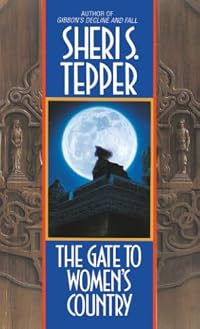
The Gate to Women's Country
by Sheri S. Tepper
On This Page
Description
Women rule in Women's Country. Women live apart from men, sheltering the remains of civilization. They have cut themselves off with walls and by ordinance from marauding males. Waging war is all men are good for. Men are allowed to fight their barbaric battles amongst themselves, garrison against garrison. For the sake of his pride, each boy child ritualistically rejects his mother when he comes of age to be a warrior. But all the secrets of civilization are strictly the possession of women. show more Naturally, there are men who want to know what the women know. And when Stavia meets Chernon, the battle of the sexes begins all over again. Foolishly, she provides books for Chernon to read. Before long, Chernon is hatching a plan of revenge against women. show lessTags
Recommendations



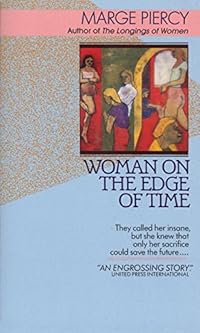
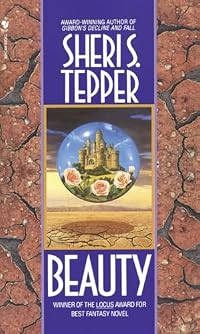

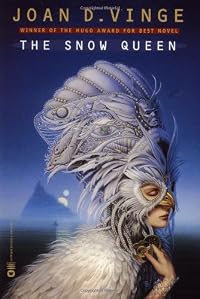











Member Recommendations

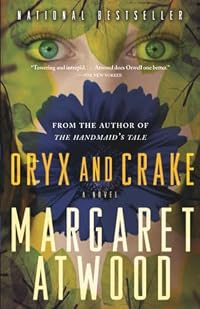
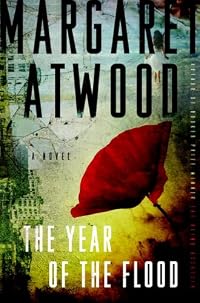
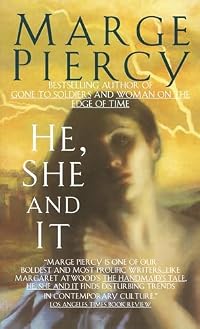
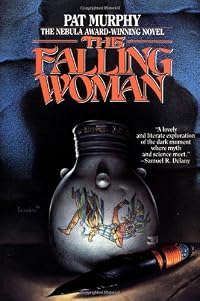
Vonini It has the same premises, but is very different none the less.
30


Member Reviews
Yeah, I stand by my earlier thoughts: this is one of the most hateful and ignorant books I've ever read.
(rated 1.5 because one of the scenes with Morgot near the end was pretty badass)
Book content warnings:
eugenics
rape
sexual assault
homophobia
transphobia
racism
misogyny
"Wow, I love this book! A feminist classic!" says the white, upper/middle class, able-bodied, straight, cis woman.
See, the thing is . . . for most of the women mentioned above, "feminism" only deals with what impacts them personally, as white, upper/middle class, able-bodied, straight, cis women. And the result is this piece of trash. It's like the scene in the movie How to Train Your Dragon: most of the reviews chant, "feminist classic, feminist classic, feminist classic", show more and I'm over here like "kill on sight, kill on sight, kill on sight".
I only checked this book out because I mistakenly thought it was When Women Were Warriors, that a friend wanted to discuss with me after I read it. Instead I got this monstrosity.
First, we get a bunch of people, apparently post-something (like a nuclear war?), after our time, where they've separated the "alpha-type" men and women in towns that are called "Women's Countries" and the "barracks". Women study and grow food and study medicine and science, etc., while men remain ignorant and focus solely on fighting. This is explained so that the men don't ever create the weapons we have right now again, because apparently only men have the hate/drive/whatever to make mass weapons of destruction. (Honestly? This reminds me of Leo Tolstoy's "educating peasants is dangerous & pointless: how does educating them help them mow the fields better, etc.?" brand of classism.)
It's . . . kind of proven in history that not just men can be hateful, and that people never actually learn from history - or that they forget things quicker (especially if they were the guilty party). Women can be just as hateful as men. Besides, if men are raised in the company of egotistical, misogynistic men, chances are they're going to grow up with the same values. Like,the main plot twist/point, that the women are "breeding" this out of the men makes no sense, since a ton of it is what society you're exposed to? I just . . . whatever.
And secondly, like you can't just separate this behavior and say it's "men vs women" as if that's all there is to it, when there's so much more to war and hate and the creation of mass weapons of destruction in the first place! Like let's say . . . racism, homophobia, religious differences, transphobia, and just general border differences.
But Sheri S. Tepper has some of those figured out, right? As in, every race but white people just up and vanished! Ha ha, solved that problem, didn't it? (/sarcasm) And every Women's Country city has the same religion! Who knows how that happened. And who knows how, despite the distance between all these cities, the religion doesn't change or shift, etc. I mean, I know that down to the South the heavily-implied "Christians" have a different religion, but how these all came to be is still never explained and I can't come to understand how it could've happened.
Oh, and let's not forget how she dealt with homophobia and transphobia! I'm going to quote directly from the book here:
"Even in preconvulsion times it had been known that the so-called 'gay syndrome' was caused by aberrant hormone levels during pregnancy. The women doctors now identified the condition as 'hormonal reproductive maladaption,' and corrected it before birth. There were very few actual HNRMs--called HenRams--either male or female, born in Women's Country, though there was still the occasional unsexed person or the omnisexed who would, so the instructors said, mate with a grasshopper if it would hold still long enough."
Again, just--make them go away, ha ha! Don't deal with them, that's easy enough! (again, /sarcasm) Not to mention single damn sentence here is disgusting and hateful. "Gay syndrome"??? Also, a word to all you homophobes out there: there is no "gay gene", sorry. You can't "correct" anyone who's not straight! And not being straight isn't a bad thing, despite whatever the hell these Women's Country women preach. Do they even have a reason to do this? No, not that I could find. It seems like it's just Sheri S. Tepper's way to get it out of the way, not have to deal with it, or force her own nasty views through the book.
And thirdly, lastly, why not throw a little more racism into this hateful mix? Anyone wandering outside the Women's Country cities or any woman who ran away from her city (most of the time persuaded away by men) are called the Rromani g**** slur. These women basically become the warriors' sex toys & become crass and unclean, because warriors can only have sex with the Women's Country women once a year. Sooooo, it's obvious what Sheri S. Tepper thinks of the Rroma people.
Yeaaaa, so feminist? I don't see how it could be. Because what about non-white women? What about disabled women (pretty much non-existent--and Morgot literally saidthat the Council Members are selectively breeding the women too, hmmm wonder what that means )? What about LGBT women? You can't claim to care about women if you only care about one kind of woman. That's not how this works. show less
(rated 1.5 because one of the scenes with Morgot near the end was pretty badass)
Book content warnings:
eugenics
rape
sexual assault
homophobia
transphobia
racism
misogyny
"Wow, I love this book! A feminist classic!" says the white, upper/middle class, able-bodied, straight, cis woman.
See, the thing is . . . for most of the women mentioned above, "feminism" only deals with what impacts them personally, as white, upper/middle class, able-bodied, straight, cis women. And the result is this piece of trash. It's like the scene in the movie How to Train Your Dragon: most of the reviews chant, "feminist classic, feminist classic, feminist classic", show more and I'm over here like "kill on sight, kill on sight, kill on sight".
I only checked this book out because I mistakenly thought it was When Women Were Warriors, that a friend wanted to discuss with me after I read it. Instead I got this monstrosity.
First, we get a bunch of people, apparently post-something (like a nuclear war?), after our time, where they've separated the "alpha-type" men and women in towns that are called "Women's Countries" and the "barracks". Women study and grow food and study medicine and science, etc., while men remain ignorant and focus solely on fighting. This is explained so that the men don't ever create the weapons we have right now again, because apparently only men have the hate/drive/whatever to make mass weapons of destruction. (Honestly? This reminds me of Leo Tolstoy's "educating peasants is dangerous & pointless: how does educating them help them mow the fields better, etc.?" brand of classism.)
It's . . . kind of proven in history that not just men can be hateful, and that people never actually learn from history - or that they forget things quicker (especially if they were the guilty party). Women can be just as hateful as men. Besides, if men are raised in the company of egotistical, misogynistic men, chances are they're going to grow up with the same values. Like,
And secondly, like you can't just separate this behavior and say it's "men vs women" as if that's all there is to it, when there's so much more to war and hate and the creation of mass weapons of destruction in the first place! Like let's say . . . racism, homophobia, religious differences, transphobia, and just general border differences.
But Sheri S. Tepper has some of those figured out, right? As in, every race but white people just up and vanished! Ha ha, solved that problem, didn't it? (/sarcasm) And every Women's Country city has the same religion! Who knows how that happened. And who knows how, despite the distance between all these cities, the religion doesn't change or shift, etc. I mean, I know that
Oh, and let's not forget how she dealt with homophobia and transphobia! I'm going to quote directly from the book here:
"Even in preconvulsion times it had been known that the so-called 'gay syndrome' was caused by aberrant hormone levels during pregnancy. The women doctors now identified the condition as 'hormonal reproductive maladaption,' and corrected it before birth. There were very few actual HNRMs--called HenRams--either male or female, born in Women's Country, though there was still the occasional unsexed person or the omnisexed who would, so the instructors said, mate with a grasshopper if it would hold still long enough."
Again, just--make them go away, ha ha! Don't deal with them, that's easy enough! (again, /sarcasm) Not to mention single damn sentence here is disgusting and hateful. "Gay syndrome"??? Also, a word to all you homophobes out there: there is no "gay gene", sorry. You can't "correct" anyone who's not straight! And not being straight isn't a bad thing, despite whatever the hell these Women's Country women preach. Do they even have a reason to do this? No, not that I could find. It seems like it's just Sheri S. Tepper's way to get it out of the way, not have to deal with it, or force her own nasty views through the book.
And thirdly, lastly, why not throw a little more racism into this hateful mix? Anyone wandering outside the Women's Country cities or any woman who ran away from her city (most of the time persuaded away by men) are called the Rromani g**** slur. These women basically become the warriors' sex toys & become crass and unclean, because warriors can only have sex with the Women's Country women once a year. Sooooo, it's obvious what Sheri S. Tepper thinks of the Rroma people.
Yeaaaa, so feminist? I don't see how it could be. Because what about non-white women? What about disabled women (pretty much non-existent--and Morgot literally said
The Gate to Women's Country is an enjoyable read and an example of fine world-building that hardly ever feels exposition-y. I enjoyed discovering more and making sense of Women's Country and its ways. I liked the emphasis on rituals, the excerpts from the pseudo-ancient play, and the details about the structures of each society. For instance, I found it clever that men mostly read epics, while women are pushed towards life-long learning and developing an art, a craft, and a science.
The book offers a controversial proposition.-- spoiler! -- ...
The women in Women's Country are leading an eugenics program. They are trying to breed out aggressiveness by selectively reproducing with men who display a gentler temperament.
A reviewer denounced show more the book as "gender essentialist, heterosexist, cissexist". I definitely think that the novel reflects the era in which it was written in. I am not certain however - having not read enough by Sheri Tepper or about her - that we can equate the world she built in the novel with her own views. Indeed I wasn't sure whether this representation of eugenics was intentionally undermined by the discourse on culture/nurture also presented by the book.
At some point, one of the characters, Chernon, describes the purposes of men and women within Women's Country as being completely at odds, like the wheels of a cart going in opposite directions. I couldn't agree more. Women's Country is based on the deliberate indoctrination of most men into what one might call toxic masculinity and fascism (worshipping the military, negating one's self, despising and objectifying women all the while fearing them, etc.). Why didn't Women's Country try to educate boys the way they did their own girls? Or why didn't Women's Country simply strive towards a gender-fluid world? Women's Country clearly relies on nurture as much, if not more than it does on nature. I found this to be in contradiction with the ending's reveal, which made me think that the reveal was perhaps not presented as THE solution but as a misguided one.
Regarding the other claims, it is certainly ludicrous that LGBQ people are just waved off in one paragraph as a "genetic defect" that could be erased. That reflects a very naive understanding of sexuality and its interaction with history and culture. This point did make me question the assumptions underlying the rest of the work.
In the end, I have to agree that the book is gender essentialist, heterosexist, and cissexist. I'm just not sure whether the lesson we're supposed to draw is that this is legitimate. Hey, the author is dead, so I guess this is about what we want to make of it! show less
The book offers a controversial proposition.-- spoiler! -- ...
The women in Women's Country are leading an eugenics program. They are trying to breed out aggressiveness by selectively reproducing with men who display a gentler temperament.
A reviewer denounced show more the book as "gender essentialist, heterosexist, cissexist". I definitely think that the novel reflects the era in which it was written in. I am not certain however - having not read enough by Sheri Tepper or about her - that we can equate the world she built in the novel with her own views. Indeed I wasn't sure whether this representation of eugenics was intentionally undermined by the discourse on culture/nurture also presented by the book.
At some point, one of the characters, Chernon, describes the purposes of men and women within Women's Country as being completely at odds, like the wheels of a cart going in opposite directions. I couldn't agree more. Women's Country is based on the deliberate indoctrination of most men into what one might call toxic masculinity and fascism (worshipping the military, negating one's self, despising and objectifying women all the while fearing them, etc.). Why didn't Women's Country try to educate boys the way they did their own girls? Or why didn't Women's Country simply strive towards a gender-fluid world? Women's Country clearly relies on nurture as much, if not more than it does on nature. I found this to be in contradiction with the ending's reveal, which made me think that the reveal was perhaps not presented as THE solution but as a misguided one.
Regarding the other claims, it is certainly ludicrous that LGBQ people are just waved off in one paragraph as a "genetic defect" that could be erased. That reflects a very naive understanding of sexuality and its interaction with history and culture. This point did make me question the assumptions underlying the rest of the work.
In the end, I have to agree that the book is gender essentialist, heterosexist, and cissexist. I'm just not sure whether the lesson we're supposed to draw is that this is legitimate. Hey, the author is dead, so I guess this is about what we want to make of it! show less
This one really got under my skin... but in a good way. It’s set generations after a war that shattered everything, and now women run a carefully structured society built around peace, but with a lot going on under the surface. I wasn’t expecting how layered it would be. At first, the world felt a little idealized, but as the story went on, I started to see the cracks.
Stavia, the main character, grows up believing in the system, but the more she experiences, the more complicated it all becomes. By the end, I was questioning everything right along with her.
I’ll admit, parts of the premise made me uncomfortable, but that felt intentional. It raises big questions about power, violence, gender, and how far people will go to protect show more what they believe is right. There’s a big reveal that re-contextualizes everything, and while I won’t spoil it, it definitely left me thinking.
It’s not a perfect book, but I’m glad I read it. There's only a few places where it felt preachy, but I forgive the author that. (As I always remind myself, "trust the reader!") But tackling this subject matter as she does, is complex. In the end, I felt the book was a little unsettling, but oddly relevant.
Bottom line: Tackles deep issues like morality, power, violence, and gender. Deep world building, highly intriguing and thought provoking social themes. show less
Stavia, the main character, grows up believing in the system, but the more she experiences, the more complicated it all becomes. By the end, I was questioning everything right along with her.
I’ll admit, parts of the premise made me uncomfortable, but that felt intentional. It raises big questions about power, violence, gender, and how far people will go to protect show more what they believe is right. There’s a big reveal that re-contextualizes everything, and while I won’t spoil it, it definitely left me thinking.
It’s not a perfect book, but I’m glad I read it. There's only a few places where it felt preachy, but I forgive the author that. (As I always remind myself, "trust the reader!") But tackling this subject matter as she does, is complex. In the end, I felt the book was a little unsettling, but oddly relevant.
Bottom line: Tackles deep issues like morality, power, violence, and gender. Deep world building, highly intriguing and thought provoking social themes. show less
I was rather surprised with what the book revealed near the end, and what this civilization came from. Of course, there were tasty hints peppered along the book and I already figured out some of the secrets, but there were a few I had not guessed. This is a nice and thought-provoking book, and I almost wish this society was real, because of how our world is currently. Overall, a good read, and a definite keeper.
(original review, 1987)
“The Gate to Women's Country”, remains the best written and most provocative of the lot when it comes to Feminist SF. It's one of the few books where I turned the last page and flipped back to the first and read it straight through again when I realized how deceptive the text, itself, was. I love when Septimus Bird tips Tepper's hand by noting that all good magicians keep us riveted on the left hand when the real trick happens in the right. That ends up being an ingenious clue about the ways we, as readers, are about to be hoodwinked. It's the very rare book that surprises me (my wife swears I have a seventh sense for foreshadowing; and I thought I was just a regular guy...) but this one did; once you know the show more secret it's everywhere. Having read it many times I continue to marvel at the superb architecture of the novel; its form holds up to the complexity of its vision. I always ended with a debate about whether what the women are really doing is justified, and those were among the most ferociously animated and intense moments in my class. It's like a torture test for those of us who are pacifists but who would have to test how far we're willing to go to prevent war. It's brilliant.
A novel that could be imagined to be a kind of sequel to Atwood's “Handmaid’s Tale”, but much better written. Atwood’s seems pedestrian by comparison. In Tepper’s novel, the women don't run away, they take action. It's pretty draconian action, too, with a revelatory moment that comes down on the reader like a hammer. show less
“The Gate to Women's Country”, remains the best written and most provocative of the lot when it comes to Feminist SF. It's one of the few books where I turned the last page and flipped back to the first and read it straight through again when I realized how deceptive the text, itself, was. I love when Septimus Bird tips Tepper's hand by noting that all good magicians keep us riveted on the left hand when the real trick happens in the right. That ends up being an ingenious clue about the ways we, as readers, are about to be hoodwinked. It's the very rare book that surprises me (my wife swears I have a seventh sense for foreshadowing; and I thought I was just a regular guy...) but this one did; once you know the show more secret it's everywhere. Having read it many times I continue to marvel at the superb architecture of the novel; its form holds up to the complexity of its vision. I always ended with a debate about whether what the women are really doing is justified, and those were among the most ferociously animated and intense moments in my class. It's like a torture test for those of us who are pacifists but who would have to test how far we're willing to go to prevent war. It's brilliant.
A novel that could be imagined to be a kind of sequel to Atwood's “Handmaid’s Tale”, but much better written. Atwood’s seems pedestrian by comparison. In Tepper’s novel, the women don't run away, they take action. It's pretty draconian action, too, with a revelatory moment that comes down on the reader like a hammer. show less
Tepper, Sheri S. The Gate to Women’s Country. Bantam, 1988.
Taken as a feminist manifesto that argues that women are perfectly capable of designing and governing a society at least as successfully as the male of the species ever has and that testosterone drives a lot of bad behavior, Sheri Tepper’s The Gate to Women’s Country makes its point. As a plausible post-apocalyptic world, it falls a bit short on plausibility. I can buy that men could easily develop a spartan military subculture, but It is hard to see the boys ever agreeing to live only in garrisons outside the country walls. The selective breeding program as well makes me skeptical. I think the multiverse premise in Joanna Russ’s The Female Man (1975) better handled and show more more nuanced. All that said, Tepper does a good job of getting us inside her characters’ heads. I also like the idea of making the sacrifice of Iphigenia and Euripides’ Trojan Women as cautionary tales for a feminist society. show less
Taken as a feminist manifesto that argues that women are perfectly capable of designing and governing a society at least as successfully as the male of the species ever has and that testosterone drives a lot of bad behavior, Sheri Tepper’s The Gate to Women’s Country makes its point. As a plausible post-apocalyptic world, it falls a bit short on plausibility. I can buy that men could easily develop a spartan military subculture, but It is hard to see the boys ever agreeing to live only in garrisons outside the country walls. The selective breeding program as well makes me skeptical. I think the multiverse premise in Joanna Russ’s The Female Man (1975) better handled and show more more nuanced. All that said, Tepper does a good job of getting us inside her characters’ heads. I also like the idea of making the sacrifice of Iphigenia and Euripides’ Trojan Women as cautionary tales for a feminist society. show less
A extremely well-written post-apocalyptic dystopian society and their highly gendered response to the man-made apocalpyse, as told throughout the life or Stavia. The story jumps perspective between Stavia as a an adult woman and a youth, and a few other POV's of important characters from her youth, connected by a fictional play "Iphigenia at Ilium" set immediately following the Trojan War. The quality of the prose and the unusual narrative style set this novel apart as a fantastic work of literature. I personally found it just as complex as "Six Moon Dance" while being significantly easier to navigate.
That being said, I came to this book hoping for the sort of nuanced feminism that I got in "Six Moon Dance" and was sorely disappointed. show more I couldn't separate my enjoyment of the technical aspects of this book from the pervasive notion that men are inherently, innately more violent than women, and vice versa. show less
That being said, I came to this book hoping for the sort of nuanced feminism that I got in "Six Moon Dance" and was sorely disappointed. show more I couldn't separate my enjoyment of the technical aspects of this book from the pervasive notion that men are inherently, innately more violent than women, and vice versa. show less
Members
- Recently Added By
Published Reviews
"I confess this book defeated me. I didn't finish it and came away with a very low opinion of Tepper's work, which I had not previously read."
"This is, unquestionably, a serious, ambitious novel, about the roles of the sexes ..." "My advice for the future is that someone, either Ms. Tepper or her editor, slog through the dense elephant grass of her prose armed with a blue pencil and, whenever show more wandering herds of adjectives appear - shoot to kill." show less
"This is, unquestionably, a serious, ambitious novel, about the roles of the sexes ..." "My advice for the future is that someone, either Ms. Tepper or her editor, slog through the dense elephant grass of her prose armed with a blue pencil and, whenever show more wandering herds of adjectives appear - shoot to kill." show less
added by RBeffa
Tepper's finest novel to date is set in a post-holocaust feminist dystopia that offers only two political alternatives: a repressive polygamist sect that is slowly self-destructing through inbreeding and the matriarchal dictatorship called Women's Country. Here, in a desperate effort to prevent another world war, the women have segregated most men into closed military garrisons and have taken show more on themselves every other function of government, industry, agriculture, science and learning. The resulting manifold responsibilities are seen through the life of Stavia, from a dreaming 10-year-old to maturity as doctor, mother and member of the Marthatown Women's Council. As in Tepper's Awakeners series books, the rigid social systems are tempered by the voices of individual experience and, here, by an imaginative reworking of The Trojan Woman that runs through the text. A rewarding and challenging novel that is to be valued for its provoc ative ideas. show less
added by cmwilson101
Lists

Best Science Fiction Novels
816 works; 430 members

Favorite Science Fiction by Women Authors
737 works; 196 members

Best Dystopias
280 works; 277 members

Best Feminist Science Fiction
188 works; 34 members

Best Post-Apocalyptic Stories
143 works; 88 members
Science fiction novels with a female protagonist
105 works; 30 members

Best Feminist Literature
188 works; 26 members

S.F. Masterworks (Complete)
229 works; 15 members

Dystopian and Apocalyptic Literature
350 works; 74 members
Recommended Speculative Fiction by Women and People of Color
298 works; 45 members

Books I've Read More Than Once
602 works; 49 members

Walls
24 works; 2 members

Novels featuring siblings
133 works; 8 members

Books Read in 2014
2,341 works; 87 members

Read These Too
458 works; 9 members
Literature About Women and Girls
391 works; 39 members

mom
729 works; 1 member

SF Masterworks
193 works; 8 members

Books Read in 2010
631 works; 10 members

Female Protagonist
1,056 works; 56 members

Utopia
7 works; 2 members
1980s
356 works; 23 members

GraceCollection TBR/To Buy List
106 works; 1 member

Book Worlds We'd Like To Visit
322 works; 158 members

Books We Discovered On LibraryThing
530 works; 130 members
Favorite Science Fiction
452 works; 215 members
Author Information

80+ Works 25,692 Members
Sheri S. Tepper was born Shirley Stewart Douglas on July 16, 1929 near Littleton, Colorado. She held numerous jobs before becoming a full-time author including working at Rocky Mountain Planned Parenthood from 1962 to 1986, eventually becoming the executive director. In the early 1960s, she wrote poems and children's stories under the name Sheri show more S. Eberhart. In the 1980s, she became a feminist and science fiction/fantasy writer. Her books include The Revenants, After Long Silence, The Gate to Women's Country, Grass, Shadow's End, Gibbon's Decline and Fall, The Family Tree, Six Moon Dance, Singer from the Sea, The Fresco, The Visitor, The Companions, and The Margarets. She received the Locus Award for Beauty and a World Fantasy life achievement award in 2015. She also wrote horror under the name E. E. Horlak and mysteries under the names A. J. Orde and B. J. Oliphant. She died on October 22, 2016 at the age of 87. (Bowker Author Biography) show less
Some Editions
Series
Belongs to Publisher Series
Work Relationships
Common Knowledge
- Canonical title
- The Gate to Women's Country
- Alternate titles
- The Gate to Women's Country: A Novel
- Original publication date
- 1988
- People/Characters
- Stavia; Chernon; Dawid; Morgot; Joshua; Jerby (show all 11); Corrig; Susannah; Spring; Septemius Bird; Myra
- Important places
- Marthatown
- First words
- Stavia saw herself as in a picture, from the outside, a darkly cloaked figure moving along a cobbled street, the stones sheened with a soft, early spring rain.
- Last words
- (Click to show. Warning: May contain spoilers.)Wept for them all.
- Blurbers
- Donaldson, Stephen R.; Card, Orson Scott; Ursula K. LeGuin; Bradley, Marion Zimmer
- Canonical DDC/MDS
- 813.54
- Canonical LCC
- PS3570.E673
Classifications
Statistics
- Members
- 2,323
- Popularity
- 8,453
- Reviews
- 61
- Rating
- (4.04)
- Languages
- 5 — English, Estonian, Finnish, French, Spanish
- Media
- Paper, Audiobook, Ebook
- ISBNs
- 19
- ASINs
- 8