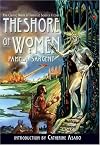
The Shore of Women
by Pamela Sargent
On This Page
Description
A dystopian tale of a power struggle between the sexes in the post-nuclear future, perfect for readers of Margaret Atwood and Ursula K. Le Guin. After a nuclear holocaust, women rule the world. Using advanced technology, they've expelled men from their vast walled cities to roam the countryside in primitive bands, bringing them back only for the purpose of loveless reproduction under the guise of powerful goddesses. When one young woman, Birana, questions her society's deception, she show more finds herself exiled among the very men she has been taught to scorn. She crosses paths with a hunter, Arvil, and the two grow close as they evade the ever-threatening female forces and the savage wilderness men. Their love just might mend their fractured world--if they manage to survive. Hailed as "one of the genre's best writers" by the Washington Post Book World, Pamela Sargent is the author of numerous novels, including Earthseed and Venus of Dreams. The winner of the Nebula and Locus awards, she has also coauthored several Star Trek novels with George Zebrowski. show lessTags
Recommendations








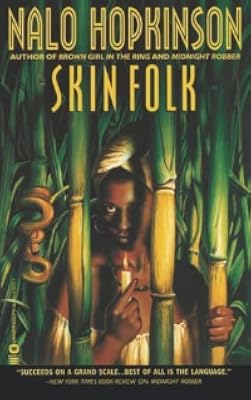













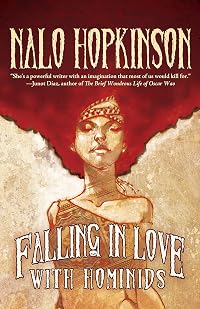
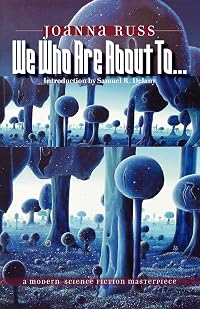









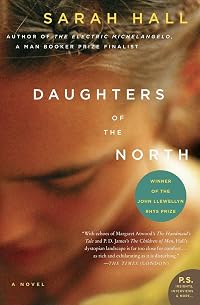




Member Recommendations


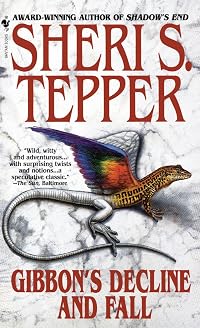
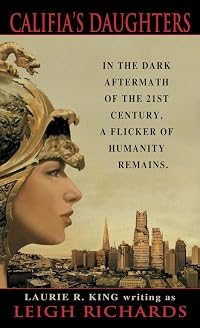
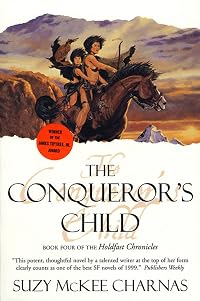
Vonini It has the same premises, but is very different none the less. The idea behind Sheri Tepper's world is very ingenious.
Member Reviews
James Thurber, the great American humorist, poked fun at “the battle of the sexes” in a long-running series of cartoons in The New Yorker, and in a 1959 film starring Peter Sellers. Thurber, like so many men, then and now, didn’t like strong women. This isn’t just a dying stereotype: Wal-Mart is currently embroiled in the largest class-action lawsuit in history because management has strived to keep the girls down. The on-going fact of women earning 79 cents to a man’s dollar gives bite to the feminist critique of our patriarchal culture—I should say, is just one of the many sharp teeth in that bite.
Feminist sociologists, like investigative journalists, “follow the money” when trying to root out the source of a thorny show more problem. The capitalist system, the argument runs (at least in its baldest, least-nuanced form), is self destructive in the same way that an addiction is. Greed, power and violence are intertwined, and everyday women and children pay the price, with their bodies and their souls, in the bosom of the nuclear family, the American home. Earth, too, pays the price with her body as the ice caps melt and the rivers run red with toxins. Mass death is the ultimate price, of course, and while this is merely something to snicker at for the elites who are killing us, for many scientists (only a few of them actually women) it is a fact of impending disaster.
Take the foregoing as you will, it serves as the back story of Pamela Sargent’s brilliant and beautiful novel, The Shore of Women. After “fire and ice” (nuclear war and the consequent “winter”) has been sent to “punish” the people of Earth, the battle of the sexes reaches its logical extreme: a complete segregation of men from women. Savvy readers will instantly recognize this as the theme of, for lack of a better term, the “feminist utopia”; Sargent’s most famous predecessor is probably Charlotte Perkins Gilman’s Herland (1915). For Gilman, though, the idea of living apart from men was truly utopian. Sargent, to her credit, doesn’t see it that way: The Shore of Women is a moving contribution to the counter-form, the dystopian novel.
Gilman, too, was essentially a 19th-century novelist of ideas (making Herland, short as it is, a tough go for modern readers), while Sargent’s novel (originally published in 1986) is a fully realized novel of character. “No ideas but in things,” said William Carlos Williams; in other words, let your polemics arise from your powers of observation. Sargent is a powerhouse of observation.
In this distant, post-“fire and ice” future, women have sequestered themselves in high-tech, weather-controlled enclaves, leaving the men, both literally and figuratively, out in the cold to lead essentially neolithic lives. Women have set up an elaborate ruse, a sort of virtual-reality religion. The men come to shrines in the wilderness, don “crowns,” and consort with “the Lady.” During these VR couplings, the men are milked of semen, and women reproduce through artificial insemination.
Within the enclaves, women live, for the most part, happy lives. But occasionally violence breaks out. At the beginning of the novel, one woman murders her lover. (Obviously, all humans are homosexual in the future; the need for day-today love and companionship doesn’t go away.) The punishment for murder is exile from the city of women into the wilderness of men. The assumption of the Mothers of the City, as the elite women are known, is that any such exile will quickly result in death.
The elegant twist, of course, is that men worship women. To see an actual woman, flesh and bone instead of virtual image, is a profoundly religious experience. And therein lies a tale. What results is a thrilling adventure and a study in human potential as Birana, the exiled women, and Arvil, the sensitive neolithic man, struggle with fear, desire and power in order to survive. Ultimately, The Shore of Women is about our ability to change, to heed the better angels of our nature. At the end of the book, a conservative Mother observes, “This is how it begins… with one misplaced act of mercy, with setting one life above one’s duty.” As a result, “our lives—very slowly, perhaps, will change.” Indeed; the ability to value particulars over principles, when appropriate, may yet be our saving grace.
BenBella Books has done a great service by reissuing The Shore of Women. It’s unfortunate the publishers wrapped the book in a truly hideous, cartoonish cover. Queer theorists, feminists, and lovers of great literature (not just SF fans) will simply have to look past the cover, to the great heart within.
Originally published in Curled Up with a Good Book show less
Feminist sociologists, like investigative journalists, “follow the money” when trying to root out the source of a thorny show more problem. The capitalist system, the argument runs (at least in its baldest, least-nuanced form), is self destructive in the same way that an addiction is. Greed, power and violence are intertwined, and everyday women and children pay the price, with their bodies and their souls, in the bosom of the nuclear family, the American home. Earth, too, pays the price with her body as the ice caps melt and the rivers run red with toxins. Mass death is the ultimate price, of course, and while this is merely something to snicker at for the elites who are killing us, for many scientists (only a few of them actually women) it is a fact of impending disaster.
Take the foregoing as you will, it serves as the back story of Pamela Sargent’s brilliant and beautiful novel, The Shore of Women. After “fire and ice” (nuclear war and the consequent “winter”) has been sent to “punish” the people of Earth, the battle of the sexes reaches its logical extreme: a complete segregation of men from women. Savvy readers will instantly recognize this as the theme of, for lack of a better term, the “feminist utopia”; Sargent’s most famous predecessor is probably Charlotte Perkins Gilman’s Herland (1915). For Gilman, though, the idea of living apart from men was truly utopian. Sargent, to her credit, doesn’t see it that way: The Shore of Women is a moving contribution to the counter-form, the dystopian novel.
Gilman, too, was essentially a 19th-century novelist of ideas (making Herland, short as it is, a tough go for modern readers), while Sargent’s novel (originally published in 1986) is a fully realized novel of character. “No ideas but in things,” said William Carlos Williams; in other words, let your polemics arise from your powers of observation. Sargent is a powerhouse of observation.
In this distant, post-“fire and ice” future, women have sequestered themselves in high-tech, weather-controlled enclaves, leaving the men, both literally and figuratively, out in the cold to lead essentially neolithic lives. Women have set up an elaborate ruse, a sort of virtual-reality religion. The men come to shrines in the wilderness, don “crowns,” and consort with “the Lady.” During these VR couplings, the men are milked of semen, and women reproduce through artificial insemination.
Within the enclaves, women live, for the most part, happy lives. But occasionally violence breaks out. At the beginning of the novel, one woman murders her lover. (Obviously, all humans are homosexual in the future; the need for day-today love and companionship doesn’t go away.) The punishment for murder is exile from the city of women into the wilderness of men. The assumption of the Mothers of the City, as the elite women are known, is that any such exile will quickly result in death.
The elegant twist, of course, is that men worship women. To see an actual woman, flesh and bone instead of virtual image, is a profoundly religious experience. And therein lies a tale. What results is a thrilling adventure and a study in human potential as Birana, the exiled women, and Arvil, the sensitive neolithic man, struggle with fear, desire and power in order to survive. Ultimately, The Shore of Women is about our ability to change, to heed the better angels of our nature. At the end of the book, a conservative Mother observes, “This is how it begins… with one misplaced act of mercy, with setting one life above one’s duty.” As a result, “our lives—very slowly, perhaps, will change.” Indeed; the ability to value particulars over principles, when appropriate, may yet be our saving grace.
BenBella Books has done a great service by reissuing The Shore of Women. It’s unfortunate the publishers wrapped the book in a truly hideous, cartoonish cover. Queer theorists, feminists, and lovers of great literature (not just SF fans) will simply have to look past the cover, to the great heart within.
Originally published in Curled Up with a Good Book show less
I can't say this book is perfect, but I'm still going to give it 5 🌟. It's about a land, probably north America, centuries after the nuclear apocalypse. When the Earth seemed healed enough, the survivors made their way from the underground shelters and began to create civilization again. Women gathered together, separating themselves from men, in the belief that men could not be trusted with the reins of leadership again, lest their tendency towards violence destroy the world again. So women built enclosed cities, leaving men to fight for survival in the wildernesses outside. They would variously be summoned to the walls to contribute their sperm, but were kept in ignorance of their purpose, believing the women to be aspects of the show more Goddess. Obviously, as other reviewers have pointed out, this is not really feminist literature, just because it has lesbians in it. Still, thoroughly enjoyable for characterization, world-building, and seeing men in the story get treated in some ways, the way they treat us. show less
I picked this up at a SF convention and kept at it for about 200 pages, since it's light enough reading and has an interesting premise.
But oh goodness, I'm afraid I have to leave this novel back in the 1980s where it came from. I can take or leave the exploration of the premise -there's a lot of weird gender essentialism going on here that I don't think is going to get resolved by the end of the story, and then there's the lameness of a setting where all relationships are queer relationships, but the spotlight is on the one "transgressive" straight couple - but whatever. Some of the worldbuilding is fun, in a campy way - a Logan's Run sort of aesthetic.
However, I really quit because the characters are just not working for me. They are show more terribly flat, with wooden dialogue and experiences that are all surface, no depth. Obviously this is a Novel of Ideas, but the story moves too slowly for the characterizations to be so shallow.
If nothing else, I suppose we can all be grateful for those well-meaning 70s and 80s feminists teaching us what not to do in our feminist SF (with some exceptions, of course!) show less
But oh goodness, I'm afraid I have to leave this novel back in the 1980s where it came from. I can take or leave the exploration of the premise -there's a lot of weird gender essentialism going on here that I don't think is going to get resolved by the end of the story, and then there's the lameness of a setting where all relationships are queer relationships, but the spotlight is on the one "transgressive" straight couple - but whatever. Some of the worldbuilding is fun, in a campy way - a Logan's Run sort of aesthetic.
However, I really quit because the characters are just not working for me. They are show more terribly flat, with wooden dialogue and experiences that are all surface, no depth. Obviously this is a Novel of Ideas, but the story moves too slowly for the characterizations to be so shallow.
If nothing else, I suppose we can all be grateful for those well-meaning 70s and 80s feminists teaching us what not to do in our feminist SF (with some exceptions, of course!) show less
Spoiler Alert
A cautionary tale for those feminists who claim that all our society's ills can be laid at the feet of men, believing that men are innately ruthless, domineering, and aggressive. In this book, the women themselves display jealousy, rivalry and power-hunger. Role-reversal. How depressing--Sargent feels that in 4,000 (or whatever) years we won't have learned anything about interpersonal relationships, love, or kindness.
Sargent uses the template of boilerplate romances for the story line. Saying this is hardly a spoiler, since it is obvious once the 2 protagonists meet what will happen: woman abhors man, they are forced by circumstances to work together, woman realizes her desire for man, they have hot sex.
Even tho Laissa & show more Arvil gain in knowledge, have adventures, and learn to respect each other, I don't see any inner personal growth. They are still consumed by jealousy at just the thought that the other might be interested in someone else.
I'm sorry I didn't like this, because Sargent was one of the author's I would look for in used book stores (where I picked this one up). I've gotten a number of good collections that she edited, & enjoyed Cloned Lives way back when. Maybe I need to re-read Cloned Lives & see if it still is as good as I remembered. show less
A cautionary tale for those feminists who claim that all our society's ills can be laid at the feet of men, believing that men are innately ruthless, domineering, and aggressive. In this book, the women themselves display jealousy, rivalry and power-hunger. Role-reversal. How depressing--Sargent feels that in 4,000 (or whatever) years we won't have learned anything about interpersonal relationships, love, or kindness.
Sargent uses the template of boilerplate romances for the story line. Saying this is hardly a spoiler, since it is obvious once the 2 protagonists meet what will happen: woman abhors man, they are forced by circumstances to work together, woman realizes her desire for man, they have hot sex.
Even tho Laissa & show more Arvil gain in knowledge, have adventures, and learn to respect each other, I don't see any inner personal growth. They are still consumed by jealousy at just the thought that the other might be interested in someone else.
I'm sorry I didn't like this, because Sargent was one of the author's I would look for in used book stores (where I picked this one up). I've gotten a number of good collections that she edited, & enjoyed Cloned Lives way back when. Maybe I need to re-read Cloned Lives & see if it still is as good as I remembered. show less
I was disappointed in this novel, at least as an engaging, "feminist" SF novel.
It's clearly a product of its time (1986, about 30 years ago): but even then, gender essentialism was only a small part of feminist thought and theory. It's vital to the premises of this novel, though.
Women and men have no actual contact with each other, and both have weird ideas of the Other. The women have claimed tech, and are stagnating in their walled citadels; meanwhile the men revel in life "nasty, brutish and short" outside. While the overall story arc depicts a small personal rapproachment, in general everyone on all sides stays resolutely gender-essentialist.
Now, this does mean that it might be an interesting book to teach in a feminist lit class, show more in which one would examine the premises- both of sex/gender, social status, etc.- in terms of a broader view of what humans are capable of. The book definitely raises some interesting questions, but it seems to me that they are mostly unaddressed, even in subtext.
Another flaw is that it went on far too long, and was quite repetitive. This may have been intentional, but it made the reading more of a slog that it could have been.
It did not help that none of the first-person protagonists were especially engaging, nor were most of the others. Our male protag flew into scary rages at the least hint of being thwarted; the females occasionally defied the powers that be, but then resigned themselves to oppression of one kind or another. Not a very hopeful look at humans, though possibly accurate...
Not recommended, except maybe in a book discussion or class context. show less
It's clearly a product of its time (1986, about 30 years ago): but even then, gender essentialism was only a small part of feminist thought and theory. It's vital to the premises of this novel, though.
Women and men have no actual contact with each other, and both have weird ideas of the Other. The women have claimed tech, and are stagnating in their walled citadels; meanwhile the men revel in life "nasty, brutish and short" outside. While the overall story arc depicts a small personal rapproachment, in general everyone on all sides stays resolutely gender-essentialist.
Now, this does mean that it might be an interesting book to teach in a feminist lit class, show more in which one would examine the premises- both of sex/gender, social status, etc.- in terms of a broader view of what humans are capable of. The book definitely raises some interesting questions, but it seems to me that they are mostly unaddressed, even in subtext.
Another flaw is that it went on far too long, and was quite repetitive. This may have been intentional, but it made the reading more of a slog that it could have been.
It did not help that none of the first-person protagonists were especially engaging, nor were most of the others. Our male protag flew into scary rages at the least hint of being thwarted; the females occasionally defied the powers that be, but then resigned themselves to oppression of one kind or another. Not a very hopeful look at humans, though possibly accurate...
Not recommended, except maybe in a book discussion or class context. show less
Interesting concept, and fairly well executed characters. I really enjoyed it, spent a lot of time thinking of the "what if" scenarios the book presented. The only, very small, problem I had was the central premise of the book that men and women live separately, is impossible to believe. Several time while reading I would think how this society is just not possible. However that is a very small nit, the book is well written and the story exciting and interesting, so I kept picking it up every free minute to find out what happened next. I may even read this again, even though I have a huge TBR pile.
http://nhw.livejournal.com/953841.html
Classic feminist sf, or at least that is how it is usually labelled: women live in hi-tech urban enclaves, while men are consigned to a nasty, brutish, short life of scrabbling in the wilderness, worshipping the female principle, as punishment for having caused the (unspecified) world-wrecking disaster centuries ago.
It's not that different from Sherri S. Tepper's The Gate to Women's Country. Sargent's characters are more three-dimensional, but her plot and setting rather less elaborate. I wondered where all the food for the women's cities was coming from; I also speculated a bit about the robustness of the command-and-control mechanism by which the women unleash deadly force on men when they get show more uppity.
The most extreme example of Sargent's rather inconsistent world-building is, oddly enough, in her erotic passages, where Hero gets it on with Heroine; they are raunchily written yet don't completely fit what we know of the environment - we are told that both of them have had same-sex physical relationships in the past, so the overtones of virginal discovery somehow aren't quite appropriate. show less
Classic feminist sf, or at least that is how it is usually labelled: women live in hi-tech urban enclaves, while men are consigned to a nasty, brutish, short life of scrabbling in the wilderness, worshipping the female principle, as punishment for having caused the (unspecified) world-wrecking disaster centuries ago.
It's not that different from Sherri S. Tepper's The Gate to Women's Country. Sargent's characters are more three-dimensional, but her plot and setting rather less elaborate. I wondered where all the food for the women's cities was coming from; I also speculated a bit about the robustness of the command-and-control mechanism by which the women unleash deadly force on men when they get show more uppity.
The most extreme example of Sargent's rather inconsistent world-building is, oddly enough, in her erotic passages, where Hero gets it on with Heroine; they are raunchily written yet don't completely fit what we know of the environment - we are told that both of them have had same-sex physical relationships in the past, so the overtones of virginal discovery somehow aren't quite appropriate. show less
Members
- Recently Added By
Lists

Best Post-Apocalyptic Stories
143 works; 88 members

Favorite Science Fiction by Women Authors
741 works; 203 members

Best Feminist Science Fiction
188 works; 35 members

Broderick and Di Filippo's Science Fiction: The 101 Best Novels 1985-2010
103 works; 7 members
Author Information

95+ Works 5,533 Members
Some Editions
Series
Belongs to Publisher Series
Common Knowledge
- Canonical title
- The Shore of Women
- Original title
- The Shore of Women
- Original publication date
- 1986
- People/Characters
- Birana; Arvil; Laissa; Nallei
- Dedication
- For Shirley Sargent
- First words
- I had expected Birana to weep.
- Last words
- (Click to show. Warning: May contain spoilers.)Perhaps we will join them on that shore at last.
- Blurbers
- Card, Orson Scott; McCaffrey, Anne
Classifications
Statistics
- Members
- 493
- Popularity
- 61,565
- Reviews
- 15
- Rating
- (3.51)
- Languages
- English, French, German
- Media
- Paper, Audiobook, Ebook
- ISBNs
- 15
- ASINs
- 5