On This Page
Description
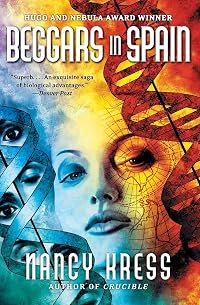
In a world where the slightest edge can mean the difference between success and failure, Leisha Camden is beautiful, extraordinarily intelligent ... and one of an ever-growing number of human beings who have been genetically modified to never require sleep. Once considered interesting anomalies, now Leisha and the other "Sleepless" are outcasts -- victims of blind hatred, political repression, and shocking mob violence meant to drive them from human society ... and, ultimately, from Earth show more itself. But Leisha Camden has chosen to remain behind in a world that envies and fears her "gift" -- a world marked for destruction in a devastating conspiracy of freedom ... and revenge. show lessTags
Recommendations












Member Recommendations

Member Reviews
I've had this on my TBR list for ages, and I'm really glad that I finally sat down with it. Oddly enough, I'm thankful that I hadn't read this when it was first recommended to me because I'm not sure I would have fully been able to absorb the book and it's political, philosophical, and biological intricacies.
Kress envisions a world where genetic modification has reached the point where parents can select specific traits for their unborn children. One of these is sleeplessness. The book follows one of the first Sleepless, Leisha Camden, as she moves through a world where Sleepers resent and hate her, and her continued belief in the necessity of coexistence has caused her to be an outcast among the Sleepless.
Extremely fascinating world show more building, and the scary thing was I can see the seeds of the world Kress created for the future in our own world today. Despite having been published nearly 20 years ago Beggars in Spain is still very relevant. show less
Kress envisions a world where genetic modification has reached the point where parents can select specific traits for their unborn children. One of these is sleeplessness. The book follows one of the first Sleepless, Leisha Camden, as she moves through a world where Sleepers resent and hate her, and her continued belief in the necessity of coexistence has caused her to be an outcast among the Sleepless.
Extremely fascinating world show more building, and the scary thing was I can see the seeds of the world Kress created for the future in our own world today. Despite having been published nearly 20 years ago Beggars in Spain is still very relevant. show less
*This review has spoilers.*
In the near future, Leisha is one of the first generation of children genetically engineered not to need sleep, and finds herself hated and feared because of the advantages that gives her.
I first read this novel long ago, and I just reread the novella it was based on to refresh my memory, so this review will focus on the novella, which is the opening section of the longer novel. I have seen this book listed on many libertarian book lists, but it is my opinion that it considers but ultimately refutes libertarian ideals, at least those ideals that we often associate with Ayn Rand.
Like most of the Sleepers, Leisha subscribes to a philosophy popularized by Kenzo Yagai, who also invented the cheap energy source show more that is transforming the world. In that philosophy, a person's greatest dignity comes from being able to do what they do well, freely and without coercion, and to trade that skill with others. This is symbolized by the contract. If a person is not allowed to achieve or must operate under coercion, then that robs them of their spiritual dignity.
However, there is the problem of the so-called beggars in Spain, who have nothing to give and want what you have--and may be willing to do violence to get it. They cannot live on their own merits, and they aren't willing to abide by the rules of civilizations. What does the world owe them? The libertarians, or Yagaiists, would argue, the world owes them nothing. Leisha feels there is something wrong with this, but it takes her a while to realize what.
The Sleepless are superior in nearly every way to the Sleepers, and that is why they come to be hated and feared. They cannot engage with the rest of the world in equal trade because they are not born equal. They come to the conclusion that their only recourse is to withdraw from society into an isolated refuge called Sanctuary. Again, Leisha does not think this is the right move.
Finally, as she and her twin sister Alice (who is not a Sleepless) rescue a sleepless child from an abusive home--and Alice basically saves everybody, much to Leisha's surprise--she realizes the truth. This is where the refutation happens. Trade is not linear. It is more like a web. A "beggar in Spain" is not fated to permanently be a beggar; they may have something of value to give that only becomes apparent later, like Alice. Human society is an ecology, so you give what you can when you can, not knowing whether you will receive something in return now or later, or even if the person you benefit will go on to benefit someone else. However, by giving when it is needed, and not expecting something in return immediately, the whole ecology benefits--including the so-called elite.
This is where we get stuck when we consider libertarianism in the political arena today. There is often the attitude of "what's in it for me?" The benefit may not be immediately apparent, but there is a benefit to us all. We are not individuals free-floating out there, tethered to no one, reliant only on ourselves. We are part of an ecology, and all of us are necessary parts of that ecology. Even the beggars. show less
In the near future, Leisha is one of the first generation of children genetically engineered not to need sleep, and finds herself hated and feared because of the advantages that gives her.
I first read this novel long ago, and I just reread the novella it was based on to refresh my memory, so this review will focus on the novella, which is the opening section of the longer novel. I have seen this book listed on many libertarian book lists, but it is my opinion that it considers but ultimately refutes libertarian ideals, at least those ideals that we often associate with Ayn Rand.
Like most of the Sleepers, Leisha subscribes to a philosophy popularized by Kenzo Yagai, who also invented the cheap energy source show more that is transforming the world. In that philosophy, a person's greatest dignity comes from being able to do what they do well, freely and without coercion, and to trade that skill with others. This is symbolized by the contract. If a person is not allowed to achieve or must operate under coercion, then that robs them of their spiritual dignity.
However, there is the problem of the so-called beggars in Spain, who have nothing to give and want what you have--and may be willing to do violence to get it. They cannot live on their own merits, and they aren't willing to abide by the rules of civilizations. What does the world owe them? The libertarians, or Yagaiists, would argue, the world owes them nothing. Leisha feels there is something wrong with this, but it takes her a while to realize what.
The Sleepless are superior in nearly every way to the Sleepers, and that is why they come to be hated and feared. They cannot engage with the rest of the world in equal trade because they are not born equal. They come to the conclusion that their only recourse is to withdraw from society into an isolated refuge called Sanctuary. Again, Leisha does not think this is the right move.
Finally, as she and her twin sister Alice (who is not a Sleepless) rescue a sleepless child from an abusive home--and Alice basically saves everybody, much to Leisha's surprise--she realizes the truth. This is where the refutation happens. Trade is not linear. It is more like a web. A "beggar in Spain" is not fated to permanently be a beggar; they may have something of value to give that only becomes apparent later, like Alice. Human society is an ecology, so you give what you can when you can, not knowing whether you will receive something in return now or later, or even if the person you benefit will go on to benefit someone else. However, by giving when it is needed, and not expecting something in return immediately, the whole ecology benefits--including the so-called elite.
This is where we get stuck when we consider libertarianism in the political arena today. There is often the attitude of "what's in it for me?" The benefit may not be immediately apparent, but there is a benefit to us all. We are not individuals free-floating out there, tethered to no one, reliant only on ourselves. We are part of an ecology, and all of us are necessary parts of that ecology. Even the beggars. show less
I didn't realize until after I had started reading it, that this was published first as a novella and later as a full-length novel. It was completely by accident that I'd gotten hold of the novella rather than the novel - might as well have been the other way around.
But now that I have read it, I'm glad I read the novella. It was a brilliant story - engaging and thought-provoking - but I don't think it would have worked nearly as well as a full-length novel. The pacing would have been off, it wouldn't have been as tight nor - I think - as poignant.
As it was, I couldn't get the story out of my head and found it extremely well written and provocative (in a good way). I'm sorry Alice and Leisha never became close, but was glad to see that show more the ending opened for the possibility of that in the future. show less
But now that I have read it, I'm glad I read the novella. It was a brilliant story - engaging and thought-provoking - but I don't think it would have worked nearly as well as a full-length novel. The pacing would have been off, it wouldn't have been as tight nor - I think - as poignant.
As it was, I couldn't get the story out of my head and found it extremely well written and provocative (in a good way). I'm sorry Alice and Leisha never became close, but was glad to see that show more the ending opened for the possibility of that in the future. show less
My reactions to reading this novel in 1993. Spoilers follow.
One of the best sf novels I’ve ever read. This is an example of a sf novel dealing with large ethical questions in a style that reminded me a great deal of James Gunn’s 1950s sociological novels like The Joy Makers and The Immortals. First an ethical question is examined from one angle, usually at novella length (and I did greatly admire the opening part of this novel in its solo publication as the novella “Beggars in Spain”). Then the question is examined from another angle by presenting some new – usually technological or scientific – factor.
This novel has three things going for it.
The first is the ethical question it debates. How do individuals, socieities, and show more political systems cope with the essential inequality of man. The second is its realistic extrapolations of genetic engineering. The third is its preoccupation with American society -- no part of this part takes place outside of America – except for the illegal surgery on Drew in Mexico. Even Sanctuary is legally under U.S. jurisdiction. Kress has given a great deal of thought to her questions and the result is a fine novel.
Kress starts out in the first part with the creation of the Sleepless. Even just working with the advantage of not needing sleep is bad enough. Yet most of these Sleepless have been modified for high intelligence, and they all turn out to be very long lived. They are clearly superior to us Norms. Kress does a nice job with brief touches denoting Sleeper reactions like Moms who can’t handle constantly crying babies who never sleep or Sleepless skaters being banned from the Olympics because they can practice so much more. And they’ll be able to use their advantages a long time. People don’t deny their superiority and naturally resent it with various legal and personal consequences.
Most of the Sleepless subscribe to the libertarian (I suspect the specific influence of Ayn Randian given an interview I read with Kress.) philosophy of Kenzo Yagai, inventor of plentiful energy via cold fusion. He sees the basis of society as voluntary contract between two parties with third parties sometimes benefitting. The problem is – and it’s a real one – is that to Sleepless eyes the normal “Beggars” have nothing to give them nothing to trade but demand the fruits of their labor gained in the pusuit of personal excellence. Leisha Camden, protagonist and hero of this novel, resolves this problem (and I find this vision more convincing upon a second reading) by seeing society not based on linear trade but an ecology where people sometimes offer help without any real hope of direct gain and indirectly see benefits from the action of strangers. The Sleepless withdraw into the world, and the We-Sleep economic/political movement sweeps the Normal Sleeper world. Calvin Hawke, its leader, realizes the fundamental inequality of man, that not all can compete evenly in the pursuit of excellence (e.g. economic wealth, scientific achievement), so Sleepers are encouraged to boycott Sleepless and buy shoddier Sleeper goods. It all sounds plausible, a variation on the economic nationalism that puts up tariffs.
Kress than further alters things with more genetic alterations in the space Sanctuary colonoy – “Supers” are born with profoundly altered intelligences. On Earth, the exact opposite philosophy to Yagaism (Curiously, Yagai came to America because it was the last refuge of free enterprise.) reigns: a welfare state run by Normal “donkeys” with a mass of “Livers” bribed with increasing Dole benefits controlling things through their votes, and it’s all funded by the licensed patents of Yagai’s cheap fusion products that were willed to America. Eventually, this too collapses (and we never really discover how America will fare – I suspect its covered in later novels of the trilogy) when the license runs out, and America no longer has exclusive rights to “Y-energy” products. Throughout this, the Sleepless leader Jennifer Sharifi, gets more fanatical. She has adopted the view that community comes first and starts to suppress dissent and secretly hatches a plot – enforced by biological weapons – to secede from the U.S. (Hence the Abraham Lincoln epigraphs that open each section). Sharifi not only accepts the philosophy that the strong and productive owe nothing to those with nothing to trade, the so-called Beggars in Spain of the title. They eventualy refer to most of the Normals as Beggars, and the rebel Super children ironically adopt the name. Sharifi maintains that the weak and non-productive have no moral claim on the moral productivity of the strong (private charity, freely given, is another matter). The logical and political consequences of not agreeing leads to the welfare state of this book, a state that eventually levies incredibly heavy taxes on the Sleepless. However, Sharifi takes to killing handicapped, injured individuals (after all, they can not contribute anymore to the community and would feel very guilty about not be able to do so.), forcibly aborting babies that spontaneously revert to Normal form. The Superbabies – aided by the new art form of Sleeper Drew (an art which initiates a form of useful lucid dreaming in the Supers) – revolt, Sharifi’s plot falls through and her whole council is to be tried for treason, and a rapproachment may be underway between Sleeper and Sleepless as mediated by the Supers. However, this is uncertain as is America’s fate.
Throughout this plot are a lot of good things. I liked the poignant relationship between Sleepless. Leisha Camden and twin sister and Normal Alice Leisha. One is destined to achieve, beloved by her father, live a long life. Alice will have none of these things, but the sisters will develop a deep love for each other as Alice painfully realizes that hating Leisha for superiority will not change things. It’s a lesson we all have to painfully learn. As Kress has said in an interview, there is always someone who has more innate advantages in life than us be it looks, intelligence, energy, or money. She also rightly admits that this novel really does not come to a satisfactory answer to its deep, eternal philosophical questions. Its strength is answering the questions. Leisha Camden (the eternal exile from both the Sleepless and Sleeper worlds because neither accepts her and she will reject neither) comes to a couple of conclusions at novel’s end.
First, that the problems of the Sleepless in America society stem from trying to have a society where individuals can pursue individual excellence and still be considered equal. Inevitably, some become geniuses, some “resentful beggars”, some will benefit themselves and community, some will loot. Equality vanishes. This gloomy prognosis for American society seems credible, yet you could argue that the law never pretended everyone was equal, only that they would be treated equally. On the other hand, in a world with talented Sleepless, how can the Normals compete with such odds against them? A Hawke-like movement of shoddiness. And, of course, beggars begin to think its their right to the productive’s labor. (The sf element is just a way of showing up an already existing political/social question.) Leisha thinks the answer is not to assume that Beggars always stay Beggars, geniuses do not always remain productive. It’s true enough, and illustrates this with Beggar Arlen Drew developing a new artform (However, its after a coercive surgery by a Sleepless), and Sleepless Richard Keller becomes an aimless drifter.
Yet, Kress seems to imply that Leisha’s insight is an answer to the quandry, an argument to Sharifi’s philosophy. How do you know which Beggar will become productive? And, just as importantly, which ones won’t? You can’t, so should you be forced to support every one? Yet Sharifi also abandons the idea of obligation for past favors and loyalty itself. Do you get rid of an injured parent just because they’re no longer productive or do you seek to care for them as an acknowledgment for their gifts to you when you weren’t productive? And is it an obligation to do this or charity? Second, Kress shows this book has also been about American values. Leisha loves America and its ideals but criticizes Americans for respecting luck, fortune, rugged individualism, faith in God, beauty, spunk, pluck, grit, git, but never intelligence.
I have some minor complaints. While I realize sf’s strength is in distorting reality to make a point about man, technology, and society, I found some of the applications of Y-energy, specifically the many energy fields and force barriers, annoying and jarringly implausible and, I don’t think, really essential to the larger plot. They jarred because of the versimilitude of the genetic science. I also thought the SuperThought of strings made them seem alien, yet that thought process was not convincingly as useful as portrayed. Kress does have great skill in smoothly blending in explication in to story and a good way with character. As is typical with Kress (and the story was emotionally moving, especially the plight of all those Normals faced with the galling presence of the Sleepless), the story stumbled a bit at the end with not totally convincing answers to the story’s large problems. But, given the problems addressed, I’m not sure anything better was possible. Still, a very fine novel. show less
One of the best sf novels I’ve ever read. This is an example of a sf novel dealing with large ethical questions in a style that reminded me a great deal of James Gunn’s 1950s sociological novels like The Joy Makers and The Immortals. First an ethical question is examined from one angle, usually at novella length (and I did greatly admire the opening part of this novel in its solo publication as the novella “Beggars in Spain”). Then the question is examined from another angle by presenting some new – usually technological or scientific – factor.
This novel has three things going for it.
The first is the ethical question it debates. How do individuals, socieities, and show more political systems cope with the essential inequality of man. The second is its realistic extrapolations of genetic engineering. The third is its preoccupation with American society -- no part of this part takes place outside of America – except for the illegal surgery on Drew in Mexico. Even Sanctuary is legally under U.S. jurisdiction. Kress has given a great deal of thought to her questions and the result is a fine novel.
Kress starts out in the first part with the creation of the Sleepless. Even just working with the advantage of not needing sleep is bad enough. Yet most of these Sleepless have been modified for high intelligence, and they all turn out to be very long lived. They are clearly superior to us Norms. Kress does a nice job with brief touches denoting Sleeper reactions like Moms who can’t handle constantly crying babies who never sleep or Sleepless skaters being banned from the Olympics because they can practice so much more. And they’ll be able to use their advantages a long time. People don’t deny their superiority and naturally resent it with various legal and personal consequences.
Most of the Sleepless subscribe to the libertarian (I suspect the specific influence of Ayn Randian given an interview I read with Kress.) philosophy of Kenzo Yagai, inventor of plentiful energy via cold fusion. He sees the basis of society as voluntary contract between two parties with third parties sometimes benefitting. The problem is – and it’s a real one – is that to Sleepless eyes the normal “Beggars” have nothing to give them nothing to trade but demand the fruits of their labor gained in the pusuit of personal excellence. Leisha Camden, protagonist and hero of this novel, resolves this problem (and I find this vision more convincing upon a second reading) by seeing society not based on linear trade but an ecology where people sometimes offer help without any real hope of direct gain and indirectly see benefits from the action of strangers. The Sleepless withdraw into the world, and the We-Sleep economic/political movement sweeps the Normal Sleeper world. Calvin Hawke, its leader, realizes the fundamental inequality of man, that not all can compete evenly in the pursuit of excellence (e.g. economic wealth, scientific achievement), so Sleepers are encouraged to boycott Sleepless and buy shoddier Sleeper goods. It all sounds plausible, a variation on the economic nationalism that puts up tariffs.
Kress than further alters things with more genetic alterations in the space Sanctuary colonoy – “Supers” are born with profoundly altered intelligences. On Earth, the exact opposite philosophy to Yagaism (Curiously, Yagai came to America because it was the last refuge of free enterprise.) reigns: a welfare state run by Normal “donkeys” with a mass of “Livers” bribed with increasing Dole benefits controlling things through their votes, and it’s all funded by the licensed patents of Yagai’s cheap fusion products that were willed to America. Eventually, this too collapses (and we never really discover how America will fare – I suspect its covered in later novels of the trilogy) when the license runs out, and America no longer has exclusive rights to “Y-energy” products. Throughout this, the Sleepless leader Jennifer Sharifi, gets more fanatical. She has adopted the view that community comes first and starts to suppress dissent and secretly hatches a plot – enforced by biological weapons – to secede from the U.S. (Hence the Abraham Lincoln epigraphs that open each section). Sharifi not only accepts the philosophy that the strong and productive owe nothing to those with nothing to trade, the so-called Beggars in Spain of the title. They eventualy refer to most of the Normals as Beggars, and the rebel Super children ironically adopt the name. Sharifi maintains that the weak and non-productive have no moral claim on the moral productivity of the strong (private charity, freely given, is another matter). The logical and political consequences of not agreeing leads to the welfare state of this book, a state that eventually levies incredibly heavy taxes on the Sleepless. However, Sharifi takes to killing handicapped, injured individuals (after all, they can not contribute anymore to the community and would feel very guilty about not be able to do so.), forcibly aborting babies that spontaneously revert to Normal form. The Superbabies – aided by the new art form of Sleeper Drew (an art which initiates a form of useful lucid dreaming in the Supers) – revolt, Sharifi’s plot falls through and her whole council is to be tried for treason, and a rapproachment may be underway between Sleeper and Sleepless as mediated by the Supers. However, this is uncertain as is America’s fate.
Throughout this plot are a lot of good things. I liked the poignant relationship between Sleepless. Leisha Camden and twin sister and Normal Alice Leisha. One is destined to achieve, beloved by her father, live a long life. Alice will have none of these things, but the sisters will develop a deep love for each other as Alice painfully realizes that hating Leisha for superiority will not change things. It’s a lesson we all have to painfully learn. As Kress has said in an interview, there is always someone who has more innate advantages in life than us be it looks, intelligence, energy, or money. She also rightly admits that this novel really does not come to a satisfactory answer to its deep, eternal philosophical questions. Its strength is answering the questions. Leisha Camden (the eternal exile from both the Sleepless and Sleeper worlds because neither accepts her and she will reject neither) comes to a couple of conclusions at novel’s end.
First, that the problems of the Sleepless in America society stem from trying to have a society where individuals can pursue individual excellence and still be considered equal. Inevitably, some become geniuses, some “resentful beggars”, some will benefit themselves and community, some will loot. Equality vanishes. This gloomy prognosis for American society seems credible, yet you could argue that the law never pretended everyone was equal, only that they would be treated equally. On the other hand, in a world with talented Sleepless, how can the Normals compete with such odds against them? A Hawke-like movement of shoddiness. And, of course, beggars begin to think its their right to the productive’s labor. (The sf element is just a way of showing up an already existing political/social question.) Leisha thinks the answer is not to assume that Beggars always stay Beggars, geniuses do not always remain productive. It’s true enough, and illustrates this with Beggar Arlen Drew developing a new artform (However, its after a coercive surgery by a Sleepless), and Sleepless Richard Keller becomes an aimless drifter.
Yet, Kress seems to imply that Leisha’s insight is an answer to the quandry, an argument to Sharifi’s philosophy. How do you know which Beggar will become productive? And, just as importantly, which ones won’t? You can’t, so should you be forced to support every one? Yet Sharifi also abandons the idea of obligation for past favors and loyalty itself. Do you get rid of an injured parent just because they’re no longer productive or do you seek to care for them as an acknowledgment for their gifts to you when you weren’t productive? And is it an obligation to do this or charity? Second, Kress shows this book has also been about American values. Leisha loves America and its ideals but criticizes Americans for respecting luck, fortune, rugged individualism, faith in God, beauty, spunk, pluck, grit, git, but never intelligence.
I have some minor complaints. While I realize sf’s strength is in distorting reality to make a point about man, technology, and society, I found some of the applications of Y-energy, specifically the many energy fields and force barriers, annoying and jarringly implausible and, I don’t think, really essential to the larger plot. They jarred because of the versimilitude of the genetic science. I also thought the SuperThought of strings made them seem alien, yet that thought process was not convincingly as useful as portrayed. Kress does have great skill in smoothly blending in explication in to story and a good way with character. As is typical with Kress (and the story was emotionally moving, especially the plight of all those Normals faced with the galling presence of the Sleepless), the story stumbled a bit at the end with not totally convincing answers to the story’s large problems. But, given the problems addressed, I’m not sure anything better was possible. Still, a very fine novel. show less
On its surface this book is a thoughtful examination of possible social and political implications of human genetic manipulation. But I was surprised when the book also addressed deeper questions about family, ambition, romance, and inequality with depth and subtlety. All that while examining the lives and choices of some very compelling and complex characters.
There's a feeling of realism in this book that is rare in Sci-Fi, even near-future stuff. The characters' way of matter-of-factly presenting dramatically amazing technological developments made them seem very attainable, and the way that there was pushback and downsides to every development struck me as more realistic than the typical Sci-Fi attitude of simple acceptance and show more integration of change.
I kept expecting the story of this book to begin building towards a conclusion and instead new characters and plot lines would rise to prominence as the old ones were resolved. I wasn't ever on the edge of my seat, since the book is focused more on characters than a fast-paced plot, but I was nonetheless continually surprised by the events of the story. The evenness of rising and falling action did make any sections drag if they were focused on characters I disliked, but overall I enjoyed the pace.
I'd recommend this book to anybody interested in a solid non-apocalyptic near-future story. show less
There's a feeling of realism in this book that is rare in Sci-Fi, even near-future stuff. The characters' way of matter-of-factly presenting dramatically amazing technological developments made them seem very attainable, and the way that there was pushback and downsides to every development struck me as more realistic than the typical Sci-Fi attitude of simple acceptance and show more integration of change.
I kept expecting the story of this book to begin building towards a conclusion and instead new characters and plot lines would rise to prominence as the old ones were resolved. I wasn't ever on the edge of my seat, since the book is focused more on characters than a fast-paced plot, but I was nonetheless continually surprised by the events of the story. The evenness of rising and falling action did make any sections drag if they were focused on characters I disliked, but overall I enjoyed the pace.
I'd recommend this book to anybody interested in a solid non-apocalyptic near-future story. show less
In the not-so-distant future, it becomes possible to genetically engineer children. This is the story of one such child built to the specifications of her wealthy industrialist father, Leisha Camden, who is beautiful, blonde, intelligent, and who does not need to sleep. The story follows Leisha's growing up in an America that gradually grows to hate and resent Leisha and her peers. Leisha is one of the most three-dimensional characters I have ever read, and I agonized with her over the moral decisions she was forced to make. Calls into question everyone's rights as citizens and human beings. Was there ever a good decision made by committee? Is any man good enough to govern another without their consent? Like Atlas Shrugged by Ayn Rand, show more but without the mind-numbing twenty-page speeches. Every time I read this novel, I get something different from it. A perennial favorite, I cannot recommend it enough if you like a good moral dilemma. show less
This was a reread of a book I read probably a decade ago and remember lovingly.
I listened to it on audiobook.
This definitely contains spoilers.
.
.
.
.
.
.
.
.
Some aspects of this book just flat out make me uncomfortable: Richard marrying a 15 yr old 'Polynesian' girl when he's in his 70's, Jennifer Sharifi the only non white main character is a murdering tyrant and no homosexual, much less transgender, folks mentioned. Are all of The Sleepless straight and cis? How boring.
Disgusted at the idea that only certain people who contribute in certain ways are valuable to society.
Also the Sleepless are not marginalized at all. It's not numerical minority status that removes power and creates marginalization, after all the 1% is a minority as were show more slave owners compared to enslaved persons. No marginalized is a social caste and The Sleepless don't fit that ever. In fact, like the 1%, their advantage incurs anger and rightfully so.
Speaking about 'beggars' without any mention of the circumstances that cause poverty is manipulative and obscene. Poverty is created by an inequal distribution of wealth. That is not poor people's fault. Also the suggestion that rich folks work for their money when studies dispute that belief, is offensive. Poor folks aren't poor because they're lazy, they're poor because there is a finite amount of money and rich people are hoarding more than their fair share. Which is by design. Poverty can be eradicated by redistributing the wealth. Our system works exactly as it was designed to work.
It is almost impossible to leave the underclass you're born into through education and hard work. The bootstrap myth is a fallacy that has been disproven repeatedly. If you don't understand how this works, you should definitely read Joseph E. Stiglitz's 'The Price of Inequality'.
Also how is Eric not mentally unbalanced after crippling Drew? Eric is smarter, faster and supposedly the sleepless have no mental or physical health challenges. Yet, a child who injures another child in this way, virtually unprovoked has mental health issues. Yet fast forward to adulthood and Drew's the bitter loser and Eric is a productive member of society. I feel like the author is saying something about genetic predispositions to crime/poverty again without exploring the inequalities that create poverty, which is not naturally occurring at all.
The idea that politicians and rich people work for the good of all is laughable. What world does this author inhabit? Corporations that care about their employees barely exist, nonexistent are corporations that would EVER pay 80-90% in taxes. It's a ridiculous theoretical future.
"Governments serve one person's personal needs" this I agree with. They also serve certain group's needs, like the 1%. Or White Christian Land owning men-which is who our country was founded for and The Constitution was written to protect. The United States was never intended by the Founding Fathers to include freedom for all, only for them.
Ultimately I disagree with this author that Beggars in Spain have value because no one can determine what they may contribute in the future. Drew is clearly the 'beggar' who grew up to contribute.
People contribute by existing. The authors premise, again, presupposes that those who have more have earned it and as such are contributing to society. I completely disagree. Wealthy people are money hoarders. The only thing they contribute to society is poverty and oppression.
I also find it ludicrous that future poor people won't read. I have friends who hold multiple degrees, some of them from Ivy League Institutions, they don't read for pleasure. Reading has little to do with intelligence. Why do sci fi authors assume poor folk are lazy and unintelligent? This is a support of capitalism without acknowledging it's limitations or pitfalls. Just victim poor folks.. As if Capitalism is equal and drives humans to excel. Again just the opposite. Those that work hardest in today's society are those that earn the least. They aren't poor because they don't want to work or were too unintelligent to plan for their futures. The opposite in fact, they are poor because Capitalism requires have nots inorder to function.
In a future where everyone's not required to work just to survive, we may see a free exchange of ideas and science. Society would be free to advance without Capitalism oppressing 90% of the population who are forced to work just to survive. Without Capitalism the brc1 test would be cheap and available to everyone. Right now it's really only available to those who aren't poor. The price of medicines, like the epipen-which was developed with tax dollars only to be patented by a private company and now unaffordable for many who truly need it. How are those rich folks benefitting society again? How is Capitalism helping us to excel? Capitalism ignores global warming in an effort to benefit from wealth for the top wealthiest right now. Nevermind it's destroying the Earth's ability to sustain human life.
Without work we would be free to focus on our interests, to contribute truly to society in meaningful ways. Working just to survive prevents that. Who knows what exists in the mind of a poor kid who can't afford college and goes to a horribly underfunded public school? Possibly the cure to cancer, HIV, diabetes. We don't know because Capitalism has decided that child is unworthy of the resources and opportunities wealthier kids get. Without opportunity that child will work a labor job for which they are not appropriately paid and they will be lost in surviving, unable to contribute to society in all of the gifts they possess. They still contribute in a meanignful way just not their full capacity. Society is cheated of all of their gifts.
This novel feels like a defense of the system that is literally destroying the Earth's ability to sustain human life. To say nothing of the rampant transphobia, homophobia, racism, sexism and rape culture.
I read this novel years ago and loved it.
There are 2 versions of me: Me before #BlackLivesMatter and Me after #BlackLivesMatter. Pre #BlackLivesMatter I was a liberal Democrat. Post #BlackLivesMatter I'm a militant anarchist. Rereading books I used to love is often disappointing. This probably the most disappointing yet. show less
I listened to it on audiobook.
This definitely contains spoilers.
.
.
.
.
.
.
.
.
Some aspects of this book just flat out make me uncomfortable: Richard marrying a 15 yr old 'Polynesian' girl when he's in his 70's, Jennifer Sharifi the only non white main character is a murdering tyrant and no homosexual, much less transgender, folks mentioned. Are all of The Sleepless straight and cis? How boring.
Disgusted at the idea that only certain people who contribute in certain ways are valuable to society.
Also the Sleepless are not marginalized at all. It's not numerical minority status that removes power and creates marginalization, after all the 1% is a minority as were show more slave owners compared to enslaved persons. No marginalized is a social caste and The Sleepless don't fit that ever. In fact, like the 1%, their advantage incurs anger and rightfully so.
Speaking about 'beggars' without any mention of the circumstances that cause poverty is manipulative and obscene. Poverty is created by an inequal distribution of wealth. That is not poor people's fault. Also the suggestion that rich folks work for their money when studies dispute that belief, is offensive. Poor folks aren't poor because they're lazy, they're poor because there is a finite amount of money and rich people are hoarding more than their fair share. Which is by design. Poverty can be eradicated by redistributing the wealth. Our system works exactly as it was designed to work.
It is almost impossible to leave the underclass you're born into through education and hard work. The bootstrap myth is a fallacy that has been disproven repeatedly. If you don't understand how this works, you should definitely read Joseph E. Stiglitz's 'The Price of Inequality'.
Also how is Eric not mentally unbalanced after crippling Drew? Eric is smarter, faster and supposedly the sleepless have no mental or physical health challenges. Yet, a child who injures another child in this way, virtually unprovoked has mental health issues. Yet fast forward to adulthood and Drew's the bitter loser and Eric is a productive member of society. I feel like the author is saying something about genetic predispositions to crime/poverty again without exploring the inequalities that create poverty, which is not naturally occurring at all.
The idea that politicians and rich people work for the good of all is laughable. What world does this author inhabit? Corporations that care about their employees barely exist, nonexistent are corporations that would EVER pay 80-90% in taxes. It's a ridiculous theoretical future.
"Governments serve one person's personal needs" this I agree with. They also serve certain group's needs, like the 1%. Or White Christian Land owning men-which is who our country was founded for and The Constitution was written to protect. The United States was never intended by the Founding Fathers to include freedom for all, only for them.
Ultimately I disagree with this author that Beggars in Spain have value because no one can determine what they may contribute in the future. Drew is clearly the 'beggar' who grew up to contribute.
People contribute by existing. The authors premise, again, presupposes that those who have more have earned it and as such are contributing to society. I completely disagree. Wealthy people are money hoarders. The only thing they contribute to society is poverty and oppression.
I also find it ludicrous that future poor people won't read. I have friends who hold multiple degrees, some of them from Ivy League Institutions, they don't read for pleasure. Reading has little to do with intelligence. Why do sci fi authors assume poor folk are lazy and unintelligent? This is a support of capitalism without acknowledging it's limitations or pitfalls. Just victim poor folks.. As if Capitalism is equal and drives humans to excel. Again just the opposite. Those that work hardest in today's society are those that earn the least. They aren't poor because they don't want to work or were too unintelligent to plan for their futures. The opposite in fact, they are poor because Capitalism requires have nots inorder to function.
In a future where everyone's not required to work just to survive, we may see a free exchange of ideas and science. Society would be free to advance without Capitalism oppressing 90% of the population who are forced to work just to survive. Without Capitalism the brc1 test would be cheap and available to everyone. Right now it's really only available to those who aren't poor. The price of medicines, like the epipen-which was developed with tax dollars only to be patented by a private company and now unaffordable for many who truly need it. How are those rich folks benefitting society again? How is Capitalism helping us to excel? Capitalism ignores global warming in an effort to benefit from wealth for the top wealthiest right now. Nevermind it's destroying the Earth's ability to sustain human life.
Without work we would be free to focus on our interests, to contribute truly to society in meaningful ways. Working just to survive prevents that. Who knows what exists in the mind of a poor kid who can't afford college and goes to a horribly underfunded public school? Possibly the cure to cancer, HIV, diabetes. We don't know because Capitalism has decided that child is unworthy of the resources and opportunities wealthier kids get. Without opportunity that child will work a labor job for which they are not appropriately paid and they will be lost in surviving, unable to contribute to society in all of the gifts they possess. They still contribute in a meanignful way just not their full capacity. Society is cheated of all of their gifts.
This novel feels like a defense of the system that is literally destroying the Earth's ability to sustain human life. To say nothing of the rampant transphobia, homophobia, racism, sexism and rape culture.
I read this novel years ago and loved it.
There are 2 versions of me: Me before #BlackLivesMatter and Me after #BlackLivesMatter. Pre #BlackLivesMatter I was a liberal Democrat. Post #BlackLivesMatter I'm a militant anarchist. Rereading books I used to love is often disappointing. This probably the most disappointing yet. show less
Members
- Recently Added By
Published Reviews
ThingScore 25
BEGGARS IN SPAIN (Avonova/Morrow, $23), by Nancy Kress, suffers from an excess of ambition. ... Despite some nice touches -- what penalty do the Sleepless pay for their inability to dream? -- the narrative degenerates into a series of future-history vignettes, inhabited by unchanging characters who fail to engage our emotions or our intellect.
added by Aerrin99
Lists

Best Science Fiction Novels
816 works; 426 members

Favorite Science Fiction by Women Authors
737 works; 202 members
Survey of Classic Science Fiction
171 works; 47 members

Science fiction novels with a female protagonist
105 works; 30 members

Nineties
43 works; 10 members

Science Fiction by female authors
43 works; 4 members
Recommended Speculative Fiction by Women and People of Color
298 works; 45 members

David Brin: Dire Warnings And Self-Preventing Prophecies
17 works; 3 members

Shannon's Read-Alikes List
71 works; 8 members

Female Author
1,235 works; 67 members

Schisms in transhumanity - SF
34 works; 1 member

Speculative Fiction to Read
706 works; 32 members

Books Tagged Clones
14 works; 6 members

Reading Glasses Podcast
410 works; 3 members

2023
2 works; 1 member

Best Books With Sisters
130 works; 30 members

Top Five Books of 2024
795 works; 264 members

Books Read in 2019
4,052 works; 110 members

Books Read in 2024
4,623 works; 126 members

Books with Twins
175 works; 12 members

Blue Pyramid 1,276 Best Books of All Time
1,248 works; 32 members

Books With Place Names in the Title
215 works; 10 members
Female Protagonist
1,056 works; 57 members

Human Evolution in Science Fiction
2 works; 2 members

Future Visions
7 works; 2 members
Literature About Women and Girls
394 works; 39 members

Books Read in 2014
2,343 works; 86 members

Reading List: Books for Insomniacs
17 works; 4 members

Libertarian Books
102 works; 19 members
Talk Discussions
Past Discussions
"Beggars in Spain" Group Discussion in Group Reads - Sci-Fi (August 2009)
Author Information

188+ Works 12,948 Members
Nancy Kress is an author who won Best Novella at the Nebula Awards 2014 for her title Yesterday's Kin. (Bowker Author Biography)
Some Editions
Awards and Honors
Awards
Series

Work Relationships
Is contained in
Is an expanded version of
Common Knowledge
- Canonical title
- Beggars in Spain
- Original publication date
- 1993-04
- People/Characters
- Leisha Camden; Alice Camden; Kenzo Yagai
- Epigraph
- "With energy and sleepless vigilance go forward and give us victories." - Abraham Lincoln to Major General Joseph Hooker, 1863
- Dedication
- For Marcos - again
For my sister Kate - First words
- They sat stiffly on his antique Eames chairs, two people who didn't want to be here, or one person who didn't want to and one who resented the other's reluctance.
- Quotations
- "Sleep served an important evolutionary function. Once Clem Pre-Mammal was done filling his stomach and squirting his sperm around, sleep kept him immobile and away from predators. Sleep was an aid to survival. But now it's a... (show all) leftover mechanism, a vestige like the appendix. It switches on every night, but the need is gone. So we turn off the switch at its source, in the genes."
"Compared to their age mates, the nonsleep children—who had not had IQ genetic manipulation—are more intelligent, better at problem-solving, and more joyous."
He told them this very carefully, finding the right words for truth. Truth was very important, Leisha already knew. Truth was being true to yourself, your specialness. Your individuality. An individual respected facts, and so... (show all) always told the truth.
"A man's worth to society and to himself doesn't rest on what he thinks other people should do or be or feel, but on himself. On what he can actually do, and do well. People trade what they do well, and everyone benefits. The... (show all) basic tool of civilization is the contract. Contracts are voluntary and mutually beneficial. As opposed to coercion, which is wrong."
"No, the only dignity, the only spirituality, rests on what a man can achieve with his own efforts. To rob a man of the chance to achieve, and to trade what he achieves with others, is to rob him of his spiritual dignity as a... (show all) man."
'The dogs bark but the caravan moves on.' You must never let your individual caravan be slowed by the barking of rude or envious dogs.
"There have always been haters, Stewart. Hate Jews, hate Blacks, hate immigrants, hate Yagaiists who have more initiative and dignity than you do. I'm just the latest object of hatred. It's not new, it's not remarkable. It do... (show all)esn't mean any basic kind of schism between the Sleepless and the Sleepers."
"Those other objects of hatred you cite--they were all powerless in their societies. They occupied inferior positions. You, on the other hand—all three Sleepless in Harvard Law are on the Law Review."
"No. But I figured out something else, watching all those communes and villages and kampongs. We are too individualistic."
To Kenzo Yagai she said, Trade isn't always linear. You missed that. If Stewart gives me something, and I give Stella something ,and ten years from now Stella is a different person because of that and gives something to someo... (show all)ne else as yet unknown—it's an ecology. An ecology of trade, yes, each niche needed, even if they're not contractually bound. Does a horse need a fish? Yes.
To Tony she said, Yes, there are beggars in Spain who trade nothing, give nothing, do nothing. But there are morethan beggars in Spain. Withdraw from the beggars, you withdraw from the whole damn country. And you withdraw from the possibility of the ecology of help. - Last words
- (Click to show. Warning: May contain spoilers.)She turned toward the compound and started to run.
- Original language
- English
- Disambiguation notice
- The novel and the novella are not the same. The novel is much longer and tells a more detailed story of Leisha's life.
Classifications
Statistics
- Members
- 1,955
- Popularity
- 10,837
- Reviews
- 61
- Rating
- (3.88)
- Languages
- 5 — English, German, Italian, Polish, Spanish
- Media
- Paper, Audiobook, Ebook
- ISBNs
- 24
- ASINs
- 18