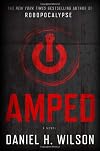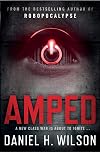
Amped
by Daniel H. Wilson
On This Page
Description
Technology makes them superhuman. But mere mortals want them kept in their place. The New York Times bestselling author of Robopocalypse creates a stunning, near-future world where technology and humanity clash in surprising ways. The result? The perfect summer blockbuster.As he did in Robopocalypse, Daniel Wilson masterfully envisions a frightening near-future world. In Amped, people are implanted with a device that makes them capable of superhuman feats. The powerful technology has show more profound consequences for society, and soon a set of laws is passed that restricts the abilities—and rights—of "amplified" humans. On the day that the Supreme Court passes the first of these laws, twenty-nine-year-old Owen Gray joins the ranks of a new persecuted underclass known as "amps." Owen is forced to go on the run, desperate to reach an outpost in Oklahoma where, it is rumored, a group of the most enhanced amps may be about to change the world—or destroy it.
Once again, Daniel H. Wilson's background as a scientist serves him well in this technologically savvy thriller that delivers first-rate entertainment, as Wilson takes the "what if" question in entirely unexpected directions. Fans of Robopocalypse are sure to be delighted, and legions of new fans will want to get "amped" this summer. show less
Tags
Recommendations










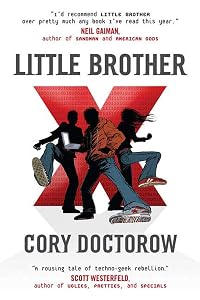

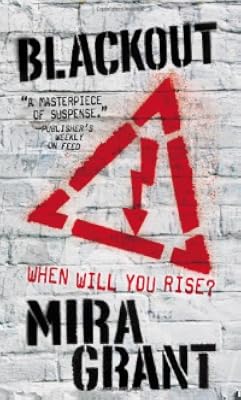
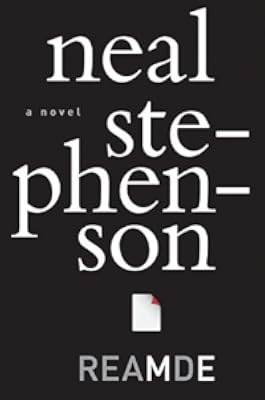


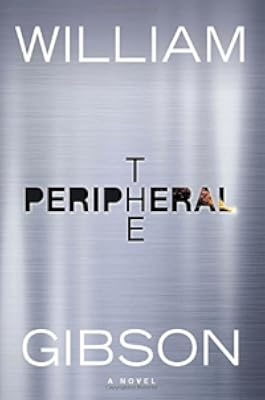
















Member Recommendations


Member Reviews
In a not-so-distant future, computer technology has advanced to the point where people can receive small brain implants to "cure" various medical conditions. A small computer chip attached to the surface of the brain can heal severe brain damage, epilepsy, and other neurological conditions. The "problem" is the implant also severely increases intelligence. Non-implanted (ie, stupid) Americans became enraged, saying their non-implanted (ie, stupid) children are at a disadvantage in the classroom, which sets off a wave of hateful, discriminatory violence.
This could have been a great book. It certainly has a great premise, and it started off brilliantly, but it unfortunately fell apart almost immediately after the introduction. I had two show more major issues with it, the plot jumped forward jarringly between every chapter, and the character interaction was atrociously bad. The story reminded me of the stories of video games where stories aren't a big focus, something like Call of Duty. Each chapter is a huge leap forward in time, each giving only a tiny snapshot of what is happening, and the "story" that is supposed to string all these is weak and flimsy.
The only time I enjoyed the book was when no one was speaking. The main character's internal monologue worked for me, and this is what made the beginning of the book so enjoyable, but as soon as he opens his mouth to speak to someone everything began to feel one-dimensional. I didn't like any of the characters with the exception of Nick, who is the only bright spot in the whole novel. I didn't like the love interest, who barely has a presence at all, and all the secondary characters might as well have not existed at all.
The book would get 5 stars for concept, but the execution is an absolute fail for me. Thankfully, I only paid a $1 for this at a dollar store. show less
This could have been a great book. It certainly has a great premise, and it started off brilliantly, but it unfortunately fell apart almost immediately after the introduction. I had two show more major issues with it, the plot jumped forward jarringly between every chapter, and the character interaction was atrociously bad. The story reminded me of the stories of video games where stories aren't a big focus, something like Call of Duty. Each chapter is a huge leap forward in time, each giving only a tiny snapshot of what is happening, and the "story" that is supposed to string all these is weak and flimsy.
The only time I enjoyed the book was when no one was speaking. The main character's internal monologue worked for me, and this is what made the beginning of the book so enjoyable, but as soon as he opens his mouth to speak to someone everything began to feel one-dimensional. I didn't like any of the characters with the exception of Nick, who is the only bright spot in the whole novel. I didn't like the love interest, who barely has a presence at all, and all the secondary characters might as well have not existed at all.
The book would get 5 stars for concept, but the execution is an absolute fail for me. Thankfully, I only paid a $1 for this at a dollar store. show less
Daniel H. Wilson specializes in stories in which the use of future technology upends society in some fashion. His intent is not only to tell an exciting story but to also spark discussions among fans about the potential dangers of technology. In Amped though, he fails to achieve his objective to generate a discussion about the ethics behind combining technology with medical care. All of the discussion points are there. However, he does not provide the one motivating factor to ignite such discussions; he fails to provide a character about whom readers truly care.
It is not that Owen is a bad character. He is just so thoroughly vanilla and so flat that he is easily forgettable and highly ignorable. His development from a teacher to a show more bad-ass amp that can save the world is too fast and mostly unexplained. His love story occurs even more quickly and with even less explanation. The explanations that readers receive about his device and the powers from that device are contradictory and unsatisfactory. There are too many unexplained or inadequately explained situations, characters, or powers, and all a reader can do is ignore any confusion and go along for the ride. A reader cannot become any further involved in the story because the details and the answers to do so are just not there.
As narrator, Robbie Daymond tries his best to improve the mediocre narrative with which he has to work. He applies an earnestness to the story that seems to be missing from the words themselves. Unfortunately, his voice is too young for Owen. He sounds so much younger than Owen actually is, and any scene which references Owen’s past experiences or actual age jar a reader out of the narrative. Given the right material, Mr. Daymond would make an excellent narrator. Unfortunately, Amped is not the right book to showcase his skills.
Amped is ultimately forgettable. The story itself might be fast-paced and intense while in the moment but loses its efficacy as time passes. Owen is sufficiently one-dimensional to keep readers at a distance, and the ethical dilemmas posed by the technology and legal quandaries never really become the heart of the story as intended. The story is too remote for readers to become vested in the outcome or to give more than a passing thought to the various lessons to learn from Owen’s situation. As an opportunity for opening up a discussion about technology and future potential uses, Amped is a failure. However, as a futuristic action novel that blurs into every other futuristic action novel, it satisfies that primal need for blood and fighting and good over evil. Just don’t expect to learn anything from it. show less
It is not that Owen is a bad character. He is just so thoroughly vanilla and so flat that he is easily forgettable and highly ignorable. His development from a teacher to a show more bad-ass amp that can save the world is too fast and mostly unexplained. His love story occurs even more quickly and with even less explanation. The explanations that readers receive about his device and the powers from that device are contradictory and unsatisfactory. There are too many unexplained or inadequately explained situations, characters, or powers, and all a reader can do is ignore any confusion and go along for the ride. A reader cannot become any further involved in the story because the details and the answers to do so are just not there.
As narrator, Robbie Daymond tries his best to improve the mediocre narrative with which he has to work. He applies an earnestness to the story that seems to be missing from the words themselves. Unfortunately, his voice is too young for Owen. He sounds so much younger than Owen actually is, and any scene which references Owen’s past experiences or actual age jar a reader out of the narrative. Given the right material, Mr. Daymond would make an excellent narrator. Unfortunately, Amped is not the right book to showcase his skills.
Amped is ultimately forgettable. The story itself might be fast-paced and intense while in the moment but loses its efficacy as time passes. Owen is sufficiently one-dimensional to keep readers at a distance, and the ethical dilemmas posed by the technology and legal quandaries never really become the heart of the story as intended. The story is too remote for readers to become vested in the outcome or to give more than a passing thought to the various lessons to learn from Owen’s situation. As an opportunity for opening up a discussion about technology and future potential uses, Amped is a failure. However, as a futuristic action novel that blurs into every other futuristic action novel, it satisfies that primal need for blood and fighting and good over evil. Just don’t expect to learn anything from it. show less
Amped by Daniel H. Wilson explores the potential backlash and misuses of biotech to improve the human experience. Owen Gray is a teacher, and an amp; he has a device in his head to control his epilepsy. That's what he's been told but he's forced to re-examine the truth after one of his amped students commits suicide at the school.
Her death comes on the eve of sweeping regulations that criminalize the use and possession of amped technology. Citizens, including soldiers who were amped in the service of their country, have their rights removed and they are rounded up and shipped to concentration camps. It sounds preposterous but we've done things like this before — to the Japanese in WWII and to numerous native American tribes/nations. show more Let's also not forget our history of slavery or the current political climate in which there is a war on women and as well as on gay marriage. Amped is social commentary in the proud tradition of H.G. Wells and George Orwell.
As it's more parable than post-apocalyptic horror, it comes in a hundred pages shorter than Robopocalypse and is in its structure, a more straightforward story. It does, though, share some of the same world building (automated cars, for instance). I don't know if the two are in the same universe or not — but they do share some technology.
I found Amped as compelling, entertaining and thought-provoking as Robopocalyse. I also found the book a quicker read. Wilson clearly understands the conventions of the different genres he writes for and can craft well told stories to work within those tropes. show less
Her death comes on the eve of sweeping regulations that criminalize the use and possession of amped technology. Citizens, including soldiers who were amped in the service of their country, have their rights removed and they are rounded up and shipped to concentration camps. It sounds preposterous but we've done things like this before — to the Japanese in WWII and to numerous native American tribes/nations. show more Let's also not forget our history of slavery or the current political climate in which there is a war on women and as well as on gay marriage. Amped is social commentary in the proud tradition of H.G. Wells and George Orwell.
As it's more parable than post-apocalyptic horror, it comes in a hundred pages shorter than Robopocalypse and is in its structure, a more straightforward story. It does, though, share some of the same world building (automated cars, for instance). I don't know if the two are in the same universe or not — but they do share some technology.
I found Amped as compelling, entertaining and thought-provoking as Robopocalyse. I also found the book a quicker read. Wilson clearly understands the conventions of the different genres he writes for and can craft well told stories to work within those tropes. show less
With three chapters left to go, I finally realized what had been bugging me about this book. I kept being reminded of Vonnegut’s “Harrison Bergeron” and “Flowers for Algernon.” And not in a good way.
Let’s get the technical stuff out of the way first. I’ll admit, it is written compellingly, as I wanted to know what was going to happen next for the characters. It does keep you on your toes, as Owen moves cross-country to stop the escalating violence against amps. And I like Owen generally, but he’s really not a compelling character. All we know is that he’s a former school teacher and has one of the limited super-special military amps in his head, and that’s it. He’s pretty much just shoved around the plot for the show more purpose of being a plot point. The romance is bland—again, I like Lucy in theory, but she’s got the same likeability level as Owen. Also, their romance feels more like “Oh, two conveniently attractive people working toward the same goals! Now kiss!” (There’s a bit where Owen does questions Lucy’s motives, but it gets dropped just as fast.) The villains—ugh. Lyle is a one-note megalomaniac psychopath with no real motives aside from social Darwinism. Senator Vaughn is a caricature of every super-conservative politician with little purpose in his arguments against the implants. The book attempts to give Vaughn a sympathetic backstory, but I cannot feel sorry for him at all (especially with the Rosemary Kennedy-esque implications.) The only two characters I genuinely liked were Nick and Samantha. I did really like Nick, even if he seemed to be the Morality Pet for Owen, but he’s the only one who has real characterization. Nick’s a little wiseass kid, but he’s got personality and I actually felt sorry for him.
And while I liked Samantha, for the sole chapter she appeared in, she unfortunately illustrates the massive problem I have with this book. Thematically, technology is awesome and wonderful and everyone should have a chance for it, but only the really good people, because with great power and all. I can get behind this message. If it were better presented.
This is a book that wants to be thematically gray, but is at best a washed-out black and/or white. The only argument presented against the amp technology is that it makes the “Reggies” afraid of people with the implants. The only people seen using the amp tech for evil purposes are Lyle and his lackeys, and they’re not presented as anything more than psychopaths. There are some positive moments—like the mention that the normal people with implanted relatives are extremely supportive—but the general argument is that we should be allowed to get this tech, even to fix minor imperfections.
Which leads me to the fact that downright disturbed me: amp technology is primarily used to fix mental problems, up to and including developmental disorders like ADHD, mental retardation, and schizophrenia. It’s mentioned that the program installing the tech is voluntary and someone can opt out of it. BUT when the majority of people mentioned with amp technology are young children, who are not generally capable of making informed medical decisions, I have a big issue with this being presented as a good thing. The last page of this is a scene of a classroom full of amped kids ready to learn, followed by an anvil dropping about technology. It feels like Owen is ready to start his own revolution of amped kids. (Also, it pissed me off when it implies that kids with ADHD can’t learn or function normally. My sister was diagnosed with ADHD, she’s a senior in college and just made dean’s list.)
And this is what I mean that the arguments in this book are black and white: there is not one character who regrets getting amped. Again, the closest we get is Samantha, who was bullied because of her developmental issues and then for being amped. (It also doesn’t help that Owen uses her as his own personal martyr for the rest of the book.) The implication is, again, that normal people can’t appreciate the wonders of technology and therefore lash out at those who do. We don’t get to see the other side of the argument. Not even when Owen believes that his implant is just for medical reasons. It feels like Wilson had a great starting point to a debate, but doesn’t give the other side a fair chance to give its arguments.
I picked this up based on the rave reviews for Robopocalypse (which I still haven’t read, and I’m now really debating on if I still want to ), and as I mentioned above, it’s a decent read. Not a bad way to kill an afternoon or two. But because so much of the book is focused on this argument of technology, and the implications that crop up throughout, I have a hard time actually recommending it. It’s a good way to get a conversation going, I’ll give it that; but as for presenting a viable argument, it ultimately fails to sway me. show less
Let’s get the technical stuff out of the way first. I’ll admit, it is written compellingly, as I wanted to know what was going to happen next for the characters. It does keep you on your toes, as Owen moves cross-country to stop the escalating violence against amps. And I like Owen generally, but he’s really not a compelling character. All we know is that he’s a former school teacher and has one of the limited super-special military amps in his head, and that’s it. He’s pretty much just shoved around the plot for the show more purpose of being a plot point. The romance is bland—again, I like Lucy in theory, but she’s got the same likeability level as Owen. Also, their romance feels more like “Oh, two conveniently attractive people working toward the same goals! Now kiss!” (There’s a bit where Owen does questions Lucy’s motives, but it gets dropped just as fast.) The villains—ugh. Lyle is a one-note megalomaniac psychopath with no real motives aside from social Darwinism. Senator Vaughn is a caricature of every super-conservative politician with little purpose in his arguments against the implants. The book attempts to give Vaughn a sympathetic backstory, but I cannot feel sorry for him at all (especially with the Rosemary Kennedy-esque implications.) The only two characters I genuinely liked were Nick and Samantha. I did really like Nick, even if he seemed to be the Morality Pet for Owen, but he’s the only one who has real characterization. Nick’s a little wiseass kid, but he’s got personality and I actually felt sorry for him.
And while I liked Samantha, for the sole chapter she appeared in, she unfortunately illustrates the massive problem I have with this book. Thematically, technology is awesome and wonderful and everyone should have a chance for it, but only the really good people, because with great power and all. I can get behind this message. If it were better presented.
This is a book that wants to be thematically gray, but is at best a washed-out black and/or white. The only argument presented against the amp technology is that it makes the “Reggies” afraid of people with the implants. The only people seen using the amp tech for evil purposes are Lyle and his lackeys, and they’re not presented as anything more than psychopaths. There are some positive moments—like the mention that the normal people with implanted relatives are extremely supportive—but the general argument is that we should be allowed to get this tech, even to fix minor imperfections.
Which leads me to the fact that downright disturbed me: amp technology is primarily used to fix mental problems, up to and including developmental disorders like ADHD, mental retardation, and schizophrenia. It’s mentioned that the program installing the tech is voluntary and someone can opt out of it. BUT when the majority of people mentioned with amp technology are young children, who are not generally capable of making informed medical decisions, I have a big issue with this being presented as a good thing. The last page of this is a scene of a classroom full of amped kids ready to learn, followed by an anvil dropping about technology. It feels like Owen is ready to start his own revolution of amped kids. (Also, it pissed me off when it implies that kids with ADHD can’t learn or function normally. My sister was diagnosed with ADHD, she’s a senior in college and just made dean’s list.)
And this is what I mean that the arguments in this book are black and white: there is not one character who regrets getting amped. Again, the closest we get is Samantha, who was bullied because of her developmental issues and then for being amped. (It also doesn’t help that Owen uses her as his own personal martyr for the rest of the book.) The implication is, again, that normal people can’t appreciate the wonders of technology and therefore lash out at those who do. We don’t get to see the other side of the argument. Not even when Owen believes that his implant is just for medical reasons. It feels like Wilson had a great starting point to a debate, but doesn’t give the other side a fair chance to give its arguments.
I picked this up based on the rave reviews for Robopocalypse (which I still haven’t read, and I’m now really debating on if I still want to ), and as I mentioned above, it’s a decent read. Not a bad way to kill an afternoon or two. But because so much of the book is focused on this argument of technology, and the implications that crop up throughout, I have a hard time actually recommending it. It’s a good way to get a conversation going, I’ll give it that; but as for presenting a viable argument, it ultimately fails to sway me. show less
Neural implants can end seizures, mitigate birth defects, or overcome injuries, but they can also create super-human soldiers. The protagonist, a high school teacher, suffers brain damage from an accident as a child, and his father, a surgeon, implants an illegal, military-grade neural chip in his head to allow him to lead a normal life. But people with such chips are not seen as normal by some. They are enhanced and thus no longer purely human. Set in the near future, this is a story of the promise of new technology, how it can be used and misused, and the Luddites who fear it. Neither side in the conflict is good or evil, right or wrong...until people do what they often do and allow their fears and biases to overrule reason and take show more matters to extremes. This sounds like the premise for a superhero comic, and in some ways this short novel is one, but it's not outrageous or especially unbelievable. I can see something like this actually happening. This book is very well done for what it is, and I found it an enjoyable short read on a rainy afternoon. show less
This book asks questions about whether some people might no longer be human. Not because of race or belief but because they are part-machine.
The book is set in a world where mind/computer interfaces are common. Initially these were used to solve medical issues such as epilepsy and to control prosthetic parts for the disabled. However some people, including the United States Government, now use them for elective improvements: making people faster and smarter than humanly possible. As the book opens the United States Supreme Court has just ruled that these "Amps" are not a protected class opening the door to legal discrimination. Owen Gray is a school teacher who was amped as a teenager to control his epilepsy. Inexplicably included in a show more list of rogue military Amps he is thrown into the centre of the struggle between for Amp rights. Seen as a potential saviour by some and a threat by others he must not only learn what he can do but also what he should.
Gray is very well crafted. Unlike many protagonists who discover hidden potential he neither transitions comfortably into a hero nor undergoes a series of humorous interludes. His acceptance that he must cease to be a school teacher with a medical implant and become a revolutionary is well paced and has realistic moments of self-hate. Many of the other characters, both normal and amped, are similarly well-rounded. Several of those who have replaced large portions of their bodies with elective prosthetics are especially well written combining an obvious human motivation for the change with the slightly alien character of inhuman capabilities.
However - despite a plot which gave many sides of the debate a fair chance - I found the main antagonist to ultimately be a touch like a Bond villain: megalomaniacal not dedicated.
With a plot centred around the superhuman few being constrained by the weaker many there are some characters who take the same approach as Nietzsche and refuse to accept the unamped as possible social equals. However, Wilson has created equally believable characters with vastly different philosophies. With a background in robotics it is unsurprising that theories of Amps as humans with tools is portrayed with more sympathetically than other views; however this is story that has a sound background and not a veiled treatise.
The chapters are interspersed with memos, press releases, and historical documents such as articles of the United States Constitution. These add depth to the story by freeing the reader from Owen's direct experience while still keeping the benefit of a single POV. However some of them do not quite fit the point in the narrative where they occur which distracted me slightly from the flow of events.
I enjoyed this book both as a story and as an exploration of where the boundary of human might lie. show less
The book is set in a world where mind/computer interfaces are common. Initially these were used to solve medical issues such as epilepsy and to control prosthetic parts for the disabled. However some people, including the United States Government, now use them for elective improvements: making people faster and smarter than humanly possible. As the book opens the United States Supreme Court has just ruled that these "Amps" are not a protected class opening the door to legal discrimination. Owen Gray is a school teacher who was amped as a teenager to control his epilepsy. Inexplicably included in a show more list of rogue military Amps he is thrown into the centre of the struggle between for Amp rights. Seen as a potential saviour by some and a threat by others he must not only learn what he can do but also what he should.
Gray is very well crafted. Unlike many protagonists who discover hidden potential he neither transitions comfortably into a hero nor undergoes a series of humorous interludes. His acceptance that he must cease to be a school teacher with a medical implant and become a revolutionary is well paced and has realistic moments of self-hate. Many of the other characters, both normal and amped, are similarly well-rounded. Several of those who have replaced large portions of their bodies with elective prosthetics are especially well written combining an obvious human motivation for the change with the slightly alien character of inhuman capabilities.
However - despite a plot which gave many sides of the debate a fair chance - I found the main antagonist to ultimately be a touch like a Bond villain: megalomaniacal not dedicated.
With a plot centred around the superhuman few being constrained by the weaker many there are some characters who take the same approach as Nietzsche and refuse to accept the unamped as possible social equals. However, Wilson has created equally believable characters with vastly different philosophies. With a background in robotics it is unsurprising that theories of Amps as humans with tools is portrayed with more sympathetically than other views; however this is story that has a sound background and not a veiled treatise.
The chapters are interspersed with memos, press releases, and historical documents such as articles of the United States Constitution. These add depth to the story by freeing the reader from Owen's direct experience while still keeping the benefit of a single POV. However some of them do not quite fit the point in the narrative where they occur which distracted me slightly from the flow of events.
I enjoyed this book both as a story and as an exploration of where the boundary of human might lie. show less
I got hooked on Wilson with Robopocalypse, and was excited to see Robogenesis on the shelves. At the time it was only in hardback, and I decided to wait for the paperback so my books would match. But in the meantime, I tided myself over with Amped.
Set in a near-future when brain implants are being used to treat a variety of medical needs, the presence of some elective users, especially a handful of military enhancements, causes serious public concern that is incubated into paranoia by a senator who is very shades of Senator Kelly from X-Men. There is a moment where public fear is whipped into such a frenzy that "amped" individuals are stripped of legal rights -- and the fictionalized court and legal documents interspersed in the text show more were painful to read.
The descriptions of the amps, how they work and how they were rolled out felt plausible and were very interesting. I am tempted to call this hard science fiction, but am not sure if it really qualifies. The characters could have had a little more depth, been a little more unexpected, but that's not ultimately what you pick up a story like this for.
You come t a story like this to see your country, your world, face a dystopic future and then shake it off. To see people confront their fears, and then even if they get lost in them for a while, to ultimately reject being ruled by them. To side with our better nature and affirm the humanity of all people. Even those who scare us. That Wilson delivers.
Amped lacks the Native American influences of Robopocalypse but Amped takes us to Oklahoma trailer parks and construction sites. It's refreshing to have a battle for America's soul that isn't all played out on one of the coasts. show less
Set in a near-future when brain implants are being used to treat a variety of medical needs, the presence of some elective users, especially a handful of military enhancements, causes serious public concern that is incubated into paranoia by a senator who is very shades of Senator Kelly from X-Men. There is a moment where public fear is whipped into such a frenzy that "amped" individuals are stripped of legal rights -- and the fictionalized court and legal documents interspersed in the text show more were painful to read.
The descriptions of the amps, how they work and how they were rolled out felt plausible and were very interesting. I am tempted to call this hard science fiction, but am not sure if it really qualifies. The characters could have had a little more depth, been a little more unexpected, but that's not ultimately what you pick up a story like this for.
You come t a story like this to see your country, your world, face a dystopic future and then shake it off. To see people confront their fears, and then even if they get lost in them for a while, to ultimately reject being ruled by them. To side with our better nature and affirm the humanity of all people. Even those who scare us. That Wilson delivers.
Amped lacks the Native American influences of Robopocalypse but Amped takes us to Oklahoma trailer parks and construction sites. It's refreshing to have a battle for America's soul that isn't all played out on one of the coasts. show less
Members
- Recently Added By
Lists

Books Read in 2016
4,666 works; 197 members

The Joe Rogan Experience Library
254 works; 3 members
Author Information

44+ Works 7,534 Members
Awards and Honors
Awards
Common Knowledge
- Canonical title
- Amped
- Epigraph
- We can change ourselves.
Think of the possibilities.
- Carl Sagan - Dedication
- For Genieve Wilson
- First words
- I'm standing on the steep slate roof of Allderdice High School, gripping a rain-spattered wrought iron decoration in one hand and holding up my other hand, palm out.
- Last words
- (Click to show. Warning: May contain spoilers.)We're all gonna be fine. Different, but fine.
Because most people are good. Right? - Blurbers
- Maslin, Janet; King, Stephen; Crais, Robert; Cussler, Clive; Yu, Charles; Doctorow, Cory (show all 7); Child, Lincoln
Classifications
Statistics
- Members
- 643
- Popularity
- 45,111
- Reviews
- 54
- Rating
- (3.32)
- Languages
- English, German, Korean
- Media
- Paper, Audiobook, Ebook
- ISBNs
- 13
- ASINs
- 7