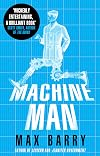
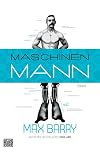
Machine Man
by Max Barry
On This Page
Description
Fiction. Literature. Science Fiction. Thriller. HTML:Scientist Charles Neumann loses a leg in an industrial accident. It's not a tragedy. It's an opportunity. Charlie always thought his body could be better. He begins to explore a few ideas. To build parts. Better parts.Prosthetist Lola Shanks loves a good artificial limb. In Charlie, she sees a man on his way to becoming artificial everything. But others see a madman. Or a product. Or a weapon.
A story for the age of pervasive show more technology, Machine Man is a gruesomely funny unraveling of one man's quest for ultimate self-improvement. show less
Tags
Recommendations

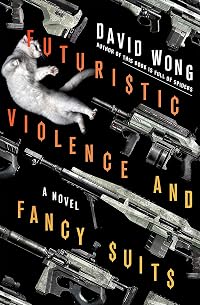
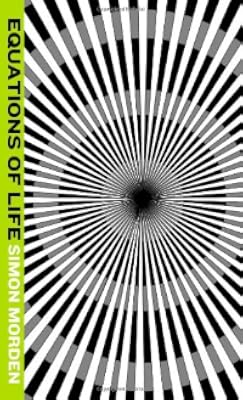
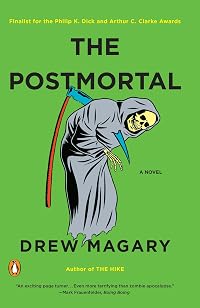
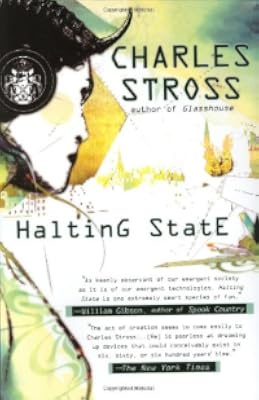


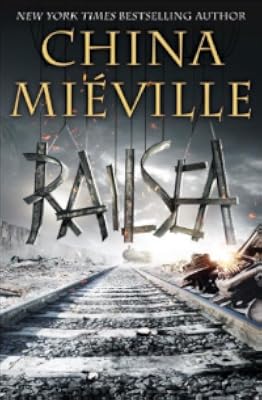
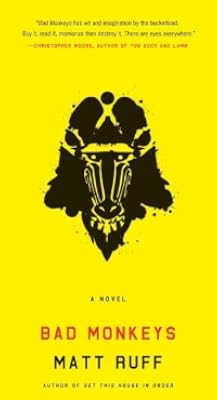
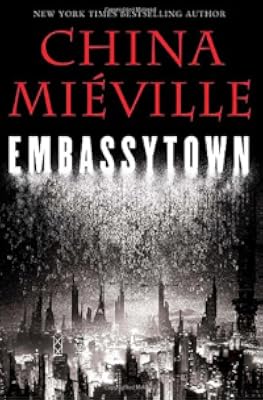
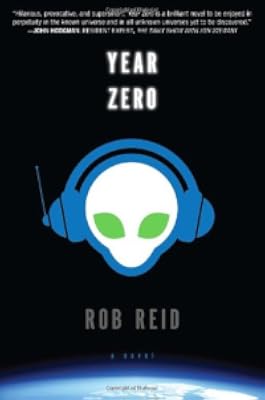
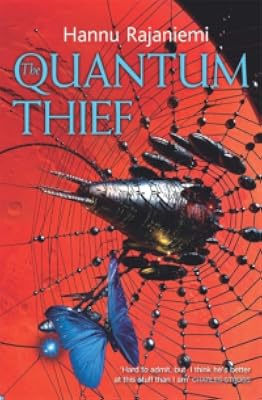
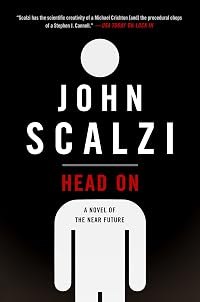
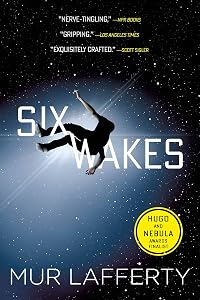
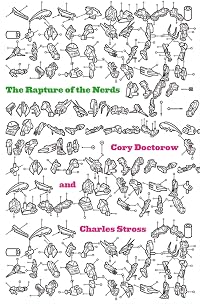
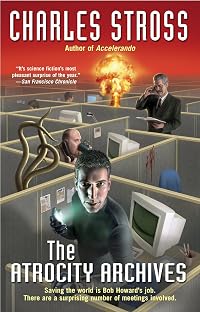
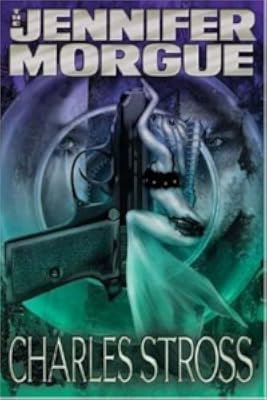
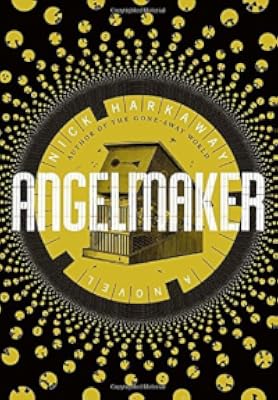

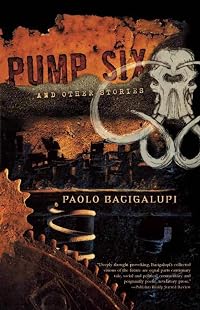
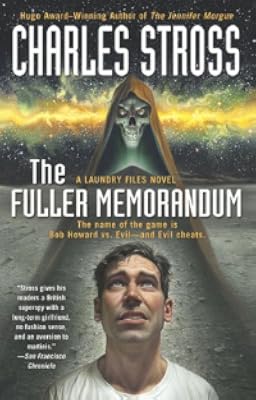
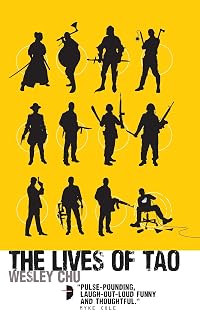
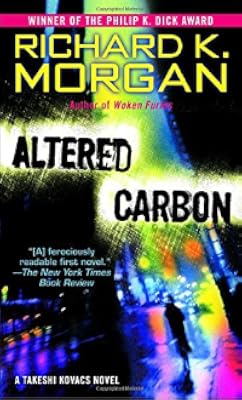
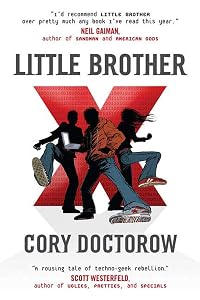

Member Recommendations
Member Reviews
Fun read. Barry skewers corporate and government power with a fine eye.
I loved the characters. The main character is a mechanical engineer, and AFAIK he's just fine. I mean, it's satire. The characters are meant to be stereotypes and exaggerations of stereotypes.
The action and plotting got a bit out of hand at the end, but I expect that from Barry. His older output usually delves into horrific, but humorous, slapstick. It's great if that's your kind of thing. It's clearly mine.
I loved the characters. The main character is a mechanical engineer, and AFAIK he's just fine. I mean, it's satire. The characters are meant to be stereotypes and exaggerations of stereotypes.
The action and plotting got a bit out of hand at the end, but I expect that from Barry. His older output usually delves into horrific, but humorous, slapstick. It's great if that's your kind of thing. It's clearly mine.
Funny & perverse
I have been a fan of Australian humorist Max Barry since his very first novel. For whatever reason, we’re on the same wave-length. But I have no illusions that this novel will find universal appeal. For one thing, the humor is dark, satirical, and squirm-inducing, and it made me uncomfortable even as I laughed.
The novel opens in the midst of a crisis; Charlie Neumann can’t find his phone. “I didn’t know how warm it would be today. It might rain, it might be humid, I had no idea… I would have to choose clothes without information on the environmental conditions. It was insane.” This loss has really thrown him off his game. Somehow the research scientist pulls it together and gets himself to the lab at Better show more Technologies. Unfortunately, spotting the errant phone at exactly the wrong moment spells disaster. The distraction is enough for Charlie to get his leg caught in an industrial clamp. The leg is crushed, and he wakes up an amputee from the thigh down.
Even the most traumatic events can have a silver lining, for it is at the hospital that he meets Lola Shanks, prosthetist and future love interest. Lola gets Charlie outfitted with a top-of-the-line prosthetic leg, and helps him learn to walk again. Still, the engineer in Charlie can’t believe that this is as good as it gets. Once back at the lab, he starts tinkering. He can build a better leg—and then one better still. Soon, the new leg is so superior in all ways that Charlie realizes that there’s no reason to keep an inferior “meat” leg. A second “accident” occurs.
While Charlie is back in the hospital being ordered psyche evaluations, his employer is beginning to realize that Dr. Neumann is on to something, something potentially profitable. From there, the novel moves in a generally predictable direction, though with plenty of surprises along the way. Barry is not going for subtlety in his story-telling. The reengineered scientist is “Neumann,” the prosthetist is “Shanks,” and a corporate fixer who plays a prominent role is named “Cautery.” No, it’s not about subtlety. Barry takes his satire to extremes, and the novel that I found myself thinking of as I read it—the only book with a tone that reminded me of this one—was Geek Love by Katherine Dunn. I don’t believe that Machine Man is that classic’s equal, but like the earlier book, there is true perversion in the very premise of the novel.
In addition to the humor, one of the reasons I enjoy Max Barry’s work so much is the exploration of ideas. Lola asks, “Where does this end for you, Charlie? New legs. New arms. Just out of curiosity. When do you say, okay, now I’m happy?” And Charlie finds it an odd question because, “you didn’t stop improving things. Reaching a point where everything was as good as good as it could be, that would be terrible. You might as well die.”
Or later, one of Charlie’s enhanced lab assistants asks, “Do you remember when I asked you about ethics? You wanted to suppress your guilt and I said maybe we shouldn’t and you said there was no such thing as shouldn’t. Actually, you didn’t even understand the question. Well, I get that now. I totally get it. Because sometimes you feel a kind of biological revulsion against an idea, but it’s only because you’re not used to it, right? It’s just a matter of baselines… I mean, it’s not like there’s any fundamental integrity of emotions, am I right? Everything’s chemicals when you get down to it.”
Do these questions give you a chill, or is it just me? Because, the reality is that in a delightfully amusing way, Max Barry is posing questions that some scientist out there has asked—or soon will be. show less
I have been a fan of Australian humorist Max Barry since his very first novel. For whatever reason, we’re on the same wave-length. But I have no illusions that this novel will find universal appeal. For one thing, the humor is dark, satirical, and squirm-inducing, and it made me uncomfortable even as I laughed.
The novel opens in the midst of a crisis; Charlie Neumann can’t find his phone. “I didn’t know how warm it would be today. It might rain, it might be humid, I had no idea… I would have to choose clothes without information on the environmental conditions. It was insane.” This loss has really thrown him off his game. Somehow the research scientist pulls it together and gets himself to the lab at Better show more Technologies. Unfortunately, spotting the errant phone at exactly the wrong moment spells disaster. The distraction is enough for Charlie to get his leg caught in an industrial clamp. The leg is crushed, and he wakes up an amputee from the thigh down.
Even the most traumatic events can have a silver lining, for it is at the hospital that he meets Lola Shanks, prosthetist and future love interest. Lola gets Charlie outfitted with a top-of-the-line prosthetic leg, and helps him learn to walk again. Still, the engineer in Charlie can’t believe that this is as good as it gets. Once back at the lab, he starts tinkering. He can build a better leg—and then one better still. Soon, the new leg is so superior in all ways that Charlie realizes that there’s no reason to keep an inferior “meat” leg. A second “accident” occurs.
While Charlie is back in the hospital being ordered psyche evaluations, his employer is beginning to realize that Dr. Neumann is on to something, something potentially profitable. From there, the novel moves in a generally predictable direction, though with plenty of surprises along the way. Barry is not going for subtlety in his story-telling. The reengineered scientist is “Neumann,” the prosthetist is “Shanks,” and a corporate fixer who plays a prominent role is named “Cautery.” No, it’s not about subtlety. Barry takes his satire to extremes, and the novel that I found myself thinking of as I read it—the only book with a tone that reminded me of this one—was Geek Love by Katherine Dunn. I don’t believe that Machine Man is that classic’s equal, but like the earlier book, there is true perversion in the very premise of the novel.
In addition to the humor, one of the reasons I enjoy Max Barry’s work so much is the exploration of ideas. Lola asks, “Where does this end for you, Charlie? New legs. New arms. Just out of curiosity. When do you say, okay, now I’m happy?” And Charlie finds it an odd question because, “you didn’t stop improving things. Reaching a point where everything was as good as good as it could be, that would be terrible. You might as well die.”
Or later, one of Charlie’s enhanced lab assistants asks, “Do you remember when I asked you about ethics? You wanted to suppress your guilt and I said maybe we shouldn’t and you said there was no such thing as shouldn’t. Actually, you didn’t even understand the question. Well, I get that now. I totally get it. Because sometimes you feel a kind of biological revulsion against an idea, but it’s only because you’re not used to it, right? It’s just a matter of baselines… I mean, it’s not like there’s any fundamental integrity of emotions, am I right? Everything’s chemicals when you get down to it.”
Do these questions give you a chill, or is it just me? Because, the reality is that in a delightfully amusing way, Max Barry is posing questions that some scientist out there has asked—or soon will be. show less
'Machine Man' is clearly a Max Barry work. It's quirky, it's introspective, and it goes entirely off the rails every now and again.
The story centers around a man who decides that his body is okay, but he can do a lot better. Part of this work feels like a parable about the evils of cosmetic surgery and artificial enhancement pushed to the limits. The other part is a love story from an odd bent that you can't help but love.
This is not, unfortunately, Barry's strongest work (which is perhaps why it only made it to hardcover as a book club edition.) It was a serial work that, perhaps, was never meant to be enjoyed as a whole on an idle Sunday.
All in all, it made me consider a few things about life around me, and those who live it. Still - show more for my money - Jennifer Government remains the pinnacle of his literary career. show less
The story centers around a man who decides that his body is okay, but he can do a lot better. Part of this work feels like a parable about the evils of cosmetic surgery and artificial enhancement pushed to the limits. The other part is a love story from an odd bent that you can't help but love.
This is not, unfortunately, Barry's strongest work (which is perhaps why it only made it to hardcover as a book club edition.) It was a serial work that, perhaps, was never meant to be enjoyed as a whole on an idle Sunday.
All in all, it made me consider a few things about life around me, and those who live it. Still - show more for my money - Jennifer Government remains the pinnacle of his literary career. show less
I have become a little Max Barry fanboy. Everything he has written has so far tickled all my iterative parts, whether they were augmented or otherwise, and I found myself chuckling with all the delights a well-crafted tale can often bring.
I mean, the IDEA is an old one, but damn if Max Barry didn't up it a notch or ten by being written really well, have very excellent science sense, and even make it more interesting by casting the main character in a light Autistic-spectrum.
What can I say!? I loved the steady build-up from an awkward engineer with no social skills to an amputee on a mission to improve his equipment. Transhumanism always did start out with humble beginnings.
Of course, what I love most about this book is the writing. show more It's always interesting, clever, and steady and fun. So many prior writers who do cyborgs never really start out at the truly humble beginnings and most either stick with the military angle or with the post-revolution. I think of the Deus Ex games. Or even RoboCop. :) But this takes it in a very fun direction because we're reading all about the possibilities of enhancement and we're focused entirely on the balance between wondering how we're going to perform some horrific body-chopping on ourselves and what kind of toys we're going to fit ourselves with.
You know. Like a video game. And it's FUN. :) show less
I mean, the IDEA is an old one, but damn if Max Barry didn't up it a notch or ten by being written really well, have very excellent science sense, and even make it more interesting by casting the main character in a light Autistic-spectrum.
What can I say!? I loved the steady build-up from an awkward engineer with no social skills to an amputee on a mission to improve his equipment. Transhumanism always did start out with humble beginnings.
Of course, what I love most about this book is the writing. show more It's always interesting, clever, and steady and fun. So many prior writers who do cyborgs never really start out at the truly humble beginnings and most either stick with the military angle or with the post-revolution. I think of the Deus Ex games. Or even RoboCop. :) But this takes it in a very fun direction because we're reading all about the possibilities of enhancement and we're focused entirely on the balance between wondering how we're going to perform some horrific body-chopping on ourselves and what kind of toys we're going to fit ourselves with.
You know. Like a video game. And it's FUN. :) show less
My kind of book! I love adventure fiction with a scientific base. Not strictly science fiction. Although it is about science. And it is fiction.
Max Barry is hilarious. And an Aussie! I didn't notice that until I'd finished reading. Made me feel all proud. I knew his suburb!
OK, the book. It is macabre to be sure. Bordering on gruesome at times, but just when you want to turn away, Barry lightens the load with sure wit that had me laughing out loud. And at the moment you think he's going to drench the page in a bit more blood, he just skips ahead and leaves it, thankfully, to your understanding. Barry does a wonderful job of letting us get into the head of his central character. Nerdy, introverted and short on social giftedness. From show more there he extrapolates a fantastic (lit.) world of machine minds that reminds one of "I'm sorry, Dave. I can't let you do that." It is terrifyingly believable. Well, almost.
He has a good sense of moving the plot forward and while there are resolutions by the end, I didn't see them coming, and when they did I wasn't left feeling let down.
One minor editing point. It's chronology 'protection' conjecture, not 'projection'.
Loved it. show less
Max Barry is hilarious. And an Aussie! I didn't notice that until I'd finished reading. Made me feel all proud. I knew his suburb!
OK, the book. It is macabre to be sure. Bordering on gruesome at times, but just when you want to turn away, Barry lightens the load with sure wit that had me laughing out loud. And at the moment you think he's going to drench the page in a bit more blood, he just skips ahead and leaves it, thankfully, to your understanding. Barry does a wonderful job of letting us get into the head of his central character. Nerdy, introverted and short on social giftedness. From show more there he extrapolates a fantastic (lit.) world of machine minds that reminds one of "I'm sorry, Dave. I can't let you do that." It is terrifyingly believable. Well, almost.
He has a good sense of moving the plot forward and while there are resolutions by the end, I didn't see them coming, and when they did I wasn't left feeling let down.
One minor editing point. It's chronology 'protection' conjecture, not 'projection'.
Loved it. show less
Charles Neumann works as a mechanical engineer for Better Future. He has no friends or social skills to speak of, but he loves technology and machines. He feels as if a piece of him is missing when he misplaces his cell phone. In an effort to get his cell phone back while testing a polymer in his industrial lab, he loses his leg. At first, depression clouds his whole life. After meeting his physical therapist and beginning the process of making his own prosthetic legs, he starts to see his situation as one of opportunity. Instead of moping about losing a limb, he works on making a limb that surpasses his frail human ones. Then he takes it a step further and severs his other leg on purpose in order to replace it with the superior show more mechanical one. Everyone thinks he's trying to kill himself until he explains his reasoning to a Better Future representative. Then, provided with two teams of interns to help, Charles develops medical enhancements for everyday people and works to perfect the rest of his weak human body. Then the teams take his projects further than he thought possible and they spin out of control. Can he stop Better Future and still use his own technological advances to replace the inferior squishy bits of his body?
Machine Man is a great novel that satirizes our need and dependence on technology. It's pervasive in our society and we may not even recognize it because we are so entrenched in it. I see it every day in the people that can't ignore their phones through a two hour film or class or even in myself, when I feel weird if I haven't been online in a day. This dependence seems ridiculous when it is separated from us in the novel. Charles was preoccupied all day, thinking about possible places his phone could be. I think a lot of us have been there because it is such an essential part of lives that we don't even recognize as such until it's missing. Then, he even loses a leg because of his mindless need for his phone. In his case, it's so extreme that it even comes before his own safety and wellbeing. After he develops his legs and his team develops mechanic organs and such, he starts to "upgrade" parts of himself as we would get a new and better phone, laptop, or mp3 player, except for the large amount of pain involved. This transforms the medical industry from one of necessity for sick or disabled people to one of trendsetters and technophiles trying to outdo each other.
Charles is both a compelling and frustrating character. He's obviously very technically smart and a brilliant scientist, but he can be very dense about other things, like relationships and interacting with people in general. Lacking any understanding of emotions, he regards the people around him as alien. His world is seen through a very clinical eye that only takes into account logic and reason. His development through the course of the book is what kept me reading as he tries to reconcile love and emotion with his world view.
Machine Man is a fun satire on our addiction to technology. The characters are all unique and quirky in their own ways, making the plot unpredictable and exciting. I have enjoyed all of Max Barry's books (especially Jennifer Government and Syrup) and I can't wait to read what he writes next. show less
Machine Man is a great novel that satirizes our need and dependence on technology. It's pervasive in our society and we may not even recognize it because we are so entrenched in it. I see it every day in the people that can't ignore their phones through a two hour film or class or even in myself, when I feel weird if I haven't been online in a day. This dependence seems ridiculous when it is separated from us in the novel. Charles was preoccupied all day, thinking about possible places his phone could be. I think a lot of us have been there because it is such an essential part of lives that we don't even recognize as such until it's missing. Then, he even loses a leg because of his mindless need for his phone. In his case, it's so extreme that it even comes before his own safety and wellbeing. After he develops his legs and his team develops mechanic organs and such, he starts to "upgrade" parts of himself as we would get a new and better phone, laptop, or mp3 player, except for the large amount of pain involved. This transforms the medical industry from one of necessity for sick or disabled people to one of trendsetters and technophiles trying to outdo each other.
Charles is both a compelling and frustrating character. He's obviously very technically smart and a brilliant scientist, but he can be very dense about other things, like relationships and interacting with people in general. Lacking any understanding of emotions, he regards the people around him as alien. His world is seen through a very clinical eye that only takes into account logic and reason. His development through the course of the book is what kept me reading as he tries to reconcile love and emotion with his world view.
Machine Man is a fun satire on our addiction to technology. The characters are all unique and quirky in their own ways, making the plot unpredictable and exciting. I have enjoyed all of Max Barry's books (especially Jennifer Government and Syrup) and I can't wait to read what he writes next. show less
Interestingly, this book was born on a blog and grew into a novel. An interactive achievement occurred when fan followers and the ever-accessible author, Max Barry, collaborated. What started as a rouse to get Barry off his butt and writing turned into a philosophical science fiction marvel that is both compelling and thought-provoking. The main character, Charlie, as part of Better Future cannot help but view human biology as flawed and with the aid of a freak accident perpetuated by the misplacement of his cell phone, he's given an opportunity to improve that, which is inadequate. The novel is a technology-heavy, sci-fi experiment with nerdy humor and a side of transformer-like vision. Machine Man asks are we greater than the sum of show more our parts? But, it doesn't stop there. Barry takes it to another level--transcending the physical body. By thinking outside the box, Charlie might just find himself stuck in one. There is no doubt this story will give a reader a lot to mull over and it won't entertain everyone. Hardcore techie sci-fi fans with a taste for philosophy will likely be pleased with this selection. Comparable style to Perdido Street Station by China Mieville. show less
Members
- Recently Added By
Author Information

13+ Works 9,040 Members
Some Editions
Awards and Honors
Common Knowledge
- Canonical title
- Machine Man
- Original title
- Machine Man
- Original publication date
- 2011-08-09
- People/Characters
- Charles Neumann; Lola Shanks; Cassandra Cautery
- Dedication
- Fine, it's for Minter.
- First words
- As a boy, I wanted to be a train.
- Last words
- (Click to show. Warning: May contain spoilers.)CAN YOU SHOW ME THE ARM, I said.
- Blurbers
- Godin, Seth; Yu, Charles
- Original language
- English
Classifications
Statistics
- Members
- 425
- Popularity
- 72,630
- Reviews
- 21
- Rating
- (3.56)
- Languages
- English, German, Greek, Portuguese
- Media
- Paper, Audiobook, Ebook
- ISBNs
- 12
- ASINs
- 6