On This Page
Description
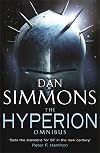
The Hyperion books are credited with single-handedly reinventing and reinvigorating SF in the 1990s. A broad canvased, hugely imaginative and exciting SF epic, the books draw on the works of Keats and provide a uniquely intelligent and literary approach with cutting edge science, compelling characterisation and edge-of-your-seat excitement. The story is continued in ENDYMION and THE RISE OF ENDYMION, which Gollancz will also be publishing in an omnibus volume.Tags
Recommendations




Member Recommendations
by mouserSVK
Member Reviews
Hyperion Cantos was first work of Dan Simmons I have read. However, it is not the first Sci-Fi book I've read by any means - I consider it to be the best one among them, though.
Why? Hyperion is a complex study of a darker part of future world as imagined by the author. First half (entitled Hyperion) does not come in a simple tale, it is told in six different tales, each written using different style, which suits the narrator. And I can tell, this job is done very well. Facts about the world are scattered and nicely woven into the narratives and into a less significant main plot. Parts between the stories act as a place where you can contemplate on the story just told and I've always been impatiently looking forward to the next one.
Do show more not expect the tales to be like fairy tales for children. The first tale comes from mouth of a priest and you may find it shocking, disgusting, horrifying. While many reviewers dislike this story, it was my favorite. The second one uses a language of a poet - bohemian that can disgust another part of the audience. All of them, however, are really interesting and unique, while slowly revealing the relationships established in Simmons' world.
The central point / character - antihero of the book - is The Shrike - one of the most remarkable characters ever described in Sci-Fi. Shrike, which comes from an unknown world and time, unpredictable, murderous, being put outside the laws of physics.
There are some references to our times and our planet, which I've found a little strange and unrealistic. Author obviously wanted to make the setting more imaginable for us, but sometimes he overused this 'trick' and that is probably the biggest flaw of this book.
Second part (entitled The Fall of Hyperion) originally consists of 45 chapters that conclude the story begun in 'Hyperion' part. This time, John Keats (or someone who has his memories) is much more apparent than in the first part. Through his words, visions, dreams and deeds we can see the fates of other main protagonists.
The narration is very descriptive many times, requires a careful attention and many people will want to reread the book to fully captivate the messages this book tells. Still the book does not make you bored and keeps you thinking about it all the time.
10 out of 10. Highly recommended. show less
Why? Hyperion is a complex study of a darker part of future world as imagined by the author. First half (entitled Hyperion) does not come in a simple tale, it is told in six different tales, each written using different style, which suits the narrator. And I can tell, this job is done very well. Facts about the world are scattered and nicely woven into the narratives and into a less significant main plot. Parts between the stories act as a place where you can contemplate on the story just told and I've always been impatiently looking forward to the next one.
Do show more not expect the tales to be like fairy tales for children. The first tale comes from mouth of a priest and you may find it shocking, disgusting, horrifying. While many reviewers dislike this story, it was my favorite. The second one uses a language of a poet - bohemian that can disgust another part of the audience. All of them, however, are really interesting and unique, while slowly revealing the relationships established in Simmons' world.
The central point / character - antihero of the book - is The Shrike - one of the most remarkable characters ever described in Sci-Fi. Shrike, which comes from an unknown world and time, unpredictable, murderous, being put outside the laws of physics.
There are some references to our times and our planet, which I've found a little strange and unrealistic. Author obviously wanted to make the setting more imaginable for us, but sometimes he overused this 'trick' and that is probably the biggest flaw of this book.
Second part (entitled The Fall of Hyperion) originally consists of 45 chapters that conclude the story begun in 'Hyperion' part. This time, John Keats (or someone who has his memories) is much more apparent than in the first part. Through his words, visions, dreams and deeds we can see the fates of other main protagonists.
The narration is very descriptive many times, requires a careful attention and many people will want to reread the book to fully captivate the messages this book tells. Still the book does not make you bored and keeps you thinking about it all the time.
10 out of 10. Highly recommended. show less
At times this felt a bit like reading Clarke with the ideas flowing out of every page, but it didn't quite rise to those levels for me. An enjoyable read and maybe one that'd be even more enjoyable for anyone who "gets" poetry, given how much it's used throughout the text.
In an effort to make a dent in the stack of unread books in the house I picked up this book two weeks ago. It has been gathering dust since I bought it at a discount almost two years ago. It's the first book by Simmons I read. His bibliography includes books in several genres but the science fiction novel Hyperion is one of his best know works. This Omnibus edition collects the novels Hyperion and Fall of Hyperion, two books in a four book series known as the Hyperion Cantos. Both are books or fair size so the omnibus is a huge tome. Taking this book on is quite a project but definitely worthwhile. Stylistically the books couldn't be more different. The skill the author displays in these books in impressive.
Much of this book is show more influenced by a number of classic works of literature. Hyperion for instance takes the same approach to telling a story as the Canterbury Tales. A group of seven pilgrims leave for the planet of Hyperion named after an unfinished epic poem by John Keats. Hyperion is the focal point of a large interstellar conflict, the causes and precise nature do not become clear in this first part of the omnibus yet. What the pilgrims do know, is that they are to face a dreadful creature known as the Shrike (I can't help but think of him as Edward Scissorhands' older brother for some reason). The creature seems to drive people away from the mysterious Time Tombs on the planet. A region in where time seems to flow in the opposite direction. Nobody has figured out what the Tombs contain but they appear to be on the verge of opening.
Hyperion doesn't really delve into the larger conflict but explores the reason for six of the seven pilgrims to join the expedition. While on their way to the site of the Time Tombs to face the Shrike they tell each other their story. Their stories are bloody, violent, dramatic and often heart wrenching and slowly an understanding between the pilgrims of what makes them join what is by most of them regarded as a suicide mission emerges. As the company nears it's destination, despite their differences, a bond between the pilgrims is forged.
The book is divided in six part, one for each loosely related story, with a few snippets of the adventures of the pilgrims on the road in between. Simmons manages to create a distinct voice for each of the six story tellers, partly by using different styles. Much of the Priest's tale is written in a series of diary entries for instance, while the Soldier's tale is told in the third person and the Detective's tale in the first. The risk with this technique is of course that not all stories will appeal to the reader in equal measure, thus creating parts of the books that will be a struggle for some readers. Hyperion opens with the Priest's story, which in my opinion is the least interesting of the bunch. This section is some 70 pages long, made it hard for me to get into the book. After that, as we launch in the more action packed soldier's tale, the book really got going for me, steadily working towards the best tale of the six, the consul's tale. I very much like the way the consul uses a non-linear structure for his story, especially since time and time debt (as Simmons put is, think time dilation) plays such a large part in his tale.
Hyperion is not an easy book to like. While the pilgrims' tales are engrossing, the reader's view of the overarching story remains hazy. Simmons drops a lot of hint and sets things up that will not make sense until you have read Fall of Hyperion. You have to appreciate this book for it's style, the individual stories and the unique voices Simmons creates for his characters but don't expect a conclusion of the overarching story. After the first fifty pages I wasn't sure if I was going to finish it, after reading the Consul's tale I absolutely loved it.
The nice thing about this omnibus is that you can dive straight into the next book. Right from the start it becomes clear that Fall of Hyperion is nothing like Hyperion. Simmons introduces new characters and points of view and switches his tale of the pilgrims' confrontation with the Shrike and events in the decision making centres of the Hegemony, an interstellar federation that rules most of the planets colonized by humanity. In this book Simmons delves deeper into the overarching conflict. An interstellar war is about to break out between the Hegemony and the Ousters, a space faring faction of humanity that mostly has come into conflict with the Hegemony before, with Hyperion as the first battlefield. Of course the conflict does not turn out quite a simple as it appears at the start of the book. As the conflict escalates more layers of intrigue, deceit and planning are uncovered and it soon becomes clear that human liberty and the very survival of the human race are the real stakes in this war.
Fall of Hyperion has much more of a Space Opera feel to it that Hyperion. It deals with some classic SF-themes such as star travel, artificial intelligence, colonization and terraforming of alien worlds and of course interstellar warfare. The structure of the book is more conventional than that of Hyperion as well, although Simmons continues to use various styles for various characters. Fall of Hyperion is not a book that is likely to provoke the either very positive of very negative reactions that Hyperion does. Personally I don't think Fall of Hyperion is any less of a literary achievement than the previous book though. It's Byzantine plot and interesting characters make it a very good read. I suppose Severn/Keats is meant to steal the show but I liked Gladstone better.
These two vastly different looks at the same conflict make the books almost inseparable in my opinion. Putting them in one omnibus edition makes a lot of sense. Without the in depth looks at the motivations of the pilgrims Fall of Hyperion doesn't work well as a novel. On the other hand the ending of Hyperion is rather abrupt. There isn't really any sense of conclusion at the end of the book the see what the sacrifice the pilgrims are making is all about. I rarely read two books that are so different yet so much interlinked. Each of these books has its merits but it's the combination that makes it a great work of science fiction. Do not start on Hyperion without a copy of Fall of Hyperion at hand.
Want to comment on this review? Go here. show less
Much of this book is show more influenced by a number of classic works of literature. Hyperion for instance takes the same approach to telling a story as the Canterbury Tales. A group of seven pilgrims leave for the planet of Hyperion named after an unfinished epic poem by John Keats. Hyperion is the focal point of a large interstellar conflict, the causes and precise nature do not become clear in this first part of the omnibus yet. What the pilgrims do know, is that they are to face a dreadful creature known as the Shrike (I can't help but think of him as Edward Scissorhands' older brother for some reason). The creature seems to drive people away from the mysterious Time Tombs on the planet. A region in where time seems to flow in the opposite direction. Nobody has figured out what the Tombs contain but they appear to be on the verge of opening.
Hyperion doesn't really delve into the larger conflict but explores the reason for six of the seven pilgrims to join the expedition. While on their way to the site of the Time Tombs to face the Shrike they tell each other their story. Their stories are bloody, violent, dramatic and often heart wrenching and slowly an understanding between the pilgrims of what makes them join what is by most of them regarded as a suicide mission emerges. As the company nears it's destination, despite their differences, a bond between the pilgrims is forged.
The book is divided in six part, one for each loosely related story, with a few snippets of the adventures of the pilgrims on the road in between. Simmons manages to create a distinct voice for each of the six story tellers, partly by using different styles. Much of the Priest's tale is written in a series of diary entries for instance, while the Soldier's tale is told in the third person and the Detective's tale in the first. The risk with this technique is of course that not all stories will appeal to the reader in equal measure, thus creating parts of the books that will be a struggle for some readers. Hyperion opens with the Priest's story, which in my opinion is the least interesting of the bunch. This section is some 70 pages long, made it hard for me to get into the book. After that, as we launch in the more action packed soldier's tale, the book really got going for me, steadily working towards the best tale of the six, the consul's tale. I very much like the way the consul uses a non-linear structure for his story, especially since time and time debt (as Simmons put is, think time dilation) plays such a large part in his tale.
Hyperion is not an easy book to like. While the pilgrims' tales are engrossing, the reader's view of the overarching story remains hazy. Simmons drops a lot of hint and sets things up that will not make sense until you have read Fall of Hyperion. You have to appreciate this book for it's style, the individual stories and the unique voices Simmons creates for his characters but don't expect a conclusion of the overarching story. After the first fifty pages I wasn't sure if I was going to finish it, after reading the Consul's tale I absolutely loved it.
The nice thing about this omnibus is that you can dive straight into the next book. Right from the start it becomes clear that Fall of Hyperion is nothing like Hyperion. Simmons introduces new characters and points of view and switches his tale of the pilgrims' confrontation with the Shrike and events in the decision making centres of the Hegemony, an interstellar federation that rules most of the planets colonized by humanity. In this book Simmons delves deeper into the overarching conflict. An interstellar war is about to break out between the Hegemony and the Ousters, a space faring faction of humanity that mostly has come into conflict with the Hegemony before, with Hyperion as the first battlefield. Of course the conflict does not turn out quite a simple as it appears at the start of the book. As the conflict escalates more layers of intrigue, deceit and planning are uncovered and it soon becomes clear that human liberty and the very survival of the human race are the real stakes in this war.
Fall of Hyperion has much more of a Space Opera feel to it that Hyperion. It deals with some classic SF-themes such as star travel, artificial intelligence, colonization and terraforming of alien worlds and of course interstellar warfare. The structure of the book is more conventional than that of Hyperion as well, although Simmons continues to use various styles for various characters. Fall of Hyperion is not a book that is likely to provoke the either very positive of very negative reactions that Hyperion does. Personally I don't think Fall of Hyperion is any less of a literary achievement than the previous book though. It's Byzantine plot and interesting characters make it a very good read. I suppose Severn/Keats is meant to steal the show but I liked Gladstone better.
These two vastly different looks at the same conflict make the books almost inseparable in my opinion. Putting them in one omnibus edition makes a lot of sense. Without the in depth looks at the motivations of the pilgrims Fall of Hyperion doesn't work well as a novel. On the other hand the ending of Hyperion is rather abrupt. There isn't really any sense of conclusion at the end of the book the see what the sacrifice the pilgrims are making is all about. I rarely read two books that are so different yet so much interlinked. Each of these books has its merits but it's the combination that makes it a great work of science fiction. Do not start on Hyperion without a copy of Fall of Hyperion at hand.
Want to comment on this review? Go here. show less
Hyperion
I first read Hyperion at least 10 years ago, picked it up because it was highly recommended by Iain Banks. I don't remember much about the first time, except the oppressive atmosphere. But the story gets better each time. Going through the individual stories of the pilgrims, interspersed with the current day travel to the Time Tombs is very effective, and you are breathless waiting to find out what will happen when they arrive. Fortunately with the omnibus edition, the wait is not too long!
Fall of Hyperion
This is a little more confusing, although it is told in a more linear fashion. I am still not quite sure where the Joseph Severn character popped up from, and this felt patchier and a bit more mystical than the preceeding book. show more But the images of the Fall are very striking, the break-up of the concourse and the Tethys... I am also not sure I agree with the life/struggle/art being a higher goal than a comfortable existence, especially so comfortable that the humans did not even know they were enslaved... Lots of ideas if a bit more jumbled. show less
I first read Hyperion at least 10 years ago, picked it up because it was highly recommended by Iain Banks. I don't remember much about the first time, except the oppressive atmosphere. But the story gets better each time. Going through the individual stories of the pilgrims, interspersed with the current day travel to the Time Tombs is very effective, and you are breathless waiting to find out what will happen when they arrive. Fortunately with the omnibus edition, the wait is not too long!
Fall of Hyperion
This is a little more confusing, although it is told in a more linear fashion. I am still not quite sure where the Joseph Severn character popped up from, and this felt patchier and a bit more mystical than the preceeding book. show more But the images of the Fall are very striking, the break-up of the concourse and the Tethys... I am also not sure I agree with the life/struggle/art being a higher goal than a comfortable existence, especially so comfortable that the humans did not even know they were enslaved... Lots of ideas if a bit more jumbled. show less
A large tome. The story is a little difficult to grasp at first, but it is worth persevering as the strands begin to knit together. The climax is particularly surprising, but ties up the threads quite nicely.
The individual stories of the characters in the first part of the book are interesting in themselves.
This was a book I started, stopped and picked up again becuase of its sheer size. Worth it in the end.
The individual stories of the characters in the first part of the book are interesting in themselves.
This was a book I started, stopped and picked up again becuase of its sheer size. Worth it in the end.
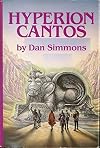
Hyperion Cantos
By Dan Simmons
Publisher: GuildAmerica
Published In: New York, NY, USA
Date: 1990
Pgs: 929
Summary:
Humanity has left Earth behind. Thanks to FTL and wormhole tech, humanity has reached out to the stars and made new homes, united under the Hegemony. Hyperion and the labyrinth worlds hold secrets though...secrets and monsters. The Shrike a multi armed killing organic machine worshipped by some, feared by all, walks Hyperion awaiting the end of the world or its next victim, depending on whose dogma you are listening to. War has broken out between the Hegemony and the post-human Ousters, humans who have left planet bound living behind. The Time Tombs in the home area of the Shrike are opening. A last group of pilgrims are on show more their way. The war. The Shrike. The pilgrims. The past. The present. The future. All are colliding on Hyperion in what may be the last days.
Genre:
fiction, science fiction, apocalypse, space, hegira, war,
Why this book:
I’ve read both the books that make up this book before and love them deeply. I wanted to re-read them again and finding them in the Cantos format was a godsend. This is a huge sweeping space opera covering the future history of man in a mysterious universe with more mysteries than answers.
This Story is About:
It’s about throwing off the yokes of society. In some cases, the yoke is torn away whether the individual character wants this “freedom” or not.
Credibility:
The story is very immersive and drags you along with it causing a well crafted suspension of disbelief as Simmons shows us what he wants to show us and hints at what lies beyond.
Favorite Character:
Colonel Fedmahn Kassad comes across as a man of his time though he has things in his past that would mark him a monster by the other people of his time. And he’s a badass. The Consul is intended in the narrator/everyman role, I believe. He does have a certain attraction as he is “our” viewpoint on the stories of the others and the later events. All the pilgrims are wonderful characters, with the exception below.
Least Favorite Character:
Martin Silenius is the poet. His inclusion seems to be to give Simmons the chance to trot out bits of the classical intermixed with his own poetry. A Loki/Pan figure with a long history because of the time debt that he has accrued during long frozen fugue states on interplanetary voyages, meaning that he has seen a lot and lived through a lot, but slept through a lot of the interstellar future backstory of this world that Simmons is creating. All that said, the Silenius character continually comes across as an ass.
A close second would be Hegemony CEO Meina Gladstone. She’s as much the villain as the circumstance that sweeps through the huge community of Humans over the course of this story. Her plans within plans may “free” humanity, but she may end up killing many of them, millions, at least, if everything works to her plan.
Ummon speaks in verse or koans. Reading his dialogue is painful.
Character I Most Identified With:
Through the early stages of the book, I identify mostly with Kassad and, by the author’s design, the Consul. In the later stages of the book, you see and feel a lot through the eyes and feelings of the pilgrims plus Johnny II.
The Feel:
The story has a real “you are there” feel to it. The tragedy of Sol and Rachel Weintraub is very palpable. I can’t imagine what Sol experienced in those years as Rachel progressed. But, yes, we can imagine it. Simmons gave us good deep insight into the character of the man.
Favorite Scene:
Father Dure’s sense of wonder when he discovers what the Bikura are hiding down below, or rather the first level of what they are hiding, is a great scene.
Kassad’s first visit to Hyperion, especially, when he awakes from fugue and has to fight his way through his fall from orbit.
Kassad’s “final” battle on Hyperion, not the denouement, but when he blows hell out of one of the monuments as he unleashes the full hell of FORCE’s future sci fi weaponry. And his final, final showdown with the Shrike is pure excellence.
Settings:
Hyperion, space, the tree ship, the Tesla forests, Mars, virtual reality battles all through history, Barnard’s World, Hebron, the WorldWeb, The Moon, a replica Earth somewhere in the Hercules Cluster, the Ouster Swarm, the Labyrinths, the Datasphere/Metasphere/Megasphere
Pacing:
The pacing of the story is excellent. Not a roaring page turner, but whenever you put it down, it draws you back. At least, it does for me. You’d think with the introspection of some of the pilgrims’ stories that the pace would drag, but it really doesn’t. The story drags me along through the tragedies of some of their stories and the sheer WTF-edness of what is happening to some of them.
Plot Holes/Out of Character:
N/A
Last Page Sound:
Damn. That is awesome.
Author Assessment:
Absolutely awesome. I would definitely read more stuff by Simmons.
Editorial Assessment:
Tightly done.
Disposition of Book:
This is a Keep it. Hardback. Proud to own it book.
Why isn’t there a screenplay?
I fear that the story would have to be watered down too much to make it fit the screen. There’s just too much story here. Warner Brothers is supposedly developing Hyperion for the big screen.
Casting call:
Fedmahn Kassad would need an actor of Arabic descent who could play early middle age and world weary while maintaining the military precision aura. I know of a few older actors who could do it, but I’m not finding the “perfect” casting choice in my memory. Though I can almost guarantee that in a movie with them wanting to tighten the story, they’d combine some of the characters into supercharacters. I could see Fedmahn and the Consul combined. If Hyperion had become a movie 25 or 30 years ago, I could see Ricardo Montalban in the role, either as Kassad or a combined Kassad and Consul. Vinnie Jones would be excellent in the role. Faran Tahir would as well.
For the Consul, if he maintained his character from the book, I could see a Ewan McGregor or a Joshua Jackson...type.
I have a picture of Sol in my head. But I’m not sure there is an actor currently acting who fits with what I see in my mind’s eye. I see an old man slipping toward ancient. The dome of his head is bald with a fringe of white flyaway hair. I went through an image search of bald actors and can’t find someone who would be perfect..
Johnny Lee Miller could be Martin Sillenius. His Sherlock on Elementary makes me realize that he could inhabit the character of the poet out of time who remembers Old Earth before the Big Mistake. ...and the gravitas and sadness and madness that would inevitably characterize a persona that has lost so much.
Judi Dench could play Meina Gladstone, CEO of the Hegemony.
Would recommend to:
Genre fans. Space opera fans. People who like a crunchy plot with lots of characters and lots of action spread over a wide range. show less
By Dan Simmons
Publisher: GuildAmerica
Published In: New York, NY, USA
Date: 1990
Pgs: 929
Summary:
Humanity has left Earth behind. Thanks to FTL and wormhole tech, humanity has reached out to the stars and made new homes, united under the Hegemony. Hyperion and the labyrinth worlds hold secrets though...secrets and monsters. The Shrike a multi armed killing organic machine worshipped by some, feared by all, walks Hyperion awaiting the end of the world or its next victim, depending on whose dogma you are listening to. War has broken out between the Hegemony and the post-human Ousters, humans who have left planet bound living behind. The Time Tombs in the home area of the Shrike are opening. A last group of pilgrims are on show more their way. The war. The Shrike. The pilgrims. The past. The present. The future. All are colliding on Hyperion in what may be the last days.
Genre:
fiction, science fiction, apocalypse, space, hegira, war,
Why this book:
I’ve read both the books that make up this book before and love them deeply. I wanted to re-read them again and finding them in the Cantos format was a godsend. This is a huge sweeping space opera covering the future history of man in a mysterious universe with more mysteries than answers.
This Story is About:
It’s about throwing off the yokes of society. In some cases, the yoke is torn away whether the individual character wants this “freedom” or not.
Credibility:
The story is very immersive and drags you along with it causing a well crafted suspension of disbelief as Simmons shows us what he wants to show us and hints at what lies beyond.
Favorite Character:
Colonel Fedmahn Kassad comes across as a man of his time though he has things in his past that would mark him a monster by the other people of his time. And he’s a badass. The Consul is intended in the narrator/everyman role, I believe. He does have a certain attraction as he is “our” viewpoint on the stories of the others and the later events. All the pilgrims are wonderful characters, with the exception below.
Least Favorite Character:
Martin Silenius is the poet. His inclusion seems to be to give Simmons the chance to trot out bits of the classical intermixed with his own poetry. A Loki/Pan figure with a long history because of the time debt that he has accrued during long frozen fugue states on interplanetary voyages, meaning that he has seen a lot and lived through a lot, but slept through a lot of the interstellar future backstory of this world that Simmons is creating. All that said, the Silenius character continually comes across as an ass.
A close second would be Hegemony CEO Meina Gladstone. She’s as much the villain as the circumstance that sweeps through the huge community of Humans over the course of this story. Her plans within plans may “free” humanity, but she may end up killing many of them, millions, at least, if everything works to her plan.
Ummon speaks in verse or koans. Reading his dialogue is painful.
Character I Most Identified With:
Through the early stages of the book, I identify mostly with Kassad and, by the author’s design, the Consul. In the later stages of the book, you see and feel a lot through the eyes and feelings of the pilgrims plus Johnny II.
The Feel:
The story has a real “you are there” feel to it. The tragedy of Sol and Rachel Weintraub is very palpable. I can’t imagine what Sol experienced in those years as Rachel progressed. But, yes, we can imagine it. Simmons gave us good deep insight into the character of the man.
Favorite Scene:
Father Dure’s sense of wonder when he discovers what the Bikura are hiding down below, or rather the first level of what they are hiding, is a great scene.
Kassad’s first visit to Hyperion, especially, when he awakes from fugue and has to fight his way through his fall from orbit.
Kassad’s “final” battle on Hyperion, not the denouement, but when he blows hell out of one of the monuments as he unleashes the full hell of FORCE’s future sci fi weaponry. And his final, final showdown with the Shrike is pure excellence.
Settings:
Hyperion, space, the tree ship, the Tesla forests, Mars, virtual reality battles all through history, Barnard’s World, Hebron, the WorldWeb, The Moon, a replica Earth somewhere in the Hercules Cluster, the Ouster Swarm, the Labyrinths, the Datasphere/Metasphere/Megasphere
Pacing:
The pacing of the story is excellent. Not a roaring page turner, but whenever you put it down, it draws you back. At least, it does for me. You’d think with the introspection of some of the pilgrims’ stories that the pace would drag, but it really doesn’t. The story drags me along through the tragedies of some of their stories and the sheer WTF-edness of what is happening to some of them.
Plot Holes/Out of Character:
N/A
Last Page Sound:
Damn. That is awesome.
Author Assessment:
Absolutely awesome. I would definitely read more stuff by Simmons.
Editorial Assessment:
Tightly done.
Disposition of Book:
This is a Keep it. Hardback. Proud to own it book.
Why isn’t there a screenplay?
I fear that the story would have to be watered down too much to make it fit the screen. There’s just too much story here. Warner Brothers is supposedly developing Hyperion for the big screen.
Casting call:
Fedmahn Kassad would need an actor of Arabic descent who could play early middle age and world weary while maintaining the military precision aura. I know of a few older actors who could do it, but I’m not finding the “perfect” casting choice in my memory. Though I can almost guarantee that in a movie with them wanting to tighten the story, they’d combine some of the characters into supercharacters. I could see Fedmahn and the Consul combined. If Hyperion had become a movie 25 or 30 years ago, I could see Ricardo Montalban in the role, either as Kassad or a combined Kassad and Consul. Vinnie Jones would be excellent in the role. Faran Tahir would as well.
For the Consul, if he maintained his character from the book, I could see a Ewan McGregor or a Joshua Jackson...type.
I have a picture of Sol in my head. But I’m not sure there is an actor currently acting who fits with what I see in my mind’s eye. I see an old man slipping toward ancient. The dome of his head is bald with a fringe of white flyaway hair. I went through an image search of bald actors and can’t find someone who would be perfect..
Johnny Lee Miller could be Martin Sillenius. His Sherlock on Elementary makes me realize that he could inhabit the character of the poet out of time who remembers Old Earth before the Big Mistake. ...and the gravitas and sadness and madness that would inevitably characterize a persona that has lost so much.
Judi Dench could play Meina Gladstone, CEO of the Hegemony.
Would recommend to:
Genre fans. Space opera fans. People who like a crunchy plot with lots of characters and lots of action spread over a wide range. show less
It's very long, and not a fast read so be ready to spend some time with this book. The first "book" (remember this is an omnibus with both Hyperion and the Fall of Hyperion in the same book) does end abruptly and book 2 does carry on the story (albeit with a different "voice") so you have to read both parts in order to "get" the story.
This might not be as daunting for some as I found it; at just under 1000 pages it is a LONG book and, while the story is mostly good, there are sections that a) don't progress the story or b) don't develop the existing characters in any significant way so you read it and wonder what the point is.
Some reviews I read likened this book to the Canterbury Tales... whatever... I don't read ancient literature, I show more read sci-fi so hurrah for it being like the 'Tales, but who cares? It's sci-fi, not great art.
Anyway, it has some great ideas/concepts and a bit of "battling" and not too much politicking so it's pretty good - definitely a 4 star.
I'm glad I read it, but it's way too big to read again. show less
This might not be as daunting for some as I found it; at just under 1000 pages it is a LONG book and, while the story is mostly good, there are sections that a) don't progress the story or b) don't develop the existing characters in any significant way so you read it and wonder what the point is.
Some reviews I read likened this book to the Canterbury Tales... whatever... I don't read ancient literature, I show more read sci-fi so hurrah for it being like the 'Tales, but who cares? It's sci-fi, not great art.
Anyway, it has some great ideas/concepts and a bit of "battling" and not too much politicking so it's pretty good - definitely a 4 star.
I'm glad I read it, but it's way too big to read again. show less
Members
- Recently Added By
Lists

Arthur C. Clarke Award Winners and Shortlisted Books
219 works; 14 members
Author Information

133+ Works 69,753 Members
Science fiction writer Dan Simmons was born in East Peoria, Illinois in 1948. He graduated from Wabash College in 1970 and received an M. A. from Washington University the following year. Simmons was an elementary school teacher and worked in the education field for a decade, including working to develop a gifted education program. His first show more successful short story was won a contest and was published in 1982. His first novel, Song of Kali, won a World Fantasy Award, and Simmons has also won a Theodore Sturgeon Award for short fiction, four Bram Stoker Awards, and eight Locus Awards. He is also the author of the Hyperion series, and Simmons and his work have been compared to Herbert's Dune and Asimov's Foundation series. (Bowker Author Biography) show less
Some Editions
Series

Belongs to Publisher Series
Work Relationships
Is contained in
Contains
Common Knowledge
- Canonical title
- The Hyperion Omnibus [2-in-1]
- Original title
- The Hyperion Omnibus
- Original publication date
- 1989 (Hyperion) (Hyperion); 1990 (The Fall of Hyperion) (The Fall of Hyperion)
- Dedication
- This is for Ted
To John Keats Whose Name Was Writ In Eternity - First words
- The Hegemony Consul sat on the balcony of his ebony spaceship and played Rachmaninoff's Prelude in C-sharp Minor on an ancient but well-maintained Steinway while great, green, saurian things surged and bellowed in the swamps ... (show all)below.
- Last words
- (Click to show. Warning: May contain spoilers.)On he flared...
- Original language*
- Englisch
- Disambiguation notice
- This is an omnibus of Hyperion and The Fall of Hyperion. It should not be credited to the awards they received.
*Some information comes from Common Knowledge in other languages. Click "Edit" for more information.
Classifications
Statistics
- Members
- 866
- Popularity
- 31,416
- Reviews
- 15
- Rating
- (4.35)
- Languages
- 7 — Czech, Dutch, English, French, German, Italian, Spanish
- Media
- Paper, Ebook
- ISBNs
- 10
- ASINs
- 15