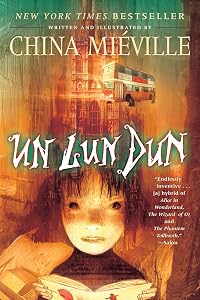
Un Lun Dun
by China Miéville
On This Page
Description
Stumbling into an alternate funhouse version of her home city, twelve-year-old Londoner Deeba finds herself trapped in a world of killer giraffes, animated umbrellas, ghost children, and flying double-decker buses and menaced by a choking black smog, and is forced to take on the role of unlikely savior to prevent utter destruction.Tags
Recommendations
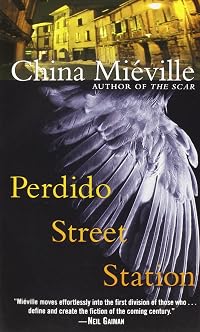
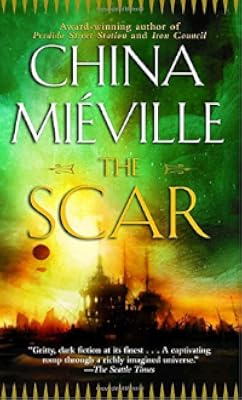
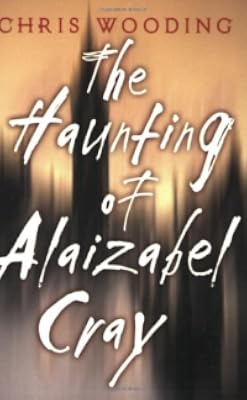
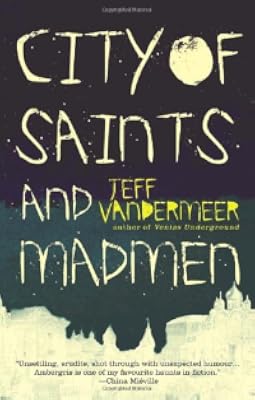
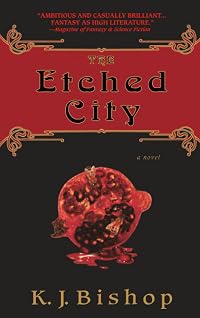
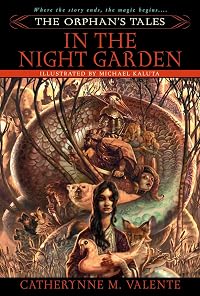
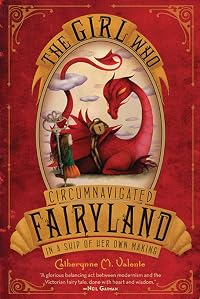

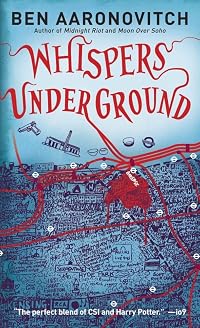
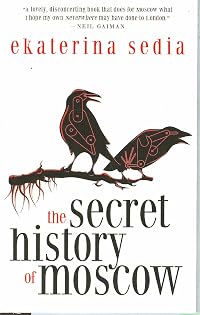
Member Recommendations
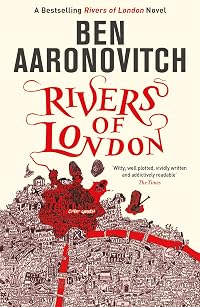
heidialice May be an obvious recommendation, but these books cover a similar (very original) premise in very different ways. Un Lun Dun is for young teens, smaller in scope and message-heavy; The City & The City for adults, deals with complex themes and offers no easy answers. Both display Mieville's consummate skills and elegant humor.
51
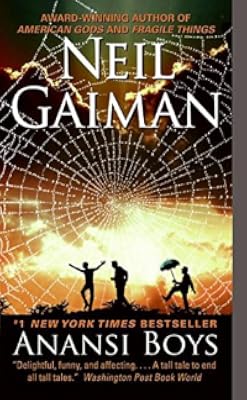
heidialice Both are fantastical YA at its best. Gaiman is an acknowledged inspiration for Mieville, and it shows, though he has his own distinctive style and voice.
52
GirlMisanthrope A story inspired by/reminiscent of Alice in Wonderland. Has similar break-neck adventure and constant twists. And great artwork by the author.
Member Reviews
Un Lun Dun is a very entertaining, delightfully self-aware YA fantasy novel, set in an Alice-through-the-Looking-Glass version of London, a city where forests grow inside buildings, ghosts inhabit their own suburbs and the iconic red Roadmaster buses sail through the air. While it does have its faults as a book—that level of self-awareness can become a little too hipster at times, the climax is a little bombastic, the characterisation isn't emphasised, and Miéville could have edited it down quite substantially—I still found it immensely enjoyable.
It's inventive and imaginative enough to have made me smile at several points, and I think if I'd read this as a nine or ten-year-old, it would have eaten my brain for weeks. Reading it show more now, I think the part I appreciated most was how Miéville subverts some well-worn tropes of YA fantasy novels, especially in light of recent discussions I've been following on race and gender: in Un Lun Dun, the heroine is not, as we have been led to believe, the tall, blonde Zanna, the Chosen One of the Prophecy. Instead, it's her short, resourceful, slightly-cranky British-Pakistani friend Deeba who decides herself that she will have to step in and lead the fight to save Un Lun Dun—and does so with aplomb. show less
It's inventive and imaginative enough to have made me smile at several points, and I think if I'd read this as a nine or ten-year-old, it would have eaten my brain for weeks. Reading it show more now, I think the part I appreciated most was how Miéville subverts some well-worn tropes of YA fantasy novels, especially in light of recent discussions I've been following on race and gender: in Un Lun Dun, the heroine is not, as we have been led to believe, the tall, blonde Zanna, the Chosen One of the Prophecy. Instead, it's her short, resourceful, slightly-cranky British-Pakistani friend Deeba who decides herself that she will have to step in and lead the fight to save Un Lun Dun—and does so with aplomb. show less
When Zanna and Deeba, two very English, plausibly adventurous schoolgirls, follow a broken umbrella through London, they end up somewhere else. But maybe one of them was always meant to be there, because, of course, adventurous girls always know they’re meant to be important. And there were those rather strange events, and that message, and… But prophecies can be confusing, interpretations can be biased, and instincts are sometimes right. Also, the underdog might grow into someone else (or into a fox).
Sometimes dark, in the same way as Alice through the Looking Glass, this tale of Zanna and Deeba through the upside-down umbrella is compelling, curious, kind of classical, and really good fun. Oh, and weird, with the weirdest of show more characters appearing—even dustbins!
So… adults can enjoy it. Children can enjoy it. Londoners will be enthralled. And teens will enjoy it too. Which makes it a really good read.
Disclosure: It was a gift and I love it. show less
Sometimes dark, in the same way as Alice through the Looking Glass, this tale of Zanna and Deeba through the upside-down umbrella is compelling, curious, kind of classical, and really good fun. Oh, and weird, with the weirdest of show more characters appearing—even dustbins!
So… adults can enjoy it. Children can enjoy it. Londoners will be enthralled. And teens will enjoy it too. Which makes it a really good read.
Disclosure: It was a gift and I love it. show less
Schoolgirl Deeba and her friend Zanna begin their adventure wondering why strange people and animals keep staring at blonde, beautiful Zanna and referring to her as ‘the Shwazzy’. Zanna’s investigation lands them in an alternative version of London known as UnLondon (Un Lun Dun), where they discover that a prophecy names Zanna as the Chosen. The book of prophecies says that Zanna will win her first encounter with the evil Smog. Confident, Zanna makes an attempt, but fails, her memory of UnLondon is erased, and she and Deeba are sent home. Deeba, however, cannot stop thinking of UnLondon …I will stop here because to go any further would give away too much.
Mieville is a wizard at word play and it was one of my favorite things show more about this book. Like as Conductor Jones talks about Manifest Station. If you’re brave enough to try, you might be able to catch a train from UnLondon to Parisn’t, or No York, or Helsunki, or Lost Angeles, or Sans Francisco, or Hong Gone, or Romeless… It’s a terminus.
Beyond the wordplay itself China Mieville has created a world that is filled with strangeness, beauty, and wondrous oddities. There's a milk carton called curdle that swiftly becomes Deeba's faithful pet. There are characters such as Brokenbroll, a lean, long-limbed man who commands an army of "unbrellas”, and Mr. Speaker, a gatekeeper who demands new words as payment. Deeba satisfies him with "bling", "diss" and "lairy", which then miraculously spring into life as a locust, a bear cub and "a baby-sized thing with one staring eye". There are carnivorous packs of giraffes that roam the streets at night looking for prey, highly skilled guards known as binjas, (trash bins that are ninja warriors), Black Window Spiders (windows with eight legs that guard the treasures of Webminster Abbey), and of course Hemi the half-ghost boy who becomes Deeba's closest companion (his mother was a ghost and his father alive).
Un Lun Dun is a colorful novel crammed with exciting incidents, dramatic confrontations, and Mieville's weird yet strangely appealing monsters. This is my first foray into anything Mieville and it won’t be my last.
Brilliant show less
Mieville is a wizard at word play and it was one of my favorite things show more about this book. Like as Conductor Jones talks about Manifest Station. If you’re brave enough to try, you might be able to catch a train from UnLondon to Parisn’t, or No York, or Helsunki, or Lost Angeles, or Sans Francisco, or Hong Gone, or Romeless… It’s a terminus.
Beyond the wordplay itself China Mieville has created a world that is filled with strangeness, beauty, and wondrous oddities. There's a milk carton called curdle that swiftly becomes Deeba's faithful pet. There are characters such as Brokenbroll, a lean, long-limbed man who commands an army of "unbrellas”, and Mr. Speaker, a gatekeeper who demands new words as payment. Deeba satisfies him with "bling", "diss" and "lairy", which then miraculously spring into life as a locust, a bear cub and "a baby-sized thing with one staring eye". There are carnivorous packs of giraffes that roam the streets at night looking for prey, highly skilled guards known as binjas, (trash bins that are ninja warriors), Black Window Spiders (windows with eight legs that guard the treasures of Webminster Abbey), and of course Hemi the half-ghost boy who becomes Deeba's closest companion (his mother was a ghost and his father alive).
Un Lun Dun is a colorful novel crammed with exciting incidents, dramatic confrontations, and Mieville's weird yet strangely appealing monsters. This is my first foray into anything Mieville and it won’t be my last.
Brilliant show less
Un Lun Dun is billed as a book aimed at young adults, or perhaps older children. So that’ll be me then. You can’t get a much older child than me. What’s it about? Err; this is going to sound a bit weird. Two girls Zanna and Deeba, find a way into UnLondon where the lost and broken things of London end up. UnLondon is under attack by the evil Smog and its cronies, and needs a hero, Zanna. But Zanna gets incapacitated in the first battle and the fate of UnLondon hinges on Deeba, an animated milk carton, a talking book full of not-totally-accurate facts and prophesies, the boss of broken umbrellas, and a couturier whose head is a pincushion. Pursued by the Smog, its stink-junkie slaves, and a half-ghost boy, Deeba has to rouse the show more people of UnLondon and find a way of defeating the Smog.
China, (the only fantasy author that everyone actually agrees is writing in the New Weird genre), is like Marmite; you either like him or loathe him. His incredible Perdido Street Station (his second novel, but the first to be set in Bas-Lag) was a nightmarish wonderland and Un Lun Dun takes us to the line and then legs it half way up the Mountains of Madness. This is Bosch and Dali in words. Miéville is constantly playful and inventive, the pages full of puns, and the text flowing around his own drawings every few pages. The narrative is witty, energetic, and full of ideas although this is at the expense of a lack of characterisation. Almost every literary cliché is overturned: the side-kick is the hero, some good guys die and some bad guys get away. Deeba is not the predestined hero but rather a real hero, coming from real people rising to the occasion. The decisions she makes and the personal growth she experiences is a much stronger recipe for heroism than simply playing a part in a drama spelled out by fantasy convention.
For the more thoughtful reader this book is China on a soap-box. There is a “War on Terror” subtext in the fight against the Smog, with some power-brokers exploiting fear, uncertainty and doubt to support the power, while others try to ingratiate themselves, rather than fight a losing battle. More obviously, this war between good and evil has none of the supernatural religious overtones, but the evil to overcome is mankind's own desecration of the environment. Miéville rages against the complacent acceptance of the status quo and the failure to question authority. show less
China, (the only fantasy author that everyone actually agrees is writing in the New Weird genre), is like Marmite; you either like him or loathe him. His incredible Perdido Street Station (his second novel, but the first to be set in Bas-Lag) was a nightmarish wonderland and Un Lun Dun takes us to the line and then legs it half way up the Mountains of Madness. This is Bosch and Dali in words. Miéville is constantly playful and inventive, the pages full of puns, and the text flowing around his own drawings every few pages. The narrative is witty, energetic, and full of ideas although this is at the expense of a lack of characterisation. Almost every literary cliché is overturned: the side-kick is the hero, some good guys die and some bad guys get away. Deeba is not the predestined hero but rather a real hero, coming from real people rising to the occasion. The decisions she makes and the personal growth she experiences is a much stronger recipe for heroism than simply playing a part in a drama spelled out by fantasy convention.
For the more thoughtful reader this book is China on a soap-box. There is a “War on Terror” subtext in the fight against the Smog, with some power-brokers exploiting fear, uncertainty and doubt to support the power, while others try to ingratiate themselves, rather than fight a losing battle. More obviously, this war between good and evil has none of the supernatural religious overtones, but the evil to overcome is mankind's own desecration of the environment. Miéville rages against the complacent acceptance of the status quo and the failure to question authority. show less
Un Lun Dun (Un-London) is an imaginative young adult fantasy that follows twelve-year-old friends Zanna and Deeba as they stumble upon an alternate version of London. It is a surreal parallel world populated by unconventional individuals, talking books, sentient umbrellas, carnivorous giraffes, and discarded appliances with a life of their own. Protagonists face Smog—a literal toxic cloud—and other manifestations of pollution. They must also figure out whom to trust.
The novel pokes fun at traditional "chosen one" narratives. Zanna is initially believed to be the hero destined to save Un-London, only for her unassuming friend Deeba to take on the mantle when Zanna’s abilities fail. The storyline celebrates ingenuity and show more individuality. A prominent theme is environmental consciousness. The author plays with language throughout, and adults will notice many puns that may escape younger children. I particularly enjoyed the Binjas (Dustbin Ninjas).
The author combines fantasy, social critique, and humor. It reminds me a bit of Neverwhere (but geared toward a younger audience) or Alice's Adventures in Wonderland set in the big city. It is a fun adventure that can appeal to children and adults alike. show less
The novel pokes fun at traditional "chosen one" narratives. Zanna is initially believed to be the hero destined to save Un-London, only for her unassuming friend Deeba to take on the mantle when Zanna’s abilities fail. The storyline celebrates ingenuity and show more individuality. A prominent theme is environmental consciousness. The author plays with language throughout, and adults will notice many puns that may escape younger children. I particularly enjoyed the Binjas (Dustbin Ninjas).
The author combines fantasy, social critique, and humor. It reminds me a bit of Neverwhere (but geared toward a younger audience) or Alice's Adventures in Wonderland set in the big city. It is a fun adventure that can appeal to children and adults alike. show less
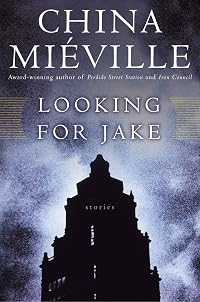
The first China Miéville story I ever read was his second Bas-Lag novel, 2002's The Scar, during my first year at university. Since then, I've gone on to read (and reread) both Perdido Street Station and the later Iron Council, and most recently his excellent short story collection, Looking For Jake. It's safe to say that I'm something of a fan - in fact, I can't think of any genre author whose work I could honestly claim to enjoy more.
And yet, oddly enough, I was reluctant about picking up this, his most recent novel. Partly that was because of the intended audience - Un Lun Dun is Miéville's first Young Adult novel - and partly, indeed more importantly, really, it was because of the nature of the story. Un Lun Dun is set in (indeed, show more is the name of) a magical alternate London populated, at least in part, by the things and people deemed 'mildly obsolete' in London (something that, ever since reading Neil Gaiman's Neverwhere, I've been a little uncomfortable with). The story begins when a young teenage girl called Zanna and her friend Deeba stumble into UnLondon from our world - this is not, of course, the most original way to begin a work of YA fantasy fiction. Zanna soon learns that she is the 'Shwazzy' - the Chosen One prophesied centuries ago to save the city from a terrible evil force by going on a quest to find seven ... er, yeah. If this were a book by any other author, this is the point at which I'd roll my eyes theatrically, mutter something about Alan Garner's Elidor or Susan Cooper's The Dark Is Rising having done it all better decades ago, and go and find something to read that didn't seem like such a blatant attempt by a publisher to cash in on the Harry Potter phenomenon.
To do so in this case would be a mistake.
For a start, this is a very well-written book - written for a younger audience, yes, but not an attempt to patronise them. The vocabulary and sentence structure are both a little simpler than in the usual Miéville novel, but not much more so than many 'adult' works. Miéville's imagination is also given free range in populating the 'abcity' of UnLondon and the results are both impressive and - somewhat suprisingly, perhaps - often very amusing. The large cast of characters are all depicted very well, and the villains are, at times, genuinely menacing.
More importantly though, there is much more to the story than at first appears. Miéville might be writing for a new audience, but the fundamental tone of his writing (and the attitude behind it) hasn't changed enough for him to suddenly start writing uncritical cliche-ridden heroic fantasy. Instead, he's simply setting things up so he can catch readers off-guard when he starts turning the tropes of the genre on their head. No sooner do Zanna and Deeba begin to learn the details of the prophecies than Mieville starts to shift things in a different direction; prophecies can be wrong as often as they're right, not everyone who believes themselves to be fighting against evil really is, and choosing to do something heroic is more important than being Chosen to do so.
Indeed, if I were to criticse the book at all it would be that, once you realise what Miéville is doing, it becomes too easy to predict events. The final two or three twists of the plot came as no surprise to me at all, and however menacing the villains were I never doubted that they would, ultimately, be defeated. But such criticisms are, I think, essentially unfair: while this is certainly a story that can be enjoyed by adult readers, it is not one that is written primarily for them. Had I read this book when I was the 'right' age for it, before reading anything else by Miéville, I would, I think, have been as shocked by all the twists as I was meant to be. And I would also, I hope, have appreciated the lessons the book has to offer - both the critique it offers of the fantasy genre itself and the wider points it makes about prejudice, self-respect and the dangers of blind trust in authority.
Un Lun Dun is a tremendous achievement; proof - if proof were ever needed - that Miéville is more than capable of dropping the occasionally verbose style and leisurely pace that caused some to criticise the Bas-Lag books and writing a tight, fast-moving adventure story, and at the same time a wonderful subversion and demolition of many of the worst cliches of the genre. It is a book I can only wish had been published while I was still young enough to be its intended audience and one that I believe deserves to be ranked alongside the very best of English YA fantasy. show less
And yet, oddly enough, I was reluctant about picking up this, his most recent novel. Partly that was because of the intended audience - Un Lun Dun is Miéville's first Young Adult novel - and partly, indeed more importantly, really, it was because of the nature of the story. Un Lun Dun is set in (indeed, show more is the name of) a magical alternate London populated, at least in part, by the things and people deemed 'mildly obsolete' in London (something that, ever since reading Neil Gaiman's Neverwhere, I've been a little uncomfortable with). The story begins when a young teenage girl called Zanna and her friend Deeba stumble into UnLondon from our world - this is not, of course, the most original way to begin a work of YA fantasy fiction. Zanna soon learns that she is the 'Shwazzy' - the Chosen One prophesied centuries ago to save the city from a terrible evil force by going on a quest to find seven ... er, yeah. If this were a book by any other author, this is the point at which I'd roll my eyes theatrically, mutter something about Alan Garner's Elidor or Susan Cooper's The Dark Is Rising having done it all better decades ago, and go and find something to read that didn't seem like such a blatant attempt by a publisher to cash in on the Harry Potter phenomenon.
To do so in this case would be a mistake.
For a start, this is a very well-written book - written for a younger audience, yes, but not an attempt to patronise them. The vocabulary and sentence structure are both a little simpler than in the usual Miéville novel, but not much more so than many 'adult' works. Miéville's imagination is also given free range in populating the 'abcity' of UnLondon and the results are both impressive and - somewhat suprisingly, perhaps - often very amusing. The large cast of characters are all depicted very well, and the villains are, at times, genuinely menacing.
More importantly though, there is much more to the story than at first appears. Miéville might be writing for a new audience, but the fundamental tone of his writing (and the attitude behind it) hasn't changed enough for him to suddenly start writing uncritical cliche-ridden heroic fantasy. Instead, he's simply setting things up so he can catch readers off-guard when he starts turning the tropes of the genre on their head. No sooner do Zanna and Deeba begin to learn the details of the prophecies than Mieville starts to shift things in a different direction; prophecies can be wrong as often as they're right, not everyone who believes themselves to be fighting against evil really is, and choosing to do something heroic is more important than being Chosen to do so.
Indeed, if I were to criticse the book at all it would be that, once you realise what Miéville is doing, it becomes too easy to predict events. The final two or three twists of the plot came as no surprise to me at all, and however menacing the villains were I never doubted that they would, ultimately, be defeated. But such criticisms are, I think, essentially unfair: while this is certainly a story that can be enjoyed by adult readers, it is not one that is written primarily for them. Had I read this book when I was the 'right' age for it, before reading anything else by Miéville, I would, I think, have been as shocked by all the twists as I was meant to be. And I would also, I hope, have appreciated the lessons the book has to offer - both the critique it offers of the fantasy genre itself and the wider points it makes about prejudice, self-respect and the dangers of blind trust in authority.
Un Lun Dun is a tremendous achievement; proof - if proof were ever needed - that Miéville is more than capable of dropping the occasionally verbose style and leisurely pace that caused some to criticise the Bas-Lag books and writing a tight, fast-moving adventure story, and at the same time a wonderful subversion and demolition of many of the worst cliches of the genre. It is a book I can only wish had been published while I was still young enough to be its intended audience and one that I believe deserves to be ranked alongside the very best of English YA fantasy. show less
I intensely adored this while I was reading it--the language! the illustrations! the quirk! unbrellas!! a pleasing twist on your typical 'chosen one' narrative!--but it hasn't aged well. The book, while a delightful experience, is simply too derivative of everything else in the world. If I remember correctly, Mieville mentions his debt to Neil Gaiman, and oh boy is it obvious. Un Lun Dun is truly almost 'Neverwhere for kids,' so blatant are their similarities. This is most galling to me in that I know Mieville as one of the most original minds in speculative fiction--I'm sure he could have managed to lessen the similarities if he'd wanted to. The details are certainly his own--the book is full of wonder and delight and I would LOVE to show more read it out loud with a kid--but the big picture is not. I wonder what Gaiman thinks of it? show less
Members
- Recently Added By
Published Reviews
ThingScore 100
This is Miéville’s first book for younger readers. It is also copiously (and well) illustrated by the author. In it Zanna and Deeba, two of a group of normal young teenagers in London, are beset by strange occurrences. They are attacked by smoke tendrils, freaked out by an ambulatory umbrella and Zanna is addressed as Shwazzy several times during different chance encounters in one of which show more she is given a card naming her as such.
Soon they are both transported to a strange place where the sun is too large - and doughnut shaped - weird and colourful characters abound and telecommunications work through the medium of what can only be described as carrier wasps. Zanna is revealed as the choisi - chosen – the girl who will save the abcity of Un Lun Dun (unLondon) from the menace of the Smog. She is presumed to know the details of the Armets and their secret weapon the Klinneract which saved real London and drove the Smog to Un Lun Dun. (This parallel existence also contains other abcities such as Parisn’t, Lost Angeles, Sans Francisco and Hong Gone.)
The book which contains the Shwazzy prophecy - and which speaks morosely a la Eeyore or Marvin - turns out to be wrong, though, and Zanna is unable to help. She is incapacitated by the Smog whose attack is only driven off by using specially slit and treated unbrellas made by Mister Brokkenbroll to ward off the smog’s projectiles. With this apparent victory Deeba and the still far from well Zanna return to London. But Deeba cannot forget her experiences, realises that not all may be well in Un Lun Dun and so makes her return. On her quest to find a weapon to defeat the Smog she is accompanied by the aforementioned Book of Prophecy, Bling, a silver furred locust, Diss, a brown bear cub, a four-armed, four-legged, many-eyed man called Cauldron, a half-ghost, half-normal boy called Hemi, and Curdle, an animated milk carton Deeba adopts as a pet.
There are some nice coinages - mostly portmanteau words like smombies, Propheseers and smoglodytes. Mister Brokkenbroll - the Unbrellissimo - is a particularly redolent case. There are also glazed, wooden framed, eight legged things called Black Windows. These are just a few examples of Miéville's playful linguistic invention.
There is more than a hint of Alice in Un Lun Dun though generally Through The Looking Glass rather than Adventures In Wonderland. This is underlined on page 296 when the Speaker of Talklands echoes Humpy Dumpty by saying, “WORDS MEAN WHATEVER I WANT.” We also have a pair of Tweedledum/Tweedledee-ish mitre-wearing clerics, in white and deep red robes respectively, who only move in zig-zags. There are parallels too with THE CITY & YTIC EHT Miéville’s recent adult novel.
Un Lun Dun is an enjoyable romp. For its target audience I would have thought it might be more than a touch too long, though its young readers may welcome a long immersion in Miéville’s skewed world. show less
Soon they are both transported to a strange place where the sun is too large - and doughnut shaped - weird and colourful characters abound and telecommunications work through the medium of what can only be described as carrier wasps. Zanna is revealed as the choisi - chosen – the girl who will save the abcity of Un Lun Dun (unLondon) from the menace of the Smog. She is presumed to know the details of the Armets and their secret weapon the Klinneract which saved real London and drove the Smog to Un Lun Dun. (This parallel existence also contains other abcities such as Parisn’t, Lost Angeles, Sans Francisco and Hong Gone.)
The book which contains the Shwazzy prophecy - and which speaks morosely a la Eeyore or Marvin - turns out to be wrong, though, and Zanna is unable to help. She is incapacitated by the Smog whose attack is only driven off by using specially slit and treated unbrellas made by Mister Brokkenbroll to ward off the smog’s projectiles. With this apparent victory Deeba and the still far from well Zanna return to London. But Deeba cannot forget her experiences, realises that not all may be well in Un Lun Dun and so makes her return. On her quest to find a weapon to defeat the Smog she is accompanied by the aforementioned Book of Prophecy, Bling, a silver furred locust, Diss, a brown bear cub, a four-armed, four-legged, many-eyed man called Cauldron, a half-ghost, half-normal boy called Hemi, and Curdle, an animated milk carton Deeba adopts as a pet.
There are some nice coinages - mostly portmanteau words like smombies, Propheseers and smoglodytes. Mister Brokkenbroll - the Unbrellissimo - is a particularly redolent case. There are also glazed, wooden framed, eight legged things called Black Windows. These are just a few examples of Miéville's playful linguistic invention.
There is more than a hint of Alice in Un Lun Dun though generally Through The Looking Glass rather than Adventures In Wonderland. This is underlined on page 296 when the Speaker of Talklands echoes Humpy Dumpty by saying, “WORDS MEAN WHATEVER I WANT.” We also have a pair of Tweedledum/Tweedledee-ish mitre-wearing clerics, in white and deep red robes respectively, who only move in zig-zags. There are parallels too with THE CITY & YTIC EHT Miéville’s recent adult novel.
Un Lun Dun is an enjoyable romp. For its target audience I would have thought it might be more than a touch too long, though its young readers may welcome a long immersion in Miéville’s skewed world. show less
added by jackdeighton
Lists

Weird and Weirder Fiction
270 works; 35 members

Stories About Other Worlds
145 works; 13 members

Best Books Set in London
157 works; 42 members

quigui wishlish
11 works; 1 member

Top Five Books of 2014
1,064 works; 398 members

London Urban Fantasy
33 works; 6 members

BingoDOG - Prophecy, Signs, or Portents are part of the plot
18 works; 9 members

Unread books
1,063 works; 87 members

A Child's Book Tour of London
51 works; 7 members

Books Read in 2021
5,361 works; 114 members

Fiction to Read for Earth Day
50 works; 8 members

Books Read in 2019
4,052 works; 110 members

Gateway Horror
496 works; 3 members
Talk Discussions
Past Discussions
GROUP READ: Un Lun Dun by China Miéville in 2013 Category Challenge (January 2014)
Author Information

115+ Works 50,973 Members
China Miéville was born in Norwich, England on September 6, 1972. He received a B.A. in social anthropology from the University of Cambridge in 1994, and a Masters' degree with distinction and Ph.D in international relations from the London School of Economics, the latter in 2001. He has also held a Frank Knox fellowship at Harvard University. show more His first novel, King Rat, was nominated for both an International Horror Guild and a Bram Stoker award. His other works include Perdido Street Station, The Scar, Iron Council, Un Lun Dun, The City and the City, Embassytown, and Three Moments of an Explosion: Stories. He has won numerous awards for his works including three Arthur C. Clarke Awards, two British Fantasy Awards, the British Science Fiction Award, and the 2008 Locus Award for Best Young Adult Book. He also published a book on Marxism and international law called Between Equal Rights: A Marxist Theory of International Law. He teaches creative writing at Warwick University. (Bowker Author Biography) show less
Some Editions
Awards and Honors
Awards
Distinctions
Notable Lists
Common Knowledge
- Canonical title*
- Lombres
- Original title
- Un Lun Dun
- Original publication date
- 2007
- People/Characters
- Zanna Moon; Deeba Resham; The Smog; Hemi; Obaday Fing; Skool (show all 10); Brokkenbroll; Joseph Jones; Rosa; Curdle
- Important places
- Un Lun Dun (unLondon); London, England, UK; Blazing World
- Dedication
- To Oscar
- First words
- In an unremarkable room, in a nondescript building, a man sat working on very non-nondescript theories.
- Last words
- (Click to show. Warning: May contain spoilers.)"Minister," said the girl. "We need to talk."
- Blurbers
- Link, Kelly ; Black, Holly
- Original language
- English
*Some information comes from Common Knowledge in other languages. Click "Edit" for more information.
Classifications
Statistics
- Members
- 3,718
- Popularity
- 4,330
- Reviews
- 204
- Rating
- (3.80)
- Languages
- 9 — Czech, Danish, English, French, German, Japanese, Polish, Spanish, Turkish
- Media
- Paper, Audiobook, Ebook
- ISBNs
- 30
- ASINs
- 9