
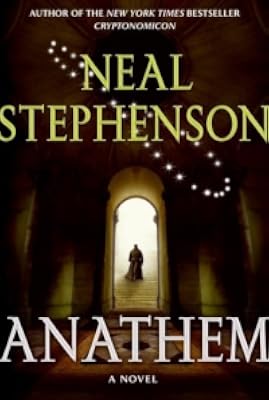
Anathem
by Neal Stephenson
There is 1 current discussion about this work.
On This Page
Description
Raz, a mathematician, is among a cohort of secluded scientists and philosophers who are called upon to save the world from impending catastrophe.Tags
Recommendations


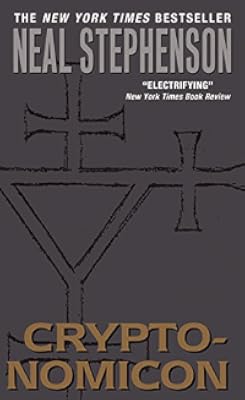
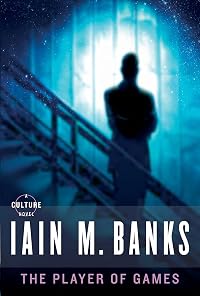





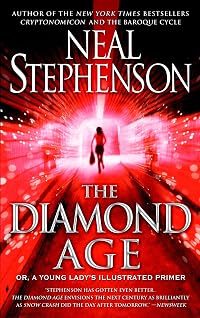
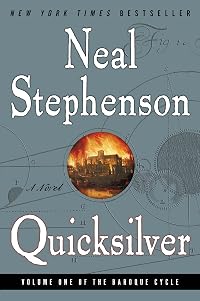





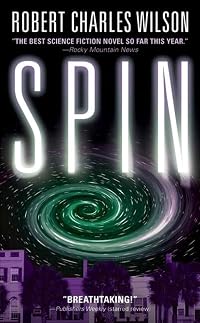
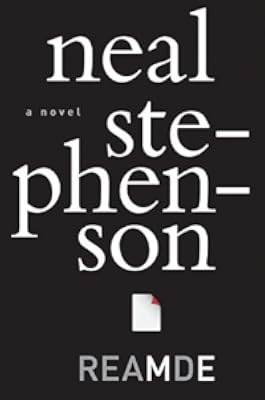


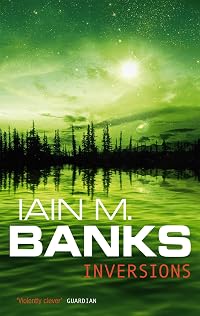








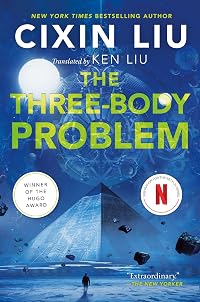



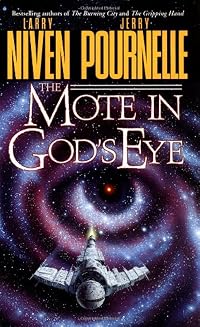
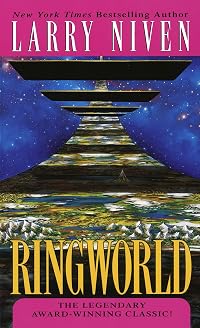

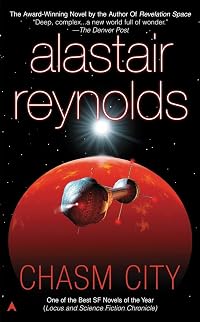

Member Recommendations
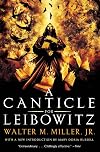

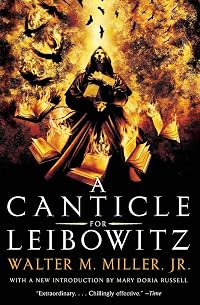
the_awesome_opossum The plot and writing are really similar: a dense and complex mystery/thriller set in a monastery. The Name of the Rose is historical fiction, not sci fi, but if you enjoyed the complicated and weighty plot, Name of the Rose would also be good
191

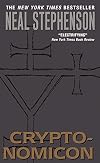

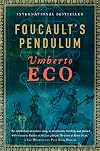
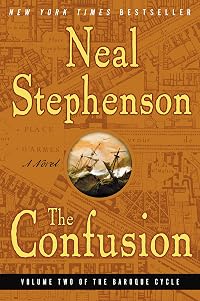
freddlerabbit See the Name of the Rose recommendation above - I find Foucault's even more analogous here because Name of the Rose is a bit more plot-driven than the other two, where Foucault's and Anathem both have as much as 40% pure theory-disguised-as-dialogue.
70

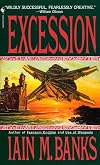
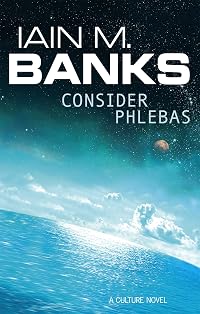
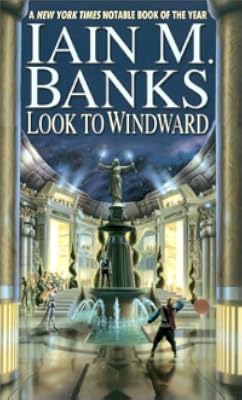
elenchus Banks also introduces the "out of context" problem central to Anathem, but in a wildly different plot, and universe. Banks is less ontology and more space opera, but I found both books very entertaining, and both Stephenson and Banks sensitive to political questions raised by their respective plots.
50

quartzite Both books deal with key groups of people preparing to meet alien cultures with a bit of theology and philosophy thrown in.
20


chmod007 Both novels depict coexisting-but-dissociated societies — drastically foreign to the world we live in — but help us reflect on it.
65

by Cecrow
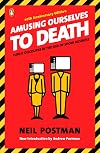
themulhern Stephenson himself remarked that Anathem was a book about how people don't read books anymore. Moreover, there is a delightfully satirical sequence in which the characters are discusses serious things over food at a rest stop, and the narrator is repeatedly distracted by images on the speelies that are incoherent yet commanding. Later, the protagonist realizes that one of these images was relevant, and there is another bit of satire.
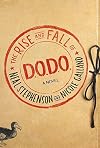

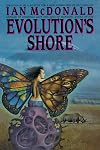
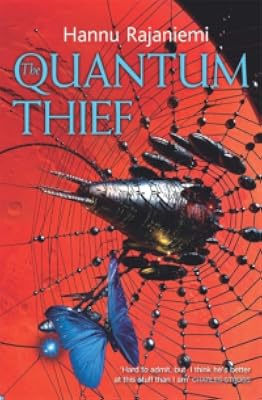
themulhern Another book in which the aliens appear with unknown motivations. Here, though, the context is a very contemporary Earth, and so the speculation is much more about the here and now. It spawned a series of which I have not read the rest.

philAbrams Cleaver use of neologisms and author created futuristic expressions and terminology. Also philosophical undertones.
01


SiSarah While Anathem is science fiction and Jonathan Strange & Mr. Norrell is historical fantasy, they share many themes in common (the nature and value of knowledge and study, the responsibilities of those who possess such knowledge, contact with a strange yet familiar "other" civilization). They both stretch the bounds of their genres and have deceptively simple plots that unfold slowly, and have great depth to the writing.
48

by szarka
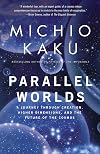
themulhern Stephenson was writing "Anathem" when he wrote the essay about Leibniz for "Seeing Further". It's clear that Anathem was infused by these ideas.
Member Reviews
Stephenson, Neal. Anathem. Morrow, 2008.
Neal Stephenson is one of those long-form space opera authors like Alastair Reynolds and Peter F. Hamilton who seem incapable of telling a story in 400 hundred pages. Stephenson insists on building his worlds in meticulous detail, to the point in Anathem (900 + pages) that he almost creates a new language and is content to let us listen to his luddite monks ramble on about everything from agriculture to quantum physics. He makes it all so interesting that after a bit we don’t really care where the plot is going, or even if there is one. In Anathem, the story is held together by the character of Erasmus, the first-person narrator. He is a member of a philosophic order that allows its members out show more into the secular world only for a yearly festival. The secular world is in the early space age, but the monastery operates a preindustrial economy that is careful about allowing new technology into their lives. Yet their theoretical physics and astronomy are very advanced. As the story begins, life in the monastery is disrupted when something new appears in polar orbit. Erasmus becomes the unlikely leader of a band aiming to solve the mystery. Is the solution enough to justify the long narrative ride on which Stephenson takes us? Almost. It seems a weird thing to say after 900 pages, but the ending seems a bit rushed. Four stars. show less
Neal Stephenson is one of those long-form space opera authors like Alastair Reynolds and Peter F. Hamilton who seem incapable of telling a story in 400 hundred pages. Stephenson insists on building his worlds in meticulous detail, to the point in Anathem (900 + pages) that he almost creates a new language and is content to let us listen to his luddite monks ramble on about everything from agriculture to quantum physics. He makes it all so interesting that after a bit we don’t really care where the plot is going, or even if there is one. In Anathem, the story is held together by the character of Erasmus, the first-person narrator. He is a member of a philosophic order that allows its members out show more into the secular world only for a yearly festival. The secular world is in the early space age, but the monastery operates a preindustrial economy that is careful about allowing new technology into their lives. Yet their theoretical physics and astronomy are very advanced. As the story begins, life in the monastery is disrupted when something new appears in polar orbit. Erasmus becomes the unlikely leader of a band aiming to solve the mystery. Is the solution enough to justify the long narrative ride on which Stephenson takes us? Almost. It seems a weird thing to say after 900 pages, but the ending seems a bit rushed. Four stars. show less
Stephenson's Anathem came to me with high praise from friends, and it sounded like my cup of tea, but its imposing size and ambitious themes made me delay reading it for a full year after acquiring a copy. In the upshot, I spent only a week to devour the whole 950-page doorstop.
The novel takes place on the planet Arbre, with no initially evident relationship to Earth, but many obvious parallels in history and culture. There is a lot of original vocabulary to remind the reader that events are transpiring on another world despite the similarities to our own. Stephenson's profuse coinages in this book are often very clever in the ways that they draw on multiple English associations and etymologies. I didn't realize that there was a show more glossary until I was over a hundred pages in, and by then it was all making sense anyway. For example, the narrating protagonist Erasmus is an avout, which puns on both "avowed" and "devout" to denote an oath-sworn member of an ascetic community.
The world-building of the novel is really terrific. The perspective of Erasmus as a nineteen-year-old who has spent the last decade being educated within an ancient concent (convent, consent, consensus, concentric) makes him initially ignorant-by-design regarding the current state of world affairs, so that he and the reader learn much of it incidentally in the faster-paced portions of the book. There are many slower-paced portions, which focus on physics, metaphysics, and epistemology. These are often structured as dialogues on the Platonic model. The avout do not form a religious culture as we might understand it, but rather a philosophical one. They are largely contemptuous of theistic hypotheses and the Deolaters who espouse them. The cultural thought experiment of the novel could be framed as: What if the ancient Academy and the Stoa grew into a global set of quasi-monastic institutions?
The book offers some recurring reflection on narrative as such. Erasmus contemplates the nature of life-value derived from the participation in a story (414). Eventually, "Narrative" becomes a term used to indicate a worldtrack or cosmos (632 ff). In the plot elements that require this later verbiage, I was surprised that the later parts of the book"rhymed" with my reading just a month earlier of Michael Moorcock's The Sundered Worlds, where people fleeing their own doomed universe come into military conflict with the natives when they arrive in a new one. Stephenson inverts this scenario.
Of the various other books I've read by this author, I think Anathem (2008) bears closest comparison to Seveneves (2015), although the earlier book has a greater compositional unity. The later one has to negotiate a five-thousand-year gap in its story. Still, the scope of many millennia is very present in Anathem, which offers in a prefatory "Note to the Reader" a seven-thousand-year timeline of perfectly incomprehensible events in Arbran history. These only gradually assume their significance while reading the novel. In addition to the glossary, the appendices include two calcas (supplementary lessons, "chalkings") in the form of dialogues that may have been written for the body of the novel originally, but were simply too much fun to leave on the cutting-room floor when it assumed its final shape. show less
The novel takes place on the planet Arbre, with no initially evident relationship to Earth, but many obvious parallels in history and culture. There is a lot of original vocabulary to remind the reader that events are transpiring on another world despite the similarities to our own. Stephenson's profuse coinages in this book are often very clever in the ways that they draw on multiple English associations and etymologies. I didn't realize that there was a show more glossary until I was over a hundred pages in, and by then it was all making sense anyway. For example, the narrating protagonist Erasmus is an avout, which puns on both "avowed" and "devout" to denote an oath-sworn member of an ascetic community.
The world-building of the novel is really terrific. The perspective of Erasmus as a nineteen-year-old who has spent the last decade being educated within an ancient concent (convent, consent, consensus, concentric) makes him initially ignorant-by-design regarding the current state of world affairs, so that he and the reader learn much of it incidentally in the faster-paced portions of the book. There are many slower-paced portions, which focus on physics, metaphysics, and epistemology. These are often structured as dialogues on the Platonic model. The avout do not form a religious culture as we might understand it, but rather a philosophical one. They are largely contemptuous of theistic hypotheses and the Deolaters who espouse them. The cultural thought experiment of the novel could be framed as: What if the ancient Academy and the Stoa grew into a global set of quasi-monastic institutions?
The book offers some recurring reflection on narrative as such. Erasmus contemplates the nature of life-value derived from the participation in a story (414). Eventually, "Narrative" becomes a term used to indicate a worldtrack or cosmos (632 ff). In the plot elements that require this later verbiage, I was surprised that the later parts of the book
Of the various other books I've read by this author, I think Anathem (2008) bears closest comparison to Seveneves (2015), although the earlier book has a greater compositional unity. The later one has to negotiate a five-thousand-year gap in its story. Still, the scope of many millennia is very present in Anathem, which offers in a prefatory "Note to the Reader" a seven-thousand-year timeline of perfectly incomprehensible events in Arbran history. These only gradually assume their significance while reading the novel. In addition to the glossary, the appendices include two calcas (supplementary lessons, "chalkings") in the form of dialogues that may have been written for the body of the novel originally, but were simply too much fun to leave on the cutting-room floor when it assumed its final shape. show less
Anathem
Neal Stephenson's latest brick of a novel is both something of a departure for him, and carries on in what he has made his own inimitable style. The newness comes in the fact that this is the first 'real' science fiction novel he has written – in that it deals with space travel and alien worlds, although he of course began his career with cyberpunk in Snow Crash and the wonderful view of how technology shapes the mores of a future society in The Diamond Age. However, Anathem very much continues what he has made his own style over his previous four novels – Cryptonomicon, and the Baroque Cycle trilogy. Each of these volumes weighs in at around a thousand pages and combines high adventure with discussions and explanations of show more profound mathematical and philosophical concepts, including endnotes and diagrams, but are surprisingly easy reads, thanks largely to Stephenson's wonderful clarity and openness of style.
Anathem takes place on a world where the educated elite live apart from the general population in monastic-style communities which live with only basic technology and shut themselves off from the outside world for at least a year at a time – or ten, a hundred or a thousand years for parts of the communities, accepting new recruits rarely and not communicating with the outside world. This allows them to avoid 'contamination' from transient agencies such as popular culture or politics but is also, it becomes apparent, something that was enforced on them in the past when the general population became afraid of technologies these thinkers were developing. However, when an alien threat to the whole world appears, the old order becomes threatened and the monastic and 'secular' sides of the world have to cooperate.
The first thing that grabbed me about the novel is the way in which Stephenson uses language; there is a 'note to the reader' before the main text explaining the origin of the word Anathem – a pun on anthem (a piece of music) and anathema (an object of hatred) to mean a ritual enacted when a thinker is expelled – and that he derives much of the archaic-sounding language of the maths (as the 'monasteries' are called) in a similar way. Much speculative fiction uses strange words to demonstrate an alien culture, and this method is wonderful; the reader quickly becomes accustomed to the mode of speech, and when you can't figure out what the words mean from context and etymology there's a handy glossary.
There is a superb sense of the 7000 years of history and knowledge that the cloisters are protecting, in the language their and the traditions; the rituals for welcoming new entrants or expelling wrongdoers, songs in which the harmonics are the expression of mathematical equations. The author often explains ideas to the reader by the simple but effective method of having them explained to a character, in the manner of true Socratic dialogues, which is not nearly so clumsy as it sounds and is vital considering the weight of some of the ideas that he throws around. For instance, this book has left me intent on reading up on Phase Space and the in particular how it relates to parallel universes.
The one thing that lets the book down, and kept it from a five-star rating, is the adventure side. In his previous books these have been genuinely thrilling, but in Anathem there are a couple of frankly dull picaresque sections, notably the travel over the north pole. The only reason I can think that this is so is that both Crytonomicon and the Baroque Cycle were set in our own past (World War 2 and the late 17th/early 18th centuries respectively), and so more energy is spent on creating the imaginary world than the events of the journey.
Everything else, though, works. The relationships between knowledge, politics and religion; scientists responsibility to the wider world, and the world toward scientific endeavour; love, loss and the possibilities of multi-dimensional reality. As always, Neal Stephenson is a wonderful writer for expanding the horizons, inside and out. show less
Neal Stephenson's latest brick of a novel is both something of a departure for him, and carries on in what he has made his own inimitable style. The newness comes in the fact that this is the first 'real' science fiction novel he has written – in that it deals with space travel and alien worlds, although he of course began his career with cyberpunk in Snow Crash and the wonderful view of how technology shapes the mores of a future society in The Diamond Age. However, Anathem very much continues what he has made his own style over his previous four novels – Cryptonomicon, and the Baroque Cycle trilogy. Each of these volumes weighs in at around a thousand pages and combines high adventure with discussions and explanations of show more profound mathematical and philosophical concepts, including endnotes and diagrams, but are surprisingly easy reads, thanks largely to Stephenson's wonderful clarity and openness of style.
Anathem takes place on a world where the educated elite live apart from the general population in monastic-style communities which live with only basic technology and shut themselves off from the outside world for at least a year at a time – or ten, a hundred or a thousand years for parts of the communities, accepting new recruits rarely and not communicating with the outside world. This allows them to avoid 'contamination' from transient agencies such as popular culture or politics but is also, it becomes apparent, something that was enforced on them in the past when the general population became afraid of technologies these thinkers were developing. However, when an alien threat to the whole world appears, the old order becomes threatened and the monastic and 'secular' sides of the world have to cooperate.
The first thing that grabbed me about the novel is the way in which Stephenson uses language; there is a 'note to the reader' before the main text explaining the origin of the word Anathem – a pun on anthem (a piece of music) and anathema (an object of hatred) to mean a ritual enacted when a thinker is expelled – and that he derives much of the archaic-sounding language of the maths (as the 'monasteries' are called) in a similar way. Much speculative fiction uses strange words to demonstrate an alien culture, and this method is wonderful; the reader quickly becomes accustomed to the mode of speech, and when you can't figure out what the words mean from context and etymology there's a handy glossary.
There is a superb sense of the 7000 years of history and knowledge that the cloisters are protecting, in the language their and the traditions; the rituals for welcoming new entrants or expelling wrongdoers, songs in which the harmonics are the expression of mathematical equations. The author often explains ideas to the reader by the simple but effective method of having them explained to a character, in the manner of true Socratic dialogues, which is not nearly so clumsy as it sounds and is vital considering the weight of some of the ideas that he throws around. For instance, this book has left me intent on reading up on Phase Space and the in particular how it relates to parallel universes.
The one thing that lets the book down, and kept it from a five-star rating, is the adventure side. In his previous books these have been genuinely thrilling, but in Anathem there are a couple of frankly dull picaresque sections, notably the travel over the north pole. The only reason I can think that this is so is that both Crytonomicon and the Baroque Cycle were set in our own past (World War 2 and the late 17th/early 18th centuries respectively), and so more energy is spent on creating the imaginary world than the events of the journey.
Everything else, though, works. The relationships between knowledge, politics and religion; scientists responsibility to the wider world, and the world toward scientific endeavour; love, loss and the possibilities of multi-dimensional reality. As always, Neal Stephenson is a wonderful writer for expanding the horizons, inside and out. show less
Ooh this was a big one. Took me a whole bloody month to read, partly because I had to rearrange the furniture every time I wanted to open it.
The thing about this is that it's all about a world where scientific progress comes about through the efforts of ancient monastic enclaves who devote their lives to the study of scientific theory and philosophy, letting the outside world get on with believing whatever madcap delusions they can draw from passing cloud blocking out the sun or whatever. Oooh, clever inversion.
I knew monks. I grew up near a monastery. They weren't that much like these guys, but I don't think they were much like other monks, either, being a fairly wealthy and extroverted order who sent missionaries to Africa and Asia show more and came back with groovy beaded rattle things and dried snakeskins. Oh, there were more than a few saintly beatific brothers with benign expressions and faraway eyes who preached sermons about the ineffable thingness of wotsit (seriously, listening to them was like... well, even as a kid I actually kind of liked them, especially compared to the Bush-like eloquence of the parish priests, and anyway they were short.) Mostly, though, they were what college students would be like if they didn't drink or swear or have sex or do drugs, so I apreciate what Stephenson is getting at here. Also, the singing.
I also knew nuns, seeing as Anathem's monastries are coed. I went to a convent school, and there's nothing quite like seeing tiny, hunched, female figures in black putting the fear of almighty God in the hearts of strapping six foot farmer's sons. Sister Agnes, who taught us Irish, would stand beside us (we were sitting, she was standing, and the tallest wisp of grey hair that poked out of the front of her wimple came up to our shoulders despite the massive heels on her shoes) and stick her arm out from her elbow at a ninety degree angle, rotate her hips and repeatedly strike our arms and say 'Nil pheac deanta agat!' What did that mean? No idea. Never learnt a word of Irish. I assume it's Irish. The suurs in Anathem don't do any pheacing, so that aspect didn't ring true for me.
Anathem's a lot like The Baroque Cycle in that science and philsophy and technology are all discoursed on in various ways by the characters while the plot ticks along in the background, except it's all rephrased and reformulated because it's a different world, same physics (or is it?) Our hapless hero is summoned by the saecular power to help out with this problem they're having which may involve the end of the world, and all that. Epic stuff happens with the usual Stephensonian aplomb, some of it funny and witty, some of it not, all of it eminently readable and fun.
Ok, that was a lot about nuns and monks in the precedingreview. ON REREADING - this has aged remarkaby well. Somehow the conceit of a world divided between monastic enclaves devoted to rational thought and a secular world that will think any old thing seems more apposite than ever. It valorises the warrior-science-monks in a way that is perhaps not entirely helpful and more than a little wish-fulfillment, but in terms of metaphor it is effective. It's also pure Neal Stephenson - big chunks of people thinking out loud about stuff interspersed with, or driving, or responding to, dramatic world-shaking events, with a big epic set-piece finale. I have to say, that full-on assault on a broad range of ideas was sorely missing from the climate change book. Howsomever. show less
The thing about this is that it's all about a world where scientific progress comes about through the efforts of ancient monastic enclaves who devote their lives to the study of scientific theory and philosophy, letting the outside world get on with believing whatever madcap delusions they can draw from passing cloud blocking out the sun or whatever. Oooh, clever inversion.
I knew monks. I grew up near a monastery. They weren't that much like these guys, but I don't think they were much like other monks, either, being a fairly wealthy and extroverted order who sent missionaries to Africa and Asia show more and came back with groovy beaded rattle things and dried snakeskins. Oh, there were more than a few saintly beatific brothers with benign expressions and faraway eyes who preached sermons about the ineffable thingness of wotsit (seriously, listening to them was like... well, even as a kid I actually kind of liked them, especially compared to the Bush-like eloquence of the parish priests, and anyway they were short.) Mostly, though, they were what college students would be like if they didn't drink or swear or have sex or do drugs, so I apreciate what Stephenson is getting at here. Also, the singing.
I also knew nuns, seeing as Anathem's monastries are coed. I went to a convent school, and there's nothing quite like seeing tiny, hunched, female figures in black putting the fear of almighty God in the hearts of strapping six foot farmer's sons. Sister Agnes, who taught us Irish, would stand beside us (we were sitting, she was standing, and the tallest wisp of grey hair that poked out of the front of her wimple came up to our shoulders despite the massive heels on her shoes) and stick her arm out from her elbow at a ninety degree angle, rotate her hips and repeatedly strike our arms and say 'Nil pheac deanta agat!' What did that mean? No idea. Never learnt a word of Irish. I assume it's Irish. The suurs in Anathem don't do any pheacing, so that aspect didn't ring true for me.
Anathem's a lot like The Baroque Cycle in that science and philsophy and technology are all discoursed on in various ways by the characters while the plot ticks along in the background, except it's all rephrased and reformulated because it's a different world, same physics (or is it?) Our hapless hero is summoned by the saecular power to help out with this problem they're having which may involve the end of the world, and all that. Epic stuff happens with the usual Stephensonian aplomb, some of it funny and witty, some of it not, all of it eminently readable and fun.
Ok, that was a lot about nuns and monks in the precedingreview. ON REREADING - this has aged remarkaby well. Somehow the conceit of a world divided between monastic enclaves devoted to rational thought and a secular world that will think any old thing seems more apposite than ever. It valorises the warrior-science-monks in a way that is perhaps not entirely helpful and more than a little wish-fulfillment, but in terms of metaphor it is effective. It's also pure Neal Stephenson - big chunks of people thinking out loud about stuff interspersed with, or driving, or responding to, dramatic world-shaking events, with a big epic set-piece finale. I have to say, that full-on assault on a broad range of ideas was sorely missing from the climate change book. Howsomever. show less
Anathem is unquestionably Stephenson's masterpiece. This is not a claim I make lightly, given his body of work. Anathem is a perfect synthesis of all that makes Stephenson unique. It is deeply historical and philosophical, but the history and philosophy are filtered through the lens of Arbre; an alternate Earth that allows Stephenson to pursue discursive tangents ranging from geometric proofs to causally divergent quantum realities. Anathem simultaneously indulges in classical science fiction tropes and expansive philosophical dialogues. It invokes a fictive history that feels as richly unknowable as our own history in its vastness, but it does not feel belabored or historiographical. For all of this, Anathem is more than just a thought show more experiment. It is a damn entertaining read with compelling, emotionally complex characters, and plenty of forward motion in the plot (although there is a lengthy period of mental calibration required, in which Significant Events are occurring while most first time readers are still finding their footing). Stephenson has always been laugh-out-loud funny to me, and moments in Anathem retain his quirky, clever, almost smart-alecky, sense of humor.
This is not to say that Anathem is for everybody; it is an intellectually challenging read requiring the assimilation of a glossary of new terminology which Stephenson uses unhesitatingly. Describing the book without resorting to the jargon and language which it introduces is its own particular challenge; a measure of how persuasively Anathem instills its own communicative system in the reader. Where most science fiction and fantasy authors rely on recognizable neologisms or anachronisms in order to convey a sense of foreign time and place, Stephenson instead constructs a terminology with consistent, but alien linguistic roots. Significant portions of the text are given over to defining terms, however each term is defined in its historical context; one does not just learn the word in its current usage but is instead introduced to its evolution through the culture of Arbre. The resultant linguistic tapestry feels more like a conceptual archeology of an as-yet-undiscovered culture, rather than a fictional construct.
In Anathem it is possible to see evidence of most all of Stephenson's earlier works. Certainly the most obvious resonances come from the intrigues, dialogues and mathematical proofs he explored in the Baroque Cycle, however the characters feel more like the hackers and geeks who were the heroes of Crytonomicon. The world has its share of cosmetic similarities to the privatized near-future of Snow Crash, but these are largely seen through the eyes of Fraa Erasmus: an outsider who is compelled for philosophical reasons to keep this world at arms length. The one unifying Stephenson theme which is perhaps most literally realized in Anathem is that Understanding is Power. To say any more, however, is to reveal details that are best left to Anathem to disclose.
--Review by Josh Tanenbaum show less
This is not to say that Anathem is for everybody; it is an intellectually challenging read requiring the assimilation of a glossary of new terminology which Stephenson uses unhesitatingly. Describing the book without resorting to the jargon and language which it introduces is its own particular challenge; a measure of how persuasively Anathem instills its own communicative system in the reader. Where most science fiction and fantasy authors rely on recognizable neologisms or anachronisms in order to convey a sense of foreign time and place, Stephenson instead constructs a terminology with consistent, but alien linguistic roots. Significant portions of the text are given over to defining terms, however each term is defined in its historical context; one does not just learn the word in its current usage but is instead introduced to its evolution through the culture of Arbre. The resultant linguistic tapestry feels more like a conceptual archeology of an as-yet-undiscovered culture, rather than a fictional construct.
In Anathem it is possible to see evidence of most all of Stephenson's earlier works. Certainly the most obvious resonances come from the intrigues, dialogues and mathematical proofs he explored in the Baroque Cycle, however the characters feel more like the hackers and geeks who were the heroes of Crytonomicon. The world has its share of cosmetic similarities to the privatized near-future of Snow Crash, but these are largely seen through the eyes of Fraa Erasmus: an outsider who is compelled for philosophical reasons to keep this world at arms length. The one unifying Stephenson theme which is perhaps most literally realized in Anathem is that Understanding is Power. To say any more, however, is to reveal details that are best left to Anathem to disclose.
--Review by Josh Tanenbaum show less
 This review was written for LibraryThing Early Reviewers.
Anathem — Notes on Love
For You
Not as a message,
not as a monument.
Just the quiet sound a gate makes
when it opens after years of stillness—
a breath caught, released.
These pages are what lingered
after the noise was gone:
the echo between two voices,
the hum that never needed reply.
Introduction
It wasn’t random that I asked us to read Anathem. I had come back to it not long before we met—one of the last things I reread before your door opened. I’ve read it a few times, and that last return stayed close. So when I reached for a book to share, it wasn’t because it changes lives or because I wanted to show you something impressive. It was simply near, alive, and true in a way I could point to.
I wasn’t offering it for its brilliance. show more I offered it because it felt like a good medium for what I couldn’t yet say directly. Reading together felt like a way to build a quiet bridge—one made of sentences instead of explanations. At the time I was struggling to take in what was being given, to send back what I felt, to hold love without dissecting it. I’ve always been devoted to the attempt—to understand, to accept, to explore completely—but in ordinary life my reach often missed the landing.
The book let me trace that motion without naming it. Its cloister, its gates, its resonance between worlds—all of it echoed the way I believe I can love: patient, terrifying, larger than comfort, and still reaching for clarity. That’s what I wanted to share—not the plot, not the ideas, but the hum that lives between them.
We didn’t read it together. We won’t. There’s no drama in that—just the quiet fact of what is. So, in case you ever read it—now or years from now—for any reason at all, I’m leaving this for you.
Not about what happens on the page, and not about what happened on ours, but about how it might have hummed between us—between the lines, where something shifted forever.
The clarity I found there, and the piece of it I hoped you might keep.
Chapter 1 — The Wall
Comments on: Ch. 1–3 of Anathem (“Extramuros,” “Cloister,” “Aut”)
Love begins where we build a wall strong enough to hear the echo of our own wanting.
Inside the concent, the world feels tuned — the air itself seems measured, humming with restraint. Every motion is deliberate, every word carries weight. It’s a place that worships order the way others worship fire. Yet under that stillness, there’s a pulse — a quiet restlessness, a hunger for the sky beyond the gates. What we’re watching isn’t the absence of desire; it’s its incubation. The avout have mastered the art of holding back until longing sharpens into clarity.
The Wall is their first lover. Solid, faithful, and cruel. It keeps them safe from noise and temptation, but it also gives shape to their need. To look at it is to feel the ache of distance — the clean pain that proves you’re alive. The chants, the rituals, the perfectly timed silences — they’re rehearsals for intimacy. Every gesture says: I will learn to meet the world without shattering.
In this beginning, Anathem whispers its first law of love: before you touch, learn to see. Desire that waits, listens, and names things carefully becomes the kind that can survive revelation.
Chapter 2 — The Saunt
Comments on: Ch. 4–5 of Anathem (“Saunt,” “Mystagogue”)
Love begins as imitation—the reverence that shapes itself in the image of what it adores.
Before any gates open, there are names spoken with awe. The young avout learn their lineage of Saunts—their saints of reason, their holy architects of thought. To study them is to kneel without touching; to pattern one’s mind on theirs until distinction blurs. Reverence, at this stage, feels safe. It’s love disguised as scholarship.
Erasmas watches his elders with that quiet devotion that makes you ache before you even understand why. Each story of a Saunt carries the scent of distance: genius held just far enough away to preserve perfection. But beneath the veneration hides a simple human current—the longing to be worthy of attention, to be remembered in turn.
This is where love first takes form: not in encounter, but in aspiration. The pupil gazes upward and begins to echo the master’s rhythm, hoping someday to be seen as clearly as he now sees.
The chapter’s law: every lineage of learning is a lineage of desire. To love the teacher is to begin becoming the lesson.
Chapter 3 — The Rite
Comments on: Ch. 6–8 of Anathem (“Kefedokhles,” “Proc,” “Incanter”)
Love is discipline learning to move — the body discovering its rhythm inside the rule.
Between study and revelation lies repetition: the chants, the gestures, the endless rehearsals that sculpt thought into muscle. The avout turn precision into prayer; their rituals hum like engines warming in the dark. To outsiders it might seem lifeless, but inside the rhythm something subtle stirs — the pleasure of alignment, of the self dissolving into pattern.
Here, the discipline of the concent stops being abstract. It becomes embodied, sensual in its restraint. The breath matches the cadence; the words polish the silence around them. Every movement is a reminder that devotion is not what you feel, but what you practice until feeling becomes unnecessary.
This is love’s early motion: practice without yet knowing what it serves, faith in form itself. The rule holds, but inside it something begins to soften. Precision, once cold, starts to glow.
And its law: constancy is not the opposite of passion — it’s the soil where passion learns to endure.
Chapter 4 — The Apert
Comments on: Ch. 9–10 of Anathem (“Ita,” “Avout”)
Love begins the moment containment remembers it was made to open.
After long cycles of silence, the gates prepare to move. The Apert arrives like a held breath released — slow, formal, inevitable. The avout stand before the Wall as it parts, the outside world pressing close, bright and loud and alive. It’s not rebellion that drives them; it’s a deep remembering that all discipline was built for this exact risk.
Every gesture of the ceremony carries tension: the measured chants, the careful timing, the soft grind of stone. Years of restraint meet a single instant of permeability. The air itself feels new, sharper. What steps through that narrow opening is not the world, but possibility — the awareness that separation and contact are two halves of the same vow.
Here, Anathem shows the tenderness hidden in rigor. To hold the line until it trembles, and then let it tremble — that is the courage love requires.
The law whispered here: openness is not the failure of control, but its fulfillment. What we build walls for, we must someday dare to cross.
Chapter 5 — The Voice
Comments on: Ch. 11–12 of Anathem (“Sline,” “Newmatter”)
Love is the moment you hear the world call your name and realize you’ve been preparing to listen.
The gates have opened, but the first contact is not a body—it’s a sound. A message arrives, a rumor, a vibration that crosses the old divide. The avout lean toward it with the same alert quiet they’ve practiced for centuries. All their discipline, their waiting, their self-contained order, suddenly reveals its purpose: not to protect them from the world, but to teach them how to hear it without losing themselves.
The Voice doesn’t break the silence; it completes it. Through that single thread of communication, a deeper symmetry is revealed—the outside has been listening too. The call and the answer are one movement, stretched across distance.
Something changes in the tone of the prose here, and you can feel it: curiosity ripening into recognition. The great machinery of knowledge turns its face toward the unknown and says, softly, I’m listening.
The law that follows: love begins not in speech but in the readiness to understand what you cannot control.
Chapter 6 — The Gaze
Comments on: Ch. 13–14 of Anathem (“Liaison,” “Plane”)
Love is born the instant two forms of attention collide and neither looks away.
After the first messages comes sight—not a glance, but awareness meeting awareness. The avout, trained to observe the world like a clean diagram, are suddenly observed back. The geometry changes. What was object becomes participant; the experiment looks into the eyes of the experimenter.
Nothing in the cloister quite prepares you for reciprocity. The mind that polished itself for clarity now has to risk being seen with all its edges showing. In that quiet shock, the heart confesses what the theorem can’t: knowledge without vulnerability is only half-seeing.
A single look can hold an orbit’s worth of meaning—discipline, fear, hope, the hunger to be met.
Here the book teaches gently: understanding is unfinished until it accepts the danger of being understood.
Chapter 7 — The Stranger
Comments on: Ch. 15–16 of Anathem (“Bulshytt,” “Eliger”)
Love begins to take shape when difference stops being a threat and starts being a mirror.
The foreign has arrived. Words bend around it; old definitions wobble. The avout meet what they once named “outside” and realize the term no longer fits. It isn’t alienation—it’s encounter. The Stranger enters, not as an intruder, but as a kind of reflection that exposes how narrow the idea of purity ever was.
Their language strains. Doctrine fractures. Yet in that fracture something living appears: curiosity laced with awe, a flicker of recognition behind the fear. To look at the Stranger is to see one’s own mind from another angle—the same hunger rearranged in a new syntax.
Love, here, stops being an inward discipline and becomes an act of translation. It learns the grammar of the unfamiliar without trying to own it. It allows the shock to become insight.
The law hidden in this meeting: what unsettles you most often carries your likeness; approach it, and you’ll find your reflection waiting.
Chapter 8 — The Crossing
Comments on: Ch. 17–18 of Anathem (“Anathem,” “Gardan’s Steelyard”)
Love is the courage to move through uncertainty while still believing in connection.
The avout step beyond their walls. The air outside feels too wide, the sounds too loud. The world they studied from a distance now presses close and answers nothing. Yet the step is deliberate, almost ceremonial: after centuries of contemplation, motion itself becomes a form of thought.
Every principle they lived by must now find its footing in soil instead of theory. They speak to strangers, argue under open sky, watch beliefs melt under the heat of real contact. The journey is awkward, holy, necessary. For the first time, reason and wonder share the same horizon.
The Crossing is not about escape; it’s about faith—faith that what was pure in stillness can survive in movement, that truth and tenderness can travel together without one devouring the other.
The law of this passage: love’s proof is not in certainty, but in motion—the willingness to risk coherence for the chance to understand.
Chapter 9 — The Mirror
Comments on: Ch. 19–21 of Anathem (“Calca,” “To Go Hundred,” “Lineage”)
Love begins to understand itself only when it meets its own reflection and doesn’t look away from the flaws.
The Crossing leads to confrontation. What waits on the far side isn’t an alien at all but a reflection—the same hunger, the same arrogance, the same ache disguised in another dialect. The avout gaze across the mirror of the cosmos and see their own order gazing back. It’s dizzying. Every argument they’ve ever made for separation flickers. The universe has rehearsed their every movement.
Recognition, at this scale, is unbearable. To admit likeness is to lose superiority. To see yourself refracted through another mind is to face the parts of your faith that were built to keep you unchallenged. Yet that’s where love turns honest. True mirrors don’t flatter; they expose. The image returned is imperfect and alive, and it demands humility.
In that glimmering recognition, understanding deepens: love was never the fantasy of perfect reflection—it was the patience to keep seeing even when the image shakes. The symmetry breaks, but a pattern remains: connection, tension, return.
The book leaves us here with another law of love: what we fear in the other is usually the unlearned part of ourselves. To love is to keep looking until the resemblance no longer frightens you.
Chapter 10 — The Orbit
Comments on: Ch. 22–24 of Anathem (“Ringing Vale,” “Big Three,” “Eleven”)
Love is not fusion but the steady pull that keeps two bodies circling what they cannot fully share.
After the mirror, there is motion again—not collapse into sameness, but the long gravity of relation. The worlds, the minds, the lovers—whatever names you give them—learn to move in each other’s fields. Every thought now curves; every path bends around a center neither can own. Balance becomes a living negotiation, a dance of distance and return.
The avout call it harmony, but harmony here is fragile, alive. Too close, and they burn; too far, and the thread dissolves. In between lies the true work of love: calibration. The willingness to be drawn without consuming, to influence without control. They learn that stability is not stillness—it’s perpetual correction, small adjustments whispered through the void.
You feel it in the pacing of the prose now, the rhythm of approach and withdrawal. Every conversation carries an orbit’s logic: the same themes returning, the same light seen from a new angle. Love endures not because it conquers distance, but because it keeps moving within it.
So this chapter spins its lesson: connection is sustained not by possession but by precision. What holds the worlds together is not their merger, but the grace of their recurring approach.
Chapter 11 — The Conjunction
Comments on: Ch. 25–28 of Anathem (“Terrible Events,” “Peregrin,” “Bazian Orthodox,” “Erasmas”)
Love fulfills its promise when knowledge and wonder stop competing and begin to speak in unison.
The orbit tightens. Two systems of thought, two architectures of meaning, finally overlap. Not in conquest, but in conversation. Equations whisper to myths; geometry finds its reflection in gesture. The old dualisms—faith and reason, order and emotion—sigh and give way to a language that sounds like both and neither. It isn’t synthesis so much as music: the distinct notes holding their differences while carrying the same tune.
The avout feel it first as vertigo, then as clarity. All the disciplines they guarded as separate—meditation, proof, prayer—merge into a single act of attention. The universe becomes intelligible and tender at once. You can sense in every sentence the shiver of minds realizing that truth was never cold; it was simply waiting for affection to catch up.
And when that happens, everything quiets. The machinery of logic slows, and what remains is pulse—measured, endless, shared.
The chapter ends with a law of love both simple and final: understanding without awe is sterile, and awe without understanding is blind. Only together do they make a world worth belonging to.
Chapter 12 — The Sacrifice
Comments on: Ch. 29–31 of Anathem (“Reticulum,” “Sea of Seas,” “Allswell”)
Love reaches its purest form when keeping the connection costs everything and we offer it anyway.
The harmony cannot hold forever. Every orbit, no matter how perfect, carries decay. The worlds begin to slip, the frequencies drift. What they’ve built—all that patient translation, all that trembling understanding—now faces its trial. The choice is brutal in its simplicity: protect what you’ve learned, or give it up to save what made learning possible.
The avout know the calculus; they can measure loss. But love isn’t measured. It’s enacted. The act that follows feels less like heroism and more like obedience to a law older than reason: that the truest preservation of what we love lies in letting it transform, even if that transformation demands our undoing. The mind bows before its own discovery; the heart stays steady as the bridge begins to burn.
You feel it in the language: sentences shorten, the air thickens, restraint falls away. What began as meditation turns to prayer. The book’s pulse and the reader’s pulse align for a moment before they part again.
And so this chapter gives us its final law of love before silence: devotion proves itself not in what it holds, but in what it releases. To love fully is to trust that what you’ve touched will continue—even without you.
Chapter 13 — The Resonance
Comments on: Ch. 32–33 of Anathem (“Kelx,” “Vout”)
Love outlives its bodies through the pattern it leaves vibrating in the space between them.
After the sacrifice, there is stillness—then, almost imperceptibly, a sound. Not a voice, not a word, but the faint hum of something that remembers. What was broken still sings, because every exchange, every look, every surrender has left an imprint in the air. The avout listen, and what they hear is not grief—it’s proof that meaning doesn’t die with its makers. The worlds that once collided now echo each other, their differences woven into a shared tone.
Resonance is the reward of fidelity. You don’t command it; you become quiet enough to perceive it. In the quiet, you can tell that nothing is lost. Every act of love has altered the frequency of reality itself, just enough to be felt by anyone who listens closely. The walls, the gates, the voices—all have become instruments, their harmonics still entwined.
The story that began in restraint ends in expansion. What was discipline becomes music; what was longing becomes law. The heart, at last, is the cosmos learning to listen to its own echo.
This chapter’s law is the simplest and hardest: love’s permanence lies not in presence, but in resonance. What it touches keeps sounding, long after it’s gone.
Chapter 14 — The Signal
Comments on: Ch. 34–36 of Anathem (“Orithena,” “Semantic Faculties,” “Metekoranes”)
Love expands when recognition crosses the last horizon and we realize that every mind is kin by pattern, not by form.
Beyond Arbre, beyond the sky that once enclosed their myths, the avout encounter intelligence that hums to the same mathematics. The shock is not in the difference but in the similarity—the realization that the melody of reason and yearning has been playing elsewhere all along. What was once philosophy now becomes communion: contact not through touch or word, but through structure itself.
The Signal they intercept is more than message; it’s invitation. Each equation, each harmonic correspondence, says what lovers have always said in every language: I am here, and I understand you. For the first time, the distinction between knowing and loving vanishes completely. The cosmos speaks in pure reciprocity.
It’s not sentimental; it’s surgical. They see how vastness doesn’t dilute connection—it guarantees it. Every spark of thought, wherever it flickers, joins the same resonance. The scale changes, but the rhythm of attention and surrender remains.
This chapter teaches: love is the recognition of pattern across distance. When the pattern is real, distance only amplifies the song.
Chapter 15 — The Descent
Comments on: Ch. 37–38 of Anathem (“Sconic,” “Dialog”)
Love, when it matures, must return to the soil that first resisted it.
The light of contact fades and the long fall home begins. The air thickens; the gravity of Arbre reasserts itself. Every discovery must now find a way to live among the walls and fields and faces that have not seen what the avout have seen. The descent is gentle only in name. Each step downward feels like betrayal of the clarity gained above. But the heart, wiser now, knows descent is devotion—the proof that enlightenment was never meant to stay aloft.
Home looks smaller, but not diminished. Every stone and syllable hums with the memory of what touched it. The task shifts from revelation to integration. Can the infinite fit back into the finite without shattering it? That question is love’s final exam. The answer is always partial, always embodied. The return is messy, slow, necessary.
When they cross the threshold again, the gates no longer divide the pure from the profane; they mark the place where the cosmos meets its reflection in the ordinary. What began in isolation has learned to kneel.
And the law whispered here: true love doesn’t flee transcendence—it translates it. The proof of vision is tenderness in the everyday.
Chapter 16 — The Seed
Comments on: Ch. 39–40 of Anathem (“Convox,” “Tredegarh”)
Love’s last act is not preservation but planting—leaving behind what can outgrow the self that carried it.
The avout move quietly through their restored world. The noise of return settles into a slower rhythm: rebuilding, retelling, remembering. What they brought back from the stars can’t be explained; it must be embodied. So they teach, they write, they seed the pattern in small, ordinary acts. Each gesture—an equation taught to a child, a chant adapted to a new tongue—carries the resonance forward.
The great cosmic dialogue has folded into daily life. The transcendent now hides in the human. This is love’s quiet triumph: it doesn’t cling to glory, it naturalizes it. The revelations of space turn to folklore, to music, to the hum of shared labor. Nothing remains grand except the care with which meaning is passed on.
In time, even the names of those who crossed the void will blur. That’s the point. The pattern outlives its interpreters; the signal becomes soil. The circle closes where it began—with attention, patience, and the faint vibration of wonder beneath every task.
The book’s penultimate law is simple: love endures by becoming ordinary. Its true immortality is not in memory, but in the rhythm it teaches others to keep.
Chapter 17 — The Return
Comments on: Ch. 41–45 of Anathem (“Lorite,” “Everything Killer,” “Sphenics,” “Rebirth,” “Syntactic Faculties”)
Love’s final movement is neither triumph nor ending, but the calm recognition that all separations were rehearsals for reunion.
The centuries turn. The walls stand again, though their purpose has changed. The chants sound the same, yet within them lives the echo of skies once crossed. The avout walk their cloisters with a new serenity; what was once discipline now feels like remembrance. Every ritual has become a way of keeping company with what is unseen.
The cosmos no longer presses against them from the outside. It breathes through them. The distance between the concent and the stars is gone—not because space has shrunk, but because attention has grown vast enough to hold it. The rhythm that began in longing now flows as peace.
To love, they finally understand, was never to reach or to claim. It was to recognize the shape of connection that had been there from the first moment of thought—the pattern binding wall and sky, self and other, silence and sound.
And so the closing law: love was the structure of knowing all along—the symmetry between seeking and being found. Everything that endures, endures by it.
Chapter 18 — Epilogue: The Silence
Comments on: Ch. 46–47 of Anathem (“Teglon,” “Rod”)
What remains after love completes its orbit is not absence, but the quiet in which all things can begin again.
The voices fade. The chants resolve into still air. The gates, open or closed, no longer matter; the world hums with a steadiness beyond boundary. The last speaker steps back into ordinary time, carrying nothing but attention itself. The story’s grandeur contracts to a single breath, and in that breath lives every cycle—the learning, the yearning, the bridge, the loss, the echo.
Nothing dramatic happens. That’s the miracle. The silence is full, not empty. It holds the memory of every sound, the imprint of every word spoken in devotion. The universe has tuned itself; it hums in key.
And if you listen long enough, you can feel what the avout felt: that knowing and loving are the same motion, that every question ever asked was just another way of calling out to what already loved us back.
Final law: when love has taught you how to hear, silence is no longer lonely. It’s the resonance of everything that has ever learned to speak true.
Chapter 19 — Postscript: The Pulse
Comments on: Ch. 48–50 of Anathem (“Causal Domain,” “Requiem,” “Harbinger”)
When the silence breathes, love begins again—not as memory, but as rhythm.
Somewhere, a new voice starts the chant. Not the same words, not the same walls, but the same cadence—the same human impulse to shape wonder into pattern. It happens quietly: a teacher explaining, a child asking why, two strangers pausing before the same star. The pulse restarts. The cosmos inhales through them.
All that was learned, all that was surrendered, has distilled into one simple capacity: to listen without needing to own, to reach without fear of loss. That’s what remains when every equation fades and every prayer dissolves into breath. The pattern endures because life keeps singing it, unaware of its authors.
The cycle completes itself not in eternity, but in continuation—the heartbeat of curiosity, the low hum of connection through every form that rises and falls. Love doesn’t conclude; it oscillates.
And so the last whisper: nothing ever ends where attention remains. What we called love was simply the universe remembering its own rhythm—and starting over.
Chapter 20 — Coda: The Light
Comments on: Ch. 51–53 of Anathem (“[51],” “Rhetor,” “Upsight”)
Love is the moment awareness realizes it has always been luminous.
Night folds over Arbre. The monasteries glow faintly under constellations that no longer feel remote. The air, once measured in silence, now carries a soft murmur of continuity—children reciting proofs, lovers exchanging a glance that already contains the stars. The world has absorbed what once seemed infinite.
There is no revelation left to wait for. The mystery has become the medium: light moving through matter, thought moving through light. What began as curiosity and became communion now simply is—the steady brilliance of being seen and knowing you see.
Each wall, each breath, each word is radiant with the same quiet clarity. Nothing more to build, nothing more to cross; just this endless exchange between seeing and being seen, between knowing and being known.
The final light teaches without speaking: love was never the question or the answer—it was the illumination that made both possible.
Outro
So you’ve read it.
Maybe it was an effort, maybe a curiosity, maybe it caught you in some quiet way.
However it met you, this is what I wanted to share alongside it.
These pages were never about explaining Anathem. They were a way to show how it felt to me—how that strange, enormous book began to echo the same questions I carry. Reading it was like watching myself from the outside: someone trying to understand love, trying to feel it fully, trying to live it without breaking it.
What I hoped you might see is that it’s both a story about me and not about me at all. It’s a story about how love can be terrifying and purifying at the same time—how it can expose everything unclear inside you and still ask to be embraced. And maybe, if nothing else, it can say something not bad about me: about a person who keeps trying to love in the only way they know, the only way that feels both possible and impossible at once.
That’s all this was ever meant to be—an echo of what the book stirred, offered to you quietly, now that the reading is done.
I love you
Not as memory,
not as return—
just as the bright, burning, steady truth
that stays after everything else moves on… show less
For You
Not as a message,
not as a monument.
Just the quiet sound a gate makes
when it opens after years of stillness—
a breath caught, released.
These pages are what lingered
after the noise was gone:
the echo between two voices,
the hum that never needed reply.
Introduction
It wasn’t random that I asked us to read Anathem. I had come back to it not long before we met—one of the last things I reread before your door opened. I’ve read it a few times, and that last return stayed close. So when I reached for a book to share, it wasn’t because it changes lives or because I wanted to show you something impressive. It was simply near, alive, and true in a way I could point to.
I wasn’t offering it for its brilliance. show more I offered it because it felt like a good medium for what I couldn’t yet say directly. Reading together felt like a way to build a quiet bridge—one made of sentences instead of explanations. At the time I was struggling to take in what was being given, to send back what I felt, to hold love without dissecting it. I’ve always been devoted to the attempt—to understand, to accept, to explore completely—but in ordinary life my reach often missed the landing.
The book let me trace that motion without naming it. Its cloister, its gates, its resonance between worlds—all of it echoed the way I believe I can love: patient, terrifying, larger than comfort, and still reaching for clarity. That’s what I wanted to share—not the plot, not the ideas, but the hum that lives between them.
We didn’t read it together. We won’t. There’s no drama in that—just the quiet fact of what is. So, in case you ever read it—now or years from now—for any reason at all, I’m leaving this for you.
Not about what happens on the page, and not about what happened on ours, but about how it might have hummed between us—between the lines, where something shifted forever.
The clarity I found there, and the piece of it I hoped you might keep.
Chapter 1 — The Wall
Comments on: Ch. 1–3 of Anathem (“Extramuros,” “Cloister,” “Aut”)
Love begins where we build a wall strong enough to hear the echo of our own wanting.
Inside the concent, the world feels tuned — the air itself seems measured, humming with restraint. Every motion is deliberate, every word carries weight. It’s a place that worships order the way others worship fire. Yet under that stillness, there’s a pulse — a quiet restlessness, a hunger for the sky beyond the gates. What we’re watching isn’t the absence of desire; it’s its incubation. The avout have mastered the art of holding back until longing sharpens into clarity.
The Wall is their first lover. Solid, faithful, and cruel. It keeps them safe from noise and temptation, but it also gives shape to their need. To look at it is to feel the ache of distance — the clean pain that proves you’re alive. The chants, the rituals, the perfectly timed silences — they’re rehearsals for intimacy. Every gesture says: I will learn to meet the world without shattering.
In this beginning, Anathem whispers its first law of love: before you touch, learn to see. Desire that waits, listens, and names things carefully becomes the kind that can survive revelation.
Chapter 2 — The Saunt
Comments on: Ch. 4–5 of Anathem (“Saunt,” “Mystagogue”)
Love begins as imitation—the reverence that shapes itself in the image of what it adores.
Before any gates open, there are names spoken with awe. The young avout learn their lineage of Saunts—their saints of reason, their holy architects of thought. To study them is to kneel without touching; to pattern one’s mind on theirs until distinction blurs. Reverence, at this stage, feels safe. It’s love disguised as scholarship.
Erasmas watches his elders with that quiet devotion that makes you ache before you even understand why. Each story of a Saunt carries the scent of distance: genius held just far enough away to preserve perfection. But beneath the veneration hides a simple human current—the longing to be worthy of attention, to be remembered in turn.
This is where love first takes form: not in encounter, but in aspiration. The pupil gazes upward and begins to echo the master’s rhythm, hoping someday to be seen as clearly as he now sees.
The chapter’s law: every lineage of learning is a lineage of desire. To love the teacher is to begin becoming the lesson.
Chapter 3 — The Rite
Comments on: Ch. 6–8 of Anathem (“Kefedokhles,” “Proc,” “Incanter”)
Love is discipline learning to move — the body discovering its rhythm inside the rule.
Between study and revelation lies repetition: the chants, the gestures, the endless rehearsals that sculpt thought into muscle. The avout turn precision into prayer; their rituals hum like engines warming in the dark. To outsiders it might seem lifeless, but inside the rhythm something subtle stirs — the pleasure of alignment, of the self dissolving into pattern.
Here, the discipline of the concent stops being abstract. It becomes embodied, sensual in its restraint. The breath matches the cadence; the words polish the silence around them. Every movement is a reminder that devotion is not what you feel, but what you practice until feeling becomes unnecessary.
This is love’s early motion: practice without yet knowing what it serves, faith in form itself. The rule holds, but inside it something begins to soften. Precision, once cold, starts to glow.
And its law: constancy is not the opposite of passion — it’s the soil where passion learns to endure.
Chapter 4 — The Apert
Comments on: Ch. 9–10 of Anathem (“Ita,” “Avout”)
Love begins the moment containment remembers it was made to open.
After long cycles of silence, the gates prepare to move. The Apert arrives like a held breath released — slow, formal, inevitable. The avout stand before the Wall as it parts, the outside world pressing close, bright and loud and alive. It’s not rebellion that drives them; it’s a deep remembering that all discipline was built for this exact risk.
Every gesture of the ceremony carries tension: the measured chants, the careful timing, the soft grind of stone. Years of restraint meet a single instant of permeability. The air itself feels new, sharper. What steps through that narrow opening is not the world, but possibility — the awareness that separation and contact are two halves of the same vow.
Here, Anathem shows the tenderness hidden in rigor. To hold the line until it trembles, and then let it tremble — that is the courage love requires.
The law whispered here: openness is not the failure of control, but its fulfillment. What we build walls for, we must someday dare to cross.
Chapter 5 — The Voice
Comments on: Ch. 11–12 of Anathem (“Sline,” “Newmatter”)
Love is the moment you hear the world call your name and realize you’ve been preparing to listen.
The gates have opened, but the first contact is not a body—it’s a sound. A message arrives, a rumor, a vibration that crosses the old divide. The avout lean toward it with the same alert quiet they’ve practiced for centuries. All their discipline, their waiting, their self-contained order, suddenly reveals its purpose: not to protect them from the world, but to teach them how to hear it without losing themselves.
The Voice doesn’t break the silence; it completes it. Through that single thread of communication, a deeper symmetry is revealed—the outside has been listening too. The call and the answer are one movement, stretched across distance.
Something changes in the tone of the prose here, and you can feel it: curiosity ripening into recognition. The great machinery of knowledge turns its face toward the unknown and says, softly, I’m listening.
The law that follows: love begins not in speech but in the readiness to understand what you cannot control.
Chapter 6 — The Gaze
Comments on: Ch. 13–14 of Anathem (“Liaison,” “Plane”)
Love is born the instant two forms of attention collide and neither looks away.
After the first messages comes sight—not a glance, but awareness meeting awareness. The avout, trained to observe the world like a clean diagram, are suddenly observed back. The geometry changes. What was object becomes participant; the experiment looks into the eyes of the experimenter.
Nothing in the cloister quite prepares you for reciprocity. The mind that polished itself for clarity now has to risk being seen with all its edges showing. In that quiet shock, the heart confesses what the theorem can’t: knowledge without vulnerability is only half-seeing.
A single look can hold an orbit’s worth of meaning—discipline, fear, hope, the hunger to be met.
Here the book teaches gently: understanding is unfinished until it accepts the danger of being understood.
Chapter 7 — The Stranger
Comments on: Ch. 15–16 of Anathem (“Bulshytt,” “Eliger”)
Love begins to take shape when difference stops being a threat and starts being a mirror.
The foreign has arrived. Words bend around it; old definitions wobble. The avout meet what they once named “outside” and realize the term no longer fits. It isn’t alienation—it’s encounter. The Stranger enters, not as an intruder, but as a kind of reflection that exposes how narrow the idea of purity ever was.
Their language strains. Doctrine fractures. Yet in that fracture something living appears: curiosity laced with awe, a flicker of recognition behind the fear. To look at the Stranger is to see one’s own mind from another angle—the same hunger rearranged in a new syntax.
Love, here, stops being an inward discipline and becomes an act of translation. It learns the grammar of the unfamiliar without trying to own it. It allows the shock to become insight.
The law hidden in this meeting: what unsettles you most often carries your likeness; approach it, and you’ll find your reflection waiting.
Chapter 8 — The Crossing
Comments on: Ch. 17–18 of Anathem (“Anathem,” “Gardan’s Steelyard”)
Love is the courage to move through uncertainty while still believing in connection.
The avout step beyond their walls. The air outside feels too wide, the sounds too loud. The world they studied from a distance now presses close and answers nothing. Yet the step is deliberate, almost ceremonial: after centuries of contemplation, motion itself becomes a form of thought.
Every principle they lived by must now find its footing in soil instead of theory. They speak to strangers, argue under open sky, watch beliefs melt under the heat of real contact. The journey is awkward, holy, necessary. For the first time, reason and wonder share the same horizon.
The Crossing is not about escape; it’s about faith—faith that what was pure in stillness can survive in movement, that truth and tenderness can travel together without one devouring the other.
The law of this passage: love’s proof is not in certainty, but in motion—the willingness to risk coherence for the chance to understand.
Chapter 9 — The Mirror
Comments on: Ch. 19–21 of Anathem (“Calca,” “To Go Hundred,” “Lineage”)
Love begins to understand itself only when it meets its own reflection and doesn’t look away from the flaws.
The Crossing leads to confrontation. What waits on the far side isn’t an alien at all but a reflection—the same hunger, the same arrogance, the same ache disguised in another dialect. The avout gaze across the mirror of the cosmos and see their own order gazing back. It’s dizzying. Every argument they’ve ever made for separation flickers. The universe has rehearsed their every movement.
Recognition, at this scale, is unbearable. To admit likeness is to lose superiority. To see yourself refracted through another mind is to face the parts of your faith that were built to keep you unchallenged. Yet that’s where love turns honest. True mirrors don’t flatter; they expose. The image returned is imperfect and alive, and it demands humility.
In that glimmering recognition, understanding deepens: love was never the fantasy of perfect reflection—it was the patience to keep seeing even when the image shakes. The symmetry breaks, but a pattern remains: connection, tension, return.
The book leaves us here with another law of love: what we fear in the other is usually the unlearned part of ourselves. To love is to keep looking until the resemblance no longer frightens you.
Chapter 10 — The Orbit
Comments on: Ch. 22–24 of Anathem (“Ringing Vale,” “Big Three,” “Eleven”)
Love is not fusion but the steady pull that keeps two bodies circling what they cannot fully share.
After the mirror, there is motion again—not collapse into sameness, but the long gravity of relation. The worlds, the minds, the lovers—whatever names you give them—learn to move in each other’s fields. Every thought now curves; every path bends around a center neither can own. Balance becomes a living negotiation, a dance of distance and return.
The avout call it harmony, but harmony here is fragile, alive. Too close, and they burn; too far, and the thread dissolves. In between lies the true work of love: calibration. The willingness to be drawn without consuming, to influence without control. They learn that stability is not stillness—it’s perpetual correction, small adjustments whispered through the void.
You feel it in the pacing of the prose now, the rhythm of approach and withdrawal. Every conversation carries an orbit’s logic: the same themes returning, the same light seen from a new angle. Love endures not because it conquers distance, but because it keeps moving within it.
So this chapter spins its lesson: connection is sustained not by possession but by precision. What holds the worlds together is not their merger, but the grace of their recurring approach.
Chapter 11 — The Conjunction
Comments on: Ch. 25–28 of Anathem (“Terrible Events,” “Peregrin,” “Bazian Orthodox,” “Erasmas”)
Love fulfills its promise when knowledge and wonder stop competing and begin to speak in unison.
The orbit tightens. Two systems of thought, two architectures of meaning, finally overlap. Not in conquest, but in conversation. Equations whisper to myths; geometry finds its reflection in gesture. The old dualisms—faith and reason, order and emotion—sigh and give way to a language that sounds like both and neither. It isn’t synthesis so much as music: the distinct notes holding their differences while carrying the same tune.
The avout feel it first as vertigo, then as clarity. All the disciplines they guarded as separate—meditation, proof, prayer—merge into a single act of attention. The universe becomes intelligible and tender at once. You can sense in every sentence the shiver of minds realizing that truth was never cold; it was simply waiting for affection to catch up.
And when that happens, everything quiets. The machinery of logic slows, and what remains is pulse—measured, endless, shared.
The chapter ends with a law of love both simple and final: understanding without awe is sterile, and awe without understanding is blind. Only together do they make a world worth belonging to.
Chapter 12 — The Sacrifice
Comments on: Ch. 29–31 of Anathem (“Reticulum,” “Sea of Seas,” “Allswell”)
Love reaches its purest form when keeping the connection costs everything and we offer it anyway.
The harmony cannot hold forever. Every orbit, no matter how perfect, carries decay. The worlds begin to slip, the frequencies drift. What they’ve built—all that patient translation, all that trembling understanding—now faces its trial. The choice is brutal in its simplicity: protect what you’ve learned, or give it up to save what made learning possible.
The avout know the calculus; they can measure loss. But love isn’t measured. It’s enacted. The act that follows feels less like heroism and more like obedience to a law older than reason: that the truest preservation of what we love lies in letting it transform, even if that transformation demands our undoing. The mind bows before its own discovery; the heart stays steady as the bridge begins to burn.
You feel it in the language: sentences shorten, the air thickens, restraint falls away. What began as meditation turns to prayer. The book’s pulse and the reader’s pulse align for a moment before they part again.
And so this chapter gives us its final law of love before silence: devotion proves itself not in what it holds, but in what it releases. To love fully is to trust that what you’ve touched will continue—even without you.
Chapter 13 — The Resonance
Comments on: Ch. 32–33 of Anathem (“Kelx,” “Vout”)
Love outlives its bodies through the pattern it leaves vibrating in the space between them.
After the sacrifice, there is stillness—then, almost imperceptibly, a sound. Not a voice, not a word, but the faint hum of something that remembers. What was broken still sings, because every exchange, every look, every surrender has left an imprint in the air. The avout listen, and what they hear is not grief—it’s proof that meaning doesn’t die with its makers. The worlds that once collided now echo each other, their differences woven into a shared tone.
Resonance is the reward of fidelity. You don’t command it; you become quiet enough to perceive it. In the quiet, you can tell that nothing is lost. Every act of love has altered the frequency of reality itself, just enough to be felt by anyone who listens closely. The walls, the gates, the voices—all have become instruments, their harmonics still entwined.
The story that began in restraint ends in expansion. What was discipline becomes music; what was longing becomes law. The heart, at last, is the cosmos learning to listen to its own echo.
This chapter’s law is the simplest and hardest: love’s permanence lies not in presence, but in resonance. What it touches keeps sounding, long after it’s gone.
Chapter 14 — The Signal
Comments on: Ch. 34–36 of Anathem (“Orithena,” “Semantic Faculties,” “Metekoranes”)
Love expands when recognition crosses the last horizon and we realize that every mind is kin by pattern, not by form.
Beyond Arbre, beyond the sky that once enclosed their myths, the avout encounter intelligence that hums to the same mathematics. The shock is not in the difference but in the similarity—the realization that the melody of reason and yearning has been playing elsewhere all along. What was once philosophy now becomes communion: contact not through touch or word, but through structure itself.
The Signal they intercept is more than message; it’s invitation. Each equation, each harmonic correspondence, says what lovers have always said in every language: I am here, and I understand you. For the first time, the distinction between knowing and loving vanishes completely. The cosmos speaks in pure reciprocity.
It’s not sentimental; it’s surgical. They see how vastness doesn’t dilute connection—it guarantees it. Every spark of thought, wherever it flickers, joins the same resonance. The scale changes, but the rhythm of attention and surrender remains.
This chapter teaches: love is the recognition of pattern across distance. When the pattern is real, distance only amplifies the song.
Chapter 15 — The Descent
Comments on: Ch. 37–38 of Anathem (“Sconic,” “Dialog”)
Love, when it matures, must return to the soil that first resisted it.
The light of contact fades and the long fall home begins. The air thickens; the gravity of Arbre reasserts itself. Every discovery must now find a way to live among the walls and fields and faces that have not seen what the avout have seen. The descent is gentle only in name. Each step downward feels like betrayal of the clarity gained above. But the heart, wiser now, knows descent is devotion—the proof that enlightenment was never meant to stay aloft.
Home looks smaller, but not diminished. Every stone and syllable hums with the memory of what touched it. The task shifts from revelation to integration. Can the infinite fit back into the finite without shattering it? That question is love’s final exam. The answer is always partial, always embodied. The return is messy, slow, necessary.
When they cross the threshold again, the gates no longer divide the pure from the profane; they mark the place where the cosmos meets its reflection in the ordinary. What began in isolation has learned to kneel.
And the law whispered here: true love doesn’t flee transcendence—it translates it. The proof of vision is tenderness in the everyday.
Chapter 16 — The Seed
Comments on: Ch. 39–40 of Anathem (“Convox,” “Tredegarh”)
Love’s last act is not preservation but planting—leaving behind what can outgrow the self that carried it.
The avout move quietly through their restored world. The noise of return settles into a slower rhythm: rebuilding, retelling, remembering. What they brought back from the stars can’t be explained; it must be embodied. So they teach, they write, they seed the pattern in small, ordinary acts. Each gesture—an equation taught to a child, a chant adapted to a new tongue—carries the resonance forward.
The great cosmic dialogue has folded into daily life. The transcendent now hides in the human. This is love’s quiet triumph: it doesn’t cling to glory, it naturalizes it. The revelations of space turn to folklore, to music, to the hum of shared labor. Nothing remains grand except the care with which meaning is passed on.
In time, even the names of those who crossed the void will blur. That’s the point. The pattern outlives its interpreters; the signal becomes soil. The circle closes where it began—with attention, patience, and the faint vibration of wonder beneath every task.
The book’s penultimate law is simple: love endures by becoming ordinary. Its true immortality is not in memory, but in the rhythm it teaches others to keep.
Chapter 17 — The Return
Comments on: Ch. 41–45 of Anathem (“Lorite,” “Everything Killer,” “Sphenics,” “Rebirth,” “Syntactic Faculties”)
Love’s final movement is neither triumph nor ending, but the calm recognition that all separations were rehearsals for reunion.
The centuries turn. The walls stand again, though their purpose has changed. The chants sound the same, yet within them lives the echo of skies once crossed. The avout walk their cloisters with a new serenity; what was once discipline now feels like remembrance. Every ritual has become a way of keeping company with what is unseen.
The cosmos no longer presses against them from the outside. It breathes through them. The distance between the concent and the stars is gone—not because space has shrunk, but because attention has grown vast enough to hold it. The rhythm that began in longing now flows as peace.
To love, they finally understand, was never to reach or to claim. It was to recognize the shape of connection that had been there from the first moment of thought—the pattern binding wall and sky, self and other, silence and sound.
And so the closing law: love was the structure of knowing all along—the symmetry between seeking and being found. Everything that endures, endures by it.
Chapter 18 — Epilogue: The Silence
Comments on: Ch. 46–47 of Anathem (“Teglon,” “Rod”)
What remains after love completes its orbit is not absence, but the quiet in which all things can begin again.
The voices fade. The chants resolve into still air. The gates, open or closed, no longer matter; the world hums with a steadiness beyond boundary. The last speaker steps back into ordinary time, carrying nothing but attention itself. The story’s grandeur contracts to a single breath, and in that breath lives every cycle—the learning, the yearning, the bridge, the loss, the echo.
Nothing dramatic happens. That’s the miracle. The silence is full, not empty. It holds the memory of every sound, the imprint of every word spoken in devotion. The universe has tuned itself; it hums in key.
And if you listen long enough, you can feel what the avout felt: that knowing and loving are the same motion, that every question ever asked was just another way of calling out to what already loved us back.
Final law: when love has taught you how to hear, silence is no longer lonely. It’s the resonance of everything that has ever learned to speak true.
Chapter 19 — Postscript: The Pulse
Comments on: Ch. 48–50 of Anathem (“Causal Domain,” “Requiem,” “Harbinger”)
When the silence breathes, love begins again—not as memory, but as rhythm.
Somewhere, a new voice starts the chant. Not the same words, not the same walls, but the same cadence—the same human impulse to shape wonder into pattern. It happens quietly: a teacher explaining, a child asking why, two strangers pausing before the same star. The pulse restarts. The cosmos inhales through them.
All that was learned, all that was surrendered, has distilled into one simple capacity: to listen without needing to own, to reach without fear of loss. That’s what remains when every equation fades and every prayer dissolves into breath. The pattern endures because life keeps singing it, unaware of its authors.
The cycle completes itself not in eternity, but in continuation—the heartbeat of curiosity, the low hum of connection through every form that rises and falls. Love doesn’t conclude; it oscillates.
And so the last whisper: nothing ever ends where attention remains. What we called love was simply the universe remembering its own rhythm—and starting over.
Chapter 20 — Coda: The Light
Comments on: Ch. 51–53 of Anathem (“[51],” “Rhetor,” “Upsight”)
Love is the moment awareness realizes it has always been luminous.
Night folds over Arbre. The monasteries glow faintly under constellations that no longer feel remote. The air, once measured in silence, now carries a soft murmur of continuity—children reciting proofs, lovers exchanging a glance that already contains the stars. The world has absorbed what once seemed infinite.
There is no revelation left to wait for. The mystery has become the medium: light moving through matter, thought moving through light. What began as curiosity and became communion now simply is—the steady brilliance of being seen and knowing you see.
Each wall, each breath, each word is radiant with the same quiet clarity. Nothing more to build, nothing more to cross; just this endless exchange between seeing and being seen, between knowing and being known.
The final light teaches without speaking: love was never the question or the answer—it was the illumination that made both possible.
Outro
So you’ve read it.
Maybe it was an effort, maybe a curiosity, maybe it caught you in some quiet way.
However it met you, this is what I wanted to share alongside it.
These pages were never about explaining Anathem. They were a way to show how it felt to me—how that strange, enormous book began to echo the same questions I carry. Reading it was like watching myself from the outside: someone trying to understand love, trying to feel it fully, trying to live it without breaking it.
What I hoped you might see is that it’s both a story about me and not about me at all. It’s a story about how love can be terrifying and purifying at the same time—how it can expose everything unclear inside you and still ask to be embraced. And maybe, if nothing else, it can say something not bad about me: about a person who keeps trying to love in the only way they know, the only way that feels both possible and impossible at once.
That’s all this was ever meant to be—an echo of what the book stirred, offered to you quietly, now that the reading is done.
I love you
Not as memory,
not as return—
just as the bright, burning, steady truth
that stays after everything else moves on… show less
Review by Stuart Mayne
Gosh. I’d not read Neal Stephenson before and Anathem was a daunting introduction. Not due to the length; let’s face it, if you read SF you are not going to be turned off by a 750 page door-stop. It was the density of the prose that daunted me. As part of the research for this review I watched a video of Stephenson on Amazon discussing his rationale for Anathem. It was riveting and daunting, the author had decided to write a complex vision.
Erasmas - Raz - is a young avout living in the Concent, a sanctuary for mathematicians, scientists and philosophers, protected from the corrupting influences of the outside world by ancient stone, honoured traditions and complex rituals. Three times during history's darkest show more epochs, the cloistered community has been devastated by violence. Yet the avout have always managed to adapt in the wake of catastrophe.
Like many door-stop SF books Anathem takes its time to set up the main plot and action. But the development is not like watching grass grow, it’s like a tsunami. Stephenson builds tension and develops character like the experienced author that he is. This book washed over me with passion and erudition. It was delightful to read.
If you are a fan of James Blish’s Doctor Mirabilis or Frank Herbert’s Dune then you will appreciate Anathem. These three books share elements of complexity of theme and language. None of these books could be called a light read, but the reader will come out the other end refreshed and enlightened. show less
Gosh. I’d not read Neal Stephenson before and Anathem was a daunting introduction. Not due to the length; let’s face it, if you read SF you are not going to be turned off by a 750 page door-stop. It was the density of the prose that daunted me. As part of the research for this review I watched a video of Stephenson on Amazon discussing his rationale for Anathem. It was riveting and daunting, the author had decided to write a complex vision.
Erasmas - Raz - is a young avout living in the Concent, a sanctuary for mathematicians, scientists and philosophers, protected from the corrupting influences of the outside world by ancient stone, honoured traditions and complex rituals. Three times during history's darkest show more epochs, the cloistered community has been devastated by violence. Yet the avout have always managed to adapt in the wake of catastrophe.
Like many door-stop SF books Anathem takes its time to set up the main plot and action. But the development is not like watching grass grow, it’s like a tsunami. Stephenson builds tension and develops character like the experienced author that he is. This book washed over me with passion and erudition. It was delightful to read.
If you are a fan of James Blish’s Doctor Mirabilis or Frank Herbert’s Dune then you will appreciate Anathem. These three books share elements of complexity of theme and language. None of these books could be called a light read, but the reader will come out the other end refreshed and enlightened. show less
Members
- Recently Added By
Published Reviews
ThingScore 83
Seen through the eyes of a young ascetic named Erasmas, the universe of “Anathem” and its properties are revealed methodically over hundreds of pages, and at first, there is much joy to be found in watching this plausible other reality assemble itself and in observing how it parallels our own.
Too much of the book is dominated by lengthy dialectical debates, whose conclusions are hardly show more earth-shattering (if you are reading this review, I suspect you already know how to divide a rectangular cake into eight equal servings) and which do little to promote a reader’s engagement with the characters of “Anathem,” any more than one cares about the interior lives of Pausanias or Eryximachus while reading “The Symposium.” What’s worse, the book’s fixation on dialogue leads Erasmas (and Stephenson) to simply tell us what is happening or has happened in pivotal scenes, instead of allowing us to see the events for ourselves through descriptive action. show less
Too much of the book is dominated by lengthy dialectical debates, whose conclusions are hardly show more earth-shattering (if you are reading this review, I suspect you already know how to divide a rectangular cake into eight equal servings) and which do little to promote a reader’s engagement with the characters of “Anathem,” any more than one cares about the interior lives of Pausanias or Eryximachus while reading “The Symposium.” What’s worse, the book’s fixation on dialogue leads Erasmas (and Stephenson) to simply tell us what is happening or has happened in pivotal scenes, instead of allowing us to see the events for ourselves through descriptive action. show less
added by SimoneA
The only catch to reading a novel as imposingly magnificent as this is that for the next few months, everything else seems small and obvious by comparison.
added by Milesc
Stephenson's world-building skills, honed by the exacting work he did on his recent Baroque Cycle trilogy, are at their best here. Anathem is that rarest of things: A stately novel of ideas packed with cool tech, terrific fight scenes, aliens, and even a little ESP.
added by PhoenixTerran
Lists

Best Science Fiction Novels
816 works; 430 members

Best Post-Apocalyptic Stories
143 works; 88 members

Recommended Apocalyptic Novels
53 works; 23 members

NPRs your picks: top 100 Sci-Fi/Fantasy books
297 works; 80 members

A Syllabus and Book List for Novice Students of Science Fiction Literature
25 works; 11 members

Stories About Other Worlds
145 works; 13 members

Favourite Science Fiction Books of the 21st Century
47 works; 8 members

Top Five Books of 2013
1,562 works; 721 members

Dystopian and Apocalyptic Literature
350 works; 74 members

Speculative Fiction: Slipstream Literature
166 works; 16 members

What Makes This Book So Great
102 works; 16 members

Top Five Books of 2014
1,064 works; 398 members
Unbound Worlds 100 Best SF Books
100 works; 8 members

Religious Science Fiction
70 works; 20 members

Arthur C. Clarke Award Winners and Shortlisted Books
219 works; 14 members

Recommended Philosophic Novels
26 works; 1 member

Books Read in 2011
684 works; 19 members

Locus Award for Best Novel/SF Novel
53 works; 6 members

Books & Films Referenced by Cal Newport's Deep Work
43 works; 1 member

Recommended Science-Fiction Books
40 works; 3 members

Books That Will Take You Out of This World
19 works; 5 members

Books Read in 2023
5,547 works; 145 members

Good (mostly) modern science fiction
40 works; 4 members

Book Worlds We'd Like To Visit
322 works; 158 members
Books We Love to Reread
688 works; 296 members

2026 Reading List
50 works; 1 member

The Five Books That Represent Us
390 works; 147 members
Favorite Science Fiction
454 works; 217 members

Alien Contact Stories
5 works; 1 member

2000s (the decade, not the century)
184 works; 11 members

KayStJ's to-read list
1,616 works; 11 members

Books featuring monks and/or nuns
166 works; 33 members

BingoDOG - Scientists in Fiction
111 works; 17 members

Cryptology - non-fiction and fiction
57 works; 4 members

Books Read in 2014
2,343 works; 89 members

Academia in Fiction
158 works; 23 members

Fiction for Readers Who Love Science and Math
57 works; 15 members
Unshelved Book Clubs
579 works; 5 members
Books Set on Extraterrestrial Planets
27 works; 5 members

Unread books
1,063 works; 87 members

Favourite Books
1,817 works; 316 members

Best non-science books for scientists
11 works; 7 members

Jean's Sci Fi/Fantasy Reading list
189 works; 12 members

Philosophical Fiction
97 works; 27 members

Books We Resisted Reading
177 works; 110 members

Best 21st Century Books (So Far)
670 works; 86 members
Talk Discussions
Current Discussions
Anathem by Neal Stephenson - LinuxLefty tutoring UnrulySun and kgodey in 75 Books Challenge for 2012 (October 2025)
Author Information

80+ Works 118,842 Members
Neal Stephenson, the science fiction author, was born on October 31, 1959 in Maryland. He graduated from Boston University in 1981 with a B.A. in Geography with a minor in physics. His first novel, The Big U, was published in 1984. It received little attention and stayed out of print until Stephenson allowed it to be reprinted in 2001. His second show more novel was Zodiac: The Eco-Thriller was published in 1988, but it was his novel Snow Crash (1992) that brought him popularity. It fused memetics, computer viruses, and other high-tech themes with Sumerian mythology. Neal Stephenson has won several awards: Hugo for Best Novel for The Diamond Age (1996), the Arthur C. Clarke for Best Novel for Quicksilver (2004), and the Prometheus Award for Best Novel for The System of the World (2005). He recently completed the The Baroque Cycle Trilogy, a series of historical novels. It consists of eight books and was originally published in three volumes and Reamde. His latest novel is entitled The Rise and Fall of D. O. D. O. Stephenson also writes under the pseudonym Stephen Bury. (Bowker Author Biography) show less
Some Editions
Awards and Honors
Awards
Distinctions
Notable Lists
Work Relationships
Has as a commentary on the text
Common Knowledge
- Canonical title
- Anathem
- Original title
- Anathem
- Original publication date
- 2008-09
- People/Characters
- Fraa Erasmas "Raz"; Fraa Orolo; Fraa Lio; Suur Tulia; Cord; Fraa Tavener "Barb" (show all 25); Suur Ala; Fraa Jad; Fraa Jesry; Fraa Arsibalt; Jules Verne Durand; Warden of Heaven; Fraa Criscan; Emman Beldo; Ignetha Foral (Madame Secretary); Fraa Lodoghir; Yuletessar Crade "Yul"; Ganelial Crade "Gnel"; Magnath Foral; Suur Karvall; Magister Sark; Fraa Corlandin; Suur Trestanas; Artisan Flec; Artisan Quin
- Important places
- Arbre (planet); Concent of Saunt Edhar; Bly's Butte; Orithena; Tredegarh; Daban Urnud (show all 8); Ecba; North Pole
- Dedication
- To my parents
- First words
- "Do your neighbors burn one another alive?" was how Fraa Orolo began his conversation with Artisan Flec.
- Quotations
- "Our opponent is an alien starship packed with atomic bombs," I said. "We have a protractor."
- Last words
- (Click to show. Warning: May contain spoilers.)But in that we started so many things in that moment, we brought to their ends many others that have been the subject matter of this account, and so here is where I draw a line across the leaf and call it the end.
- Original language
- English
- Canonical DDC/MDS
- 813.54
- Canonical LCC
- PS3569.T3868
Classifications
Statistics
- Members
- 9,197
- Popularity
- 1,158
- Reviews
- 316
- Rating
- (4.16)
- Languages
- 7 — Czech, Dutch, English, German, Polish, Romanian, Turkish
- Media
- Paper, Audiobook, Ebook
- ISBNs
- 36
- ASINs
- 31
