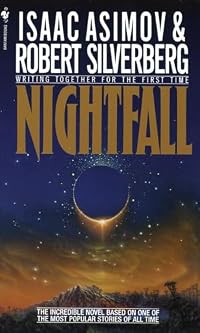
Nightfall [Novel]
by Isaac Asimov, Robert Silverberg
There is 1 current discussion about this work.
On This Page
Description
On a planet with six suns, night is about to fall for the first time in two thousand years . . .The planet Kalgash is on the brink of chaos—but only a handful of people realize it. Kalgash knows only the perpetual light of day; for more than two millennia, some combination of its six suns has lit up the sky. But twilight is now gathering. Soon the suns will set all at one—and the terrifying splendor of Nightfall will call forth a madness that signals the end of civilization
Isaac show more Asimov's short story “Nightfall” first appeared in 1941. It has since become recognized as a classic, its author a legend. But the short story isn't the whole story. Now, Dr. Asimov has teamed with multiple Hugo and Nebula Award winner Robert Silverberg to explore and expand one of the most awe-inspiring concepts in the history of science fiction.
In this novel, you will witness Nightfall—and much more.
You will learn what happens at Daybreak. show less
Tags
Recommendations
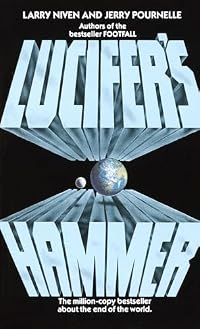
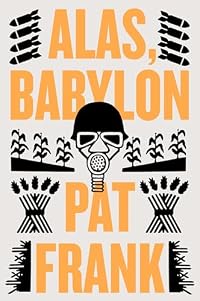
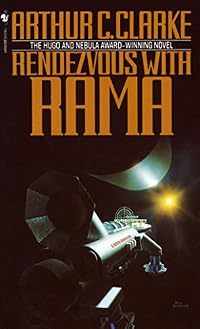
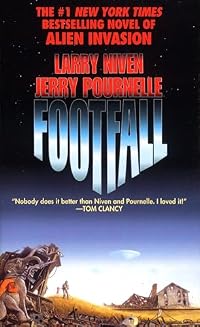
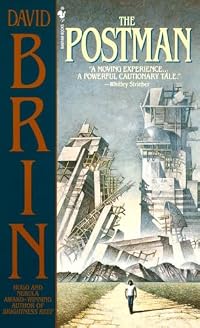
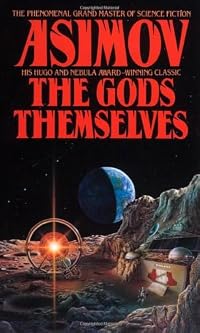
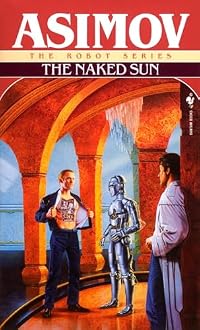
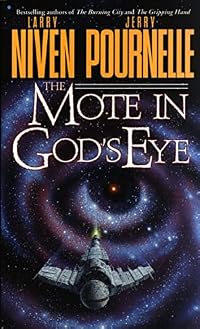
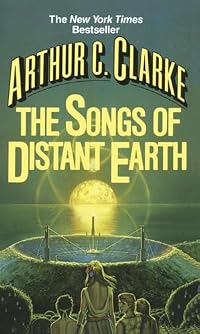
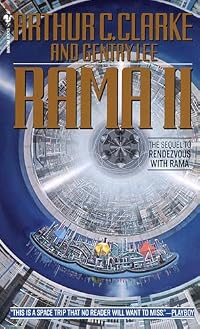
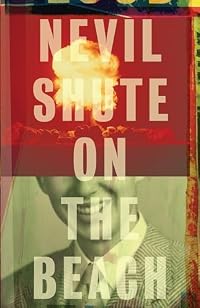
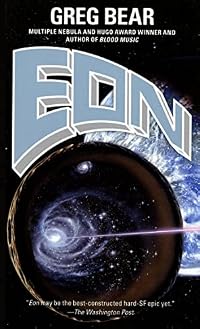
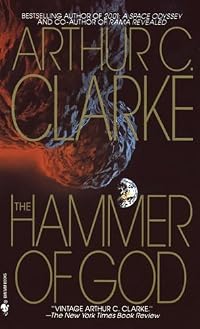
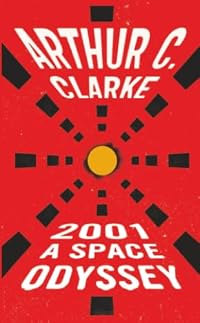
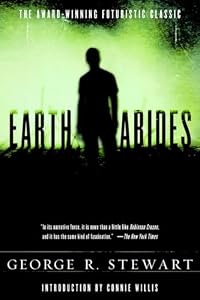
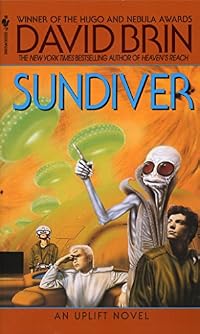
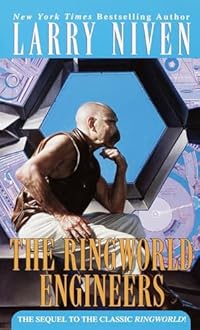


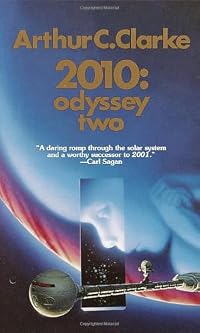
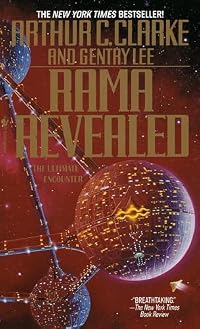
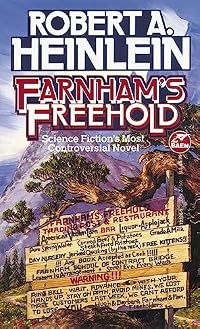
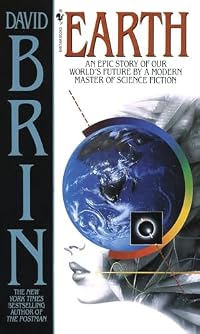
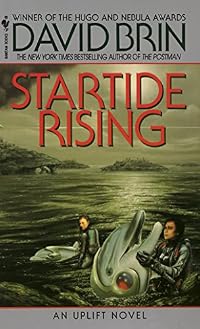
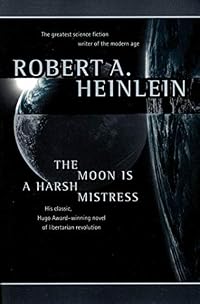

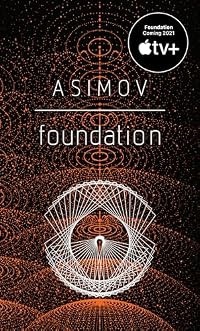
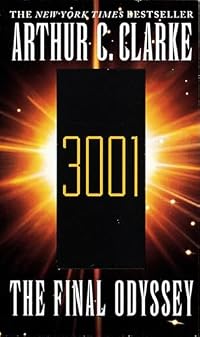

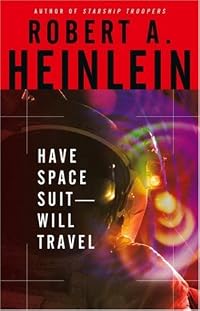
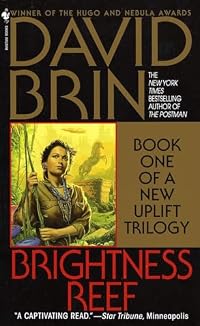
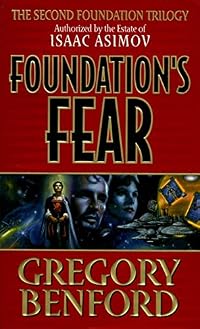
Member Recommendations
LE.Draqonoviicht Both books do a great job, in their own ways, of taking the reader to places / alter-realities where whet is 'common-form'. for us, is not the standard for those who live where these books will take you.
41
Member Reviews
This book was SO GOOD. The way the plot built up to the eclipse was done expertly. I was invested in the characters and story pretty much immediately. I adored the different approaches to the inevitability of the eclipse: not just astronomy, but psychology, archaeology, and media. My favorite part was the way the writing weaved those approaches together into a delicious, slowly growing tension to that moment of the eclipse itself. The tension broke after the eclipse, obviously, but it built again slightly in the aftermath to an engaging conclusion. At times, especially during and after the eclipse, the book had significant horror elements. The effects on a species of discovering that the universe is far more vast than they ever could show more have imagined was believable, terrifying, and thoroughly explored. Highly recommend. show less
Kalgash, a planet with six suns. A prophecy from an ancient text states that every two thousand years the world will be plunged into Nightfall and the cities will burn, retribution from the gods for the wickedness of man. But the scientists scoff, knowing it to be just some religious hocus-pocus. Until two of their own make disturbing discoveries based in fact. Beenay, the astronomer, finds that a rare event will soon happen: a conjunction of five of the suns, combined with an eclipse of the sixth. And Siferra, the archeologist, uncovers a dig site which proves that their civilization has existed seven times previous, and it has burned every two thousand years.
What will happen when an entire society unaccustomed to night is plunged into show more complete Darkness? What will happen when starcrazed people burn their cities, desperate for light? Who will control what remains when the suns come up?
Some time ago I had read that the working title for the film Pitch Black had been Nightfall. And furthermore, that the germ of the idea behind the movie had been from a story by the same name. I didn't think much of it until browsing one day at a Friends of the Library sale when I came upon the book by Asimov & Silverberg, apparently an expansion of the short story written by Asimov back in 1941. Now, I'm not a 'hard' sci-fi reader by any means. I had attempted one of Asimov's Robot books in the past and had cast it aside knowing that Asimov was not for me. But my curiosity took over. Did Asimov write a creature-feature? Well, no, he did not - that was pure Hollywood. But he did write about the chaos that ensues after Nightfall.
I found this book utterly captivating and I read it all in one sitting. I remember the Y2K frenzy and I think that helped me to get into the correct mindset. The battle between Religion and Science is one we see almost everyday in the news. To see it here played out against a backdrop of Darkness, both physical and mental, is fascinating.
Other reviews I have read claim the addition of the section Daybreak weakens the original story. I have not read the original short piece but I don't agree with that statement. We are told early on that the civilization has previously survived The Darkness. I think it's natural to explore what that is like.
An excellent book. If there is more Asimov like this than I am onboard! show less
What will happen when an entire society unaccustomed to night is plunged into show more complete Darkness? What will happen when starcrazed people burn their cities, desperate for light? Who will control what remains when the suns come up?
Some time ago I had read that the working title for the film Pitch Black had been Nightfall. And furthermore, that the germ of the idea behind the movie had been from a story by the same name. I didn't think much of it until browsing one day at a Friends of the Library sale when I came upon the book by Asimov & Silverberg, apparently an expansion of the short story written by Asimov back in 1941. Now, I'm not a 'hard' sci-fi reader by any means. I had attempted one of Asimov's Robot books in the past and had cast it aside knowing that Asimov was not for me. But my curiosity took over. Did Asimov write a creature-feature? Well, no, he did not - that was pure Hollywood. But he did write about the chaos that ensues after Nightfall.
I found this book utterly captivating and I read it all in one sitting. I remember the Y2K frenzy and I think that helped me to get into the correct mindset. The battle between Religion and Science is one we see almost everyday in the news. To see it here played out against a backdrop of Darkness, both physical and mental, is fascinating.
Other reviews I have read claim the addition of the section Daybreak weakens the original story. I have not read the original short piece but I don't agree with that statement. We are told early on that the civilization has previously survived The Darkness. I think it's natural to explore what that is like.
An excellent book. If there is more Asimov like this than I am onboard! show less
A civilization on the planet Kalgash, illuminated by six suns, never experiences darkness. A group of astronomers, archaeologists, and psychologists at Sorrows University predicts the eclipse based on gravitational anomalies and evidence of previous societal collapses every 2,000 years.
A religious cult, the Apostles of Flame, independently predicts the impending doom, believing the darkness brings the end of the world and the revealing of stars that steal souls
A religious cult, the Apostles of Flame, independently predicts the impending doom, believing the darkness brings the end of the world and the revealing of stars that steal souls
I normally hate short stories. Just as I get into them, they end. My favourite short story of all time, and the one time you'll hear me say the short story was better than the longer book version. More bang. It's wonderful.
Imagine you lived on a planet with multiple suns, so it was always light. Except, once every 2,000 years when all the suns are eclipsed. You see the night sky. You see the stars. The world goes mad.
With the 2017 eclipse, a perfect story for the time!
Imagine you lived on a planet with multiple suns, so it was always light. Except, once every 2,000 years when all the suns are eclipsed. You see the night sky. You see the stars. The world goes mad.
With the 2017 eclipse, a perfect story for the time!
This is actually one of my favorite Asimov books - and I liked the short story as well. The psychology of mass hysteria and resulting social chaos and destruction is always ripe for sci-fi and this is no exception. I also felt it was an interesting example of world building based around a fundamental question of what life would be like in a solar system dominated by multiple suns and there was no such thing as night. What sorts of things would be different and what would be the same? What sorts of things would folks in this world be afraid of?
This was a very disappointing read. Scifi by Asimov should be a safe bet, but this has been cobbled together. The original short story was written by Asimov in 1941 and this book length adaptation was published in 1990. I have the strong feeling that the book was written by Silverberg alone, but Asimov's name was retained because it is his original idea. And for marketing purposes. I doubt I would have read this had it not been for the Asimov name.
After finishing the book, I found the original short story and read that. The short story is good - tightly written, creative, and leaving plenty for the reader to imagine.
The book length treatment is different. I found it plodding and predictable. It took all the mystery and suspense away. show more And the greater length exposed all the potential flaws in the story line, every one of them, and did nothing to address them. What a shame. show less
After finishing the book, I found the original short story and read that. The short story is good - tightly written, creative, and leaving plenty for the reader to imagine.
The book length treatment is different. I found it plodding and predictable. It took all the mystery and suspense away. show more And the greater length exposed all the potential flaws in the story line, every one of them, and did nothing to address them. What a shame. show less
Always a treat to read an Asimov book, and with Robert Silverberg joining him, this is a great little novel. It started out slow, but got better as the book progressed and had one of the better climaxes/denouements, particularly for a post apocalyptic style story. I liked the 4 main protagonists and how I never really knew where the story was going.
Members
- Recently Added By
Lists

It's the end of the world as we know it!
90 works; 23 members

Isaac Arthur’s Book Recommendations
98 works; 3 members

Books Read in 2020
4,379 works; 124 members

Books We Couldn't Put Down
443 works; 197 members

Books We Want To Read Again For The First Time
384 works; 160 members

Favorite Science Fiction
452 works; 215 members
Survey of Classic Science Fiction
171 works; 47 members
Talk Discussions
Current Discussions
Arion Press -- Isaac Asimov -- Nightfall in Fine Press Forum (November 2025)
Past Discussions
Nightfall by Asimov and Silverberg - I don't get it in Science Fiction Fans (July 2019)
Author Information

2,404+ Works 292,078 Members
Isaac Asimov was born in Petrovichi, Russia, on January 2, 1920. His family emigrated to the United States in 1923 and settled in Brooklyn, New York, where they owned and operated a candy store. Asimov became a naturalized U.S. citizen at the age of eight. As a youngster he discovered his talent for writing, producing his first original fiction at show more the age of eleven. He went on to become one of the world's most prolific writers, publishing nearly 500 books in his lifetime. Asimov was not only a writer; he also was a biochemist and an educator. He studied chemistry at Columbia University, earning a B.S., M.A. and Ph.D. In 1951, Asimov accepted a position as an instructor of biochemistry at Boston University's School of Medicine even though he had no practical experience in the field. His exceptional intelligence enabled him to master new systems rapidly, and he soon became a successful and distinguished professor at Columbia and even co-authored a biochemistry textbook within a few years. Asimov won numerous awards and honors for his books and stories, and he is considered to be a leading writer of the Golden Age of science fiction. While he did not invent science fiction, he helped to legitimize it by adding the narrative structure that had been missing from the traditional science fiction books of the period. He also introduced several innovative concepts, including the thematic concern for technological progress and its impact on humanity. Asimov is probably best known for his Foundation series, which includes Foundation, Foundation and Empire, and Second Foundation. In 1966, this trilogy won the Hugo award for best all-time science fiction series. In 1983, Asimov wrote an additional Foundation novel, Foundation's Edge, which won the Hugo for best novel of that year. Asimov also wrote a series of robot books that included I, Robot, and eventually he tied the two series together. He won three additional Hugos, including one awarded posthumously for the best non-fiction book of 1995, I. Asimov. "Nightfall" was chosen the best science fiction story of all time by the Science Fiction Writers of America. In 1979, Asimov wrote his autobiography, In Memory Yet Green. He continued writing until just a few years before his death from heart and kidney failure on April 6, 1992. (Bowker Author Biography) show less

989+ Works 62,256 Members
Some Editions
Series
Belongs to Publisher Series
Work Relationships
Is contained in
Is an expanded version of
Has as a student's study guide
Common Knowledge
- Canonical title
- Nightfall [Novel]
- Original title
- Nightfall
- Original publication date
- 1990
- Related movies
- Nightfall (1988 | IMDb); Nightfall (2000 | IMDb)
- Epigraph
- If the stars should appear one night in a thousand years, how would men believe and adore, and preserve for many generations the remembrance of the city of God!
—Emerson
Other world! There is no other world! Here or nowhere is the whole fact.
—Emerson - Dedication
- Campbell, John W (In fond and reverent memory of John W. Campbell, Jr.—and of those two terrified kids from Brooklyn who, in fear and trembling, made the awesome pilgrimage to his office, one of them in 1938 and the oth... (show all)er in 1952.)
- First words
- It was a dazzling four-sun afternoon.
- Last words
- (Click to show. Warning: May contain spoilers.)"Let's go talk to Folimun and see what he says."
- Original language*
- English US
- Disambiguation notice
- This is an expansion (co-authored by Robert Silverberg) of Asimov's original short story. It should not be combined with "Nightfall and Other Stories", a collection including the original story and several others. Additiona... (show all)lly there is a book, "Nightfall" by Asimov that is a compendium of the books "Nightfall One" and "Nightfall Two" that should not be combined into this work.
*Some information comes from Common Knowledge in other languages. Click "Edit" for more information.
Classifications
Statistics
- Members
- 3,355
- Popularity
- 5,003
- Reviews
- 56
- Rating
- (3.82)
- Languages
- 15 — Czech, Dutch, English, Finnish, French, German, Hebrew, Hungarian, Italian, Japanese, Polish, Portuguese, Russian, Spanish, Swedish
- Media
- Paper, Audiobook, Ebook
- ISBNs
- 41
- ASINs
- 17