On This Page
Description
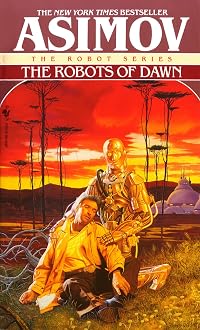
Classic Literature. Fiction. Science Fiction. HTML:A millennium into the future two advances have altered the course of human history: the colonization of the Galaxy and the creation of the positronic brain. Isaac Asimov's Robot novels chronicle the unlikely partnership between a New York City detective and a humanoid robot who must learn to work together.Detective Elijah Baiey is called to the Spacer world Aurora to solve a bizarre case of roboticide. The prime suspect is a gifted show more roboticist who had the means, the motive, and the opportunity to commit the crime. There's only one catch: Baley and his positronic partner, R. Daneel Olivaw, must prove the man innocent. For in a case of political intrigue and love between woman and robot gone tragically wrong, there's more at stake than simple justice. This time Baley's career, his life, and Earth's right to pioneer the Galaxy lie in the delicate balance. show less
Tags
Recommendations

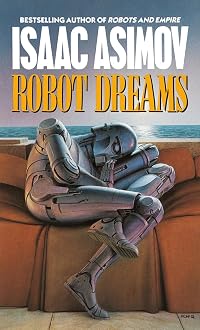
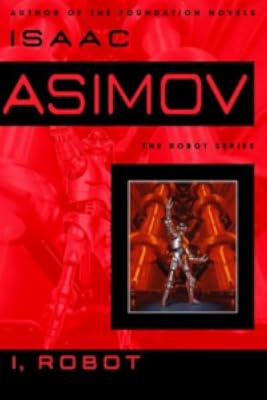
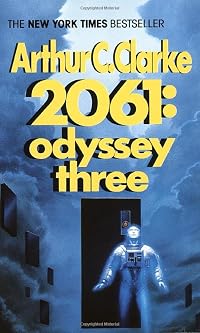
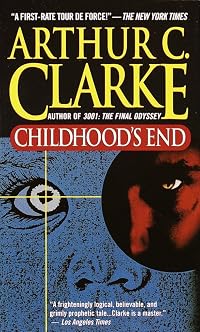


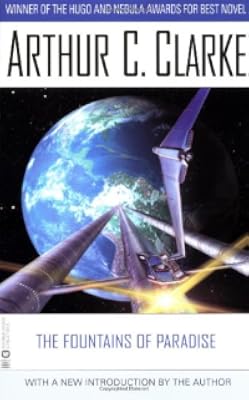
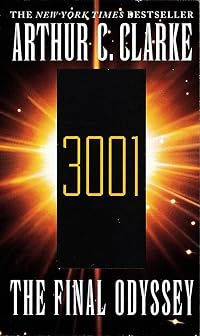
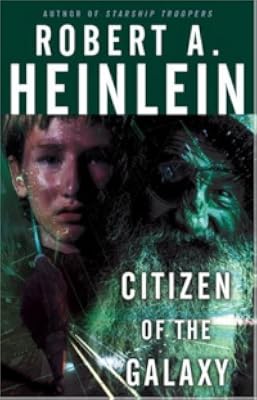
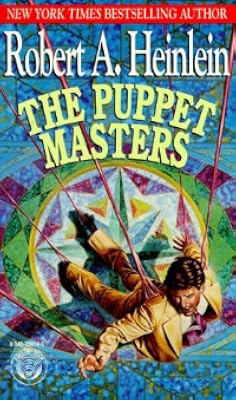

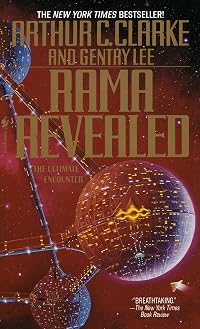
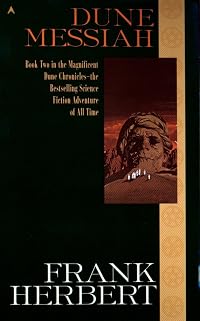
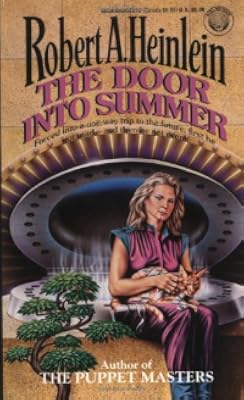
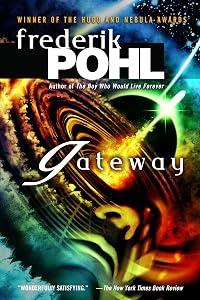


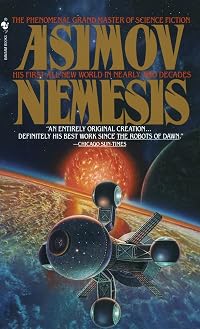
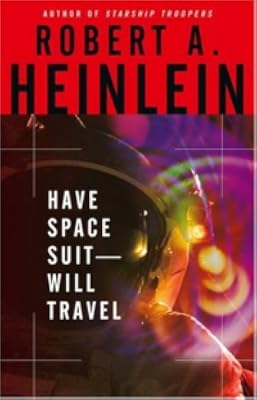
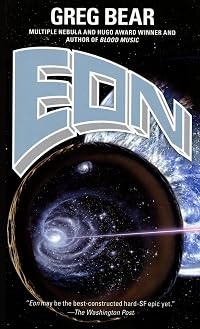


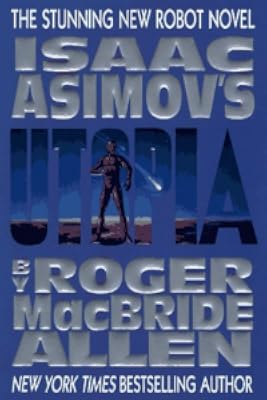


Member Recommendations
LE.Draqonoviicht Both books do a great job, in their own ways, of taking the reader to places / alter-realities where whet is 'common-form'. for us, is not the standard for those who live where these books will take you.
70
Member Reviews
It’s the old story: boy meets girl, boy loses girl, author returns to a series twenty-five years later and completely screws it up. But not this time! This is actually pretty good. The dénouement is particularly well done. There are a couple of problems. Unrestrained by paper costs, Asimov has written to twice the length. The conversations are not as tight as they were in the first two novels. There are even a couple that could be excised completely. The themes are not brought out as crisply either.
However, despite this slight bagginess these is much to enjoy. Asimov picks up the slavery theme from the first two novels. If you remember, Aurora was describes in The Caves of Steel as having an ‘integrated’ robot culture: C/Fe. show more Carbon and iron living equally. I couldn’t help noticing that C came first. Now here are on Aurora and the culture is definitely still master/slave, but the masters are kidding themselves about how far they’ve come and will investigate a ‘roboticide’, but only when it’s politically expedient. Basically, in the years intervening since the last novel, the civil rights movement has happened and Asimov is slyly commenting on its success. The sexual revolution has also happened and Asimov can now go on about sex to his heart’s content. There’s an interesting section in his wikipedia article about his problems interacting with women.
Well worth reading if you enjoyed the first two novels. show less
However, despite this slight bagginess these is much to enjoy. Asimov picks up the slavery theme from the first two novels. If you remember, Aurora was describes in The Caves of Steel as having an ‘integrated’ robot culture: C/Fe. show more Carbon and iron living equally. I couldn’t help noticing that C came first. Now here are on Aurora and the culture is definitely still master/slave, but the masters are kidding themselves about how far they’ve come and will investigate a ‘roboticide’, but only when it’s politically expedient. Basically, in the years intervening since the last novel, the civil rights movement has happened and Asimov is slyly commenting on its success. The sexual revolution has also happened and Asimov can now go on about sex to his heart’s content. There’s an interesting section in his wikipedia article about his problems interacting with women.
Well worth reading if you enjoyed the first two novels. show less
I thoroughly enjoyed this third book in the Isaac Asimov robot trilogy (which I believe turned into four books…) and thought it was the best one. It follows the paths of Earth investigator Elijah Bailey and his Spacer robot sidekick R Daneel Olivaw as they attempt to solve the “murder” of a humaniform robot similar to Daneel on the planet Aurora. In the first book, The Caves of Steel, the two met and solved a murder mystery in New York City on Earth. In this futuristic Earth, a fearful population lives in huge domed cities underground and never goes outside. In the second book, The Naked Sun, Elijah is forced to face his fears and is told to leave Earth to solve a murder that occurred on a Spacer planet called Solaria where the show more sparse population has developed a weird type of disgust for their fellow humans. They refuse to touch other humans and mostly only interact with their numerous robots. When Elijah returns to Earth, he’s come to think that colonizing other planets is the only way that the human race on Earth can survive the future. He’s been changed by his experience.
In this book, The Robots of Dawn, Daneel’s humaniform robot companion has been “murdered” by someone, yet the only suspect is the most famous roboticist in the galaxy, Dr. Falstolfe, who freely admits he’s the only person in the galaxy with the necessary skills to be able to disable a positronic humaniform robot of that type, of which he is also the creator, yet at the same time he strongly claims he’s innocent. If Elijah and Daneel can’t prove him innocent, it will have terrible consequences for Elijah’s career and for Earth’s ability to attempt to colonize the galaxy. Daneel is also in danger, as he is the last remaining humaniform robot and it seems he is wanted. It’s a huge mystery and as Baley interviews various suspects and other people, it seems completely unsolvable, or at least everything points to Falstolfe, so there seems little hope for Baley and Earth’s futures.
Two important characters in the book are ex-Solarian woman, Gladia, now living on Aurora and with whom Elijah has a bit of a “thing,” even though he’s married and has no intention of cheating or leaving his wife, etc. He still allows himself to fantasize every now and then, remembering their time together when he was solving the murder on Solaria. The other major character is another robot named Giskard, who doesn’t appear to be as advanced as Daneel, but for whom appearances may be deceiving. Frankly, this is one of the most difficult mysteries I’ve ever seen any character solve and I had no idea how Baley was going to do it. The ultimate solution came as a bit of a shock to me and took me completely by surprise, as the apparent solution was a bit, just that – apparent, but there was a second, hidden, solution that was the brilliant shocker and which made this book most excellent.
However, I do have a complaint and in fairness to this book, it’s more about the author than it is about this book alone. Over the past year or two, in reading a lot of Asimov, I’ve come to realize that while he can come up with good ideas and write good mysteries, he’s a crappy writer and can’t write dialogue to save his life. In fact, he’s the worst dialogue writer of any author I’ve ever read! He’s freaking horrible!!! It’s so stilted and formal, so unauthentic, so academic and dry. In this book, somewhat surprisingly, there’s a lot of talk about sex, particularly between Elijah and Gladia and some of it occurs after an odd and surreal intimated sex scene and the dialogue is so 1950s wooden, formal crap that it’s just downright silly. No one talks like that. And this is supposed to be many thousands of years in the future! I read some of the sentences and paragraphs to my wife, who doesn’t read science fiction but who does read a lot, and she burst out laughing, stating that was the worst crap she had ever heard. And it is. My God, Asimov is a hack! In fact, he’s easily one of the worst sci fi “writers” in terms of actual writing ability of anyone I’ve ever read. In my reviews of his various Foundation books, I’ve often said it would have helped if he had taken some college level creative writing classes because he showed little evidence of basic skills, such as use of transitions, plot development, character development, and obviously his use of dialogue is such a joke as to make his books laughable – if these particular mysteries weren’t so intriguing. So, I really want to knock this book’s rating down a few stars, even though I think it’s a five star story. I mean, the story itself is brilliant, one of the best mysteries I’ve ever encountered. But the actual writing is so typically Asimov-bad, I’ve got to knock it down at least one star to four stars, with apologies. Nonetheless, it’s a darn good book and strongly recommended. show less
In this book, The Robots of Dawn, Daneel’s humaniform robot companion has been “murdered” by someone, yet the only suspect is the most famous roboticist in the galaxy, Dr. Falstolfe, who freely admits he’s the only person in the galaxy with the necessary skills to be able to disable a positronic humaniform robot of that type, of which he is also the creator, yet at the same time he strongly claims he’s innocent. If Elijah and Daneel can’t prove him innocent, it will have terrible consequences for Elijah’s career and for Earth’s ability to attempt to colonize the galaxy. Daneel is also in danger, as he is the last remaining humaniform robot and it seems he is wanted. It’s a huge mystery and as Baley interviews various suspects and other people, it seems completely unsolvable, or at least everything points to Falstolfe, so there seems little hope for Baley and Earth’s futures.
Two important characters in the book are ex-Solarian woman, Gladia, now living on Aurora and with whom Elijah has a bit of a “thing,” even though he’s married and has no intention of cheating or leaving his wife, etc. He still allows himself to fantasize every now and then, remembering their time together when he was solving the murder on Solaria. The other major character is another robot named Giskard, who doesn’t appear to be as advanced as Daneel, but for whom appearances may be deceiving. Frankly, this is one of the most difficult mysteries I’ve ever seen any character solve and I had no idea how Baley was going to do it. The ultimate solution came as a bit of a shock to me and took me completely by surprise, as the apparent solution was a bit, just that – apparent, but there was a second, hidden, solution that was the brilliant shocker and which made this book most excellent.
However, I do have a complaint and in fairness to this book, it’s more about the author than it is about this book alone. Over the past year or two, in reading a lot of Asimov, I’ve come to realize that while he can come up with good ideas and write good mysteries, he’s a crappy writer and can’t write dialogue to save his life. In fact, he’s the worst dialogue writer of any author I’ve ever read! He’s freaking horrible!!! It’s so stilted and formal, so unauthentic, so academic and dry. In this book, somewhat surprisingly, there’s a lot of talk about sex, particularly between Elijah and Gladia and some of it occurs after an odd and surreal intimated sex scene and the dialogue is so 1950s wooden, formal crap that it’s just downright silly. No one talks like that. And this is supposed to be many thousands of years in the future! I read some of the sentences and paragraphs to my wife, who doesn’t read science fiction but who does read a lot, and she burst out laughing, stating that was the worst crap she had ever heard. And it is. My God, Asimov is a hack! In fact, he’s easily one of the worst sci fi “writers” in terms of actual writing ability of anyone I’ve ever read. In my reviews of his various Foundation books, I’ve often said it would have helped if he had taken some college level creative writing classes because he showed little evidence of basic skills, such as use of transitions, plot development, character development, and obviously his use of dialogue is such a joke as to make his books laughable – if these particular mysteries weren’t so intriguing. So, I really want to knock this book’s rating down a few stars, even though I think it’s a five star story. I mean, the story itself is brilliant, one of the best mysteries I’ve ever encountered. But the actual writing is so typically Asimov-bad, I’ve got to knock it down at least one star to four stars, with apologies. Nonetheless, it’s a darn good book and strongly recommended. show less
This book is not worth your time.
This book is a mystery with an obvious solution. There are no surprises. This is typical of Asimov's books, which are mainly a vehicle to show off his interesting worlds. That being said, this world is not interesting. He mainly uses this book to showcase his thoughts on sexuality. Every female character is introduced in this book by one of two ways: describing her body with heavy emphasis on secondary sex characteristics or describing a sexual act they have done. The sexual act is always one that audiences of the time would have found distasteful. I found one of them distasteful and the other just weirdly unnecessary. This is also the first Asimov book I've read with a sex scene in it and it is a weird show more one.
If you want to read an interesting Asimov book, try Nightfall and Other Short Stories. If you want an interesting Sci-Fi book, try and of the myriad of choices. The only two reasons to read this book are: you're a completion who wants to read all of Asimov's Robot and Foundation series (me) or you are very interested in the weird sex stuff that a 63 year old man is into.
Side note: it was my plan to continue to the next book in the series but after those four terrible books in a row, I will take a break. show less
This book is a mystery with an obvious solution. There are no surprises. This is typical of Asimov's books, which are mainly a vehicle to show off his interesting worlds. That being said, this world is not interesting. He mainly uses this book to showcase his thoughts on sexuality. Every female character is introduced in this book by one of two ways: describing her body with heavy emphasis on secondary sex characteristics or describing a sexual act they have done. The sexual act is always one that audiences of the time would have found distasteful. I found one of them distasteful and the other just weirdly unnecessary. This is also the first Asimov book I've read with a sex scene in it and it is a weird show more one.
If you want to read an interesting Asimov book, try Nightfall and Other Short Stories. If you want an interesting Sci-Fi book, try and of the myriad of choices. The only two reasons to read this book are: you're a completion who wants to read all of Asimov's Robot and Foundation series (me) or you are very interested in the weird sex stuff that a 63 year old man is into.
Side note: it was my plan to continue to the next book in the series but after those four terrible books in a row, I will take a break. show less
Vasilia looked at Daneel with bitter curiosity. "Partner Elijah? Is that what you call him?"
"Yes, Dr. Vasilia. My choice in this matter-the Earthman over you-arises not only out of Dr. Fastolfe's instructions, but because the Earthman and I are partners in this investigation and because-" Daneel paused as though puzzled by what he was about to say, and then said it anyway, "-we are friends."
Vasilia said, "Friends? An Earthman and a humaniform robot? Well, there is a match. Neither quite human."
Baley said, sharply, "Nevertheless bound by friendship. Do not, for your own sake, test the force of our-" Now it was he who paused and, as though to his own surprise, completed the sentence impossibly, "-love."
You know something's gone off the show more rails when I have to start a review of a story about robots with a content warning for multiple incest mentions. This is a book where Asimov suddenly cares deeply about sex and romance, while showing approximately zero understanding of what love and intimacy mean. Aurora is a society where sex is apparently much freer than on Earth and yet Asimov shows very little understanding of what such a concept would look like, or how it could be fulfilling. In this book Bailey's superhero act somehow breached my suspension of disbelief, not when he saves the universe, but when he heroically introduces how great lifelong monogamy and "courtship" are - and "courtship" in this case appears to mean ignoring people's clearly stated rejection and trying over and over again - to Auroran society.
To look at it another way, why is the "love" relationship between a woman and a robot so heavily foregrounded? There's a strong set up of parallels and matches between Gladlia and Bailey. So when Gladlia finds their perfect match is a robot... and it just so happens that the "twin" of that robot is Bailey's "partner" Daneel... suddenly the already noticeable homoerotic tinge to their relationship comes into focus. This is the sort of thing that has been obvious to at this point generations of shippers but I think a lot of sci-fi fans would write off as "reading too much into it". But it's not just the declarations of love but the entire structure of the plot that demands a Bailey/Daneel romance to be noticed.
What you'd assume is the main "plot" about the robots is surprisingly thin. The book strings you along with a mystery at the start: a robot has been killed in a way that indicates a fiendish "talking to death". Only one person could possibly have done it, and Bailey's job is to somehow defend him. Despite tons of dialogue harping on this basic concept, the actual resolution to this is a major anti-climax - in the last couple of pages we discover something which breaks all the rules of a good mystery novel:
This book made a deep impression upon me. First time, I found Asimov exploring extremely difficult concept like sexuality in his writing and what a brilliant and rational way he presented the whole concept of Sex through the way of his characters and his imaginative ploys. This book is nothing about sex. At the core this book is about a Roboticide, a murder of robot, if you can accept this statement and Elijah Baley travels to Aurora to solve this murder mystery. He tries hard to make any advances to solving that mystery and regularly finds himself without any evidence or knowledge beyond what is already known and obvious. It is a stroke of brilliant imagination and logical deduction as Elijah Baley manages to solve this murder mystery.
“I cannot say what I feel in any human sense, Partner Elijah. I can say, however, that the sight of you seems to make my thoughts flow more easily, and the gravitational pull on my body seems to assault my senses with lesser insistence."
Ahh.. good old R. Daneel Olivaw, how I have missed you.
It has been decades since I read anything by Isaac Asimov. When I started reading sci-fi in my teens Asimov was the go-to author for new readers. I was not quite ready for Heinlein or Clarke but Asimov’s [b:The Foundation Trilogy|46654|The Foundation Trilogy (Foundation, #1-3)|Isaac Asimov|https://d.gr-assets.com/books/1316412178s/46654.jpg|41350] and his robot stories and novels were just the thing to start a life long devotion to the genre. Of show more course I went on to read many other sf authors and for some reason I completely missed Asimov’s later works from 1980 onward. So I have no idea how his return to the Foundation universe went, and of course I have not read
The Robots of Dawn.
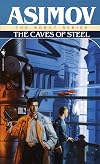
This later robot novel from 1984 is a belated sequel to [b:The Caves of Steel|41811|The Caves of Steel (Robot, #1)|Isaac Asimov|https://d.gr-assets.com/books/1335782224s/41811.jpg|140376] and [b:The Naked Sun|30016|The Naked Sun (Robot, #2)|Isaac Asimov|https://d.gr-assets.com/books/1335782263s/30016.jpg|1583154], two beloved whodunit robot novels from the 50s. So once again ace detective Elijah Baley of that dreadful plebeian planet called Earth is called upon solve a seemingly impossible murder on another planet (human occupied). The difference is this time it is a “roboticide” where a “humaniform” robot is murdered rendered permanently inoperative (I love Asimov’s neologism, nothing to figure out). Also back is the excellent R. Daneel Olivaw, the first humaniform and really almost human robot, and introducing Giskard, another friendly and loyal robot who unlike Daneel is “robot in form” with glowing eyes.
As with the aforementioned Elijah Baley books the good doctor used a crime fiction template for this novel. I think the style here is more reminiscent of [a:P.D. James|344522|P.D. James|https://d.gr-assets.com/authors/1245013536p2/344522.jpg] than [a:Agatha Christie|123715|Agatha Christie|https://d.gr-assets.com/authors/1321738793p2/123715.jpg], with slower pace and a lot of dialogue. The science fiction aspect of it is not neglected however, Asimov’s world building and attention to details is legendary. He did not disappoint here with his depiction of a future human colony planet. Even the toilets are interesting, I can just imagine some very relaxing time there. As a slothful potato couch I would love to live in Aurora where tons of robots are at the beg and call of everybody.
While Asimov’s straightforward, smooth and friendly prose style brings back memories of my early days as a sci-fi reader, the differences are quite startling. For a start this book is very dialogue heavy. There are pages and pages of just two characters discussing robotics, politics and whatnot from all possible angles. It does drag the book’s momentum and at times and I found it to be occasionally tiring to read, not tiresome but tiring. Baley just grinds and grinds away at the suspects hoping they will let slip something that will incriminate them like some kind of futuristic Columbo. These grilling sessions are not actually awful, they are quite well written but they do seem to be interminable after a while. I am surprised the suspects do not simply confess to everything just to shut him up.
Another thing that surprised me is the discussion of sex and even the inclusion of a mildly erotic scene. This is not a complaint however, it is just very different from the Asimov of my teen years. This is a much more adult book than Asimov's Golden Age classics. There are even some philosophical passages like "Are there Laws of Humanics as there are Laws of Robotics? How many Laws of Humanics might there be and how can they be expressed mathematically?"
Interestingly some of the technology seems a little dated in these days of wireless internet. The robots actually speak to each other verbally rather than communicating via wi-fi or something similar. Navigation is also done by preloaded maps rather than some kind of GPS. The robots even drive vehicles rather than having AI built into them for completely hand-free driving. This is not a criticism of Asimov however, he was a scientist, not a fortune teller. I just find it interesting how the future is turning out in actuality in comparison to Asimov’s speculation.
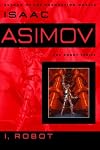
One thing I particularly like about Asimov’s robots above other authors’ depiction of AI characters is the robotness of them. Their “somewhat stilted way with the language” as Asimov described, and their adherence to and interpretations of The Three Laws of Robotics . Nowadays sci-fi authors tend to portray robots (or AI) as speaking exactly like people normally do. Yes, I can imagine this being the case with very advanced AI, but Asimov’s robots have the sense of otherness that makes them somehow more believable. Fans of Asimov’s robot books will be delighted by the references to Susan Calvin and one of the most memorable stories from [b:I, Robot|41804|I, Robot (Robot, #0.1)|Isaac Asimov|https://d.gr-assets.com/books/1388321463s/41804.jpg|1796026], and the reference to The Bicentennial Man. A tenuous link to the Foundation series is also introduced through the initial development of psychohistory. If you ever wondered why there are no robots in [b:The Foundation Trilogy|46654|The Foundation Trilogy (Foundation, #1-3)|Isaac Asimov|https://d.gr-assets.com/books/1316412178s/46654.jpg|41350] the answer is given here.
In spite of my quibbles with some of the pacing I really enjoyed this book, and coming back to Asimov after all these years. Now I feel an urge to reread the original Foundation Trilogy plus the subsequent Foundation volumes from the 80s. Also a reread of the old Elijah Baley novels and robot short stories. With all that in my TBR I’d be lucky to squeeze in books by anybody else. show less
Ahh.. good old R. Daneel Olivaw, how I have missed you.
It has been decades since I read anything by Isaac Asimov. When I started reading sci-fi in my teens Asimov was the go-to author for new readers. I was not quite ready for Heinlein or Clarke but Asimov’s [b:The Foundation Trilogy|46654|The Foundation Trilogy (Foundation, #1-3)|Isaac Asimov|https://d.gr-assets.com/books/1316412178s/46654.jpg|41350] and his robot stories and novels were just the thing to start a life long devotion to the genre. Of show more course I went on to read many other sf authors and for some reason I completely missed Asimov’s later works from 1980 onward. So I have no idea how his return to the Foundation universe went, and of course I have not read
The Robots of Dawn.
This later robot novel from 1984 is a belated sequel to [b:The Caves of Steel|41811|The Caves of Steel (Robot, #1)|Isaac Asimov|https://d.gr-assets.com/books/1335782224s/41811.jpg|140376] and [b:The Naked Sun|30016|The Naked Sun (Robot, #2)|Isaac Asimov|https://d.gr-assets.com/books/1335782263s/30016.jpg|1583154], two beloved whodunit robot novels from the 50s. So once again ace detective Elijah Baley of that dreadful plebeian planet called Earth is called upon solve a seemingly impossible murder on another planet (human occupied). The difference is this time it is a “roboticide” where a “humaniform” robot is murdered rendered permanently inoperative (I love Asimov’s neologism, nothing to figure out). Also back is the excellent R. Daneel Olivaw, the first humaniform and really almost human robot, and introducing Giskard, another friendly and loyal robot who unlike Daneel is “robot in form” with glowing eyes.
As with the aforementioned Elijah Baley books the good doctor used a crime fiction template for this novel. I think the style here is more reminiscent of [a:P.D. James|344522|P.D. James|https://d.gr-assets.com/authors/1245013536p2/344522.jpg] than [a:Agatha Christie|123715|Agatha Christie|https://d.gr-assets.com/authors/1321738793p2/123715.jpg], with slower pace and a lot of dialogue. The science fiction aspect of it is not neglected however, Asimov’s world building and attention to details is legendary. He did not disappoint here with his depiction of a future human colony planet. Even the toilets are interesting, I can just imagine some very relaxing time there. As a slothful potato couch I would love to live in Aurora where tons of robots are at the beg and call of everybody.
While Asimov’s straightforward, smooth and friendly prose style brings back memories of my early days as a sci-fi reader, the differences are quite startling. For a start this book is very dialogue heavy. There are pages and pages of just two characters discussing robotics, politics and whatnot from all possible angles. It does drag the book’s momentum and at times and I found it to be occasionally tiring to read, not tiresome but tiring. Baley just grinds and grinds away at the suspects hoping they will let slip something that will incriminate them like some kind of futuristic Columbo. These grilling sessions are not actually awful, they are quite well written but they do seem to be interminable after a while. I am surprised the suspects do not simply confess to everything just to shut him up.
Another thing that surprised me is the discussion of sex and even the inclusion of a mildly erotic scene. This is not a complaint however, it is just very different from the Asimov of my teen years. This is a much more adult book than Asimov's Golden Age classics. There are even some philosophical passages like "Are there Laws of Humanics as there are Laws of Robotics? How many Laws of Humanics might there be and how can they be expressed mathematically?"
Interestingly some of the technology seems a little dated in these days of wireless internet. The robots actually speak to each other verbally rather than communicating via wi-fi or something similar. Navigation is also done by preloaded maps rather than some kind of GPS. The robots even drive vehicles rather than having AI built into them for completely hand-free driving. This is not a criticism of Asimov however, he was a scientist, not a fortune teller. I just find it interesting how the future is turning out in actuality in comparison to Asimov’s speculation.
One thing I particularly like about Asimov’s robots above other authors’ depiction of AI characters is the robotness of them. Their “somewhat stilted way with the language” as Asimov described, and their adherence to and interpretations of The Three Laws of Robotics . Nowadays sci-fi authors tend to portray robots (or AI) as speaking exactly like people normally do. Yes, I can imagine this being the case with very advanced AI, but Asimov’s robots have the sense of otherness that makes them somehow more believable. Fans of Asimov’s robot books will be delighted by the references to Susan Calvin and one of the most memorable stories from [b:I, Robot|41804|I, Robot (Robot, #0.1)|Isaac Asimov|https://d.gr-assets.com/books/1388321463s/41804.jpg|1796026], and the reference to The Bicentennial Man. A tenuous link to the Foundation series is also introduced through the initial development of psychohistory. If you ever wondered why there are no robots in [b:The Foundation Trilogy|46654|The Foundation Trilogy (Foundation, #1-3)|Isaac Asimov|https://d.gr-assets.com/books/1316412178s/46654.jpg|41350] the answer is given here.
In spite of my quibbles with some of the pacing I really enjoyed this book, and coming back to Asimov after all these years. Now I feel an urge to reread the original Foundation Trilogy plus the subsequent Foundation volumes from the 80s. Also a reread of the old Elijah Baley novels and robot short stories. With all that in my TBR I’d be lucky to squeeze in books by anybody else. show less
This third Lije Baley robot novel mystery was written three decades(!) after the first two, "The Caves of Steel" and "The Naked Sun" during the last decade of the Good Doctor's life when he sought to interconnect his major science fiction works written over the course of his writing career (i.e., his robot, galactic empire, and award-winning Foundation stories and novels) into his own "Future History" series like that of many of his peers, notably Robert Heinlein.
Earth police investigator Lije Baley is again called upon to solve a murder of a member of the Spacer worlds, but this time the victim is one of the only two humaniform robots in existence -- and nothing less than the survival of all humanity is at risk.
This story is more show more complex and far longer than the two previous robot novels -- and, perhaps, suffers for it. In addition to, and entwined with, the central narrative of a murder mystery,
is political intrigue and romance, each with extensive philosophical considerations (including, uncharacteristically, of Asimov's prior fiction, of sex -- fidelity/infidelity, casual sex, consent and age of consent, auto/roboto-human sexual relations, etc.). To his credit, Asimov compares and contrasts the differences to the "accepted" sexual mores of his, and mostly our, modern American culture with the different mores he depicts on the two Spacer worlds that his protagonist encounters in the previous and, in greater detail, this novel, without being overtly judgmental -- but, in Lije's relationship with the beautiful Gladia (the accused murderess he "saves" in the prior novel), at times, the story seems uncomfortably like fantasy wish fulfilment.
The inclusion of references to the Good Doctor's other works has mixed results. Those to chronologically ocurring works like robotocist Susan Calvin of the Asimov collection "I, Robot," and to Andrew Martin of his "The Bicentennial Man" are internally consistent with the plot, the first proving to be quite relevant to the story. However, the inclusion of the term and definition of "psychohistory," that is central to Asimov's Foundation novels that, per the Good Doctor's Future History, are set many millennia in the future is jarringly anachronistic -- despite the tenuous suggestion spread across these later-in-life-written linking novels that it is the robots that all along that have been secretly guiding/manipulating humanity to ensure our survival in accordance with the 1st and (as I recall from the next and final "robot" novel "Robots and Empire") 0th Laws of Robotics.
As has been noted by many reviewers and students of Asimov, his prose style for plot advancement is primarily extended dialog between his characters with relatively sparse scenes of actual action. It is something the reader either dislikes or accepts as "Asimov's" way and forgives him the many moments of long exposition and, at times, info dumping.
While my preference would have been for a tighter (and shorter) told tale, the story does work as a whodunit with pleasing misdirection, a secondary illuminating reveal sustained by (admittedly subtle) foreshadowing clues, and a bittersweet yet inspiring emotional conclusion. show less
Earth police investigator Lije Baley is again called upon to solve a murder of a member of the Spacer worlds, but this time the victim is one of the only two humaniform robots in existence -- and nothing less than the survival of all humanity is at risk.
This story is more show more complex and far longer than the two previous robot novels -- and, perhaps, suffers for it. In addition to, and entwined with, the central narrative of a murder mystery,
is political intrigue and romance, each with extensive philosophical considerations (including, uncharacteristically, of Asimov's prior fiction, of sex -- fidelity/infidelity, casual sex, consent and age of consent, auto/roboto-human sexual relations, etc.). To his credit, Asimov compares and contrasts the differences to the "accepted" sexual mores of his, and mostly our, modern American culture with the different mores he depicts on the two Spacer worlds that his protagonist encounters in the previous and, in greater detail, this novel, without being overtly judgmental -- but, in Lije's relationship with the beautiful Gladia (the accused murderess he "saves" in the prior novel), at times, the story seems uncomfortably like fantasy wish fulfilment.
The inclusion of references to the Good Doctor's other works has mixed results. Those to chronologically ocurring works like robotocist Susan Calvin of the Asimov collection "I, Robot," and to Andrew Martin of his "The Bicentennial Man" are internally consistent with the plot, the first proving to be quite relevant to the story. However, the inclusion of the term and definition of "psychohistory," that is central to Asimov's Foundation novels that, per the Good Doctor's Future History, are set many millennia in the future is jarringly anachronistic -- despite the tenuous suggestion spread across these later-in-life-written linking novels that it is the robots that all along that have been secretly guiding/manipulating humanity to ensure our survival in accordance with the 1st and (as I recall from the next and final "robot" novel "Robots and Empire") 0th Laws of Robotics.
As has been noted by many reviewers and students of Asimov, his prose style for plot advancement is primarily extended dialog between his characters with relatively sparse scenes of actual action. It is something the reader either dislikes or accepts as "Asimov's" way and forgives him the many moments of long exposition and, at times, info dumping.
While my preference would have been for a tighter (and shorter) told tale, the story does work as a whodunit with pleasing misdirection, a secondary illuminating reveal sustained by (admittedly subtle) foreshadowing clues, and a bittersweet yet inspiring emotional conclusion. show less
Members
- Recently Added By
Lists

Best Science Fiction Novels
816 works; 430 members

Books Read in 2016
4,666 works; 197 members

Books Read in 2019
4,052 works; 110 members
Favorite Science Fiction
457 works; 223 members
Author Information

2,405+ Works 294,464 Members
Isaac Asimov was born in Petrovichi, Russia, on January 2, 1920. His family emigrated to the United States in 1923 and settled in Brooklyn, New York, where they owned and operated a candy store. Asimov became a naturalized U.S. citizen at the age of eight. As a youngster he discovered his talent for writing, producing his first original fiction at show more the age of eleven. He went on to become one of the world's most prolific writers, publishing nearly 500 books in his lifetime. Asimov was not only a writer; he also was a biochemist and an educator. He studied chemistry at Columbia University, earning a B.S., M.A. and Ph.D. In 1951, Asimov accepted a position as an instructor of biochemistry at Boston University's School of Medicine even though he had no practical experience in the field. His exceptional intelligence enabled him to master new systems rapidly, and he soon became a successful and distinguished professor at Columbia and even co-authored a biochemistry textbook within a few years. Asimov won numerous awards and honors for his books and stories, and he is considered to be a leading writer of the Golden Age of science fiction. While he did not invent science fiction, he helped to legitimize it by adding the narrative structure that had been missing from the traditional science fiction books of the period. He also introduced several innovative concepts, including the thematic concern for technological progress and its impact on humanity. Asimov is probably best known for his Foundation series, which includes Foundation, Foundation and Empire, and Second Foundation. In 1966, this trilogy won the Hugo award for best all-time science fiction series. In 1983, Asimov wrote an additional Foundation novel, Foundation's Edge, which won the Hugo for best novel of that year. Asimov also wrote a series of robot books that included I, Robot, and eventually he tied the two series together. He won three additional Hugos, including one awarded posthumously for the best non-fiction book of 1995, I. Asimov. "Nightfall" was chosen the best science fiction story of all time by the Science Fiction Writers of America. In 1979, Asimov wrote his autobiography, In Memory Yet Green. He continued writing until just a few years before his death from heart and kidney failure on April 6, 1992. (Bowker Author Biography) show less
Some Editions
Awards and Honors
Awards
Distinctions
Series


Belongs to Publisher Series
Work Relationships
Is contained in
Common Knowledge
- Canonical title
- The Robots of Dawn
- Original title
- The Robots of Dawn
- Original publication date
- 1983
- People/Characters
- R. Giskard Reventlov; R. Daneel Olivaw; Elijah Baley; Bentley Baley; R. Jander Panell; Han Fastolfe (show all 23); Gladia Delmarre; Gladia Solaria (nee Delmarre); Vasilia Fastolfe; Vasilia Aliena (nee Fastolfe); Santirix Gremionis; Rutilari Horder; Kelden Amadiro; Jessie Baley; Lavinia Demachek; Albert Minnim; Roj Nemennuh Sarton; Fanya Fastolfe; R. Pandion; R. Borgraf; R. Lumen; R. Brundij; Maloon Cicis
- Important places
- New York, New York, USA; Earth; Washington, D.C., USA; Aurora; Solaria
- Important events*
- Roboticide of R. Jander Panell
- Dedication
- Dedicated to Marvin Minsky and
Joseph F. Engelberger, who epitomize
(respectively) the theory and practice
of robotics - First words
- Elijah Baley found himself in the shade of the tree and muttered to himself, "I knew it. I'm sweating."
- Last words
- (Click to show. Warning: May contain spoilers.)Giskard said, "Good-bye, friend Elijah, and remember that, although people apply the phrase to Aurora, it is, from this point on, Earth itself that is the true World of the Dawn."
(Click to show. Warning: May contain spoilers.)-Adiós, amigo Elijah, y recuerde que, aunque haya gente que aplique esta frase a Aurora, a partir de este instante la Tierra es el auténtico mundo del amanecer. - Original language
- American English
- Canonical DDC/MDS
- 813.08762; 813.0872
*Some information comes from Common Knowledge in other languages. Click "Edit" for more information.
Classifications
- Genres
- Science Fiction, Fiction and Literature, Mystery
- DDC/MDS
- 813.08762 — Literature & rhetoric American literature in English American fiction in English By type Genre fiction Adventure fiction Speculative fiction Science fiction
- LCC
- PS3551 .S5 .R6 — Language and Literature American literature American literature Individual authors 1961-
- BISAC
Statistics
- Members
- 7,664
- Popularity
- 1,495
- Reviews
- 116
- Rating
- (3.89)
- Languages
- 17 — Catalan, Chinese, Czech, Dutch, English, Estonian, Finnish, French, German, Hungarian, Italian, Polish, Portuguese, Slovak, Spanish, Swedish, Turkish
- Media
- Paper, Audiobook, Ebook
- ISBNs
- 64
- ASINs
- 59