On This Page
Description
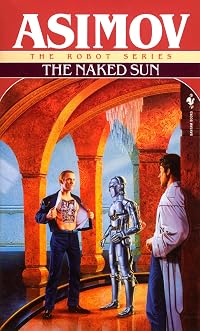
A millennium into the future, two advancements have altered the course of human history: the colonization of the Galaxy and the creation of the positronic brain. On the beautiful Outer World planet of Solaria, a handful of human colonists lead a hermit-like existence, their every need attended to by their faithful robot servants. To this strange and provocative planet comes Detective Elijah Baley, sent from the streets of New York with his positronic partner, the robot R. Daneel Olivaw, to show more solve an incredible murder that has rocked Solaria to its foundations. The victim had been so reclusive that he appeared to his associates only through holographic projection. Yet someone had gotten close enough to bludgeon him to death while robots looked on. Now Baley and Olivaw are faced with two clear impossibilities: Either the Solarian was killed by one of his robots--unthinkable under the laws of Robotics--or he was killed by the woman who loved him so much that she never came into his presence! show lessTags
Recommendations
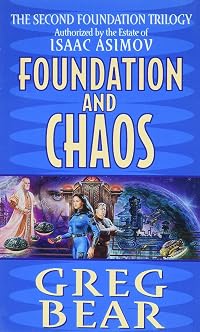
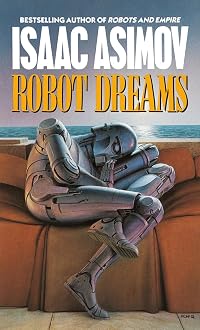
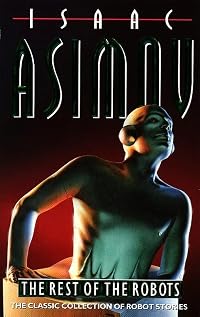
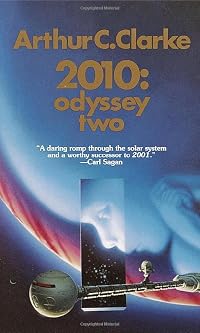








Member Recommendations

Member Reviews
It can be quite tough to go into a sequel which was pretty much perfect in its execution, feeling that the sequel has a lot to live up to. It can seem unlikely it can beat its predecessor so the best that can be hoped for is that it can at least equal it. The Naked Sun with much relief, achieves just that.
Whereas The Caves of Steel dealt with Earth's relationship to its outer world sisters by localising everything on the claustrophobic cities of the homeworld, The Naked Sun flips the coin and takes the story to a planet (Solaria) light years away with a planet so sparsely populated, nobody can bear to touch or even “see” in proximity to one another. And this creates some very intriguing socio-subplots around familial connections, show more phobias and how we view alternative cultures.
Returned is the partnership of Elijah Bayley and advanced robot Daneel Olivaw. This time there is a lot less conflict having smoothed out their relationship in book one, but the underlying frustration between Daneel's programming to protect Elijah from the harm his natural agrophobia could cause him on a world almost entirely open creates a unique level of tension between the two until it boils over.
Elijah's agrophobia is also an excellent counter-echo to the Solaria humans who cannot abide proximity without a nervous breakdown. As someone who suffers intermittently with certain severe OCD symptoms, I had a lot of sympathy and connection to some of the Solarian behaviour towards physical contact. The under current of tension between the two civilisations is also fascinating as Asimov creates a society wholly alien to the concept of family, love and personal connections. One that is difficult for us to relate to, but yet written in a believable way.
All this is wrapped around an intelligent detective story, again showing that Asimov was skilled in transferring science fiction concepts seamlessly into another genre. And this is what I enjoy most about this series. Within 200 pages, we have an engrossing, fast paced detective novel with intense characters, whilst still able to discuss a range of socio-philosophical issues around humanity's relationship with machines and itself. These books are a lesson to any writer in how to concisely communicate world building and ideas, with no loss to storytelling.
A tightly plotted and timeless novel which still has important ramifications and lessons for today's increasingly technological dependant world, with both a tinge of hope and frustration to round it off at the end. show less
Whereas The Caves of Steel dealt with Earth's relationship to its outer world sisters by localising everything on the claustrophobic cities of the homeworld, The Naked Sun flips the coin and takes the story to a planet (Solaria) light years away with a planet so sparsely populated, nobody can bear to touch or even “see” in proximity to one another. And this creates some very intriguing socio-subplots around familial connections, show more phobias and how we view alternative cultures.
Returned is the partnership of Elijah Bayley and advanced robot Daneel Olivaw. This time there is a lot less conflict having smoothed out their relationship in book one, but the underlying frustration between Daneel's programming to protect Elijah from the harm his natural agrophobia could cause him on a world almost entirely open creates a unique level of tension between the two until it boils over.
Elijah's agrophobia is also an excellent counter-echo to the Solaria humans who cannot abide proximity without a nervous breakdown. As someone who suffers intermittently with certain severe OCD symptoms, I had a lot of sympathy and connection to some of the Solarian behaviour towards physical contact. The under current of tension between the two civilisations is also fascinating as Asimov creates a society wholly alien to the concept of family, love and personal connections. One that is difficult for us to relate to, but yet written in a believable way.
All this is wrapped around an intelligent detective story, again showing that Asimov was skilled in transferring science fiction concepts seamlessly into another genre. And this is what I enjoy most about this series. Within 200 pages, we have an engrossing, fast paced detective novel with intense characters, whilst still able to discuss a range of socio-philosophical issues around humanity's relationship with machines and itself. These books are a lesson to any writer in how to concisely communicate world building and ideas, with no loss to storytelling.
A tightly plotted and timeless novel which still has important ramifications and lessons for today's increasingly technological dependant world, with both a tinge of hope and frustration to round it off at the end. show less
Baley, a detective from postapocalypted Earth, is sent to investigate a murder on rich but weird Solaria, where people avoid not just physical contact but being in the same room with other humans, all the jobs of daily life reverting to armies of robots. The story is lumbered with Asimov's mechanical, literal-minded robots and the mystery hinges on a sort of puzzle he must've been bombarded with, i.e. how would you make a robot subvert Asimov's laws of robotics etc. It's not a very interesting story but some features of it couldn't but resonate with the current reading of the Communist manifesto.
There are only twenty thousand people, all of whom own an estate and robots. As the sole sociologist on the planet tells Baley, the problem of show more social justice was solved by getting rid of the bottom of the pyramid--only the richest 1% gets to live, supported by robot labour, and keeping the population static.
Does anyone doubt this scenario would appeal to the rich? Basically, get rid of the messy humanity altogether and hang out with your own "kind" only. What else are gated communities and exclusive spaces about anyway.
Another was a point about the tendency of robot labour to increase, which is also something M&E write about in the Manifesto (except it's not called "robots"). In short, once you enter certain developmental paths, you are committed to following them, by all the bourgeois logic. Once those washing machines entered the picture in the Simplon-Tunnel, there was no going back to the women washing clothes in the stream. Human labour was replaced by "robots", logically, naturally, inexorably. And you can shift those women from that position into other jobs but eventually you hit a wall, where there is no job that class of worker can perform better or cheaper than a "robot" can. And if you propose to educate them further, that inevitably means at least some culling, and then a lot of culling, as only a small minority can be expected to have sufficient talent to acquire skills unavailable to "robots" as the "robots" are improved.
(And don't those Italian women replaced by the washing machines somehow prefigure Italy's disappearing population, the ghost villages in particular?)
The robot-human ratio in any economy that has accepted robot labor tends continuously to increase despite any laws that are passed to prevent it. show less
There are only twenty thousand people, all of whom own an estate and robots. As the sole sociologist on the planet tells Baley, the problem of show more social justice was solved by getting rid of the bottom of the pyramid--only the richest 1% gets to live, supported by robot labour, and keeping the population static.
Does anyone doubt this scenario would appeal to the rich? Basically, get rid of the messy humanity altogether and hang out with your own "kind" only. What else are gated communities and exclusive spaces about anyway.
Another was a point about the tendency of robot labour to increase, which is also something M&E write about in the Manifesto (except it's not called "robots"). In short, once you enter certain developmental paths, you are committed to following them, by all the bourgeois logic. Once those washing machines entered the picture in the Simplon-Tunnel, there was no going back to the women washing clothes in the stream. Human labour was replaced by "robots", logically, naturally, inexorably. And you can shift those women from that position into other jobs but eventually you hit a wall, where there is no job that class of worker can perform better or cheaper than a "robot" can. And if you propose to educate them further, that inevitably means at least some culling, and then a lot of culling, as only a small minority can be expected to have sufficient talent to acquire skills unavailable to "robots" as the "robots" are improved.
(And don't those Italian women replaced by the washing machines somehow prefigure Italy's disappearing population, the ghost villages in particular?)
The robot-human ratio in any economy that has accepted robot labor tends continuously to increase despite any laws that are passed to prevent it. show less
The Naked Sun is a detective mystery set in space on the planet Solaria. Elijah Bailey is summoned from Earth to form a detective-duo with his former partner Daneel Olivaw, a robot indistinguishable from human to anyone observing from a distance. A Solarian scientist has been murdered, and the Solarians believe his wife is the murderer. The storyline follows Elijah (and to a lesser extent Daneel) attempting to solve the case.
Where this book differs from the standard fare of detective stories is in its examination of cultural differences and other social systems such as population control, fertility, and artificial intelligence. Solaria is vastly different from earth. There are only twenty thousand humans on the planet, and they have show more cultivated a preference for solitude over direct physical contact. They “view” each other through artificial means and rarely interact face-to-face. There are 200 million robots on the planet who are programmed to perform specialties necessary for human survival.
Elijah is a “fish out of water” so to speak. He must figure out how to navigate the much different culture and avoid taboos while trying to use his detective skills to determine who murdered the scientist. The author employs a great deal of humor as Elijah stumbles his way into one cultural hurdle after another. Earth is overpopulated and has now established underground cities, and Elijah has developed a fear of open spaces and rarely sees the sun. Published in 1958, it occasionally veers into an older outdated terminology and attitudes, but it is refreshingly different from most crime novels and other science fiction. I enjoyed this book immensely. show less
Where this book differs from the standard fare of detective stories is in its examination of cultural differences and other social systems such as population control, fertility, and artificial intelligence. Solaria is vastly different from earth. There are only twenty thousand humans on the planet, and they have show more cultivated a preference for solitude over direct physical contact. They “view” each other through artificial means and rarely interact face-to-face. There are 200 million robots on the planet who are programmed to perform specialties necessary for human survival.
Elijah is a “fish out of water” so to speak. He must figure out how to navigate the much different culture and avoid taboos while trying to use his detective skills to determine who murdered the scientist. The author employs a great deal of humor as Elijah stumbles his way into one cultural hurdle after another. Earth is overpopulated and has now established underground cities, and Elijah has developed a fear of open spaces and rarely sees the sun. Published in 1958, it occasionally veers into an older outdated terminology and attitudes, but it is refreshingly different from most crime novels and other science fiction. I enjoyed this book immensely. show less
This is the second of Asimov's full length robot novels featuring Earth detective Elijah Bailey and Robot Daneel Olivaw. Another re-read from my youth, this is one of my all time favourite novels. It's the perfect blend of brilliant dialogue and detective ratiocination by "Partner Elijah", as Olivaw (out of action for over a third of the novel, but still a great character) calls him. Set almost entirely on the planet Solaria, where human individualism and dependence on robots has found its ultimate expression, the characters are rather more memorable than those in its predecessor novel, The Caves of Steel, and their ways of thinking, contrasting with those of Elijah and his fellow Earthmen, are vividly and memorably drawn. Wonderful stuff.
Una vez mas Asimov demostró la gran inteligencia que poseía, el entorno sociológico que crea para esta novela es impecable, solida y descripta de una manera que te permite una abundante información sin caer en los excesos.
Los personajes están bien creados y sufren una transformación muy reconocible como en toda buena novela, el detective protagonista tiene una personalidad fuerte usa bien sus miedos, supera sus inseguridades, llega a una conclusion eficaz y brillante, los solarianos poseen una personalidad creible para su entorno, y el robot de Aurora es todo lo logico que se puede intuir para el respeto de las tres leyes.
En mi caso no me voy a cansar de leer a este autor que siempre me deja satisfecho con respecto a lo que espero show more de el y viene demostrando desde que pude tocar sus novelas del ciclo de Trantor de la fundación.
Con respecto a una critica que leí en una reseña sobre actitudes narrativas que ejerzan prejuicios sobre un genero, a mi parecer puedo visualizar uno pero es minimo, mas alla de eso esto es una obra de ficcion, y si el autor necesita incluirlos ya sea por como se crio o porque eso es lo que le parece que va, no me parece mal porque esto es una obra, una simulacion, arte, se puede identificar que tiene esas caracteristicas pero no es suficiente para calificar a la obra rebajandole puntos, no tiene sentido. show less
Los personajes están bien creados y sufren una transformación muy reconocible como en toda buena novela, el detective protagonista tiene una personalidad fuerte usa bien sus miedos, supera sus inseguridades, llega a una conclusion eficaz y brillante, los solarianos poseen una personalidad creible para su entorno, y el robot de Aurora es todo lo logico que se puede intuir para el respeto de las tres leyes.
En mi caso no me voy a cansar de leer a este autor que siempre me deja satisfecho con respecto a lo que espero show more de el y viene demostrando desde que pude tocar sus novelas del ciclo de Trantor de la fundación.
Con respecto a una critica que leí en una reseña sobre actitudes narrativas que ejerzan prejuicios sobre un genero, a mi parecer puedo visualizar uno pero es minimo, mas alla de eso esto es una obra de ficcion, y si el autor necesita incluirlos ya sea por como se crio o porque eso es lo que le parece que va, no me parece mal porque esto es una obra, una simulacion, arte, se puede identificar que tiene esas caracteristicas pero no es suficiente para calificar a la obra rebajandole puntos, no tiene sentido. show less
If the rest of the Robots/Empire/Foundation series is even close to the quality of Caves of Steel or Naked Sun, I'm in for another 14 amazing books in a row. Another terrific detective story, and the world of Solaria was so well thought out. Asimov really was a genius, I was completely hooked from the first page. Baley is a great protagonist, not flawless and a bit prejudiced. Asimov weaves from internal dialogue, to external dialogue, to world building and rational thinking and sci-fi themes effortlessly. Others look amateur by comparison. Excited for Robots of Dawn!
After murder takes place on remote space colony, on a planet where only handful of people are allowed to live by social standards, Elijah Baley gets again teamed with Daneel Olivaw to solve the mystery.
Again, crime investigation is just a background. Asimov's gives excellent portrait of two polar opposites of human society - crammed cities of Earth populated by people afraid of everything outside the domes, and also afraid of any change and of internal contact they try to handle with weird ignore-it-politely social rules; and space colony again based on fear, fear of intimacy and nature of humanity in general, so much afraid that entire society can be described as engineered to the extreme.
Both societies are based on science and logic show more and both are so unreasonable and incapable to ensure the future for their respective populations.
Cold logic can provide insights but it is not necessary reasonable - and reason says change is good if requested by proper reasons. If anything is done out of fear then is misdirected from the start.
Excellent story, highly recommended to SF fans. show less
Again, crime investigation is just a background. Asimov's gives excellent portrait of two polar opposites of human society - crammed cities of Earth populated by people afraid of everything outside the domes, and also afraid of any change and of internal contact they try to handle with weird ignore-it-politely social rules; and space colony again based on fear, fear of intimacy and nature of humanity in general, so much afraid that entire society can be described as engineered to the extreme.
Both societies are based on science and logic show more and both are so unreasonable and incapable to ensure the future for their respective populations.
Cold logic can provide insights but it is not necessary reasonable - and reason says change is good if requested by proper reasons. If anything is done out of fear then is misdirected from the start.
Excellent story, highly recommended to SF fans. show less
Members
- Recently Added By
Published Reviews
ThingScore 75
Elijah must face is extreme agoraphobia, and Gladia must confront the Solarian fear of interpersonal contact. These Solarians represent what can possibly happen when dependence on robots is taken to extremes. Also, we get to see the developing relationship between Elijah and Daneel.
added by circeus
Lists

Best Science Fiction Novels
816 works; 426 members

Isaac Arthur’s Book Recommendations
98 works; 3 members

Genre Benders: Science Fiction + Crime
10 works; 3 members

Books Read in 2015
3,299 works; 129 members

Read in 2016
107 works; 6 members
Books Read in 2016
4,666 works; 199 members

Books Read in 2004
200 works; 7 members

Books Read in 2018
4,360 works; 110 members

Books Read in 2025
4,091 works; 97 members
Author Information

2,396+ Works 292,490 Members
Isaac Asimov was born in Petrovichi, Russia, on January 2, 1920. His family emigrated to the United States in 1923 and settled in Brooklyn, New York, where they owned and operated a candy store. Asimov became a naturalized U.S. citizen at the age of eight. As a youngster he discovered his talent for writing, producing his first original fiction at show more the age of eleven. He went on to become one of the world's most prolific writers, publishing nearly 500 books in his lifetime. Asimov was not only a writer; he also was a biochemist and an educator. He studied chemistry at Columbia University, earning a B.S., M.A. and Ph.D. In 1951, Asimov accepted a position as an instructor of biochemistry at Boston University's School of Medicine even though he had no practical experience in the field. His exceptional intelligence enabled him to master new systems rapidly, and he soon became a successful and distinguished professor at Columbia and even co-authored a biochemistry textbook within a few years. Asimov won numerous awards and honors for his books and stories, and he is considered to be a leading writer of the Golden Age of science fiction. While he did not invent science fiction, he helped to legitimize it by adding the narrative structure that had been missing from the traditional science fiction books of the period. He also introduced several innovative concepts, including the thematic concern for technological progress and its impact on humanity. Asimov is probably best known for his Foundation series, which includes Foundation, Foundation and Empire, and Second Foundation. In 1966, this trilogy won the Hugo award for best all-time science fiction series. In 1983, Asimov wrote an additional Foundation novel, Foundation's Edge, which won the Hugo for best novel of that year. Asimov also wrote a series of robot books that included I, Robot, and eventually he tied the two series together. He won three additional Hugos, including one awarded posthumously for the best non-fiction book of 1995, I. Asimov. "Nightfall" was chosen the best science fiction story of all time by the Science Fiction Writers of America. In 1979, Asimov wrote his autobiography, In Memory Yet Green. He continued writing until just a few years before his death from heart and kidney failure on April 6, 1992. (Bowker Author Biography) show less
Some Editions
Series


Belongs to Publisher Series
Heyne-Buch (3009)
Sündmuste horisont (12)
Adey's Locked Room Murders (0106)
J'ai lu (468)
Delta Science Fiction (132)
Lanterne (L 155)
Heyne Science Fiction & Fantasy (3009 / 3517)
Work Relationships
Common Knowledge
- Canonical title
- The Naked Sun
- Original title
- The Naked Sun
- Alternate titles*
- Vo vesmíre niekto vraždí
- Original publication date
- 1956-12
- People/Characters
- Elijah Baley; R. Daneel Olivaw; Dr. Rikane Delmarre; Dr. Jothan Leebig; Gladia Delmarre; Albert Minnim (show all 16); Dr. Han Fastolfe; Robot RX-2475; Hannis Gruer; Robot ACX-2745; Robot ACC-1129; Dr. Altim Thool; Corwin Attlebish; Anselmo Quemot; Klorissa Cantoro; Bik
- Important places
- Solaria; Aurora; Earth
- Related movies
- Out of the Unknown:The Naked Sun (1969 | s3e7 | IMDb)
- Dedication
- To Noreen,
To Tony, and
to One Hundred Unusual Hours
To Noreen and Nick Falasca
for inviting me,
To Tony Boucher
for introducing me,
and to One Hundred Unusual Hours - First words
- Stubbornly Elijah Baley fought panic.
- Last words
- (Click to show. Warning: May contain spoilers.)The naked sun!
(Click to show. Warning: May contain spoilers.)¡Los rayos del sol desnudo!
(Click to show. Warning: May contain spoilers.)He could see it shining down — the naked sun. - Original language
- English
*Some information comes from Common Knowledge in other languages. Click "Edit" for more information.
Classifications
- Genres
- Science Fiction, Fiction and Literature, Mystery
- DDC/MDS
- 813.54 — Literature & rhetoric American literature in English American fiction in English 1900-1999 1945-1999
- LCC
- PZ3 .A8316 .N — Language and Literature Fiction and juvenile belles lettres Fiction and juvenile belles lettres Fiction in English
- BISAC
Statistics
- Members
- 6,989
- Popularity
- 1,689
- Reviews
- 124
- Rating
- (3.93)
- Languages
- 21 — Chinese, Czech, Danish, Dutch, English, Estonian, Finnish, French, German, Hebrew, Hungarian, Italian, Norwegian (Bokmål), Norwegian, Polish, Portuguese, Romanian, Slovak, Spanish, Swedish, Thai
- Media
- Paper, Audiobook, Ebook
- ISBNs
- 80
- ASINs
- 78