
Kelly Freas (1922–2005)
Author of Frank Kelly Freas: The Art of Science Fiction
About the Author
Image credit: Kelly Freas at his 82nd birthday party by The Epopt
Works by Kelly Freas
Crazy Ad 9 copies
Call Me Joe 5 copies
Somewhere a Voice 3 copies
Omnilingual 2 copies
I'll Kill You Tomorrow 1 copy
Disqualified 1 copy
The Haunt Of Horror Ad 1 copy
A Bottle of Old Wine 1 copy
Associated Works
The Dream Master (1966) — Cover artist, some editions; Cover artist, some editions — 1,242 copies, 29 reviews
Astounding: John W. Campbell Memorial Anthology (1973) — Cover Artist, some editions — 258 copies, 1 review
The Dark Intruder and Other Stories / Falcons of Narabedla (Ace Double F-273) (1972) — Cover artist, some editions — 194 copies, 4 reviews
The Space Willies / Six Worlds Yonder (Classic Ace Double D-315) (1958) — Cover artist, some editions — 119 copies, 3 reviews
L. Ron Hubbard Presents Writers of the Future, Volume 4 (1988) — Director of Illustration — 105 copies, 1 review
Planet of Exile / Mankind Under the Leash (Ace Double G-597) (1966) — Cover artist, some editions — 90 copies
Tonight We Steal the Stars / The Wagered World (Ace Double, 81680) (1969) — Cover artist — 72 copies, 1 review
Lord of the Green Planet; and, Five against Arlane (1967) — Cover artist, some editions — 72 copies, 2 reviews
The Unteleported Man / The Mind Monsters (Ace Double G-602) (1964) — Cover artist, some editions — 70 copies, 2 reviews
The Star Magicians / The Off-Worlders (Vintage Ace Double, G-588) (1966) — Cover artist, some editions — 59 copies
Flower of Doradil / A Promising Planet (Ace Double 24100) (1970) — Cover artist, some editions — 55 copies
L. Ron Hubbard Presents Writers of the Future, Volume 17 (2001) — Cover artist, some editions — 52 copies
Analog Science Fiction/Science Fact: Vol. LXXXVIII, No. 3 (November 1971) (1971) — Illustrator — 37 copies
Analog Science Fiction/Science Fact: Vol. XCVI, No. 2 (February 1976) (1976) — Illustrator — 33 copies, 1 review
The Magazine of Fantasy and Science Fiction July 1977, Vol. 53, No. 1 (1977) — Cover artist — 31 copies
Analog Science Fiction/Science Fact: Vol. XCVI, No. 9 (September 1976) (1976) — Cover artist — 30 copies
Analog Science Fiction/Science Fact: Vol. XCVII, No. 8 (August 1977) (1977) — Cover artist — 30 copies, 1 review
Analog Science Fiction/Science Fact: Vol. XCVII, No. 3 (March 1977) (1977) — Illustrator — 29 copies
Analog Science Fiction/Science Fact: Vol. XCVI, No. 8 (August 1976) (1976) — Illustrator — 29 copies, 2 reviews
Analog Science Fiction/Science Fact: Vol. XCIII, No. 6 (August 1974) (1974) — Illustrator — 29 copies
Master Storyteller: An Illustrated Tour of the Fiction of L. Ron Hubbard (2003) — Preface, some editions — 29 copies
Analog Science Fiction/Science Fact: Vol. XCVI, No. 12 (December 1976) (1976) — Illustrator — 28 copies
Analog Science Fiction/Science Fact: Vol. XCVII, No. 1 (January 1977) (1977) — Illustrator, some editions — 28 copies, 1 review
Analog Science Fiction/Science Fact: Vol. XCV, No. 3 (March 1975) (1975) — Illustrator — 28 copies, 1 review
Analog Science Fiction/Science Fact: Vol. XCVIII, No. 6 (June 1978) (1978) — Illustrator — 28 copies
Analog Science Fiction/Science Fact: Vol. XCI, No. 4 (June 1973) (1973) — Contributor; Cover artist — 28 copies
Analog Science Fiction/Science Fact: Vol. XC, No. 3 (November 1972) (1972) — Illustrator — 27 copies
Analog Science Fiction/Science Fact: Vol. XCIV, No. 5 (January 1975) (1975) — Illustrator — 27 copies
Analog Science Fiction/Science Fact: Vol. XCI, No. 5 (July 1973) (1973) — Cover artist — 27 copies, 1 review
Analog Science Fiction/Science Fact: Vol. XC, No. 1 (September 1972) (1972) — Cover artist — 27 copies
Analog Science Fiction/Science Fact: Vol. XCVIII, No. 8 (August 1978) (1978) — Illustrator — 27 copies
Analog Science Fiction/Science Fact: Vol. XCV, No. 10 (October 1975) (1975) — Cover artist — 26 copies, 2 reviews
Analog Science Fiction/Science Fact: Vol. XCII, No. 5 (January 1974) (1974) — Cover artist — 26 copies
Analog Science Fiction/Science Fact: Vol. XCIV, No. 3 (November 1974) (1974) — Illustrator — 26 copies
Analog Science Fiction/Science Fact: Vol. XCIV, No. 2 (October 1974) (1974) — Illustrator — 26 copies
Analog Science Fiction/Science Fact: Vol. XCIII, No. 4 (June 1974) (1974) — Cover artist — 26 copies
Analog Science Fiction/Science Fact: Vol. XC, No. 4 (December 1972) (1972) — Cover artist — 26 copies
Analog Science Fiction/Science Fact: Vol. LXXXVIII, No. 2 (October 1971) (1971) — Illustrator — 26 copies
Analog Science Fiction/Science Fact: Vol. LXXXII, No. 5 (January 1969) (1969) — Cover artist — 25 copies
Analog Science Fiction/Science Fact: Vol. LXXXIX, No. 6 (August 1972) (1972) — Cover artist — 24 copies
Analog Science Fiction/Science Fact: Vol. XCV, No. 9 (September 1975) (1975) — Illustrator — 24 copies, 1 review
Analog Science Fiction/Science Fact: Vol. XCII, No. 3 (November 1973) (1973) — Cover artist — 24 copies
Analog Science Fiction/Science Fact: Vol. XCIII, No. 1 (March 1974) (1974) — Cover artist — 24 copies
Analog Science Fiction/Science Fact: Vol. XCV, No. 2 (February 1975) (1975) — Cover artist — 24 copies, 1 review
Analog Science Fiction/Science Fact: Vol. XCV, No. 7 (July 1975) (1975) — Illustrator — 24 copies, 1 review
Analog Science Fiction/Science Fact: Vol. XCV, No. 12 (December 1975) (1975) — Illustrator — 24 copies
Analog Science Fiction/Science Fact: Vol. XCIV, No. 1 (September 1974) (1974) — Cover artist — 24 copies
Analog Science Fiction/Science Fact: Vol. LXXXIX, No. 5 (July 1972) (1972) — Illustrator — 23 copies
Analog Science Fiction/Science Fact: Vol. LXXXVI, No. 5 (January 1971) (1971) — Cover artist — 23 copies
Analog Science Fiction/Science Fact: Vol. LXXX, No. 2 (October 1967) (1967) — Illustrator — 23 copies
Analog Science Fiction/Science Fact: Vol. XC, No. 6 (February 1973) (1973) — Illustrator — 23 copies
Analog Science Fiction/Science Fact: Vol. LXXXVIII, No. 4 (December 1971) (1971) — Cover artist; Contributor — 22 copies
Analog Science Fiction/Science Fact: Vol. XCV, No. 6 (June 1975) (1975) — Illustrator — 22 copies, 1 review
Analog Science Fiction/Science Fact: Vol. XCIV, No. 4 (December 1974) (1974) — Illustrator — 22 copies
Analog Science Fiction/Science Fact: Vol. XCII, No. 4 (December 1973) (1973) — Illustrator — 22 copies
Analog Science Fiction/Science Fact: Vol. LXXXIII, No. 3 (May 1969) (1969) — Cover artist — 22 copies
Analog Science Fiction/Science Fact: Vol. XCII, No. 1 (September 1973) (1973) — Illustrator — 22 copies
Analog Science Fiction/Science Fact: Vol. LXXXIX, No. 4 (June 1972) (1972) — Cover artist — 22 copies
Analog Science Fiction/Science Fact: Vol. LXXXIX, No. 1 (March 1972) (1972) — Illustrator — 21 copies
Analog Science Fiction/Science Fact: Vol. LXXXVIII, No. 5 (January 1972) (1971) — Illustrator — 21 copies
Analog Science Fiction/Science Fact: Vol. LXXXVI, No. 2 (October 1970) (1970) — Cover artist — 20 copies
Analog Science Fiction/Science Fact: Vol. LXXVIII, No. 4 (December 1966) (1966) — Cover artist — 20 copies
Analog Science Fiction/Science Fact: Vol. LXXXIX, No. 2 (April 1972) (1972) — Cover artist — 19 copies, 1 review
Analog Science Fiction/Science Fact: Vol. LXXXIV, No. 4 (December 1969) (1969) — Cover artist — 19 copies
Analog Science Fiction/Science Fact: Vol. LXXXVIII, No. 6 (February 1972) (1972) — Illustrator — 19 copies
Analog Science Fiction/Science Fact: Vol. LXXXVII, No. 1 (March 1971) (1971) — Cover artist — 19 copies
Analog Science Fiction/Science Fact: Vol. LXXXV, No. 1 (March 1970) (1970) — Cover artist — 18 copies
Analog Science Fiction/Science Fact: Vol. LXXXV, No. 2 (April 1970) (1970) — Cover artist; Illustrator — 17 copies
Analog Science Fiction/Science Fact: Vol. LXXXII, No. 3 (November 1968) (1968) — Cover artist, some editions — 16 copies
Analog Science Fiction/Science Fact: Vol. LXXXII, No. 4 (December 1968) (1968) — Cover artist, some editions — 15 copies
The Magazine of Fantasy and Science Fiction January 1990, Vol. 78, No. 1 (1990) — Cover artist — 14 copies
Analog Science Fiction/Science Fact: Vol. LXXXII, No. 2 (October 1968) (1968) — Cover artist, some editions — 13 copies
The Magazine of Fantasy and Science Fiction February 1955, Vol. 8, No. 2 (1955) — Cover artist — 11 copies
Analog Science Fact/Science Fiction: Vol. LXXIII, No. 5 (July 1964) (1964) — Illustrator — 11 copies
Science Fiction Stories November 1956 — Illustrator — 4 copies
Future Science Fiction No. 31 — Illustrator — 2 copies
Tagged
Common Knowledge
- Canonical name
- Freas, Kelly
- Legal name
- Freas, Frank Kelly
- Other names
- Dean of Science Fiction Artists
- Birthdate
- 1922-08-27
- Date of death
- 2005-01-02
- Gender
- male
- Occupations
- science fiction and fantasy artist
- Awards and honors
- SF Hall Of Fame (Posthumous Inductee ∙ 2006)
E.E. Smith Memorial Award for Imaginative Fiction (1981)
11 Hugos ( [1955, 1956, 1958, 1959, 1970, 1972, 1973, 1974, 1975, 1976])
Inkpot Award (1979)
Art Teacher Emeritus Award (1988)
National Association of Trade and Technical Schools National Hall of Fame (1991) (show all 14)
Hugo (Artist, 1955)
Hugo (Artist, 1956)
Hugo (Outstanding Artist, 1958)
Hugo (Professional Artist, 1959)
Hugo Nominee (Professional Artist, 1960)
Hugo Nominee (Professional Artist, 1961)
Hugo (Professional Artist, Retro-Hugo, [1951], 2001)
Hugo Nominee (Professional Artist, Retro-Hugo, [1954], 2004) - Relationships
- Freas, Polly (wife)
- Nationality
- USA
- Birthplace
- Hornell, New York, USA
- Place of death
- West Hills, California, USA
- Burial location
- Oakwood Memorial Park, Chatsworth, California, USA
- Associated Place (for map)
- California, USA
Members
Reviews

Robert Silverberg fixates a lot on the idea of "fun" in his introduction to this anthology, but I sense that he perhaps had more fun writing for Super-Science Fiction when it was published 1955-59 than I am having reading what got written. After all, who wouldn't like being able to sell three stories a month to a magazine that paid the best in the business? Not Silverberg (and not Harlan EllisonTM, none of whose stories are in this volume, unfortunately).
But with fourteen stories, this book show more has enough room to be good and be bad, and thankfully the good makes the bad worth it. James Gunn turns in an almost prescient critique of a consumer economy gone mad (and how fortunate that I read this book at Christmastime, even if the story was set in the summer) in "Every Day is Christmas," with a suitably dark ending. I also enjoyed "Song of the Axe" by Don Berry: I didn't always get what had happened or why, but the details were intriguing enough that I didn't care; it's definitely the best fleshing out of an alien culture in this collection (where aliens are often just foils for Our Brave White Spacemen).
Robert Moore Williams's "I Want to Go Home" was maybe my favorite story in the collection: short and creepy, but seemingly universal. A great idea I wouldn't want to spoil one jot by explaining it. Alan E. Nourse's "The Gift of Numbers," about a criminal who transfers his mathematical abilities to someone else, was also a delightful and clever idea. And big kudos to Tom Godwin for writing "A Place Beyond the Stars" and Silverberg for including the story: a very cool idea from a guy who deserves to be remembered for something other than "The Cold Equations."
Jack Vance's "World of Origin" was one of the worst ideas for a murder mystery I ever read-- it basically tromps all over Asimov's rules for sf mysteries, and not to good effect. A guy tries to solve a crime based on what planets the suspects come from, applying what he knows of the planets' cultures (a Space Father Brown, maybe?), but it turns out that this is very easy because in the future, every planet will have one easily-defined characteristic that tells you exactly how its citizens murder people. (On Planet Sprocket, you can only murder a man when riding a bicycle. On Planet Academia, you can only murder someone if you publish a monograph on it. On Planet Cricket, you can only murder someone with a cricket bat used to win the Ashes. These aren't real examples... but they could be.)
"The Tool of Creation" by J. F. Bone is boring because it sets up a nonsensical sf problem (why are all the planets formed like this?) and then answers it via coincidence. I don't care about the problem or the solution. And can we call for a retroactive moratorium on all sf stories that involve "twist" endings? Except for the good ones, of course.
I found Silverberg's own two contributions ("Catch 'Em All Alive" and "The Loathsome Beasts") dull and flat, typical sf tropes played out uninterestingly, but his introduction is great, and he even provides individual introductions to each story/writer, an anthology practice that I always enjoy, and am disappointed we don't see more often. This is a well-planned packaging of some forgotten sf, and while the stories might not be a fun to read as they were to write, they're fun enough to pick up and look through at the least. show less
But with fourteen stories, this book show more has enough room to be good and be bad, and thankfully the good makes the bad worth it. James Gunn turns in an almost prescient critique of a consumer economy gone mad (and how fortunate that I read this book at Christmastime, even if the story was set in the summer) in "Every Day is Christmas," with a suitably dark ending. I also enjoyed "Song of the Axe" by Don Berry: I didn't always get what had happened or why, but the details were intriguing enough that I didn't care; it's definitely the best fleshing out of an alien culture in this collection (where aliens are often just foils for Our Brave White Spacemen).
Robert Moore Williams's "I Want to Go Home" was maybe my favorite story in the collection: short and creepy, but seemingly universal. A great idea I wouldn't want to spoil one jot by explaining it. Alan E. Nourse's "The Gift of Numbers," about a criminal who transfers his mathematical abilities to someone else, was also a delightful and clever idea. And big kudos to Tom Godwin for writing "A Place Beyond the Stars" and Silverberg for including the story: a very cool idea from a guy who deserves to be remembered for something other than "The Cold Equations."
Jack Vance's "World of Origin" was one of the worst ideas for a murder mystery I ever read-- it basically tromps all over Asimov's rules for sf mysteries, and not to good effect. A guy tries to solve a crime based on what planets the suspects come from, applying what he knows of the planets' cultures (a Space Father Brown, maybe?), but it turns out that this is very easy because in the future, every planet will have one easily-defined characteristic that tells you exactly how its citizens murder people. (On Planet Sprocket, you can only murder a man when riding a bicycle. On Planet Academia, you can only murder someone if you publish a monograph on it. On Planet Cricket, you can only murder someone with a cricket bat used to win the Ashes. These aren't real examples... but they could be.)
"The Tool of Creation" by J. F. Bone is boring because it sets up a nonsensical sf problem (why are all the planets formed like this?) and then answers it via coincidence. I don't care about the problem or the solution. And can we call for a retroactive moratorium on all sf stories that involve "twist" endings? Except for the good ones, of course.
I found Silverberg's own two contributions ("Catch 'Em All Alive" and "The Loathsome Beasts") dull and flat, typical sf tropes played out uninterestingly, but his introduction is great, and he even provides individual introductions to each story/writer, an anthology practice that I always enjoy, and am disappointed we don't see more often. This is a well-planned packaging of some forgotten sf, and while the stories might not be a fun to read as they were to write, they're fun enough to pick up and look through at the least. show less
 This review was written for LibraryThing Early Reviewers.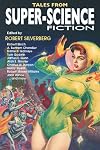
The main trouble the old-school science fiction stories, the real stuff that ran in the old pulps with the lurid covers, bought by the word from young men with a million ideas and all the worlds in the world to discover is that they don't make it any more. There are great writers today, of course, but the science fiction of the pulps was of its time and can't be written now except as parody. The world has moved on. This is a great problem for those of us who love that style and the stories show more of that period. Like a Bach fan or a Grateful Dead devotee, we're presented with a vast but finite corpus of material, and little hope of discovering great new stuff.
Robert Silverberg has performed a great service for the world in putting together this collection of over a dozen stories from the little-known and little-remembered Super-Science Fiction magazine, whose pages featured some of the best writers of the time. These stories are all new to me, and there's not a clinker in the bunch. Some hue closer to the standard forms of the genre than others - Robert Bloch's "Broomstick Ride" is told in an age old riddle form, and its turn is as inevitable and as surprising as the key change in a Bach sonata. "Worlds of Origin" (Jack Vance) is a detective story in science-fiction drag, but nothing about it feels forced or rote.
On the other hand, stories like Charles Runyon's "First Man in a a Satellite" and James Gunn's "Every Day is Christmas" , while they could not be anything but a product of its time, are entirely their own stories, and reading them feels like discovering something entirely new. Reading this collection feels like I imagine buying a copy of Super-Science Fiction must have felt like in 1956: some old stories, newly told, and new stories which fit into the old forms, and great writing throughout. show less
Robert Silverberg has performed a great service for the world in putting together this collection of over a dozen stories from the little-known and little-remembered Super-Science Fiction magazine, whose pages featured some of the best writers of the time. These stories are all new to me, and there's not a clinker in the bunch. Some hue closer to the standard forms of the genre than others - Robert Bloch's "Broomstick Ride" is told in an age old riddle form, and its turn is as inevitable and as surprising as the key change in a Bach sonata. "Worlds of Origin" (Jack Vance) is a detective story in science-fiction drag, but nothing about it feels forced or rote.
On the other hand, stories like Charles Runyon's "First Man in a a Satellite" and James Gunn's "Every Day is Christmas" , while they could not be anything but a product of its time, are entirely their own stories, and reading them feels like discovering something entirely new. Reading this collection feels like I imagine buying a copy of Super-Science Fiction must have felt like in 1956: some old stories, newly told, and new stories which fit into the old forms, and great writing throughout. show less
This review was written for LibraryThing Early Reviewers.Disclosure: I received this book as part of the LibraryThing Early Reviewers program. Some people think this may bias a reviewer so I am making sure to put this information up front. I don't think it biases my reviews, but I'll let others be the judge of that.
It seems somewhat odd to think of it now, with only as handful of dedicated fiction magazines still publishing, but in the 1950s there was such demand for pulpy tales that publishers with no experience in genres like science fiction show more were moved to start their own science fiction magazines to capitalize on the market. In 1956, Harlan, a company whose experience in publishing included titles like Trapped and Guilty - magazines that specialized in juvenile delinquent tales - decided to throw its hat into the science fiction ring with the magazine Super-Science Fiction. Luckily, W.W. Scott, the editor of all three magazines, knew both Harlan Ellison and Robert Silverberg who had previously submitted stories of juvenile mischief and punishment to his other magazines. With the two of them helping him out (and earning themselves steady money by submitting stories to him), the result was a fun, if short-lived, magazine. In Tales of Super-Science Fiction Robert Silverberg takes the reader on a chronological journey through the three year history of the magazine, starting with the stories published in its earliest issues, and concluding with some monster oriented stories representative of those that made up the bulk of its later "SPECIAL MONSTER ISSUE" installments.
The fourteen stories included in this retrospective anthology are pretty much exactly what one would expect would be in a collection drawn from the pages of a pulpy magazine published in the late 1950s. Lantern jawed heroes, dorky scientists, and damsels in distress make up a substantial portion of the population of the stories, and they are opposed by bug-eyed monsters, computers run wild, or monomaniacal tyrants. As an aside, the cover picture is hilarious in its depiction of 1950s science fiction sensibility. A buxom woman threatened by a horde of aliens is clad in a leotard and space helmet, with the outfit, of course, prominently highlighting her breasts. But the outfit doesn't cover her legs. What sort of environment is she supposed to be in where she needs a space helmet, but can walk around with bare legs?
The first story, Catch 'Em All Alive by Robert Silverberg, is a classic tale of the hubris of human explorers who come across an alien planet that they think offers them everything they could ever want and consequently don't bother to investigate before they get themselves into trouble. The twist at the end of the story is somewhat predictable, but the story is well-executed. A second story about the dangers of human hubris is found in I'll Take Over by A. Bertram Chandler, in which the mechanical "brain" controlling a star ship tells the ship's crew that the craft is experiencing a malfunction, whereupon they land on an prohibited alien planet and have to deal with the comparatively primitive natives. The story has some twists and turns, including a hint of supernatural influence, but ends up as a fairly standard tale of technological paranoia. Broomstick Ride by Robert Bloch is almost exactly the opposite, taking place on a planet where witches are real. The explorers try to convince the local authorities that magic cannot be real while at the same time trying to find some logical explanation for the apparently supernatural phenomena. While I'll Take Over expresses man's fear of technology, Broomstick Ride expresses man's fear of the night and the supernatural horrors our imaginations have filled it with. A "space exploration" story with a twist, The Tool of Creation by J.F. Bone, is a variant on the "engineering puzzle" story. In the story a ship traveling at superluminal speeds suffers a malfunction that threatens to drop the ship into "normal" space, which would be fatal to the crew. They have to solve the problem of shedding enough speed to avoid this fate, with the added wrinkle of using the super science in the story to solve the mystery of where solar systems come from.
Several of the stories amount to mysteries with an exotic added element. Who Am I? by Henry Slesar is the first of these, as a pair of space traders rescue an unknown individual drifting in a space-sled. The simple act of getting the man they rescued to identify himself proves to be the central mystery of the story, as it seems that he doesn't really know himself. as it is a science fiction story, the answer turns out to be somewhat exotic. Song of the Axe by Don Berry is probably the most archetypal example of 1950s era science fiction. A disgraced (but still lantern jawed and manly) star ship captain is given another chance by his superiors when they ask him to try to locate the lost records of a dead civilization. The story includes a beautiful alien princess, exotic alien rituals, an invading alien army, and a hero who uses an axe in a battle where others are using high tech weaponry. The story is basically mindless action adventure, but it is fairly good action adventure. Worlds of Origin by Jack Vance is a mode sedate mystery centered on a murder at a space resort housing vacationers from various planets. Vance's recurring character Magnus Ridolph just happens to be on hand when the murder occurs and the resort owner asks him to investigate. Ridolph decides that unraveling the mystery will depend upon examining the worlds the various guests hail from (hence the title), and sets about solving the crime. The story is decent, and the mystery is intriguing, but the stereotyping of the aliens - effectively assuming that everyone from a given planet, or who has a given profession holds the same mind set - robs an otherwise good yarn of some verisimilitude.
A couple of the stories use the science fiction as a vehicle to comment very explicitly with the concerns that were hot topics in the 1950s, and Every Day Is Christmas by James E. Gunn is the most didactic of these. In his story Gunn posits that advertising had been perfected "scientifically" to the point where the populace has become mindless purchasing drones acquiring and hoarding massive piles of products that they have no real use for. A deep space explorer returns to this culture of insane consumption and struggles to fit in. The passage of time has made the story somewhat unintentionally humorous, but it is still disturbing and effective. Another story exemplifying this style of story First Man in a Satellite by Charles W. Runyon that takes place almost entirely aboard a tiny one man satellite housing man's first space explorer as it orbits the Earth: a dwarf from Vaudeville recruited to the the job because of his small size. A malfunction in the craft leads to those on the ground talking the protagonist through the landing procedures, a task made more difficult by the lousy communications between the ground and orbit. The story is one of the more thoughtful ones in the collections, and has a sad yet also triumphant conclusion.
One of the best stories in the book, I Want to Go Home by Robert Moore Williams is a strange story about a seemingly insane youth who believes he is actually an alien from another world. The story is told from the perspective of a scientist brought in by the police to examine the boy, but by the end the reader is left wondering who has a handle on reality and who does not. As with most really good science fiction stories, the ending is ambiguous and slightly disturbing. The Gift of Numbers by Alan E. Nourse, on the other hand, is a blackly humorous story in which a hapless accountant is duped into accepting a gift from a somewhat colorful character who calls himself the Colonel. The "gift" is a seemingly inexplicable affinity for numbers that is accompanied by an ulcer and an uncontrollable (and unconscious) desire to use the newly acquired mathematical talents to commit petty larceny. The "gift" is a decidedly mixed blessing, and the protagonist is keen to get rid of it, but in the end it turns out that the tables are turned. The story is both creepy and darkly funny. Possibly the best story in the book is Tom Godwin's A Place Beyond the Stars, a tale possibly more relevant today than it was when written. A space scout tasked with preparing way stations for the following emigration fleet to resupply at lands on a planet controlled by a fascist government that strictly regulates everything, including scientific inquiry. The inimical government has banned all research of no seeming practical value, but seizes upon the scout as a potential source of technologically advanced weaponry. Using their own scientific myopia against them, the scout manages to turn the tables and secure a safe port of call for his fleet. The story is engaging, and in a world in which governments increasingly seem to disdain "blue sky" science, it is also a cautionary tale.
Late in its run, Super-Science Fiction began focusing heavily on "monster" stories in an effort to retain readers, hyping every issue as a "special monster issue". Hostile Life-Form by Daniel F. Galouye is a story that fell into that category. Human explorers on an alien planet find themselves besieged by monstrous alien beasts until they are apparently saved by the arrival of another species that preys upon their tormentors. As usual, the story takes a dark turn as the situation is not exactly what the explorers assumed it was. The story is somewhat predictable, but it is still fun to read, and does a good job at conveying a rising sense of horror and tension. The final story in the book is The Loathsome Beasts by Robert Silverberg, who wrote the story under the pen name Dan Malcolm to help disguise the fact that he had contributed so many stories to the magazine. The story itself is one of the weaker stories in the volume, with mindless alien monsters serving more or lass as ravening beasts that exist to fight and eat the colonists on a distant planet. The story starts with some (for the 1950s) salacious scenes of teenagers swimming naked and then getting eaten by giant sea monsters. The rest of the story details the colony's increasingly desperate battle against the encroaching horde until the final denouement that would have conservationists and xenobiologists howling. The story is a classic case of "kill the monsters" science fiction, and being a Silverberg story, it is competently written, but it isn't anything more than that.
With the switch in focus to repeated "special monster issues", the writing was on the wall. Three years and eighteen issues after Super-Science Fiction was first published, it folded. But as this collection shows, what it left behind was a legacy of enjoyable science fiction stories, albeit stories that are firmly rooted in a 1950s mindset. Filled with an eclectic cross-section of the best stories the magazine had to offer, Tales from Super-Science Fiction offers a fun romp through science fiction history and should find a place on the bookshelf of any fan of classic science fiction.
This review has also been posted to my blog Dreaming About Other Worlds. show less
It seems somewhat odd to think of it now, with only as handful of dedicated fiction magazines still publishing, but in the 1950s there was such demand for pulpy tales that publishers with no experience in genres like science fiction show more were moved to start their own science fiction magazines to capitalize on the market. In 1956, Harlan, a company whose experience in publishing included titles like Trapped and Guilty - magazines that specialized in juvenile delinquent tales - decided to throw its hat into the science fiction ring with the magazine Super-Science Fiction. Luckily, W.W. Scott, the editor of all three magazines, knew both Harlan Ellison and Robert Silverberg who had previously submitted stories of juvenile mischief and punishment to his other magazines. With the two of them helping him out (and earning themselves steady money by submitting stories to him), the result was a fun, if short-lived, magazine. In Tales of Super-Science Fiction Robert Silverberg takes the reader on a chronological journey through the three year history of the magazine, starting with the stories published in its earliest issues, and concluding with some monster oriented stories representative of those that made up the bulk of its later "SPECIAL MONSTER ISSUE" installments.
The fourteen stories included in this retrospective anthology are pretty much exactly what one would expect would be in a collection drawn from the pages of a pulpy magazine published in the late 1950s. Lantern jawed heroes, dorky scientists, and damsels in distress make up a substantial portion of the population of the stories, and they are opposed by bug-eyed monsters, computers run wild, or monomaniacal tyrants. As an aside, the cover picture is hilarious in its depiction of 1950s science fiction sensibility. A buxom woman threatened by a horde of aliens is clad in a leotard and space helmet, with the outfit, of course, prominently highlighting her breasts. But the outfit doesn't cover her legs. What sort of environment is she supposed to be in where she needs a space helmet, but can walk around with bare legs?
The first story, Catch 'Em All Alive by Robert Silverberg, is a classic tale of the hubris of human explorers who come across an alien planet that they think offers them everything they could ever want and consequently don't bother to investigate before they get themselves into trouble. The twist at the end of the story is somewhat predictable, but the story is well-executed. A second story about the dangers of human hubris is found in I'll Take Over by A. Bertram Chandler, in which the mechanical "brain" controlling a star ship tells the ship's crew that the craft is experiencing a malfunction, whereupon they land on an prohibited alien planet and have to deal with the comparatively primitive natives. The story has some twists and turns, including a hint of supernatural influence, but ends up as a fairly standard tale of technological paranoia. Broomstick Ride by Robert Bloch is almost exactly the opposite, taking place on a planet where witches are real. The explorers try to convince the local authorities that magic cannot be real while at the same time trying to find some logical explanation for the apparently supernatural phenomena. While I'll Take Over expresses man's fear of technology, Broomstick Ride expresses man's fear of the night and the supernatural horrors our imaginations have filled it with. A "space exploration" story with a twist, The Tool of Creation by J.F. Bone, is a variant on the "engineering puzzle" story. In the story a ship traveling at superluminal speeds suffers a malfunction that threatens to drop the ship into "normal" space, which would be fatal to the crew. They have to solve the problem of shedding enough speed to avoid this fate, with the added wrinkle of using the super science in the story to solve the mystery of where solar systems come from.
Several of the stories amount to mysteries with an exotic added element. Who Am I? by Henry Slesar is the first of these, as a pair of space traders rescue an unknown individual drifting in a space-sled. The simple act of getting the man they rescued to identify himself proves to be the central mystery of the story, as it seems that he doesn't really know himself. as it is a science fiction story, the answer turns out to be somewhat exotic. Song of the Axe by Don Berry is probably the most archetypal example of 1950s era science fiction. A disgraced (but still lantern jawed and manly) star ship captain is given another chance by his superiors when they ask him to try to locate the lost records of a dead civilization. The story includes a beautiful alien princess, exotic alien rituals, an invading alien army, and a hero who uses an axe in a battle where others are using high tech weaponry. The story is basically mindless action adventure, but it is fairly good action adventure. Worlds of Origin by Jack Vance is a mode sedate mystery centered on a murder at a space resort housing vacationers from various planets. Vance's recurring character Magnus Ridolph just happens to be on hand when the murder occurs and the resort owner asks him to investigate. Ridolph decides that unraveling the mystery will depend upon examining the worlds the various guests hail from (hence the title), and sets about solving the crime. The story is decent, and the mystery is intriguing, but the stereotyping of the aliens - effectively assuming that everyone from a given planet, or who has a given profession holds the same mind set - robs an otherwise good yarn of some verisimilitude.
A couple of the stories use the science fiction as a vehicle to comment very explicitly with the concerns that were hot topics in the 1950s, and Every Day Is Christmas by James E. Gunn is the most didactic of these. In his story Gunn posits that advertising had been perfected "scientifically" to the point where the populace has become mindless purchasing drones acquiring and hoarding massive piles of products that they have no real use for. A deep space explorer returns to this culture of insane consumption and struggles to fit in. The passage of time has made the story somewhat unintentionally humorous, but it is still disturbing and effective. Another story exemplifying this style of story First Man in a Satellite by Charles W. Runyon that takes place almost entirely aboard a tiny one man satellite housing man's first space explorer as it orbits the Earth: a dwarf from Vaudeville recruited to the the job because of his small size. A malfunction in the craft leads to those on the ground talking the protagonist through the landing procedures, a task made more difficult by the lousy communications between the ground and orbit. The story is one of the more thoughtful ones in the collections, and has a sad yet also triumphant conclusion.
One of the best stories in the book, I Want to Go Home by Robert Moore Williams is a strange story about a seemingly insane youth who believes he is actually an alien from another world. The story is told from the perspective of a scientist brought in by the police to examine the boy, but by the end the reader is left wondering who has a handle on reality and who does not. As with most really good science fiction stories, the ending is ambiguous and slightly disturbing. The Gift of Numbers by Alan E. Nourse, on the other hand, is a blackly humorous story in which a hapless accountant is duped into accepting a gift from a somewhat colorful character who calls himself the Colonel. The "gift" is a seemingly inexplicable affinity for numbers that is accompanied by an ulcer and an uncontrollable (and unconscious) desire to use the newly acquired mathematical talents to commit petty larceny. The "gift" is a decidedly mixed blessing, and the protagonist is keen to get rid of it, but in the end it turns out that the tables are turned. The story is both creepy and darkly funny. Possibly the best story in the book is Tom Godwin's A Place Beyond the Stars, a tale possibly more relevant today than it was when written. A space scout tasked with preparing way stations for the following emigration fleet to resupply at lands on a planet controlled by a fascist government that strictly regulates everything, including scientific inquiry. The inimical government has banned all research of no seeming practical value, but seizes upon the scout as a potential source of technologically advanced weaponry. Using their own scientific myopia against them, the scout manages to turn the tables and secure a safe port of call for his fleet. The story is engaging, and in a world in which governments increasingly seem to disdain "blue sky" science, it is also a cautionary tale.
Late in its run, Super-Science Fiction began focusing heavily on "monster" stories in an effort to retain readers, hyping every issue as a "special monster issue". Hostile Life-Form by Daniel F. Galouye is a story that fell into that category. Human explorers on an alien planet find themselves besieged by monstrous alien beasts until they are apparently saved by the arrival of another species that preys upon their tormentors. As usual, the story takes a dark turn as the situation is not exactly what the explorers assumed it was. The story is somewhat predictable, but it is still fun to read, and does a good job at conveying a rising sense of horror and tension. The final story in the book is The Loathsome Beasts by Robert Silverberg, who wrote the story under the pen name Dan Malcolm to help disguise the fact that he had contributed so many stories to the magazine. The story itself is one of the weaker stories in the volume, with mindless alien monsters serving more or lass as ravening beasts that exist to fight and eat the colonists on a distant planet. The story starts with some (for the 1950s) salacious scenes of teenagers swimming naked and then getting eaten by giant sea monsters. The rest of the story details the colony's increasingly desperate battle against the encroaching horde until the final denouement that would have conservationists and xenobiologists howling. The story is a classic case of "kill the monsters" science fiction, and being a Silverberg story, it is competently written, but it isn't anything more than that.
With the switch in focus to repeated "special monster issues", the writing was on the wall. Three years and eighteen issues after Super-Science Fiction was first published, it folded. But as this collection shows, what it left behind was a legacy of enjoyable science fiction stories, albeit stories that are firmly rooted in a 1950s mindset. Filled with an eclectic cross-section of the best stories the magazine had to offer, Tales from Super-Science Fiction offers a fun romp through science fiction history and should find a place on the bookshelf of any fan of classic science fiction.
This review has also been posted to my blog Dreaming About Other Worlds. show less
This review was written for LibraryThing Early Reviewers.
_Star Well_ by Alexei Panshin is an entertaining comedy of manners in the SF mode with a hint of the demimonde thrown in for flavour. Our protagonist is Anthony Villiers, Viscount Charteris, an aristocrat and fop whose life seems to be a perpetual Grand Tour of the Nashuite Empire, chasing the stipend afforded him by his father from port to port and resorting to what might, in impolite circles, be considered illicit means to gain funds when he is unable to catch up with it. He is no career show more criminal or grifter, though, and is content rather to live a life of comfort and fashion without sullying his hands with anything so low as labour or outright criminality. He is, in a word, a gentleman.
His travelling companion is the enigmatic Torve the Trog, a giant befurred frog who seems equal parts Yoda and Chewbacca. Torve is generally a rather stoic companion, at least in this volume, and is content merely to evade customs officials anxious to restrict Trog travel, sit cross-legged in the Palatine Suite composing indecipherable poetry seemingly based upon the single word “Thurb”, and utter gnomic phrases repudiating causality to Anthony whenever confronted by the latter’s concerns or problems: “No, you have very strange mind. I do not understand. But is no mattering: favourable line of occurrence and friendship travel together. I like you – means nothing to me.” He is rather a charming fellow.
Star Well is a space port tunnelled into an asteroid which resides in the Flammarion Drift, an empty reach of space “where the stars don’t grow” and which is known primarily for some gambling, a little shopping, and an otherwise complete lack of interest. It is thus generally used as little more than a stopover by travellers on their way to somewhere else. This suits its owners and operators fine, since it is, of course, also the home of illegal smuggling and other illicit activities. We follow Anthony as he becomes embroiled in these activities, quite by accident of course, and meets such varied characters as Godwin the deadly enforcer of low birth and aristoractic yearnings (a man who, if it can be believed, has an even more accomplished toilet than that of Villiers…though of course it is somewhat vulgar in its ostentation); Godwin’s boss the cow-towing Hisan Bashir Shirabi who might make a formidable criminal if only he could overcome his awe of his betters; a corpulent and red robed priest of Mithras who may be more than he appears; and the charming and capable Louisa Parini, a fifteen year old girl of shadowy parentage en route to a finishing school for girls which she would most heartily like to avoid.
There is another character even more prevalent in the tale, the narrator, whose asides and commentary make up most of the ‘mannerism’ of the tale. I generally don’t mind an intrusive narrator like this (in fact I quite love it when done with panache, as in Dumas), and usually such a tale demands one, but I think Panshin needed a slightly lighter touch with him than was on display here. Some of the bon mots were a little too strained and it would have been nice to see a few more in the mouth of Villiers himself, though he does get a few of his own.
All in all this was an enjoyable tale and if you like the comedy of manners mode and light sci-fi then you will likely enjoy this. Despite its slight beginnings the story ends in a satisfactory manner and leaves open some room for the development of Villiers and his adventures to something more substantial. Two volumes follow (a fourth, concluding volume, was never produced due to disputes between Panshin and his publishers). show less
His travelling companion is the enigmatic Torve the Trog, a giant befurred frog who seems equal parts Yoda and Chewbacca. Torve is generally a rather stoic companion, at least in this volume, and is content merely to evade customs officials anxious to restrict Trog travel, sit cross-legged in the Palatine Suite composing indecipherable poetry seemingly based upon the single word “Thurb”, and utter gnomic phrases repudiating causality to Anthony whenever confronted by the latter’s concerns or problems: “No, you have very strange mind. I do not understand. But is no mattering: favourable line of occurrence and friendship travel together. I like you – means nothing to me.” He is rather a charming fellow.
Star Well is a space port tunnelled into an asteroid which resides in the Flammarion Drift, an empty reach of space “where the stars don’t grow” and which is known primarily for some gambling, a little shopping, and an otherwise complete lack of interest. It is thus generally used as little more than a stopover by travellers on their way to somewhere else. This suits its owners and operators fine, since it is, of course, also the home of illegal smuggling and other illicit activities. We follow Anthony as he becomes embroiled in these activities, quite by accident of course, and meets such varied characters as Godwin the deadly enforcer of low birth and aristoractic yearnings (a man who, if it can be believed, has an even more accomplished toilet than that of Villiers…though of course it is somewhat vulgar in its ostentation); Godwin’s boss the cow-towing Hisan Bashir Shirabi who might make a formidable criminal if only he could overcome his awe of his betters; a corpulent and red robed priest of Mithras who may be more than he appears; and the charming and capable Louisa Parini, a fifteen year old girl of shadowy parentage en route to a finishing school for girls which she would most heartily like to avoid.
There is another character even more prevalent in the tale, the narrator, whose asides and commentary make up most of the ‘mannerism’ of the tale. I generally don’t mind an intrusive narrator like this (in fact I quite love it when done with panache, as in Dumas), and usually such a tale demands one, but I think Panshin needed a slightly lighter touch with him than was on display here. Some of the bon mots were a little too strained and it would have been nice to see a few more in the mouth of Villiers himself, though he does get a few of his own.
All in all this was an enjoyable tale and if you like the comedy of manners mode and light sci-fi then you will likely enjoy this. Despite its slight beginnings the story ends in a satisfactory manner and leaves open some room for the development of Villiers and his adventures to something more substantial. Two volumes follow (a fourth, concluding volume, was never produced due to disputes between Panshin and his publishers). show less
You May Also Like


Associated Authors
Statistics
- Works
- 23
- Also by
- 296
- Members
- 284
- Popularity
- #82,066
- Rating
- 3.7
- Reviews
- 23
- ISBNs
- 9
- Favorited
- 3
