

John Rackham (1916–1976)
Author of The Man from U.N.C.L.E.: The Mad Scientist Affair
About the Author
Works by John Rackham
The Electric Sword-Swallowers / Beyond Capella (Ace Double 05595) (1971) — Author — 57 copies, 1 review
Life With Lancelot 14 copies
El Planeta Argentia 3 copies
Incorrigible [short story] 2 copies
A Promising Planet 2 copies
Primo agente galattico 1 copy
The Fine Print 1 copy
The Rites of Man (Novelette) 1 copy
Bd. 15. Roboter im Einsatz 1 copy
Silêncio no espaço 1 copy
The God Birds of Glentallach 1 copy
The Touch Of Evil 1 copy
Aim for the Heel (Novelette) 1 copy
Flying Fish [novelette] 1 copy
Dr K.N. Wilson 1 copy
Associated Works
Isaac Asimov's Magical Worlds of Fantasy, Volume 3: Cosmic Knights (1954) — Contributor — 145 copies, 3 reviews
Analog Science Fiction/Science Fact: Vol. LXXXVIII, No. 3 (November 1971) (1971) — Contributor — 37 copies
Analog Science Fiction/Science Fact: Vol. LXXXVIII, No. 2 (October 1971) (1971) — Contributor — 26 copies
Analog Science Fiction/Science Fact: Vol. LXXXVIII, No. 1 (September 1971) (1971) — Contributor — 19 copies
Analog Science Fact/Science Fiction: Vol. LXXIV, No. 5 (January 1965) (1965) — Contributor — 11 copies
Science Fantasy 75 — Contributor — 6 copies
Tagged
Common Knowledge
- Legal name
- Phillifent, John Thomas
- Other names
- Rackham, John (pen name)
- Birthdate
- 1916-11-10
- Date of death
- 1976-12-15
- Gender
- male
- Occupations
- writer (science fiction)
- Nationality
- UK
- Birthplace
- Durham, County Durham, England, UK
- Place of death
- London, England, UK
- Associated Place (for map)
- England, UK
Members
Reviews

This is Phillifent’s second and final Interstellar Security story. Hierarchies was published in book form after this volume, but it was serialized in Analog in 1971.
There’s a formula to these stories. Interstellar Security’s best operatives, Rex Sixx and Roger Lowry again find themselves in sort of a spy adventure involving playing bodyguard to a beautiful and peculiar woman. Here that’s Louise Latham, daughter of the head of the Interstellar Police and adoptive niece and the show more daughter of the head of Interstellar Police. She has a preternatural ability to sense danger, a product of her highly intuitive to sort out mysteries. She also needs to drink a lot of alcohol to calm her nerves though it doesn’t impair her functioning.
And we also have a strange culture at the heart of things, and it’s more interesting than the one in Hierarchies since, basically, that was based on the improbable notion of a ruling elite using mind control to ensure social stability. Iskola, on the other hand, is much more plausible in its sociological and technological aspects
Fifty years ago, the Hungarian genius Bardak was part of the Colony Probe expedition that discovered Martas, a planet of fertile soil and mineral wealth. He stayed behind to lead its successful development. Things went well, but Bardak chafed under the constraints of “civilized society” and sold out at the height of Martas’ economic boom and, on a small landmass of the planet, set up a society of geniuses – admittance subject to careful screening — called Iskola.
And now this society of geniuses has a problem, a crime problem. They aren’t going to turn to Dolgonzi for help. That’s the main settlement on Martas where Bardak is regarded with some hostility as a man who knowingly abandoned colonial development when he knew it was going to turn difficult. So, they’ve asked for help from the head of the Interstellar Police who sent Latham.
Rex is surprised by this development. Lowry isn’t. What would you expect from a society of geniuses who thought they could dispense with “law and order, rule and punishment – discipline from outside”?
On the way to Martas, an attempt is made on Latham’s life, foiled by her intuitive sense. Also, en route, the news comes that Solar Senator Arthur Vancec, suspcious of Iskola, was shot while visiting there. And another attempt is made on Latham’s life after the trio meet Dolgonzi’s chief of police who lets his assistant Dobny run a brainscan on Latham, allegedly to verify her identity and purpose.
Contact is made with Iskola which have a radio link on Dolgonzi since they very occassionally agree to do technical consultation on problems presented to them. Iskolans aren’t exactly autistic, but they don’t like to live close to each other. Instead, they live in widely scattered dwellings, all connected to a central computer data bank, in a land of jungle-like growth where the houses all have their own defensive fields.
The designated genius the party contacts is the beautiful biologist Alma Tillet. She explains that Iskola is primarily designed to study sociology, and it’s a society not built around any central rules. Those were thought unnecessary in a society of screened geniuses. No rules were thought necessary.
On the way to Iskola, the trio fights off some armed boats trying to stop them from arriving at Iskola. There they meet Graham Packard, determined to make a science of history, and another beautiful woman, Olga Glink, a genius concerned with the “art of living”. It’s discovered Vancec’s death was the result of machinations before he every came to Iskola.
Soon, Iskola’s problem is revealed. There’s way more people on the island than expected – and they’ve made their move to seize control. A chase ensues as the Interstellar Party and some geniuses make their way, courtesy of machines that cut through the thick foilage, to Bardak’s house. He can’t figure out why anyone would want to take over Iskola. Its members aren’t “power-oriented”. Well, points out Lowry, others are motivated by power and seek it in the technical research done on Iskola.
Battle lines are drawn, and Phillifent concisely depicts the armed struggle for Iskola and intersperses it with some quick philosophical discussions on the tenability of Iskola’s set up and other matters like what motivates self-sacrifice, love or abstract allegiances. The technological details are more credible than those in Hierarchies. We get a credible power system using water evaporation and, of all things, a discussion of soil laterization (possibly the only mention of it in a science fiction novel).
So, all in all, a nice, breezy science fiction adventure with the air of a spy story and short enough not to wear out its welcome. show less
There’s a formula to these stories. Interstellar Security’s best operatives, Rex Sixx and Roger Lowry again find themselves in sort of a spy adventure involving playing bodyguard to a beautiful and peculiar woman. Here that’s Louise Latham, daughter of the head of the Interstellar Police and adoptive niece and the show more daughter of the head of Interstellar Police. She has a preternatural ability to sense danger, a product of her highly intuitive to sort out mysteries. She also needs to drink a lot of alcohol to calm her nerves though it doesn’t impair her functioning.
And we also have a strange culture at the heart of things, and it’s more interesting than the one in Hierarchies since, basically, that was based on the improbable notion of a ruling elite using mind control to ensure social stability. Iskola, on the other hand, is much more plausible in its sociological and technological aspects
Fifty years ago, the Hungarian genius Bardak was part of the Colony Probe expedition that discovered Martas, a planet of fertile soil and mineral wealth. He stayed behind to lead its successful development. Things went well, but Bardak chafed under the constraints of “civilized society” and sold out at the height of Martas’ economic boom and, on a small landmass of the planet, set up a society of geniuses – admittance subject to careful screening — called Iskola.
And now this society of geniuses has a problem, a crime problem. They aren’t going to turn to Dolgonzi for help. That’s the main settlement on Martas where Bardak is regarded with some hostility as a man who knowingly abandoned colonial development when he knew it was going to turn difficult. So, they’ve asked for help from the head of the Interstellar Police who sent Latham.
Rex is surprised by this development. Lowry isn’t. What would you expect from a society of geniuses who thought they could dispense with “law and order, rule and punishment – discipline from outside”?
On the way to Martas, an attempt is made on Latham’s life, foiled by her intuitive sense. Also, en route, the news comes that Solar Senator Arthur Vancec, suspcious of Iskola, was shot while visiting there. And another attempt is made on Latham’s life after the trio meet Dolgonzi’s chief of police who lets his assistant Dobny run a brainscan on Latham, allegedly to verify her identity and purpose.
Contact is made with Iskola which have a radio link on Dolgonzi since they very occassionally agree to do technical consultation on problems presented to them. Iskolans aren’t exactly autistic, but they don’t like to live close to each other. Instead, they live in widely scattered dwellings, all connected to a central computer data bank, in a land of jungle-like growth where the houses all have their own defensive fields.
The designated genius the party contacts is the beautiful biologist Alma Tillet. She explains that Iskola is primarily designed to study sociology, and it’s a society not built around any central rules. Those were thought unnecessary in a society of screened geniuses. No rules were thought necessary.
On the way to Iskola, the trio fights off some armed boats trying to stop them from arriving at Iskola. There they meet Graham Packard, determined to make a science of history, and another beautiful woman, Olga Glink, a genius concerned with the “art of living”. It’s discovered Vancec’s death was the result of machinations before he every came to Iskola.
Soon, Iskola’s problem is revealed. There’s way more people on the island than expected – and they’ve made their move to seize control. A chase ensues as the Interstellar Party and some geniuses make their way, courtesy of machines that cut through the thick foilage, to Bardak’s house. He can’t figure out why anyone would want to take over Iskola. Its members aren’t “power-oriented”. Well, points out Lowry, others are motivated by power and seek it in the technical research done on Iskola.
Battle lines are drawn, and Phillifent concisely depicts the armed struggle for Iskola and intersperses it with some quick philosophical discussions on the tenability of Iskola’s set up and other matters like what motivates self-sacrifice, love or abstract allegiances. The technological details are more credible than those in Hierarchies. We get a credible power system using water evaporation and, of all things, a discussion of soil laterization (possibly the only mention of it in a science fiction novel).
So, all in all, a nice, breezy science fiction adventure with the air of a spy story and short enough not to wear out its welcome. show less

review of
John Rackham's / John Brunner's The Beasts of Kohl / A Planet of Your Own
by tENTATIVELY, a cONVENIENCE - September 10, 2019
The Beasts of Kohl is the sort of thing that I'd usually be put off by. The deliberate editorial strategy of the Ace Doubles seems to be to occasionallly combine 2 story types of differing natures in the hope of getting the reader to choose the bk out of preference for one of them but to then read both. That's what happened w/ me: I picked this for the show more Brunner but read the Rackham 1st. That's somewhat like the way I eat: I eat the food I like the least 1st & save what's tastiest to me for last.
The "beasts" of Kohl include, at 1st, one human &, eventually, 2. Kohl is a non-human described thusly:
"Kohl had no shape, produced no visual image of his own, and never a sense of any emotion except keen pleasure, quick curiosity, or cool reason. Rang knew, with the top of his mind, that Kohl could change his shape to a certain extent, could produce extrusions to touch and operate the machinery controls to his own region of the undersea home, but he never thought of Kohl as a shape anyway, or a thing. He was just Kohl, who knew all things, who neither saw, smelled, heard or felt anything except through the mental rapport between himself and his beasts, who was at home in the sea, but shared life in all spheres with his servants." - p 10
Now, there's a type of Science Fiction & Fantasy that I usually avoid: a type that includes dragons, swords, names like "Rang" (single-syllable names meant to be Barbarian-evocative), etc.. But, occasionally, I read somethong along those lines that pleases me: Samuel R. Delaney's Return to Nevèrÿon series & Mack Reynolds's The Space Barbarians. Rackham's The Beasts of Kohl isn't really Sword & Sorcery, it makes it into its own category, perhaps, but it doesn't quite achieve what Delaney & Reynolds do — partially b/c it isn't as politically informed. Still, its basic premise of a creature w/ superior abilities to humans kidnapping human children & raising them as pets/bodily-extensions & then returning them to their planet of origin thousands of yrs later allows some interesting development. The 3 creatures on the cover are the "beasts": a human, a large dog & a large bird. What's surprising is that the naked woman, who comes along later, isn't featured in a rear-view position on the cover. The planet from wch the children were taken is, of course, Earth, as the reader soon realizes.
""This is a yellow-orange star," he said, remembering what he had learned out of the memory tanks. "A small one. See, it has nine planets. I wonder which one is to be ours?"" - p 39
Rang, having returned to an Earth dramatically in the future from the time he was born there still has the appearance of a cave man in contrast to the sophisticates of modern technology that he meets. Nonetheless, he has abilities, taught to him by Kohl, that surpass those of his new modern friend, Hector.
"And Rang showed him, by careful stages, how to disentangle physical and emotional reactions from rational thinking, how to be aware of fear, and pain, and hunger and weariness, to isolate and analyze one by one the animal responses and understand them. And then, in a hesitant inexpert way, to control and project them. Once he had grasped the first essential, and tremendously difficult, knack of non-effort, Hector made progress swiftly." - p 104
Rang had never met a female human until Rana came along. He was of a sexual age but when she appeared in her natural nakedness he, apparently, didn't have a natural reaction. Given that I don't think that such a reaction is an acculturated one, the following passage, where Rana is dressed & otherwise altered, strikes me as delusionally humorous.
"With just a brief flicker of hesitation she glowed and responded to him with total sympathy. It was a pleasant feeling. A fervor.
""Lord!" Hector breathed. "What have you done, Merry? She was magnificent before, but now—!"
""It's very good!" Rang endorsed, catching the ardent glow in Rana's mind and matching it generously. "But how?" He brought his attention, and the feelings, back to Meryl. Her face was rosy now, but her voice shrank to a confused murmur.
""It wasn't anything, really. Just a shampoo, and a good brushing. And a little foundation—powder—nothing much. But it makes a difference. You look different too, now that you're dressed up."" - p 106
Call me old-fashioned but I prefer a naked woman w/o make-up to a woman w/ "foundation" on anyday.
This having been written in 1966, it seems a little late to be perpetuating the Cold War but the Soviets are tossed in anyway.
""I am Maly Shevlov, the captain of this ship. In the name of my glorious country and on behalf of the rational people everywhere, I welcome you to a better life, Mr. Raine. Please be assured that if you behave with reason and good sense you will find us the same. We wish no harm to yourself and your so beautiful companion. Put the pistol away now, Rakov; it will not be needed."" - p 143
Well, some exciting, adventurous, positively THRILLING things happen & then it's over. But, HEY!, there's still John Brunner's bk on the flip side:
*********************************************************************
John Brunner's A Planet of Your Own: Brunner's one of my favorite SF writers & even in these sometimes deficient Ace Doubles his ideas always shine thru. I've reviewed so many bks of his now that I won't even link to them here. Here, amongst other things, Brunner addresses post-Earth beauty standards.
"And even her asset of last resort, her appearance, had failed her. What she hadn't reckoned with—or had omitted to find out—was that once they had been clear of Earth, and the traditional association of appearance with regional origins, the emigrants whether forced or voluntary had become satisfied to be human beings rather than Europeans or Africans or Asians. By the time a couple of generations had slipped away, the mixing of the gene-pool had already been producing types which made the concept "exotic" seem irrelevant" - p 8
SOOOOOOO she gets desperate for a job stuck out in some podunk galaxy somewhere & she gets tricked into being what she thinks & is told is the only human on a planet that manufactures the veeerrrrryyyyy expensive "Zygra Pelts".
""Hmmm? Oh!" Shuster leaned confidentially close. "The term 'pelt' is a misnomer, and it's no breach of company secrecy to say so nowadays, although when they were first being imported to civilized worlds the admission would have been an automatic breach of an employee's contract, since it was thought advisable to mislead purchasers and possible rivals by making them think it was the skin of an animal. Actually, the pelts are entire lifeforms in themselves, and insofar as they're related to anything we know they're a kind of moss.["]" - p 13
Brunner has his character have a skill set that turns into the unlikely makings of a hero.
"She whistled. Hadn't it been ruled, in McGillicuddy and Kropotkin versus Callisto Methane Derivatives, 2106, that interplanetary space included any solid body not possessed of its own independent jurisdiction? As of this moment, therefore, the whole planet Zygra counted as an asteroid." - p 73
This was great, if I'd liked The Beasts of Kohl as much as this I might've been tempted to give the whole Ace Double a 4.5 rating. Instead it's a 4. Not wanting to give away too much, my 'reviews' of both are really just teasers. show less
John Rackham's / John Brunner's The Beasts of Kohl / A Planet of Your Own
by tENTATIVELY, a cONVENIENCE - September 10, 2019
The Beasts of Kohl is the sort of thing that I'd usually be put off by. The deliberate editorial strategy of the Ace Doubles seems to be to occasionallly combine 2 story types of differing natures in the hope of getting the reader to choose the bk out of preference for one of them but to then read both. That's what happened w/ me: I picked this for the show more Brunner but read the Rackham 1st. That's somewhat like the way I eat: I eat the food I like the least 1st & save what's tastiest to me for last.
The "beasts" of Kohl include, at 1st, one human &, eventually, 2. Kohl is a non-human described thusly:
"Kohl had no shape, produced no visual image of his own, and never a sense of any emotion except keen pleasure, quick curiosity, or cool reason. Rang knew, with the top of his mind, that Kohl could change his shape to a certain extent, could produce extrusions to touch and operate the machinery controls to his own region of the undersea home, but he never thought of Kohl as a shape anyway, or a thing. He was just Kohl, who knew all things, who neither saw, smelled, heard or felt anything except through the mental rapport between himself and his beasts, who was at home in the sea, but shared life in all spheres with his servants." - p 10
Now, there's a type of Science Fiction & Fantasy that I usually avoid: a type that includes dragons, swords, names like "Rang" (single-syllable names meant to be Barbarian-evocative), etc.. But, occasionally, I read somethong along those lines that pleases me: Samuel R. Delaney's Return to Nevèrÿon series & Mack Reynolds's The Space Barbarians. Rackham's The Beasts of Kohl isn't really Sword & Sorcery, it makes it into its own category, perhaps, but it doesn't quite achieve what Delaney & Reynolds do — partially b/c it isn't as politically informed. Still, its basic premise of a creature w/ superior abilities to humans kidnapping human children & raising them as pets/bodily-extensions & then returning them to their planet of origin thousands of yrs later allows some interesting development. The 3 creatures on the cover are the "beasts": a human, a large dog & a large bird. What's surprising is that the naked woman, who comes along later, isn't featured in a rear-view position on the cover. The planet from wch the children were taken is, of course, Earth, as the reader soon realizes.
""This is a yellow-orange star," he said, remembering what he had learned out of the memory tanks. "A small one. See, it has nine planets. I wonder which one is to be ours?"" - p 39
Rang, having returned to an Earth dramatically in the future from the time he was born there still has the appearance of a cave man in contrast to the sophisticates of modern technology that he meets. Nonetheless, he has abilities, taught to him by Kohl, that surpass those of his new modern friend, Hector.
"And Rang showed him, by careful stages, how to disentangle physical and emotional reactions from rational thinking, how to be aware of fear, and pain, and hunger and weariness, to isolate and analyze one by one the animal responses and understand them. And then, in a hesitant inexpert way, to control and project them. Once he had grasped the first essential, and tremendously difficult, knack of non-effort, Hector made progress swiftly." - p 104
Rang had never met a female human until Rana came along. He was of a sexual age but when she appeared in her natural nakedness he, apparently, didn't have a natural reaction. Given that I don't think that such a reaction is an acculturated one, the following passage, where Rana is dressed & otherwise altered, strikes me as delusionally humorous.
"With just a brief flicker of hesitation she glowed and responded to him with total sympathy. It was a pleasant feeling. A fervor.
""Lord!" Hector breathed. "What have you done, Merry? She was magnificent before, but now—!"
""It's very good!" Rang endorsed, catching the ardent glow in Rana's mind and matching it generously. "But how?" He brought his attention, and the feelings, back to Meryl. Her face was rosy now, but her voice shrank to a confused murmur.
""It wasn't anything, really. Just a shampoo, and a good brushing. And a little foundation—powder—nothing much. But it makes a difference. You look different too, now that you're dressed up."" - p 106
Call me old-fashioned but I prefer a naked woman w/o make-up to a woman w/ "foundation" on anyday.
This having been written in 1966, it seems a little late to be perpetuating the Cold War but the Soviets are tossed in anyway.
""I am Maly Shevlov, the captain of this ship. In the name of my glorious country and on behalf of the rational people everywhere, I welcome you to a better life, Mr. Raine. Please be assured that if you behave with reason and good sense you will find us the same. We wish no harm to yourself and your so beautiful companion. Put the pistol away now, Rakov; it will not be needed."" - p 143
Well, some exciting, adventurous, positively THRILLING things happen & then it's over. But, HEY!, there's still John Brunner's bk on the flip side:
*********************************************************************
John Brunner's A Planet of Your Own: Brunner's one of my favorite SF writers & even in these sometimes deficient Ace Doubles his ideas always shine thru. I've reviewed so many bks of his now that I won't even link to them here. Here, amongst other things, Brunner addresses post-Earth beauty standards.
"And even her asset of last resort, her appearance, had failed her. What she hadn't reckoned with—or had omitted to find out—was that once they had been clear of Earth, and the traditional association of appearance with regional origins, the emigrants whether forced or voluntary had become satisfied to be human beings rather than Europeans or Africans or Asians. By the time a couple of generations had slipped away, the mixing of the gene-pool had already been producing types which made the concept "exotic" seem irrelevant" - p 8
SOOOOOOO she gets desperate for a job stuck out in some podunk galaxy somewhere & she gets tricked into being what she thinks & is told is the only human on a planet that manufactures the veeerrrrryyyyy expensive "Zygra Pelts".
""Hmmm? Oh!" Shuster leaned confidentially close. "The term 'pelt' is a misnomer, and it's no breach of company secrecy to say so nowadays, although when they were first being imported to civilized worlds the admission would have been an automatic breach of an employee's contract, since it was thought advisable to mislead purchasers and possible rivals by making them think it was the skin of an animal. Actually, the pelts are entire lifeforms in themselves, and insofar as they're related to anything we know they're a kind of moss.["]" - p 13
Brunner has his character have a skill set that turns into the unlikely makings of a hero.
"She whistled. Hadn't it been ruled, in McGillicuddy and Kropotkin versus Callisto Methane Derivatives, 2106, that interplanetary space included any solid body not possessed of its own independent jurisdiction? As of this moment, therefore, the whole planet Zygra counted as an asteroid." - p 73
This was great, if I'd liked The Beasts of Kohl as much as this I might've been tempted to give the whole Ace Double a 4.5 rating. Instead it's a 4. Not wanting to give away too much, my 'reviews' of both are really just teasers. show less

The glorious Ace double: two books in one. Each gets a separate review
Treasure of Tau Ceti: 3 stars. A mostly straightforward adventure story of the Alan Quartermaine or Doc Savage variety, transported to space, with gold and jewels replaced by alien artifacts. Good fun, enhanced by acknowledgement of the new ideas and morals of the 1960s when it was written.
Final War and Other Fantasies: 1-4 stars. Actually a collection of short stories, ranging from 40-odd pages down to only 4 or 5 pages. show more Extremely variable. Some are quite literary, both thematically and in style; others are pure pulp. Some of my favorite parts were the author's notes preceding each story, where he lists off the magazines that rejected publication of the story—he wasn't bitter about them at all, I'm sure! show less
Treasure of Tau Ceti: 3 stars. A mostly straightforward adventure story of the Alan Quartermaine or Doc Savage variety, transported to space, with gold and jewels replaced by alien artifacts. Good fun, enhanced by acknowledgement of the new ideas and morals of the 1960s when it was written.
Final War and Other Fantasies: 1-4 stars. Actually a collection of short stories, ranging from 40-odd pages down to only 4 or 5 pages. show more Extremely variable. Some are quite literary, both thematically and in style; others are pure pulp. Some of my favorite parts were the author's notes preceding each story, where he lists off the magazines that rejected publication of the story—he wasn't bitter about them at all, I'm sure! show less
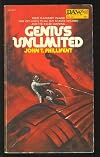
A two Sci Fi / Spy team bodyguard a psychic woman while investigating a murder on an island of geniuses.
Instant favorite. This is a classic 50s/60s light adventure novel, but the author has a great voice and a good eye for action and intelligent tech and sci-fi talk. I only wish it was longer. 140 pages is short even for a DAW book.
Instant favorite. This is a classic 50s/60s light adventure novel, but the author has a great voice and a good eye for action and intelligent tech and sci-fi talk. I only wish it was longer. 140 pages is short even for a DAW book.
Lists
You May Also Like


Associated Authors
Statistics
- Works
- 66
- Also by
- 25
- Members
- 1,594
- Popularity
- #16,182
- Rating
- 3.4
- Reviews
- 15
- ISBNs
- 23
- Languages
- 1
- Favorited
- 2