
Walter Wager (1924–2004)
Author of 58 Minutes
About the Author
Series
Works by Walter Wager
Associated Works
Tagged
Common Knowledge
- Legal name
- Wager, Walter Herman
- Other names
- Tiger, John
- Birthdate
- 1924-09-04
- Date of death
- 2004-07-11
- Gender
- male
- Nationality
- USA
- Birthplace
- The Bronx, New York, USA
- Place of death
- New York, New York, USA
- Associated Place (for map)
- New York, USA
Members
Reviews
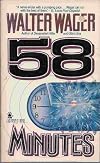
On of the more common reviews you will hear regarding books made into films is that "the book was better than the movie." Considering that this book was the inspiration for the weakest of the Die Hard sequels, and quite possibly one of the worst action films of the early nineties, it's a low bar to clear.
Walter Wager's 58 Minutes was published the year before Die Hard exploded onto movie screens and reshaped the action film genre for decades to come, so similarities to the book's Frank show more Malone and the film's John McClain - a New York cop with marital problems facing down terrorists during Christmas - was more a combination of cliche and coincidence than anything else. But it was apparently enough for Hollywood, desperate to crank out a quick sequel to their newest cash cow, to jump on for a quick story-line to build on. It's odd that the first film was based on a novel, and that the sequel immediately following was based on a novel by a completely different author (with previous adaptation screen credits, including Charles Bronson in Telefon), but that just shows how desperate they were to release a sequel.
The similarities between the source material and the abysmal film adaptation are mostly plot points and story structure: A New York cop waiting for a loved one to arrive at an airport during Christmas, when terrorists shut down all communications between planes and the tower, and the hero cop attempts to track down the source of the jamming, apprehend the terrorist, and make sure the planes - especially the one with the family member - land safely.
The only other thing familiar for someone who has seen the film is that the head terrorist is actually watching the news in a hotel when we first meet him, although not performing tai chi naked while doing so. Beyond that, the changes are bigger. The action shifts from Kennedy Airport to Dulles in Washington DC, and instead of demanding the release of seven political prisoners (which is a little too close to the subterfuge from the first Die Hard), the film has them rescuing a South American drug lord inbound for some U.S. criminal justice.
Comparisons of book to film aside for a moment, attention needs to be given to the main flaw of the book, the main character and hero, Frank Malone. Far from the flawed, wisecracking John McClain from Die Hard, Frank Malone is an idealized uber-cop right out of a pulp crime novel. The first two chapters containing Malone spend all of their time explaining how perfect he is: Voted best Ivy League quarterback two years running (and best quarterback among the Brooklyn diocese high schools, admitted to both Harvard and Columbia (graduated the head of his class, of course), the youngest captain in the NYPD, a first-class commander, Latin scholar, expert marksman, revered and respected by all... "Good-looking, amiable but disciplined and highly intelligent without a trace of arrogance, Frank Malone was popular with faculty and students of both sexes." Enough already. Even the one flaw in his background, marital issues leading to an impending annulment, is clearly illustrated to be the fault of a shallow wife who "realized that her husband really meant to stay a cop despite the danger and mediocre salary" and absconded with his young daughter to her wealthy parents' "luxurious home in the fashionable California community that Frank Malone called The Amaretto Ghetto - Malibu by the Sea." Frank Malone is perfection personified in every way possible, which leaves him completely and utterly boring to follow for 260 pages, even with the appearance of a surprise former romantic interest in chapter 9.
Another aspect of Frank Malone that might annoy fans of the film is how smoothly he gets things done. Nearly everybody he meets respects Malone and follows his instructions with minimal resistance, as he manages to command immediate actions from the FBI up through to the President himself. This is almost the exact opposite of John McClain in Die Hard 2, who earns his Underdog Hero status by struggling with resistance from every authority figure - down to and including parking attendants - as he saves the day single-handed and against all odds. But while both extremes may be equally improbable, underdog heroes are more endearing and fun to root for, so let that be the only gold star for Die Hard 2.
Besides the Doc Savage wannabe in the lead role, the novel is fairly good. People who see the film first then read the book often complain that the book is boring, but that's because they're expecting an action sequence every twenty minutes like most action films. 58 Minutes actually bears more resemblance to the older Airport movies, where multiple plot-lines and characters intertwine as professionals on the ground scramble to prevent a disaster in the air, at the airport, or both. The terrorist plot in the book also seems less exciting in comparison, but that's because it doesn't count on convoluted traps, unlikely internal conspiracies, and a ludicrous escape plane with a 2% chance of actual success. In fact, with the exception of Frank "Super Cop" Malone, the only thing that might interfere with you enjoying this tight, straightforward thriller is having seen the movie to which it is now unfortunately connected. show less
Walter Wager's 58 Minutes was published the year before Die Hard exploded onto movie screens and reshaped the action film genre for decades to come, so similarities to the book's Frank show more Malone and the film's John McClain - a New York cop with marital problems facing down terrorists during Christmas - was more a combination of cliche and coincidence than anything else. But it was apparently enough for Hollywood, desperate to crank out a quick sequel to their newest cash cow, to jump on for a quick story-line to build on. It's odd that the first film was based on a novel, and that the sequel immediately following was based on a novel by a completely different author (with previous adaptation screen credits, including Charles Bronson in Telefon), but that just shows how desperate they were to release a sequel.
The similarities between the source material and the abysmal film adaptation are mostly plot points and story structure: A New York cop waiting for a loved one to arrive at an airport during Christmas, when terrorists shut down all communications between planes and the tower, and the hero cop attempts to track down the source of the jamming, apprehend the terrorist, and make sure the planes - especially the one with the family member - land safely.
The only other thing familiar for someone who has seen the film is that the head terrorist is actually watching the news in a hotel when we first meet him, although not performing tai chi naked while doing so. Beyond that, the changes are bigger. The action shifts from Kennedy Airport to Dulles in Washington DC, and instead of demanding the release of seven political prisoners (which is a little too close to the subterfuge from the first Die Hard), the film has them rescuing a South American drug lord inbound for some U.S. criminal justice.
Comparisons of book to film aside for a moment, attention needs to be given to the main flaw of the book, the main character and hero, Frank Malone. Far from the flawed, wisecracking John McClain from Die Hard, Frank Malone is an idealized uber-cop right out of a pulp crime novel. The first two chapters containing Malone spend all of their time explaining how perfect he is: Voted best Ivy League quarterback two years running (and best quarterback among the Brooklyn diocese high schools, admitted to both Harvard and Columbia (graduated the head of his class, of course), the youngest captain in the NYPD, a first-class commander, Latin scholar, expert marksman, revered and respected by all... "Good-looking, amiable but disciplined and highly intelligent without a trace of arrogance, Frank Malone was popular with faculty and students of both sexes." Enough already. Even the one flaw in his background, marital issues leading to an impending annulment, is clearly illustrated to be the fault of a shallow wife who "realized that her husband really meant to stay a cop despite the danger and mediocre salary" and absconded with his young daughter to her wealthy parents' "luxurious home in the fashionable California community that Frank Malone called The Amaretto Ghetto - Malibu by the Sea." Frank Malone is perfection personified in every way possible, which leaves him completely and utterly boring to follow for 260 pages, even with the appearance of a surprise former romantic interest in chapter 9.
Another aspect of Frank Malone that might annoy fans of the film is how smoothly he gets things done. Nearly everybody he meets respects Malone and follows his instructions with minimal resistance, as he manages to command immediate actions from the FBI up through to the President himself. This is almost the exact opposite of John McClain in Die Hard 2, who earns his Underdog Hero status by struggling with resistance from every authority figure - down to and including parking attendants - as he saves the day single-handed and against all odds. But while both extremes may be equally improbable, underdog heroes are more endearing and fun to root for, so let that be the only gold star for Die Hard 2.
Besides the Doc Savage wannabe in the lead role, the novel is fairly good. People who see the film first then read the book often complain that the book is boring, but that's because they're expecting an action sequence every twenty minutes like most action films. 58 Minutes actually bears more resemblance to the older Airport movies, where multiple plot-lines and characters intertwine as professionals on the ground scramble to prevent a disaster in the air, at the airport, or both. The terrorist plot in the book also seems less exciting in comparison, but that's because it doesn't count on convoluted traps, unlikely internal conspiracies, and a ludicrous escape plane with a 2% chance of actual success. In fact, with the exception of Frank "Super Cop" Malone, the only thing that might interfere with you enjoying this tight, straightforward thriller is having seen the movie to which it is now unfortunately connected. show less
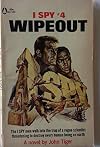
The original mid-60s CIA team of tennis bum Kelly Robinson and trainer Alexander Scott are charged with being the bagmen for exchanging a ransom for a stolen biological agent. The book captures the flavor and humor of the original "hip" NBC TV show with an original plot. If the I Spy novels, which I've reread a few times since I was a young teen, this is my favorite.

Very good story based on the classic TV show. Kelly and Scotty are sent with ten million dollars stuffed into 4 suitcases. The money is a blackmail payment to buy back a deadly biochemical weapon from a rogue scientist. The scientist is being sheltered by a dictator who has been ostracized from the rest of the world.
You can hear Bill Cosby & Robert Culp in the dialogue. The author adds details not given in the original series.
Well done, fun read.
You can hear Bill Cosby & Robert Culp in the dialogue. The author adds details not given in the original series.
Well done, fun read.
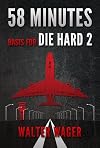
My original 58 Minutes audiobook review and many others can be found at Audiobook Reviewer.
If you're anything like me. You have seen all of the Die Hard movies. Specifically the first two, especially around this time of year. So I was interested in the story that served as the inspiration for one of the greatest Christmas movies made in my lifetime. Going into this listen, I am not expecting a Hollywood-style action story. I am however expecting something entertaining that is probably deeper show more than the movie could ever be.
IF you are expecting 58 Minutes to be as action packed, full of snowmobile chases, and political as the Die Hard 2 movie, you probably will be disappointed. Movies need all of that to stimulate you visually. Here Wager presents a fairly straightforward terrorist plot on an airport. With the tension and suspense that this line delivers: "You have 58 minutes till the 1st plane runs out of fuel". Along with the solitude of a gigantic snow storm raging down on you. With an NYPD captain, that just happens to be on the scene.
Entertaining and engaging. Wager doesn't waste time by filling the story with fluff. You will find many similarities and differences alike from the movie. However, if you want a well-crafted suspense thriller with interesting enough characters and slight plot twist. You will enjoy 58 minutes.
As always, RC Bray delivers a flawless performance. I watched a video of him talking about some poor performances he had earlier on in his audiobook career and am so glad that he found the formula. Bray does everything that is important to my specific audiobook listening tastes. Character voices, while his are not the most believable they serve their purpose of distinguishing different people speaking. Pacing, changing the speed of the text for action scenes is a key thing. Enthusiasm, if a character is excited, Bray, in turn, sounds excited and so on.
Audiobook was provided for review by the narrator. show less
If you're anything like me. You have seen all of the Die Hard movies. Specifically the first two, especially around this time of year. So I was interested in the story that served as the inspiration for one of the greatest Christmas movies made in my lifetime. Going into this listen, I am not expecting a Hollywood-style action story. I am however expecting something entertaining that is probably deeper show more than the movie could ever be.
IF you are expecting 58 Minutes to be as action packed, full of snowmobile chases, and political as the Die Hard 2 movie, you probably will be disappointed. Movies need all of that to stimulate you visually. Here Wager presents a fairly straightforward terrorist plot on an airport. With the tension and suspense that this line delivers: "You have 58 minutes till the 1st plane runs out of fuel". Along with the solitude of a gigantic snow storm raging down on you. With an NYPD captain, that just happens to be on the scene.
Entertaining and engaging. Wager doesn't waste time by filling the story with fluff. You will find many similarities and differences alike from the movie. However, if you want a well-crafted suspense thriller with interesting enough characters and slight plot twist. You will enjoy 58 minutes.
As always, RC Bray delivers a flawless performance. I watched a video of him talking about some poor performances he had earlier on in his audiobook career and am so glad that he found the formula. Bray does everything that is important to my specific audiobook listening tastes. Character voices, while his are not the most believable they serve their purpose of distinguishing different people speaking. Pacing, changing the speed of the text for action scenes is a key thing. Enthusiasm, if a character is excited, Bray, in turn, sounds excited and so on.
Audiobook was provided for review by the narrator. show less
Lists
You May Also Like


Associated Authors
Statistics
- Works
- 40
- Also by
- 1
- Members
- 733
- Popularity
- #34,654
- Rating
- 3.5
- Reviews
- 14
- ISBNs
- 89
- Languages
- 8