On This Page
Description
A millennium into the future two advancements have altered the course of human history: the colonization of the galaxy and the creation of the positronic brain. Isaac Asimov’s Robot novels chronicle the unlikely partnership between a New York City detective and a humanoid robot who must learn to work together.Like most people left behind on an over-populated Earth, New York City police detective Elijah Baley had little love for either the arrogant Spacers or their robotic companions. show more But when a prominent Spacer is murdered under mysterious circumstances, Baley is ordered to the Outer Worlds to help track down the killer.
The relationship between Life and his Spacer superiors, who distrusted all Earthmen, was strained from the start. Then he learned that they had assigned him a partner: R. Daneel Olivaw. Worst of all was that the “R” stood for robot—and his positronic partner was made in the image and likeness of the murder victim!. show less
Tags
Recommendations





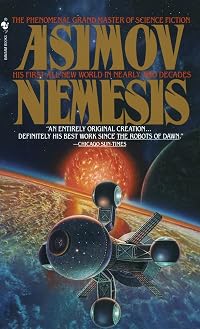
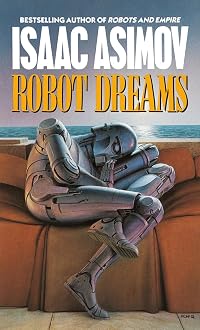

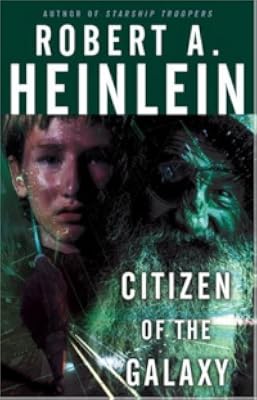
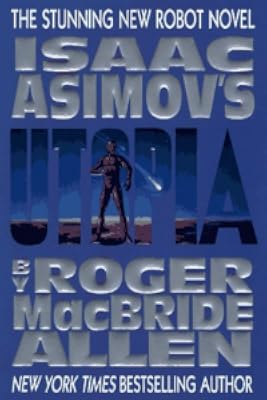
Member Recommendations

Member Reviews
A fun scifi detective novel. I see a lot of reviews focusing on Asimov's speculation of how AI/Robots/Automation will effect humans and society, which is certainly a prevailing theme here. However, one should not overlook that just as, if not more important, is the attention given to human overpopulation and environmental system collapse as a consequence of it without changes to human goals and behavior. Its interesting that he shows us a post-capitalist society that is *not* the post-scarcity utopia of Roddenberry's dream, but if anything has greater scarcity due entirely to human society falling victim to other behaviors and cultural norms just as outlandishly stupid as the pursuit of ending financial gain.
I'll confess to a deep fondness for The Caves of Steel, a sociological novel wrapped in a light mystery. In the far future, an over-populated Earth is dominated by giant hive Cities, and the galaxy dominated by the 50 Spacer planets. When a prominent Spacer is killed on Earth, Detective Elijah Bailey is assigned the case, and an unusual partner in the form of a nearly perfect humanoid robot, R. Daneel Olivaw.
The mystery is really an excuse to explore the world of the Cities, where humans lived crammed together in vast communal blocks linked by moving pedestrian expressways, subsisting on food made mostly from varieties of yeast. Hidden political cadres of medievalists seek a romantic return to the soil, even though modern humans are show more psychologically incapable of living under an open sky. Meanwhile, Spacer renegades have their own plan to use Terrans to launch a new wave of colonization.
The extrapolation of a setting is some of Asimov's best work, and the mystery good enough to keep you reading. show less
The mystery is really an excuse to explore the world of the Cities, where humans lived crammed together in vast communal blocks linked by moving pedestrian expressways, subsisting on food made mostly from varieties of yeast. Hidden political cadres of medievalists seek a romantic return to the soil, even though modern humans are show more psychologically incapable of living under an open sky. Meanwhile, Spacer renegades have their own plan to use Terrans to launch a new wave of colonization.
The extrapolation of a setting is some of Asimov's best work, and the mystery good enough to keep you reading. show less
Siempre resulta en un ejercicio interesante leer a Asimov, no es solo que te entregue uno de los más grandes placeres que da la lectura, que es el de entretener, que lo hace como pocos que conozco, es que además sus historias además siempre están llenas de fundamento, de fondo y de inteligencia.
En este libro bastante futurista, Asimov recrea la situación de una tierra superpoblada y con un sistema de gobierno y de vida muy burocrático y con reglas bastante establecidas para que tantos seres humanos puedan convivir en un espacio que ya les queda pequeño, también nos plantea una vida aparte de la de los humanos, personas a los que se les llama "Espaciales" y por supuesto todo esto combinado con la convivencia diaria de los show more Robots.
Los Robots son completamente rechazados por los humanos, puesto que les "quitan" sus puestos de trabajo, pero también queda claro que sin ellos la eficiencia y muchos de estos trabajos que ellos realizan, no podrían ser llevados a cabo (suena conocido ¿no?)
Nuestro protagonista Elijah Baley, un policía maduro es llamado para investigar el asesinato de un importante científico espacial y le adjudican como compañero de investigación a R. Daneel Olivaw, un robot humanoide.
La cuestión es que al final del día Asimov nos cuenta una historia de racismo y segregación bastante conocida en un mundo inexistente hoy en día, pero que no está muy lejos de llegar a ser una realidad.
La historia es genial, no solo tiene mucha acción y aventuras, persecuciones y una investigación de asesinato bastante interesante, si no que al final nos entrega un giro espectacular en la historia con relación a la finalidad de los Espaciales por la investigación de dicho asesinato.
Me encanta leer a Isaac Asimov, tiene una fluidez en su narrativa que te atrapa, ciencia ficción de pura cepa sin que resulte pesado, mucho menos aburrido, creo que es de los escritores de este género de los que es más fácil leer y entre esa fluidez y facilidad narrativa es imposible no ver los destellos de brillantez que hacen lucir tanto a este escritor. show less
En este libro bastante futurista, Asimov recrea la situación de una tierra superpoblada y con un sistema de gobierno y de vida muy burocrático y con reglas bastante establecidas para que tantos seres humanos puedan convivir en un espacio que ya les queda pequeño, también nos plantea una vida aparte de la de los humanos, personas a los que se les llama "Espaciales" y por supuesto todo esto combinado con la convivencia diaria de los show more Robots.
Los Robots son completamente rechazados por los humanos, puesto que les "quitan" sus puestos de trabajo, pero también queda claro que sin ellos la eficiencia y muchos de estos trabajos que ellos realizan, no podrían ser llevados a cabo (suena conocido ¿no?)
Nuestro protagonista Elijah Baley, un policía maduro es llamado para investigar el asesinato de un importante científico espacial y le adjudican como compañero de investigación a R. Daneel Olivaw, un robot humanoide.
La cuestión es que al final del día Asimov nos cuenta una historia de racismo y segregación bastante conocida en un mundo inexistente hoy en día, pero que no está muy lejos de llegar a ser una realidad.
La historia es genial, no solo tiene mucha acción y aventuras, persecuciones y una investigación de asesinato bastante interesante, si no que al final nos entrega un giro espectacular en la historia con relación a la finalidad de los Espaciales por la investigación de dicho asesinato.
Me encanta leer a Isaac Asimov, tiene una fluidez en su narrativa que te atrapa, ciencia ficción de pura cepa sin que resulte pesado, mucho menos aburrido, creo que es de los escritores de este género de los que es más fácil leer y entre esa fluidez y facilidad narrativa es imposible no ver los destellos de brillantez que hacen lucir tanto a este escritor. show less
Still good, still in many ways ahead of its time, but a disappointment all the same. Where “I, Robot” was a collection of short stories that in many ways functioned as something almost like Platonic dialogs, and thus were more purely about ideas, this book, as a novel, of necessity required more place setting detail. And there, Asimov runs into trouble, including an extremely outdated gender essentialism (say, did you know what we as women contain an in born ability to apply makeup well under duress? Me neither ) and several assumptions about synthetic persons / artificial intelligence that appear to be demonstrably false based on the state of the art today. The main such assumption is that AI, as the product of human artifice, must show more be finite, calculable, and fully analyzable. But we know as of today that AIs are already deceiving us, hallucinating, hiding processes and undergoing processes we don’t understand, and so on.
There’s also some extremely implausible and ill advised Abrahamic claptrap and the plot devices to allow it - for example an AI detective who has no idea that a great deal of human law has been riddled with Abrahamic concepts for thousands of years, no idea what “the Bible” is, no idea what “adultery” is, etc. It had a super false WTF effect that reminds me of Uhura in ST:OS referring gauzily to “not the sun, the son of Gawd” at the end of the modernized Roman Fascist empire episode. Just face palmingly bad, as was the attempted half ass theodicy at the end of the book, the alleged justification of letting a murderer go unpunished.
I don’t fault Asimov for not knowing where AI would be in 2025; I did expect better from an intellect of his level on the gender essentialism though, as well as the religious claptrap (perhaps that’s my fault, looking at the world and its apparent trajectory backward). This is still a good book, very readable, and part of a long arc of books whose path I am continuing to follow. I was just kinda bummed, is all. On to the next one. show less
There’s also some extremely implausible and ill advised Abrahamic claptrap and the plot devices to allow it - for example an AI detective who has no idea that a great deal of human law has been riddled with Abrahamic concepts for thousands of years, no idea what “the Bible” is, no idea what “adultery” is, etc. It had a super false WTF effect that reminds me of Uhura in ST:OS referring gauzily to “not the sun, the son of Gawd” at the end of the modernized Roman Fascist empire episode. Just face palmingly bad, as was the attempted half ass theodicy at the end of the book, the alleged justification of letting a murderer go unpunished.
I don’t fault Asimov for not knowing where AI would be in 2025; I did expect better from an intellect of his level on the gender essentialism though, as well as the religious claptrap (perhaps that’s my fault, looking at the world and its apparent trajectory backward). This is still a good book, very readable, and part of a long arc of books whose path I am continuing to follow. I was just kinda bummed, is all. On to the next one. show less
"What I hold is not a neuronic whip, nor is it a tickler. It is a blaster and very deadly. I will use it and I will not aim over your heads. I will kill many of you before you seize me, perhaps most of you. I am serious. I look serious, do I not?"
The wonderful thing about Isaac Asimov is that he's just so readable. A person can pick up one of his books and just dive in with little or no preparation, and yet Asimov is still able to open up different worlds and distant futures. Asimov also has a way of making one think about the issues that society will face in the future. These are just a few reasons why Asimov is rightly regarded as one of the real giants of science fiction.
The Caves of Steel is a mystery story. It is also a science show more fiction story. The title refers to how populated Earth has become in the distant future. There are so many people that our planet has become one gigantic city. Every piece of ground is covered with buildings that not only rise high into the air but also descend deep under the surface--like caves of steel. In this future, a murder has been committed, and police detective Elijah Bailey has been given the task of finding the killer. He is also forced to take on a new partner: Robot Daneel Olivaw.
For me, the pleasure of reading The Caves of Steel comes more from watching Bailey and Olivaw interact than from trying to solve the mystery. The mystery story is fairly interesting, but what I enjoyed more was trying to imagine what it would be like to live in a world populated by robots. Asimov does a very good job of showing the kinds of issues humanity would have to deal with if we ever got to the point of making intelligent, humanoid robots.
The Caves of Steel is an easy-to-read, entertaining book that asks important questions about the future. It's a great introduction to science fiction, especially for those who don't think that they like science fiction, and it's also great for mystery fans looking for something different. show less
The wonderful thing about Isaac Asimov is that he's just so readable. A person can pick up one of his books and just dive in with little or no preparation, and yet Asimov is still able to open up different worlds and distant futures. Asimov also has a way of making one think about the issues that society will face in the future. These are just a few reasons why Asimov is rightly regarded as one of the real giants of science fiction.
The Caves of Steel is a mystery story. It is also a science show more fiction story. The title refers to how populated Earth has become in the distant future. There are so many people that our planet has become one gigantic city. Every piece of ground is covered with buildings that not only rise high into the air but also descend deep under the surface--like caves of steel. In this future, a murder has been committed, and police detective Elijah Bailey has been given the task of finding the killer. He is also forced to take on a new partner: Robot Daneel Olivaw.
For me, the pleasure of reading The Caves of Steel comes more from watching Bailey and Olivaw interact than from trying to solve the mystery. The mystery story is fairly interesting, but what I enjoyed more was trying to imagine what it would be like to live in a world populated by robots. Asimov does a very good job of showing the kinds of issues humanity would have to deal with if we ever got to the point of making intelligent, humanoid robots.
The Caves of Steel is an easy-to-read, entertaining book that asks important questions about the future. It's a great introduction to science fiction, especially for those who don't think that they like science fiction, and it's also great for mystery fans looking for something different. show less
Now we're talking! While I, Robot set the stage, this was a full on production of a fantastic show. Loved every minute of this - amazing how this was written 64 years ago and still feels fresh and prophetic. The general population's anxiety towards automation and technology, the longing to return to our past and the "good old days", the idea of fixing society being easier than fixing yourself first, all of it is filled with well written, if dated, dialogue, characters and motivations. Sets up the next book (or the next 13!) and I can't wait to read them. Late to the party on this one, but I couldn't be more impressed.
A murder has happened in Spacetown and Earther Policeman Elijah ("Lije") Baley is given a robot for a partner when he begins his investigation. The Spacers want Earthers to be more like them, accepting robots into society, but Earthers want to protect their jobs from automation (sound familiar?) and keep from being "declassified" (basically put on welfare, but probably worse). Lije is rather suspicious of robots at the beginning of the book, but his partnership with R. Daneel changes his mind. The murder investigation is almost secondary to this character study. This is a very interesting world Asimov has built and I am glad to know there is much more to read about it.
Members
- Recently Added By
Lists

Best Science Fiction Novels
816 works; 426 members

NPRs your picks: top 100 Sci-Fi/Fantasy books
297 works; 80 members

Golden Age of Detection
35 works; 10 members

Gateway Book: Science Fiction
21 works; 26 members

Murder Mysteries
57 works; 11 members

One Book, Many Authors
441 works; 40 members

Nonhuman Protagonists
243 works; 35 members

Space Colonization
100 works; 26 members

Want to Read — open list
55 works; 2 members

Isaac Arthur’s Book Recommendations
98 works; 3 members

A Locked Room Library
71 works; 1 member

Books Read in 2025
4,128 works; 98 members

Books We Want To Read Again For The First Time
384 works; 160 members

Les 100 principaux titres de la science-fiction (1981)
126 works; 3 members

Books Read in 2022
5,226 works; 112 members

al.vick-series
381 works; 2 members

Books Read in 2016
4,666 works; 199 members

Books Read in 2018
4,360 works; 110 members

Novels Set Underground
28 works; 7 members

Books Read in 2004
212 works; 7 members

Blue Pyramid 1,276 Best Books of All Time
1,248 works; 32 members
Books Read in 2015
3,299 works; 129 members

Genre Benders: Science Fiction + Crime
10 works; 3 members
Favorite Science Fiction
456 works; 219 members

Speculative Fiction: The Classics
36 works; 5 members
Talk Discussions
Past Discussions
Book Discussion: The Caves of Steel - Spoiler Free Thread in The Green Dragon (October 2007)
Book Discussion: The Caves of Steel - Post here AFTER you've finished. SPOILER ALERT! in The Green Dragon (October 2007)
Author Information

2,399+ Works 293,998 Members
Isaac Asimov was born in Petrovichi, Russia, on January 2, 1920. His family emigrated to the United States in 1923 and settled in Brooklyn, New York, where they owned and operated a candy store. Asimov became a naturalized U.S. citizen at the age of eight. As a youngster he discovered his talent for writing, producing his first original fiction at show more the age of eleven. He went on to become one of the world's most prolific writers, publishing nearly 500 books in his lifetime. Asimov was not only a writer; he also was a biochemist and an educator. He studied chemistry at Columbia University, earning a B.S., M.A. and Ph.D. In 1951, Asimov accepted a position as an instructor of biochemistry at Boston University's School of Medicine even though he had no practical experience in the field. His exceptional intelligence enabled him to master new systems rapidly, and he soon became a successful and distinguished professor at Columbia and even co-authored a biochemistry textbook within a few years. Asimov won numerous awards and honors for his books and stories, and he is considered to be a leading writer of the Golden Age of science fiction. While he did not invent science fiction, he helped to legitimize it by adding the narrative structure that had been missing from the traditional science fiction books of the period. He also introduced several innovative concepts, including the thematic concern for technological progress and its impact on humanity. Asimov is probably best known for his Foundation series, which includes Foundation, Foundation and Empire, and Second Foundation. In 1966, this trilogy won the Hugo award for best all-time science fiction series. In 1983, Asimov wrote an additional Foundation novel, Foundation's Edge, which won the Hugo for best novel of that year. Asimov also wrote a series of robot books that included I, Robot, and eventually he tied the two series together. He won three additional Hugos, including one awarded posthumously for the best non-fiction book of 1995, I. Asimov. "Nightfall" was chosen the best science fiction story of all time by the Science Fiction Writers of America. In 1979, Asimov wrote his autobiography, In Memory Yet Green. He continued writing until just a few years before his death from heart and kidney failure on April 6, 1992. (Bowker Author Biography) show less
Some Editions
Awards and Honors
Awards
Distinctions
Series


Belongs to Publisher Series
Work Relationships
Common Knowledge
- Canonical title
- The Caves of Steel
- Original title
- The Caves of Steel; THE CAVES OF STEEL
- Alternate titles
- Der Mann von drüben; The Caves of Steel: A Lije Baley & R. Daneel Olivaw Novel
- Original publication date
- 1953 (serial) (serial); 1954-02-04 (book) (book); 1986 (Urania) (Urania)
- People/Characters
- Elijah Baley; Jessie Baley; Julius Enderby; R. Daneel Olivaw; R. Sammy; Roj Nemmenuh Sarton (show all 7); Han Fastolfe
- Important places
- New York, New York, USA; Aurora
- Related movies
- Story Parade:The Caves of Steel (1964 | IMDb)
- Epigraph
- [None]
- Dedication
- To my wife GERTRUDE and My Son DAVID
- First words
- Lije Baley had just reached his desk when he became aware of R. Sammy watching him expectantly.
- Quotations
- But now, Earthmen are all so coddled, so enwombed in their imprisoning caves of steel, that they are caught forever. (p. 97)
- Last words
- (Click to show. Warning: May contain spoilers.)Baley, suddenly smiling, took R. Daneel's elbow, and they walked out the door, arm in arm.
- Publisher's editor*
- Mondadori Libri S.p.A.
- Original language
- English
*Some information comes from Common Knowledge in other languages. Click "Edit" for more information.
Classifications
Statistics
- Members
- 8,803
- Popularity
- 1,240
- Reviews
- 168
- Rating
- (3.96)
- Languages
- 24 — Catalan, Chinese, Czech, Danish, Dutch, English, Estonian, Finnish, French, German, Greek, Hebrew, Hungarian, Icelandic, Italian, Japanese, Polish, Romanian, Russian, Slovak, Spanish, Swedish, Thai, Portuguese (Portugal)
- Media
- Paper, Audiobook, Ebook
- ISBNs
- 88
- ASINs
- 89