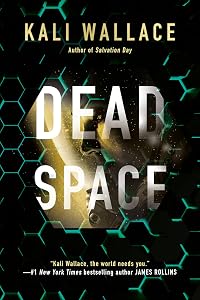
Dead Space
by Kali Wallace
On This Page
Description
"An investigator must solve a brutal murder on a claustrophobic asteroid mine in this tense science fiction thriller from the author of Salvation Day. Hester Marley used to have a plan for her life. But when a catastrophic attack left her injured, indebted, and stranded far from home, she was forced to take a dead-end security job with a powerful mining company in the asteroid belt. Now she spends her days investigating petty crimes to help her employer maximize its profits. She's surprised show more to hear from an old friend and fellow victim of the terrorist attack that ruined her life-and that surprise quickly turns to suspicion when he claims to have discovered something shocking about their shared history and the tragedy that neither of them can leave behind. Before Hester can learn more, her friend is violently murdered at a remote asteroid mine. Hester joins the investigation to find the truth, both about her friend's death and the information he believed he had uncovered. But catching a killer is only the beginning of Hester's worries, and she soon realizes that everything she learns about her friend, his fellow miners, and the outpost they call home brings her closer to revealing secrets that very powerful and very dangerous people would rather keep hidden in the depths of space"-- show lessTags
Recommendations















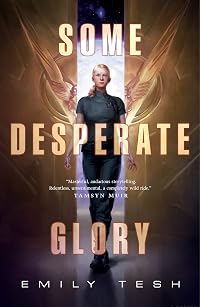



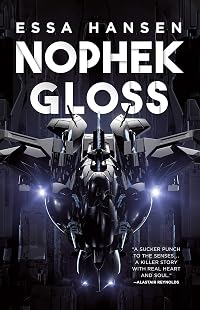
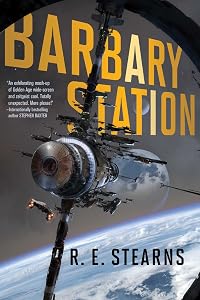
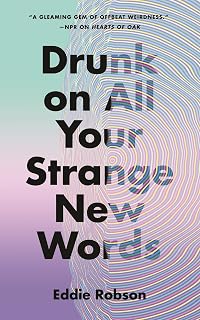
Member Recommendations
Member Reviews
The two genres of fiction that I love most are science fiction and mystery. So when you have a book that combines both, especially when the mystery is like a space version of all those classic English manor house mysteries, you know it is going to appeal to me.
In a far distant future mankind has expanded into the universe but the main driver for the conquest of space is corporate greed. Hester Marley thought she had escaped the corporate world to work on a project to explore Titan with a group of like-minded scientists. Hester's contribution was as an artificial intelligence (AI) expert. She trained an AI which would land on Titan and independently explore the moon, reporting back to the project. On the way to Titan a group of show more terrorists exploded the ship. Hester and a few others survived the explosion thanks to a ship sent by the corporation Parthenope. Hester was badly injured and required extensive surgery which she now has to repay to Parthenope. To do this she is working as a security expert on Hygeia, a Parthenope space construct. Unexpectedly she hears from one of the other survivors, David Prussenko. He's been working on an asteroid that is being mined by Parthenope using his robotics skills to maintain the artificial mind that basically runs everything on the asteroid. Just after she receives this communication from David she learns that he has been murdered. Since a security team from Hygeia is going to investigate the murder she asks to be assigned. The other members of the team are her supervisor, a forensics specialist (with whom Hester had a relationship when she first got to Hygeia) and a lawyer. There were only 12 humans on the asteroid when David was killed so the pool of suspects is fairly small. Surely with security camera footage and forensic evidence the team can find the guilty party and wrap up the investigation fairly quickly. Except, there is no security camera footage for an hour surrounding the time of David's death, nor any other recording. The team has a fairly difficult task ahead of them. Then the bodies start to pile up!
Several times I thought I had figured out what was going on only to be surprised by another revelation. I was very impressed with Wallace's plotting and Hester is a very interesting character. Wonder if there will be more Hester Marley investigations? show less
In a far distant future mankind has expanded into the universe but the main driver for the conquest of space is corporate greed. Hester Marley thought she had escaped the corporate world to work on a project to explore Titan with a group of like-minded scientists. Hester's contribution was as an artificial intelligence (AI) expert. She trained an AI which would land on Titan and independently explore the moon, reporting back to the project. On the way to Titan a group of show more terrorists exploded the ship. Hester and a few others survived the explosion thanks to a ship sent by the corporation Parthenope. Hester was badly injured and required extensive surgery which she now has to repay to Parthenope. To do this she is working as a security expert on Hygeia, a Parthenope space construct. Unexpectedly she hears from one of the other survivors, David Prussenko. He's been working on an asteroid that is being mined by Parthenope using his robotics skills to maintain the artificial mind that basically runs everything on the asteroid. Just after she receives this communication from David she learns that he has been murdered. Since a security team from Hygeia is going to investigate the murder she asks to be assigned. The other members of the team are her supervisor, a forensics specialist (with whom Hester had a relationship when she first got to Hygeia) and a lawyer. There were only 12 humans on the asteroid when David was killed so the pool of suspects is fairly small. Surely with security camera footage and forensic evidence the team can find the guilty party and wrap up the investigation fairly quickly. Except, there is no security camera footage for an hour surrounding the time of David's death, nor any other recording. The team has a fairly difficult task ahead of them. Then the bodies start to pile up!
Several times I thought I had figured out what was going on only to be surprised by another revelation. I was very impressed with Wallace's plotting and Hester is a very interesting character. Wonder if there will be more Hester Marley investigations? show less
This book was an exciting, engrossing space murder mystery, like an updated version of a sci-fi classic by Isaac Asimov or Frederik Pohl. Sadly the thing that required no updates was the concept of dangerous and not-exactly-voluntary indentured space servitude to unscrupulous interglobal corporations—just as relevant a social and cultural commentary today as it was when Pohl put his characters through it in 1977! A depressing thought, but fantastic, plausible future world building and a truly twisty mystery.
After my engrossing first encounter with Kali Wallace’s previous book, Salvation Day, I had great expectations for her new novel and I’m happy to report they were all met, if not surpassed: the synopsis made me think about a delightfully tense SF movie from the ‘80s, Outland, and there were some similar vibes here, mostly due to the background in which the story takes place, although Dead Space moves in quite a different direction.
Hester used to be a gifted AI expert, part of a deep space expedition toward Titan, where the exploration of Saturn’s biggest satellite would be assisted by Vanguard, an evolved form of artificial intelligence capable of learning and adapting, Hester’s ultimate achievement. Unfortunately the show more Symposium, the science ship built for the mission, had been infiltrated by extremists who managed to sabotage it and kill most of the science team. Hester survived, although devastated both mentally and physically: the left side of her body is now mostly prosthetics, implanted by the doctors of Parthenope Enterprises, the corporation to which she is now in deep debt. To repay it, Hester has accepted to work as security analyst on the mining colony of Hygiea - a thankless, menial job that crushes her already defeated spirit and misuses her brilliant mind.
When one of her Symposium friends, another survivor of the disaster now working in a different mining outpost, is killed in mysterious circumstances shortly after having sent Hester a weird message, she joins the investigative team to discover what truly happened to her old colleague David and finds herself embroiled in a spiral of conflicting clues and unsettling revelations that is only the surface layer of a deeper, far more dangerous conspiracy, and she will need to rekindle all her old skills and determination if she wants to survive and avoid disaster on a massive scale.
Like Salvation Day, this novel offers a view of the future that’s far from comforting: the drive for space seems to have been taken over by big corporations whose sole purpose is to exploit the resources in the Solar System, gaining as much profit as possible with the minimum of expenditure in the areas of workers’ comfort or safety. It does not take much, as Wallace describes the mining outposts disseminated throughout the Belt, to compare this background with Earth’s mining towns of old, where the miners’ wages were spent almost entirely in company-owned shops and utilities, therefore creating a vicious circle of legalized indentured slavery. Hygiea and Nimue (the site of the investigation for David’s murder) represent this set-up in dreary relief, so that it’s easy to picture ill-lighted, barely maintained tunnels, none too clean, inhabited by a gloomy humanity whose sole, desperate goal is to beat the system of diminishing returns that keeps them tied to these balls of rock.
There is a claustrophobic quality to the story - which seems to be Kali Wallace’s skillful trademark - that works hand in hand with Hester’s despondent attitude, and even if she is not prone to self-pity, one can feel the quiet despair that has turned her once-brilliant personality into the sharp, cutting posture of someone who feels detached from humanity, sometimes even her own:
[…] didn’t stop people from looking at me and seeing only the metal.
It doesn’t take much, however, to bring her out of this self-imposed numbness: once the investigation into David’s murder starts and progresses from the first appearance of a personal attack from a co-worker to something more complex, and with far-reaching implications, once the dangers pile up and Hester’s life is threatened at every step of the way, she is finally able to wake up her old self, the one that was smothered by post-traumatic stress and the thankless job she has been trapped into. When the real Hester emerges, we are finally able to see the intelligent, intense person who dreamed of exploring a new world and dared to create something amazing and revolutionary as Vanguard, the person we see in the brief flashbacks before the Symposium disaster. What happens on Nimue, as ghastly and horrifying as it is, is the systemic shock she needs to finally process her grief and loss and reclaim the keen scientific mind that had propelled her in the past.
Even though Hester’s journey is front and center, there are a few other interesting characters peopling the story, starting from David - her murdered friend - whom we see in the flashbacks and through the descriptions of his coworkers on Nimue: like Hester, the before and after personalities are as different as day and night, stressing once more how the Symposium tragedy shattered these lives, not only through physical damage or because of the heavy debt incurred with medical expenses, but above all for the death of their dreams of advancing science, of learning the mysteries of the cosmos, of making a difference for humanity. It’s also worth mentioning the Nimue staff which, in pure whodunit style, share a common lack of reliability that enhances the sense of foreboding and danger that permeates the investigation from the very start.
And again, Hester’s partners in the investigative team are quite intriguing, particularly the unit’s leader Adisa, whose Martian origin constitutes a handicap: some time before the Mars settlers rebelled against their inhuman living conditions and the revolt was stamped out with ruthless efficiency, while the powers that be chose to lay the blame for the war on the hapless colonists, who are now the object of scorn and racial slurs. I was intrigued by these hints about the conflict, just as I was by the apparently self-effacing Adisa who, when push comes to shove, exhibits some very unexpected abilities, but unfortunately the pacing of the story did not allow more than a few, tantalizing glimpses, and that’s my only small disappointment with this novel because I wanted more and would not have minded a deeper digression into this particular topic.
Still, I thoroughly enjoyed the breathless, adrenaline-rich new story that Kali Wallace gave us with her latest work, a well-crafted mix of thriller, science fiction and social commentary that offers many layers of character exploration while keeping you entranced with a deadly puzzle to solve. Highly recommended. show less
Hester used to be a gifted AI expert, part of a deep space expedition toward Titan, where the exploration of Saturn’s biggest satellite would be assisted by Vanguard, an evolved form of artificial intelligence capable of learning and adapting, Hester’s ultimate achievement. Unfortunately the show more Symposium, the science ship built for the mission, had been infiltrated by extremists who managed to sabotage it and kill most of the science team. Hester survived, although devastated both mentally and physically: the left side of her body is now mostly prosthetics, implanted by the doctors of Parthenope Enterprises, the corporation to which she is now in deep debt. To repay it, Hester has accepted to work as security analyst on the mining colony of Hygiea - a thankless, menial job that crushes her already defeated spirit and misuses her brilliant mind.
When one of her Symposium friends, another survivor of the disaster now working in a different mining outpost, is killed in mysterious circumstances shortly after having sent Hester a weird message, she joins the investigative team to discover what truly happened to her old colleague David and finds herself embroiled in a spiral of conflicting clues and unsettling revelations that is only the surface layer of a deeper, far more dangerous conspiracy, and she will need to rekindle all her old skills and determination if she wants to survive and avoid disaster on a massive scale.
Like Salvation Day, this novel offers a view of the future that’s far from comforting: the drive for space seems to have been taken over by big corporations whose sole purpose is to exploit the resources in the Solar System, gaining as much profit as possible with the minimum of expenditure in the areas of workers’ comfort or safety. It does not take much, as Wallace describes the mining outposts disseminated throughout the Belt, to compare this background with Earth’s mining towns of old, where the miners’ wages were spent almost entirely in company-owned shops and utilities, therefore creating a vicious circle of legalized indentured slavery. Hygiea and Nimue (the site of the investigation for David’s murder) represent this set-up in dreary relief, so that it’s easy to picture ill-lighted, barely maintained tunnels, none too clean, inhabited by a gloomy humanity whose sole, desperate goal is to beat the system of diminishing returns that keeps them tied to these balls of rock.
There is a claustrophobic quality to the story - which seems to be Kali Wallace’s skillful trademark - that works hand in hand with Hester’s despondent attitude, and even if she is not prone to self-pity, one can feel the quiet despair that has turned her once-brilliant personality into the sharp, cutting posture of someone who feels detached from humanity, sometimes even her own:
[…] didn’t stop people from looking at me and seeing only the metal.
It doesn’t take much, however, to bring her out of this self-imposed numbness: once the investigation into David’s murder starts and progresses from the first appearance of a personal attack from a co-worker to something more complex, and with far-reaching implications, once the dangers pile up and Hester’s life is threatened at every step of the way, she is finally able to wake up her old self, the one that was smothered by post-traumatic stress and the thankless job she has been trapped into. When the real Hester emerges, we are finally able to see the intelligent, intense person who dreamed of exploring a new world and dared to create something amazing and revolutionary as Vanguard, the person we see in the brief flashbacks before the Symposium disaster. What happens on Nimue, as ghastly and horrifying as it is, is the systemic shock she needs to finally process her grief and loss and reclaim the keen scientific mind that had propelled her in the past.
Even though Hester’s journey is front and center, there are a few other interesting characters peopling the story, starting from David - her murdered friend - whom we see in the flashbacks and through the descriptions of his coworkers on Nimue: like Hester, the before and after personalities are as different as day and night, stressing once more how the Symposium tragedy shattered these lives, not only through physical damage or because of the heavy debt incurred with medical expenses, but above all for the death of their dreams of advancing science, of learning the mysteries of the cosmos, of making a difference for humanity. It’s also worth mentioning the Nimue staff which, in pure whodunit style, share a common lack of reliability that enhances the sense of foreboding and danger that permeates the investigation from the very start.
And again, Hester’s partners in the investigative team are quite intriguing, particularly the unit’s leader Adisa, whose Martian origin constitutes a handicap: some time before the Mars settlers rebelled against their inhuman living conditions and the revolt was stamped out with ruthless efficiency, while the powers that be chose to lay the blame for the war on the hapless colonists, who are now the object of scorn and racial slurs. I was intrigued by these hints about the conflict, just as I was by the apparently self-effacing Adisa who, when push comes to shove, exhibits some very unexpected abilities, but unfortunately the pacing of the story did not allow more than a few, tantalizing glimpses, and that’s my only small disappointment with this novel because I wanted more and would not have minded a deeper digression into this particular topic.
Still, I thoroughly enjoyed the breathless, adrenaline-rich new story that Kali Wallace gave us with her latest work, a well-crafted mix of thriller, science fiction and social commentary that offers many layers of character exploration while keeping you entranced with a deadly puzzle to solve. Highly recommended. show less
I'm a huge fan of science fiction and a decent fan of murder mysteries, and I'm beginning to realize how much I enjoy the merging of these two genres. For me Dead Space contained a lot of what I liked about both genres, and only a little of what I don't care for as much.
In terms of science fiction: it has the futuristic setting, the multi-planet spanning plot, the space stations and outer space exploration, the fusing and man and machine, and the excitement of artificial intelligence.
In terms of murder mysteries: it has, well, the mysterious murder, the cast of suspicious characters, the red herrings, the betrayals, and the numerous twists and turns.
The author does a good job of developing the characters and building the world(s) show more around them. I especially liked the Protagonist (a brilliant scientist-turned-lowly-security officer who struggles with her past defining her future), the Investigator (an calm and commanding Martian with a complex past I would love to learn more about), and the Lawyer (a disagreeable rich boy who actually has a heart of gold, er maybe bronze).
The book also engages with a lot of interesting concepts, including unchecked capitalism, corporate enslavement, scientific exploration, and the pros/cons of artificial intelligence. Even being set so far in the future, it felt a little too close to home with its portrayal of greedy, insensitive corporations and Earth as an uncouth antagonist of other worlds and species.
My main complaint is the overwhelming amount of exposition. Though a lot of the details relate to the characters and the setting, they still came across as bloated and overdone. Exposition is par for the course with science fiction, but here it just felt like much too much. Also, I had some minor quibbles with comically overdone action sequences involving robotic spiders.
Overall there's a lot to like here, from the compelling characters to the scenes of brutal violence to the surprising plot twists. There's also a nice bit of representation of the LGBTQ community and persons with disabilities, which was refreshing. It's a character-driven space murder mystery with elements of horror, and the second half especially had my flying through the pages.
(3.5 stars rounded up for Goodreads) show less
In terms of science fiction: it has the futuristic setting, the multi-planet spanning plot, the space stations and outer space exploration, the fusing and man and machine, and the excitement of artificial intelligence.
In terms of murder mysteries: it has, well, the mysterious murder, the cast of suspicious characters, the red herrings, the betrayals, and the numerous twists and turns.
The author does a good job of developing the characters and building the world(s) show more around them. I especially liked the Protagonist (a brilliant scientist-turned-lowly-security officer who struggles with her past defining her future), the Investigator (an calm and commanding Martian with a complex past I would love to learn more about), and the Lawyer (a disagreeable rich boy who actually has a heart of gold, er maybe bronze).
The book also engages with a lot of interesting concepts, including unchecked capitalism, corporate enslavement, scientific exploration, and the pros/cons of artificial intelligence. Even being set so far in the future, it felt a little too close to home with its portrayal of greedy, insensitive corporations and Earth as an uncouth antagonist of other worlds and species.
My main complaint is the overwhelming amount of exposition. Though a lot of the details relate to the characters and the setting, they still came across as bloated and overdone. Exposition is par for the course with science fiction, but here it just felt like much too much. Also, I had some minor quibbles with comically overdone action sequences involving robotic spiders.
Overall there's a lot to like here, from the compelling characters to the scenes of brutal violence to the surprising plot twists. There's also a nice bit of representation of the LGBTQ community and persons with disabilities, which was refreshing. It's a character-driven space murder mystery with elements of horror, and the second half especially had my flying through the pages.
(3.5 stars rounded up for Goodreads) show less
One sentence review: a character study and mystery with the worst detective ever.
"From the first moment we'd stepped off the transport ship and onto Nimue, Sigrah had been telling us that David's death was clearly the result of a personal argument. I wanted to ask her what she meant by that--who could have hated David that much, how did she know, who was that violent, why would they do this--but I kept my questions to myself for now and tried not to flinch every time Adisa asked something that felt completely unrelated or irrelevant."
Yes, I can see how an investigator might hesitate when asking these questions to one of the eleven people on a presumably closed mining facility. Clearly, Hester Marley is out of her league. By training, show more she is an AI programming specialist who has become an indentured servant to one of the controlling corporations of her corner of the galaxy. For over a year, she's been "one of the so-called Safety Officers whose job it was to make criminals, malcontents, and all manner of other inconveniences vanish before any of them had a chance to impact the company's profits." When a former teammate and robotics expert sends her a perplexing message and then is found murdered, she requests to join the investigation. David lived and worked on the tiny mining asteroid Nimue with only eleven other people, so it should have been relatively easy to narrow the field. Unfortunately, the chief suspect dies right in front of her. Hester, unlike the reader, is dumbfounded by this development and cannot seem to move on.
Understand, it's not bad. But not only is it more of a character study than I expected, it's a limited one. Hester is at an unfortunate spot in her life and is suffering from PTSD. However, the focus on her is myopic, undeveloped beyond the last three to four years of her life and with very limited focus on her professional specialty. As she's been severely traumatized by a terrorist attack on her research ship, and her subsequent rehabilitation with a number of robotic components, she deserves compassion for where she's at in life. It seems clear to me that she wishes to forget about her artificial parts and the attention it brings her, rather than adapt to them. Does that square with our AI expert? I don't know.
"I shut off the news feeds. I didn't care. I couldn't care. This was my life now, such as it was. Picking grubby PDs off the floor in personal quarters, trawling through endless data, looking for petty extortionists, for corporate spies, for black market biohackers, even for snakes like Kristin, should they make themselves sufficiently troublesome to Parthenope. This isolated rock in the outer system, this thankless job helping a rich company make itself richer, the pain in my joints where metal met flesh, the medical debt that grew every day, this was it, this was all I had, until I could work my way out.
My heart was still thumping uncomfortably. I could still smell that dank, foul room."
I can understand why people would like this, but for me, there were too many limitations to push it into 'highly recommended.' As a character study, I believed the PTSD, but nothing about her professional expertise. Seriously, I'm not sure Wallace knows anything more about programming or AI theories than I do, and that's saying something. I think Wallace liked the philosophical concept but her views are limited to "freedom of choice will not result in anti-human outcomes." Honestly, it's like a lite version of the issues raised in the tv series Person of Interest.
Not a big deal, right? Maybe the mystery is what it's about. Ok, I can accept that. However, Wallace really squanders the opportunity to do an in-space version of a manor-house mystery. Characterization of the rest of the crew is almost absent, with the exception of the lead inspector, Adisa, her sometime-lover Ryu, and the victim. Because its a first-person narrative, and Hestor is so impacted by her internal drama, she has trouble getting out of her own head long enough to consider what might be going on in someone else's. Her deductions are limited, driven more by narrative needs than by an integrated process of observation and consideration.
"Adisa looked at me for a moment, then he said, 'Let's get the surveillance and talk to the crew, aye?'
God, I hated the way he said the words, not heavy with pity but carefully avoiding it, like casual professionalism was going to make this any less humiliating. I was used to being talked about. The whispers, the glances, the murmurs that followed me everywhere I went. I knew how that conversation with Jackson must have gone. She's fine with data, sure, but she's touchy and sensitive, thinks she's smarter than us, thinks she deserves better than this job. Get her out of here for a few days. She's such a drag on the mood."
Yep, there's a lot of emotional damage there, and Hector isn't doing much to work it out. There's a reason why I stalled half-way on this, and it took finishing the book to parse it all out. What I did tend to like is the writing; Wallace is above average at actual construction of a story. The world-building felt integrated and solid, The Expanse-adjacent, falling into the dystopian corporation-rule school setting. I found the A.I. Vanguard intriguing, but again, limited, suffering from too-little-too-late. I would read more from Wallace, but this isn't my library-worthy. show less
"From the first moment we'd stepped off the transport ship and onto Nimue, Sigrah had been telling us that David's death was clearly the result of a personal argument. I wanted to ask her what she meant by that--who could have hated David that much, how did she know, who was that violent, why would they do this--but I kept my questions to myself for now and tried not to flinch every time Adisa asked something that felt completely unrelated or irrelevant."
Yes, I can see how an investigator might hesitate when asking these questions to one of the eleven people on a presumably closed mining facility. Clearly, Hester Marley is out of her league. By training, show more she is an AI programming specialist who has become an indentured servant to one of the controlling corporations of her corner of the galaxy. For over a year, she's been "one of the so-called Safety Officers whose job it was to make criminals, malcontents, and all manner of other inconveniences vanish before any of them had a chance to impact the company's profits." When a former teammate and robotics expert sends her a perplexing message and then is found murdered, she requests to join the investigation. David lived and worked on the tiny mining asteroid Nimue with only eleven other people, so it should have been relatively easy to narrow the field. Unfortunately, the chief suspect dies right in front of her. Hester, unlike the reader, is dumbfounded by this development and cannot seem to move on.
Understand, it's not bad. But not only is it more of a character study than I expected, it's a limited one. Hester is at an unfortunate spot in her life and is suffering from PTSD. However, the focus on her is myopic, undeveloped beyond the last three to four years of her life and with very limited focus on her professional specialty. As she's been severely traumatized by a terrorist attack on her research ship, and her subsequent rehabilitation with a number of robotic components, she deserves compassion for where she's at in life. It seems clear to me that she wishes to forget about her artificial parts and the attention it brings her, rather than adapt to them. Does that square with our AI expert? I don't know.
"I shut off the news feeds. I didn't care. I couldn't care. This was my life now, such as it was. Picking grubby PDs off the floor in personal quarters, trawling through endless data, looking for petty extortionists, for corporate spies, for black market biohackers, even for snakes like Kristin, should they make themselves sufficiently troublesome to Parthenope. This isolated rock in the outer system, this thankless job helping a rich company make itself richer, the pain in my joints where metal met flesh, the medical debt that grew every day, this was it, this was all I had, until I could work my way out.
My heart was still thumping uncomfortably. I could still smell that dank, foul room."
I can understand why people would like this, but for me, there were too many limitations to push it into 'highly recommended.' As a character study, I believed the PTSD, but nothing about her professional expertise. Seriously, I'm not sure Wallace knows anything more about programming or AI theories than I do, and that's saying something. I think Wallace liked the philosophical concept but her views are limited to "freedom of choice will not result in anti-human outcomes." Honestly, it's like a lite version of the issues raised in the tv series Person of Interest.
Not a big deal, right? Maybe the mystery is what it's about. Ok, I can accept that. However, Wallace really squanders the opportunity to do an in-space version of a manor-house mystery. Characterization of the rest of the crew is almost absent, with the exception of the lead inspector, Adisa, her sometime-lover Ryu, and the victim. Because its a first-person narrative, and Hestor is so impacted by her internal drama, she has trouble getting out of her own head long enough to consider what might be going on in someone else's. Her deductions are limited, driven more by narrative needs than by an integrated process of observation and consideration.
"Adisa looked at me for a moment, then he said, 'Let's get the surveillance and talk to the crew, aye?'
God, I hated the way he said the words, not heavy with pity but carefully avoiding it, like casual professionalism was going to make this any less humiliating. I was used to being talked about. The whispers, the glances, the murmurs that followed me everywhere I went. I knew how that conversation with Jackson must have gone. She's fine with data, sure, but she's touchy and sensitive, thinks she's smarter than us, thinks she deserves better than this job. Get her out of here for a few days. She's such a drag on the mood."
Yep, there's a lot of emotional damage there, and Hector isn't doing much to work it out. There's a reason why I stalled half-way on this, and it took finishing the book to parse it all out. What I did tend to like is the writing; Wallace is above average at actual construction of a story. The world-building felt integrated and solid, The Expanse-adjacent, falling into the dystopian corporation-rule school setting. I found the A.I. Vanguard intriguing, but again, limited, suffering from too-little-too-late. I would read more from Wallace, but this isn't my library-worthy. show less
Review of eBook
Artificial Intelligence expert Hester Marley, currently working for Parthenope Enterprise’s Operational Security Department as a Safety Officer, hopes a year’s worth of work for the company will pay off her massive debt, incurred as a result of her medical care [and including the cost of her prosthetic arm, leg, and eye] following the spaceship “Symposium” disaster. The antiexpansion terrorist group Black Halo was responsible for the destruction of the spaceship and the deaths of most of the Titan Research Project group.
Hester had been intimately involved in the development of a highly advanced Artificial Intelligence known as Vanguard; she was part of a group planning to establish a research colony on Titan, the show more largest of the Saturnian moons. But now those plans were gone and Hester spent her days working for Parthenope Enterprises, one of the largest companies in the outer system.
When Hester receives a strange communication from a fellow “Symposium” survivor, David Prussenko, she is baffled and decides to talk to him. But, before she has an opportunity to do that, David is dead and Hester manages to join the team investigating his suspicious death on Parthenope’s asteroid mine Nimue. As Hester and the team investigate the murder, they begin to realize that there are secrets on Nimue that may well cost them their lives.
Well-defined characters . . . both human and alien . . . populate this in-the-future outer space tale. Hester is world-weary, trying to manage her own health issues as she works to pay off her debt to the company. Backstory fills in the details of the events that led to the present; the plot twists and turns in surprising ways, taking the story in unexpected directions. Hester harbors some deep resentments, but her ongoing investigation is both impressive and harrowing.
Anchored by a strong sense of place, the unfolding story is both compelling and terrifying. Readers will find it difficult to set this book aside before turning the final page, although the denouement’s less-than-complete closure may be frustrating to many. Unfortunately, the unnecessary overuse of a particularly offensive expletive throughout the story is particularly off-putting and lowers the rating for this book.
Recommended, especially for science-fiction aficionados and murder mystery fans. show less
Artificial Intelligence expert Hester Marley, currently working for Parthenope Enterprise’s Operational Security Department as a Safety Officer, hopes a year’s worth of work for the company will pay off her massive debt, incurred as a result of her medical care [and including the cost of her prosthetic arm, leg, and eye] following the spaceship “Symposium” disaster. The antiexpansion terrorist group Black Halo was responsible for the destruction of the spaceship and the deaths of most of the Titan Research Project group.
Hester had been intimately involved in the development of a highly advanced Artificial Intelligence known as Vanguard; she was part of a group planning to establish a research colony on Titan, the show more largest of the Saturnian moons. But now those plans were gone and Hester spent her days working for Parthenope Enterprises, one of the largest companies in the outer system.
When Hester receives a strange communication from a fellow “Symposium” survivor, David Prussenko, she is baffled and decides to talk to him. But, before she has an opportunity to do that, David is dead and Hester manages to join the team investigating his suspicious death on Parthenope’s asteroid mine Nimue. As Hester and the team investigate the murder, they begin to realize that there are secrets on Nimue that may well cost them their lives.
Well-defined characters . . . both human and alien . . . populate this in-the-future outer space tale. Hester is world-weary, trying to manage her own health issues as she works to pay off her debt to the company. Backstory fills in the details of the events that led to the present; the plot twists and turns in surprising ways, taking the story in unexpected directions. Hester harbors some deep resentments, but her ongoing investigation is both impressive and harrowing.
Anchored by a strong sense of place, the unfolding story is both compelling and terrifying. Readers will find it difficult to set this book aside before turning the final page, although the denouement’s less-than-complete closure may be frustrating to many. Unfortunately, the unnecessary overuse of a particularly offensive expletive throughout the story is particularly off-putting and lowers the rating for this book.
Recommended, especially for science-fiction aficionados and murder mystery fans. show less
Wallace, Kali. Dead Space. Berkley, 2021.
Kali Wallace has a Ph.D. in geophysics, which serves her well in creating a large mining station in the outer solar system on which to set a high-suspense murder-mystery. She does a good job of imagining how artificial intelligence and robotics would work in such an operation. Lots of the tech details ring true. I am particularly fond of the use she makes of “gecko boots” for light gravity traction. Our heroine is an embittered expert in artificial intelligence who has been forced to take a low-end security job to pay for a prosthetic leg, arm, and eye received in a terrorist attack. When a roboticist is murdered on the station, she launches an investigation that involves some tricky show more interaction with station robots and the station supervising computer. The novel has some of the ambience of early episodes in The Expanse. Recommended. show less
Kali Wallace has a Ph.D. in geophysics, which serves her well in creating a large mining station in the outer solar system on which to set a high-suspense murder-mystery. She does a good job of imagining how artificial intelligence and robotics would work in such an operation. Lots of the tech details ring true. I am particularly fond of the use she makes of “gecko boots” for light gravity traction. Our heroine is an embittered expert in artificial intelligence who has been forced to take a low-end security job to pay for a prosthetic leg, arm, and eye received in a terrorist attack. When a roboticist is murdered on the station, she launches an investigation that involves some tricky show more interaction with station robots and the station supervising computer. The novel has some of the ambience of early episodes in The Expanse. Recommended. show less
Members
- Recently Added By
Lists

Best Science Fiction Novels
816 works; 426 members

Favorite Science Fiction by Women Authors
741 works; 203 members

2022 Hugo Awards -- Eligible Works -- Novels
43 works; 10 members

Speculative Fiction to Read
706 works; 32 members
LGBTQ+ Speculative Fiction
821 works; 51 members
Author Information

17+ Works 1,140 Members
Some Editions
Awards and Honors
Awards
Common Knowledge
- Original publication date
- 2021-03-02
- People/Characters
- Hester Marley; David Prussenko; Hugo van Arendonk
- Dedication
- For Link and Mochi, for being very good company in a very bad year.
- First words
- The kid was bleeding from his eyes, but he hadn’t noticed yet.
- Last words
- (Click to show. Warning: May contain spoilers.)I stared at the ceiling and smiled and thought about all the different ways I would tell them to go fuck themselves.
- Publisher's editor
- Coulthurst, Audrey
- Blurbers
- Rollins, James; Sawyer, Robert J.
- Original language
- English US
Classifications
Statistics
- Members
- 274
- Popularity
- 118,785
- Reviews
- 14
- Rating
- (3.60)
- Languages
- English, German
- Media
- Paper, Audiobook, Ebook
- ISBNs
- 4
- ASINs
- 2