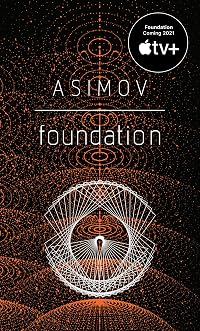
Foundation
by Isaac Asimov
Foundation - Publication (1), Foundation - Chronological (3), Asimov's Universe (13)
On This Page
Description
One of the great masterworks of science fiction, the Foundation novels of Isaac Asimov are unsurpassed for their unique blend of nonstop action, daring ideas, and extensive world-building. The story of our future begins with the history of Foundation and its greatest psychohistorian: Hari Seldon. For twelve thousand years the Galactic Empire has ruled supreme. Now it is dying. Only Hari Seldon, creator of the revolutionary science of psychohistory, can see into the future--a dark age of show more ignorance, barbarism, and warfare--that will last thirty thousand years. To preserve knowledge and save mankind, Seldon gathers the best minds in the Empire--both scientists and scholars--and brings them to a bleak planet at the edge of the Galaxy to serve as a beacon of hope for future generations. He calls his sanctuary the Foundation. But soon the fledgling Foundation finds itself at the mercy of corrupt warlords rising in the wake of the receding Empire. And mankind's last best hope is faced with an agonizing choice: submit to the barbarians and live as slaves, or take a stand for freedom and risk total destruction. show lessTags
Recommendations
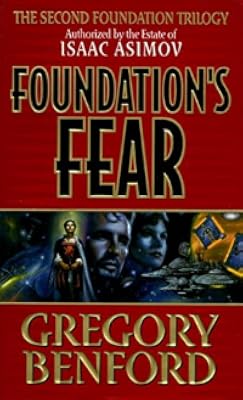
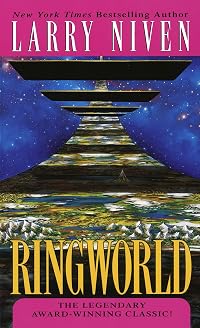
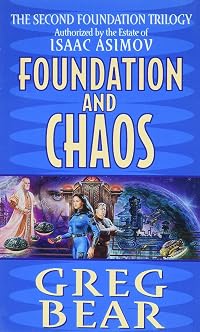
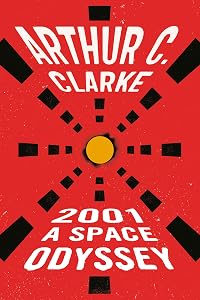
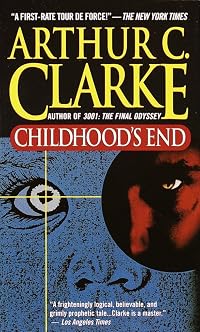
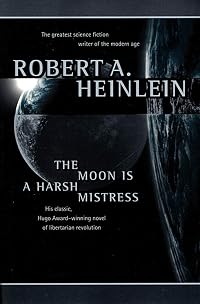
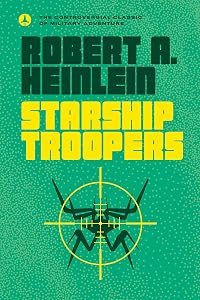
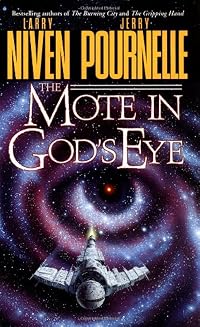




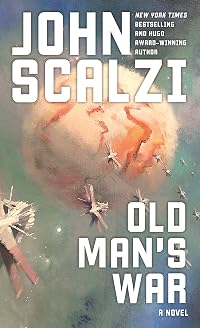
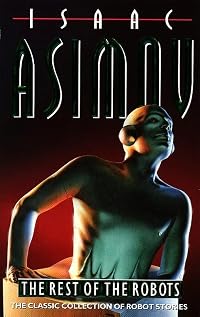
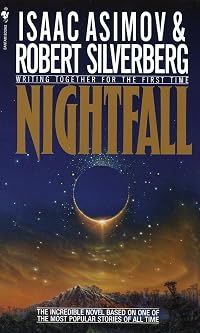
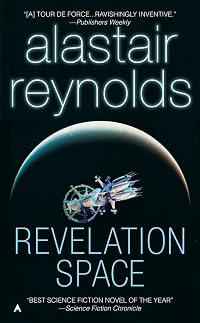
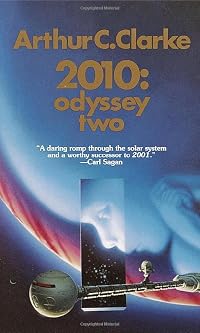
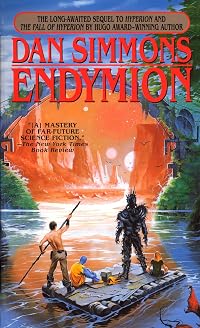
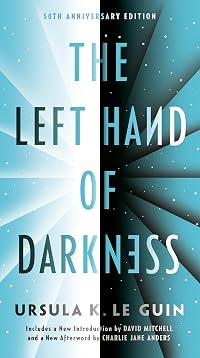
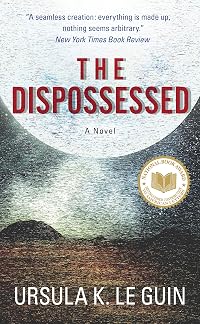


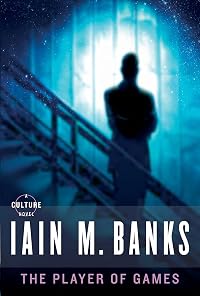
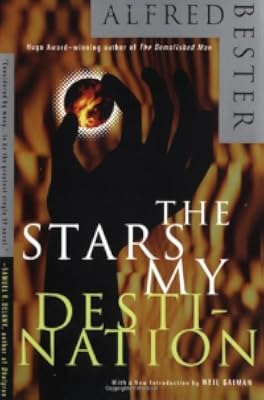
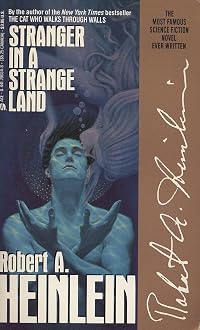


Member Recommendations
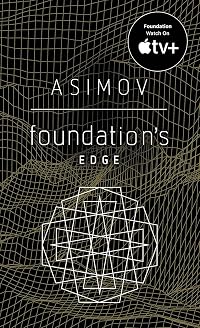
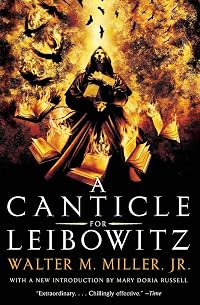
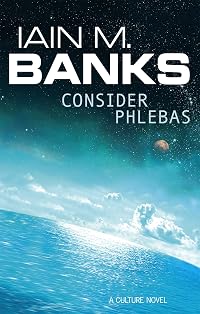
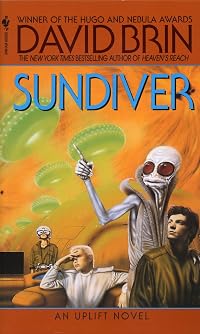
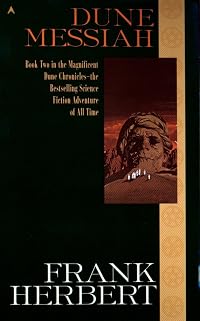
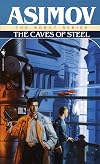
JonTheTerrible The pace of these books are similar as well as the topics they cover: society and government. The science plays only a small role in both books but is present enough to successfully build the worlds in which the characters inhabit.
Also recommended by Patangel, philAbrams
355

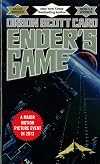
karnoefel de eerste drie foundation boeken in een robuuste hardcoverband. Dit boek was een van de eerste sf boeken die ik las in de jaren 70 in de bibliotheek van Tegelen
152

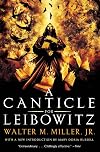
br77rino Pebble in the Sky is the first book Asimov wrote regarding the Galactic Empire, a subject he used in his later masterpiece trilogy, Foundation.
60
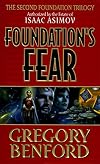
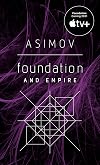


by anonymous user
Member Reviews
A classic early example of a "fix-up," the gathering together of a group of stories with a little tinkering to shape them into something more novel-ish. In this case, four previously published stories have been gathered (and given new names), along with a new introductory story; whatever tinkering has been done, this feels more like a collection of separate stories than it does like a single narrative.
It's typical of early 40s SF. Ideas are more important than characters, who serve primarily as mouthpieces for those ideas; "the future" is depicted mostly through giving characters names that sound like rejected pharmaceutical products ("Ask your doctor if Hari Seldon is right for you!").
Hari Seldon is the dominant figure in this book, show more though he doesn't actually appear in most of the stories. He is the great genius of Asimov's imagined science, psychohistory, which posits that while the actions of individuals are unpredictable, the actions of societies can be predicted with (astonishingly precise) accuracy. What he does after he forecasts the coming downfall of the great galactic Empire sets in motion the events of these stories, which take place over the course of roughly a century, with a different set of characters featured in each chapter.
Alas, I fear that "stories" is a generous description for what's in this book. These are primarily exchanges of political and philosophical speeches, dressed up in the guise of stories. But the costume is a little too thin, and the alternating "here's how I will destroy you" and "but you have not foreseen my brilliant strategy" monologues get tired very quickly.
The Foundation series was enormously popular in its day, and Asimov returned to it late in his career as part of an attempt (rather misguided, if you ask me) to tie all of his novels into one grand future history. All four of the previously published stories gathered here were eventually nominated for Retro Hugos as the best of their year, as were stories gathered for the second volume in the series (so I'll eventually be reading that one, too).
But as a reading experience 80 years after their original publication, they really don't hold up very well. show less
It's typical of early 40s SF. Ideas are more important than characters, who serve primarily as mouthpieces for those ideas; "the future" is depicted mostly through giving characters names that sound like rejected pharmaceutical products ("Ask your doctor if Hari Seldon is right for you!").
Hari Seldon is the dominant figure in this book, show more though he doesn't actually appear in most of the stories. He is the great genius of Asimov's imagined science, psychohistory, which posits that while the actions of individuals are unpredictable, the actions of societies can be predicted with (astonishingly precise) accuracy. What he does after he forecasts the coming downfall of the great galactic Empire sets in motion the events of these stories, which take place over the course of roughly a century, with a different set of characters featured in each chapter.
Alas, I fear that "stories" is a generous description for what's in this book. These are primarily exchanges of political and philosophical speeches, dressed up in the guise of stories. But the costume is a little too thin, and the alternating "here's how I will destroy you" and "but you have not foreseen my brilliant strategy" monologues get tired very quickly.
The Foundation series was enormously popular in its day, and Asimov returned to it late in his career as part of an attempt (rather misguided, if you ask me) to tie all of his novels into one grand future history. All four of the previously published stories gathered here were eventually nominated for Retro Hugos as the best of their year, as were stories gathered for the second volume in the series (so I'll eventually be reading that one, too).
But as a reading experience 80 years after their original publication, they really don't hold up very well. show less
This is one of the all time classics of science fiction that I first read 30 years ago as a student. Asimov has been my favourite science fiction writer ever since, and this still delights in its simple but intelligent and epic storyline covering a period of some 150 years, its crisp prose and sharp dialogue. Of course like most science fiction, it says more about the time in which it was written (1940s) than about the far future after 12,000 years of galactic empire, where there are almost no female characters (and almost everyone smokes like a chimney). But it is a memorable start to the Foundation series, the later books are even more diverse in scope.
If you like sci-fi, they say, you must read the classics.
After reading this book, I can claim with certainty that's BS, plain and simple, and forgive me the French.
My reason for giving this book a two-star review—in addition to what other two-star reviews rightfully claim about the boredom of the characters—is that I had to get around the 75% of the book to see a female character on scene. She didn't even deserve a name and vanished in a blip.
This is the first book I read in my life—and I've read a few—where women aren't present at all, not even as secondary (and badly written) characters.
And people complain about The Lord of the Rings for lack of female characters. Sheesh, what about Galadriel? She's a fundamental element to show more the story, not to mention her connection with all the past of the Noldor.
Even Heinlein, who never primed in writing women, uses them as characters.
I'm appalled, speechless even.
Unfortunately, I can't return the series because I bought it last year, otherwise I would take my money back. Since I have thrown it in the bin, I'll try to read the other books—after all I'm curious to see how it ends, although I can hope to see it in the TV series. Now that I think about it, despite not loving the series, I think it's better than the books, at least the one I read so far.
This story could have been so more interesting if Asimov had shown some kind of enlightenment in the social sciences, like he did in biochemistry. show less
After reading this book, I can claim with certainty that's BS, plain and simple, and forgive me the French.
My reason for giving this book a two-star review—in addition to what other two-star reviews rightfully claim about the boredom of the characters—is that I had to get around the 75% of the book to see a female character on scene. She didn't even deserve a name and vanished in a blip.
This is the first book I read in my life—and I've read a few—where women aren't present at all, not even as secondary (and badly written) characters.
And people complain about The Lord of the Rings for lack of female characters. Sheesh, what about Galadriel? She's a fundamental element to show more the story, not to mention her connection with all the past of the Noldor.
Even Heinlein, who never primed in writing women, uses them as characters.
I'm appalled, speechless even.
Unfortunately, I can't return the series because I bought it last year, otherwise I would take my money back. Since I have thrown it in the bin, I'll try to read the other books—after all I'm curious to see how it ends, although I can hope to see it in the TV series. Now that I think about it, despite not loving the series, I think it's better than the books, at least the one I read so far.
This story could have been so more interesting if Asimov had shown some kind of enlightenment in the social sciences, like he did in biochemistry. show less
First, I love the Asimov robot books, so don't hate me when I say that [Foundation] just wasn't very good. Certainly, my expectations may have been too high, given my love for other Asimov tales and the frenzied fandom of [Foundation]. But I didn't expect a dry political satire. I was looking more for the carnage and tension of the robot tales and what I got was a royal parlor treatise. Again, to be fair, perhaps Asimov was laying the groundwork for the larger series, but he left me with so little interest that I won't be going on to the rest of the series. On balance, I preferred Heinlein's [Double Star] for this kind of political satire set in the stars.
3 bones!!!
3 bones!!!
I’ve never read an Asimov novel before (only short stories) and I was a little intimidated by this grandfather of the science fiction genre, having heard his work was idea focused and somewhat dry. This initial novel mostly bears that description out, however it was also gripping and addicting reading. The chapters, which are short, function just like Pringles or popcorn, you sit down to have a handful or two and after a while find you’ve emptied the bowl. Asimov does seem most interested in his ideas and his sweeping narratives, his characters tend to be a bit static and one dimensional, his prose fairly Spartan and matter of fact, but this is no impediment as the ideas and narrative really do excel and shine.
Foundation
I grew up on Isaac Asimov. From ages 8 to 13 I read all of his fiction that I could get my hands on, and most of the non-fiction as well: hundreds of thousands of words. He was one of my heroes.
So fifty years later, when I came across his Foundation Trilogy in the same Science Fiction Book Club edition that I read as a kid, I found it an irresistible pickup. I’ve now reread “Foundation,” the first of the trilogy. And let me tell you, it is awful. I almost don’t know where to start.
Let’s start with a ludicrously unimaginative view of the far future. In the first chapter, the protagonist takes a kind of interstellar commuter train (he chats with the conductor) to his destination planet, which is New York City, but more show more so (its tall buildings and impressive infrastructure amaze the provincials). At the spaceport (whose description is indistinguishable from that of Penn Station), he hops in a cab. At the end of the ride, he pays the cabbie with coins.
Every man smokes tobacco: either cigarettes or cigars. If I had a quarter for every time a man lights up in Foundation, it would pay for the trilogy. There isn’t any sociological or historical reason given for this; apparently, all of Asimov’s peers smoked, so all of the men in his fiction smoke. It seems to be that simple.
The decline of the galactic empire is illustrated when the hostile neighbors of Terminus, the Foundation planet, have fallen back on coal and gas power. It’s shown repeatedly that these economies have reverted because the knowledge necessary to maintain atomic power has been lost. Nevertheless, these coal and gas economies maintain their interstellar fleets. Although it’s funny to imagine a coal-fired starship, it tends to break you out of the suspension of disbelief.
Next let’s look at “Foundation” as a reading experience. I’ll start with characterization, of which there is virtually none. All the characters are stock puppetry, each of whom embodies exactly one trait: wise, canny, scheming, or naive. Now, the book was written as four novellas, published in the monthly magazines of the day. Asimov then added a prologue story to fill things out. What this means to the reader is that even the bare-minimum characterization established for each character has no room to be developed.
You’ll have noted that above I said that “every man” smokes tobacco. I couldn’t speak more generally because women not only barely appear in this book, they are never mentioned or referred to when they don’t appear. It’s positively uncanny, like the novel written entirely without the letter “e.” The two women who do appear? A servant girl brought in to coo over the special high-tech dress the trader hero hopes to sell, and the shrewish wife of a high provincial official. I’m not sure what purpose she serves in the book.
“Foundation” has a single strength, and that’s the interesting concept of a “psychohistorian” genius who is able to predict the fall and renaissance of a galactic society over thousands of years by applying large-scale sociological principles. But without characterization, without recurring characters, and without a trace of imagination beyond the broad strokes of the plot, this is a depressing and downright alarming read, neither fun nor challenging, and without excitement of any kind. show less
I grew up on Isaac Asimov. From ages 8 to 13 I read all of his fiction that I could get my hands on, and most of the non-fiction as well: hundreds of thousands of words. He was one of my heroes.
So fifty years later, when I came across his Foundation Trilogy in the same Science Fiction Book Club edition that I read as a kid, I found it an irresistible pickup. I’ve now reread “Foundation,” the first of the trilogy. And let me tell you, it is awful. I almost don’t know where to start.
Let’s start with a ludicrously unimaginative view of the far future. In the first chapter, the protagonist takes a kind of interstellar commuter train (he chats with the conductor) to his destination planet, which is New York City, but more show more so (its tall buildings and impressive infrastructure amaze the provincials). At the spaceport (whose description is indistinguishable from that of Penn Station), he hops in a cab. At the end of the ride, he pays the cabbie with coins.
Every man smokes tobacco: either cigarettes or cigars. If I had a quarter for every time a man lights up in Foundation, it would pay for the trilogy. There isn’t any sociological or historical reason given for this; apparently, all of Asimov’s peers smoked, so all of the men in his fiction smoke. It seems to be that simple.
The decline of the galactic empire is illustrated when the hostile neighbors of Terminus, the Foundation planet, have fallen back on coal and gas power. It’s shown repeatedly that these economies have reverted because the knowledge necessary to maintain atomic power has been lost. Nevertheless, these coal and gas economies maintain their interstellar fleets. Although it’s funny to imagine a coal-fired starship, it tends to break you out of the suspension of disbelief.
Next let’s look at “Foundation” as a reading experience. I’ll start with characterization, of which there is virtually none. All the characters are stock puppetry, each of whom embodies exactly one trait: wise, canny, scheming, or naive. Now, the book was written as four novellas, published in the monthly magazines of the day. Asimov then added a prologue story to fill things out. What this means to the reader is that even the bare-minimum characterization established for each character has no room to be developed.
You’ll have noted that above I said that “every man” smokes tobacco. I couldn’t speak more generally because women not only barely appear in this book, they are never mentioned or referred to when they don’t appear. It’s positively uncanny, like the novel written entirely without the letter “e.” The two women who do appear? A servant girl brought in to coo over the special high-tech dress the trader hero hopes to sell, and the shrewish wife of a high provincial official. I’m not sure what purpose she serves in the book.
“Foundation” has a single strength, and that’s the interesting concept of a “psychohistorian” genius who is able to predict the fall and renaissance of a galactic society over thousands of years by applying large-scale sociological principles. But without characterization, without recurring characters, and without a trace of imagination beyond the broad strokes of the plot, this is a depressing and downright alarming read, neither fun nor challenging, and without excitement of any kind. show less
Yes, I have read Foundation before, chances are you have too! However, for some reason I missed out on the later Foundation books from [b:Foundation's Edge|76683|Foundation's Edge (Foundation, #4)|Isaac Asimov|https://d.gr-assets.com/books/1442201382s/76683.jpg|1725527], I can barely remember who Hari Seldon is or why “Violence is the last refuge of the incompetent”. So reread the series from the beginning it is then; no great hardship really, a fun time is already guaranteed, and the three volumes combined are shorter than a single book by [a:Peter F. Hamilton|25375|Peter F. Hamilton|https://d.gr-assets.com/authors/1235123752p2/25375.jpg].
The very first Foundation story was published in 1942, around the time poor Anne Frank was show more writing her diary. I first read the trilogy in an omnibus volume in the early 80s, before [b:Foundation's Edge|76683|Foundation's Edge (Foundation, #4)|Isaac Asimov|https://d.gr-assets.com/books/1442201382s/76683.jpg|1725527] came out. I did, of course, gobble up all three books up at once, and I did love it, in fact I have never met anyone who does not like the Foundation Trilogy (and I don’t want to, I suspect they are all churls).
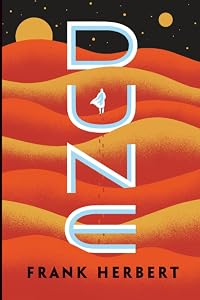
The trilogy is auspiciously my first sci-fi series, I have since read many others, though I don’t think I have read a better one (yes, I prefer it to the [b:Dune|234225|Dune (Dune Chronicles, #1)|Frank Herbert|https://d.gr-assets.com/books/1434908555s/234225.jpg|3634639] trilogy). This first Foundation book is a fix-up novel of connected short stories, unlike some fix-up novels I have read these stories join up beautifully into one cohesive novel. In this volume we meet the legendary Hari Seldon, the founder of the Foundation and ultra-brilliant “psychohistorian”, who is able to predict the future through mathematical algorithms combined with history, sociology and goodness knows what else. Such prediction is necessarily based on aggregate behavioral trends of vast numbers of people (billions). Seldon predicts the fall of the Galactic Empire and makes it his life’s mission to reduce the span of the dark ages which will inevitably follow. To this end the Foundation is established on a remote planet called Terminus ostensibly to compile a mega Encyclopedia Galactica but in truth to save mankind as a whole from an extended period of dark ages, and eventually to set up a Second Empire.
Seldon is not the only protagonist of Foundation, as the book spans hundreds of years and several generations three other heroes (no anti-heroes here) follow him: Salvor Hardin, Linmar Ponyets, and Hober Mallow. The first is a politician and the other two are traders. What they have in common is a can-do attitude, a disdain of violence, and the instinctive wiliness to outwit just about anybody they come across. In fact this series is a fine example of “The Triumph of Intellect and Romance Over Brute Force and Cynicism” (thank you Craig Ferguson). The showdown between these heroes and their antagonists are all battles of wit, no ass kicking is ever implemented.
What I did not appreciate in my teens is what a good writer and story teller Asimov is. He is not great prose stylist (witness the ample use of exclamation marks in the narrative), nor did he need to be for the type of stories he wanted to tell. However, there is a sincere and infectious enthusiasm in his story telling and a clarity that render the narrative very readable and entertaining; not to mention the witty and sardonic humour in much of the dialog. The scene where the Foundation citizens are waiting outside a vault for a hologram of Seldon to appear after 50 years is really quite thrilling.
The futuristic tech and world building are a lot of fun of course, though you will have to allow for some dated tech ideas or anachronisms such as messages printed on tapes, the use of microfilms and lack of AI (computers are not mentioned).
As good as this first Foundation volume is I find it to be the least exciting of the trilogy. I distinctly remember some edge of the seat developments in the two follow-up volumes; more on them very soon.
Personally I can’t wait to read [b:Foundation's Edge|76683|Foundation's Edge (Foundation, #4)|Isaac Asimov|https://d.gr-assets.com/books/1442201382s/76683.jpg|1725527]. show less
The very first Foundation story was published in 1942, around the time poor Anne Frank was show more writing her diary. I first read the trilogy in an omnibus volume in the early 80s, before [b:Foundation's Edge|76683|Foundation's Edge (Foundation, #4)|Isaac Asimov|https://d.gr-assets.com/books/1442201382s/76683.jpg|1725527] came out. I did, of course, gobble up all three books up at once, and I did love it, in fact I have never met anyone who does not like the Foundation Trilogy (and I don’t want to, I suspect they are all churls).
The trilogy is auspiciously my first sci-fi series, I have since read many others, though I don’t think I have read a better one (yes, I prefer it to the [b:Dune|234225|Dune (Dune Chronicles, #1)|Frank Herbert|https://d.gr-assets.com/books/1434908555s/234225.jpg|3634639] trilogy). This first Foundation book is a fix-up novel of connected short stories, unlike some fix-up novels I have read these stories join up beautifully into one cohesive novel. In this volume we meet the legendary Hari Seldon, the founder of the Foundation and ultra-brilliant “psychohistorian”, who is able to predict the future through mathematical algorithms combined with history, sociology and goodness knows what else. Such prediction is necessarily based on aggregate behavioral trends of vast numbers of people (billions). Seldon predicts the fall of the Galactic Empire and makes it his life’s mission to reduce the span of the dark ages which will inevitably follow. To this end the Foundation is established on a remote planet called Terminus ostensibly to compile a mega Encyclopedia Galactica but in truth to save mankind as a whole from an extended period of dark ages, and eventually to set up a Second Empire.
Seldon is not the only protagonist of Foundation, as the book spans hundreds of years and several generations three other heroes (no anti-heroes here) follow him: Salvor Hardin, Linmar Ponyets, and Hober Mallow. The first is a politician and the other two are traders. What they have in common is a can-do attitude, a disdain of violence, and the instinctive wiliness to outwit just about anybody they come across. In fact this series is a fine example of “The Triumph of Intellect and Romance Over Brute Force and Cynicism” (thank you Craig Ferguson). The showdown between these heroes and their antagonists are all battles of wit, no ass kicking is ever implemented.
What I did not appreciate in my teens is what a good writer and story teller Asimov is. He is not great prose stylist (witness the ample use of exclamation marks in the narrative), nor did he need to be for the type of stories he wanted to tell. However, there is a sincere and infectious enthusiasm in his story telling and a clarity that render the narrative very readable and entertaining; not to mention the witty and sardonic humour in much of the dialog. The scene where the Foundation citizens are waiting outside a vault for a hologram of Seldon to appear after 50 years is really quite thrilling.
The futuristic tech and world building are a lot of fun of course, though you will have to allow for some dated tech ideas or anachronisms such as messages printed on tapes, the use of microfilms and lack of AI (computers are not mentioned).
As good as this first Foundation volume is I find it to be the least exciting of the trilogy. I distinctly remember some edge of the seat developments in the two follow-up volumes; more on them very soon.
Personally I can’t wait to read [b:Foundation's Edge|76683|Foundation's Edge (Foundation, #4)|Isaac Asimov|https://d.gr-assets.com/books/1442201382s/76683.jpg|1725527]. show less
Members
- Recently Added By
Lists

1001 Books You Must Read Before You Die
1,448 works; 1,134 members

Best Science Fiction Novels
816 works; 426 members

The Guardian's 1000 Novels Everyone Must Read
1,005 works; 547 members
Survey of Classic Science Fiction
171 works; 48 members

Classics you know you should have read but probably haven't
421 works; 406 members

PBS The Great American Read
100 works; 21 members

The Telegraph's 110 Best Books: The Perfect Library
101 works; 18 members

Survey of Science Fiction and Fantasy
101 works; 13 members
Science Fiction
42 works; 7 members
20th Century Literature
1,161 works; 54 members
Top 100 Science-Fiction, Fantasy Books
18 works; 4 members

S.F. Masterworks (Complete)
229 works; 15 members

Unbound Worlds 100 Best SF Books
100 works; 8 members

Flyleaf Sci-Fi and Fantasy Book Club Selections
8 works; 2 members

LibraryThingers' 1001 Books You Must Read Before You Die
442 works; 30 members
Top 100 to Read before you Die
109 works; 7 members

Speculative Fiction to Read
706 works; 32 members

Political Science Fiction
43 works; 3 members

Summer Reads 2014
207 works; 70 members

Bustle: 10 Addictive Book Trilogies To Read This Year
10 works; 1 member

Isaac Arthur’s Book Recommendations
98 works; 3 members
Best Books of the 20th Century
193 works; 5 members

Books Read in 2020
4,379 works; 123 members
Mind Expanding Books by hackerkid
581 works; 8 members

Books by Jewish Authors
68 works; 5 members

2021
26 works; 1 member

Books Read in 2021
5,361 works; 113 members
1,001 BYMRBYD Concensus
723 works; 27 members

al.vick-series
381 works; 2 members

Read For Your Life
157 works; 1 member

Books Read in 2022
5,166 works; 112 members

Five star books
1,757 works; 108 members

AbeBooks: 50 essential science fiction books
50 works; 6 members
Books We Love to Reread
688 works; 296 members

La Bibliothèque idéale de la SF (Éditions Albin Michel, 1988)
52 works; 1 member
Les 100 principaux titres de la science-fiction (1981)
126 works; 3 members

Top Five Books of 2024
795 works; 264 members
Books I Read Before The Invention Of The Internet.
144 works; 1 member

.
396 works; 1 member
Wishlist
99 works; 1 member

.
194 works; 2 members

Poly Sci Fi
23 works; 2 members

Books Read in 2023
5,547 works; 145 members
Favorite Long Books
330 works; 42 members
GWFKegel's Dystopia Suggestions
12 works; 1 member

BingoDOG - Scientists in Fiction
111 works; 17 members
Nifty Fifties
129 works; 14 members

Best books I read in 2013
152 works; 3 members

Childhood Favorites
427 works; 24 members
Books Set on Extraterrestrial Planets
27 works; 5 members
Favourite Books
1,819 works; 309 members
Books Read in 2014
2,343 works; 86 members

Tablet Magazine's List of 101 Great Jewish Books
103 works; 9 members

Books Bought & Received as Gifts in 2014
81 works; 1 member

Biggest Disappointments
606 works; 168 members

Read
293 works; 4 members
American Lit for Eng 11 Research Project
368 works; 6 members

My TBR
371 works; 3 members

Blue Pyramid 1,276 Best Books of All Time
1,248 works; 32 members
Overdue Podcast
806 works; 9 members

Books Read in 2016
4,666 works; 197 members

Books That Will Take You Out of This World
19 works; 5 members

Books on my Kindle
162 works; 3 members

Unread books
1,063 works; 83 members
Books tagged favorites
390 works; 30 members

Books Read in 2011
684 works; 20 members
1950s
340 works; 22 members

Books Read in 2018
4,360 works; 110 members
An evolving science fiction novel canon
50 works; 2 members
Talk Discussions
Past Discussions
***Group Read: Asimov's Foundation Series in 75 Books Challenge for 2012 (March 2014)
GROUP READ: Foundation in The 12 in 12 Category Challenge (March 2012)
Author Information

Isaac Asimov was born in Petrovichi, Russia, on January 2, 1920. His family emigrated to the United States in 1923 and settled in Brooklyn, New York, where they owned and operated a candy store. Asimov became a naturalized U.S. citizen at the age of eight. As a youngster he discovered his talent for writing, producing his first original fiction at show more the age of eleven. He went on to become one of the world's most prolific writers, publishing nearly 500 books in his lifetime. Asimov was not only a writer; he also was a biochemist and an educator. He studied chemistry at Columbia University, earning a B.S., M.A. and Ph.D. In 1951, Asimov accepted a position as an instructor of biochemistry at Boston University's School of Medicine even though he had no practical experience in the field. His exceptional intelligence enabled him to master new systems rapidly, and he soon became a successful and distinguished professor at Columbia and even co-authored a biochemistry textbook within a few years. Asimov won numerous awards and honors for his books and stories, and he is considered to be a leading writer of the Golden Age of science fiction. While he did not invent science fiction, he helped to legitimize it by adding the narrative structure that had been missing from the traditional science fiction books of the period. He also introduced several innovative concepts, including the thematic concern for technological progress and its impact on humanity. Asimov is probably best known for his Foundation series, which includes Foundation, Foundation and Empire, and Second Foundation. In 1966, this trilogy won the Hugo award for best all-time science fiction series. In 1983, Asimov wrote an additional Foundation novel, Foundation's Edge, which won the Hugo for best novel of that year. Asimov also wrote a series of robot books that included I, Robot, and eventually he tied the two series together. He won three additional Hugos, including one awarded posthumously for the best non-fiction book of 1995, I. Asimov. "Nightfall" was chosen the best science fiction story of all time by the Science Fiction Writers of America. In 1979, Asimov wrote his autobiography, In Memory Yet Green. He continued writing until just a few years before his death from heart and kidney failure on April 6, 1992. (Bowker Author Biography) show less
Some Editions
Awards and Honors
Notable Lists
Series

Foundation - Publication
7 works (1)

Foundation - Chronological
8 works (3)

Asimov's Universe
14 works (13)
Belongs to Publisher Series
Gallimard, Folio SF (1-335)
Heyne-Buch (3080)
Mirabilia (44)
Urania [Mondadori] (317 bis)
ハヤカワ文庫 SF (555)
Libro amigo [Bruguera] (385)
Présence du futur (89)
Work Relationships
Is contained in
Contains
Has as a student's study guide
Common Knowledge
- Canonical title
- Foundation
- Original title
- Foundation; Foundation I
- Alternate titles
- The 1,000 Year Plan
- Original publication date
- 1951
- People/Characters
- Hari Seldon; Salvor Hardin; Hober Mallow; Gaal Dornick; Yugo Amaryl; Ebling Mis (show all 38); Linge Chen; Lors Avakim; Lewis Pirenne; Anselm haut Rodric; Tomaz Sutt; Jord Fara; Lundin Crast; Yate Fulham; Lord Dorwin; Yohan Lee; Sef Sermak; Poly Verisof; Wienis; King Lepold I; Lewis Bort; Dokor Walto; Lem Tarki; Jaim Orsy; Levi Norast; Limmar Ponyats; Les Gorm; Eskel Gorov; Grand Master of Askone; Pherl; Jorane Sutt; Publis Manlio; Jaim Twer; Asper Argo; Jord Parma; Licia; Onum Barr; Ankor Jael
- Important places
- Trantor; Terminus; Anacreon; Smyrno; Askone; Korellian Republic (show all 8); Siwenna; Locris
- Important events
- Seldon Crisis
- Related movies
- Foundation (2021 | IMDb)
- Dedication
- Post-1973 reissues:
To the memory of my mother
(1895–1973)
1951 issue:
To my Mother
Of whose Authentic Gray Hairs
Not a few were caused by myself. - First words
- HARI SELDON ... born in the 11,988th year of the Galactic Era: died 12,069.
ENCYCLOPEDIA GALACTICA
His name was Gaal Dornick and he was just a country boy who had never seen Trantor before. - Quotations
- It pays to be obvious, especially if you have a reputation for subtlety.
Violence is the last refuge of the incompetent.
He had brought down his first Nyak when scarcely thirteen; had brought down his tenth the week after his accession to the throne; and was returning now from his forty-sixth.
‘Fifty before I come of age,' he had exult... (show all)ed. ‘Who'll take the wager?'
But courtiers don't take wagers against the king's skill. There is the deadly danger of winning. - Last words
- (Click to show. Warning: May contain spoilers.)Let my successors solve those new problems, as I have solved the one of today.'
(Click to show. Warning: May contain spoilers.)KORELL ... And so after three years of a war which was certainly the most unfought war on record, the Republic of Korell surrendered unconditionally, and Hober Mallow took his place next to Hari Seldon and Salvor Hardin in the hearts of the people of the Foundation.
ENCYCLOPEDIA GALACTICA - Original language
- English
- Canonical DDC/MDS
- 813.087625
- Canonical LCC
- PZ3.A8316 Fo PS3551.S5
- Disambiguation notice
- Contents: Part I. The Psychohistorians -- Part II. The Encyclopedists -- Part III. The Mayors -- Part IV. The Traders -- Part V. The Merchant Princes
Classifications
- Genres
- Science Fiction, Fiction and Literature
- DDC/MDS
- 813.087625 — Literature & rhetoric American literature in English American fiction in English By type Genre fiction Adventure fiction Speculative fiction Science fiction Space opera
- LCC
- PZ3 .A8316 .F — Language and Literature Fiction and juvenile belles lettres Fiction and juvenile belles lettres Fiction in English
- BISAC
Statistics
- Members
- 23,397
- Popularity
- 214
- Reviews
- 443
- Rating
- (3.99)
- Languages
- 29 — Catalan, Czech, Danish, Dutch, English, Estonian, Finnish, French, German, Irish, Greek, Hebrew, Hungarian, Italian, Japanese, Lithuanian, Norwegian (Bokmål), Norwegian, Polish, Romanian, Russian, Croatian, Slovak, Spanish, Swedish, Thai, Turkish, Portuguese (Portugal), Chinese, traditional
- Media
- Paper, Audiobook, Ebook
- ISBNs
- 146
- ASINs
- 90