On This Page
Description
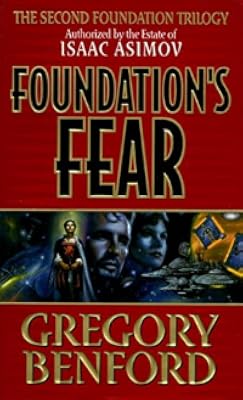
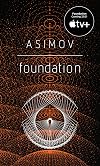
Isaac Asimov's Foundation Trilogy is one of the high-water marks of science fiction. It is the monumental story of a Galactic Empire in decline, and the secret society of scientists who seek to shorten the inevitable Dark Age with the science of psychohistory. Now, with the permission -- and blessing -- of the Asimov estate, the epic saga continues. Fate -- and a cruel Emperor's arbitrary power -- have thrust Hari Seldon into the First Ministership of the Empire against his will. As the show more story opens, Hari is about to leave his quiet professorship and take on the all but impossible task of administering 25 million inhabited worlds from the all-steel planet of Trantor. With the help of his beautiful bio-engineered "wife" Dors and his alien companion Yugo, Seldon is still developing the science that will transform history, never dreaming that it will ultimately pit him against future history's most awesome threat. show lessTags
Recommendations




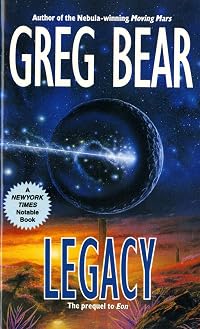
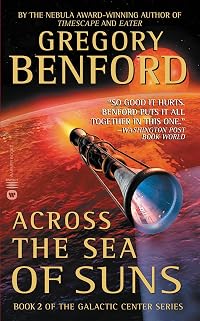
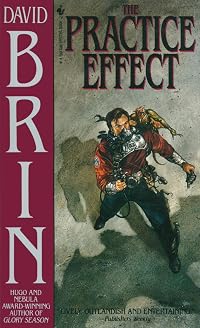
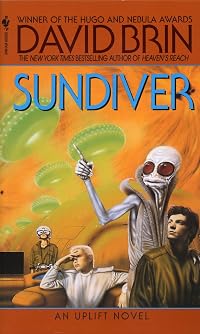







Member Recommendations
Member Reviews
Foundation's Fear by Gregory Benford is the first book in a trilogy that follows Isaac Asimov's acclaimed Foundation series. Gregory Benford's background in physics comes through in overwrought detail when describing the technology and science of the Trantorian Empire. The pacing is uneven and stultifying in some sections but his action scenes move swiftly and you get a true sense of the breadth of the galaxy that Asimov painted so beautifully in his original works.
I think clearly, Benford tried to remain true to the characters but sometimes took liberties which could be interpreted as his own writing style. While every writer has his or her own style (a fact which should be celebrated, of course), I could only feel that Benford had a show more story in his head that had nothing to do with the Foundation series and adapted it, somewhat clumsily at times. show less
I think clearly, Benford tried to remain true to the characters but sometimes took liberties which could be interpreted as his own writing style. While every writer has his or her own style (a fact which should be celebrated, of course), I could only feel that Benford had a show more story in his head that had nothing to do with the Foundation series and adapted it, somewhat clumsily at times. show less
Benford says himself in the afterword that he had some questions about the Foundation trilogy - where are the aliens and what is the role of computers. He also points out that the original trilogy (not the Asimov prequels or sequels) is devoid of physical action. So he set out to answer the questions and fill in the gaps and goes overboard doing so. This just didn't feel like a Foundation novel at all and it was too long.
This is the first of a trilogy billing itself as the second foundation trilogy based on Isaac Asimov's Foundation Trilogy. Although a three-book set, each can stand on its own very well.
The author explores some elements left up in the air by Isaac Asimov, and fills with more current knowledge and philosophy, such as addressing why there are no non-humans in the galaxy.
Some of the topics he addresses include expanding on Dor, who she is and giving her a little background. Her character is expanded, and perhaps changed a bit, at least from what I may have imagined. In general, he adds a lot about computers and robotics that Asimov didn't go into, or couldn't because the technology wasn't available. Philosophically, he approaches the show more topic of computer intelligence and what could constitute life. In this, Hari creates two simulated people, Voltaire and Jean of Arc, to help him understand society and to help further his psychohistory, Voltaire and Jean of Arc act as a yin and yang, who's arguments are designed to answer questions. But they evolve their own desires and take on life beyond their programming.
I found the book difficult to work through at times, but still an interesting addition to the Asimov series. I believe those fond of the Asmiov trilogy will enjoy this and find it interesting. It adds background to the trilogy and brings it a little more into the present. Otherwise I don't think it may not be worth the effort. show less
The author explores some elements left up in the air by Isaac Asimov, and fills with more current knowledge and philosophy, such as addressing why there are no non-humans in the galaxy.
Some of the topics he addresses include expanding on Dor, who she is and giving her a little background. Her character is expanded, and perhaps changed a bit, at least from what I may have imagined. In general, he adds a lot about computers and robotics that Asimov didn't go into, or couldn't because the technology wasn't available. Philosophically, he approaches the show more topic of computer intelligence and what could constitute life. In this, Hari creates two simulated people, Voltaire and Jean of Arc, to help him understand society and to help further his psychohistory, Voltaire and Jean of Arc act as a yin and yang, who's arguments are designed to answer questions. But they evolve their own desires and take on life beyond their programming.
I found the book difficult to work through at times, but still an interesting addition to the Asimov series. I believe those fond of the Asmiov trilogy will enjoy this and find it interesting. It adds background to the trilogy and brings it a little more into the present. Otherwise I don't think it may not be worth the effort. show less
The main aspect of this book are AI realisations of Joan of Arc and Voltaire and the ongoing thoughts and descriptions of what is intelligence and humanity. These concepts are interesting and possibly may be seen as a continuation of Asimov's treatment of robots. However, I couldn't see the theme as presented by Benford tying in with my view of the Asimov Foundation Universe. The explanation on how aliens had made themselves into some form of AI beings and infected the human "internet" was again an interesting idea but I felt it undermined the Foundations created by Asimov - being possibly "trumped" by these secret alien beings created by Benford. I found it a hard read and only recommended for the keen Foundation reader. It has put ne show more off reading the other 2 books of the trilogy authorised by the Asimov estate. show less
This first entry into the Foundation (2) Trilogy by other authors is a mess. I would not have finished it except that I wanted to read the additional entries in the series. I had read reader reviews before I started this book, so I was prepared for it to have problems.
There are three major strands in the story. One is the attempt by the Emperor to nominate Hari as first minister. Cleon knows of Hari's work on psycohistory. This story winds its way through the 578 pages and is a relatively cogent, and readable story for most people, I think. There is intrigue and violence and plots and counter plots all involved in Hari attempt to be confirmed in the position.
A second story involves simulated intelligences inside of computer systems show more named Voltaire and Joan of Arc. This begins in a big way around page 100 and continues on and off until the end of the book. I found this storyline uninteresting and distracting from the Foundation premise and story. I did not understand a purpose or point to this storyline. The author explains after another couple of hundred pages why the sims are important to the plot of this book. But by then I had lost all interest in them, and I think they could be removed entirely from the book, with no loss of coherence or plot development.
The third major storyline involves Chimpanzees. This storyline about pans as they are called in the book starts around page 327. I was actually looking forward to this storyline since I had read that the author introduced them as a tool for Hari's development of psycohostory. Although we see a connection between the pan episodes and Hari's theory development, here again I found this storyline distracting and merely an interlude away from the main story. Again here is a major section, which I feel could have been completely excised with a resulting improvement to the plot flow.
I give this book 3 stars, because of my strong interest in Asimov world and the other two entries in this trilogy. Also, as I mentioned I found one of the storylines interesting and worth my time. But if I did not have an ulterior motive in reading this book I would not have finished it, and it would have earned less stars from me. show less
There are three major strands in the story. One is the attempt by the Emperor to nominate Hari as first minister. Cleon knows of Hari's work on psycohistory. This story winds its way through the 578 pages and is a relatively cogent, and readable story for most people, I think. There is intrigue and violence and plots and counter plots all involved in Hari attempt to be confirmed in the position.
A second story involves simulated intelligences inside of computer systems show more named Voltaire and Joan of Arc. This begins in a big way around page 100 and continues on and off until the end of the book. I found this storyline uninteresting and distracting from the Foundation premise and story. I did not understand a purpose or point to this storyline. The author explains after another couple of hundred pages why the sims are important to the plot of this book. But by then I had lost all interest in them, and I think they could be removed entirely from the book, with no loss of coherence or plot development.
The third major storyline involves Chimpanzees. This storyline about pans as they are called in the book starts around page 327. I was actually looking forward to this storyline since I had read that the author introduced them as a tool for Hari's development of psycohostory. Although we see a connection between the pan episodes and Hari's theory development, here again I found this storyline distracting and merely an interlude away from the main story. Again here is a major section, which I feel could have been completely excised with a resulting improvement to the plot flow.
I give this book 3 stars, because of my strong interest in Asimov world and the other two entries in this trilogy. Also, as I mentioned I found one of the storylines interesting and worth my time. But if I did not have an ulterior motive in reading this book I would not have finished it, and it would have earned less stars from me. show less
Sorry for the brevity of this review, but I've blacked out most memories of this book. What I do remember is that the protagonist Hari Seldon felt incompatible with how I (fondly) remember Asimov's character, and that the prolonged storyline about AI realizations of Joan of Arc and Voltaire seemed utterly unrelated to the Foundation world of Asimov and completely boring, to boot. Other raters have clearly liked this book, but it left me with zero interest in reading any farther in the series.
I kept slogging through this book hoping and waiting for this work to redeem itself. Then it ended.
Members
- Recently Added By
Author Information

Gregory Benford, was born on January 30, 1941 in Mobile, Alabama. He is a physicist and science fiction writer who earned his Ph.D. from the University of California, San Diego, in 1967. He is a Woodrow Wilson Fellow and a consultant for NASA. Benford's first novel "Deeper than the Darkness" (1970), which was revised as "The Stars in Shroud" show more (1978), gave him notice as a serious Science Fiction writer. His most popular work is "Timescape" (1980), which was the winner of the Nebula and John W. Campbell Memorial Awards; it presented a hard physics approach to limited time travel. "In the Ocean of Night" (1977), "Across the Sea of Suns" (1984), "Great Sky River" (1987), "Tides of Light" (1989) and "Furious Gulf" (1994) were all a part of the Galactic Cluster Series. He has also written the juvenile novel "Jupiter Project" (1975), "Against Infinity" (1983) and the thriller "Artifact" (1985). He has been nominated for 12 Nebula Awards (winning for "Timescape" and for the novelette, "If the Stars are Gods"). Benford, writing alternately with Bruce Sterling, produces science fact articles for the Magazine of Fantasy and Science Fiction. They took over after the death of regular columnist Isaac Asimov. He has also co-edited theme anthologies with Martin H. Greenburg, which include "Hitler Victorious" (1986), "Nuclear War" (1988), "What Might Have Been, Volume 1: Alternate Empires" (1988), "Volume 2: Alternate Heroes" (1989) and "Volume 3: Alternate Wars." (Bowker Author Biography) show less
Some Editions
Series

Work Relationships
Common Knowledge
- Canonical title
- Foundation's Fear
- Original title
- Foundation's Fear
- Original publication date
- 1997-03
- People/Characters
- Cleon I; Hari Seldon; Betan Lamurk; Yugo Amaryl; Dors Venabili; Joan of Arc (show all 9); Voltaire; Marq; Sybil
- Important places
- Trantor; Panucopia; Dahl Sector; Junin Sector; Sark; Trantor Mesh
- Dedication
- To Greg Bear and David Brin fellow voyagers on strange seas
- First words
- R. Daneel Olivaw did not look like Eto Demerzel.
- Last words
- (Click to show. Warning: May contain spoilers.)"Not yet," Lodovik said. "Captain, please accompany me to the bridge. We may yet be able to save something."
- Original language
- English
Classifications
Statistics
- Members
- 1,873
- Popularity
- 11,534
- Reviews
- 28
- Rating
- (3.10)
- Languages
- 10 — Czech, Dutch, English, French, German, Hungarian, Italian, Polish, Romanian, Spanish
- Media
- Paper, Ebook
- ISBNs
- 25
- ASINs
- 11