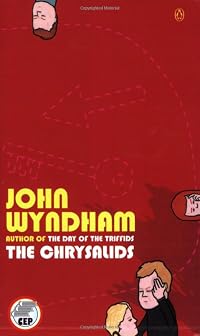
The Chrysalids
by John Wyndham
On This Page
Description
Genetic mutation has devastated the world and a bleak, primitive society has emerged from its ruins ; a society which punishes any deviation from rigid norms. Ten-year-old David is having strange dreams about a mysterious city. But in his ultra-religious village of Waknut, all abnormality is abhorred, and he soon realizes that differences can be very dangerous indeed.Tags
Recommendations

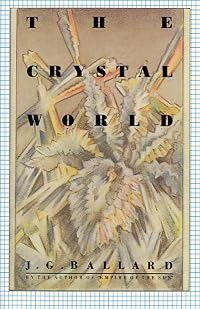
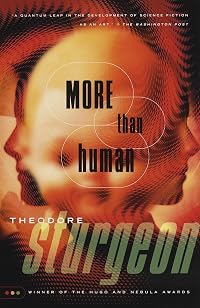
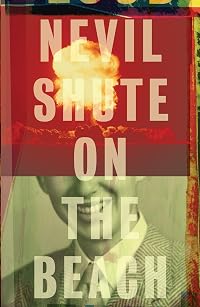
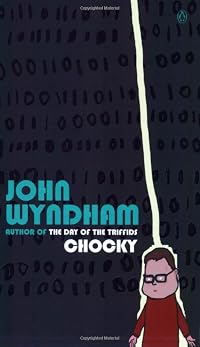
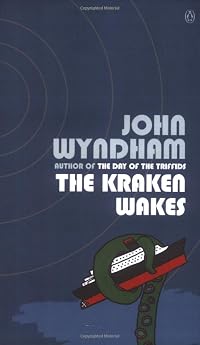
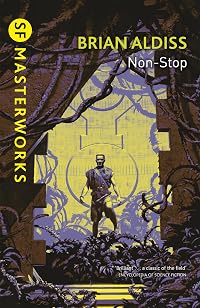
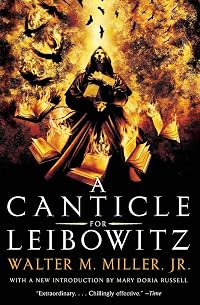
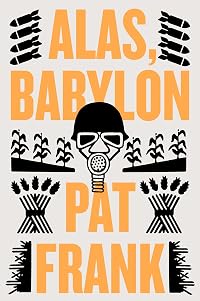


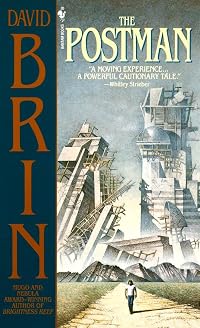


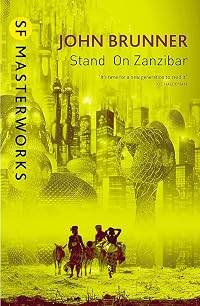
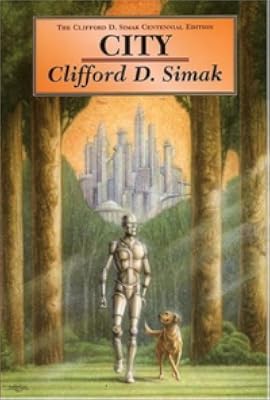
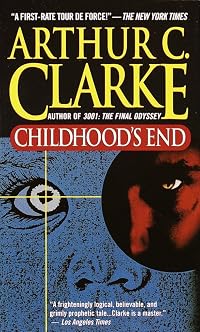
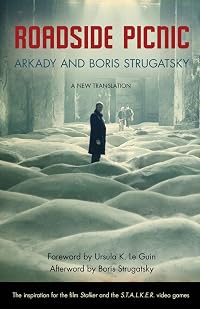
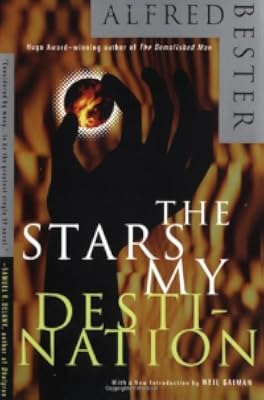


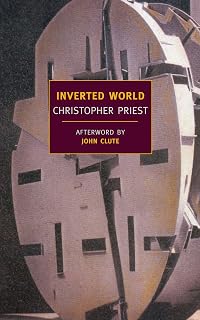
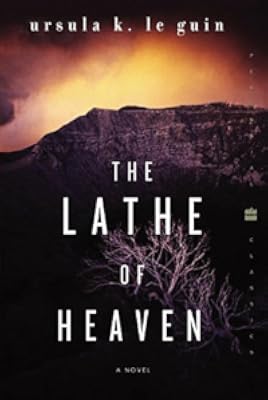


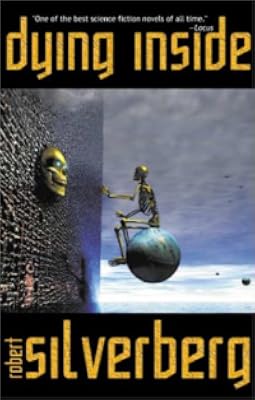
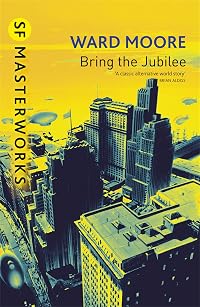


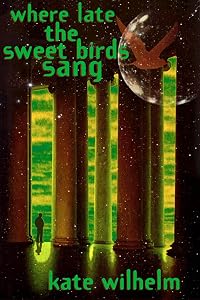
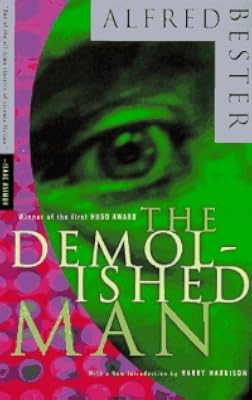
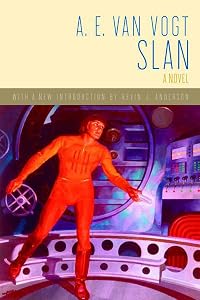
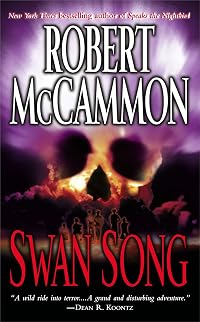


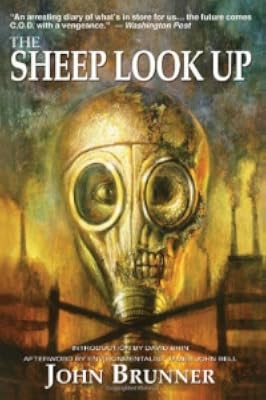

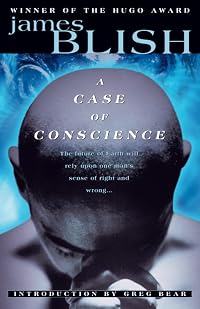

Member Recommendations
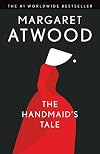

SomeGuyInVirginia Each book compliments the other, describing the same fundamental theme from two points of view. I enjoyed the Midwich Cuckoos more.
111
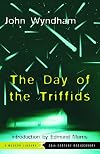
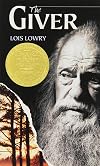

20
hilge Not so much based on characters or storyline more a general feel to the book that make them feel like good matches
21

bmlg post-collapse stories with young protagonists confronting issues of humanity and identity



Member Reviews
I wanted to mull this one overnight. I remember being absorbed in [The Day of the Triffids] as a teenager and if I had read this then I would have been just as absorbed. I was - - almost. Here the story is not invaders and the larger part of the population handicapped with blindness, but a look, after self-annihilation, at humans on the verge of a major evolutionary change, telepathy. Here you have strong storytelling and great descriptions and intelligent courageous women with strong roles to play (impressive for 1955) . . . The culture, very rigid and religious, is built around physical "perfection" -- so that even small deviations, extra toes, unusual height -- genetic variants that happen naturally -- are regarded as against God's show more laws for humans, his favorites. Those with flaws are sent to the Fringes where the radiation has abated and life can go on. Our protagonist has an invisible difference, telepathy as do a few others in his neighborhood. The trouble begins in earnest when his little sister apparently has mindpowers exponentially stronger than the others in their group -- she is also too young to understand the dangers involved and they are, ultimately, found out and must run away. The feeling is similar to that in Atwood's [The Handmaid's Tale]. Unquestionably somewhat dated (it's awfully white and while women are strong and intelligent, the descriptive sexism, all unconscious on Wyndham's part, made me squirm.) Wyndham's message is a good one, totally relevant, and also timely. You can't stop change and any attempt to turn back the clock is indicative of a moribund cultural viewpoint that is doomed to cause suffering and ultimately fail. That sounds about right! When will we ever learn? ****1/2 show less
Brian Aldiss is supposed to have coined the term cozy catastrophe to cover John Wyndham's books, but I've never been able to see anything cozy about The Chrysalids, which is my favourite of all Wyndham's books and one of my overall favourite reads from my teenage years. Set in a much warmer Labrador of the far future after a nuclear holocaust has engulfed the world, it depicts an agrarian society where mutations (clearly caused by the high radiation levels) are common. But having no understanding of radiation, and very little understanding of the civilisation that preceded them, people have interpreted its destruction as 'Tribulation' sent by God to punish an evil world. And the only way to prevent tribulation from revisiting them is to show more root out all mutations, whether human, animal or plant, which depart in any way from the norms laid down by their forefathers. No matter how human a mutant might look, no matter how small might be their departure from the norm, they are merely soulless copies sent by the devil to tempt humans away from the true path laid down for them by God.
Into this world comes David Strorm: seemingly born to a secure life as the only son of a prosperous farmer who owns the biggest farm in the district. But his father is also strict in his persecution of mutants, strict to the point of bigotry some would say, and as the young David realises that he is different from virtually all others around him, even though apparently physically normal, his life becomes a struggle to hide his true nature. And when his younger sister Petra is born, the struggle becomes nearly impossible.
This is a book which, although short, deals with a lot of underlying questions of what it means to be human. Without giving anything away, I can say that I've always found the ending thought-provoking and disturbing. And even though I've read this several times before I enjoyed it equally as much when re-reading it again. Highly recommended. show less
Into this world comes David Strorm: seemingly born to a secure life as the only son of a prosperous farmer who owns the biggest farm in the district. But his father is also strict in his persecution of mutants, strict to the point of bigotry some would say, and as the young David realises that he is different from virtually all others around him, even though apparently physically normal, his life becomes a struggle to hide his true nature. And when his younger sister Petra is born, the struggle becomes nearly impossible.
This is a book which, although short, deals with a lot of underlying questions of what it means to be human. Without giving anything away, I can say that I've always found the ending thought-provoking and disturbing. And even though I've read this several times before I enjoyed it equally as much when re-reading it again. Highly recommended. show less
I'm honestly surprised this novel doesn't get talked about more as being a classic of the genre. Similar in a lot of ways when it comes to style as John Christopher's The Death of Grass, The Chrysalids excels past it as well. While not quite as well paced, this novel offers much more in a philosophical sense. The characters are well written, and the prose is easy to read without lacking depth. There's a real sense of both melancholy and tension that slowly builds throughout the novel that was fitting to the content. There are also moments of true excitement that left me gripped to the page, though I will admit that the ending, while decent, was more mediocre than I expected.
Wyndham focuses mainly on themes of xenophobia, dogma, show more otherness, and the future of humanity. Exploring these themes often leads to dark places and moments, ones that feel grounded in the harsh reality of the world. Yet Wyndham is also deft enough a writer to weave in real moments of tenderness, love, and care between the characters. These moments are especially clear and sharp through their bitter surroundings. I especially appreciated these themes being seen through the eyes of a child, and then a teenager, as they come to grips with their reality. Most of my encounters with this perspective have come with a firm YA ting that I didn't care far, but not here. I also think it's important to point out that this is one of the rare vintage SF titles that doesn't ignore or belittle women.
Overall and excellent novel. Surprisingly deep and poignant for such a slim page length. Very excited to explore more of Wyndham's works. show less
Wyndham focuses mainly on themes of xenophobia, dogma, show more otherness, and the future of humanity. Exploring these themes often leads to dark places and moments, ones that feel grounded in the harsh reality of the world. Yet Wyndham is also deft enough a writer to weave in real moments of tenderness, love, and care between the characters. These moments are especially clear and sharp through their bitter surroundings. I especially appreciated these themes being seen through the eyes of a child, and then a teenager, as they come to grips with their reality. Most of my encounters with this perspective have come with a firm YA ting that I didn't care far, but not here. I also think it's important to point out that this is one of the rare vintage SF titles that doesn't ignore or belittle women.
Overall and excellent novel. Surprisingly deep and poignant for such a slim page length. Very excited to explore more of Wyndham's works. show less
This post-apocalyptic novel has really good pacing, telling a nightmarish story in a lighter way than I would have thought possible. Also, as a Canadian, I was tickled pink that the story took place in Labrador. Was definitely trying to guess how the places they talked about mapped onto present-day place names.
This book was a possible choice for students in Grade 9 where I went to high school, and I can see this being a good book for that age group to study.
This book was a possible choice for students in Grade 9 where I went to high school, and I can see this being a good book for that age group to study.
A great coming-of-age-cum-enlightenment novella. This tends more towards YA than science fiction, but don't let that detract from its power. The story revolves around a mind-reading gestalt community and how they survive in an oppressive, religiously conservative society intolerant of anything or anyone abnormal. Similar in some ways to Sturgeon's fix-up More Than Human.
Read as part of A Treasury of Great Science Fiction, Volume 1, an anthology edited by Anthony Boucher.
Read as part of A Treasury of Great Science Fiction, Volume 1, an anthology edited by Anthony Boucher.
I first read The Chrysalids by John Wyndham many years ago as a student, and about all I retained from then was the feeling that I really liked the book. My re-read has confirmed that, yes, I do really like this book. On so many levels this story of life after the nuclear holocaust is well done, imaginative and leaves us with many questions to ponder.
Very subtly written, with religious overtones, I can see why this book was chosen for students to read. Instead of laying out his opinions, the author gently sets the scene and lets his reader reach his or her own opinion. Questions of what is normal, how much direct truth can we take from the bible, and why do we, as humans, cling to bigotry and cruelty are all part of this story.
A group show more of young people living in a strait-laced rural community are different. Their difference is not evident to the naked eye. They can communicate by thoughts. People, animals and crops that are not “normal” are considered deviants and while the animals and crops are destroyed, the people are sterilized and sent to live in a wild area called The Fringe. Eventually some of the thought-senders are discovered, tortured and made to reveal the identity of others. Our three main characters manage to flee to the Fringe, but do not find safety there either. One thought sender, is able to send her thoughts half-way around the world and manages to contact people that are like them.
Well written though slightly dated, I was totally caught up in the story. I find it interesting that not all was neatly wrapped up at the end of the book. If The Chrysalids were to be written today, I’m sure it would be the first part of a YA trilogy. When John Wyndham wrote it back in the fifties, he wisely ended the story and allowed his audience to reach their own conclusions. show less
Very subtly written, with religious overtones, I can see why this book was chosen for students to read. Instead of laying out his opinions, the author gently sets the scene and lets his reader reach his or her own opinion. Questions of what is normal, how much direct truth can we take from the bible, and why do we, as humans, cling to bigotry and cruelty are all part of this story.
A group show more of young people living in a strait-laced rural community are different. Their difference is not evident to the naked eye. They can communicate by thoughts. People, animals and crops that are not “normal” are considered deviants and while the animals and crops are destroyed, the people are sterilized and sent to live in a wild area called The Fringe. Eventually some of the thought-senders are discovered, tortured and made to reveal the identity of others. Our three main characters manage to flee to the Fringe, but do not find safety there either. One thought sender, is able to send her thoughts half-way around the world and manages to contact people that are like them.
Well written though slightly dated, I was totally caught up in the story. I find it interesting that not all was neatly wrapped up at the end of the book. If The Chrysalids were to be written today, I’m sure it would be the first part of a YA trilogy. When John Wyndham wrote it back in the fifties, he wisely ended the story and allowed his audience to reach their own conclusions. show less
Full disclosure: I read this book back in September, right before an unexpected and emergency hospitalization. Had my life followed its normal pattern, I would have reviewed it comprehensively at the time, but instead I'm coming to back to it more than two months later to clean up loose ends. What I do recollect is that I enjoyed the novel very much; there was greater character depth than the Wyndham I've read previously (Chocky, The Kraken Wakes), and both a realism and an urgency to the writing that really pushed me on. You could make a film of this book quite easily, even today, and it would have something significant to say about the lengths we go to demonize those "not like us." Wyndham's use of Christian zealotry, too, seems show more remarkably prescient (and unusually pointed) for something written in 1955.
Where the book falls down, a little, is in its ending, which comes thick, fast, and far too abruptly. Up to that point, however, it's a very affecting and engaging read. show less
Where the book falls down, a little, is in its ending, which comes thick, fast, and far too abruptly. Up to that point, however, it's a very affecting and engaging read. show less
Members
- Recently Added By
Published Reviews
ThingScore 75
Wyndham lumbers his characters with some verbose, pompous speeches about human nature, but his points are still interesting and as relevant today as when he wrote the book in 1955. It's also a ripping adventure.
added by andyl
Lists

Best Dystopias
280 works; 276 members

Best Science Fiction Novels
816 works; 430 members

Best Post-Apocalyptic Stories
143 works; 88 members
Survey of Classic Science Fiction
171 works; 48 members

Classics you know you should have read but probably haven't
421 works; 407 members

S.F. Masterworks (Complete)
229 works; 15 members
Best of British Literature
226 works; 41 members

Survey of Classic Dystopias
29 works; 4 members

Bibliography for Among Others
159 works; 15 members

Dystopian and Apocalyptic Literature
350 works; 74 members
Science Fiction
42 works; 7 members

Best high-school English books reread later in life
30 works; 19 members
Books That Changed Me
158 works; 47 members
Survey of Science Fiction and Fantasy
101 works; 13 members

20th Century Literature
1,161 works; 54 members

SF Masterworks
193 works; 8 members

Religious Science Fiction
70 works; 20 members

Dystopian Novels you should read
25 works; 2 members

Books Set in Canada
80 works; 16 members

LibraryThingers' 1001 Books You Must Read Before You Die
442 works; 30 members

Speculative Fiction to Read
706 works; 32 members

child hero ~ adult novel
60 works; 12 members
Best Books of the 20th Century
193 works; 5 members
Favourite Books
1,819 works; 309 members
Books Read in 2011
684 works; 20 members

Books Read in 2018
4,360 works; 110 members
Speculative Fiction
40 works; 2 members
GWFKegel's Dystopia Suggestions
12 works; 1 member

Books Read in 2019
4,052 works; 110 members

Books Read in 2026
1,918 works; 66 members

Books Read in 2022
5,166 works; 112 members

Stephen King's Danse Macabre Full Appendix List
110 works; 2 members

Favourite Books
50 works; 1 member

Books Read in 2023
5,547 works; 145 members

Books Read in 2024
4,623 works; 126 members

Top Five Books of 2024
795 works; 264 members

Our Favorite Comfort Reads
334 works; 200 members

Books We Loved As Children
603 works; 252 members
School Made Us Read It
380 works; 196 members

AbeBooks: 50 essential science fiction books
50 works; 6 members

Recommended Science-Fiction Books
40 works; 3 members
Folio Society
831 works; 53 members

Books Set in Canada
57 works; 10 members

Children's and YA Dystopias
123 works; 11 members
1950s
340 works; 22 members

Books Read in 2012 (Numbered)
168 works; 6 members

Allie's Favourite 150 Books
145 works; 3 members

Books Read in 2013
1,630 works; 51 members

Hidden Classics
73 works; 15 members

A Novel Cure
742 works; 23 members

Books Read in 2012
816 works; 34 members

Books Read in 2014
2,343 works; 86 members

University literature
145 works; 5 members

Favourite Books by Male Authors
29 works; 2 members
Frequently sought stories - Name that Book group
149 works; 11 members

Books You Read During High School (For School)
301 works; 52 members

Lesser known books of well known authors
39 works; 17 members
Five star books
1,756 works; 107 members

What are your favourite books?
121 works; 11 members

Books Read in 2015
3,299 works; 129 members

Stephen King's 'Danse Macabre' reading list
111 works; 25 members

ESP, psychic powers -- children's/young adult fiction
230 works; 8 members

Books Read in 2017
4,249 works; 129 members
Favorite Science Fiction
456 works; 218 members
Talk Discussions
Past Discussions
Found: YA - Set in post-apocalypse (nuclear holocaust?) society that shuns and exterminates people who have deformities in Name that Book (April 2021)
Author Information

Some Editions
Awards and Honors
Series
Belongs to Publisher Series
Penguin Decades (1950s)
Goldmann Science Fiction (020)
Orpheuse Raamatukogu (26)
SF Masterworks (New design)
suhrkamp taschenbuch (1386)
Fleuve Noir Anticipation (123)
Work Relationships
Is contained in
Has the adaptation
Is abridged in
Has as a study
Has as a student's study guide
Common Knowledge
- Canonical title*
- Wiedergeburt
- Original title
- The Chrysalids
- Alternate titles
- Re-birth
- Original publication date
- 1955-04
- People/Characters
- David Strorm; Sophie Wender; Rosalind Morton; Petra Strorm; Mary Strorm; Sarah (show all 32); Martie Wender; Uncle Axel; Elias Strorm; Joseph Strorm; Emily Strorm; Angus Morton; John Wender; Ben Dakers; Corky; Alan Ervin; John Ervin; Marther; Aunt Harriet; Henry; Walter Brent; Michael; Sally; Katherine; Mark; Anne; Rachel; Jacob; William Tay; Jerome Skinner; Joe Darley; Gordon Strorm
- Important places
- Newfoundland, Canada; Labrador, Canada; Canada; Waknuk; Zealand; Badlands (show all 11); Fringes; Rigo; Kentak; Wild Country; Black Coasts
- First words
- When I was quite small I would sometimes dream of a city – which was strange because it began before I even knew what a city was.
- Quotations
- There was the power of gods in the hands of children, we know: but were they mad children, all of them quite mad?
The essential quality of life is living; the essential quality of living is change; change is evolution: and we are part of it.
No one, indeed, would dream of mentioning the matter [childbirth] openly until the inspector should have called to issue his certificate that it was a human baby in the true image. Should it unhappily turn out to violate the ... (show all)image and thus be ineligible for a certificate, everyone would continue to be unaware of it, and the whole regrettable incident would be deemed not to have occurred. - Last words
- (Click to show. Warning: May contain spoilers.)“It is.”
- Blurbers
- Mitchell, David
- Original language
- English
- Canonical DDC/MDS
- 823.0876220
- Disambiguation notice
- Re-Birth is the US title of The Chrysalids.
*Some information comes from Common Knowledge in other languages. Click "Edit" for more information.
Classifications
- Genres
- Science Fiction, Fiction and Literature
- DDC/MDS
- 823.0876220 — Literature & rhetoric English & Old English literatures English fiction By type Genre fiction Adventure fiction Speculative fiction Science fiction Post-apocalypse Nuclear apocalypse
- LCC
- PR6045 .Y64 .C48 — Language and Literature English English Literature 1900-1960
- BISAC
Statistics
- Members
- 5,354
- Popularity
- 2,523
- Reviews
- 142
- Rating
- (3.90)
- Languages
- 14 — Catalan, Czech, Dutch, English, Estonian, French, German, Hebrew, Hungarian, Italian, Portuguese, Spanish, Swedish, Turkish
- Media
- Paper, Audiobook, Ebook
- ISBNs
- 57
- ASINs
- 91
