The Long Tomorrow
by Leigh Brackett
On This Page
Description
'No city, no town, no community of more than one thousand people or two hundred buildings to the square mile, shall be built or permitted to exist anywhere in the United States of America.' Thirtieth Amendment to the Constitution of the United States Two generations after the nuclear holocaust, rumours persisted about a secret desert hideaway where scientists worked with dangerous machines and where men plotted to revive the cities. Almost a continent away, Len Coulter heard whisperings that show more fired his imagination. Then one day he found a strange wooden box ... show lessTags
Recommendations












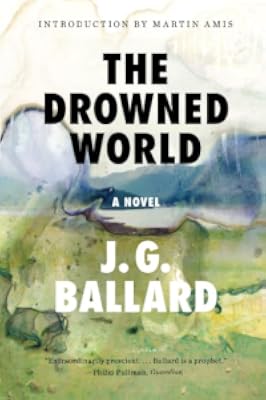
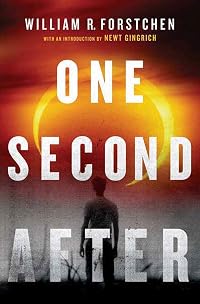

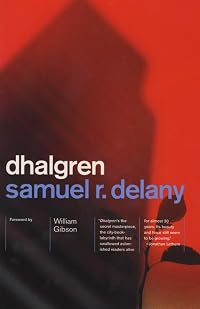


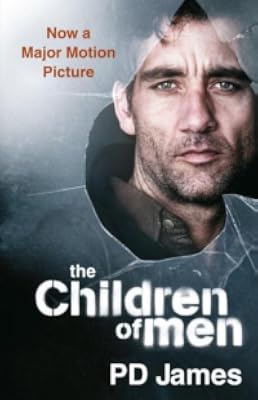






Member Recommendations
Member Reviews
(...)
The Long Tomorrow reminds me of the excellent The Wild Shore, Kim Stanley Robinson’s debut. Both a coming of age story about a boy, both set in a rural America decades after nuclear annihilation, with knowledge of the past not forgotten but not completely understood either. And like Robinson’s, Brackett’s characters ponder questions about which life is better: tech city life with its destructive dangers, or primitive small town farming? Like Robinson, Brackett doesn’t give answers. Instead she focuses on the desire of some humans for knowledge and change, and the fear of it in others.
The characters ostensibly dualistic archetypes on these matters, Brackett manages to turn things on their heads, and keeps the reader engaged show more with main characters that transcend the binary. There are other themes too: family, educating children, religion as a product and a source of societal change, the brazen arrogance and naivety of youth, and the non-existence of free will.
(...)
Full review on Weighing A Pig show less
The Long Tomorrow reminds me of the excellent The Wild Shore, Kim Stanley Robinson’s debut. Both a coming of age story about a boy, both set in a rural America decades after nuclear annihilation, with knowledge of the past not forgotten but not completely understood either. And like Robinson’s, Brackett’s characters ponder questions about which life is better: tech city life with its destructive dangers, or primitive small town farming? Like Robinson, Brackett doesn’t give answers. Instead she focuses on the desire of some humans for knowledge and change, and the fear of it in others.
The characters ostensibly dualistic archetypes on these matters, Brackett manages to turn things on their heads, and keeps the reader engaged show more with main characters that transcend the binary. There are other themes too: family, educating children, religion as a product and a source of societal change, the brazen arrogance and naivety of youth, and the non-existence of free will.
(...)
Full review on Weighing A Pig show less
As an SF author, Leigh Brackett is known for her planetary romances, which are indeed very fine. But this novel, perhaps her most lauded book-length work, involves a more serious and credible look at the future of our society. Indeed, the book's scenario for the not-so-distant time to come is not much less believable now than it was when she wrote it about sixty years ago. The only ways it seems dated are that she didn't predict the microprocessor, or describe any anthropogenic climate change. Given the nature of the story, the first of these is not a significant lack.
In some features, this book resembles Logan's Run, which I read recently. Both involve a protagonist rejecting a stultified society and looking for a possibly-mythical show more site of organized resistance which has continuity with the lost values of the past. Where Logan's Run has Sanctuary, The Long Tomorrow has Bartorstown. But while Logan flees an urban technocracy, Brackett's Len Colter is trying to escape an American anti-civilization in the etymological sense: a culture that has overtly rejected the idea of the city, along with all of the industries and technologies of the twentieth and twenty-first centuries.
With this rural, piously conservative, post-apocalyptic environment as the setting for what is in large measure a coming-of-age story, the novel invites an even more direct comparison with John Wyndham's The Chrysalids. On the whole, I consider Brackett more successful. She better realizes the ways in which even those oppressed by the prevailing morals have internalized them, and she traces a more extensive and nuanced process of maturation in her characters.
The Long Tomorrow reads quickly -- "I finished The Long Tomorrow today," I remarked paradoxically to my Other Reader -- with digestibly short chapters divided into three component "books," which might have been titled "Piper's Run" (the village of Len's childhood), "Refuge" (a community where his exile leads him as a young man), and "Bartorstown." Although it was not issued as YA fiction, it would serve that increasingly sophisticated market well today. And it continues to deserve the attention of adults willing to reflect on social and technological change outside the myth of progress. show less
In some features, this book resembles Logan's Run, which I read recently. Both involve a protagonist rejecting a stultified society and looking for a possibly-mythical show more site of organized resistance which has continuity with the lost values of the past. Where Logan's Run has Sanctuary, The Long Tomorrow has Bartorstown. But while Logan flees an urban technocracy, Brackett's Len Colter is trying to escape an American anti-civilization in the etymological sense: a culture that has overtly rejected the idea of the city, along with all of the industries and technologies of the twentieth and twenty-first centuries.
With this rural, piously conservative, post-apocalyptic environment as the setting for what is in large measure a coming-of-age story, the novel invites an even more direct comparison with John Wyndham's The Chrysalids. On the whole, I consider Brackett more successful. She better realizes the ways in which even those oppressed by the prevailing morals have internalized them, and she traces a more extensive and nuanced process of maturation in her characters.
The Long Tomorrow reads quickly -- "I finished The Long Tomorrow today," I remarked paradoxically to my Other Reader -- with digestibly short chapters divided into three component "books," which might have been titled "Piper's Run" (the village of Len's childhood), "Refuge" (a community where his exile leads him as a young man), and "Bartorstown." Although it was not issued as YA fiction, it would serve that increasingly sophisticated market well today. And it continues to deserve the attention of adults willing to reflect on social and technological change outside the myth of progress. show less
When Fear Rules, Reason Dies
Many consider Leigh Brackett’s The Long Tomorrow a science fiction classic because it is among the first mediations on the aftermath of nuclear holocaust and probably because she was one of the few successful female sci-fi writers of the era. Modern readers may find it slow by today’s standards and the science antiquated, particularly the giant computer brain on the order of an overgrown UNIVAC (itself notable at the time for predicting the outcome of the 1952 U.S. Presidential Election). But others will recognize the theme of fear and ignorance vs. human curiosity and scientific advancement as pertinent today as it was in the 1950s (recall the Red Scare-mongering and national Cold War paranoia). show more Scientific inquiry and its findings, after all, can be tough for many to abide, especially when it debunks cherished beliefs.
And such is the case in The Long Tomorrow. Not many years after the end of a worldwide nuclear war, around eighty years, the United States eschews science, reverts to religious dominance and its strict rules of faith and conformity, and restricts settlements to maximum populations of one thousand and no more than two hundred buildings per square mile. Thus, no more big cities, no more electricity and the conveniences and communications it supports, no more autos, trucks, trains, and planes. Steam power produced by crude engines becomes the technology of the day, livestock provides transportation and power, and roaming traders supply the goods that rural communities can’t manufacture for themselves. Instead of respecting and encouraging scientific exploration and knowledge, society represses both for fear of another conflagration.
Two teen boys, cousins, Len and Esau Colter, chaff at the insularity of their Mennonite community. They’ve heard stories of the past, of the big cities, of the wonders of modern life fostered by the remembrances of their old grandmother, and most particularly of a mystical big city called Bartorstown. They yearn to find it. After a devastating trading day, when a mob of ultra religious zealots kill a trader, Esau finds a radio in the wagon of another, Ed Hostetter. Later, they try unsuccessfully puzzling how to operate it. Nonetheless, it spurs them on to escape their stringent community and set out to find Bardorstown. Along the way, they arrive in a town called Refuge, where they work for an expansion minded businessman, Mike Dulinsky and Esau meets a girl, Amity. When Dulinsky repudiates the wishes of Refuge religious elders and the ambitions of a rival town by building an additional warehouse, retribution and mob action follow. Dulinsky dies at the hands of a local elder, while Hostetter appears to save Len and Esau.
The three, plus Amity, then make the journey to a town in the Rocky Mountains called Falls Creek and there find the Bartorstown they have dreamed about. Except that it bears no resemblance to what they imagined. Instead, it is a small community of scientists technicians who maintain a giant computer called Clementine and a nuclear reactor. They people work tirelessly and to their great frustration to discover a shield to protect humankind from the kind of destruction suffered at the hands of misused nuclear power. The endeavor seems hopeless and the achievement, if it can be had, appears long off in the distant, long tomorrow. Len and his new Bartorstown wife Joan, who long has been disillusioned and seeking escape, devise and execute a plan to flee Bartorstown, though the penalty for such action is death. After attempting to reach his hometown a thousand miles away, being buffeted by hardship, and engulfed again by the religious fatalism he fled, Hostetter finds them and arranges for them to be accepted back into Bartorstown. Len, for his part, accepts that change will come eventually, though he may not live to see it.
Though nearly sixty-five years old, the underlying theme of the novel will still resonate with certain readers. show less
Many consider Leigh Brackett’s The Long Tomorrow a science fiction classic because it is among the first mediations on the aftermath of nuclear holocaust and probably because she was one of the few successful female sci-fi writers of the era. Modern readers may find it slow by today’s standards and the science antiquated, particularly the giant computer brain on the order of an overgrown UNIVAC (itself notable at the time for predicting the outcome of the 1952 U.S. Presidential Election). But others will recognize the theme of fear and ignorance vs. human curiosity and scientific advancement as pertinent today as it was in the 1950s (recall the Red Scare-mongering and national Cold War paranoia). show more Scientific inquiry and its findings, after all, can be tough for many to abide, especially when it debunks cherished beliefs.
And such is the case in The Long Tomorrow. Not many years after the end of a worldwide nuclear war, around eighty years, the United States eschews science, reverts to religious dominance and its strict rules of faith and conformity, and restricts settlements to maximum populations of one thousand and no more than two hundred buildings per square mile. Thus, no more big cities, no more electricity and the conveniences and communications it supports, no more autos, trucks, trains, and planes. Steam power produced by crude engines becomes the technology of the day, livestock provides transportation and power, and roaming traders supply the goods that rural communities can’t manufacture for themselves. Instead of respecting and encouraging scientific exploration and knowledge, society represses both for fear of another conflagration.
Two teen boys, cousins, Len and Esau Colter, chaff at the insularity of their Mennonite community. They’ve heard stories of the past, of the big cities, of the wonders of modern life fostered by the remembrances of their old grandmother, and most particularly of a mystical big city called Bartorstown. They yearn to find it. After a devastating trading day, when a mob of ultra religious zealots kill a trader, Esau finds a radio in the wagon of another, Ed Hostetter. Later, they try unsuccessfully puzzling how to operate it. Nonetheless, it spurs them on to escape their stringent community and set out to find Bardorstown. Along the way, they arrive in a town called Refuge, where they work for an expansion minded businessman, Mike Dulinsky and Esau meets a girl, Amity. When Dulinsky repudiates the wishes of Refuge religious elders and the ambitions of a rival town by building an additional warehouse, retribution and mob action follow. Dulinsky dies at the hands of a local elder, while Hostetter appears to save Len and Esau.
The three, plus Amity, then make the journey to a town in the Rocky Mountains called Falls Creek and there find the Bartorstown they have dreamed about. Except that it bears no resemblance to what they imagined. Instead, it is a small community of scientists technicians who maintain a giant computer called Clementine and a nuclear reactor. They people work tirelessly and to their great frustration to discover a shield to protect humankind from the kind of destruction suffered at the hands of misused nuclear power. The endeavor seems hopeless and the achievement, if it can be had, appears long off in the distant, long tomorrow. Len and his new Bartorstown wife Joan, who long has been disillusioned and seeking escape, devise and execute a plan to flee Bartorstown, though the penalty for such action is death. After attempting to reach his hometown a thousand miles away, being buffeted by hardship, and engulfed again by the religious fatalism he fled, Hostetter finds them and arranges for them to be accepted back into Bartorstown. Len, for his part, accepts that change will come eventually, though he may not live to see it.
Though nearly sixty-five years old, the underlying theme of the novel will still resonate with certain readers. show less
When Fear Rules, Reason Dies
Many consider Leigh Brackett’s The Long Tomorrow a science fiction classic because it is among the first mediations on the aftermath of nuclear holocaust and probably because she was one of the few successful female sci-fi writers of the era. Modern readers may find it slow by today’s standards and the science antiquated, particularly the giant computer brain on the order of an overgrown UNIVAC (itself notable at the time for predicting the outcome of the 1952 U.S. Presidential Election). But others will recognize the theme of fear and ignorance vs. human curiosity and scientific advancement as pertinent today as it was in the 1950s (recall the Red Scare-mongering and national Cold War paranoia). show more Scientific inquiry and its findings, after all, can be tough for many to abide, especially when it debunks cherished beliefs.
And such is the case in The Long Tomorrow. Not many years after the end of a worldwide nuclear war, around eighty years, the United States eschews science, reverts to religious dominance and its strict rules of faith and conformity, and restricts settlements to maximum populations of one thousand and no more than two hundred buildings per square mile. Thus, no more big cities, no more electricity and the conveniences and communications it supports, no more autos, trucks, trains, and planes. Steam power produced by crude engines becomes the technology of the day, livestock provides transportation and power, and roaming traders supply the goods that rural communities can’t manufacture for themselves. Instead of respecting and encouraging scientific exploration and knowledge, society represses both for fear of another conflagration.
Two teen boys, cousins, Len and Esau Colter, chaff at the insularity of their Mennonite community. They’ve heard stories of the past, of the big cities, of the wonders of modern life fostered by the remembrances of their old grandmother, and most particularly of a mystical big city called Bartorstown. They yearn to find it. After a devastating trading day, when a mob of ultra religious zealots kill a trader, Esau finds a radio in the wagon of another, Ed Hostetter. Later, they try unsuccessfully puzzling how to operate it. Nonetheless, it spurs them on to escape their stringent community and set out to find Bardorstown. Along the way, they arrive in a town called Refuge, where they work for an expansion minded businessman, Mike Dulinsky and Esau meets a girl, Amity. When Dulinsky repudiates the wishes of Refuge religious elders and the ambitions of a rival town by building an additional warehouse, retribution and mob action follow. Dulinsky dies at the hands of a local elder, while Hostetter appears to save Len and Esau.
The three, plus Amity, then make the journey to a town in the Rocky Mountains called Falls Creek and there find the Bartorstown they have dreamed about. Except that it bears no resemblance to what they imagined. Instead, it is a small community of scientists technicians who maintain a giant computer called Clementine and a nuclear reactor. They people work tirelessly and to their great frustration to discover a shield to protect humankind from the kind of destruction suffered at the hands of misused nuclear power. The endeavor seems hopeless and the achievement, if it can be had, appears long off in the distant, long tomorrow. Len and his new Bartorstown wife Joan, who long has been disillusioned and seeking escape, devise and execute a plan to flee Bartorstown, though the penalty for such action is death. After attempting to reach his hometown a thousand miles away, being buffeted by hardship, and engulfed again by the religious fatalism he fled, Hostetter finds them and arranges for them to be accepted back into Bartorstown. Len, for his part, accepts that change will come eventually, though he may not live to see it.
Though nearly sixty-five years old, the underlying theme of the novel will still resonate with certain readers. show less
Many consider Leigh Brackett’s The Long Tomorrow a science fiction classic because it is among the first mediations on the aftermath of nuclear holocaust and probably because she was one of the few successful female sci-fi writers of the era. Modern readers may find it slow by today’s standards and the science antiquated, particularly the giant computer brain on the order of an overgrown UNIVAC (itself notable at the time for predicting the outcome of the 1952 U.S. Presidential Election). But others will recognize the theme of fear and ignorance vs. human curiosity and scientific advancement as pertinent today as it was in the 1950s (recall the Red Scare-mongering and national Cold War paranoia). show more Scientific inquiry and its findings, after all, can be tough for many to abide, especially when it debunks cherished beliefs.
And such is the case in The Long Tomorrow. Not many years after the end of a worldwide nuclear war, around eighty years, the United States eschews science, reverts to religious dominance and its strict rules of faith and conformity, and restricts settlements to maximum populations of one thousand and no more than two hundred buildings per square mile. Thus, no more big cities, no more electricity and the conveniences and communications it supports, no more autos, trucks, trains, and planes. Steam power produced by crude engines becomes the technology of the day, livestock provides transportation and power, and roaming traders supply the goods that rural communities can’t manufacture for themselves. Instead of respecting and encouraging scientific exploration and knowledge, society represses both for fear of another conflagration.
Two teen boys, cousins, Len and Esau Colter, chaff at the insularity of their Mennonite community. They’ve heard stories of the past, of the big cities, of the wonders of modern life fostered by the remembrances of their old grandmother, and most particularly of a mystical big city called Bartorstown. They yearn to find it. After a devastating trading day, when a mob of ultra religious zealots kill a trader, Esau finds a radio in the wagon of another, Ed Hostetter. Later, they try unsuccessfully puzzling how to operate it. Nonetheless, it spurs them on to escape their stringent community and set out to find Bardorstown. Along the way, they arrive in a town called Refuge, where they work for an expansion minded businessman, Mike Dulinsky and Esau meets a girl, Amity. When Dulinsky repudiates the wishes of Refuge religious elders and the ambitions of a rival town by building an additional warehouse, retribution and mob action follow. Dulinsky dies at the hands of a local elder, while Hostetter appears to save Len and Esau.
The three, plus Amity, then make the journey to a town in the Rocky Mountains called Falls Creek and there find the Bartorstown they have dreamed about. Except that it bears no resemblance to what they imagined. Instead, it is a small community of scientists technicians who maintain a giant computer called Clementine and a nuclear reactor. They people work tirelessly and to their great frustration to discover a shield to protect humankind from the kind of destruction suffered at the hands of misused nuclear power. The endeavor seems hopeless and the achievement, if it can be had, appears long off in the distant, long tomorrow. Len and his new Bartorstown wife Joan, who long has been disillusioned and seeking escape, devise and execute a plan to flee Bartorstown, though the penalty for such action is death. After attempting to reach his hometown a thousand miles away, being buffeted by hardship, and engulfed again by the religious fatalism he fled, Hostetter finds them and arranges for them to be accepted back into Bartorstown. Len, for his part, accepts that change will come eventually, though he may not live to see it.
Though nearly sixty-five years old, the underlying theme of the novel will still resonate with certain readers. show less
What a great book! It's hard to believe that someone who wrote something as awfully Fanthorpian as "Mel Gray stared with slitted blue eyes down the valley. The huge sun of Mercury seared his naked body." in 1941, or as fun but pulpy as "the Martian had fought beside him through a long guerilla campaign among the harried tribes of the nearer moon. He was a good man of his hands, and in the end had taken the bullet that was meant for Stark, knowing quite well what he was doing. They were friends." in 1951, could write "Len Colter sat in the shade under the wall of the horse barn, eating pone and sweet butter and contemplating a sin." just 2 years later.
It's easy to see why this long overlooked novel has been chosen for the Library of show more America treatment. The writing is rich and evocative, the characters are complex and mixed, and the story only falters in its pace a bit near the end, and not fatally so. The sense of place is overwhelming at times. Brackett doesn't do this by overwriting, but by keenly described detail, including, when it matters most, how things sound and smell, not just look. Just when the post-atomic war new Mennonite world is too bucolic, the darkness of the fear that binds everyone in place is made clear, not by histrionics but by small observation.
Highly highly recommended. show less
It's easy to see why this long overlooked novel has been chosen for the Library of show more America treatment. The writing is rich and evocative, the characters are complex and mixed, and the story only falters in its pace a bit near the end, and not fatally so. The sense of place is overwhelming at times. Brackett doesn't do this by overwriting, but by keenly described detail, including, when it matters most, how things sound and smell, not just look. Just when the post-atomic war new Mennonite world is too bucolic, the darkness of the fear that binds everyone in place is made clear, not by histrionics but by small observation.
Highly highly recommended. show less
Just about every US science fiction writer has had a go at a post-apocalypse novel – and if it was during the first 75 years of last century, it was usually a post-nuclear holocaust novel. Several of the better ones have been by women writers, although, as is usually the case, the ones by male writers – Earth Abides, A Canticle for Leibowitz – have been more celebrated. But with Judith Merril’s Shadow on the Hearth and Brackett’s The Long Tomorrow, you have two of the best American post-nuclear war sf novels written in the first half(-ish) of last century. They should be the ones that are celebrated, not Stewart or Miller. But, no matter, we know sf is male-centric, and though we do our best to show this is a false picture, show more women writers have been immensely successful in genre fiction the last couple of years and that tends to overshadow the achievements of women genre writers of last century. Which it should not. In The Long Tomorrow, the US has turned Mennonite after a nuclear war, and an amendment to the constitution bans towns and villages over a certain size. Cities, you see, make good targets. Of course, the rest of the world has also probably devolved to an agrarian early twentieth-century society, so who’s going to attack the US? But never mind. Len and Esau are curious teenagers in a small New Mennonite farming community, who dream of bigger things, particularly Bartorstown, a mythical town of high tech. After witnessing the stoning of a man linked with Bartorstown, they run away. And end up at the town of Refuge, where they come into conflict with some of the townsfolk because they’re start working for a trader who wants to build an extra warehouse, which will break the aforementioned amendment. This is exacerbated by a rival town across the river which is taking advantage of Refuge’s inability to grow. And then farmers descend on Refuge and put warehouses to the torch, but Len and Esau manage to escape, with the help of an old friend who proves to be from Bartorstown… There’s nothing new in the future US Brackett depicts, drawing as it does on pretty much the entire history of American literature; but the events in Refuge are unexpected, and the arguments against holding back progress, while characteristically American, are handled well. The two leads are typical for sixty year old American sf – ie, white males from comfortable backgrounds – and in fact I don’t recall any POC being mentioned anywhere in the novel. I’m a bigger fan of Brackett’s planetary romances than I am her straight-up sf, although The Long Tomorrow was better than I’d expected. It’s now in the SF Masterworks series. show less
This book from 1955 is on a par with the dystopian tales from Margaret Atwood and I am really surprised it is not better known. I read this at a slow pace which worked well for me, as the book goes at a slow pace. It describes a life in Ohio about 75 years after an atomic war that destroyed the cities. What survives is a society who could live off the land, the New Mennonites, and similar sects. But there is also a secret place, rumored anyways, where the old technology knowledge is kept alive. This is almost a young adult novel with the issues it addresses but it is really a finely written piece of literature.
The novel is divided into three books and I think the final book, for me, and maybe the characters themselves, was a bit of a show more letdown. The novel as a whole is still deserving of 4 stars, and recommended to anyone who reads dystopian fiction. show less
The novel is divided into three books and I think the final book, for me, and maybe the characters themselves, was a bit of a show more letdown. The novel as a whole is still deserving of 4 stars, and recommended to anyone who reads dystopian fiction. show less
Members
- Recently Added By
Published Reviews
ThingScore 75
This is the theme of the Bildungsroman: loss of innocence, change, and the journey from safety into the unknown in pursuit of knowledge. But because Brackett's ambition was huge, she chose for her setting a post-nuclear Ruined Earth. She aimed for no less than the first serious science fiction novel of character.
added by markon
Lists

Favorite Science Fiction by Women Authors
737 works; 202 members

Best Science Fiction Novels
816 works; 430 members

S.F. Masterworks (Complete)
229 works; 15 members

David Pringle's Science Fiction: The 100 Best Novels
101 works; 9 members

Science Fiction by female authors
43 works; 4 members

SF Masterworks
193 works; 8 members
Dystopian and Apocalyptic Literature
350 works; 74 members

An End of the World Reading List
63 works; 4 members

Apocalypse Must-Reads
10 works; 1 member

Books Read in 2015
3,299 works; 129 members

Books Read in 2017
4,249 works; 130 members
Books Read in 2018
4,360 works; 110 members

Top Five Books of 2023
767 works; 317 members

Top Five Books of 2024
795 works; 264 members

AbeBooks: 50 essential science fiction books
50 works; 6 members

Best Post-Apocalyptic Stories
143 works; 88 members
Author Information

172+ Works 7,119 Members
Some Editions
Awards and Honors
Awards
Series
Belongs to Publisher Series
Work Relationships
Common Knowledge
- Canonical title*
- Am Morgen einer anderen Zeit
- Original title
- The Long Tomorrow
- Alternate titles*
- Das lange Morgen
- Original publication date
- 1955
- People/Characters
- Len Colter; Esau Colter; Mr. Ed Hofstetter (a trader); William Soames (a trader); Judge Taylor (of Refuge); Amity Taylor (the judge's daughter) (show all 13); Mike Dulinsky (Refuge man who wants a 5th warehouse); Wepplo; Joan; Sherman; Gutierrez; Erdmann; Gran Coulter (remembers pre-war days)
- Important places
- Bartorstown (town); Refuge (town on the north bank of the Ohio River); Piper's Run (small town); Shadwell (new town on the Kentucky side of the Ohio River, opposite Refuge); Fall Creek, Fall Creek Canyon (mining town)
- Important events
- Nuclear War; Post-apocalypse
- Epigraph
- No city, no town, no community of more than one thousand people or two hundred buildings to the square mile shall be permitted to exist anywhere in the United States of America
Constitution of the United States, Thirtieth ... (show all)Amendment - First words
- Len Colter sat in the shade under the wall of the horse barn, eating pone and sweet butter and contemplating a sin.
- Quotations
- He knew that when he had groveled in Esau's tracks in the dust and forsworn himself, he had lied. He was not going to give up Bartorstown. He could not give it up without giving up the most important part of himself. He did... (show all) not know quite what that most important part was, but he knew it was there, and he knew that nobody, not even Pa, had the right to lay hands on it. Good or bad, righteous or sinful, it lay beyond whim or attitude or passing play. It was himself, Len Coulter, the individual, unique. He could not forswear it and live. (chapter 7)
[Esau and Len talking about Bartorstown's big project]
'Important,' said Len. 'Yes, it is.' That's true. There isn't any question about that. Oh God, you make the ones like Brother James who never question, and yo... (show all)u make the ones like Esau who never believe, and why do you have to make the in-between ones like me? (chapter 23) - Last words
- (Click to show. Warning: May contain spoilers.)"I'll radio Sherman and tell him we've started back."
- Publisher's editor*
- Schelwokat, Günter M.
- Original language*
- Englisch
- Canonical DDC/MDS
- 813.54
- Canonical LCC
- PS3503.R154
*Some information comes from Common Knowledge in other languages. Click "Edit" for more information.
Classifications
Statistics
- Members
- 940
- Popularity
- 28,281
- Reviews
- 34
- Rating
- (3.54)
- Languages
- Danish, English, German, Italian
- Media
- Paper, Ebook
- ISBNs
- 14
- ASINs
- 19