On This Page
Description
From the author of the award-winning Mars trilogy comes a vision of a radically different alternative future, where every day is a fight to survive. North America, 2047. For the small Pacific Coast community of San Onofre, life in the aftermath of a devastating nuclear attack is a matter of survival, a day-to-day struggle to stay alive. But young Hank Fletcher dreams of the world that might have been, that might yet be-and dreams of playing a crucial role in America's rebirth. Kim Stanley show more Robinson's first novel, The Wild Shore is an epic tale that will appeal to adults and young adults alike. show lessTags
Recommendations
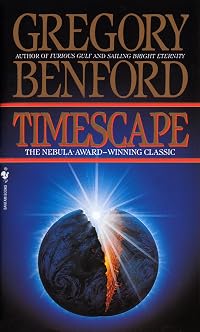
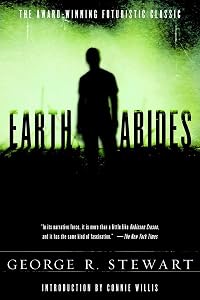
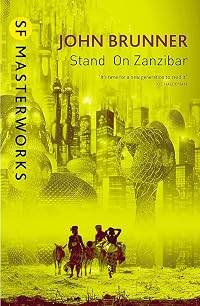
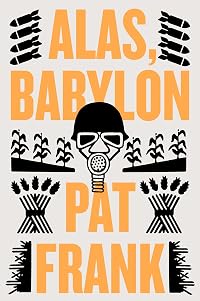


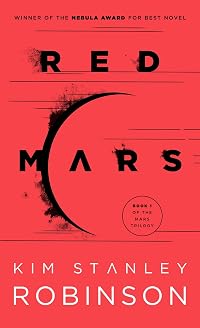
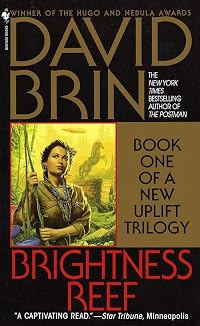
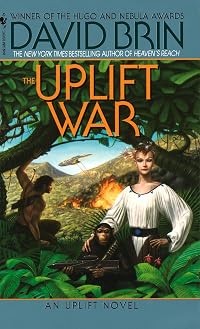
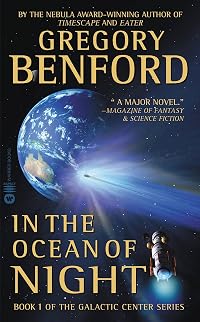


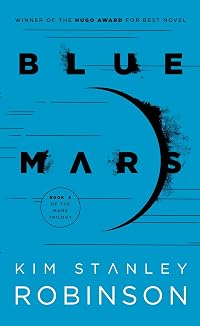
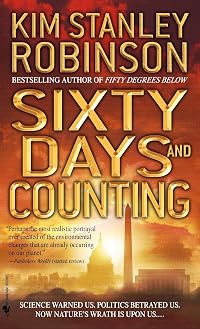


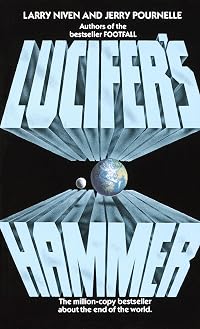
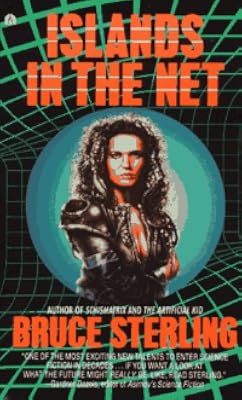





Member Recommendations

Member Reviews
(...)
Information is key in the novel. Just like the readers, the characters are in the dark about what happened. They are also in the dark about what is happening, for Robinson shows glimpses of a bigger narrative in world politics in the aftermath of the attack – but characters nor readers get to know its true extent. It is a clever narrative device, maximizing the reader’s empathy with the characters: we share uncertainty and frustration about it. It is especially clever because – like the readers – the characters do know about what once was: trains, electricity, hospitals, national pride, and general literacy.
Robinson isn’t showy, and he doses the post-apocalyptic horror extremely sparsely, at the right times, with supreme show more command – so much that most of the time you even forget you’re reading a post-apocalyptic story at all.
Just as Hank doesn’t have a grip on what happens, he doesn’t have a grip on what he himself is doing. He doesn’t know whether his actions are the right ones, and moral information doesn’t come cheap. The obligatory old man in the story – Tom – seems to have a better grip on things. He’s the only character that survived from the olden days, but ultimately confesses to be a fool too, like anyone. Robinson leaves it to the reader: how much in control are we really, and how is history formed?
(...)
Full review on Weighing A Pig Doesn't Fatten It show less
Information is key in the novel. Just like the readers, the characters are in the dark about what happened. They are also in the dark about what is happening, for Robinson shows glimpses of a bigger narrative in world politics in the aftermath of the attack – but characters nor readers get to know its true extent. It is a clever narrative device, maximizing the reader’s empathy with the characters: we share uncertainty and frustration about it. It is especially clever because – like the readers – the characters do know about what once was: trains, electricity, hospitals, national pride, and general literacy.
Robinson isn’t showy, and he doses the post-apocalyptic horror extremely sparsely, at the right times, with supreme show more command – so much that most of the time you even forget you’re reading a post-apocalyptic story at all.
Just as Hank doesn’t have a grip on what happens, he doesn’t have a grip on what he himself is doing. He doesn’t know whether his actions are the right ones, and moral information doesn’t come cheap. The obligatory old man in the story – Tom – seems to have a better grip on things. He’s the only character that survived from the olden days, but ultimately confesses to be a fool too, like anyone. Robinson leaves it to the reader: how much in control are we really, and how is history formed?
(...)
Full review on Weighing A Pig Doesn't Fatten It show less
It's the late 2040's ( fifty years off when KSR wrote the novel) some time after hundreds of small neutron bombs were set off all over the country, when an attack that had been mean for the Russians was aborted. Thee US was devastated, knocked back centuries and the UN voted that they had abused their powers and since then the entire continent has been under quarantine by the Japanese on the Pacific side, Russians and others on the Atlantic. North of San Diego, in former Orange County, a self-sufficient and equable community of survivors, twenty or so families gets on with living. There is unrest in some of the larger nearby communities -- a sense that the international quarantine has run its course and it's time to fight back and show more rebuild "America" -- the reality is, that hardly anyone around really knows what the country was actually like before -- but never mind. The story focusses around one event involving a group of late adolescent boys, a raid on the Japanese who land "tourists" on shore to see how the "primitive" Americans are managing, and an old man, Tom Barnard, a survivor of the original holocaust. This is early KSR and it is uneven. The plot is simplistic, the characters are . . . not flat but not quite rounded. The women, well, they are basically objectified, but I know that KSR moves on and matures, so I'll let that be. The writing is often wonderful, especially the descriptions of the landscape. I'll keep reading the series because I am a fan and can't help myself. KSR is one of those writer who, even when not at his best, is better than most. ***1/2 show less
I didn't do my homework and didn't realize at first that this series were three different futures in the same setting, so I took the ending of this book as a resolvable cliffhanger. After realizing my mistake, I liked the book even more. The book is characterized by confusion, darkness, and failing to communicate, so it's only right that I should feel the same way about what will happen next.
In the year 2047, humanity struggles to survive in the ruins of coastal California. Almost 50 years before, nuclear blasts decimated thousands of cities across the United States. However, this is the only world teenaged Henry knows: a world revolving around harvests, fishing, the howl of the Santa Ana, and the danger of wild-eyed scavengers in Orange County. His ancient mentor, Tom, taught him how to read and of the way things used to be. Henry's world shifts when strangers from the outside arrive. San Diego seeks to unite the coastal communities by handcar rail, even as outside forces bomb their efforts. Henry must decide where his future lies.
This was a fascinating coming-of-age tale. It's not a suspenseful read. It builds slowly, and show more shows how people have scraped by. I loved the details on fishing and harvest time, and all of the characters felt real and complicated. Some people might find the detailed world building to be dull, but in some ways, it reminded me of a childhood favorite, The Other Side of the Mountain, or a pioneer book. Those details made their hardship feel genuine to me.
This apparently is part of a trilogy called The Three Californas. I'm a little disappointed that the other books cover different interpretations of the future Orange County and won't continue this post-apocalyptic setting. However, as a native Californian, I adore speculative fiction set in the state, and I will read the next books at some point. show less
This was a fascinating coming-of-age tale. It's not a suspenseful read. It builds slowly, and show more shows how people have scraped by. I loved the details on fishing and harvest time, and all of the characters felt real and complicated. Some people might find the detailed world building to be dull, but in some ways, it reminded me of a childhood favorite, The Other Side of the Mountain, or a pioneer book. Those details made their hardship feel genuine to me.
This apparently is part of a trilogy called The Three Californas. I'm a little disappointed that the other books cover different interpretations of the future Orange County and won't continue this post-apocalyptic setting. However, as a native Californian, I adore speculative fiction set in the state, and I will read the next books at some point. show less
A nuclear holocaust has struck America, the reason for which is not well known, but probably because of its overwhelming power over the other nations of the world, who have teamed up to destroy it and now hold it under siege to prevent its rebirth. The survivors have returned to the living conditions of the pioneers: few, at the mercy of the weather conditions - changed after the catastrophe - without technology if not what little they can recover from the ruins of the cities, without culture and without medicine. This is the environment in which Henry grew up, the young protagonist to whom old Tom, repository of the wisdom of the past, teaches everything he can to make him, it seems to understand, the man of the future.
In a summer when show more Henry and his friends will come into contact with the humiliation of being treated like animals in a zoo by their keepers and with the haughtiness of American greatness, the boy will finally understand what his place in the world is and that old America was like an aggressive teengaer that doesn't want to grow up. show less
In a summer when show more Henry and his friends will come into contact with the humiliation of being treated like animals in a zoo by their keepers and with the haughtiness of American greatness, the boy will finally understand what his place in the world is and that old America was like an aggressive teengaer that doesn't want to grow up. show less
It took a little while to track down a copy of this book. Set in a dystopian southern California town called Onofre (between Orange County and San Diego), communities have been isolated after a series of nuclear explosions sixty years ago. Ideas abound as to what exactly set off the explosions and what is happening in the rest of the country and around the world, but little is known due to the loss of transportation and technology. I've enjoyed other works by Robinson -- "2312" in particular, but also "Red Mars," but ended up being a little disappointed by this one.
This book is set in a quarantined America devastated by nuclear weapons. While we are subjected to much speculation by various characters, we never do find out precisely who attacked America, why they were attacked or why they are under quarantine.
Kim Stanley Robertson has a real talent for presenting believable characters and situations in his books, and this one is no exception. I felt sympathy for the people in this book, who were simply trying to rebuild their lives under very trying circumstances, not knowing who to trust, who to regard as the enemy or why they were being held back from recovery.
I found this book to be so realistic, particularly in the light of the fact that it was written in the mid-eighties, during the height of show more the cold war, that it was, at times, quite frightening. This is not the best post-apocalyptic novel I have read, but it is definitely worth your time. show less
Kim Stanley Robertson has a real talent for presenting believable characters and situations in his books, and this one is no exception. I felt sympathy for the people in this book, who were simply trying to rebuild their lives under very trying circumstances, not knowing who to trust, who to regard as the enemy or why they were being held back from recovery.
I found this book to be so realistic, particularly in the light of the fact that it was written in the mid-eighties, during the height of show more the cold war, that it was, at times, quite frightening. This is not the best post-apocalyptic novel I have read, but it is definitely worth your time. show less
Members
- Recently Added By
Lists

Best Post-Apocalyptic Stories
143 works; 88 members

Dystopian and Apocalyptic Literature
350 works; 74 members

Beginner's Guide to Climate Fiction
24 works; 7 members

Top Five Books of 2014
1,064 works; 397 members

Books Set in California
112 works; 15 members

Best Beach Reads
99 works; 61 members

Summer Reads 2014
207 works; 69 members

Best Survival Stories
97 works; 15 members

Speculative Fiction to Read
706 works; 32 members

Read These Too
458 works; 9 members

Best School Stories
219 works; 22 members

Story Within a Story
65 works; 17 members

Forced Exposure
83 works; 1 member

TBR - Older Books
92 works; 1 member

La Bibliothèque idéale de la SF (Éditions Albin Michel, 1988)
52 works; 1 member

Post Apocalyptic Novels
41 works; 1 member
Author Information

140+ Works 49,581 Members
Kim Stanley Robinson was born in Orange County, California on March 23, 1952. He received a B. A. and Ph. D. from the University of California at San Diego and an M. A. from Boston University. His first trilogy of books, Orange County, collectively won a Nebula Award and two Hugo Awards. His other works include the Mars trilogy, 2312, and Aurora. show more He has won an Asimov Award, a World Fantasy Award, a Locus Reader's Poll Award, and a John W. Campbell Award. (Bowker Author Biography) show less
Some Editions
Awards and Honors
Awards
Notable Lists
Series

Belongs to Publisher Series
Work Relationships
Common Knowledge
- Canonical title*
- La costa dei barbari
- Original title
- The Wild Shore
- Original publication date
- 1984-03
- People/Characters
- Tom Barnard
- Important places
- California, USA; Orange County, California, USA; San Diego County, California, USA; San Onofre State Beach, California, USA; San Diego, California, USA; San Clemente, California, USA (show all 7); Catalina Island, California, USA
- First words
- "It wouldn't really be grave-robbing," Nicolin was explaining.
- Quotations
- The world pours in and overflows the heart till speech is useless, and that's a fact.
- Last words
- (Click to show. Warning: May contain spoilers.)I'll stay right here and fill another book.
- Publisher's editor
- Carr, Terry
- Blurbers
- LeGuin, Ursula K.
- Original language*
- Inglés
*Some information comes from Common Knowledge in other languages. Click "Edit" for more information.
Classifications
Statistics
- Members
- 1,233
- Popularity
- 20,112
- Reviews
- 24
- Rating
- (3.69)
- Languages
- 6 — English, French, German, Italian, Polish, Spanish
- Media
- Paper, Audiobook, Ebook
- ISBNs
- 24
- ASINs
- 6