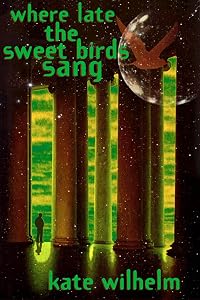
Where Late the Sweet Birds Sang
by Kate Wilhelm
On This Page
Description
When the first warm breeze of Doomsday came wafting over the Shenandoah Valley, the Sumners were ready. Using their enormous wealth, the family had forged an isolated post-holocaust citadel. Their descendants would have everything they needed to raise food and do the scientific research necessary for survival. But the family was soon plagued by sterility, and the creation of clones offered the only answer. And that final pocket of human civilization lost the very human spirit it was meant to show more preserve as man and mannequin turned on one another.Sweeping, dramatic, rich with humanity, and rigorous in its science, Where Late the Sweet Birds Sang is widely regarded as a high point of both humanistic and hard science fiction. It won science fiction's Hugo Award and Locus Award on its first publication and is as compelling today as it was then.
. show less
Tags
Recommendations




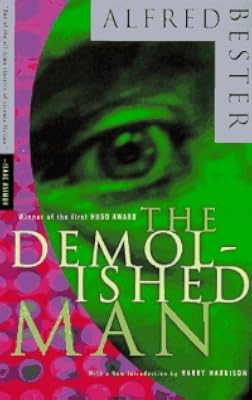

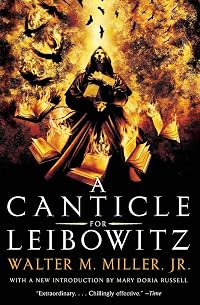
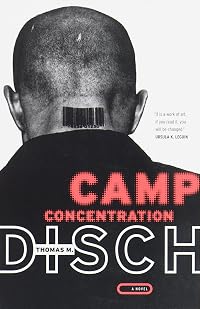
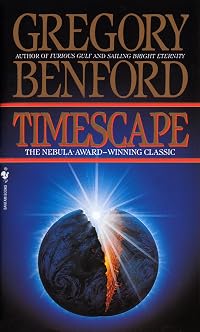
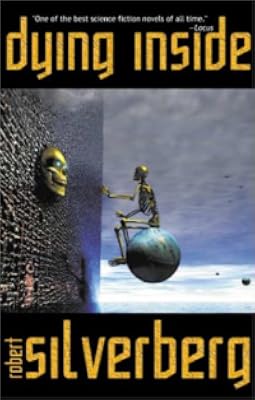
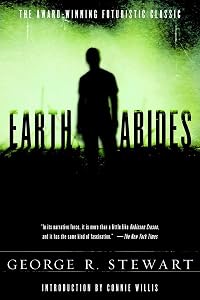
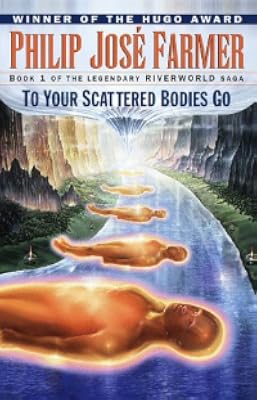
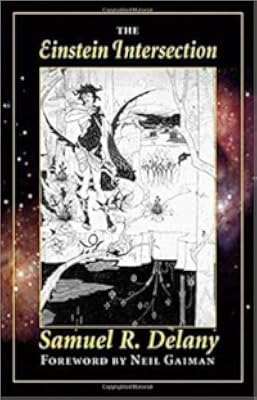







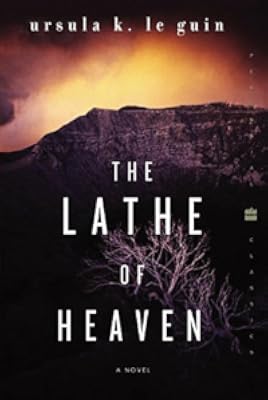

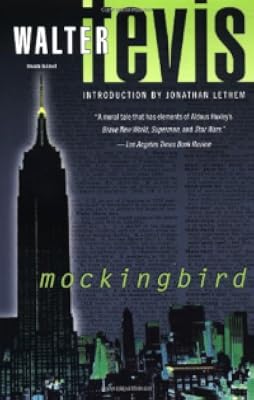
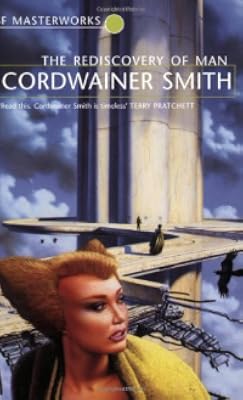

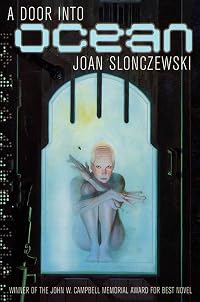



Member Recommendations
rat_in_a_cage Hinweis auf Rückentext bei »Hier sangen früher Vögel«.
21

Member Reviews
Where to start about this book? First, its prediction of the “end of the world” is so close to our current issue with Global Warming and Climate Change, it is almost terrifying.
But the real cleverness in this book is the characters and the idea these grapple with – how much would one sacrifice to see the human race survive? And what is the balance between self and community?
The book is divided into three parts. The first concerns the beginning, when the last humans created the clones. The middle tells what happens when the clones inadvertently trigger the individuality that had been buried in them. And the last section, what happens when a true individual gets tossed into a community of clones.
It’s hard to explain why this book show more is so good. But the characters are what compel the story forward. It is the characters, rich and complex, that snares the reader and drags them into the story, only to let one surface at the end.
For anyone who wants a truly great science fiction read, this is it! show less
But the real cleverness in this book is the characters and the idea these grapple with – how much would one sacrifice to see the human race survive? And what is the balance between self and community?
The book is divided into three parts. The first concerns the beginning, when the last humans created the clones. The middle tells what happens when the clones inadvertently trigger the individuality that had been buried in them. And the last section, what happens when a true individual gets tossed into a community of clones.
It’s hard to explain why this book show more is so good. But the characters are what compel the story forward. It is the characters, rich and complex, that snares the reader and drags them into the story, only to let one surface at the end.
For anyone who wants a truly great science fiction read, this is it! show less
"What if...?" That simple phrase is the essential basis of speculative fiction. In Where Late the Sweet Birds Sang, Kate Wilhelm posits the question, "What if humanity were nearly wiped out and the only apparent chance of survival for the species is cloning?". Without wasting too much time on the mechanics of decline, within a few chapters our view is reduced to a single surviving community comprised mostly of scientists that are developing a cloning process as a substitute for widespread infertility in humans. But can the fruit of their labors still be considered as human?
The tone of the story is pastoral rather than couched in hard science. Avoiding the tedium of explaining how and why things work the way they do, Wilhelm instead show more chooses to focus on the social ramifications and on the character development - which is very strong. Reminiscent of writers like Simak and Brackett, Wilhelm's prose is both direct and lyrical. Her characters have very real motivations and it's not difficult to empathize with them as they work through their issues.
Fully deserving the nominations and awards it received, this book was a great read for me. I recommend it to anyone - fan of SF or not. It's one of those books that is more about the fiction than the science - and that's a good thing. show less
The tone of the story is pastoral rather than couched in hard science. Avoiding the tedium of explaining how and why things work the way they do, Wilhelm instead show more chooses to focus on the social ramifications and on the character development - which is very strong. Reminiscent of writers like Simak and Brackett, Wilhelm's prose is both direct and lyrical. Her characters have very real motivations and it's not difficult to empathize with them as they work through their issues.
Fully deserving the nominations and awards it received, this book was a great read for me. I recommend it to anyone - fan of SF or not. It's one of those books that is more about the fiction than the science - and that's a good thing. show less
For all the little ways this book is a bit dated, in greater ways it is insanely timely now in 2021: maybe even darkly prescient. Ecological collapse, global pandemic, official obliviousness to disaster, obsession...and that's just the first part. While other reviewers liken "Where Late The Sweet Birds Sang" to Miller's "A Canticle for Liebowitz" because it is in three parts, separated by passing time, and tells of humanity in the wake of apocalypse, that comparison only goes that far; in bucolic tone, human scale, empathy, and simply in the telling itself, this book is closer kin to Simak's "City," if more grim and cold. It's about what is left behind by those left behind, and looking forward is at best limited.
The post-apocalypse show more microcosm that makes up Parts 2 and 3 is both dystopic and dysfunctional, yet maintained by over-confident puppeteers too deeply invested to consider change. The attitudes and steps taken, if not the cloning and social experiment itself, are way too foreshadowed in the words and actions of a loud demographic currently in the USA:
"They were happy because they didn't have enough imagination to look ahead, he thought, and anyone who tried to tell them there were dangers was by definition an enemy of the community." (p.193)
Clunky science now and some awkward plot holes, but this little book needs to get dusted off and passed around. show less
The post-apocalypse show more microcosm that makes up Parts 2 and 3 is both dystopic and dysfunctional, yet maintained by over-confident puppeteers too deeply invested to consider change. The attitudes and steps taken, if not the cloning and social experiment itself, are way too foreshadowed in the words and actions of a loud demographic currently in the USA:
"They were happy because they didn't have enough imagination to look ahead, he thought, and anyone who tried to tell them there were dangers was by definition an enemy of the community." (p.193)
Clunky science now and some awkward plot holes, but this little book needs to get dusted off and passed around. show less
I didn't know quite what to expect. I ended up loving it. The novel weaves together the disaster story and the rise of cloning technology wonderfully. Wilhelm does very well in exploring the social and psychological impacts of a post-disaster society that relies on cloning. The exploration of individual vs community identity is all well told. Further, Wilhelm does well at "hard SF" - the practical problems with cloning. In addition, I liked how the story unfolds the collapse of knowledge - spare parts, supplies, maps and long distance communications rapidly become lost
There are several wonderful passages in the book. Here are two that stood out.
“For a moment he had a curious feeling of being there, seeing the devastation, the tragedy of a lost era”
"And if they became too lonely, there was the comfort of drugs. They were happy because they didn’t have enough imagination to look ahead, he thought, and anyone who tried to tell them there were dangers was by definition an enemy of the community. In disrupting their perfect existence, he had become an enemy."
I can see this novel as a kind of conceptual sequel to "Earth Abides." It has the same haunting, lonely quality about post-disaster life. In addition, the cloning based society sounds like it could have been the origin story of "Brave New World." In other words, imagine that the events of "Brave New World" happen 100 years after Wilhelm's novel.
In this post-apocalyptic novel, civilization has been destroyed by some unspecified means involving environmental degradation, pandemics and famine. But one extended family, seeing the end coming, has used their wealth to isolate themselves in a well-protected valley and has constructed the hospital, labs and mill they will need to survive. Short on food, they develop cloning techniques to produce more livestock. When they find that most of them have become infertile, they start cloning themselves as well, with unforeseen consequences.
The story is told in three parts, each following a similar arc, each ending in a main character leaving the family’s compound. In the first section, a brilliant doctor helps develop the cloning process show more but is ousted by his own younger clones, who are already exhibiting disturbing behaviors, such as losing their individual identities. In the second part, a clone is separated from her sister clones when she goes on an expedition to look for supplies in the ruined cities. As a result, she develops an individual personality and an artistic vision that the other clones interpret as madness when she returns to the compound. She must flee to keep from living a life as a drugged-up “breeder.” In the final section, her son is being raised by the clones but clearly doesn’t belong among them. Only he has the ingenuity and creativity necessary for continued survival as the machines and systems set up by the original survivalists begin to break down.
What I thought about as I read this book was recent news stories about children so micro-managed by their “helicopter” parents that they have no ability to cope with the real world and break down as soon as they get to college. The young clones in the story reminded me of younger generations so coddled that they cannot make a decision on their own. How can we survive and advance as a species when we lose our individuality and cannot think for ourselves? is the question.
This is exactly the dilemma faced by the clones. They become so used to a life where they never have to think for themselves that they lose all of their creativity and problem-solving abilities. They become dependent on machines they don’t understand, and when those break down, they cannot come up with creative ways to fix them. So they are doomed. Only those who can establish an individual identity through isolation from the main group are able to learn how to survive.
It may seem on the surface that this novel is a somewhat dated horror story about cloning. But look deeper–the story brings up issues that are very relevant today. Wilhelm is raising a warning flag that we should safeguard our individuality and nurture our creativity if we want to survive. show less
The story is told in three parts, each following a similar arc, each ending in a main character leaving the family’s compound. In the first section, a brilliant doctor helps develop the cloning process show more but is ousted by his own younger clones, who are already exhibiting disturbing behaviors, such as losing their individual identities. In the second part, a clone is separated from her sister clones when she goes on an expedition to look for supplies in the ruined cities. As a result, she develops an individual personality and an artistic vision that the other clones interpret as madness when she returns to the compound. She must flee to keep from living a life as a drugged-up “breeder.” In the final section, her son is being raised by the clones but clearly doesn’t belong among them. Only he has the ingenuity and creativity necessary for continued survival as the machines and systems set up by the original survivalists begin to break down.
What I thought about as I read this book was recent news stories about children so micro-managed by their “helicopter” parents that they have no ability to cope with the real world and break down as soon as they get to college. The young clones in the story reminded me of younger generations so coddled that they cannot make a decision on their own. How can we survive and advance as a species when we lose our individuality and cannot think for ourselves? is the question.
This is exactly the dilemma faced by the clones. They become so used to a life where they never have to think for themselves that they lose all of their creativity and problem-solving abilities. They become dependent on machines they don’t understand, and when those break down, they cannot come up with creative ways to fix them. So they are doomed. Only those who can establish an individual identity through isolation from the main group are able to learn how to survive.
It may seem on the surface that this novel is a somewhat dated horror story about cloning. But look deeper–the story brings up issues that are very relevant today. Wilhelm is raising a warning flag that we should safeguard our individuality and nurture our creativity if we want to survive. show less
I discovered [b:Where Late the Sweet Birds Sang|968827|Where Late the Sweet Birds Sang|Kate Wilhelm|https://i.gr-assets.com/images/S/compressed.photo.goodreads.com/books/1460999710l/968827._SY75_.jpg|953721] by checking the wikipedia list of SF Masterworks for books I hadn't read. It won the 1977 Hugo award with a tale of complete and sudden ecological breakdown. A small US community survives, perpetuating itself via cloning. The narrative follows several generations, exploring the group mentality exhibited by the clones in contrast to the individuality of those born more conventionally. This is not particularly subtle: the clones are so dependent upon each other as to almost have psychic links, aren't capable of creative thinking, and show more suffer intense agoraphobia away from home. The narrative tone is dispassionate while presenting chilling details of 'breeders' forced into constant pregnancies and mentally conditioned not to rebel. These reminded me of [b:Native Tongue|285563|Native Tongue (Native Tongue, #1)|Suzette Haden Elgin|https://i.gr-assets.com/images/S/compressed.photo.goodreads.com/books/1348446358l/285563._SY75_.jpg|2866090]. That the central question of the book remains undeniably relevant: can humanity save itself with the same systems that doomed it in the first place? This could easily apply to climate change:
I did enjoy the vivid environmental descriptions of rewilding after the collapse of human civilisation. There were some vaguely mystical elements around the forests, but those didn't go anywhere in particular. Close to the end, a character helpfully summarises the central thesis:
This is an appealing yet overly simple analogy. The pyramid of modernity includes scientific realities that humanity needs. The idea of a tiny community of humans surviving in isolation and starting again is a survivalist dream, rather than a particularly convincing model of recovery from environmental collapse. The metaphor works in the narrative if the pyramid is industrial capitalism, as the final survivors have implicitly returned to pre-industrial indigenous ways of living. They definitely don't have enough genetic diversity in the tiny group to survive long-term, though. Thus I consider [b:Where Late the Sweet Birds Sang|968827|Where Late the Sweet Birds Sang|Kate Wilhelm|https://i.gr-assets.com/images/S/compressed.photo.goodreads.com/books/1460999710l/968827._SY75_.jpg|953721] a less subtle and insightful treatment of cloning, environmental breakdown, and post apocalyptic survival than others I've read from the same decade. It is well written, but I found myself comparing it unfavourably to John Brunner's incredibly devastating [b:The Sheep Look Up|41074|The Sheep Look Up|John Brunner|https://i.gr-assets.com/images/S/compressed.photo.goodreads.com/books/1386924437l/41074._SY75_.jpg|900514]. show less
"And they don't know what to do about any of it," his grandfather went on. "No more than the dinosaurs knew how to stop their own extinction. We've changed the photochemical reactions of our atmosphere, and we can't adapt to the new radiations fast enough to survive! There have been hints here and there that this is a major concern, but who listens? The damn fools will lay each and every catastrophe at the foot of a local condition and turn their backs on the fact that this is global, until it's too late to do anything."
"But if it's what you think, what could they do?" David asked, looking to Dr. Walt for support and finding none.
"Turn off the factories, ground the airplanes, stop the mining, junk the cars. But they won't, and even if they did, it would still be a catastrophe. It's going to break wide open. Within the next couple of years, David, it's going to break."
I did enjoy the vivid environmental descriptions of rewilding after the collapse of human civilisation. There were some vaguely mystical elements around the forests, but those didn't go anywhere in particular. Close to the end, a character helpfully summarises the central thesis:
"We're living on the top of a pyramid," he had said, "supported by the massive base, rising above it, above everything that has made it possible. We're responsible for nothing, not the structure, not anything above us. We owe nothing to the pyramid, and are totally dependent on it. If the pyramid crumbles and returns to dust, there is nothing we can do to prevent it, or even to save ourselves. When the base goes, the top goes with it, no matter how elaborate the life is that has developed there. The top will return to dust along with the base when the collapse comes. If a new structure is to rise, we must start from the ground, not on top of what has been built during the centuries past."
"You'd drag everyone back into savagery!"
"I would help them down from the point of the pyramid. It's rotting away. The snow and ice from one direction, weather and age from the others. It will collapse, and when it does, the only ones who can survive will be those who are free from it, in no way dependent on it."
This is an appealing yet overly simple analogy. The pyramid of modernity includes scientific realities that humanity needs. The idea of a tiny community of humans surviving in isolation and starting again is a survivalist dream, rather than a particularly convincing model of recovery from environmental collapse. The metaphor works in the narrative if the pyramid is industrial capitalism, as the final survivors have implicitly returned to pre-industrial indigenous ways of living. They definitely don't have enough genetic diversity in the tiny group to survive long-term, though. Thus I consider [b:Where Late the Sweet Birds Sang|968827|Where Late the Sweet Birds Sang|Kate Wilhelm|https://i.gr-assets.com/images/S/compressed.photo.goodreads.com/books/1460999710l/968827._SY75_.jpg|953721] a less subtle and insightful treatment of cloning, environmental breakdown, and post apocalyptic survival than others I've read from the same decade. It is well written, but I found myself comparing it unfavourably to John Brunner's incredibly devastating [b:The Sheep Look Up|41074|The Sheep Look Up|John Brunner|https://i.gr-assets.com/images/S/compressed.photo.goodreads.com/books/1386924437l/41074._SY75_.jpg|900514]. show less
I have always been attracted to stories that explore the dichotomy between capital-C Civilization and its nebulous, wild, primal opposite. "Where Late The Sweet Birds Sang" puts this in stark relief, with high-definition characters at the center, surrounded by superb descriptions of a natural world in decay, flux, and rebirth.
Members
- Recently Added By
Published Reviews
ThingScore 100
A bleak fairytale account of human cloning which has since been overtaken by science and coloured by the disappointment and alienation of the post-radical 70s. It will seem dated in terms of social mores but nothing else has changed. This is still a chilling, gripping and heartbreaking landmark science fiction novel, one of the greatest of its time, about the death of the living world: an SF show more writer's response to Rachel Carson's Silent spring. show less
added by Cynfelyn
Mit großem erzählerischem Talent gelingt Kate Wilhelm eine glaubwürdige und spannende Dystopie, die völlig zu Recht zu den Klassikern der Science Fiction Literatur gezählt wird.
added by rat_in_a_cage
Fabulous story, deep thoughts cleverly disguised by amazing character development.
added by MunchkinMommy
Lists

Best Science Fiction Novels
816 works; 430 members

Favorite Science Fiction by Women Authors
737 works; 196 members

Best Dystopias
280 works; 271 members

Best Post-Apocalyptic Stories
143 works; 88 members

Hugo Award Winning Novels
63 works; 23 members

Hugo Awards - Best Novel
69 works; 10 members

S.F. Masterworks (Complete)
229 works; 15 members
Dystopian and Apocalyptic Literature
350 works; 74 members
Locus Award for Best Novel/SF Novel
53 works; 6 members

Survey of Classic Dystopias
29 works; 4 members

20th Century Literature
1,161 works; 54 members

It's the end of the world as we know it!
90 works; 23 members
Recommended Speculative Fiction by Women and People of Color
298 works; 45 members

SF Masterworks
193 works; 8 members

An End of the World Reading List
63 works; 4 members

Apocalypse Must-Reads
10 works; 1 member

Speculative Fiction to Read
706 works; 32 members

Apocalyptic Classics
11 works; 4 members

Books Read in 2020
4,379 works; 123 members

Books Read in 2021
5,361 works; 113 members

Books Read in 2016
4,666 works; 197 members

Books Read in 2008
335 works; 8 members

Top Five Books of 2017
757 works; 231 members

Animals in the Title
498 works; 11 members

Books Read in 2017
4,249 works; 130 members

Undiscovered Classics to Read
70 works; 15 members
Put a Bird On It
75 works; 12 members

Books Tagged Clones
14 works; 6 members

1970s
657 works; 23 members
Shakespeare Quote Titles
112 works; 12 members
Post Apocalyptic Novels
41 works; 1 member

Best Feminist Science Fiction
188 works; 34 members
Author Information

186+ Works 10,666 Members
Kate Wilhelm was born Katie Gertrude Meredith in Dayton, Ohio on June 8, 1928. Her first book, More Bitter Than Death, was published in 1963. She wrote over 75 books in many genres including science fiction, mystery, and fantasy. Her books included The Clone, the Barbara Holloway mystery series, and Welcome, Chaos. Her short stories and novellas show more won several Nebula Awards. Her novel Where Late the Sweet Birds Sang and her how-to book Storyteller: Writing Lessons and More From 27 Years of the Clarion Writers' Workshop won Hugo Awards. She and her husband, author and editor Damon Knight, trained numerous writers through their Clarion Science Fiction and Fantasy Writers' Workshop and the annual Milford Writers' Conference. She died from respiratory failure on March 8, 2018 at the age of 89. (Bowker Author Biography) show less
Some Editions
Awards and Honors
Awards
Distinctions
Series
Belongs to Publisher Series
Work Relationships
Is an expanded version of
Common Knowledge
- Canonical title
- Where Late the Sweet Birds Sang
- Original title
- Where Late the Sweet Birds Sang
- Original publication date
- 1976-01
- People/Characters*
- David Sumner; Celia; Molly; Mark
- Important places
- Washington, D.C., USA; Philadelphia, Pennsylvania, USA
- Dedication
- For Valerie,
Kris, and Leslie,
with love
Für Valerie,
Kris und Leslie,
in Liebe - First words
- What David always hated most about the Sumner family dinners was the way everyone talked about him as if he were not there.
- Quotations*
- In der zeitlosen Periode wurde das Leben selbst das Ziel, nicht die Wiederbeschaffung der Vergangenheit oder die raffinierte Planung der Zukunft.
- Last words
- (Click to show. Warning: May contain spoilers.)'Because I'm happy to be home. I was lonely too,’ he said, and it was part of the truth, and the other part he knew he could not explain to her. Because all the children were different.
- Original language
- English
- Canonical DDC/MDS
- 813.54
- Canonical LCC
- PS3573.I434
*Some information comes from Common Knowledge in other languages. Click "Edit" for more information.
Classifications
Statistics
- Members
- 2,013
- Popularity
- 10,404
- Reviews
- 78
- Rating
- (3.79)
- Languages
- 10 — English, French, German, Italian, Korean, Polish, Portuguese, Romanian, Spanish, Swedish
- Media
- Paper, Audiobook, Ebook
- ISBNs
- 35
- ASINs
- 29