

Pamela Sargent
Author of The Shore of Women
About the Author
Image credit: via Goodreads
Series
Works by Pamela Sargent
Women of Wonder: Science Fiction Stories by Women about Women (1975) — Editor — 369 copies, 5 reviews
More Women of Wonder: Science Fiction Novelettes by Women about Women (1976) — Editor — 254 copies, 7 reviews
Women of Wonder, the Contemporary Years: Science Fiction by Women from the 1970s to the 1990s (1995) — Editor — 216 copies, 2 reviews
The New Women of Wonder: Recent Science Fiction Stories by Women about Women (1977) — Editor — 197 copies, 5 reviews
Women of Wonder, the Classic Years: Science Fiction by Women from the 1940s to the 1970s (1995) — Editor — 189 copies, 1 review
Nebula Awards 31: SFWA's Choices For The Best Science Fiction And Fantasy Of The Year (Nebula Awards Showcase) (1997) — Editor — 97 copies
Nebula Awards 30: SFWA's Choices For The Best Science Fiction And Fantasy Of The Year (Nebula Awards Showcase) (1996) — Editor — 89 copies, 2 reviews
Nebula Awards 29: SFWA's Choices For The Best Science Fiction And Fantasy Of The Year (Nebula Awards Showcase) (1995) — Editor — 57 copies
Three in Time: Classic Novels of Time Travel (White Wolf Rediscovery Trio, Vol. 1) (1997) — Editor — 53 copies, 2 reviews
Behind the Eyes of Dreamers: And Other Short Novels (Five Star Speculatvie Fiction) (2002) 12 copies, 1 review
Masters of Science Fiction 7 copies
Gather Blue Roses 4 copies
Hillary Orbits Venus 3 copies
Fears 3 copies
Desert Places (short story) 3 copies
All Rights 2 copies
Once Upon a Future — Contributor — 2 copies
Venus Flowers at Night 2 copies
A Smaller Government 2 copies
The Other Perceiver 1 copy
Diana and the Djinn 1 copy
Not Alone 1 copy
Bond and Free 1 copy
Collected Short Fiction 1 copy
Strip-Runner 1 copy
Originals 1 copy
Erdeni's Tiger 1 copy
Follow The Sky 1 copy
Big Roots 1 copy
Isles 1 copy
Mindband 1 copy
Slow Darkness 1 copy
Out Of Place 1 copy
Outside the Windows 1 copy
Associated Works
The Norton Book of Science Fiction: North American Science Fiction, 1960-1990 (1993) — Contributor — 344 copies, 6 reviews
Sisters of the Revolution: A Feminist Speculative Fiction Anthology (2015) — Contributor — 343 copies, 8 reviews
Wandering Stars: An Anthology of Jewish Fantasy and Science Fiction (1974) — Contributor — 339 copies, 6 reviews
The Way It Wasn't : Great Science Fiction Stories of Alternate History (1996) — Contributor — 163 copies, 4 reviews
The Future Is Female! Volume Two, The 1970s: More Classic Science Fiction Storie s By Women: A Library of America Special Publication (2022) — Contributor — 108 copies, 3 reviews
Asimov's Science Fiction: Hugo & Nebula Award Winning Stories (1995) — Contributor — 103 copies, 2 reviews
Alternate Americas (What Might Have Been, Vol. 4) (1992) — Contributor, some editions — 101 copies, 1 review
And walk now gently through the fire, and other science fiction stories (1972) — Contributor — 77 copies, 2 reviews
New Eves: Science Fiction About the Extraordinary Women of Today and Tomorrow (1994) — Contributor — 70 copies, 3 reviews
The Best Horror Stories from The Magazine of Fantasy & Science Fiction (1988) — Contributor — 52 copies, 1 review
Tales from Isaac Asimov's Science Fiction Magazine: Short Stories for Young Adults (1986) — Contributor — 42 copies
Light Years and Dark: Science Fiction and Fantasy of and for Our Time (1984) — Contributor — 38 copies
Women of Vision : Essays by Women Writing Science Fiction (1988) — Contributor, some editions — 34 copies, 1 review
Short Things: Tales Inspired by "Who Goes There?" by John W. Campbell, Jr. (2020) 21 copies, 1 review
The War of the Worlds: Fresh Perspectives on the H. G. Wells Classic (2005) — Contributor — 17 copies
The Magazine of Fantasy and Science Fiction June 1974, Vol. 46, No. 6 (1974) — Contributor, some editions — 17 copies
Isaac Asimov's Science Fiction Magazine: Vol. 7, No. 9 [September 1983] (1983) — Contributor — 14 copies
Isaac Asimov's Science Fiction Magazine: Vol. 7, No. 11 [November 1983] (1983) — Contributor — 13 copies
The Profession of Science Fiction: SF Writers on Their Craft and Ideas (1992) — Contributor — 6 copies
Once Upon a Future: The Third Borgo Press Book of Science Fiction Stories (2011) — Contributor — 2 copies, 1 review
Tagged
Common Knowledge
- Birthdate
- 1948-03-20
- Gender
- female
- Education
- State University of New York (MA|Classical Philosophy)
- Occupations
- author
editor - Organizations
- Science Fiction and Fantasy Writers of America
- Nationality
- USA
- Birthplace
- Ithaca, New York, USA
- Places of residence
- Albany, New York, USA
- Associated Place (for map)
- New York, USA
Members
Discussions
Venusian geography ahoy in Good Show Sir! — bad science fiction and fantasy covers (October 2024)
YA SciFi Girl born in future and raised by beast/alien in Name that Book (March 2010)
Reviews
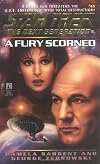
Every fan of Star Trek knows that the books set in each universe of the franchise are often problematic. Sometimes the story is ho-hum, other times the writing isn’t that good, occasionally, especially with books written early in the show’s run, the writer seems to have no grasp of the characters, and they don’t conform to the crew as we came to know them through television. For these reasons, perhaps 2/3 of the books aren’t as good as we’d like them to be. I’d been lucky with a show more few in the past, but also obtained some that sounded good, and ended up not being so — which I didn’t review. When I had a chance to pick up several at one go recently, I spent a great deal of time researching them, and haven’t come across a dud yet among the several I acquired in both the Voyager and Next Generation universes.
A Fury Scorned in the Next Generation universe had some mixed reviews, but I read enough about it to take a chance on it, and threw this one in at the last second. I’m very glad I did! Pamela Sargent and George Zebrowski have written an excellent book for Next Generation fans, that is no ordinary entry. There’s a real story here, and it’s big. A world is created, and it’s done slowly through the inhabitants so that by the end, we feel for what happens to them. Red Shirts — Star Trek fans will know the term well — are not just there to be extinguished. Some in fact, survive, and when one does go down, we’ve been made through the dense and involving narrative to like the individual Star Fleet officer so much that we’re uttering unpleasant things under our breath when it happens.
The characters we grew so fond of in the show seem very much themselves for the vast majority of A Fury Scorned. There is much less light-hearted banter here than in some books, because this is a more serious “episode” in the Next Generation universe. This doesn’t detract from enjoying the story, however, as the writers deftly draw us into the mood and ambiance of this particular story. With characters so familiar, and perimeters so pre-outlined, it’s difficult to do what Sargent and Zebrowski have done here, which is to write a human-driven science fiction story about a world in need of a miracle, then drop the Next Generation characters and Federation into the mix as the element responsible for the miracle — which comes at a great price.
There is in fact, probably more story here than a lot of fans are used to in the books. It’s layered, it’s involving, and it adds to what happens rather than detract from it. The characters on the world of Epictetus III are shaded in gray, becoming distinct; ranging from selfish to noble, brave to misguided, as their world is bathed in hopelessness. And even once Data comes up with a plan, it’s so out there, and dangerous for both the planet and the Enterprise itself, even Data isn’t positive it will work. With 20 million lives at stake, Picard must weight the danger for not only his own crew, but the lives that might be saved if Data’s extremely risky plan works. And the latter he must way against the handful that they can definitely save and keep the Enterprise safe, against the millions who will die on the planet when the sun goes Nova if he does.
Where many have a problem is Star Fleet ordering Picard to keep from the inhabitants Data’s plan, leaving them so hopeless that some on the planet are committing suicide, preferring to die in a less horrific manner than they are certain to within days. It’s a moral dilemma Picard has on his hands, one he shares with his crew, who all feel the weight of their actions, whatever they decide. It truly is a no-win situation, and there’s no way to cheat it as Kirk did. While on the surface the reasoning of Star Fleet to forbid Picard from giving what may turn out to be false hope to the inhabitants of Epictetus III seems lame, even flimsy, it is exactly like all organizations and entities in any government react — protecting their own backs and own reputation when push comes to shove. Once you realize that, you just get on with the story.
The story gradually morphs from a cerebral study of the morality of choices, to an exciting action story as Data’s plan is put into motion, and not everything goes to plan. There are consequences in this one, lives lost, but a world — for the most part — saved, if still devastated. The ending is exciting, the enterprise crew themselves touched by a deep loss, but there is also hope. It’s pretty terrific in a quiet, almost subdued way, but is somewhat different from most entries in the book arm of the universe. It is only in the last conversation between Picard and Data that I felt the intrusion of the writers’ thoughts and feelings, as it seemed a tick off for the characters, but it’s a minor quibble. Mostly Sargent and Zebrowski stay out of the way of this involving story. They give us real and clearly defined characters, a terrific story, and the crew seem to be the crew we know for the vast majority of this one. This one doesn’t have much light-heartedness, none of the feel-good or humorous moments that might mark it as a favorite, but in this universe I think it ranks among the best as per writing and story and execution. Great stuff, just maybe a bit more story than a lot of readers expect when they pick up a Star Trek book. Recommended. show less
A Fury Scorned in the Next Generation universe had some mixed reviews, but I read enough about it to take a chance on it, and threw this one in at the last second. I’m very glad I did! Pamela Sargent and George Zebrowski have written an excellent book for Next Generation fans, that is no ordinary entry. There’s a real story here, and it’s big. A world is created, and it’s done slowly through the inhabitants so that by the end, we feel for what happens to them. Red Shirts — Star Trek fans will know the term well — are not just there to be extinguished. Some in fact, survive, and when one does go down, we’ve been made through the dense and involving narrative to like the individual Star Fleet officer so much that we’re uttering unpleasant things under our breath when it happens.
The characters we grew so fond of in the show seem very much themselves for the vast majority of A Fury Scorned. There is much less light-hearted banter here than in some books, because this is a more serious “episode” in the Next Generation universe. This doesn’t detract from enjoying the story, however, as the writers deftly draw us into the mood and ambiance of this particular story. With characters so familiar, and perimeters so pre-outlined, it’s difficult to do what Sargent and Zebrowski have done here, which is to write a human-driven science fiction story about a world in need of a miracle, then drop the Next Generation characters and Federation into the mix as the element responsible for the miracle — which comes at a great price.
There is in fact, probably more story here than a lot of fans are used to in the books. It’s layered, it’s involving, and it adds to what happens rather than detract from it. The characters on the world of Epictetus III are shaded in gray, becoming distinct; ranging from selfish to noble, brave to misguided, as their world is bathed in hopelessness. And even once Data comes up with a plan, it’s so out there, and dangerous for both the planet and the Enterprise itself, even Data isn’t positive it will work. With 20 million lives at stake, Picard must weight the danger for not only his own crew, but the lives that might be saved if Data’s extremely risky plan works. And the latter he must way against the handful that they can definitely save and keep the Enterprise safe, against the millions who will die on the planet when the sun goes Nova if he does.
Where many have a problem is Star Fleet ordering Picard to keep from the inhabitants Data’s plan, leaving them so hopeless that some on the planet are committing suicide, preferring to die in a less horrific manner than they are certain to within days. It’s a moral dilemma Picard has on his hands, one he shares with his crew, who all feel the weight of their actions, whatever they decide. It truly is a no-win situation, and there’s no way to cheat it as Kirk did. While on the surface the reasoning of Star Fleet to forbid Picard from giving what may turn out to be false hope to the inhabitants of Epictetus III seems lame, even flimsy, it is exactly like all organizations and entities in any government react — protecting their own backs and own reputation when push comes to shove. Once you realize that, you just get on with the story.
The story gradually morphs from a cerebral study of the morality of choices, to an exciting action story as Data’s plan is put into motion, and not everything goes to plan. There are consequences in this one, lives lost, but a world — for the most part — saved, if still devastated. The ending is exciting, the enterprise crew themselves touched by a deep loss, but there is also hope. It’s pretty terrific in a quiet, almost subdued way, but is somewhat different from most entries in the book arm of the universe. It is only in the last conversation between Picard and Data that I felt the intrusion of the writers’ thoughts and feelings, as it seemed a tick off for the characters, but it’s a minor quibble. Mostly Sargent and Zebrowski stay out of the way of this involving story. They give us real and clearly defined characters, a terrific story, and the crew seem to be the crew we know for the vast majority of this one. This one doesn’t have much light-heartedness, none of the feel-good or humorous moments that might mark it as a favorite, but in this universe I think it ranks among the best as per writing and story and execution. Great stuff, just maybe a bit more story than a lot of readers expect when they pick up a Star Trek book. Recommended. show less

This was an excellent novel. Sargent again surprised me as in Venus of Dreams with her ability to treat the personal, the familial in a realistic way while set in a science-fiction setting. This novel is a slow burn that illustrates step by step how people can fall into fundamentalist beliefs that allow them to rationale treating other human beings as less deserving of humanitarian treatment. It is interesting to read this novel written in the 1980s during the 2020s when the same issues of show more organized intolerance are still occurring in our current reality. And these issues are played out at the very human level of the individual members of a single family who each have very different ideas of how society should develop in a new world. A good tagline for this novel could be “the road to hell is paved with the best of intentions.” I highly recommend this book. show less

This book surprised me - I did not expect it to be that good. Although this is a SciFi novel, the story itself is simply just an excellent story about how people behave, think, feel, interact in response to ambition, love, and aspirations that are bigger than themselves. It just goes to show that good writing is simply good writing regardless of the genre. I really appreciated the development of many of the characters in the novel. Almost none of them remain unchanged in response to the huge show more undertaking of the early stages of terraforming a planet - Venus. Although the emphasis of the story is on character development, Sargent does not go lightly on the thinking and planning that would be required to terraform a planet. Indeed, these physical real challenges are what drives much of the character development in the story. This is what good Sci Fi does - places people in a future situation and then explores how people would respond. This is an excellent book. I look forward to reading the two sequels: Venus of Shadows and Child of Venus. show less
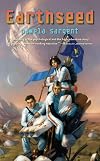
The science fiction premise behind Pamela Sargent's Earthseed is a strong one: children born on an interstellar ship must prepare for colonization of an extraterrestrial planet. The diverse cast of teenagers must live alone in the Hollow, a pastoral area of the planet-sized ship on which they were raised, and learn to function as a society. However, in-fighting and competition threatens their success, manifesting itself in a surprisingly bloody, violent way. This is not young adult science show more fiction for the faint of heart--it's essentially a tale of the foibles of humanity, presented with a very dark tone.
But, while this core plotline is dynamic and engaging in its direness, Sargent undermines it in several ways. Many of the teenagers are hardly introduced as characters only to become, suddenly, integral to the plot. Beyond their multi-cultural names, they seem largely interchangeable and poorly developed. Worse, Sargent throws in several plot wrenches suddenly, with little foreshadowing. This means that aspects of the climax feel almost like a convenient afterthought.
But stripped of all this, it's clear that Sargent possesses a certain tenderness for her main characters, particularly for heroine Zoheret and for the sentient ship (called, appropriately, "Ship") itself. For all Earthseed's flaws, Sargent manages a satisfying and well-wrought conclusion. show less
Lists
Dead narrators (1)
Strange Westerns (1)
Awards


You May Also Like


Associated Authors
Statistics
- Works
- 94
- Also by
- 79
- Members
- 5,518
- Popularity
- #4,515
- Rating
- 3.9
- Reviews
- 107
- ISBNs
- 209
- Languages
- 6
- Favorited
- 5