
Joan D. Vinge
Author of The Snow Queen
About the Author
Joan D. Vinge, 1948 - Joan Dennison Vinge was born April 2, 1948 in Baltimore, Maryland to Seymour W. Dennison, an engineer, and Carol Erwin, an executive secretary. Vinge attended San Kiego State University and received a B.A. in anthropology, with highest honors. She was married to author Vernor show more S. Vinge from 1972-1979. Vinge began writing professionally in 1973 and her first story, "Tin Soldier," appeared in Orbit 14 in 1974. Her story, "Eyes of Amber," won the 1977 Hugo Award for Best Science Fiction Novelette. Her novel "The Snow Queen" won the Hugo Award for Best Science Fiction Novel in 1981, "Psion" was named a Best Book for Young Adults by the American Library Association and "Return of the Jedi Storybook" was the #1 bestseller on the New York Times Book Review List for two months. (Bowker Author Biography) show less
Image credit: Courtesy of Jim Frenkel.
Series
Works by Joan D. Vinge
The Storm King 3 copies
Voices from the Dust 2 copies
The Outcasts of Heavens Belt 2 copies
A Rainha do Verão vol. 1 1 copy
Lady Hawke a mulher falcão 1 copy
The Snow Queen 1 1 copy
Pierduți în Spațiu 1 copy
The Hunt of the Unicorn 1 copy
O feitiço de Áquila 1 copy
Rainha do Verão III 1 copy
Rainha do Verão II Livro 1 1 copy
need title, accidental erase 1 copy
Short Fiction 1 copy
Occhi d'ambra e altre storie 1 copy
Murphy's Cat 1 copy
Phoenix in the Ashes 1 copy
Associated Works
The Year's Best Fantasy and Horror: Fifteenth Annual Collection (2002) — Contributor — 275 copies, 4 reviews
More Women of Wonder: Science Fiction Novelettes by Women about Women (1976) — Contributor — 255 copies, 7 reviews
The Year's Best Fantasy & Horror 2006: 19th Annual Collection (2006) — Contributor — 244 copies, 4 reviews
The Year's Best Fantasy and Horror: Seventeenth Annual Collection (2004) — Contributor — 241 copies, 9 reviews
The Year's Best Fantasy and Horror: Sixteenth Annual Collection (2003) — Contributor — 240 copies, 2 reviews
The Year's Best Fantasy and Horror: Eighteenth Annual Collection (2005) — Contributor — 231 copies, 5 reviews
The New Women of Wonder: Recent Science Fiction Stories by Women about Women (1977) — Contributor — 198 copies, 5 reviews
Women of Wonder, the Classic Years: Science Fiction by Women from the 1940s to the 1970s (1995) — Contributor — 189 copies, 1 review
The Crystal Ship: Three Original Novellas of Science Fiction (1976) — Author — 165 copies, 2 reviews
Moonsinger's Friends: In Honor of Andre Norton (1985) — Afterword, some editions — 154 copies, 1 review
The Future Is Female! Volume Two, The 1970s: More Classic Science Fiction Storie s By Women: A Library of America Special Publication (2022) — Contributor — 109 copies, 3 reviews
Best Science Fiction Stories of the Year Fifth Annual Collection (1976) — Contributor — 107 copies, 1 review
Best Science Fiction Stories of the Year Eighth Annual Collection (1979) — Contributor — 66 copies, 2 reviews
Analog Science Fiction/Science Fact: Vol. XCVII, No. 6 (June 1977) (1977) — Contributor — 36 copies, 1 review
Women of Vision : Essays by Women Writing Science Fiction (1988) — Contributor, some editions — 34 copies, 1 review
Analog Science Fiction/Science Fact: Vol. XCVI, No. 10 (October 1976) (1976) — Contributor — 30 copies
Analog Science Fiction/Science Fact: Vol. XCVIII, No. 3 (March 1978) (1978) — Contributor — 29 copies
Analog Science Fiction/Science Fact: Vol. XCVIII, No. 4 (April 1978) (1978) — Contributor — 27 copies
Analog Science Fiction/Science Fact: Vol. XCVIII, No. 2 (February 1978) (1978) — Contributor — 26 copies
Analog Science Fiction/Science Fact: Vol. XCVIII, No. 12 (December 1978) (1978) — Author — 23 copies
Isaac Asimov's Science Fiction Magazine: Vol. 4, No. 4 [April 1980] (1980) — Contributor — 20 copies
The Loch Moose Monster: More Stories From Isaac Asimov's Science Fiction Magazine (1993) — Foreword — 13 copies
I Premi Hugo 1976-1983 — Contributor — 4 copies
Tagged
Common Knowledge
- Other names
- Dennison, Joan Carol (birth name)
- Birthdate
- 1948-04-02
- Gender
- female
- Education
- San Diego State University (BA | Anthropology | 1971)
- Occupations
- science fiction writer
- Agent
- Merrilee Heifetz
- Relationships
- Vinge, Vernor (former spouse)
Frenkel, James (spouse) - Nationality
- USA
- Birthplace
- Baltimore, Maryland, USA
- Places of residence
- Baltimore, Maryland, USA
Madison, Wisconsin, USA
Green Valley, Arizona, USA - Associated Place (for map)
- USA
Members
Reviews

The first time I read this I bounced because I was expecting something reminiscent of the fairy tale and didn't see it. This time I read far enough to see it.
Being novel-length it also fits in a whole lot more science-fictiony goodness: stellar phenomena causing a fascinating society divide, an anti-aging serum, sibyls who can channel the databanks of a mysterious computer, the appropriately named Hegemony restricting the technology the planet gets so it can continue to exploit its longevity show more drug.... The tech-free summer and tech-full winter cycles on the planet are in a way echoed by the way the Hegemony itself is a relatively ignorant successor to a far higher-tech fallen empire. I wonder if that's intentional; I see there a sequels so perhaps one day will find out. show less
Being novel-length it also fits in a whole lot more science-fictiony goodness: stellar phenomena causing a fascinating society divide, an anti-aging serum, sibyls who can channel the databanks of a mysterious computer, the appropriately named Hegemony restricting the technology the planet gets so it can continue to exploit its longevity show more drug.... The tech-free summer and tech-full winter cycles on the planet are in a way echoed by the way the Hegemony itself is a relatively ignorant successor to a far higher-tech fallen empire. I wonder if that's intentional; I see there a sequels so perhaps one day will find out. show less

Pretty clearly a first novel. While Vinge does a pretty decent job with telepaths, their interactions, and the cultural issues between them and non-psi humans, the general world-building is unsatisfying; corporate mercantilism run amok among the stars has been done more thoroughly elsewhere. The plot stumbles its way along to the finish line as if continuity was a chore; perhaps keeping this as a novella might have been better.
Oddly, it's the very imperfect characters that appeal to me. show more There aren't any easily likeable characters, but no out-and-out execrable souls either; each has a past, a set of bugaboos to deal with, and no one seems to be made of infinite patience or avarice. This can be frustrating to a reader, but it makes the characters believable.
This is serviceable, journeyman SF but a pale representative of the struggling-youth, coming-of-age corner of the market. show less
Oddly, it's the very imperfect characters that appeal to me. show more There aren't any easily likeable characters, but no out-and-out execrable souls either; each has a past, a set of bugaboos to deal with, and no one seems to be made of infinite patience or avarice. This can be frustrating to a reader, but it makes the characters believable.
This is serviceable, journeyman SF but a pale representative of the struggling-youth, coming-of-age corner of the market. show less

Ah, this book is why it remains so worthwhile to pick up an old, unfamiliar story collection. Sometimes the stories in such books are little gifts just waiting for you to claim them. Joan Vinge certainly began her publishing career with confidence and style. Narrative, character, and alien perspectives are dealt creative and credible hands throughout, and the stories have aged well.
Of the stories here, "Media Man" is the weakest to me and closest to dated; it's conventional in form, content, show more and conclusion and kinda forgettable. As for the others, "Eyes of Amber" is a fascinating and fun romp through xeno-anthropology and the observer effect, "To Bell The Cat" seems awkward at first but makes itself clear in its own time, "View From a Height" is a good, credible psychological progression, "The Crystal Ship" paints a rich, almost psychedelic portrait of two very different characters' shared, lonesome journeys and builds in unexpected ways, and "Tin Soldier" is just sublime.
Looks like I'll be adding plenty more of JV's work to my readings. show less
Of the stories here, "Media Man" is the weakest to me and closest to dated; it's conventional in form, content, show more and conclusion and kinda forgettable. As for the others, "Eyes of Amber" is a fascinating and fun romp through xeno-anthropology and the observer effect, "To Bell The Cat" seems awkward at first but makes itself clear in its own time, "View From a Height" is a good, credible psychological progression, "The Crystal Ship" paints a rich, almost psychedelic portrait of two very different characters' shared, lonesome journeys and builds in unexpected ways, and "Tin Soldier" is just sublime.
Looks like I'll be adding plenty more of JV's work to my readings. show less
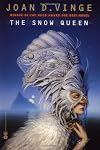
Loosely based on a famous fairy tale, The Snow Queen is a story about good, evil, power, and love above all else. The planet Tiamat is defined by two cultures, which alternate power over centuries. When Tiamat is accessible by the black hole based FTL drive, it is part of the Hegemony, the Snow Queen ruling over Winter with technological tricks from the stars. For the century of Summer, when the stars of the planet orbit close on the black hole, Summer rules, a luddite culture that rejects show more technology. Tiamat is also the only source of the immortality drug the Water of Life, murderously extracted from the local mer, a seal-like species.
The cycle has endured for centuries, but the current Snow Queen, Arienrhod, a woman of tremendous power and evil, plans to break the cycle and uphold Winter. The first step of her plan is to clone herself, and have the clone raised as a member of the Summer culture. But then everything goes awry, as the clone, Moon, and her cousin and true love Sparks, refuse to fit neatly into the plan. Moon becomes a sybil; a semi-legendary breed of oracles, and winds up leaving the planet with idealistic tech-smugglers trying to help out Tiamat in their own way. Sparks falls into the orbit of Arienrhod and becomes her right hand, the masked hunter Starbuck. Most of the novel concerns the arc of degeneration around Arienrhod, her city of Carbuncle (an immense shell-like spiral constructed by the fallen Old Empire), and the moral degeneracy that is connected to the immortality drug. Meanwhile, Moon discovers the extent of her powers and returns to set things right.
Vinge is the first self-consciously feminist writer to win the Hugo for best novel, an opinion confirmed by the front and backwards material in this version. Ursula LeGuin is a great writer, but concerned more with Humanity than with women. Vonda McIntyre wrote an adolescent fantasy, and a bad one at that. I think Snow Queen is a female counterpart to Dune The similarities are clear: a chosen one with the power of prophecy; a harsh and primitive world valued for its immortality drug; themes of moral decay and personal salvation; along with inversions like water for sand, and lust instead of revenge as the prime driver for personal politics. One of the viewpoint characters, the interstellar cop Jerusha PalaThion, is a clear analog to the stark discrimination women faced in the late 1970s.
I was surprised by how much I liked this book, given that I'd never heard of Joan D. Vinge before. She had a checkered career, doing novelizations to make ends meet in the 90s, and then spending most of the 00s down with medical problems. The way that minor uses and abuses on human dignity add up to a complete lack of empathy and great evil in Arienrhod and her minions, is as good a picture of evil as any that I've read (comparable to Fallada's Every Man Dies Alone). Vinge is vividly imaginative and solid on the world-building. For example the FTL drive involves plunging into a black hole, so starships are disc-like to minimize tidal stresses, while the cultures of Tiamat and the Hegemony are brightly painted. She's an enthusiastic writer, and a great describer of place and character. If I have any strike against this book, it's that it's actually too quickly paced. I think the story could've been done better as two volumes or a trilogy, with a little more room to breath.
Not that my audience needs any reminders, but The Snow Queen is proof that great stories can be written by women, about women, for everybody. show less
The cycle has endured for centuries, but the current Snow Queen, Arienrhod, a woman of tremendous power and evil, plans to break the cycle and uphold Winter. The first step of her plan is to clone herself, and have the clone raised as a member of the Summer culture. But then everything goes awry, as the clone, Moon, and her cousin and true love Sparks, refuse to fit neatly into the plan. Moon becomes a sybil; a semi-legendary breed of oracles, and winds up leaving the planet with idealistic tech-smugglers trying to help out Tiamat in their own way. Sparks falls into the orbit of Arienrhod and becomes her right hand, the masked hunter Starbuck. Most of the novel concerns the arc of degeneration around Arienrhod, her city of Carbuncle (an immense shell-like spiral constructed by the fallen Old Empire), and the moral degeneracy that is connected to the immortality drug. Meanwhile, Moon discovers the extent of her powers and returns to set things right.
Vinge is the first self-consciously feminist writer to win the Hugo for best novel, an opinion confirmed by the front and backwards material in this version. Ursula LeGuin is a great writer, but concerned more with Humanity than with women. Vonda McIntyre wrote an adolescent fantasy, and a bad one at that. I think Snow Queen is a female counterpart to Dune The similarities are clear: a chosen one with the power of prophecy; a harsh and primitive world valued for its immortality drug; themes of moral decay and personal salvation; along with inversions like water for sand, and lust instead of revenge as the prime driver for personal politics. One of the viewpoint characters, the interstellar cop Jerusha PalaThion, is a clear analog to the stark discrimination women faced in the late 1970s.
I was surprised by how much I liked this book, given that I'd never heard of Joan D. Vinge before. She had a checkered career, doing novelizations to make ends meet in the 90s, and then spending most of the 00s down with medical problems. The way that minor uses and abuses on human dignity add up to a complete lack of empathy and great evil in Arienrhod and her minions, is as good a picture of evil as any that I've read (comparable to Fallada's Every Man Dies Alone). Vinge is vividly imaginative and solid on the world-building. For example the FTL drive involves plunging into a black hole, so starships are disc-like to minimize tidal stresses, while the cultures of Tiamat and the Hegemony are brightly painted. She's an enthusiastic writer, and a great describer of place and character. If I have any strike against this book, it's that it's actually too quickly paced. I think the story could've been done better as two volumes or a trilogy, with a little more room to breath.
Not that my audience needs any reminders, but The Snow Queen is proof that great stories can be written by women, about women, for everybody. show less
Lists
Awards


You May Also Like


Associated Authors
Statistics
- Works
- 82
- Also by
- 51
- Members
- 11,207
- Popularity
- #2,105
- Rating
- 4.0
- Reviews
- 186
- ISBNs
- 227
- Languages
- 15
- Favorited
- 26