
C. S. Friedman
Author of Black Sun Rising
About the Author
Image credit: Permission of CSF
Series
Works by C. S. Friedman
Terms of Engagement 3 copies
Perfect Day 1 copy
Yesterday's Children 1 copy
Shall We Dance? 1 copy
Downtime 1 copy
Associated Works
Tagged
Common Knowledge
- Legal name
- Friedman, Celia S.
- Birthdate
- 1957-01-12
- Gender
- female
- Education
- Brandeis University (Theater)
Adelphi University
University of Georgia (MFA | Costume Design) - Occupations
- costume designer
writer - Organizations
- Society for Creative Anachronism
League of Renaissance Swordsmen - Agent
- Russell Galen (Scovil Galen Ghosh Literary)
- Nationality
- USA
- Birthplace
- New York, New York, USA
- Places of residence
- Rochester, New York, USA
Winchester, Virginia, USA - Associated Place (for map)
- New York, USA
Members
Reviews
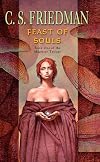
In the world of Feast of Souls it is thought that women cannot become sorcerers. Women can become witches, draining their own life energy to fuel magic, but not sorcerers. Witches are generally fate to die young, burning through their life energy at a faster rate than normal as they delve and conjure. Most witches use their powers sparingly, selling seconds and minutes of their life at great cost.
By contrast a sorcerer does not burn his own life’s energy; instead he has access to another show more source, one that has seemingly infinite potential. Their magic is colder, without fear of burning ones own life away. Sorcerers use their abilities for frivolous pursuits, such as conjuring trinkets or warming tea… no sane witch would give up minutes of her life for something as trivial.
Men and women both have the potential to become witches; only men can become sorcerers. Many women have tried to learn the secrets of sorcery, some have been apprenticed to sorcerers in an attempt to make the transition, but all have failed… until, of course, this book. Predominately, Feast of Souls is about a woman named Kamala who discovers how to become a sorcerer.
The story itself is pretty dark, and not gentle reading. Kamala’s early life is fraught with abuse. Her own mother, who loved her children enough to beg for her son’s life in the prologue, sold Kamala’s virginity off to the highest bidder. Though not discussed in detail, it is clear that, until she began apprenticed to a Magister, Kamala spent her young adult life as a sex worker.
Once she attains her first transition and begins stealing life energy from someone else –a stranger, and unknown person, somewhere in the world– Kamala struggles to figure out her place. She is a Magister, but she cannot reveal her true nature to others of her kind just yet. She has to gain experience, get a foothold in the world, before announcing her existence to the other Magisters.
Since Magisters can effectively live forever and they have infinite power, they have almost no rules. The only exception to this is the Law; Magisters may not kill each other. Naturally, one of the first things Kamala does upon leaving her master is accidentally kill another Magister. The only thing that saves her from immediate judgement is that the other Magisters have no idea who or what she is.
Much of the story touches on the moral ambiguity of surviving by slowly, but actively, killing another human. This is a bit disturbing, especially as Kamala not only meets her consort, the person whose life she is draining, they form a friendship and even become lovers. It’s definitely an iffy situation that made me feel a little yucky while at the same time drawing me in to read more. The death of Kamala’s consort was inevitable, and it was handled in a way that let me be a little ok with it, despite still wigging out about how the main character could be such a cold killer.
Of course there is a lot more going on in the background of this story. Monsters that should be held back in the frozen north by a mystical wall, constructed years and years ago by the sacrifice of a thousand witches, have been sighted. The monsters are called beasts called Souleaters and, like Magisters, they steal away the life essence of their victims. There isn’t much information on the exact nature of these creatures but it is clear that there is a connection between them and Magisters.
In the end, the story was so morally ambiguous I’m not sure what to think of it. I remember liking it a lot more when I first read it years ago. But now… well, after reading more about and trying to become more aware of feminist issues, part of me feels like Kamala is an unfortunate poster child for the “Rape Creates Strong Female Characters” trope. On the other hand it seems from the acknowledgements that Friedman did her research and drew extensively on the personal experiences of a sex worker for Kamala’s background and personality. I liked the book, but it definitely left me a bit uncomfortable. And, for this story, maybe that’s a good thing. Either way, I’m looking forward to more information, more answers, and more squickiness from the second book. show less
By contrast a sorcerer does not burn his own life’s energy; instead he has access to another show more source, one that has seemingly infinite potential. Their magic is colder, without fear of burning ones own life away. Sorcerers use their abilities for frivolous pursuits, such as conjuring trinkets or warming tea… no sane witch would give up minutes of her life for something as trivial.
Men and women both have the potential to become witches; only men can become sorcerers. Many women have tried to learn the secrets of sorcery, some have been apprenticed to sorcerers in an attempt to make the transition, but all have failed… until, of course, this book. Predominately, Feast of Souls is about a woman named Kamala who discovers how to become a sorcerer.
The story itself is pretty dark, and not gentle reading. Kamala’s early life is fraught with abuse. Her own mother, who loved her children enough to beg for her son’s life in the prologue, sold Kamala’s virginity off to the highest bidder. Though not discussed in detail, it is clear that, until she began apprenticed to a Magister, Kamala spent her young adult life as a sex worker.
Once she attains her first transition and begins stealing life energy from someone else –a stranger, and unknown person, somewhere in the world– Kamala struggles to figure out her place. She is a Magister, but she cannot reveal her true nature to others of her kind just yet. She has to gain experience, get a foothold in the world, before announcing her existence to the other Magisters.
Since Magisters can effectively live forever and they have infinite power, they have almost no rules. The only exception to this is the Law; Magisters may not kill each other. Naturally, one of the first things Kamala does upon leaving her master is accidentally kill another Magister. The only thing that saves her from immediate judgement is that the other Magisters have no idea who or what she is.
Much of the story touches on the moral ambiguity of surviving by slowly, but actively, killing another human. This is a bit disturbing, especially as Kamala not only meets her consort, the person whose life she is draining, they form a friendship and even become lovers. It’s definitely an iffy situation that made me feel a little yucky while at the same time drawing me in to read more. The death of Kamala’s consort was inevitable, and it was handled in a way that let me be a little ok with it, despite still wigging out about how the main character could be such a cold killer.
Of course there is a lot more going on in the background of this story. Monsters that should be held back in the frozen north by a mystical wall, constructed years and years ago by the sacrifice of a thousand witches, have been sighted. The monsters are called beasts called Souleaters and, like Magisters, they steal away the life essence of their victims. There isn’t much information on the exact nature of these creatures but it is clear that there is a connection between them and Magisters.
In the end, the story was so morally ambiguous I’m not sure what to think of it. I remember liking it a lot more when I first read it years ago. But now… well, after reading more about and trying to become more aware of feminist issues, part of me feels like Kamala is an unfortunate poster child for the “Rape Creates Strong Female Characters” trope. On the other hand it seems from the acknowledgements that Friedman did her research and drew extensively on the personal experiences of a sex worker for Kamala’s background and personality. I liked the book, but it definitely left me a bit uncomfortable. And, for this story, maybe that’s a good thing. Either way, I’m looking forward to more information, more answers, and more squickiness from the second book. show less
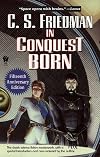
I believe that my paperback copy of this book is the original printing. I've had it for decades, and have always enjoyed it. When I downloaded it to my Kindle last week I was nervous that it would not stand the test of time. It did.
This is a complex, intense, original story of two warriors whose lives seldom touch directly but whose personal vendetta re-shapes their empires. Their relationship is one of hatred more passionate than most loves, and both are driven to greater and greater show more achievements in the pursuit of victory.
But the book is much more than that. Anzha and Zatar's stories are interwoven with those of their associates, whose subjective perspectives on their worlds and the antagonists provide insights that a limited pov could not.
This is a book to sink into and not emerge from until you've finished. show less
This is a complex, intense, original story of two warriors whose lives seldom touch directly but whose personal vendetta re-shapes their empires. Their relationship is one of hatred more passionate than most loves, and both are driven to greater and greater show more achievements in the pursuit of victory.
But the book is much more than that. Anzha and Zatar's stories are interwoven with those of their associates, whose subjective perspectives on their worlds and the antagonists provide insights that a limited pov could not.
This is a book to sink into and not emerge from until you've finished. show less
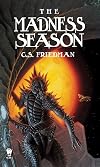
Not my favorite book ever, but I give it many, many points for originality. Somehow, the author combines hive-mind aliens; more aliens; non-embodied entities; shapeshifters (more than one type, at that); vampires; Earth's takeover, and the aftermath; a fight for the salvation of the human race; a multiple-planet, interstellar setting; and probably several things I've forgotten. And, somehow, it works. It works well. All these things are mixed together and an intriguing, actually coherent show more story comes out of it. I mean, a book involving humanity's enslavement by aliens and a vampiric protagonist is either going to be an enthusiastic mess or well worth reading. Obviously, this is the latter. show less
4.5 stars
Originally posted at Fantasy Literature.
I am quickly becoming a fan of C.S. Friedman. Audible Frontiers has recently produced all her novels in audio format, so I snatched them up and I'm happy I did. Her science fiction is original, imaginative, and super smart.
In The Madness Season, a man named Daetrin is old enough to have fought in the last battle when the Earth was conquered by the aliens of Tyr. That was three hundred years ago and the Tyrians want to know how Daetrin is still show more alive. So they've captured him, just like they've rounded up all the humans who they think they can learn something from. The Tyr have been genetically engineering the humans who are left on Earth -- breeding out creativity, intelligence, and rebelliousness in the hopes of making them more biddable -- but some humans have found ways to resist their captors' plans. Daetrin is worried about what they intend to do with him. If he cooperates with them, will he doom the future of his own people? Should he try to find some allies and fight back? Or is it possible that there are values more important than survival?
The Madness Season showcases many of C.S. Friedman's admirable skills: inventive and perfectly leak-proof plot, excellent character development (this book contains some of my favorite Friedman characters so far), elegant writing style, a nice balance of tension and release, a touch of understated humor, and a foundation of science (math, physics, biology, comparative anatomy, neuroscience, evolution, sociology) that informs without being at all teachy.
Perhaps what I appreciate most about C.S. Friedman is that she creates wonderfully inventive worlds, species, languages, and cultures that truly feel alien rather than just variations on humanity. Friedman's aliens are so alien that they're frightening. They have different language processing equipment, different sensory systems, and completely different ways of thinking. All of their physiological and psychological details are different from ours, but Friedman uses her scientific knowledge to construct them so that they make sense. Friedman also has interesting insights and ideas about human behavior -- again, backed up by research findings about memory, perception, consciousness, sleep, etc.
Jonathan Davis, as I've said so many times before, is one of the very best audiobook narrators. As usual, he gives a terrific reading of The Madness Season. Even though he speaks a little too slowly (I had to increase the playback speed), Davis has perfect cadence and makes it possible to forget that we're being read to. If you see Jonathan Davis' name on the cover, you can be sure it's a good production. I highly recommend The Madness Season -- especially in audio format! show less
Originally posted at Fantasy Literature.
I am quickly becoming a fan of C.S. Friedman. Audible Frontiers has recently produced all her novels in audio format, so I snatched them up and I'm happy I did. Her science fiction is original, imaginative, and super smart.
In The Madness Season, a man named Daetrin is old enough to have fought in the last battle when the Earth was conquered by the aliens of Tyr. That was three hundred years ago and the Tyrians want to know how Daetrin is still show more alive. So they've captured him, just like they've rounded up all the humans who they think they can learn something from. The Tyr have been genetically engineering the humans who are left on Earth -- breeding out creativity, intelligence, and rebelliousness in the hopes of making them more biddable -- but some humans have found ways to resist their captors' plans. Daetrin is worried about what they intend to do with him. If he cooperates with them, will he doom the future of his own people? Should he try to find some allies and fight back? Or is it possible that there are values more important than survival?
The Madness Season showcases many of C.S. Friedman's admirable skills: inventive and perfectly leak-proof plot, excellent character development (this book contains some of my favorite Friedman characters so far), elegant writing style, a nice balance of tension and release, a touch of understated humor, and a foundation of science (math, physics, biology, comparative anatomy, neuroscience, evolution, sociology) that informs without being at all teachy.
Perhaps what I appreciate most about C.S. Friedman is that she creates wonderfully inventive worlds, species, languages, and cultures that truly feel alien rather than just variations on humanity. Friedman's aliens are so alien that they're frightening. They have different language processing equipment, different sensory systems, and completely different ways of thinking. All of their physiological and psychological details are different from ours, but Friedman uses her scientific knowledge to construct them so that they make sense. Friedman also has interesting insights and ideas about human behavior -- again, backed up by research findings about memory, perception, consciousness, sleep, etc.
Jonathan Davis, as I've said so many times before, is one of the very best audiobook narrators. As usual, he gives a terrific reading of The Madness Season. Even though he speaks a little too slowly (I had to increase the playback speed), Davis has perfect cadence and makes it possible to forget that we're being read to. If you see Jonathan Davis' name on the cover, you can be sure it's a good production. I highly recommend The Madness Season -- especially in audio format! show less
Lists
Unread books (1)
Morphy Pick! (1)
Awards


You May Also Like


Associated Authors
Statistics
- Works
- 36
- Also by
- 8
- Members
- 13,325
- Popularity
- #1,749
- Rating
- 3.9
- Reviews
- 205
- ISBNs
- 143
- Languages
- 7
- Favorited
- 58