

Melissa Scott (1) (1960–)
Author of Trouble and Her Friends
For other authors named Melissa Scott, see the disambiguation page.
About the Author
Melissa Scott is a science fiction writer. She was born in Little Rock, Arkansas in 1961. Scott studied history at Harvard University before earning her Ph. D. in comparative history from Brandeis University. Scott's first science fiction book, The Game Beyond, was published in 1984. In 1986, she show more won the John W. Campbell Award for Best New Writer. Scott received the Lambda Literary Award for Gay/Lesbian Science Fiction in both 1995 and 1996 for the books Trouble and Her Friends and Shadow Man. She is a co-founder of WaveLengths, a journal of gay/lesbian/bisexual-interest science fiction and fantasy. (Bowker Author Biography) show less
Series
Works by Melissa Scott
Mercy Mission 4 copies
The Complete Astreiant 3 copies
A Player's Heart 2 copies
The Rule of Five: Year Two 1 copy
Mr. Seeley [short fiction] 1 copy
The merchant 1 copy
Associated Works
The Year's Best Science Fiction: Thirty-First Annual Collection (2014) — Contributor — 203 copies, 3 reviews
The Year's Best Science Fiction: Thirty-Fourth Annual Collection (2017) — Contributor — 147 copies, 4 reviews
Queers Dig Time Lords: A Celebration of Doctor Who by the LGBTQ Fans Who Love It (2013) — Contributor — 81 copies, 2 reviews
Heiresses of Russ 2016: The Year's Best Lesbian Speculative Fiction (2016) — Contributor — 20 copies, 1 review
Tagged
Common Knowledge
- Birthdate
- 1960-08-07
- Gender
- female
- Education
- Brandeis University (PhD, Comparitive History)
Harvard College - Occupations
- science fiction writer
- Awards and honors
- John W. Campbell Award (1986)
- Relationships
- Barnett, Lisa A. (former spouse | until 2006 (Barnett's death))
- Nationality
- USA
- Birthplace
- Little Rock, Arkansas, USA
- Places of residence
- Portsmouth, New Hampshire, USA
- Associated Place (for map)
- USA
Members
Discussions
If I could turn back time... in Good Show Sir! — bad science fiction and fantasy covers (July 2025)
Standalone Group Read - April - Shadow Man by Melissa Scott in The Green Dragon (May 2015)
Standalone Group Read - June - Burning Bright by Melissa Scott in The Green Dragon (August 2014)
Reviews
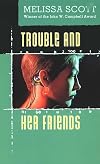
Trouble and Her Friends might be the last cyberpunk novel (at least according to Matthew Claxton), written in the final days when the internet was still the net, and not the world wide web, or worse a walled garden of apps and platforms. Trouble and Cerise are partners, romantic and criminal, two of the baddest hackers on the net, when Trouble disappears after a new anti-hacker law passes. Cerise goes legit and tries to forget her old partner, but three years later someone appears on the net show more using Trouble's handle and some of her programs. Cerise's company and the US Treasury want Trouble in custody, and the two of them reunite to find and take down the punk threatening Trouble's quiet retirement.
There is a lot that is good in this book, mostly tied up in this quote. “Maybe that was why it was almost always the underclasses, the women, the people of color, the gay people, the ones who were already stigmatized as being vulnerable, available, trapped by the body, who took the risk of the wire.” The cyberspace has a nice Gibsonian vibe, Trouble and her cadre of queer hacker friends are wonderfully drawn. This book is definitely about being gay and has some ambitions about doing crime. There are fantastic asides, like districts haunted by vicious dolly-gangs of wannabe corporate secretaries with network implants, stilettos heels, and switchblade knives.
Good advice from mr skelly
Unfortunately, it also has some serious flaws. The pacing is on the languid side, with important plot threads like Cerise's boss's obsession with Trouble dropped aside. The conclusion centers around the real and virtual twin towns of Sea Haven, a gray zone useful to the shadows and bright lights of the net alike, abandoning the idea that what happens in cyberspace is about cyberspace for a physical confrontation. And while I was really hoping for a solid landing, the end is about outsiders coming inside, about crackers growing up into cops, rather than breaking down unjust systems of exploitation. show less
There is a lot that is good in this book, mostly tied up in this quote. “Maybe that was why it was almost always the underclasses, the women, the people of color, the gay people, the ones who were already stigmatized as being vulnerable, available, trapped by the body, who took the risk of the wire.” The cyberspace has a nice Gibsonian vibe, Trouble and her cadre of queer hacker friends are wonderfully drawn. This book is definitely about being gay and has some ambitions about doing crime. There are fantastic asides, like districts haunted by vicious dolly-gangs of wannabe corporate secretaries with network implants, stilettos heels, and switchblade knives.
Good advice from mr skelly
Unfortunately, it also has some serious flaws. The pacing is on the languid side, with important plot threads like Cerise's boss's obsession with Trouble dropped aside. The conclusion centers around the real and virtual twin towns of Sea Haven, a gray zone useful to the shadows and bright lights of the net alike, abandoning the idea that what happens in cyberspace is about cyberspace for a physical confrontation. And while I was really hoping for a solid landing, the end is about outsiders coming inside, about crackers growing up into cops, rather than breaking down unjust systems of exploitation. show less
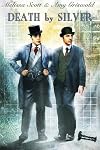
Great world, with an interesting magical system, and a strong steampunk sensibility. I particularly like the vicious, roving plants. Heh. Also, hooray for gay romance, and man, boarding schools are the pits. Solid mystery, very entertaining.
I bought this back when it came out and then inexplicably failed to read it until this year, probably because I had library books out and then I forgot. Honestly, I'm glad I saved it, because I need escapism right now and this is the good stuff.
The book is a fanromystery (shhhh, it's a thing if I say it's a thing) that works well as all three genres. I enjoyed the characters, the nods to classic detective fiction, and the worldbuilding in the fantasy element.
Of course, I expected all of show more this going in, because both Scott and Griswold are A+ writers. I also expected that it would be a bit challenging even for them to pack mystery, romance, and worldbuilding into one novel, and it was, a bit; the second book in the series is better because they're not trying to hold onto to so many threads. I'm really sad there's not a third one! Great series. show less
The book is a fanromystery (shhhh, it's a thing if I say it's a thing) that works well as all three genres. I enjoyed the characters, the nods to classic detective fiction, and the worldbuilding in the fantasy element.
Of course, I expected all of show more this going in, because both Scott and Griswold are A+ writers. I also expected that it would be a bit challenging even for them to pack mystery, romance, and worldbuilding into one novel, and it was, a bit; the second book in the series is better because they're not trying to hold onto to so many threads. I'm really sad there's not a third one! Great series. show less

This is the first book of the Silence Leigh trilogy, followed in 1986 by Silence in Solitude and in 1987 by The Empress of the Earth. It was later released in a SFBC omnibus edition, The Roads of Heaven. But that’s a pretty naff title for the trilogy, even if it is, well, pretty accurate (it’s also used by the current small press Kindle omnibus). Because in the universe of Five-Twelfths of Heaven, it’s the music of the spheres which allows for interstellar travel. Starship have show more “harmoniums” (harmonia?) and it is the music they make which drives starships into orbit and pushes them into “purgatory” (ie, hyperspace) at velocities measured in “twelfths of heaven”. Most starships travel at a sixth of heaven, so five-twelfths of heaven is pretty quick. It’s also the speed of the ship, Sun-Treader, whose crew pilot Silence reluctantly joins when she finds herself trapped on a world of the Hegemon after her grandfather dies. Because her grandfather owned the starship she piloted, but her uncle had done a deal with a local merchant so the ship would need to be sold to cover grandfather’s debts and, as a woman, Silence has no legal standing… But Captain Balthasar of Sun-Treader agrees to act as her representative in probate court, and offers her a job afterwards. He needs a female pilot – and female pilots are very rare – because his engineer has fake papers, but if Silence enters into a marriage of convenience with the two of them they can get him proper papers. Polygamy, apparently, is okay, but not same-sex marriage. Silence agrees. Things go reasonably well, but then Balthasar is called to a captains’ meeting of Wrath-of-God, a major pirate combine, and it’s war against the Hegemon. But the attack fails, and Silence and her two husbands are captured by Hegemon forces, and put under geas. Except Silence manages somehow to break the geas – it seems she could well be a magus. And… well, spoilers. Obviously, the main draw of Five-Twelfths of Heaven is the mix of science fiction and magic. It’s cleverly done. FTL is itself a metaphor, and Scott recognises this and chooses to use a metaphor typically not associated with sf instead. It works because she maintains rigour, her magic system has as many rules, and operates as logically, as some made-up “scientific” FTL drive would. Instead of computers churning out numbers, her pilots have to memorise Tarot-like symbolic diagrams. Instead of laws of physics, she writes about notes and chords and dissonances. Different words for the same things. And a good example why you can’t use tropes to differentiate between science fiction and fantasy. If I’d discovered Scott back in the 1980s, I think it likely she’d have become a writer whose work I sought out. She certainly is now. I’m looking forward to reading the rest of this trilogy. show less
Lists
Awards


You May Also Like


Associated Authors
Statistics
- Works
- 66
- Also by
- 19
- Members
- 7,537
- Popularity
- #3,245
- Rating
- 3.8
- Reviews
- 158
- ISBNs
- 160
- Languages
- 1
- Favorited
- 6