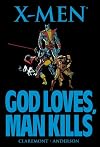
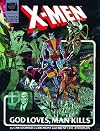
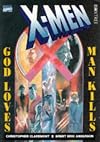
X-Men: God Loves, Man Kills
by Chris Claremont (Author), Brent Anderson (Illustrator)
On This Page
Description
Collects Uncanny X-Men (1981) #168-175, X-Men Annual (1970) #7, Marvel Graphic Novel #5 And Wolverine (1982) #1-4. One of the all-time great Marvel stories is just one part of a golden era for X-Men storytelling! By 1982, the X-Men had become the biggest franchise in comic books. The engine driving it all was UNCANNY X-MEN, where Chris Claremont's deft character work and potent exploration of the mutant metaphor captivated readers. Claremont continued to find new dramatic heights with artist show more Paul Smith as they unfurled the growing romance between Kitty Pryde and Colossus, the first appearances of Callisto and the Morlocks, Rogue's debut with the team and the wedding of Cyclops and Madelyne Pryor! Claremont's writing rose to find perhaps his most poignant and challenging expression in his graphic novel with artist Brent Anderson, "God Loves, Man Kills." Meanwhile, he collaborated with Frank Miller on the first Wolverine miniseries, which rocketed the character's popularity into the stratosphere! show lessTags
Recommendations



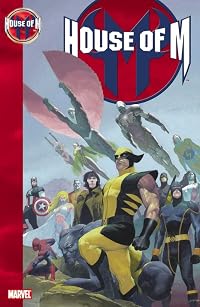
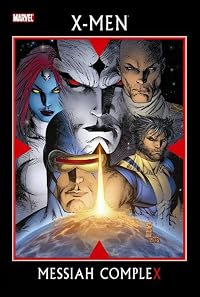
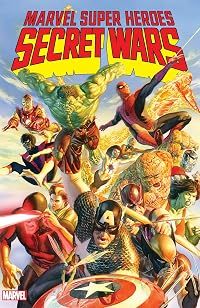
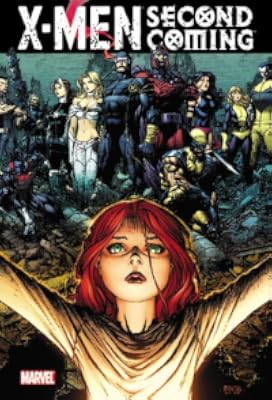




Member Recommendations

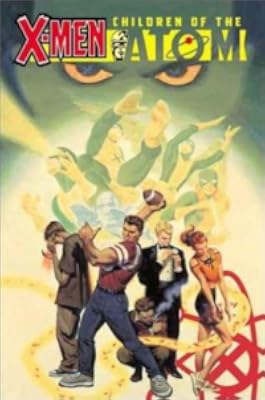
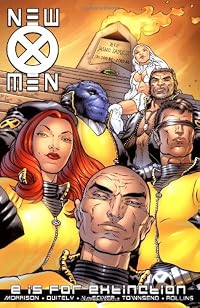
artturnerjr Deals with many of the same themes as GOD LOVES, MAN KILLS
11
Member Reviews
The X-Men franchise has exploded since its inception. Every year we witness series, after series, of new orientations and mythologies gracing pop culture with the adventures of Charles Xavier's maverick do-gooders who live in a flawed world fearful of their powers.
So what makes God Loves, Man Kills one of the most cardinal texts in the entire X universe? Hints can be gauged when one learns that the 2003 X2 film derived fundamental inspiration from it. Here's the answer, the X-Men live in a world plagued by the fear of its very protectors. What happens when this fear is cultivated, heightened and finally unleashed against mutant kind and that too in the name of religion? God Loves, Man Kills answers this pointed query in all its visceral show more glory. The chief antagonist here is not some superhuman rogue but Reverend William Stryker; a common man of the cloth armed with a Bible and inspired by a Vendetta against Mutantkind.
While many critics have argued that the ending is highly anticlimactic, I believe it sticks firmly to the highly symbolic nature of the story. What Claremont has done is that he has transposed our fears of racial differences within the X-verse and amplified them for our own observation. God Loves, Man Kills is one for the history books. show less
So what makes God Loves, Man Kills one of the most cardinal texts in the entire X universe? Hints can be gauged when one learns that the 2003 X2 film derived fundamental inspiration from it. Here's the answer, the X-Men live in a world plagued by the fear of its very protectors. What happens when this fear is cultivated, heightened and finally unleashed against mutant kind and that too in the name of religion? God Loves, Man Kills answers this pointed query in all its visceral show more glory. The chief antagonist here is not some superhuman rogue but Reverend William Stryker; a common man of the cloth armed with a Bible and inspired by a Vendetta against Mutantkind.
While many critics have argued that the ending is highly anticlimactic, I believe it sticks firmly to the highly symbolic nature of the story. What Claremont has done is that he has transposed our fears of racial differences within the X-verse and amplified them for our own observation. God Loves, Man Kills is one for the history books. show less
The Five Faces of X-MEN: GOD LOVES, MAN KILLS
------
😍
The greatest parts of the graphic novel are the unusually dark and mature themes that run throughout the story and the exhilarating action sequences, that feel different than before.
Kitty Pryde is given a key role in the story together with the best action set pieces of the entire graphic novel.
What makes this such an effective story is the fact that the X-Men have to unite with their greatest enemy, Magneto, to defeat their most dangerous foe yet, mankind.
Those shocking moments of violence or bizarre ideology acted out by some of the characters strongly hark back to the days of Nazi-Germany, while still feeling relevant (perhaps growingly so) in the world of today.
Seeing an show more ordinary man, on a mission from his God, as the main villain of this story is refreshing and invokes a sense of real danger. This guy is no Magneto, no extraterrestrial threat or killer robot; he is a man with a twisted mind and one, lethal mission. His cinematic counterpart from X2 captures him surprisingly well, but here he feels a whole lot more terrifying.
The climax is epic in scope, with the heroes struggling to win against Stryker and his forces. It feels like a bigger challenge than many of the world-domination plots the team has faced over the years.
It's refreshing to see philosophical dialogue take center-stage in the ultimate moments of the comic, and as an important lecture for readers.
😃
The art style is beautifully impressionist and abstract but also at times messy and difficult to grasp. The use of color is admirable though.
The art style combined with some dark, depressing and mature material, makes for a story with real depth and a disturbing message. There's murder, torture, torment, fear and so much more.
There is a slight cinematic feel to the four-part story, something that is quite unusual in the world of Marvel comics until Grant Morrison's run on the X-Men.
The overly obvious dialogue typical for the era isn't as annoying here as in most other comic books. It sits nicely within the story and its characters.
😐
The first part briefly sets up the story, before depicting the same things these stories always depict, until the first turn in the story. The beginning is bland and nothing special, and wouldn't make an impression if it wasn't for the shocking introduction with the murder of the mutant children.
The overall plot is somewhat repetitive, with the religious motivation being stuffed down our throats and with our heroes being captured and escaping over and over again.
Like in most stories penned by Claremont, there are many characters but little use to most of them. The focus lies on a select few characters but since Claremont desperately wants to use all of his beautiful creations, the final gallery feels overblown even for a story on this scale.
Sadly, when Magneto for once teams up with the good guys it is to be a deus ex machina and show up in the nick of time to save our heroes from certain doom. That's cheap for a character who is usually depicted with depth and respect.
☹️
//
🤮
//
-----
The Final Face: 😃 show less
------
😍
The greatest parts of the graphic novel are the unusually dark and mature themes that run throughout the story and the exhilarating action sequences, that feel different than before.
Kitty Pryde is given a key role in the story together with the best action set pieces of the entire graphic novel.
What makes this such an effective story is the fact that the X-Men have to unite with their greatest enemy, Magneto, to defeat their most dangerous foe yet, mankind.
Those shocking moments of violence or bizarre ideology acted out by some of the characters strongly hark back to the days of Nazi-Germany, while still feeling relevant (perhaps growingly so) in the world of today.
Seeing an show more ordinary man, on a mission from his God, as the main villain of this story is refreshing and invokes a sense of real danger. This guy is no Magneto, no extraterrestrial threat or killer robot; he is a man with a twisted mind and one, lethal mission. His cinematic counterpart from X2 captures him surprisingly well, but here he feels a whole lot more terrifying.
The climax is epic in scope, with the heroes struggling to win against Stryker and his forces. It feels like a bigger challenge than many of the world-domination plots the team has faced over the years.
It's refreshing to see philosophical dialogue take center-stage in the ultimate moments of the comic, and as an important lecture for readers.
😃
The art style is beautifully impressionist and abstract but also at times messy and difficult to grasp. The use of color is admirable though.
The art style combined with some dark, depressing and mature material, makes for a story with real depth and a disturbing message. There's murder, torture, torment, fear and so much more.
There is a slight cinematic feel to the four-part story, something that is quite unusual in the world of Marvel comics until Grant Morrison's run on the X-Men.
The overly obvious dialogue typical for the era isn't as annoying here as in most other comic books. It sits nicely within the story and its characters.
😐
The first part briefly sets up the story, before depicting the same things these stories always depict, until the first turn in the story. The beginning is bland and nothing special, and wouldn't make an impression if it wasn't for the shocking introduction with the murder of the mutant children.
The overall plot is somewhat repetitive, with the religious motivation being stuffed down our throats and with our heroes being captured and escaping over and over again.
Like in most stories penned by Claremont, there are many characters but little use to most of them. The focus lies on a select few characters but since Claremont desperately wants to use all of his beautiful creations, the final gallery feels overblown even for a story on this scale.
Sadly, when Magneto for once teams up with the good guys it is to be a deus ex machina and show up in the nick of time to save our heroes from certain doom. That's cheap for a character who is usually depicted with depth and respect.
☹️
//
🤮
//
-----
The Final Face: 😃 show less
The best X-Men story ever written, and one of Marvel's best period. There's so much being said in this work, which is extremely powerful. Claremont has never been able to best this, but to be fair, he set the bar exceedingly high with this one.
What the core conflict of X-Men is all about. Incredibly effective story and I can see why this is considered one of the seminal X-Men stories. You can see how Magneto is right and how tempted Charles Xavier is to give in to the hatred based on the prejudice and violence the mutants face. Some amazing frames, like the one at the Stryker televangelist broadcast with the cop. Not as much action as I would have expected, but the ideas are timeless.
A fun reboot on X Factor, with a casually heavy body count. Worth grabbing the next installment.
Christopher Claremont and Brent Eric Anderson’s X-Men: God Loves, Man Kills was the fifth book in the Marvel Graphic Novel line, following Claremont’s The New Mutants. These two, unlike the first three – The Death of Captain Marvel was relatively self-contained; Elric: The Dreaming City adapted Michael Moorcock’s novella by the same name; and Jim Starlin’s Dreadstar launched a series that Marvel published under its Epic Comics imprint – closely tied into the ongoing X-Men comics, though its canonical status was only decided in 2003 after the release of X2, the second X-Men movie that used God Loves, Man Kills as the basis for much of its story (as well as Return to Weapon X from the Ultimate X-Men series).
The story focuses show more on religious fundamentalist Reverend William Stryker and his purifiers, who kidnap Professor Xavier in order to use him and a modified Cerebro to wipe out mutant kind. The X-Men – Cyclops, Storm, Wolverine, Colossus, Nightcrawler, and Ariel (Kitty Pryde) – must save the professor and prove Stryker’s position wrong to a national audience. They work with Magneto, who helps them achieve results as they find their goals aligned. The story concludes with a thoughtful rededication of the X-Men’s mission and Magneto wishing them luck, while saying that he will be there to fix things if they should fail.
Claremont successfully told an essential X-Men story in only 64 pages, demonstrating why this is one of the must-reads of the franchise and remains in high regard. He began working on drafts of this story beginning in the late 1970s, though the overall narrative remained relatively unchanged with just some minor adjustments to dialogue and the final title. Marvel later clarified the story’s place in continuity, setting it between The Uncanny X-Men nos. 167 and 168 based on Cyclops’ role and Ilyana Rasputin. Claremont later wrote a sequel, titled “God Loves Man Kills II,” which appeared in X-Treme X-Men nos. 25-30. show less
The story focuses show more on religious fundamentalist Reverend William Stryker and his purifiers, who kidnap Professor Xavier in order to use him and a modified Cerebro to wipe out mutant kind. The X-Men – Cyclops, Storm, Wolverine, Colossus, Nightcrawler, and Ariel (Kitty Pryde) – must save the professor and prove Stryker’s position wrong to a national audience. They work with Magneto, who helps them achieve results as they find their goals aligned. The story concludes with a thoughtful rededication of the X-Men’s mission and Magneto wishing them luck, while saying that he will be there to fix things if they should fail.
Claremont successfully told an essential X-Men story in only 64 pages, demonstrating why this is one of the must-reads of the franchise and remains in high regard. He began working on drafts of this story beginning in the late 1970s, though the overall narrative remained relatively unchanged with just some minor adjustments to dialogue and the final title. Marvel later clarified the story’s place in continuity, setting it between The Uncanny X-Men nos. 167 and 168 based on Cyclops’ role and Ilyana Rasputin. Claremont later wrote a sequel, titled “God Loves Man Kills II,” which appeared in X-Treme X-Men nos. 25-30. show less
A fine X-Men graphic novel about the prejudice and fear that men often direct against anybody different from themselves, often cloaking it in the words of God. This story is a tale that has been told many times throughout history, only the hatred that was before directed against different skin color, or creed, or appearance, is now directed against mutants - those born with special powers and abilities. A good story with an important lesson.
Members
- Recently Added By
Lists

Recommended Comics / Graphic Novels
595 works; 122 members
Author Information


Some Editions
Awards and Honors
Notable Lists
Series
Belongs to Publisher Series
Work Relationships
Common Knowledge
- Canonical title
- X-Men: God Loves, Man Kills
- Original title
- X-Men: God Loves, Man Kills
- Alternate titles*
- X-men: Deus Ama, O Homem Mata
- Original publication date
- 1982-11-30
- People/Characters
- Magneto; Illyana Rasputin; Kitty Pryde; Ororo Munroe; Scott Summers; Charles Xavier (show all 16); Piotr Nikolaievitch Rasputin; Kurt Wagner; Logan; Storm; Cyclops; Professor X; Nightcrawler; Colossus; Wolverine; Stevie Hunter
- Important places
- Xavier's School for Gifted Youngsters, Salem Center, Westchester County, New York, USA; Salem Center, Westchester County, New York, USA; Westchester County, New York, USA; New York, USA
- Related movies
- X2 (2003 | IMDb); X-Men (2000 | IMDb); X-Men: The Last Stand (2006 | IMDb); X-Men Origins: Wolverine (2009 | IMDb)
- Dedication
- With thanks to Mary Jo Duffy for her invaluable assistance and criticism - Chris Claremont
- First words
- They run without knowing why, save that they are in peril of their lives.
- Last words
- (Click to show. Warning: May contain spoilers.)"If only that were so."
- Original language
- English
*Some information comes from Common Knowledge in other languages. Click "Edit" for more information.
Classifications
- Genre
- Graphic Novels & Comics
- DDC/MDS
- 741.5973 — Arts & recreation Drawing & decorative arts Drawing Comic books, graphic novels, fotonovelas, cartoons, caricatures, comic strips History, geographic treatment, biography North American United States (General)
- LCC
- PN6728 .X2 .C5883 — Language and Literature Literature (General) Literature (General) Collections of general literature Comic books, strips, etc.
- BISAC
Statistics
- Members
- 607
- Popularity
- 48,361
- Reviews
- 9
- Rating
- (3.95)
- Languages
- 9 — Danish, Dutch, English, French, German, Italian, Polish, Portuguese (Brazil), Spanish
- Media
- Paper, Ebook
- ISBNs
- 26
- ASINs
- 13