
Bill Sienkiewicz
Author of Elektra: Assassin
About the Author
Image credit: Luigi Novi
Series
Works by Bill Sienkiewicz
Classics Illustrated: Moby Dick {graphic adaptation by Bill Sienkiewicz} (1990) — Adapter — 132 copies, 5 reviews
Strip AIDS U.S.A.: A Collection of Cartoon Art to Benefit People With AIDS (1988) — Editor; Contributor; Cover artist — 65 copies
Black Widow [2004] #4 - No Place Like Home — Illustrator — 4 copies
Moon Knight, Vol. 1 #29 — Illustrator — 4 copies
The Shadow #1 - Shadows and Light, Part I: Hat Trick (1987) — Illustrator; Illustrator — 4 copies, 1 review
The Shadow #3 - Shadows and Light, Part III: Burning Apostles (1987) — Illustrator; Illustrator — 3 copies
Black Widow [2004] #6 - Now That's What I Call a Woman (Reprise) — Illustrator — 3 copies
Black Widow [2004] #5 - A Field in the East — Illustrator — 3 copies
Big Numbers, Issue 3 3 copies
Black Widow [2004] #3 - Now That's What I Call a Woman — Illustrator — 3 copies
Black Widow [2004] #1 - Right to a Life, Part 1 — Illustrator — 3 copies
Black Widow [2004] #2 - Right to a Life, Part 2 — Illustrator — 3 copies
DC 1st: Batgirl/The Joker — Illustrator — 2 copies
The Shadow #2 - Shadows and Light, Part II: The Cool Kill (1987) — Illustrator; Illustrator — 2 copies
Tales from the Edge #9 1 copy
Moon Knight, Vol. 1 #30 — Illustrator — 1 copy
MOBY DICK 1 copy
Sketchbook 2014 1 copy
The Hangman 1 copy
Associated Works
The Collected Stories of Philip K. Dick Volume 5: We Can Remember It For You Wholesale (1987) — Cover designer, some editions — 737 copies, 10 reviews
Black Panther Book 02: A Nation Under Our Feet Part 02 (2017) — Artist, alternate cover — 410 copies, 15 reviews
Star Wars: Return of the Jedi [The Official Comics Version] (1995) — Illustrator — 297 copies, 1 review
9-11: The World's Finest Comic Book Writers & Artists Tell Stories to Remember (2002) — Illustrator — 256 copies, 1 review
The Collected Toppi, Vol. 01: The Enchanted World (2020) — Foreword, some editions — 62 copies, 1 review
Green Arrow By Jeff Lemire & Andrea Sorrentino Deluxe Edition (2016) — Illustrator — 59 copies, 1 review
Heroes: The World's Greatest Super Hero Creators Honor The World's Greatest Heroes 9-11-2001 (2001) — Illustrator — 25 copies, 1 review
Teenage Mutant Ninja Turtles Universe, Vol. 1: The War to Come (2017) — Illustrator — 19 copies, 1 review
The Transformers #1 - The Transformers (1984) — Cover artist, some editions; Cover artist, some editions — 10 copies, 2 reviews
The Walking Dead [2003] #182 - The Commonwealth Grows (2018) — Cover artist, some editions — 10 copies
The Walking Dead [2003] #183 - And Michonne Without Her Sword (2018) — Cover artist, some editions — 10 copies
Star Wars: Return of the Jedi #1 (In the Hands of Jabba the Hutt) (1983) — Cover artist, some editions — 9 copies
The New Mutants (1983-1991) Annual #1 - The Cosmic Cannonball Caper (1984) — Cover artist — 8 copies
The Walking Dead [2003] #180 - New World Order Part 6 of 6 (2018) — Cover artist, some editions — 7 copies
The Walking Dead [2003] #179 - New World Order Part 5 of 6 (2018) — Cover Art, some editions — 6 copies
The Batman Chronicles #3 — Artist, some editions — 5 copies
The Batman Chronicles #1 — Inker, some editions — 4 copies
Black Widow [2005] #2 - What Do You Really Deep Down Want? — Cover artist — 3 copies
Black Widow [2005] #1 - The Things They Say About Her, Part 1 — Cover artist — 3 copies
Black Widow [2005] #4 - Women and Children First — Cover artist — 3 copies
Black Widow [2005] #3 - Help and Those Who Need It — Cover artist — 3 copies
Black Widow [2005] #5 - Do You Feel Better Now? — Cover artist — 3 copies
Black Widow [2005] #6 - Welcome to the Game — Cover artist — 2 copies
Rage — Variant Cover Artist, some editions — 1 copy
Tagged
Common Knowledge
- Canonical name
- Sienkiewicz, Bill
- Legal name
- Sienkiewicz, Boleslav Felix Robert
- Birthdate
- 1958-05-03
- Gender
- male
- Awards and honors
- Squiddy Award (Favorite Artist, 1990)
Squiddy Award (Best Inker, 2004) - Nationality
- USA
- Birthplace
- Blakely, Pennsylvania, USA
- Associated Place (for map)
- Pennsylvania, USA
Members
Reviews

I really tried. I love Sienkiewicz's art, but I'm unfamiliar with Helfer's writing.
So...a few things here.
First, why oh why oh why do new writers think it's smart to take characters from the 1920s/30s/40s and bring them up to current times? Doc Savage, Tarzan, John Carter, the Shadow and a host of others were of their time. They fit nicely into those times. Bringing them forward where there's colour TVs and 24 hour news and cell phones and computers? No. Doesn't work. In fact, it's often show more terrible, because the writer has to bend and contort the original character in so many ways to first get them up to present day, then allow them to somewhat do their thing while adapting to progress, that the original sense of the character is lost. What made them fun is buried under all those mad contortions.
I don't have a lot to go on with Helfer's writing, but if this issue's any indication, I don't care to learn more.
And Sienkiewicz? He seems to be slumming here. Yes, there's his trademark messy, cartoonish style, but none of the bite and flair and experimentation. This one feels to me like just another paycheque.
Terrible stuff. show less
So...a few things here.
First, why oh why oh why do new writers think it's smart to take characters from the 1920s/30s/40s and bring them up to current times? Doc Savage, Tarzan, John Carter, the Shadow and a host of others were of their time. They fit nicely into those times. Bringing them forward where there's colour TVs and 24 hour news and cell phones and computers? No. Doesn't work. In fact, it's often show more terrible, because the writer has to bend and contort the original character in so many ways to first get them up to present day, then allow them to somewhat do their thing while adapting to progress, that the original sense of the character is lost. What made them fun is buried under all those mad contortions.
I don't have a lot to go on with Helfer's writing, but if this issue's any indication, I don't care to learn more.
And Sienkiewicz? He seems to be slumming here. Yes, there's his trademark messy, cartoonish style, but none of the bite and flair and experimentation. This one feels to me like just another paycheque.
Terrible stuff. show less
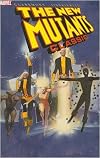
I had to give this one 4 stars - Bill Sienkiewicz's artwork here is just amazing and Claremont's writing is at its peak especially with Magik succumbing to her dark sorcery. The Demon Bear storyline is fantastic - the Cloak & Dagger one is not bad. Also introduced Lila Cheney, the interdimensional teleporting rock star. Her seduction of Cannonball is just pure Claremont depravity.
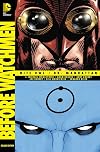
When I first heard about the Before Watchmen series, I was somewhat curious but mostly skeptical. My opinion was that the original graphic novel provided a great deal of back story on its characters already (one of the many reasons I love that book so much), so this would be superfluous. Add to the mix that the original author as well the illustrator of Watchmen were neither involved in the project, and my doubts were high. Still, curiosity prevailed and I finally decided to check out Before show more Watchmen, starting with the bound book covering Nite Owl and Dr. Manhattan. Besides my unbeatable curiosity, another thing this book had going for it was that DC had gathered a team of highly prized creators to helm this effort.
In the original novel, Nite Owl/Dan Dreiberg was one of my favorite characters but also the one with the least back story, so it was a given that I’d want to read his prequel. Turns out I was rather disappointed. Dan struck me as one the nicest and least problematic characters in the original book, someone who simply got in to the costumed hero business because he idolized the first Nite Owl so much. Here he is given an abusive past with a father who victimized Dan’s mother while he was unable to help. There are also several allusions to the first Nite Owl having done something horrible, which was again sad to see, as he also struck a chord as a genuinely “good guy” in the original novel. Furthermore, this section of the book doesn’t read like Watchmen; it’s more or less any costumed hero getting his bearings, finding mentors and partners, and getting ensnared by a buxom woman - in this case, a high-class madam who seems to be a masked vigilante herself. As a superhero story, it’s entertaining escapism; as part of the Watchmen universe, it simply isn’t up to par. Likewise, the illustrations throughout are well done, but they are also pretty standard fare for comics in terms of being straightforward grid sequencing. This section’s rating is only three stars in my opinion.
As he wasn’t really a beloved character for me in the original story, I probably wouldn’t have read Dr. Manhattan’s prequel if it weren’t included in the same bound book with Nite Owl. In this case, that ended up being a good thing. I really enjoyed this part of the book, which touched on deeper themes and gave the reader pause for thought. While a lot of Dr. Manhattan’s back story was already explored in the original Watchmen, new details are created here, including 10-year-old Jon’s harrowing escape from Nazis – an event that later played in to his watchmaker father’s decision to abandon his trade and spurred Jon into his career as a physicist. We also see the building blocks here of the main crux of the Watchmen conflict and climax, with a brief look into the thoughts of Adrian Veidt as he pulls the wool over the Dr. Manhattan and talks him into re-creating his energy signature. The illustrations are far more interesting here, and there’s more creative license taken with the comics layout. My particular favorite is when the book literally reverses as we’re pulled into Veidt’s thoughts, a very clever and effective device. While this still isn’t exactly Watchmen, this seems like a suitable homage to it and a worthy contribution to its universe. I’d rate this section with all five stars.
An unexpected bonus at the end of the book is the inclusion of the back story to Moloch, one of the longtime enemies of the Minutemen/Watchmen. Being a relatively minor character in the original story, his background was really never explored nor one that seemed necessary to do so. The origins imagined here is comparatively trite – he looks funny, people make fun of him, he turns to crime in revenge. The real piece of interest here is again seeing how Veidt manipulates Moloch in to being a player in his master plan without revealing the details of that scheme. The religious overtones in this one were perhaps a bit much, but it did bring another layer to the story at hand. Like with the first section, the illustrations here are well done but nothing particularly spectacular. This section gets a three and a half star rating.
Overall, I do appreciate how the creators here were able to fashion something new out of an older story, incorporating elements of the original novel throughout but without necessarily simply re-creating them nor entirely re-imagining them. It’s more like they took the original events and discovered new life around them, putting them into a broader context. Inevitably, these Before Watchmen comics will strike strong chords – purists will hate anyone touching the source material while those just wishing there was more Watchmen to read will eagerly clamor towards them. For myself, I found this title both sadly lacking (the Nite Owl story), surprisingly on target (the Dr. Manhattan story), and giving new perspective (the Moloch story). While I wasn’t overwhelmed by what I found in its pages, it was certainly well done enough that I will go on to seek out further titles in the Before Watchmen series. show less
In the original novel, Nite Owl/Dan Dreiberg was one of my favorite characters but also the one with the least back story, so it was a given that I’d want to read his prequel. Turns out I was rather disappointed. Dan struck me as one the nicest and least problematic characters in the original book, someone who simply got in to the costumed hero business because he idolized the first Nite Owl so much. Here he is given an abusive past with a father who victimized Dan’s mother while he was unable to help. There are also several allusions to the first Nite Owl having done something horrible, which was again sad to see, as he also struck a chord as a genuinely “good guy” in the original novel. Furthermore, this section of the book doesn’t read like Watchmen; it’s more or less any costumed hero getting his bearings, finding mentors and partners, and getting ensnared by a buxom woman - in this case, a high-class madam who seems to be a masked vigilante herself. As a superhero story, it’s entertaining escapism; as part of the Watchmen universe, it simply isn’t up to par. Likewise, the illustrations throughout are well done, but they are also pretty standard fare for comics in terms of being straightforward grid sequencing. This section’s rating is only three stars in my opinion.
As he wasn’t really a beloved character for me in the original story, I probably wouldn’t have read Dr. Manhattan’s prequel if it weren’t included in the same bound book with Nite Owl. In this case, that ended up being a good thing. I really enjoyed this part of the book, which touched on deeper themes and gave the reader pause for thought. While a lot of Dr. Manhattan’s back story was already explored in the original Watchmen, new details are created here, including 10-year-old Jon’s harrowing escape from Nazis – an event that later played in to his watchmaker father’s decision to abandon his trade and spurred Jon into his career as a physicist. We also see the building blocks here of the main crux of the Watchmen conflict and climax, with a brief look into the thoughts of Adrian Veidt as he pulls the wool over the Dr. Manhattan and talks him into re-creating his energy signature. The illustrations are far more interesting here, and there’s more creative license taken with the comics layout. My particular favorite is when the book literally reverses as we’re pulled into Veidt’s thoughts, a very clever and effective device. While this still isn’t exactly Watchmen, this seems like a suitable homage to it and a worthy contribution to its universe. I’d rate this section with all five stars.
An unexpected bonus at the end of the book is the inclusion of the back story to Moloch, one of the longtime enemies of the Minutemen/Watchmen. Being a relatively minor character in the original story, his background was really never explored nor one that seemed necessary to do so. The origins imagined here is comparatively trite – he looks funny, people make fun of him, he turns to crime in revenge. The real piece of interest here is again seeing how Veidt manipulates Moloch in to being a player in his master plan without revealing the details of that scheme. The religious overtones in this one were perhaps a bit much, but it did bring another layer to the story at hand. Like with the first section, the illustrations here are well done but nothing particularly spectacular. This section gets a three and a half star rating.
Overall, I do appreciate how the creators here were able to fashion something new out of an older story, incorporating elements of the original novel throughout but without necessarily simply re-creating them nor entirely re-imagining them. It’s more like they took the original events and discovered new life around them, putting them into a broader context. Inevitably, these Before Watchmen comics will strike strong chords – purists will hate anyone touching the source material while those just wishing there was more Watchmen to read will eagerly clamor towards them. For myself, I found this title both sadly lacking (the Nite Owl story), surprisingly on target (the Dr. Manhattan story), and giving new perspective (the Moloch story). While I wasn’t overwhelmed by what I found in its pages, it was certainly well done enough that I will go on to seek out further titles in the Before Watchmen series. show less

Access a version of the below that includes illustrations on my blog.
This book collects three four-issue miniseries that feature Commissioner Gordon and/or the Gotham City Police Department; it's a precursor of sorts to Gotham Central, though I am pretty sure that the only main character here who is also a main character there is the ubiquitous Renee Montoya. Each of the stories here has a slightly different focus.
"Gordon's Law" is pretty squarely focused on Commissioner Gordon himself, as show more he discovers that there's possibly some corruption in the GCPD, which means he can't trust anyone on the force-- and to make things worse, he only wants cops to go after cops, which means he rejects Batman's offer of assistance as well. The story is kinda complicated; there are a lot of characters, and most of them were new to me (if not new to everyone), and though I really like the gritty tone established by Klaus Janson's artwork, he didn't always make it easy to remember who was who. Its biggest weakness is probably that it's one of those stories where tons of "old friends" we've never seen before turn up, and the narrative expects us to be surprised when an "old friend" we've never seen before turns out to not be altogether trustworthy. And that's not the only obvious twist, but there were some good ones as well. Overall, it's an okay tale: some good crime fiction influences, but it doesn't really have anything to say about Gordon, about the GCPD, or about Batman.
"GCPD" is the most like Gotham Central of all the stories here; the commissioner is just a minor part of a sprawling, ensemble tale of various members of the GCPD pursuing various cases. Harvey Bullock struggles with anger management, a new partner, and a serial killer; Renee Montoya goes undercover as a diplomat's wife to help catch an assassin; two cops named Kitch (a trained lawyer) and Cav (a grizzled old vet) track down art thieves and an insurance scam; an administrator named Hendricks tries to figure out who's stealing stationery. As you might imagine, some of these stories are better than others: I always enjoy a Montoya tale, but Chuck Dixon doesn't really make her very unique, and the circumstance she ends up in seems incredibly contrived to say the least. (Do local cops really handle assassination plots against foreign officials? Would there really be no plan for cancelling the operation when it all goes wrong and the diplomat deliberately endangers Montoya's life?) On the other hand, I did enjoy the Harvey Bullock plot. This was my first real exposure to the character (he was retired during Gotham Central), and he gets to do some good old-fashioned investigating that shows off his intelligence as well as his human side, and I liked his contentious relationship with his new partner.
The Kitch/Cav plot had its moments, but some of its beats were very familiar. Is the lawyer-turned-cop who is mocked for his education by the cops and for his slumming it by the lawyers, and flirts with going back to law only to be reminded that lawyers are corrupt, a thing? I am pretty sure I read this exact story last year in Fort Freak. I liked Cav, though. The best character of all, however, was Hendricks: of course a desk officer grimly determined to catch an office supplies thief in the fact of mockery from his colleagues was my fave. The law begins and ends with him! I've previously struggled with Jim Aparo art on stories of the "gritty" type, but to my surprise, he paired really well with Bill Sienkiewicz on inks: Aparo does great figures and great storytelling, but Sienkiewicz's rough inks add the right tone for an urban cop story. Best art in the book.
"Gordon of Gotham" is even less about the GCPD than "Gordon's Law," as it's mostly a present-day Gordon telling Batman about his last year as a Chicago cop, leading into the events of Batman: Year One. As anyone who read my review of that story would know, I love Jim Gordon, and Dennis O'Neil really captures what it is that I like about him. Gordon is just a man trying to do the right thing in a world that will never reward him for it, because it is a world that needs Batman. Gordon argues with his wife (there's a callback to his struggle with domestic violence from Night Cries, another quality Jim Gordon tale), but ends up stopping a diner holdup almost by accident, then decides to go after corruption, but the world itself is corrupt, and he quickly gets in deeply over his head and ends up making choices that violate his moral core... or so he had thought. O'Neil piles on the twists and the action in a compelling way, and I really liked how this set us up for the Gordon of Year One, down to his decision to grow a mustache. The only real weakness is the frame; I wonder why they didn't just do this story in pure flashback.
Gotham Central: Next in sequence » show less
This book collects three four-issue miniseries that feature Commissioner Gordon and/or the Gotham City Police Department; it's a precursor of sorts to Gotham Central, though I am pretty sure that the only main character here who is also a main character there is the ubiquitous Renee Montoya. Each of the stories here has a slightly different focus.
"Gordon's Law" is pretty squarely focused on Commissioner Gordon himself, as show more he discovers that there's possibly some corruption in the GCPD, which means he can't trust anyone on the force-- and to make things worse, he only wants cops to go after cops, which means he rejects Batman's offer of assistance as well. The story is kinda complicated; there are a lot of characters, and most of them were new to me (if not new to everyone), and though I really like the gritty tone established by Klaus Janson's artwork, he didn't always make it easy to remember who was who. Its biggest weakness is probably that it's one of those stories where tons of "old friends" we've never seen before turn up, and the narrative expects us to be surprised when an "old friend" we've never seen before turns out to not be altogether trustworthy. And that's not the only obvious twist, but there were some good ones as well. Overall, it's an okay tale: some good crime fiction influences, but it doesn't really have anything to say about Gordon, about the GCPD, or about Batman.
"GCPD" is the most like Gotham Central of all the stories here; the commissioner is just a minor part of a sprawling, ensemble tale of various members of the GCPD pursuing various cases. Harvey Bullock struggles with anger management, a new partner, and a serial killer; Renee Montoya goes undercover as a diplomat's wife to help catch an assassin; two cops named Kitch (a trained lawyer) and Cav (a grizzled old vet) track down art thieves and an insurance scam; an administrator named Hendricks tries to figure out who's stealing stationery. As you might imagine, some of these stories are better than others: I always enjoy a Montoya tale, but Chuck Dixon doesn't really make her very unique, and the circumstance she ends up in seems incredibly contrived to say the least. (Do local cops really handle assassination plots against foreign officials? Would there really be no plan for cancelling the operation when it all goes wrong and the diplomat deliberately endangers Montoya's life?) On the other hand, I did enjoy the Harvey Bullock plot. This was my first real exposure to the character (he was retired during Gotham Central), and he gets to do some good old-fashioned investigating that shows off his intelligence as well as his human side, and I liked his contentious relationship with his new partner.
The Kitch/Cav plot had its moments, but some of its beats were very familiar. Is the lawyer-turned-cop who is mocked for his education by the cops and for his slumming it by the lawyers, and flirts with going back to law only to be reminded that lawyers are corrupt, a thing? I am pretty sure I read this exact story last year in Fort Freak. I liked Cav, though. The best character of all, however, was Hendricks: of course a desk officer grimly determined to catch an office supplies thief in the fact of mockery from his colleagues was my fave. The law begins and ends with him! I've previously struggled with Jim Aparo art on stories of the "gritty" type, but to my surprise, he paired really well with Bill Sienkiewicz on inks: Aparo does great figures and great storytelling, but Sienkiewicz's rough inks add the right tone for an urban cop story. Best art in the book.
"Gordon of Gotham" is even less about the GCPD than "Gordon's Law," as it's mostly a present-day Gordon telling Batman about his last year as a Chicago cop, leading into the events of Batman: Year One. As anyone who read my review of that story would know, I love Jim Gordon, and Dennis O'Neil really captures what it is that I like about him. Gordon is just a man trying to do the right thing in a world that will never reward him for it, because it is a world that needs Batman. Gordon argues with his wife (there's a callback to his struggle with domestic violence from Night Cries, another quality Jim Gordon tale), but ends up stopping a diner holdup almost by accident, then decides to go after corruption, but the world itself is corrupt, and he quickly gets in deeply over his head and ends up making choices that violate his moral core... or so he had thought. O'Neil piles on the twists and the action in a compelling way, and I really liked how this set us up for the Gordon of Year One, down to his decision to grow a mustache. The only real weakness is the frame; I wonder why they didn't just do this story in pure flashback.
Gotham Central: Next in sequence » show less
Lists
Awards


You May Also Like


Associated Authors
Statistics
- Works
- 103
- Also by
- 144
- Members
- 2,738
- Popularity
- #9,382
- Rating
- 3.9
- Reviews
- 59
- ISBNs
- 107
- Languages
- 9
- Favorited
- 2