On This Page
Description
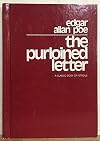
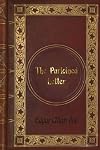
First published in an 1844 literary annual The Gift: A Christmas and New Year's Present for 1845, The Purloined Letter is the third and final story that features Poe's detective, C. Auguste Dupin. In it, Dupin is approached by the prefect of the police to help with a case that involves a stolen letter containing compromising information.Tags
Recommendations















Member Recommendations
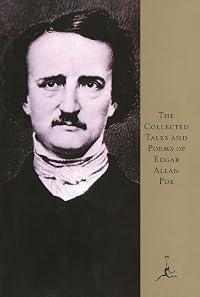
bertilak In both stories that which is sought is present to the sight but unseeable.
Member Reviews
This is definitely the best of the three Poe stories featuring Dupin, despite having the most commonplace title. It's a clear antecedent of Sherlock Holmes in almost every respect, and actually has a plot as well. You can hear Holmes saying many of Dupin's lines, Watson saying many of the unnamed narrator's and Lestrade saying many of Inspector G's lines.
Eh. Not my favourite of Poe's works by far, but I do respect it as a departure from his typical style and subject matter. The real reason I didn't like this is because it's almost entirely dialogue, and for a story that could have been interesting, 95% of it is spent rambling on about algebra and metaphysics.
Edgar Allen Poe was an amazingly creative, unconventional man, and he is credited with inventing and popularizing the modern detective novel. The first Dupin mystery was written in 1841, [b:The Murders in the Rue Morgue|3301759|The Murders in the Rue Morgue|Edgar Allan Poe|https://images.gr-assets.com/books/1409105459s/3301759.jpg|18440614]; [b:The Purloined Letter|278854|The Purloined Letter|Edgar Allan Poe|https://images.gr-assets.com/books/1338446224s/278854.jpg|270472] is another mystery handily solved by C. Auguste Dupin.
This tale is not a murder mystery (as the previous Dupin mysteries were), but rather the problem of a letter stolen from the Queen of France. The explanation of Dupin's reasoning at the end seems a bit grandiose show more to me, but is very necessary for the reader to understand (and, in fact, to admire) his skills. I enjoyed the writing style, the dramatic nature, and the epic explanation at the end.
Overall, a lovely little mystery, and clearly a huge influence on Arthur Conan Doyle's Sherlock Holmes, (although written well before Arthur Conan Doyle's Sherlock Holmes). Well worth reading, and highly recommended. show less
This tale is not a murder mystery (as the previous Dupin mysteries were), but rather the problem of a letter stolen from the Queen of France. The explanation of Dupin's reasoning at the end seems a bit grandiose show more to me, but is very necessary for the reader to understand (and, in fact, to admire) his skills. I enjoyed the writing style, the dramatic nature, and the epic explanation at the end.
Overall, a lovely little mystery, and clearly a huge influence on Arthur Conan Doyle's Sherlock Holmes, (although written well before Arthur Conan Doyle's Sherlock Holmes). Well worth reading, and highly recommended. show less
This is one of Poe's mysteries, and it might seem dated in today's era compared to the forensic technology and mysteries we deal with in the 21st century, this is still a very fun and classic read.
I've read a few Edgar Allan Poe stories in my time (I remember being very scared by reading the Tell-Tale Heart) but this one had never this one. Since it is on the 1001 Books to Read Before You Die list and it was available as a free download on the internet I decided to finish up my trifecta of detective novels by reading it now. I suppose this would be classified as one of the oldest detective mysteries and I'm sure that is why it is on the list.
A letter has been taken from a royal personage's room by a minister of the Crown. The letter would be damaging to the royal personage (although not specified it is presumed the royal personage is the Queen) if it was divulged to her husband so the minister can use it to obtain advantages for show more himself. The Parisian police, headed by Monsieur G., have been tasked with recovering the letter but despite searching the minister's house minutely and having him waylaid twice to be personally searched they have not been able to find it. Monsieur G. comes to Auguste Dupin to ask for advice. Dupin advises him to search the house again. When Monsieur G. returns in a month he confesses that they have not been able to find the letter and that the reward has been doubled. G. says he would give 50,000 francs to whoever could help find the letter. Dupin says if G. writes a cheque he will produce the letter and he does upon receiving the cheque. G. goes away happy but mystified and Dupin explains to the narrator how he found the letter. In this he reminded me quite a lot of Agatha Christie's Hercule Poirot using his little grey cells to solve a mystery that eluded the police.
It's nice to tick another one off the list. show less
A letter has been taken from a royal personage's room by a minister of the Crown. The letter would be damaging to the royal personage (although not specified it is presumed the royal personage is the Queen) if it was divulged to her husband so the minister can use it to obtain advantages for show more himself. The Parisian police, headed by Monsieur G., have been tasked with recovering the letter but despite searching the minister's house minutely and having him waylaid twice to be personally searched they have not been able to find it. Monsieur G. comes to Auguste Dupin to ask for advice. Dupin advises him to search the house again. When Monsieur G. returns in a month he confesses that they have not been able to find the letter and that the reward has been doubled. G. says he would give 50,000 francs to whoever could help find the letter. Dupin says if G. writes a cheque he will produce the letter and he does upon receiving the cheque. G. goes away happy but mystified and Dupin explains to the narrator how he found the letter. In this he reminded me quite a lot of Agatha Christie's Hercule Poirot using his little grey cells to solve a mystery that eluded the police.
It's nice to tick another one off the list. show less
The Purloined Letter was originally published in 1845, and is one of three stories featuring the famous Parisian amateur detective C. Auguste Dupin. These three stories are considered early forerunners of the modern detective story.
This case involves the blackmail of the queen. A letter from the queen’s lover has been taken. The police know who took the letter and are trying to retrieve it but all their efforts to locate it’s hiding place have failed. On being handed a cheque in the amount of 50,000 francs, Dupin was able to produce the letter. Using his method of identifying with the criminal, Dupin was able to put his mind to work and discover where the letter had been hidden.
A simple story with the answer relying on the show more deductions made by Dupin who worked out that the letter’s appearance had been altered and that it was in plain sight if one cared to look. Having the detective simply use his brain to solve the mystery allowed this genre to become both based on action as in The Murders of Rue Morgue and on analytical thinking by allowing the detective to ponder the case and track down the clues through his own deductions as in this story. show less
This case involves the blackmail of the queen. A letter from the queen’s lover has been taken. The police know who took the letter and are trying to retrieve it but all their efforts to locate it’s hiding place have failed. On being handed a cheque in the amount of 50,000 francs, Dupin was able to produce the letter. Using his method of identifying with the criminal, Dupin was able to put his mind to work and discover where the letter had been hidden.
A simple story with the answer relying on the show more deductions made by Dupin who worked out that the letter’s appearance had been altered and that it was in plain sight if one cared to look. Having the detective simply use his brain to solve the mystery allowed this genre to become both based on action as in The Murders of Rue Morgue and on analytical thinking by allowing the detective to ponder the case and track down the clues through his own deductions as in this story. show less
Read this as part of my BA in English.
With Poe's reputation, I felt disappointed with this, though parts did impress me. The concept is clever, but too much rambling prose prevented me from really liking this.
With Poe's reputation, I felt disappointed with this, though parts did impress me. The concept is clever, but too much rambling prose prevented me from really liking this.
Members
- Recently Added By
Lists

1001 Books You Must Read Before You Die
1,448 works; 1,136 members

Blue Pyramid 1,276 Best Books of All Time
1,248 works; 32 members

Books Read in 2013
1,630 works; 51 members

Books Read in College
80 works; 5 members

Recommended Reading : 600 Classics Reviewed, Editors of Salem Press, 2015
634 works; 6 members

Tozai Mystery Best 100 | The Top 100 Mystery Novels
111 works; 3 members
Author Information

3,820+ Works 107,861 Members
Edgar Allan Poe was born in Boston, Massachusetts on January 19, 1809. In 1827, he enlisted in the United States Army and his first collection of poems, Tamerlane and Other Poems, was published. In 1835, he became the editor of the Southern Literary Messenger. Over the next ten years, Poe would edit a number of literary journals including the show more Burton's Gentleman's Magazine and Graham's Magazine in Philadelphia and the Broadway Journal in New York City. It was during these years that he established himself as a poet, a short story writer, and an editor. His works include The Fall of the House of Usher, The Tell-Tale Heart, The Murders in the Rue Morgue, The Mystery of Marie Roget, A Descent into the Maelstrom, The Masque of the Red Death, and The Raven. He struggle with depression and alcoholism his entire life and died on October 7, 1849 at the age of 40. (Bowker Author Biography) show less
Some Editions
Awards and Honors
Notable Lists
Series

Belongs to Publisher Series
Work Relationships
Is contained in
Edgar Allan Poe: Collected Stories and Poems (Collector's Library Editions) by Edgar Allan Poe (indirect)
The Murders in the Rue Morgue / The Mystery of Marie Roget / The Purloined Letter and other stories by Edgar Allan Poe
The Fall of the House of Usher and Other Writings: Poems, Tales, Essays, and Reviews (Penguin Classics) by Edgar Allan Poe
Delphi Complete Works of Anna Katharine Green US (Illustrated) (Delphi Series Eight Book 11) by Anna Katharine Green (indirect)
The Fall Of The House Of Usher: And Other Tales And Prose Writings of Edgar Allan Poe by Edgar Allan Poe
The Murders in the Rue Morgue / The Mystery of Marie Roget / The Purloined Letter / The Gold Bug / Thou Art the Man by Edgar Allan Poe
The Works of Edgar Allen Poe in One Volume: Poems, Tales, Essays, Criticisms with New Notes by Edgar Allan Poe
The Best Known Works of Edgar Allan Poe in One Volume: Poems, Tales, Essays, Criticisms by Edgar Allan Poe
The Complete Tales and Poems of Edgar Allan Poe with Selections from His Critical Writings by Edgar Allan Poe
Great Tales of Horror and Suspense; Weird Tales of Edgar Allan Poe: the Ghost Ship and Other Ghostly Stories, Dracula by Edgar Allan Poe
The annotated tales of Edgar Allan Poe edited with an introduction, notes, and a bibliography by Edgar Allan Poe
The American Short Story: A Collection of the Best Known and Most Memorable Stories by the Great American Authors by Thomas K. Parkes
The Best of Poe: The Tell-Tale Heart, The Raven, The Cask of Amontillado, and 30 Others by Edgar Allan Poe
The Complete Tales of Mystery and Imagination; The Narrative of Arthur Gordon Pym; The Raven and Other Poems by Edgar Allan Poe (indirect)
The fall of the House of Usher and other stories (Classics of mystery & suspense) by Edgar Allan Poe
Is retold in
Has the adaptation
Has as a student's study guide
Common Knowledge
- Canonical title
- The Purloined Letter [short story]
- Original title
- The Purloined Letter
- Original publication date
- 1844-12
- People/Characters
- C. Auguste Dupin
- Important places
- Paris, France; au troisième, 33 rue Dunôt, Faubourg St. Germain, Paris, France
- Related movies
- Wishbone" The Pawloined Paper (IMDb)
- Epigraph
- Nil sapientiæ odiosus acumine nimio. - Seneca
(Nothing is more odious to wisdom than too much cleverness.) - First words
- At Paris, just after dark one gusty evening in the autumn of 18--, I was enjoying the twofold luxury of meditation and a meerschaum, in company with my friend C. Auguste Dupin, in his little back library, or book closet, a... (show all)u troisième, 33 rue Dunôt, Faubourg St. Germain.
- Last words
- (Click to show. Warning: May contain spoilers.)"He is well acquainted with my MS., and I just copied into the middle of the blank sheet the words:-
'Un dessein si funeste,
S'il n'est digne d'Atrée, est digne de Thyeste.'
[If such a sinister design,
Isn't worthy of Atreus, it is worthy of Thyestes].
They are to be found in Crébillon's Atrée." - Original language
- English
Classifications
- Genres
- Fiction and Literature, General Fiction, Horror, Mystery
- DDC/MDS
- 813.3 — Literature & rhetoric American literature in English American fiction in English Middle 19th Century 1830-1861
- LCC
- PZ7 .P7515 .P — Language and Literature Fiction and juvenile belles lettres Fiction and juvenile belles lettres Juvenile belles lettres
- BISAC
Statistics
- Members
- 472
- Popularity
- 64,748
- Reviews
- 19
- Rating
- (3.50)
- Languages
- 7 — English, French, German, Italian, Korean, Portuguese, Spanish
- Media
- Paper, Audiobook, Ebook
- ISBNs
- 71
- ASINs
- 24