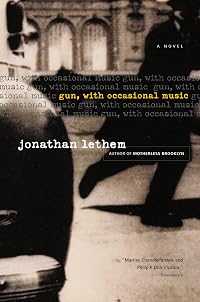
Gun, with Occasional Music
by Jonathan Lethem
On This Page
Description
Gumshoe Conrad Metcalf has problems-not the least of which are the rabbit in his waiting room and the trigger-happy kangaroo on his tail. Near-future Oakland is an ominous place where evolved animals function as members of society, the police monitor citizens by their karma levels, and mind-numbing drugs such as Forgettol and Acceptol are all the rage. In this brave new world, Metcalf has been shadowing the wife of an affluent doctor, perhaps falling a little in love with her at the same show more time. But when the doctor turns up dead, our amiable investigator finds himself caught in the crossfire in a futuristic world that is both funny-and not so funny. show lessTags
Recommendations
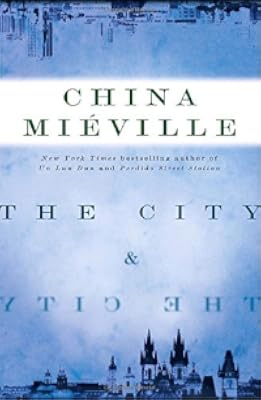
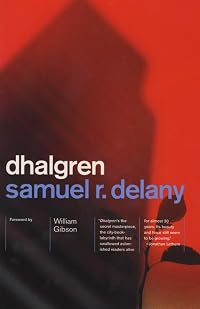
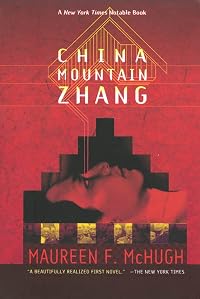
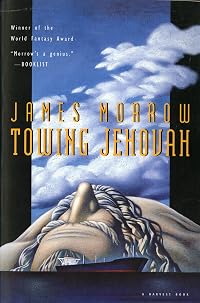



Member Recommendations

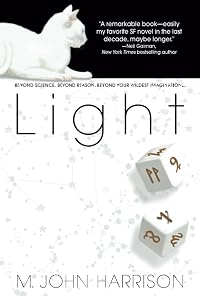
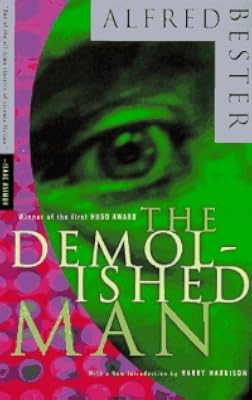
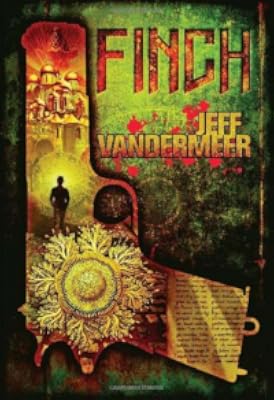
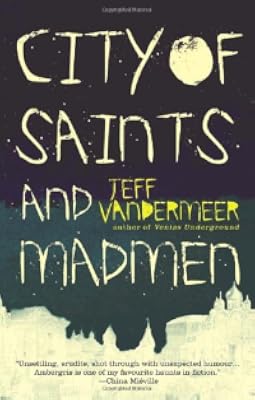
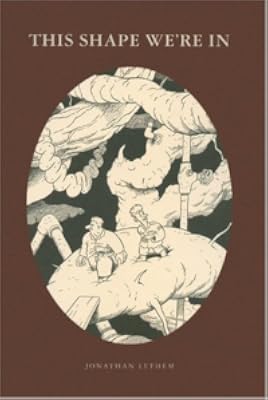
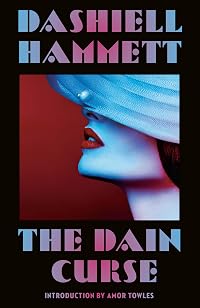
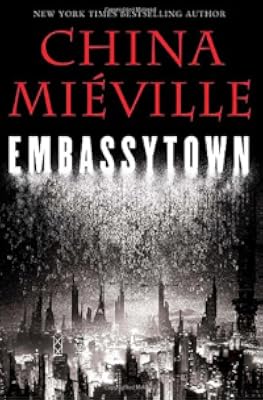
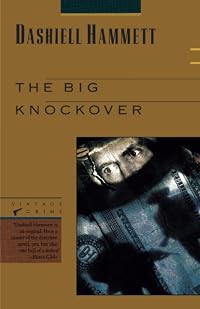
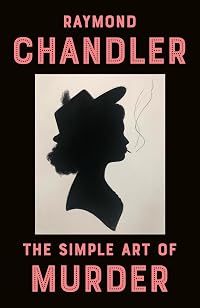
oldnick42 Creative sci-fi with memory-erasing elements.
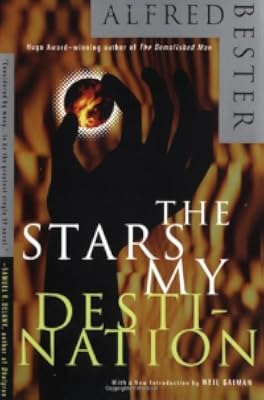
CGlanovsky Dystopian futures largely characterized by the ubiquity of mood-altering drugs.
Member Reviews
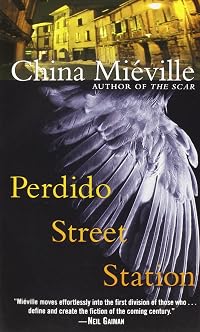
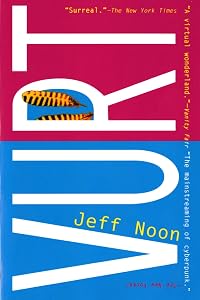
'Gun, With Occasional Music' is a science fiction noir mystery. As with all crime noir, I must compare it unfavourably with Raymond Chandler. Sorry, but there it is. That done, I do recommend this novel as an entertainingly weird twist on the lone PI investigating a mystery with the world against him. Lethem's style can be found about equidistant between Jeff Noon and The Great Chandler.
I very much enjoyed the details of the world evoked in this book. Free drugs for everyone, evolved animals doing most of the menial jobs, and wordless news updates. All this was presented in the deadpan, hard-boiled narration of the former-cop-current-detective-for-hire. Probably the least interesting part, though, was the mystery itself. Perhaps this show more was an intentionally postmodern element of the book, but I had little interest in whodunnit or why. I was more interested in the self-destructiveness of the narrator and pondering what on earth was going on with the creepy 'babyheads'.
Thus I can't wholeheartedly recommend 'Gun, With Occasional Music', although I love the world within which it is set. I think Jeff Noon does the mystery-in-bizarre-near-future thing more effectively in 'Pollen' and 'Nymphomation'. A lot of amusement can be had from reading this novel as a stylistic parody of the noir genre, though. On balance, I liked the parts better than the whole. show less
I very much enjoyed the details of the world evoked in this book. Free drugs for everyone, evolved animals doing most of the menial jobs, and wordless news updates. All this was presented in the deadpan, hard-boiled narration of the former-cop-current-detective-for-hire. Probably the least interesting part, though, was the mystery itself. Perhaps this show more was an intentionally postmodern element of the book, but I had little interest in whodunnit or why. I was more interested in the self-destructiveness of the narrator and pondering what on earth was going on with the creepy 'babyheads'.
Thus I can't wholeheartedly recommend 'Gun, With Occasional Music', although I love the world within which it is set. I think Jeff Noon does the mystery-in-bizarre-near-future thing more effectively in 'Pollen' and 'Nymphomation'. A lot of amusement can be had from reading this novel as a stylistic parody of the noir genre, though. On balance, I liked the parts better than the whole. show less
A hard-boiled detective with a Raymond Chandler mouth fights for justice in a near-future Oakland. What a wild ride! This novel is full of sheep and kangaroos that talk among other strange things, but manages to be very darkly humorous and wonderfully entertaining. While the dialogue and some of the narrative is downright campy at times, the story simmers with restrained guffaws of realism. Overall a stunning first novel and a riotous romp of triumph. "She was either looking good for fifty or bad for thirty-five..."
A lot of this book felt like a cheesy noir detective story, from the bantering that always leaves our hero with the last word to the predictable sexual conquest. On top of that, the writing had some pretty big flaws. Of many, here is one example:
See how the author has to have the big-man character explain his motive for revealing information? That's because the author is having that character do something that makes no sense show more given what has already been told to the reader. Major no-no.
So, three stars? Really? I think yes, and it's because of the twist 2/3 of the way through the book, and the way that the twist sustains itself to the end. I was phoning it in with this book, just getting through it for my bookclub, until that twist. Then I sat up, tucked my feet under myself, and dove on in. show less
The big man chuckled. "What would be my motive for telling you that?"
"Simple. I'll find out one way or another. Either you tell me now or I bother your loved ones about it."
"Very well. There's something I like about letting you go on thinking your threats are effective with me. I suppose I admire your bluster."
See how the author has to have the big-man character explain his motive for revealing information? That's because the author is having that character do something that makes no sense show more given what has already been told to the reader. Major no-no.
So, three stars? Really? I think yes, and it's because of the twist 2/3 of the way through the book, and the way that the twist sustains itself to the end. I was phoning it in with this book, just getting through it for my bookclub, until that twist. Then I sat up, tucked my feet under myself, and dove on in. show less
My reaction to reading this novel in 1995. Spoilers may follow.
The strange title makes sense at the end of the novel when mechanical devices, including guns, often have musical accompaniments. This is another mystery written in direct stylistic imitation of Raymond Chandler. I’ve never read Chandler himself though I’ve come close by watching Double Indemnity which he scripted. I suspect the plot of the book – a lone cynical detective trying to unmask the corruption of the world around him – mirrors Chandler’s private eye heroes.
The corrupt world of this book, sometime in the middle or early 21st century, is a sf dystopia of baroque touches. Evolutionary therapy has created intelligent animals. (We meet a talking sheep -- who show more gets murdered, a kitten, an ape, and a vicious, gun-toting kangaroo who the narrator detective kills at the novel’s conclusion.) Cryonic suspension is a punishment. “Babyheads” (all children now have accelerated growth) form their own babbling, beatnik type subculture. Neural surgery permits lovers to exchange sensory input from their genitals. (The hero’s old girlfriend has left him with female type wiring in his genitals while she has his penis wiring.). Memories can be edited. Most significant and disturbing of all, lots of drugs: addictol, Regrettol, Acceptol, Forgettol with effects you’d expect given their names. Technology – of the hardware sort – is relegated to an anti-gravity pen the narrator carries, and he wittingly makes the observation that significant new technology often announces itself in tacky advertising products.
Despite all these baroque touches and talking animals, the plot and style (Chandleresque prose is always fun to read because it emphasizes grim, dark humor and dry wit) make it feel like a ‘40s mystery. If I understood Letham’s point, this novel, behind its sf machinery and its Chandleresque plot of a man “neither tarnished nor afraid” prowling “mean streets” (phrases from Chandler), is about a dystopia of alienation. The hero, Conrad Metcalf, is not a private eye but a private Inquisitor; he formerly worked with the official Inquisitors who in this world are the police. Letham depicts a culture of people alienated from each other and reality. It is considered rude for all but Inquisitors to ask questions, so a major fuel of human interaction is missing. Metcalf, because he has the genital nerve wiring of a female, feels alienated from his own sexuality. The murdered Maynard Stanhunt (whose death opens the novel) is alienated from his own past due to heavy use of Forgettol. Indeed, this alienation proves fatal since, through a series of convoluted events, his employee the gun-toting kangaroo, mistakes him for someone else. The populace itself is somewhat divorced from reality since newspapers (in a manner reminiscent of Ray Bradbury’s Fahrenheit 451) only carry pictures, radio news is usually delivered in music and seldom words. After Metcalf is railroaded into a six year cold sleep sentence, he emerges into an even more grim, bizarre world where “time-release Forgettol” is the drug of choice for the population, where people query memory boxes to see what they do and don’t remember. In such a world, Metcalf can’t bring himself to kill Phoneblum, the object of his intended vengeance, since, to all practical purposes, the old Phoneblum is dead already.
Metcalf’s role as an incorruptible figure is further accented when, even though he has a heavy drug habit emphasized from beginning to the very last words of the novel, he refuses to satisfy it with the new personality and memory destroying drugs. He is determined to not only symbolize justice in the world but to be one of the few uncorrupted repositories of past memory. Eventually, he goes back into cold sleep rather than becoming a typical denizen of the world and hopes the world will be better when he wakes up. The only real flaw in this novel is the love triangle between Phoneblum, Maynard Stanhunt, and Celeste Stanlemt is termed as stable before Maynard’s murder but that is never explained nor is Phoneblum’s blackmail hold over Drs. Stanhunt and Testafer. show less
The strange title makes sense at the end of the novel when mechanical devices, including guns, often have musical accompaniments. This is another mystery written in direct stylistic imitation of Raymond Chandler. I’ve never read Chandler himself though I’ve come close by watching Double Indemnity which he scripted. I suspect the plot of the book – a lone cynical detective trying to unmask the corruption of the world around him – mirrors Chandler’s private eye heroes.
The corrupt world of this book, sometime in the middle or early 21st century, is a sf dystopia of baroque touches. Evolutionary therapy has created intelligent animals. (We meet a talking sheep -- who show more gets murdered, a kitten, an ape, and a vicious, gun-toting kangaroo who the narrator detective kills at the novel’s conclusion.) Cryonic suspension is a punishment. “Babyheads” (all children now have accelerated growth) form their own babbling, beatnik type subculture. Neural surgery permits lovers to exchange sensory input from their genitals. (The hero’s old girlfriend has left him with female type wiring in his genitals while she has his penis wiring.). Memories can be edited. Most significant and disturbing of all, lots of drugs: addictol, Regrettol, Acceptol, Forgettol with effects you’d expect given their names. Technology – of the hardware sort – is relegated to an anti-gravity pen the narrator carries, and he wittingly makes the observation that significant new technology often announces itself in tacky advertising products.
Despite all these baroque touches and talking animals, the plot and style (Chandleresque prose is always fun to read because it emphasizes grim, dark humor and dry wit) make it feel like a ‘40s mystery. If I understood Letham’s point, this novel, behind its sf machinery and its Chandleresque plot of a man “neither tarnished nor afraid” prowling “mean streets” (phrases from Chandler), is about a dystopia of alienation. The hero, Conrad Metcalf, is not a private eye but a private Inquisitor; he formerly worked with the official Inquisitors who in this world are the police. Letham depicts a culture of people alienated from each other and reality. It is considered rude for all but Inquisitors to ask questions, so a major fuel of human interaction is missing. Metcalf, because he has the genital nerve wiring of a female, feels alienated from his own sexuality. The murdered Maynard Stanhunt (whose death opens the novel) is alienated from his own past due to heavy use of Forgettol. Indeed, this alienation proves fatal since, through a series of convoluted events, his employee the gun-toting kangaroo, mistakes him for someone else. The populace itself is somewhat divorced from reality since newspapers (in a manner reminiscent of Ray Bradbury’s Fahrenheit 451) only carry pictures, radio news is usually delivered in music and seldom words. After Metcalf is railroaded into a six year cold sleep sentence, he emerges into an even more grim, bizarre world where “time-release Forgettol” is the drug of choice for the population, where people query memory boxes to see what they do and don’t remember. In such a world, Metcalf can’t bring himself to kill Phoneblum, the object of his intended vengeance, since, to all practical purposes, the old Phoneblum is dead already.
Metcalf’s role as an incorruptible figure is further accented when, even though he has a heavy drug habit emphasized from beginning to the very last words of the novel, he refuses to satisfy it with the new personality and memory destroying drugs. He is determined to not only symbolize justice in the world but to be one of the few uncorrupted repositories of past memory. Eventually, he goes back into cold sleep rather than becoming a typical denizen of the world and hopes the world will be better when he wakes up. The only real flaw in this novel is the love triangle between Phoneblum, Maynard Stanhunt, and Celeste Stanlemt is termed as stable before Maynard’s murder but that is never explained nor is Phoneblum’s blackmail hold over Drs. Stanhunt and Testafer. show less
This is tasty futuristic/dystopian noir. It has several of the revolting aspects that make noir darker and seedier than "crime stories." There are things that the story hints at that makes astute readers want to pump the brakes. Such points are real risks that the author took, and I can appreciate that. (Example, what are these evolved animals and how corrupt are the physical interactions these future humans have with them? Taboos and immorality and...and. Are they still brutes if they talk and think and such? Maybe it's a good thing the author left some of this open ended and vague.)
The detective story: a private investigator who is a real louse anyway, gets a case that ends up terribly. Like a good noir story, nobody is saved. It's a show more bad day for everyone.
But the writing is somehow utterly engaging and the world-building with its strangeness is so curious.....
With more payoffs on a few of the elements, this is easily a five star read. Instead, some of the elements just seem too pointless. And this is certainly NOT a novel for *every* reader. It's a bit repulsive at points. But not gore...just cringe. Not crass. Just cringe. All noir (the streets flow with powder and gin). show less
The detective story: a private investigator who is a real louse anyway, gets a case that ends up terribly. Like a good noir story, nobody is saved. It's a show more bad day for everyone.
But the writing is somehow utterly engaging and the world-building with its strangeness is so curious.....
With more payoffs on a few of the elements, this is easily a five star read. Instead, some of the elements just seem too pointless. And this is certainly NOT a novel for *every* reader. It's a bit repulsive at points. But not gore...just cringe. Not crass. Just cringe. All noir (the streets flow with powder and gin). show less
I can't believe I allowed this gem to languish so long. This is noir set in the near-distant future with a cast of characters which includes "evolved" animals ranging from Joey the kangaroo, a vicious thug, to sweet Dulcie the ewe, not to mention "evolved" babies, the Babyheads. P. I. (Private Inquisitor, not Private Investigator; in this future the only people who can ask questions are Inquisitors, Private or Government), Conrad Metcalf has been hired by a man accused of murder (and about to be "frozen" for that crime) to prove his innocence. Conrad must conduct his investigation in a world where everyone, including himself, relies on drugs with varying proportions of Forgetterol, Regreterol, Acceptol, Avoidol etc. etc., but always show more with a heaping dose of Addictol. Everyone must also carry a card showing their "Karma" number, which is constantly subject to reduction by government inquisitors.
What a unique and utterly cohesive world Lethem has created and what a unique genre--sci fi, dystopian, noir?--whatever--it totally works. The tone, too, is unique--depressing but funny. I totally loved this book. Highly recommended.
4 1/2 stars show less
What a unique and utterly cohesive world Lethem has created and what a unique genre--sci fi, dystopian, noir?--whatever--it totally works. The tone, too, is unique--depressing but funny. I totally loved this book. Highly recommended.
4 1/2 stars show less
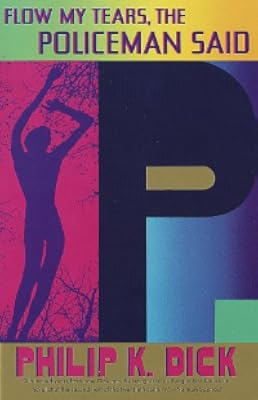
This was one hell of a trip. If you're into the whole noir-style smart-mouthed jaded detective thing, this hits that note really well, but the near-future world it's set in takes everything to a whole new level. Reminds me a little of The Big Sheep, another novel heavily influenced by Raymond Chandler and Philip K. Dick. I loved both novels, but Gun feels a bit less like self-conscious parody, I'd say. It has a lot to say about society at large, not just the sort of low-life characters who caught up in murder mysteries.
Members
- Recently Added By
Published Reviews
ThingScore 75
A final note: one might expect that it would be hard to immerse oneself in a novel filled with such outré characters and settings, but that wasn’t the case for me. I fell right in. I don’t know why I’ve not read more Lethem.
added by JalenV
Lists

Noirvember: The Best Noir
113 works; 56 members

Best Noir Fiction
160 works; 14 members

Dystopian and Apocalyptic Literature
350 works; 74 members
Books Set in California
112 works; 15 members

Speculative Fiction: Slipstream Literature
166 works; 16 members

Biggest Disappointments
606 works; 163 members

The Hermenautic Bookshelf
111 works; 7 members

Book Worlds We'd Like To Visit
322 works; 158 members

Favorite Animal Fiction
359 works; 156 members

Adult Stories Involving Animals
76 works; 6 members

Books Read in 2006
424 works; 8 members

Crime and Mysteries to Read
746 works; 31 members

recalling favorites...
105 works; 2 members
Speculative Fiction to Read
706 works; 32 members

Strange Cities
30 works; 7 members

Read These Too
458 works; 9 members

A Novel Cure
742 works; 23 members

Amusing Book Titles
146 works; 39 members

The Five Books That Represent Us
391 works; 149 members

Best Science Fiction Novels
816 works; 426 members
Author Information

100+ Works 24,681 Members
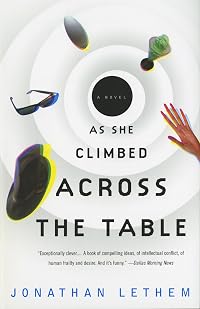
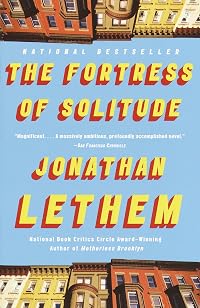
Jonathan Lethem was born in Brooklyn, New York on February 19, 1964. His first novel, Gun, with Occasional Music was published in 1994. His other works include As She Climbed across the Table (1997), Amnesia Moon (1995), The Fortress of Solitude (2003), You Don't Love Me Yet (2007), Chronic City (2009), and Dissident Gardens (2013). He won the show more National Book Critics Circle Award for Motherless Brooklyn (1999). He also writes short stories, comics and essays. His work has appeared in The New Yorker, Harper's, Rolling Stone, Esquire, The New York Times, The Paris Review, McSweeney's and other periodicals and anthologies. (Bowker Author Biography) show less
Some Editions
Awards and Honors
Awards
Series
Belongs to Publisher Series
Distorsions (7)
Work Relationships
Has as a commentary on the text
Common Knowledge
- Canonical title
- Gun, with Occasional Music
- Original title
- Gun, with occasional music
- Original publication date
- 1994
- People/Characters
- Conrad Metcalf; Celeste Stanhunt; Joey Castle (the Kangaroo); Maynard Stanhunt; Dr. Testafore; Barry Phoneblum (show all 7); Inquistor Telepromptor
- Important places
- Wyoming, USA; Oakland, California, USA; San Francisco, California, USA
- Epigraph
- There was nothing to it. The Super Chief was on time, as it almost always is, and the subject was as easy to spot as a kangaroo in a dinner jacket. Raymond Chandler
- Dedication
- For Carmen Farina.
- First words
- It was there when I woke up, I swear. The feeling.
- Last words
- (Click to show. Warning: May contain spoilers.)It was that rarity, an easy decision.
- Blurbers
- Eisenstadt, Jill; Carroll, Jonathan; Shepard, Lucius; Robinson, Kim Stanley; Morrow, James; Bisson, Terry (show all 7); Williams, Paul
Classifications
Statistics
- Members
- 2,504
- Popularity
- 7,725
- Reviews
- 68
- Rating
- (3.72)
- Languages
- 7 — Catalan, English, Finnish, French, German, Italian, Russian
- Media
- Paper, Audiobook, Ebook
- ISBNs
- 24
- ASINs
- 13