
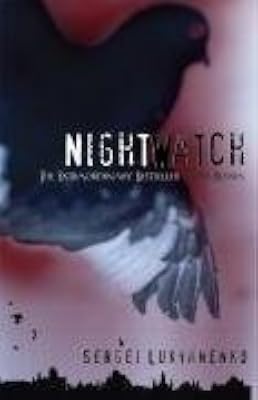
On This Page
Description
They are the "Others," an ancient race of supernatural beings--magicians, shape-shifters, vampires, and healers--who live among us. Human born, they must choose a side to swear allegiance to--the Dark or the Light--when they come of age. For a millennium, these opponents have coexisted in an uneasy peace, enforced by defenders like the Night Watch, forces of the Light who guard against the Dark. But prophecy decrees that one supreme "Other" will arise to spark a cataclysmic war. Anton show more Gorodetsky, an untested mid-level Light magician with the Night Watch, discovers a cursed young woman--an Other of tremendous potential unallied with either side--who can shift the balance of power. With the battle lines between Light and Dark drawn, the magician must move carefully, for one wrong step could mean the beginning of annihilation. show lessTags
Recommendations
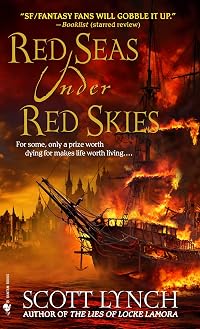
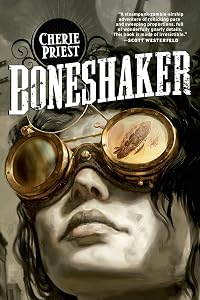

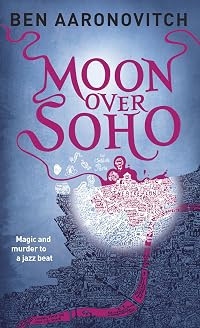
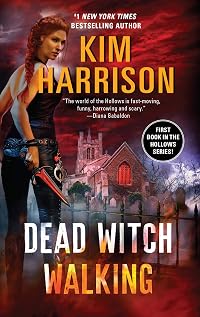
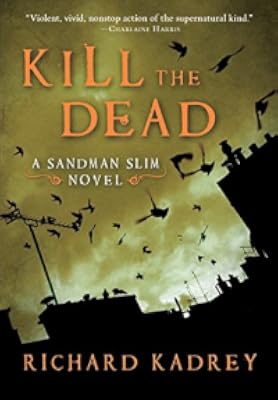
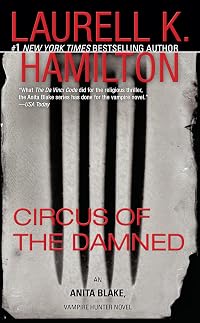
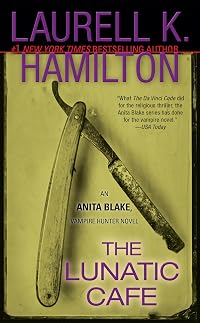
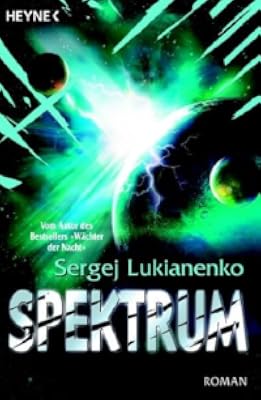
Member Recommendations
citygirl When the supernatural collides with modern life. One in Moscow, one in the US.
90
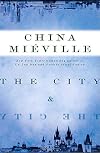
julienne_preacher Both books are about divided realities (and both books are awesome).
30
Member Reviews
I think I'm a bit amazed.
There's an awful lot I love about this novel and I had to put aside a lot of my well-misinformed prejudices about what I think I like most about modern Urban Fantasy.
Let's be clear here... this novel came out before most of the modern batches. 1998.
When it comes to similar themes of dark magic vs. light and the exploration of an amazingly deep moral ambiguity between them, I actually prefer Benedict Jacka's UF novels when it comes to straight action, magic, and characters, but Night Watch takes things slightly farther with the honest questions.
In both, anyone can be good or evil despite the categories, and there's a LOT of ground covered in both series, but Night Watch actually comes close to laying down a show more foundation of philosophical thought. I can be summed up as balance if I wanted to be crude. Let's not be surprised this is a modern Russian novel writing about modern Russia as a full-out UF with vampires, magicians, alternate dimensional side-realms, and a fight between the light and dark. Add the police-like drama and ramp up the focus of a morality of action versus the singularity of truth and the ambiguity of all the details will bring a hoard of devils home to us.
Sometimes slow, very often broken up into what could be a series of novellas, this first book is nevertheless pretty brilliant.
Where do dark magicians get their power? Suffering. Where do light magicians get theirs? Joy. Both diminish the source. It's quite delightful.
But if I'm being very honest, this is more of a 4.5 than a full 5 stars, but that's only due to my sheer enjoyment (or lack) that pulled down this otherwise sprawling philosophical twist to a traditional gritty UF. Maybe my issue is in the translation. Maybe it's my greater enjoyment coming from similar series to have treated the topic. I do not know.
Even so, I did enjoy this very much. Especially the end. show less
There's an awful lot I love about this novel and I had to put aside a lot of my well-misinformed prejudices about what I think I like most about modern Urban Fantasy.
Let's be clear here... this novel came out before most of the modern batches. 1998.
When it comes to similar themes of dark magic vs. light and the exploration of an amazingly deep moral ambiguity between them, I actually prefer Benedict Jacka's UF novels when it comes to straight action, magic, and characters, but Night Watch takes things slightly farther with the honest questions.
In both, anyone can be good or evil despite the categories, and there's a LOT of ground covered in both series, but Night Watch actually comes close to laying down a show more foundation of philosophical thought. I can be summed up as balance if I wanted to be crude. Let's not be surprised this is a modern Russian novel writing about modern Russia as a full-out UF with vampires, magicians, alternate dimensional side-realms, and a fight between the light and dark. Add the police-like drama and ramp up the focus of a morality of action versus the singularity of truth and the ambiguity of all the details will bring a hoard of devils home to us.
Sometimes slow, very often broken up into what could be a series of novellas, this first book is nevertheless pretty brilliant.
Where do dark magicians get their power? Suffering. Where do light magicians get theirs? Joy. Both diminish the source. It's quite delightful.
But if I'm being very honest, this is more of a 4.5 than a full 5 stars, but that's only due to my sheer enjoyment (or lack) that pulled down this otherwise sprawling philosophical twist to a traditional gritty UF. Maybe my issue is in the translation. Maybe it's my greater enjoyment coming from similar series to have treated the topic. I do not know.
Even so, I did enjoy this very much. Especially the end. show less
Lo scontro tra il bene e il male, uno dei temi forse più abusati di tutta la letteratura mondiale.
Ma qui, in una Mosca che ricorda molto quella di Bugakov, nonostante gli anni passati e la caduta dell'impero sovietico, il bene rischia di essere scambiato per cinismo, e il male per qualosa che difende la libertà da esperimenti di rivoluzione globale discutibili e pericolosi.
E soprattutto, il bene, attraverso il suo agente Anton, si fa domande su se stesso e sulla sua possibilità di rimanere umano.
Una lettura molto divertente e solo apparentemente di pura evasione.
Ma qui, in una Mosca che ricorda molto quella di Bugakov, nonostante gli anni passati e la caduta dell'impero sovietico, il bene rischia di essere scambiato per cinismo, e il male per qualosa che difende la libertà da esperimenti di rivoluzione globale discutibili e pericolosi.
E soprattutto, il bene, attraverso il suo agente Anton, si fa domande su se stesso e sulla sua possibilità di rimanere umano.
Una lettura molto divertente e solo apparentemente di pura evasione.
I can’t get over the suspicion I’m reading this in the wrong language.
Simple, really. I am—I’m reading it in English.
The philosophy of language makes me dizzy; the chicken-egg relationship between cognition and verbal expression means that something is likely lost in translation the more sophisticated or fantastical a thought becomes. Even simple phrases have deeper meaning. Take the concept “I have to walk the dog.” Not too hard, is it? Except in translating, do you use the pronoun “I” or is it implied in the verb? If you leave the ‘I’ out, are you implying something about importance of self? What about ‘walk’ and ‘dog?’ In English, ‘walk’ tends to imply a more leisurely pace. In America, there is often show more an implication of economics and social status. You have a dog. You have free time to walk it. Money to feed it. You have a safe place to walk. What’s the equivalent expression of leisure and obligation? Is the ‘have to’ an ethical obligation or a social one? Declaring or implying? Something more is contained in every word chosen–a hint of characterization, a whiff of judgement, an implication.
As I said, dizzy.
I liked The Night Watch. And yet I felt I missed some of the details, the emotional impact of the whole. The concepts are deceptively simple. Balance. Sacrifice of the few for the many. Sacrifice of the personal for the larger goal. The bureaucrat forced into action. Love.
Told in a triptych structure, it follows the story of Anton, agent of the Night Watch in the war between the Light Ones and the Dark Ones. Discovering one’s potential to walk in the Twilight, the unseen world around us, obligates a person to choose a side. With choosing and training comes other magical skills. Dark Ones explore freedom at the expense of others. Light Ones work for others.
‘Story One: Destiny.’ Anton, former computer jockey, is tasked with tracking vampires who are poaching in Moscow without a license. The Night Watch, the police force of the Light, is monitoring and enforcing the treaty of neutrality between the Light and the Dark. As Anton rides the trains listening to music, he runs into a young woman with a powerful curse hanging over her head. He uses his magic amulet, but it is unable to disperse it more than a minute or two. Unfortunately, he notes the vampire luring in a young boy nearby, so he has to disengage from saving the woman to complete his mission. Anton is a little unsuited to his task; his main role has been as programmer, not field agent. In fact, he lives next to a family of (legal) vampires, and is prone to drawing comparisons between his friends and the vampire he is supposed to kill.
The language of the translation is deceptively straightforward, except for the mind-stutter of the ‘Night Watch’ being the arm of Light, and the ‘Day Watch’ being the arm of Dark. It was almost as if those terms were too simple for their use. Occasionally, I’d hit a lovely little turn of phrase:
“That’s how myths are born. Out of our carelessness, out of our tattered nerves, out of jokes that go wrong and flashy gestures.”
“Generally speaking, we can and should say everything. We just have to choose the right time, otherwise the truth can be worse than a lie.”
For an everyman mythos, characterization is well done. There’s an interruption in the narrative when the young teen Egor is given a viewpoint, and Lukyanenko manages to capture young, confused and defiant in a nice mix. I found the scene were the narrator approaches Egor to be equally well done–American urban fantasy especially wants to believe in the romance, when in fact, fright, doubt and suspicion are equally likely responses. I loved the idea that words/intentions/feelings could result in curses, which could attach to a person and cause temporary bad luck.
There were, perhaps, particularly Russian moments and conceptions:
“They showed me out in total silence, without any unnecessary words, without any shoulder-slapping or helpful advice. After all, what I was doing wasn’t such a big deal. I was only on my way to die.”
That one struck me, the resignation, the acceptance, the futility and the neutral reaction of his team. ‘Yes,’ they seem to say. ‘We all do. This is only your turn.’
‘Story Two: Among His Own Kind’ is a more challenging piece. An unknown magician is killing low-level agents of the Dark Ones without a trace, with only a rip in the clothes for evidence. Is it a rogue Light Agent? Both sides are interested in finding the killer, either to recruit or to retaliate. Anton is suspected, and he and Olga switch bodies as a way of hiding Anton from the Dark. Anton finds his commitment to the Light tested.
‘Story Three: All for My Own Kind’ starts more hopefully with the Night Watch heading on a three day vacation. I liked the view of leisure it presented, a small glimpse into Russian culture with resources to vacation in the country. Characterization here is particularly well done, with a nice air of both comedy and melancholy. Anton is roused for defense and embarks on his most complicated journey yet. It ends satisfactorily.
“Maybe it’s because we’ve lost something, Anton… The ability not just to defend people, but to bring them joy? What good are secure walls, if they’re the walls of a prison? Humans have forgotten about genuine magic, they don’t believe in the Dark, but they don’t believe in the Light either!”
Another Russian moment:
“‘It’s okay to get drunk, Anton. If you really need to. Only you have to get drunk on vodka. Cognac and wine–that’s all for the heart.’
‘So what’s vodka for?’
‘For the soul. If it’s hurting real bad.'”
It all feels very metaphorical, all very Cold-War-esque, Russian stoicism, philosophical debate of freedom. Still, it’s couched in a good story. The second time through, I had greater understanding of the mechanics of the complicated plots. I have the feeling that if I knew more about Russian culture, or was reading it in Russian, that I’d have a greater appreciation for its intricate plot and philosophical underpinnings.
“‘Why am I still asking these questions?’
‘You’ll never stop asking them. Out loud at first, and later on just to yourself. It will never stop, never. If you wanted to be free of painful questions, you chose the wrong side.’
‘I chose the one I wanted’
‘I know. So now put up with it.’
‘All my life?’
‘Yes. It will be a long one, but you’ll never get over this. You’ll never stop asking yourself if every step you make is the right one.'” show less
Simple, really. I am—I’m reading it in English.
The philosophy of language makes me dizzy; the chicken-egg relationship between cognition and verbal expression means that something is likely lost in translation the more sophisticated or fantastical a thought becomes. Even simple phrases have deeper meaning. Take the concept “I have to walk the dog.” Not too hard, is it? Except in translating, do you use the pronoun “I” or is it implied in the verb? If you leave the ‘I’ out, are you implying something about importance of self? What about ‘walk’ and ‘dog?’ In English, ‘walk’ tends to imply a more leisurely pace. In America, there is often show more an implication of economics and social status. You have a dog. You have free time to walk it. Money to feed it. You have a safe place to walk. What’s the equivalent expression of leisure and obligation? Is the ‘have to’ an ethical obligation or a social one? Declaring or implying? Something more is contained in every word chosen–a hint of characterization, a whiff of judgement, an implication.
As I said, dizzy.
I liked The Night Watch. And yet I felt I missed some of the details, the emotional impact of the whole. The concepts are deceptively simple. Balance. Sacrifice of the few for the many. Sacrifice of the personal for the larger goal. The bureaucrat forced into action. Love.
Told in a triptych structure, it follows the story of Anton, agent of the Night Watch in the war between the Light Ones and the Dark Ones. Discovering one’s potential to walk in the Twilight, the unseen world around us, obligates a person to choose a side. With choosing and training comes other magical skills. Dark Ones explore freedom at the expense of others. Light Ones work for others.
‘Story One: Destiny.’ Anton, former computer jockey, is tasked with tracking vampires who are poaching in Moscow without a license. The Night Watch, the police force of the Light, is monitoring and enforcing the treaty of neutrality between the Light and the Dark. As Anton rides the trains listening to music, he runs into a young woman with a powerful curse hanging over her head. He uses his magic amulet, but it is unable to disperse it more than a minute or two. Unfortunately, he notes the vampire luring in a young boy nearby, so he has to disengage from saving the woman to complete his mission. Anton is a little unsuited to his task; his main role has been as programmer, not field agent. In fact, he lives next to a family of (legal) vampires, and is prone to drawing comparisons between his friends and the vampire he is supposed to kill.
The language of the translation is deceptively straightforward, except for the mind-stutter of the ‘Night Watch’ being the arm of Light, and the ‘Day Watch’ being the arm of Dark. It was almost as if those terms were too simple for their use. Occasionally, I’d hit a lovely little turn of phrase:
“That’s how myths are born. Out of our carelessness, out of our tattered nerves, out of jokes that go wrong and flashy gestures.”
“Generally speaking, we can and should say everything. We just have to choose the right time, otherwise the truth can be worse than a lie.”
For an everyman mythos, characterization is well done. There’s an interruption in the narrative when the young teen Egor is given a viewpoint, and Lukyanenko manages to capture young, confused and defiant in a nice mix. I found the scene were the narrator approaches Egor to be equally well done–American urban fantasy especially wants to believe in the romance, when in fact, fright, doubt and suspicion are equally likely responses. I loved the idea that words/intentions/feelings could result in curses, which could attach to a person and cause temporary bad luck.
There were, perhaps, particularly Russian moments and conceptions:
“They showed me out in total silence, without any unnecessary words, without any shoulder-slapping or helpful advice. After all, what I was doing wasn’t such a big deal. I was only on my way to die.”
That one struck me, the resignation, the acceptance, the futility and the neutral reaction of his team. ‘Yes,’ they seem to say. ‘We all do. This is only your turn.’
‘Story Two: Among His Own Kind’ is a more challenging piece. An unknown magician is killing low-level agents of the Dark Ones without a trace, with only a rip in the clothes for evidence. Is it a rogue Light Agent? Both sides are interested in finding the killer, either to recruit or to retaliate. Anton is suspected, and he and Olga switch bodies as a way of hiding Anton from the Dark. Anton finds his commitment to the Light tested.
‘Story Three: All for My Own Kind’ starts more hopefully with the Night Watch heading on a three day vacation. I liked the view of leisure it presented, a small glimpse into Russian culture with resources to vacation in the country. Characterization here is particularly well done, with a nice air of both comedy and melancholy. Anton is roused for defense and embarks on his most complicated journey yet. It ends satisfactorily.
“Maybe it’s because we’ve lost something, Anton… The ability not just to defend people, but to bring them joy? What good are secure walls, if they’re the walls of a prison? Humans have forgotten about genuine magic, they don’t believe in the Dark, but they don’t believe in the Light either!”
Another Russian moment:
“‘It’s okay to get drunk, Anton. If you really need to. Only you have to get drunk on vodka. Cognac and wine–that’s all for the heart.’
‘So what’s vodka for?’
‘For the soul. If it’s hurting real bad.'”
It all feels very metaphorical, all very Cold-War-esque, Russian stoicism, philosophical debate of freedom. Still, it’s couched in a good story. The second time through, I had greater understanding of the mechanics of the complicated plots. I have the feeling that if I knew more about Russian culture, or was reading it in Russian, that I’d have a greater appreciation for its intricate plot and philosophical underpinnings.
“‘Why am I still asking these questions?’
‘You’ll never stop asking them. Out loud at first, and later on just to yourself. It will never stop, never. If you wanted to be free of painful questions, you chose the wrong side.’
‘I chose the one I wanted’
‘I know. So now put up with it.’
‘All my life?’
‘Yes. It will be a long one, but you’ll never get over this. You’ll never stop asking yourself if every step you make is the right one.'” show less
Like most Russian novels, this book is long, and think-y. But the entire series is, in as literal a way as possible, "Good vs. Evil". So of course it's going to be philosophical. My favorite part is when Svetlana (a new member of the Night Watch (who are Good and protect against Evil)) wants to know how the Good Guys (herself included) are any different from the Evil Guys. Anton (another member of the Night Watch) tells her that as long as she is worried about whether she is good or not, she is good. So perfect.
I absolutely love the movie that is based on this book. I wasn't sure what to expect when reading the book, but it turned out to be good. It's not better than the movie, or worse, it's just very different. The movie really only show more encompasses the first 50 pages or so, and then changes the plot so it can end at that point. But the movie is a work of art in its own right. So don't skip either one.
Also, this book was a whole lot less about vampires than I thought it would be. Vampires are really only in the first 100 pages or so, and after that it's all about the Good Guys. show less
I absolutely love the movie that is based on this book. I wasn't sure what to expect when reading the book, but it turned out to be good. It's not better than the movie, or worse, it's just very different. The movie really only show more encompasses the first 50 pages or so, and then changes the plot so it can end at that point. But the movie is a work of art in its own right. So don't skip either one.
Also, this book was a whole lot less about vampires than I thought it would be. Vampires are really only in the first 100 pages or so, and after that it's all about the Good Guys. show less
The Night Watch was sitting on my shelf for so long, despite having people telling me it was good, that I had to challenge myself to read it. And read it I did (finally).
First, what put me off this book mostly was the fact it had vampires. And this isn't my dislike for teenage vampire drama, but my relationship with this kind of creatures: it's a love-hate thing, where sometimes I really like them, but most of the times I can't see the fascination with them. I probably should have paid better attention to the back cover and the reviews, because the bloodsuckers are not really the focus of the story.
So, The Night Watch is set in Moscow, which is refreshing as most of the books I have read set in Russia are written by long dead authors, show more and are pretty depressing (not because they aren't good, it's just the mood of them). But this is a Russia (well, a world) where paranormal creatures and magic exist. Only the general population isn't really aware of them (so it could actually be our world). A world where saying something “Damn you” when someone gets in front of you in a line will actually damn them (even if just a little).
Meet Anton, our (reluctant) hero. He works for the Night Watch, which are actually the good guys, the guys of Light, that keep watch on the evil ones, the ones of Darkness, who operate mainly during the night. On a side note, the Dark ones have a Day Watch to make sure the good guys don't do too much good, upsetting the balance of things and breaking their long-struck deal.
Back to Anton, then. He is really just a programmer, he keeps telling that to his boss throughout the book, but he is required to do some field work as well, and so, like the good employee he is, he puts on his headphones (and his minidisk walkman, that was the height of technology when this book was written but now it just sounds really old – so much I was amazed they had cellphones) and goes on patrolling the streets (and the subway lines as well).
The book starts when he is in a test – he has to identify a threat and solve it. But this guy is good at what he does, and even better at what he normally doesn't do, and identifies two threats, takes care of the one he was supposed to deal with and then goes on to help with the other one.
And then adventures follow. And twists, and an owl appears! (I am not joking, there is sidekick owl in the first story). And you get thrown in this really rich world, where you, like Anton, doubt if the Night Watch boss is really a good guy and has your (Anton's) best interests in mind. You get to meet his co-workers, some with always a story to tell, some mysterious; and get a glimpse of his problems with relationships and his level of magic, and what it means to be good.
I am not sure what I was expecting of this book, but certainly it wasn't this. But I liked it, not just because of Anton, but the entire world and the way magic and goodness (or evilness) works. I'll be reading the next book in the series: Day Watch.
Also at Spoilers and Nuts show less
First, what put me off this book mostly was the fact it had vampires. And this isn't my dislike for teenage vampire drama, but my relationship with this kind of creatures: it's a love-hate thing, where sometimes I really like them, but most of the times I can't see the fascination with them. I probably should have paid better attention to the back cover and the reviews, because the bloodsuckers are not really the focus of the story.
So, The Night Watch is set in Moscow, which is refreshing as most of the books I have read set in Russia are written by long dead authors, show more and are pretty depressing (not because they aren't good, it's just the mood of them). But this is a Russia (well, a world) where paranormal creatures and magic exist. Only the general population isn't really aware of them (so it could actually be our world). A world where saying something “Damn you” when someone gets in front of you in a line will actually damn them (even if just a little).
Meet Anton, our (reluctant) hero. He works for the Night Watch, which are actually the good guys, the guys of Light, that keep watch on the evil ones, the ones of Darkness, who operate mainly during the night. On a side note, the Dark ones have a Day Watch to make sure the good guys don't do too much good, upsetting the balance of things and breaking their long-struck deal.
Back to Anton, then. He is really just a programmer, he keeps telling that to his boss throughout the book, but he is required to do some field work as well, and so, like the good employee he is, he puts on his headphones (and his minidisk walkman, that was the height of technology when this book was written but now it just sounds really old – so much I was amazed they had cellphones) and goes on patrolling the streets (and the subway lines as well).
The book starts when he is in a test – he has to identify a threat and solve it. But this guy is good at what he does, and even better at what he normally doesn't do, and identifies two threats, takes care of the one he was supposed to deal with and then goes on to help with the other one.
And then adventures follow. And twists, and an owl appears! (I am not joking, there is sidekick owl in the first story). And you get thrown in this really rich world, where you, like Anton, doubt if the Night Watch boss is really a good guy and has your (Anton's) best interests in mind. You get to meet his co-workers, some with always a story to tell, some mysterious; and get a glimpse of his problems with relationships and his level of magic, and what it means to be good.
I am not sure what I was expecting of this book, but certainly it wasn't this. But I liked it, not just because of Anton, but the entire world and the way magic and goodness (or evilness) works. I'll be reading the next book in the series: Day Watch.
Also at Spoilers and Nuts show less
"You find life such a problem because you think there are good people and bad people. You're wrong, of course. There are, always and only, the bad people, but some of them are on opposite sides."--Terry Pratchett
Summon up your own shadow and let it pull you into the Twilight, the liminal land of heartless greys and mysterious shadows, where truths cannot be hidden and where magic is real. But the Twilight's gift is two-edged. While it will grant you powers, it will also leech away your humanity, transforming you into an Other: an inhuman, immortal being who sees the world as inalterably divided into Light and Dark. If you walk into the Twilight, pray that you do so with a merry heart. Don't bring anger or greed or sadness, because that show more first moment in the Twilight will alter your fate forever. Walk in with laughter on your lips and you'll be a servant of the Light; step in with sadness and you'll be a creature of the Dark.
After eons of war between Light and Dark, the two forces have created an unholy truce: to maintain a balance between good and evil. Vampires can hunt and kill only via the approved lottery, and Light mages cannot perform healings and "remoralizations" at random. Anton is a member of the Night Watch, the Light's police force against the powers of Darkness. He has been a sysadmin for the past few years, and this is his first active field mission: to find and stop a rogue vampire. However, when he discovers a girl under a terrible curse, his mission is diverted: a curse this monstrous means all of Moscow is in danger, and the Night Watch must race to save the city.
Night Watch was a very interesting read and my first non-Anglo/American urban fantasy. It is wonderfully successful at capturing the atmosphere of Moscow, and the themes and perspective are very different from those presented in American books. What troubled and intrigued me most was the extreme polarity of the magical system, its inherent arbitrariness, and the morality seemingly assumed by each side. In general, I have real issues with stories that split the world into Good and Evil (which perhaps explains my ill success with most epic fantasy.) In general, I feel that such an attitude is laughably simplistic and removes all moral complexity and grey areas from the story. However, Night Watch is, at its core, a deconstruction of this concept. Even though I think the narrator does not fully question the contradictions in the concept, I think his story and his questions cause the reader to fall even further than Anton into despair and nihilism.
From the outset, Night Watch forces one to consider the basis of morality, for in the Twilight, even the tiniest fluctuation in a person's mood irrevocably determine their "side." Throughout the story, I struggled to understand this, and I'm still not sure what the author was trying to portray. The narration seems to seesaw between unquestioning utilization of this duality and an increasingly nihilistic deconstruction of it. The Dark Others are portrayed as unquestionably evil; their Power comes directly from increases in chaos and human misery, so it seems reasonable that powerful Dark Ones must have succumbed to evil. But what of the weak Dark Ones? How is it their fault that the Twilight forced them into grief? They are portrayed as being able to pursue ordinary lives, so why assume they are necessarily evil? Why did entering the Twilight remove all choice from them? This issue is even more apparent for the Light. The Light Others gain their power by siphoning the happiness of the population, so it is in their selfish interest to create a utopia. To me, their actions are far more disturbing than those of the Dark: they are ruthlessly willing to sacrifice their own like pawns, to experiment upon the populace, and even to perform "remoralizations" upon the populace to forcibly direct their actions. Yet their actions are, apparently by definition, always "Good." What happens if a Light mage wants to begin acting selfishly? Why would a single moment of happiness wipe out the innate selfishness of a person's nature? Yet according to Anton, an Other cannot switch sides; either a Light One is incapable of acting selfishly, or even in selfishness, he is still of the Light. How is it, then, that to me, the Light is far more evil than the Dark?
The story heavily explores the issue of free will, and it was interesting to delve into a perspective that was entirely alien to my own. I'm an American, and a sacred tenant of our belief is free will. Even though we all know instinctively that not everyone is "special" and not everyone can do or become whatever they wish to be, to actually say so in American society equates to heresy. Anton's perspective is entirely different: he is repeatedly told that free will is just another word for selfishness, and a province only of the Dark Ones. I had real difficulty wrapping my head around this perspective, but was fascinated by it, and with the conclusions that Anton eventually draws.
In terms of readability, I was pleasantly surprised by how resonant and natural the language of the translation was. My only minor quibble was the serious surfeit of exclamation points--it made me wonder about cultural differences in punctuation. The structure is very different from the standard novel: it is split into three parts, with each part a different case with its own story arc. Although the characters and themes intertwine, I see Night Watch more as a set of three novellas or vignettes rather than a connected novel. To me, the abrupt switches in plot were a weakness in the story, but tastes are sure to differ on this. I wasn't able to warm to most of the characters, mainly because descriptions of them are typically tell rather than show. I warmed to the very few who actually had both quirks and conversations. As a character, I found Anton terrifying. His sudden bursts of ruthlessness and savagery are more extreme than most of the other semi-antiheroic protagonists I have encountered. hover for spoiler Yet this attitude in itself helps to accentuate the ultimate question of the book: what is Good and Evil, and how can one distinguish between them?
Night Watch is a unique read; its explicit exploration of themes of morality and its deconstruction of the ideals of good and evil can wander into rather ponderous moralizing at some points, but the multiple plot arcs and continuous action mean that the story never drags or suffers. It was also incredibly quotable, as my large collection of status updates can attest. I found its exploration of what "good" and "free will" actually mean to be captivating, and I was left pondering these themes long after I closed the book. Overall, it was definitely a worthwhile read, although it left me wanting to get drunk in the proper Russian fashion (on vodka)--and I don't drink. Like one of the characters, I'm beginning to understand "what real Russian drunkenness was all about...it's about waking up in the morning with everything around you looking gray. Gray sky, gray sun, gray city, gray people, gray thoughts. And the only way out is to have another drink. Then you feel better. Then the colors come back." This book, with its eternal war and the terrifying inhumanity on both sides, with humans trapped in the middle of the struggle, definitely leaves you feeling grey and in need of something to bring the colours back. show less
Summon up your own shadow and let it pull you into the Twilight, the liminal land of heartless greys and mysterious shadows, where truths cannot be hidden and where magic is real. But the Twilight's gift is two-edged. While it will grant you powers, it will also leech away your humanity, transforming you into an Other: an inhuman, immortal being who sees the world as inalterably divided into Light and Dark. If you walk into the Twilight, pray that you do so with a merry heart. Don't bring anger or greed or sadness, because that show more first moment in the Twilight will alter your fate forever. Walk in with laughter on your lips and you'll be a servant of the Light; step in with sadness and you'll be a creature of the Dark.
After eons of war between Light and Dark, the two forces have created an unholy truce: to maintain a balance between good and evil. Vampires can hunt and kill only via the approved lottery, and Light mages cannot perform healings and "remoralizations" at random. Anton is a member of the Night Watch, the Light's police force against the powers of Darkness. He has been a sysadmin for the past few years, and this is his first active field mission: to find and stop a rogue vampire. However, when he discovers a girl under a terrible curse, his mission is diverted: a curse this monstrous means all of Moscow is in danger, and the Night Watch must race to save the city.
Night Watch was a very interesting read and my first non-Anglo/American urban fantasy. It is wonderfully successful at capturing the atmosphere of Moscow, and the themes and perspective are very different from those presented in American books. What troubled and intrigued me most was the extreme polarity of the magical system, its inherent arbitrariness, and the morality seemingly assumed by each side. In general, I have real issues with stories that split the world into Good and Evil (which perhaps explains my ill success with most epic fantasy.) In general, I feel that such an attitude is laughably simplistic and removes all moral complexity and grey areas from the story. However, Night Watch is, at its core, a deconstruction of this concept. Even though I think the narrator does not fully question the contradictions in the concept, I think his story and his questions cause the reader to fall even further than Anton into despair and nihilism.
From the outset, Night Watch forces one to consider the basis of morality, for in the Twilight, even the tiniest fluctuation in a person's mood irrevocably determine their "side." Throughout the story, I struggled to understand this, and I'm still not sure what the author was trying to portray. The narration seems to seesaw between unquestioning utilization of this duality and an increasingly nihilistic deconstruction of it. The Dark Others are portrayed as unquestionably evil; their Power comes directly from increases in chaos and human misery, so it seems reasonable that powerful Dark Ones must have succumbed to evil. But what of the weak Dark Ones? How is it their fault that the Twilight forced them into grief? They are portrayed as being able to pursue ordinary lives, so why assume they are necessarily evil? Why did entering the Twilight remove all choice from them? This issue is even more apparent for the Light. The Light Others gain their power by siphoning the happiness of the population, so it is in their selfish interest to create a utopia. To me, their actions are far more disturbing than those of the Dark: they are ruthlessly willing to sacrifice their own like pawns, to experiment upon the populace, and even to perform "remoralizations" upon the populace to forcibly direct their actions. Yet their actions are, apparently by definition, always "Good." What happens if a Light mage wants to begin acting selfishly? Why would a single moment of happiness wipe out the innate selfishness of a person's nature? Yet according to Anton, an Other cannot switch sides; either a Light One is incapable of acting selfishly, or even in selfishness, he is still of the Light. How is it, then, that to me, the Light is far more evil than the Dark?
The story heavily explores the issue of free will, and it was interesting to delve into a perspective that was entirely alien to my own. I'm an American, and a sacred tenant of our belief is free will. Even though we all know instinctively that not everyone is "special" and not everyone can do or become whatever they wish to be, to actually say so in American society equates to heresy. Anton's perspective is entirely different: he is repeatedly told that free will is just another word for selfishness, and a province only of the Dark Ones. I had real difficulty wrapping my head around this perspective, but was fascinated by it, and with the conclusions that Anton eventually draws.
In terms of readability, I was pleasantly surprised by how resonant and natural the language of the translation was. My only minor quibble was the serious surfeit of exclamation points--it made me wonder about cultural differences in punctuation. The structure is very different from the standard novel: it is split into three parts, with each part a different case with its own story arc. Although the characters and themes intertwine, I see Night Watch more as a set of three novellas or vignettes rather than a connected novel. To me, the abrupt switches in plot were a weakness in the story, but tastes are sure to differ on this. I wasn't able to warm to most of the characters, mainly because descriptions of them are typically tell rather than show. I warmed to the very few who actually had both quirks and conversations. As a character, I found Anton terrifying. His sudden bursts of ruthlessness and savagery are more extreme than most of the other semi-antiheroic protagonists I have encountered. hover for spoiler Yet this attitude in itself helps to accentuate the ultimate question of the book: what is Good and Evil, and how can one distinguish between them?
Night Watch is a unique read; its explicit exploration of themes of morality and its deconstruction of the ideals of good and evil can wander into rather ponderous moralizing at some points, but the multiple plot arcs and continuous action mean that the story never drags or suffers. It was also incredibly quotable, as my large collection of status updates can attest. I found its exploration of what "good" and "free will" actually mean to be captivating, and I was left pondering these themes long after I closed the book. Overall, it was definitely a worthwhile read, although it left me wanting to get drunk in the proper Russian fashion (on vodka)--and I don't drink. Like one of the characters, I'm beginning to understand "what real Russian drunkenness was all about...it's about waking up in the morning with everything around you looking gray. Gray sky, gray sun, gray city, gray people, gray thoughts. And the only way out is to have another drink. Then you feel better. Then the colors come back." This book, with its eternal war and the terrifying inhumanity on both sides, with humans trapped in the middle of the struggle, definitely leaves you feeling grey and in need of something to bring the colours back. show less
It's weird to say that I couldn’t engage with this book when I clearly did--I finished it, after all. I guess it would be better to say that I never really felt involved in it. It was a bit like going to a bad zoo: nothing really felt natural and it seemed like there hadn’t been much attempt to disguise the fact.
I think that’s due in part to the translation. I know translating is hard, but isn’t there an English-only copyeditor on the other end to go, “hey dude, this doesn’t really make much sense”? There were places where I got lost in the pronouns, but the weirdest thing was reading a scene or a conversation’s tone one way only to bump into an adjective that seems the polar opposite of the impression I was getting.
I show more didn’t like the main character, but it wasn’t in a fun way. I just was watching him move around—I never felt connected to him, or any of the characters. I think a big part of that was because this parallel world was so insular. The times I felt most connected were when humans had the narrative from their perspective for a bit: I feel like I learned more about those characters in a few pages than I did about Anton in the whole book. But for all the normal world was right next door to the Other world, there was almost no interaction…including with me as a reader.
While I do applaud the author for trying to muddy up good and evil a bit, I kind of feel like he went too far. None of the good people really seemed good. They talked about doing things for others, being selfless, but none of them actually were. Really, aside from the philosophizing, I feel like I could have been reading about the Day Watch.
And I felt like…well, what was the point? Where did we get to? Why did we need to get there? I get that a little bit of that was supposed to be in the book—it wasn’t exactly subtle—but I just didn’t feel any urgency.
It’s a cool world, to be sure, but it didn’t feel as rich as the author seemed to imply. People could live for hundreds of years, but where was their culture? There didn’t seem to be any difference between characters several hundred years old and with an average lifetime, but there wasn’t even a hint that this was deliberate.
I’m a bit disappointed—I had hoped this would be better, since I’ve wanted to read it since 2009—but honestly I just didn’t muster up enough interest in this book to care all that much. Not a waste of time, but this book will be going, with the sequel I picked up just in case, on the take shelf. Hopefully someone who appreciates it more will pick it up.
Quote Roundup
30 - "I've always believed that ill-considered but well-intentioned actions do more good than actions that are well-considered but cruel."
Duh. Oh, and irony overload.
61 - "It's discrimination..."
"You're not in the States," the boss said, and his voice turned dangerously polite. "Yes, it's discrimination. Making use of the most appropriate available member of staff without taking his personal inclinations into account."
This confused me...I was wondering if Ignat was gay, but he only seemed attracted to women afterwards.And he certainly had no trouble getting cozy with the person who merited this comment later.
131 - It's not so easy to use the familiar form of my name. From Anton to Antonshka is too big a step.
One thing I did enjoy about the book was that I got to indulge in my love of Russian names--though the -nyms weren't quite as good as in The Brothers Karamazov.
155 - In a war the most dangerous thing is to understand the enemy. To understand is to forgive. And we have no right to do that--we never have had, not since the creation of the world.
You know what, it's entirely possible that my discomfort from this book is due to my Christian upbringing. I was given a very rational approach: you try to understand those who hurt you, you try to see the bigger picture, you try to understand so that you can forgive, maybe even empathize. I'm not pitching atheism as an opposite here--more like I'm saying the refusal to think logically, to even try to understand, is what made it so hard for me to connect. I always want to understand, but no one in this book does, they just want to categorize their Good and Evil--even when everything is supposedly not so clean-cut.
179 - One of the quirks of people who've managed to find their place in life is that they believe that's the way things ought to be. Everything simply works out the way it ought to. And if someone feels shortchanged by life, then he has only himself to blame. He must be either lazy or stupid. or else he thought too much of himself and tried to "get above himself."
Privilege in a nutshell. There's so much of this in the USA.
229 - "Stay in that body! It suits you better; you're not a man, you're a spineless wimp!"
Ugh, sexism. If Sveta were a real person, I'd pity her internalized misogyny. Since she's written by a man, I pity her creator for the same reason. And I hope he quit practicing psychiatry.
228 - "We're not given the chance to choose absolute truth. Truth's always two-faced. The only thing we have is the right to reject the lie we find most repugnant."
Oversimplified thinking masquerading as profound insight. The book was stuffed with it. It vexed me.
283 - How I wished I had clean hands, a passionate heart, and a cool head. But somehow these three qualities don't seem to get along too well. The wolf, the goat, and the cabbage--what crazy ferryman would think of sticking them all in the same boat? And when he'd eaten the goat for starters, what wolf wouldn't like to try the ferryman?
I have no idea what this means. Who or what is the ferryman? The hands conquer the heart? It's implied but not stated that the heart might "eat" the head (of cabbage--I'm disappointed the translator resisted the pun). Is that supposed to mean something? Is this a Russian saying or story? Why is this so much more complicated than it has to be?!
362 - Gesar might act harshly, even cruelly. He might provoke the Dark Ones and leave the Light Ones to carry on alone. He might do anything at all. Except make a mistake.
Part of the reason I was so confused was that the characters were so inconsistent. This guy's infallible? How's that even possible? Don't we witness him failing, making mistakes? Why would Anton believe he can't make mistakes? Is he being sarcastic?
378 - You have to take responsibility for your actions. But sometimes you simply don't have enough strength for that.
Ugh, this character. You have to earn the right to say that kind of thing and have me believe you, and you definitely haven't done that, Anton. There are plenty of ways I might have sympathized with the difficulty of accepting responsibility. Instead I'm just annoyed.
397 - "The potential of Europe and North America has already been exhausted. Everything that was possible has already been tried there. There are a few things being developed right now. But all those countries are already half asleep. A healthy retiree in shorts with a digital camera--that's the prosperous countries of the West. We need to experiment with young ones. Russia, Asia, the Arab world--these are where the battles of the present day are fought."
Interesting and a bit prophetic--but I think Olga really sold places like Mexico and Greece short. show less
I think that’s due in part to the translation. I know translating is hard, but isn’t there an English-only copyeditor on the other end to go, “hey dude, this doesn’t really make much sense”? There were places where I got lost in the pronouns, but the weirdest thing was reading a scene or a conversation’s tone one way only to bump into an adjective that seems the polar opposite of the impression I was getting.
I show more didn’t like the main character, but it wasn’t in a fun way. I just was watching him move around—I never felt connected to him, or any of the characters. I think a big part of that was because this parallel world was so insular. The times I felt most connected were when humans had the narrative from their perspective for a bit: I feel like I learned more about those characters in a few pages than I did about Anton in the whole book. But for all the normal world was right next door to the Other world, there was almost no interaction…including with me as a reader.
While I do applaud the author for trying to muddy up good and evil a bit, I kind of feel like he went too far. None of the good people really seemed good. They talked about doing things for others, being selfless, but none of them actually were. Really, aside from the philosophizing, I feel like I could have been reading about the Day Watch.
And I felt like…well, what was the point? Where did we get to? Why did we need to get there? I get that a little bit of that was supposed to be in the book—it wasn’t exactly subtle—but I just didn’t feel any urgency.
It’s a cool world, to be sure, but it didn’t feel as rich as the author seemed to imply. People could live for hundreds of years, but where was their culture? There didn’t seem to be any difference between characters several hundred years old and with an average lifetime, but there wasn’t even a hint that this was deliberate.
I’m a bit disappointed—I had hoped this would be better, since I’ve wanted to read it since 2009—but honestly I just didn’t muster up enough interest in this book to care all that much. Not a waste of time, but this book will be going, with the sequel I picked up just in case, on the take shelf. Hopefully someone who appreciates it more will pick it up.
Quote Roundup
30 - "I've always believed that ill-considered but well-intentioned actions do more good than actions that are well-considered but cruel."
Duh. Oh, and irony overload.
61 - "It's discrimination..."
"You're not in the States," the boss said, and his voice turned dangerously polite. "Yes, it's discrimination. Making use of the most appropriate available member of staff without taking his personal inclinations into account."
This confused me...I was wondering if Ignat was gay, but he only seemed attracted to women afterwards.
131 - It's not so easy to use the familiar form of my name. From Anton to Antonshka is too big a step.
One thing I did enjoy about the book was that I got to indulge in my love of Russian names--though the -nyms weren't quite as good as in The Brothers Karamazov.
155 - In a war the most dangerous thing is to understand the enemy. To understand is to forgive. And we have no right to do that--we never have had, not since the creation of the world.
You know what, it's entirely possible that my discomfort from this book is due to my Christian upbringing. I was given a very rational approach: you try to understand those who hurt you, you try to see the bigger picture, you try to understand so that you can forgive, maybe even empathize. I'm not pitching atheism as an opposite here--more like I'm saying the refusal to think logically, to even try to understand, is what made it so hard for me to connect. I always want to understand, but no one in this book does, they just want to categorize their Good and Evil--even when everything is supposedly not so clean-cut.
179 - One of the quirks of people who've managed to find their place in life is that they believe that's the way things ought to be. Everything simply works out the way it ought to. And if someone feels shortchanged by life, then he has only himself to blame. He must be either lazy or stupid. or else he thought too much of himself and tried to "get above himself."
Privilege in a nutshell. There's so much of this in the USA.
229 - "Stay in that body! It suits you better; you're not a man, you're a spineless wimp!"
Ugh, sexism. If Sveta were a real person, I'd pity her internalized misogyny. Since she's written by a man, I pity her creator for the same reason. And I hope he quit practicing psychiatry.
228 - "We're not given the chance to choose absolute truth. Truth's always two-faced. The only thing we have is the right to reject the lie we find most repugnant."
Oversimplified thinking masquerading as profound insight. The book was stuffed with it. It vexed me.
283 - How I wished I had clean hands, a passionate heart, and a cool head. But somehow these three qualities don't seem to get along too well. The wolf, the goat, and the cabbage--what crazy ferryman would think of sticking them all in the same boat? And when he'd eaten the goat for starters, what wolf wouldn't like to try the ferryman?
I have no idea what this means. Who or what is the ferryman? The hands conquer the heart? It's implied but not stated that the heart might "eat" the head (of cabbage--I'm disappointed the translator resisted the pun). Is that supposed to mean something? Is this a Russian saying or story? Why is this so much more complicated than it has to be?!
362 - Gesar might act harshly, even cruelly. He might provoke the Dark Ones and leave the Light Ones to carry on alone. He might do anything at all. Except make a mistake.
Part of the reason I was so confused was that the characters were so inconsistent. This guy's infallible? How's that even possible? Don't we witness him failing, making mistakes? Why would Anton believe he can't make mistakes? Is he being sarcastic?
378 - You have to take responsibility for your actions. But sometimes you simply don't have enough strength for that.
Ugh, this character. You have to earn the right to say that kind of thing and have me believe you, and you definitely haven't done that, Anton. There are plenty of ways I might have sympathized with the difficulty of accepting responsibility. Instead I'm just annoyed.
397 - "The potential of Europe and North America has already been exhausted. Everything that was possible has already been tried there. There are a few things being developed right now. But all those countries are already half asleep. A healthy retiree in shorts with a digital camera--that's the prosperous countries of the West. We need to experiment with young ones. Russia, Asia, the Arab world--these are where the battles of the present day are fought."
Interesting and a bit prophetic--but I think Olga really sold places like Mexico and Greece short. show less
Members
- Recently Added By
Lists

Best Urban Fantasy
632 works; 78 members

Read the book and saw the movie
1,170 works; 192 members

Best Fantasy Originally Published in a Language Other Than English
84 works; 25 members

Best of World Literature
432 works; 51 members

SF & Fantasy in Translation
95 works; 16 members

Speculative Fiction to Read
706 works; 32 members

Read-Alike - Incarnations of Immortality Series
19 works; 1 member

Global Reads: Books Set in Eastern Europe
45 works; 10 members
Best Science Fiction Originally Published in a Language Other Than English
449 works; 34 members

Russian Literature
184 works; 35 members

Read in 2014
334 works; 11 members

Vampires: A Biteography
85 works; 5 members

Speculative Fiction from around the World
610 works; 16 members

Books Read in 2012
816 works; 34 members

Contemporary Fantasy to Read
63 works; 5 members
Talk Discussions
Past Discussions
Night Watch in Thing(amabrarian)s That Go Bump in the Night (August 2006)
Author Information

149+ Works 14,489 Members
Some Editions
Awards and Honors
Awards
Distinctions
Notable Lists
Series

Belongs to Publisher Series
Work Relationships
Is contained in
Contains
Has the adaptation
Common Knowledge
- Canonical title
- Night Watch
- Original title
- Ночной дозор; Nochnoi dozor
- Original publication date
- 1998; 2006-07-01 (English translation) (English translation)
- People/Characters
- Anton Sergeevich Gorodetsky; Svetlana Nazarova; Zabulon; Gesar (Boris Ignatyevich); Konstantin "Kostya" Gennadievich Shaushkin; Alisa Donnikova (show all 15); Tiger Cub (Katya); Bear; Maxim; Alisher; Olga; Egor; Ignat; Ilya; Garik
- Important places
- Moscow, Russia; The Twilight
- Related movies
- Nochnoy dozor (2004 | IMDb); Dnevnoy dozor (2006 | IMDb)
- Epigraph
- This text has been approved for distribution as conducive to the cause of the Light.
The Night Watch
This text has been approved for distribution as conducive to the cause of the Dark.
The Day Watch - First words
- The escalator strained slowly upward.
- Last words
- (Click to show. Warning: May contain spoilers.)"I know that," I said. "Of course I know it, Gesar. But still, it would be nice."
- Original language
- Russian
Classifications
- Genres
- Fantasy, Fiction and Literature, Horror
- DDC/MDS
- 813 — Literature & rhetoric American literature in English American fiction in English
- LCC
- PG3483 .U498 .N613 — Language and Literature Slavic languages and literatures. Baltic languages. Albanian language Slavic. Baltic. Albanian Russian literature Individual authors and works 1961-2000
- BISAC
Statistics
- Members
- 4,998
- Popularity
- 2,788
- Reviews
- 150
- Rating
- (3.86)
- Languages
- 17 — Chinese, Czech, Dutch, English, Estonian, Finnish, French, German, Greek, Hungarian, Italian, Lithuanian, Polish, Portuguese, Russian, Spanish, Swedish
- Media
- Paper, Audiobook, Ebook
- ISBNs
- 61
- ASINs
- 22