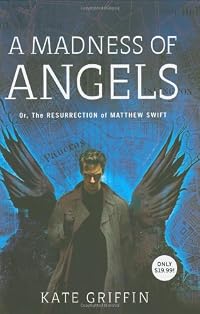
On This Page
Description
"Two years after his untimely death, Matthew Swift finds himself breathing once again, lying in bed in his London home. Except that it's no longer his bed, or his home. And the last time this sorcerer was seen alive, an unknown assailant had gouged a hole so deep in his chest that his death was irrefutable...despite his body never being found. He doesn't have long to mull over his resurrection, though, or the changes that have been wrought upon him. His only concern now is vengeance. show more Vengeance upon his monstrous killer and vengeance upon the one who brought him back."--dust cover flap. show lessTags
Recommendations

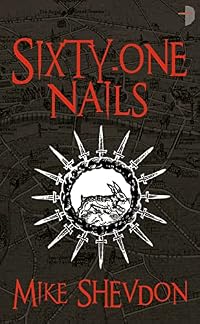
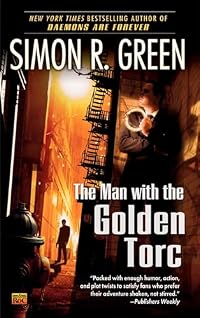
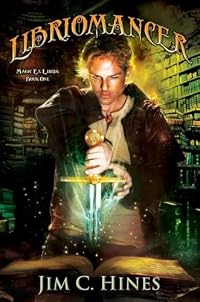
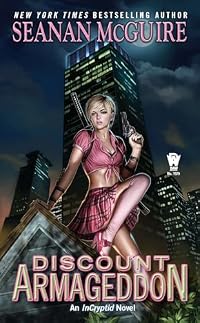
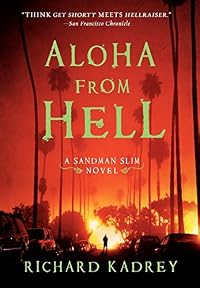
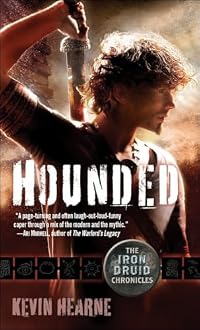
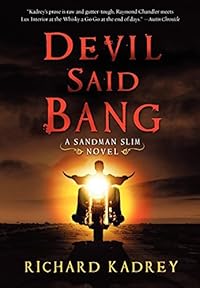
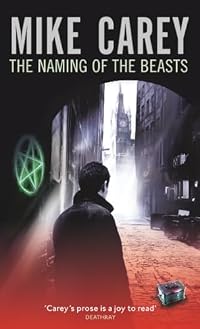
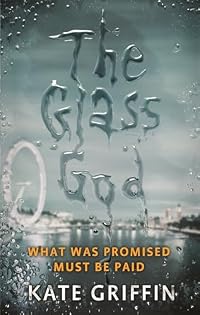
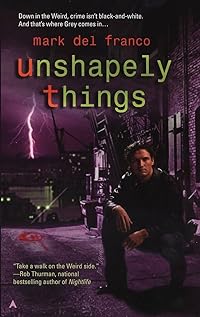
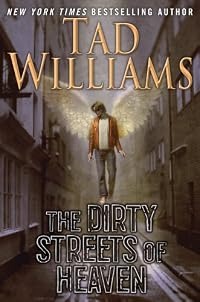
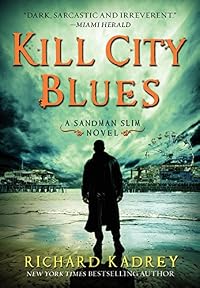
Member Recommendations
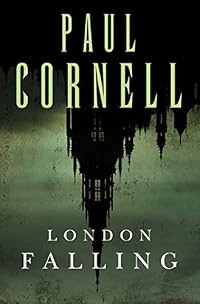
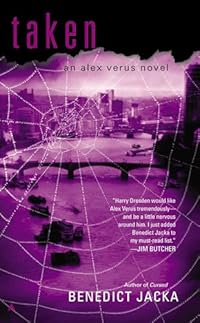
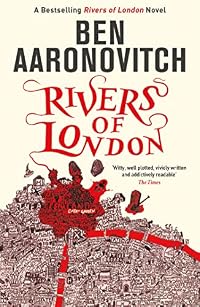
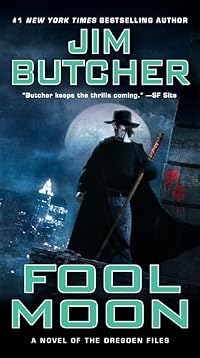
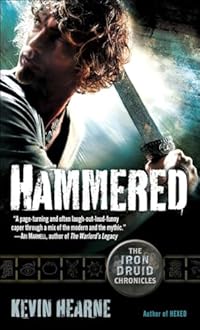
TheDivineOomba Same Location, similar themes. Both Capture the essence of London.
40
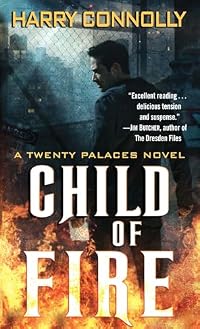
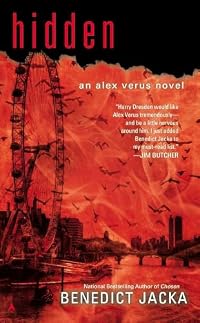
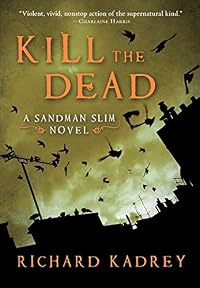
saltypepper Start of a series which begins with the resurrection of a man who uses magic and is seeking vengeance, in a city (Los Angeles, London) which is practically another character.
20
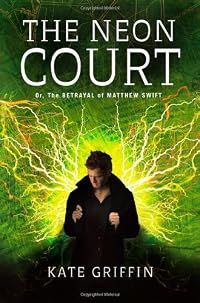
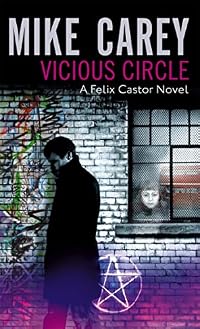
mysterymax Anyone who enjoys the Dresden File series would, I think enjoy the Matthew Swift books.
20
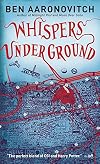
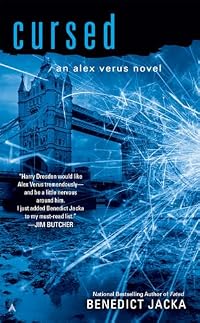
amberwitch Offbeat magicians in London
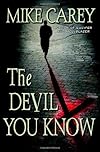
amberwitch gritty urban fantasy set in London
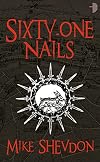
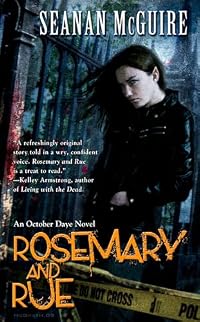
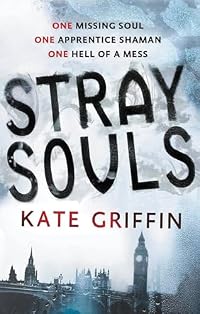
LongDogMom Both set in London, similar feel to the writing.
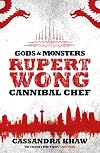
Member Reviews
Notes from a third read:
Matthew Swift is back, but no one is exactly sure that he is him. He visits the shop of a prophet who once foretold his death:
"'You want to tell me that you're Matthew Swift.'
'Is this a bad thing?'
'You are a dead man, Matthew Swift.'
'You must have customers flocking to hear your predictions.'
'It was a statement of fact, of history.'
'It pays for prophets to be cryptic, particularly in this litigious age,' I wheezed."
The sorcerer Matthew Swift was killed--or at least disappeared, leaving an extremely copious amount of his spilled blood behind--two years ago, and has suddenly reappeared with an apparent personality disorder and more magic than ever at his fingertips. A visit to a nurse at a supernatural hospital show more sums up the problem:
"'No. We want...no. Please. Help us.'
'Help us, or help me?'
'We are the same.'
'You sure?' she asked nicely. 'Only it seems to me that one of you has blue blood, and one of you has red, and one of you knows about the things that were in the phone line and one of you, probably the clinically dead one, has a better grounding in the personal ego--not that I want to speculate beyond my training, you understand. You may share the same skin and the same voice, but I'm really not entirely sure that you're working on the same track."
So serious, and yet there are flashes of humor here. A temporary removal of the fourth wall made me laugh. After all, we are talking urban fantasy:
"For a ludicrous moment I wondered if there were any air ducts I could crawl through to get inside the office; but life was not like the movies."
And a social statement, and why I consider Kate Griffin's urban fantasies to be something far more substantial than candy bar reads:
"If asked why they did not give charity [to beggars], the standard reply is 'They would only have spent it on drugs.' Unkind as this is, the bastard's reply is even worse: 'It's their fault they're here; why should I waste my money on someone who can't be saved?'
Thus, with a single swoop, the entire population of old, young, black, white, frightened, bold, subdued, cowering, cold, ill, hungry, thirsty, dirty or addicted are classified as self-destructive, and every ignored face, every shadow blotted out of the memory of the stranger on the street can be classified by a single word--failed." show less
Matthew Swift is back, but no one is exactly sure that he is him. He visits the shop of a prophet who once foretold his death:
"'You want to tell me that you're Matthew Swift.'
'Is this a bad thing?'
'You are a dead man, Matthew Swift.'
'You must have customers flocking to hear your predictions.'
'It was a statement of fact, of history.'
'It pays for prophets to be cryptic, particularly in this litigious age,' I wheezed."
The sorcerer Matthew Swift was killed--or at least disappeared, leaving an extremely copious amount of his spilled blood behind--two years ago, and has suddenly reappeared with an apparent personality disorder and more magic than ever at his fingertips. A visit to a nurse at a supernatural hospital show more sums up the problem:
"'No. We want...no. Please. Help us.'
'Help us, or help me?'
'We are the same.'
'You sure?' she asked nicely. 'Only it seems to me that one of you has blue blood, and one of you has red, and one of you knows about the things that were in the phone line and one of you, probably the clinically dead one, has a better grounding in the personal ego--not that I want to speculate beyond my training, you understand. You may share the same skin and the same voice, but I'm really not entirely sure that you're working on the same track."
So serious, and yet there are flashes of humor here. A temporary removal of the fourth wall made me laugh. After all, we are talking urban fantasy:
"For a ludicrous moment I wondered if there were any air ducts I could crawl through to get inside the office; but life was not like the movies."
And a social statement, and why I consider Kate Griffin's urban fantasies to be something far more substantial than candy bar reads:
"If asked why they did not give charity [to beggars], the standard reply is 'They would only have spent it on drugs.' Unkind as this is, the bastard's reply is even worse: 'It's their fault they're here; why should I waste my money on someone who can't be saved?'
Thus, with a single swoop, the entire population of old, young, black, white, frightened, bold, subdued, cowering, cold, ill, hungry, thirsty, dirty or addicted are classified as self-destructive, and every ignored face, every shadow blotted out of the memory of the stranger on the street can be classified by a single word--failed." show less
“We be light, we be life, we be fire! We sing electric flame, we rumble underground wind, we dance heaven! Come be we and be free!”
Years ago they made a pretty corny movie out of Anne Rice's Queen of the Damned. Actually they made an ok vampire movie, and called some of the characters after those in QotD, so it didn't go over well with anyone, but it wasn't that bad. And it had this one, tiny, wonderful perfect scene, at the very very end of the movie, where the relatively ancient Lestat takes the newborn Jessie by the hand and they walk out into London across Westminster Bridge and the pulse of the city is like the beat of the music and they are just walking, timeless, and the city in all it's glittery rainy lit up beauty speeds show more up and moves around them, ignoring them entirely. And in the end there's so much light and speed and the city is just a blur and yet somehow, you can still see it overlaying everything, the rails of the bridge and the face of big ben's clock, like anchors to reality. I haven't been able to shake the image out of my head for this entire book. It's the nearest I can come to how Matthew describes how the city is for him.
http://www.youtube.com/watch?feature=player_detailpage&v=RLFc79X10RQ#t=37
I shouldn't have liked this book, at least according to many of the reviews, it's got long windy passages of nothing but description, and the plot is confusing and it's really really long (718 pages on my e-reader) and it's POV hopping sometimes in the same sentence and I don't give a damn because it's all just magical. It has characters that come and go, and stereotypes that quite literally come to life and a magic system that is both elegantly well drawn and utterly nuts at the same time.
It's Tinkerbell's and American Gods "You have to believe" from the other side: Things happen, when enough people believe, and faith in the tube is as good as faith in any deity. But as has been said, insanity is repeating the same action over and over, and expecting a different result. Which, when repetition based in faint belief leaves us magic, creates life, springing up entities like the angels in the wire, how can they possibly be sane? They aren't, of course. They are newborns, with all the power and knowledge, but no rudder, no compass.
It's like Dr Who and Neil Gaiman and Mark Helprin and John Crowley and Robert Holdstock and China Miéville and Charles de Lint and even Clive Barker (am I the only one who just adored Imajica and Weaveworld? Nobody ever talks about him) and anyway just everyone who is a master mechanic of words, those weavers of images and imagery and magic and the love of beautiful dirty things. The ones who can see and can make me see the life and the magic where I'm expecting only grime and shadow.
Or I suppose you could read this as an urban fantasy about a sorcerer who is accidentally reincarnated two years after his brutal murder, and sets about getting some revenge, with the help of a ragtag band of underground magical practitioners of many different streaks, all with their own motives but a shared target. And from that point of view too, it's a unicorn of another colour. Matthew is neither hard boiled and dripping with male gaze. He couldn't crack a sarcastic joke to save himself (and he tries a couple of times). There are women in this book who aren't in epic need of saving constantly. There are powerful, evil, bad men, who are yet sympathetic. There are good honourable people who are dislikeable and impossible to root for. There are characters who make bad decisions for good reasons, and good decisions for bad reasons, and there is no black, no white, just dirty city grey everywhere you look.
There's just such a rhythm to the way Kate Griffin writes. Entire passages read like chants, as if begging to be read aloud, or as if doing so might invoke something unexpected.
“Between Friday evening and Sunday afternoon, I broke into a total of six offices, one penthouse suite and a small bank, and cursed them all. I cursed the stones they were built on, the bricks in their walls, the paint on their ceilings, the carpets on their floors. I cursed the nylon chairs to give their owners little electric shocks, I cursed the markers to squeak on the whiteboard, the hinges to rust, the glass to run, the windows to stick, the fans to whir, the chairs to break, the computers to crash, the papers to crease, the pens to smear; I cursed the pipes to leak, the coolers to drip, the pictures to sag, the phones to crackle and the wires to spark. And we enjoyed it.”
And I'm a little worried that, still sick, I'm just delirious, and so I shall turn around and read this book again, right from the start, just to be sure. Because if that's the case, I'd like to pack in as much of it as I can before I get better and return to sanity. show less
Sometimes an author captures my imagination, and as long as they fail to become blazingly incompetent, I’m along for the ride. So it was with A Madness of Angels.
Matthew Swift wakes up from death, lost, confused, unaware its been two years since he died, as for him it feels like moments ago. The terrible and fascinating hook to his story is that as a sorcerer, he was dialing the phone as he died–and the phone lines are the home of the electric blue angels, the bits and pieces of humanity spun out over the wires and taking on life of their own. When Matthew is brought back to life, he is no longer alone in his familiar body–he shares it with the electric blue angels, along with their talents.
“We be light, we be life, we be show more fire!
We sing electric flame, we rumble underground wind, we dance heaven!
Come be we and be free!”
Griffin’s concept is given life (pardon the pun) by a fascinating use of language, a type of lyricism rarely seen in urban fantasy and which reminded me as much of scat and bebop as a written narrative. And, as I pointed out in a Booklikes post, more than a little bit of Fame’s “I Sing the Body Electric.” Although I enjoy a wide range of music, my reading experience and my musical listening experience are almost always two separate things; Griffin provided me a rare experience and enjoyment with her lyrical writing. With the musicality of the narrative, all I needed was a semi-coherent plot and I was sold. Thankfully, the rest of the details were more than competent.
A hallmark of many types of urban fantasy and mysteries are the emphasis on location. The setting is virtually a character, providing mood, spiking thought, inciting action. London is a chief player in this series, and with loving and full detail, it is clear Griffin is no mere tourist (I once read an apocalypse book set in a New York that the author very clearly had only visited–if seen in person at all). Some places are so iconic that they take on a role beyond their actuality. Hollywood is one of those places–dirty, dingy, filled with the outcasts of humanity and cockroach-infested diners, the imaginary Hollywood bares little resemblance to the reality. Not this London. This one is very real,with tired commuters, overflowing rubbish bins, and confusing and obscure tube system. I liked it, and because the angels are new to the corporeal experience, their joy in the details, in all their glamorous and dirty varieties, was contagious.
If the rest of the characters weren’t quite as developed as Swift/Angels and London, they were still reasonably done. There is a nice ambivalence surrounding Matthew’s former teacher Bakker, for his role in teaching him the craft and his ultimate path. Oda, an anti-magic fanatic, has little finesse to her arc, but is done well enough that it added an element of tension. Sinclair and Charlie were very interesting and not at all predictable. There's a nice amount of dialogue, occasionally delightfully described:
"'Yes,' she said, in the weary voice of someone who knows where this conversation is going and can't believe she has to wait at the traffic lights to get there."
Magic has an unusual flair as well. It is supposed to be ‘urban’ magic, evolving to its place and time, and one of the first malevolent creatures encountered is a trash-beast. Then there’s the magic of the city–the rituals of public transport gating, the mystery of the ATMs. I loved the graffiti-magic angle; and a perfect twist on the out-front yet underground language of the city, decipherable to those in the know. The magical healer connected to the NHS cracked me up. The city creatures are perhaps not precisely magical, but echo real life cities with an abundance of pigeons, rats and foxes. The Beggar King and Bag Lady were nice magical elements, echoing the parable of those least among us. Griffin cleverly avoids the over-powered magical protagonist as well. As Matthew is so new to his body and abilities from the electric angels, there’s believable limits on what he is reasonably able to accomplish, despite the abilities of both sorcerer and electric angels.
Plot is perhaps the least unusual aspect of the story, but with so much going on with narrative and magic, it’s rather nice to have something sort of straightforward. Swift and the angels seem to agree on revenge, and part of toppling a mighty sorcerer means toppling the pillars that support him. I’m not entirely sure this worked logically in any sense of the word, since everyone was on the defensive after the first went down, and because the sorcerer seemed more than capable of taking care of himself without said supports. The mystery surrounding Matthew’s death was rather unsurprising, as well as the ultimate denouement.
That said, I’ll undoubtedly read it again–a story that hinges on narrative, character and world-building is enjoyably revisitable. The enthusiasm Swift and the angels have for life is contagious, and make it a moderately uplifting read. This is one that needs to be was added to my personal collection. Highly recommended, but only for those that can tolerate a certain poetic laxity of narrative.
11/19 Re-read. Okay, maybe it loses luster a bit on the fifth or sixth re-read. Also, read the kindle version bc I wanted to highlight. Interestingly, a lot of it is about swathes of text rather than short bursts of sentences. Also note, Kindle edition is full of formatting errors and was a bit more distracting than it should have been.
08/21 This is one of the most satisfying books I own. Lovely language complex enough to hold up on re-read; generally positive/proactive, without being depressing (eyeballing Steven Brust); interesting world-building; forward-moving plot; and (spoiler) satisfying, if complicated resolution. show less
Matthew Swift wakes up from death, lost, confused, unaware its been two years since he died, as for him it feels like moments ago. The terrible and fascinating hook to his story is that as a sorcerer, he was dialing the phone as he died–and the phone lines are the home of the electric blue angels, the bits and pieces of humanity spun out over the wires and taking on life of their own. When Matthew is brought back to life, he is no longer alone in his familiar body–he shares it with the electric blue angels, along with their talents.
“We be light, we be life, we be show more fire!
We sing electric flame, we rumble underground wind, we dance heaven!
Come be we and be free!”
Griffin’s concept is given life (pardon the pun) by a fascinating use of language, a type of lyricism rarely seen in urban fantasy and which reminded me as much of scat and bebop as a written narrative. And, as I pointed out in a Booklikes post, more than a little bit of Fame’s “I Sing the Body Electric.” Although I enjoy a wide range of music, my reading experience and my musical listening experience are almost always two separate things; Griffin provided me a rare experience and enjoyment with her lyrical writing. With the musicality of the narrative, all I needed was a semi-coherent plot and I was sold. Thankfully, the rest of the details were more than competent.
A hallmark of many types of urban fantasy and mysteries are the emphasis on location. The setting is virtually a character, providing mood, spiking thought, inciting action. London is a chief player in this series, and with loving and full detail, it is clear Griffin is no mere tourist (I once read an apocalypse book set in a New York that the author very clearly had only visited–if seen in person at all). Some places are so iconic that they take on a role beyond their actuality. Hollywood is one of those places–dirty, dingy, filled with the outcasts of humanity and cockroach-infested diners, the imaginary Hollywood bares little resemblance to the reality. Not this London. This one is very real,with tired commuters, overflowing rubbish bins, and confusing and obscure tube system. I liked it, and because the angels are new to the corporeal experience, their joy in the details, in all their glamorous and dirty varieties, was contagious.
If the rest of the characters weren’t quite as developed as Swift/Angels and London, they were still reasonably done. There is a nice ambivalence surrounding Matthew’s former teacher Bakker, for his role in teaching him the craft and his ultimate path. Oda, an anti-magic fanatic, has little finesse to her arc, but is done well enough that it added an element of tension. Sinclair and Charlie were very interesting and not at all predictable. There's a nice amount of dialogue, occasionally delightfully described:
"'Yes,' she said, in the weary voice of someone who knows where this conversation is going and can't believe she has to wait at the traffic lights to get there."
Magic has an unusual flair as well. It is supposed to be ‘urban’ magic, evolving to its place and time, and one of the first malevolent creatures encountered is a trash-beast. Then there’s the magic of the city–the rituals of public transport gating, the mystery of the ATMs. I loved the graffiti-magic angle; and a perfect twist on the out-front yet underground language of the city, decipherable to those in the know. The magical healer connected to the NHS cracked me up. The city creatures are perhaps not precisely magical, but echo real life cities with an abundance of pigeons, rats and foxes. The Beggar King and Bag Lady were nice magical elements, echoing the parable of those least among us. Griffin cleverly avoids the over-powered magical protagonist as well. As Matthew is so new to his body and abilities from the electric angels, there’s believable limits on what he is reasonably able to accomplish, despite the abilities of both sorcerer and electric angels.
Plot is perhaps the least unusual aspect of the story, but with so much going on with narrative and magic, it’s rather nice to have something sort of straightforward. Swift and the angels seem to agree on revenge, and part of toppling a mighty sorcerer means toppling the pillars that support him. I’m not entirely sure this worked logically in any sense of the word, since everyone was on the defensive after the first went down, and because the sorcerer seemed more than capable of taking care of himself without said supports. The mystery surrounding Matthew’s death was rather unsurprising, as well as the ultimate denouement.
That said, I’ll undoubtedly read it again–a story that hinges on narrative, character and world-building is enjoyably revisitable. The enthusiasm Swift and the angels have for life is contagious, and make it a moderately uplifting read. This is one that needs to be was added to my personal collection. Highly recommended, but only for those that can tolerate a certain poetic laxity of narrative.
11/19 Re-read. Okay, maybe it loses luster a bit on the fifth or sixth re-read. Also, read the kindle version bc I wanted to highlight. Interestingly, a lot of it is about swathes of text rather than short bursts of sentences. Also note, Kindle edition is full of formatting errors and was a bit more distracting than it should have been.
08/21 This is one of the most satisfying books I own. Lovely language complex enough to hold up on re-read; generally positive/proactive, without being depressing (eyeballing Steven Brust); interesting world-building; forward-moving plot; and (spoiler) satisfying, if complicated resolution. show less
When Matthew Swift materialises naked and craving crispy bacon the scene is set for a magical journey through London. Two years previously all that remained of him was a lot of blood but no body. Now he's back and he and the world has changed, something out there is killing sorcerers and Matthew has to find allies, friends and who the enemy is.
A vivid portrait of a magical London. Where Life is Magic (or is it Magic is Life?) Where the echoes of life are reinvented as magic and some people can hear and use those echoes.
A fascinating cast of characters; a different take on magic and its uses — this is a fast paced, intriguing story. Bloody and violent in places, we travel along with the confused Matthew as he seeks his revenge. I'll show more definitely be looking for the sequel. show less
A vivid portrait of a magical London. Where Life is Magic (or is it Magic is Life?) Where the echoes of life are reinvented as magic and some people can hear and use those echoes.
A fascinating cast of characters; a different take on magic and its uses — this is a fast paced, intriguing story. Bloody and violent in places, we travel along with the confused Matthew as he seeks his revenge. I'll show more definitely be looking for the sequel. show less
I loved this book.
My (library) copy has a soundbite quote calling it "Neverwhere for the digital age" but that's not it at all, frankly; it's Constantine for the digital age. It's gritty street-sorcery that isn't so much making-do as it's the understanding that this is magic. It's beautiful and it's poetic but it's all of these things in wry, urban, working style, and that's what makes it perfect.
The start is a little full-on, inasmuch as it pushes you in at the deep end of some magnificent stylistic choices that are handled with enviable deftness to really elevate the story into something solid. It has abundant witticisms and deep, serious character and wonderful layers of complexity.
It is magic. It just is.
My (library) copy has a soundbite quote calling it "Neverwhere for the digital age" but that's not it at all, frankly; it's Constantine for the digital age. It's gritty street-sorcery that isn't so much making-do as it's the understanding that this is magic. It's beautiful and it's poetic but it's all of these things in wry, urban, working style, and that's what makes it perfect.
The start is a little full-on, inasmuch as it pushes you in at the deep end of some magnificent stylistic choices that are handled with enviable deftness to really elevate the story into something solid. It has abundant witticisms and deep, serious character and wonderful layers of complexity.
It is magic. It just is.
This book is really good. It’s been hailed as the Neverwhere for the Digital Age and I think it lives up to the comparison. Griffin has a way with words which is descriptive, engaging, and entertaining. Her descriptions of London are spot on, and her take on magic makes the story interesting. Urban magic is strong and powerful, and exists in different forms. Sorcerer Matthew Swift is able to unite several magical groups together in his fight against his old master: the Order, a cult whose members hate magic; the weremen, who can shift into multiple animals including rats, foxes, and pigeons; magicians who use traditional spells; and the bikers who can travel from A to C without going through B.
Different parts of London have their own show more unique magic, and the laws cannot be broken. The Underground provides refuge for the magical with a valid ticket, the wishing fountain at Piccadilly Circus can save your life, everyone should be wary of the electric angels in the telephone wires, the turning of the tide in the Thames has cleansing properties, and the Dragon of London will not be forced to act against its will. Magic and legend blend seamlessly with modern London as Griffin weaves an engaging tale. show less
Different parts of London have their own show more unique magic, and the laws cannot be broken. The Underground provides refuge for the magical with a valid ticket, the wishing fountain at Piccadilly Circus can save your life, everyone should be wary of the electric angels in the telephone wires, the turning of the tide in the Thames has cleansing properties, and the Dragon of London will not be forced to act against its will. Magic and legend blend seamlessly with modern London as Griffin weaves an engaging tale. show less
Two years after bleeding to death in an unfriendly alley, Matthew Swift wakes up in his old apartment, blinking open eyes that have transformed from muddy brown to electric blue. He-- and the entities who possess him--have only one thought in his/their mind: revenge against those who killed him and brought them back.
Madness of Angels captures the essence why I keep coming back to urban fantasy. When I read UF, I want to enter a world both alien and familiar, where the mundane touches the sublime, where the everyday rules and patterns and flow of life take on new meaning and shape. For me, Griffin's London exemplifies this delicate balance of wonder and absurdity. It is a world where the ebb and flow of the trains beneath the city show more creates a rhythmic heartbeat of magic, where familiarity and belief create genius loci: deities of bag ladies and beggars, trains and towers. And then there is the life blood of the city itself, the power from which light and noise and movement and life are born.
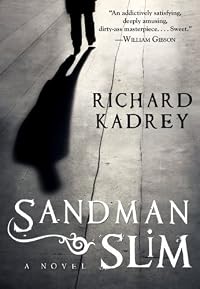
The book is not without its flaws; although I personally feel that its merits more than make up for them, tastes differ, so I'll mention a few of the major issues. The style is somewhere between flowery and overblown, but just in case you can't tell from my writing style, (a) elaborate prose doesn't bother me, and (b) any comment from me would be serious pot-kettle territory. I've got some quotes in my status updates; if that sort of rhetoric bothers you, consider yourself warned. The bare premise is somewhat similar to Sandman Slim, but the structure of the book rather reminded me of a video game, with a set of "bosses" that each had to be tackled in turn. The plot develops slowly and if you demand constant action, be warned that things bog down a bit in the middle. Certain events lack logical rationale and there's a bit of blatant moralising, but there are lots of entertaining characters and ingenious urban magics, so I really didn't care. The worldbuilding was breathtaking throughout--and not just the magical portions. Griffin's knowledge of London is intimate and affectionate, and the lush detail of her scenes transport the reader to the city that she so clearly loves. The book's unique world, interesting characters, and gentle humour made up for some slow sections in the middle.
I loved the myriad ways in which Griffin broke the standard MUF (male urban fantasy) structure. Swift may wear a trenchcoat, but instead of the standard tall, rugged, gun-totin' MUF, he's a shrimp who looks like a "starved pigeon," and his weapon of choice is a London Underground oyster card. The Male Gaze ever-present in MUFs is completely absent, and despite one disappointingly distressed damsel, the supporting female characters are as multidimensional as their male counterparts. Not a single female is described in terms of her curves or figure, and the book is free from the tensions of lust ever-present in all forms of UF. I think Griffin creates a reasonable male POV--although I did notice that Matthew Swift goes through the entire novel without shaving or thinking about shaving, a first for the MUFs I've encountered. The book also tries to explore culpability and consequences, themes not usually much considered in salt'em-burn'em-blast'em MUF. hover for spoiler I loved the complexities and eccentric perspectives that the angels brought with them--and if you prefer to leave the halos in heaven, don't worry--these are not of the white-clad-harp-toting-Heaven's-messenger variety. Matthew is a rather unique narrator and has a tendency to drop into third-person-plural (my precioussss) to indicate a switch in the entities currently in control. Stylistically, these switches are often accompanied by dramatically broken lines and rather clunky stream-of-consciousness such as the oft-repeated tagline, "We be light, we be life, we be fire! We sing electric flame, we rumble underground wind, we dance heaven! Come be we and be free!". Although such bathos came close to driving me into mockery mode, I did manage to cringe my way through these sections, and the effort was worth it.
I was enchanted by Griffin's world of urban magic. Despite the many and creative flights of fancy, the nuts and bolts of the magic in the world are solid and thoroughly constructed, and several of Griffin's creations, such as "litterbugs" (golems created from street trash), were positively fascinating. There are so many mindblowing and inventive little details, from the use of spraypaint and chewing gum in spellwork to the power of the right coin in a wishing well. It is a wonderful vision of the evolution of magic; as one character notes, the mystical properties of grafitti are only natural:
If a cross between Sandman Slim and Neverwhere with a touch of Harry Potter thrown in sounds intriguing, then I think this book is worth a closer look. As far as I can tell from the ratings, this isn't a book you'll love or hate--it's a book you'll love or 'meh'. For once, I got to be on the 'love' side of the dichotomy. If, like me, you were captivated by Neverwhere, then put A Madness of Angels on your to-read list. With its tenuous thresholds between life and death, magical and mundane, absurdism and atrocity, it recaptures the liminality that brings such depth to Neverwhere. A Madness of Angels captured my attention with its fantastically quirky and inventive world, bizarre and sympathetic character, and juxtaposition of the weird, wonderful, and ordinary.
~4.5
So, then....
"Welcome to telephone banking! To change your credit card details, please press one. To check your current account balance, press two. To dance in fire until the end of days, please press three....To cancel a direct debit, please press the star key. To send your soul across the infinite void faster than the blink of the mind dreaming in the moonlight, please press hash."
*********WARNING: PROGRESS UPDATES MAY CONTAIN SPOILERS********** show less
Madness of Angels captures the essence why I keep coming back to urban fantasy. When I read UF, I want to enter a world both alien and familiar, where the mundane touches the sublime, where the everyday rules and patterns and flow of life take on new meaning and shape. For me, Griffin's London exemplifies this delicate balance of wonder and absurdity. It is a world where the ebb and flow of the trains beneath the city show more creates a rhythmic heartbeat of magic, where familiarity and belief create genius loci: deities of bag ladies and beggars, trains and towers. And then there is the life blood of the city itself, the power from which light and noise and movement and life are born.
The book is not without its flaws; although I personally feel that its merits more than make up for them, tastes differ, so I'll mention a few of the major issues. The style is somewhere between flowery and overblown, but just in case you can't tell from my writing style, (a) elaborate prose doesn't bother me, and (b) any comment from me would be serious pot-kettle territory. I've got some quotes in my status updates; if that sort of rhetoric bothers you, consider yourself warned. The bare premise is somewhat similar to Sandman Slim, but the structure of the book rather reminded me of a video game, with a set of "bosses" that each had to be tackled in turn. The plot develops slowly and if you demand constant action, be warned that things bog down a bit in the middle. Certain events lack logical rationale and there's a bit of blatant moralising, but there are lots of entertaining characters and ingenious urban magics, so I really didn't care. The worldbuilding was breathtaking throughout--and not just the magical portions. Griffin's knowledge of London is intimate and affectionate, and the lush detail of her scenes transport the reader to the city that she so clearly loves. The book's unique world, interesting characters, and gentle humour made up for some slow sections in the middle.
I loved the myriad ways in which Griffin broke the standard MUF (male urban fantasy) structure. Swift may wear a trenchcoat, but instead of the standard tall, rugged, gun-totin' MUF, he's a shrimp who looks like a "starved pigeon," and his weapon of choice is a London Underground oyster card. The Male Gaze ever-present in MUFs is completely absent, and despite one disappointingly distressed damsel, the supporting female characters are as multidimensional as their male counterparts. Not a single female is described in terms of her curves or figure, and the book is free from the tensions of lust ever-present in all forms of UF. I think Griffin creates a reasonable male POV--although I did notice that Matthew Swift goes through the entire novel without shaving or thinking about shaving, a first for the MUFs I've encountered. The book also tries to explore culpability and consequences, themes not usually much considered in salt'em-burn'em-blast'em MUF. hover for spoiler I loved the complexities and eccentric perspectives that the angels brought with them--and if you prefer to leave the halos in heaven, don't worry--these are not of the white-clad-harp-toting-Heaven's-messenger variety. Matthew is a rather unique narrator and has a tendency to drop into third-person-plural (my precioussss) to indicate a switch in the entities currently in control. Stylistically, these switches are often accompanied by dramatically broken lines and rather clunky stream-of-consciousness such as the oft-repeated tagline, "We be light, we be life, we be fire! We sing electric flame, we rumble underground wind, we dance heaven! Come be we and be free!". Although such bathos came close to driving me into mockery mode, I did manage to cringe my way through these sections, and the effort was worth it.
I was enchanted by Griffin's world of urban magic. Despite the many and creative flights of fancy, the nuts and bolts of the magic in the world are solid and thoroughly constructed, and several of Griffin's creations, such as "litterbugs" (golems created from street trash), were positively fascinating. There are so many mindblowing and inventive little details, from the use of spraypaint and chewing gum in spellwork to the power of the right coin in a wishing well. It is a wonderful vision of the evolution of magic; as one character notes, the mystical properties of grafitti are only natural:
"Has it ever occurred to you that if in the good old days ladies with bad skin and big hair drew mystic pentagrams and pointed stars on the walls with bits of old chalk, then the invention of spraypaint would only have enhanced this tendency?"The book also contains one of the most wonderful magical warding scenes I've ever encountered. (You'll know it when you get there.) My favourite aspects of Gaiman's Neverwhere were the eccentric demigods of the city and their birth from beliefs and repetition and symbol, and Griffin's book enlarges upon this theme. In fact, I think your reaction to Neverwhere is probably a reasonable predictor of your reaction to this book. There are a few differences; Griffin is far more heavy-handed with imagery and descriptions and her prose lacks Gaiman's terse lyricism. However, Swift is a far more distinctive protagonist: while both Swift and Mayhew are somewhat bumbling ingenues, Swift is definitely not one of Christopher Moore's "Beta males." I must admit to a fascination with possession, especially possession that stems from a choice or a bargain, and and Griffin's use of the motif introduces an interesting discussion of identity. I found the bizarrely childlike Swift, with his mix of blazing passion, savage fury, and ingenuous delight in the world around him to be a pleasant change from the standard jaded, world-weary, snarky MUF. Griffin's intimate knowledge and love of her city shines out of every page, and her depiction of London is rich and colorful. To have Swift's boundless enthusiasm for the mundanities around you, to see such potential in every grimy alley, you'd have to be a very young child or on some seriously strong illegal substances. Despite his comfort and experience with the magic of his world, Swift stops to marvel at every new sunrise, every streetlight, every graffiti tag, every train.
If a cross between Sandman Slim and Neverwhere with a touch of Harry Potter thrown in sounds intriguing, then I think this book is worth a closer look. As far as I can tell from the ratings, this isn't a book you'll love or hate--it's a book you'll love or 'meh'. For once, I got to be on the 'love' side of the dichotomy. If, like me, you were captivated by Neverwhere, then put A Madness of Angels on your to-read list. With its tenuous thresholds between life and death, magical and mundane, absurdism and atrocity, it recaptures the liminality that brings such depth to Neverwhere. A Madness of Angels captured my attention with its fantastically quirky and inventive world, bizarre and sympathetic character, and juxtaposition of the weird, wonderful, and ordinary.
~4.5
So, then....
"Welcome to telephone banking! To change your credit card details, please press one. To check your current account balance, press two. To dance in fire until the end of days, please press three....To cancel a direct debit, please press the star key. To send your soul across the infinite void faster than the blink of the mind dreaming in the moonlight, please press hash."
*********WARNING: PROGRESS UPDATES MAY CONTAIN SPOILERS********** show less
Members
- Recently Added By
Lists

Top Five Books of 2013
1,564 works; 722 members

Best Urban Fantasy
632 works; 78 members

Recommend the 20 best books you've read in the last five years
2,152 works; 598 members

Top Five Books of 2014
1,064 works; 398 members

Recommended Speculative Fiction by Women and People of Color
298 works; 45 members

al.vick-wishlist-scifi-fant
180 works; 2 members

Best Antagonist Role in Urban Fantasy
214 works; 1 member

Jean's Sci Fi/Fantasy Reading list
189 works; 12 members

London Urban Fantasy
33 works; 6 members

Best books set in London
26 works; 1 member
Author Information

6+ Works 2,983 Members
Series

Common Knowledge
- Canonical title
- A Madness of Angels
- Original publication date
- 2009-04-06
- People/Characters
- Matthew Swift; Robert James Bakker; Hunger; Dudley Sinclair; Dana Mikeda; San Khay (show all 10); Vera; Oda Ajaja; the Beggar King; the London dragon
- Important places
- London, England, UK
- Epigraph
- We be light, we be life, we be fire!
We sing electric flame, we rumble underground wind, we dance heaven!
Come be we and be free!
We be blue electric angels.
Anonymous spam mail, source unknown - First words
- Not how it should have been.
- Quotations
- ...there was power by the river, an intense, old magic that the druids had been drawing on back in the days when wizards had burnt the colour of forest fires and summoned ivy from the paving stones, instead of barbed wire. p ... (show all)351
Amongst them, and I was pleased to see it hadn't gone, was the "Cave of Wonders, Mysteries and Miracles", advertised by a small wooden sign swinging above an open door through which the overwhelming smell of cheap incense and... (show all) musty carpets hit the nose like it wanted a pillow fight.
But as I look at it, you can die a whole number of ways that don't involve your skin.
"To look away from someone in pain because you know that your e-account is paying monthly contributions to the 'greater good', to walk on by while all those people suffer and die because you've got a cause and a big sense of ... (show all)perspective...says something about the soul. Compassion And that " - he (the Beggar King) flicked the end of the cigarette at me in the dark - "is the first thing that died in Robert James Bakker."
To keep ourself busy we read books, tuning down our worries and fears into the strange, artificial reaction of feelings in the face of ink and paper, until we forgot that we were doing anything so mechanical as reading; the t... (show all)hings we saw simply were, rather than being a conglomeration of syllables.
"We will find joy in all life, anywhere. To be whoever we want to be...nothing but joy." - the blue electric angels
to Oda - "Please don't try concern; you're much better at indignation."
She was of average height, and unusual width - being not so much fat as all-present, so that even in the largest of rooms there was never quite enough space for the crowd and Mrs. Mikeda to co-exist peacefully.
"Turn of the tide!" I answered in my best optimist's voice. "Gotta have some magic in that, right?
"Don't you know?"
"I'm trying to save your daughter's life within the tenets of the Orthodox faith. I haven't a clue!"
"You know, for a man possessed - sorry - in a complicated relationship with mystical entities of blood magic and forgotten life - you're pretty useless when it comes to a tight situation, aren't you?" - Dana - Last words
- (Click to show. Warning: May contain spoilers.)Whatever happened next, good or bad, it would be wonderful finding out.
- Blurbers
- Carey, Mike
- Original language
- English
Classifications
Statistics
- Members
- 1,257
- Popularity
- 19,351
- Reviews
- 48
- Rating
- (3.71)
- Languages
- English, French, Polish
- Media
- Paper, Ebook
- ISBNs
- 9
- ASINs
- 8