On This Page
Description
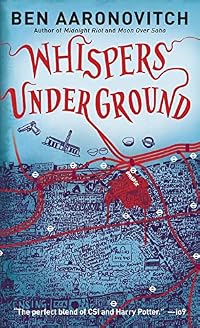
Fantasy. Fiction. Literature. Mystery. It begins with a dead body at the far end of Baker Street tube station, all that remains of American exchange student James Gallagher-and the victim's wealthy, politically powerful family is understandably eager to get to the bottom of the gruesome murder. The trouble is, the bottom-if it exists at all-is deeper and more unnatural than anyone suspects . . . except, that is, for London constable and sorcerer's apprentice Peter Grant. With Inspector show more Nightingale, the last registered wizard in England, tied up in the hunt for the rogue magician known as "the Faceless Man," it's up to Peter to plumb the haunted depths of the oldest, largest, and-as of now-deadliest subway system in the world.At least he won't be alone. No, the FBI has sent over a crack agent to help. She's young, ambitious, beautiful . . . and a born-again Christian apt to view any magic as the work of the devil. Oh yeah-that's going to go well. show lessTags
Recommendations

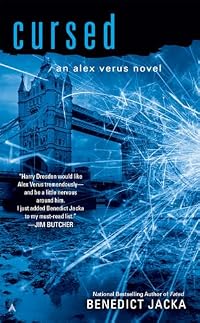
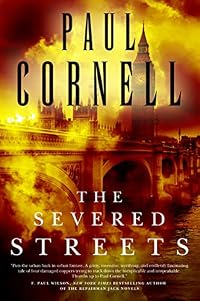
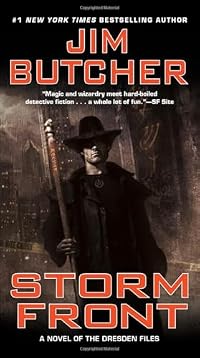
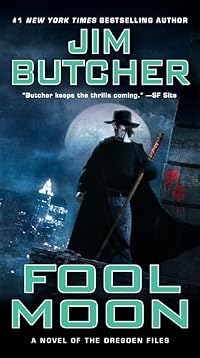

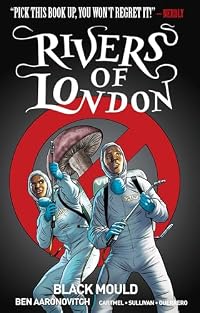


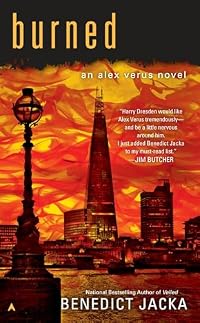
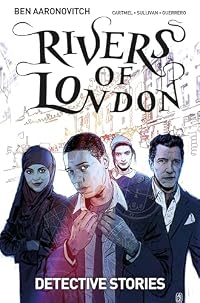

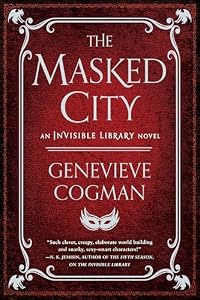
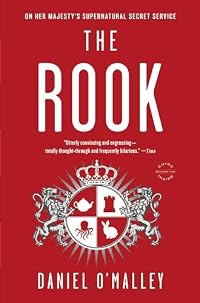
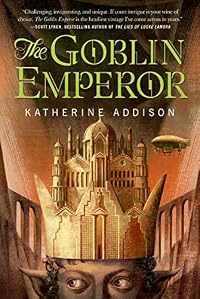
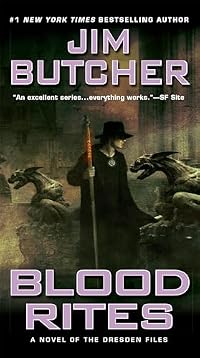


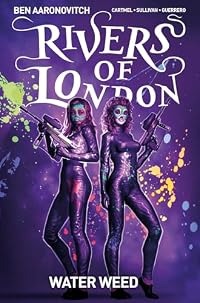

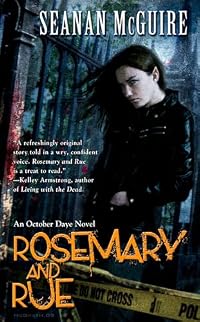
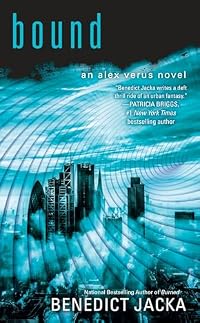
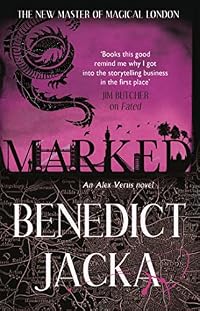

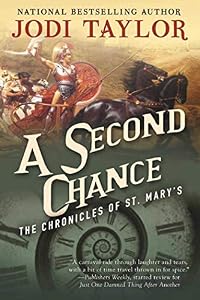
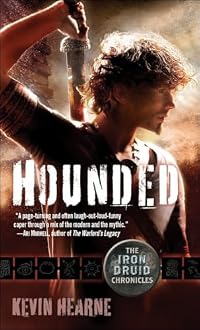


Member Recommendations
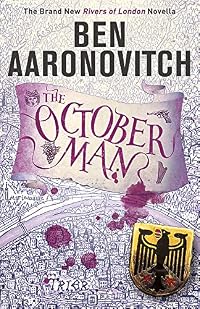
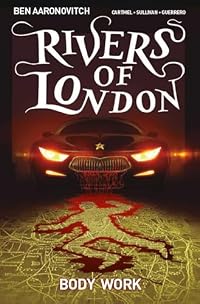
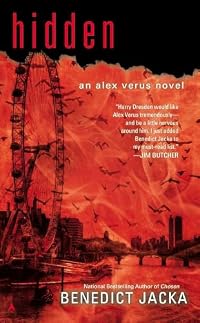
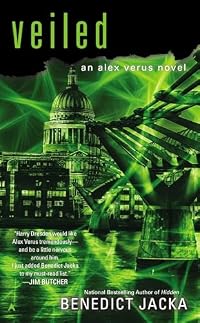
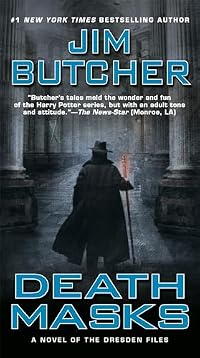
Jannes For all your "supernatural secrets in the London underground" needs.
140
Member Reviews
If you like urban fantasy and you haven't yet tried this series, do so. Now. The first book is Midnight Riot. Go find it. You'll thank me later. If you haven't read the first two in the series, don't read my review. It doesn't contain any spoilers for this book, but no promises about the previous two.
It's nearly Christmas, but Peter Grant, intrepid copper and trainee wizard, has been thrown into a case that is definitely lacking in holiday cheer. An American student has been murdered in the London Underground, stabbed in the back with the fragments of a magical ceramic pot, and mysterious figures have been glimpsed in the bowels of London. And that means Peter is going to have to divert his concentration from finding the identity of the show more evil wizard stalking the London streets to do a little urban caving in the underground and sewers. Soon enough, he's up to his knees in it--literally and figuratively.
I loved so many things about this book that it's difficult to even come up with a coherent list. First up is probably the diverse set of characters--and diverse in all meanings of the word, but without ever taking political correctness too seriously. Peter himself is half Sierra Leonean and has the refreshing tendency to describe the people around him without our horrifically ubiquitous white default. Other members of the cast include Constable Guleed, a family liason officer with an awesome sense of humour, a tendency to speak her mind, and a fondness for pairing her hijab with a furry hat with earflaps, Sergeant Kumar, a cave-obsessed nerd who handles all the "weird stuff" relating to the London Underground, and Lesley May, Peter's partner in anti-crime, who literally lost her face in a previous magic-related accident. I particularly appreciate Lesley's continuing plight. There is a general tendency in most novels to allow the sidekick to sustain horrific injuries but recover by the next book so that she can return to her role as handy hanger-on and Action Girl. Letting Lesley's injuries remain not only brings additional dimensions to her character but also an additional depth and realism to the world itself. Peter and Lesley's relationship melts even my stony heart. I am typically either indifferent or actively anti-ship various relationships, but I definitely ship Peter and Lesley. And I hope Aaronovitch has the integrity and bravery to leave her injured and scarred and let Peter learn to love her without her magically becoming a beautiful Barbie again.
I also love Aaronovitch's London. He, perhaps more than any other urban fantasy author, stands out to me as using the city as a breathing entity in his novel. London comes alive as a character in its own right, and Aaronovitch's familiarity and affectionate irritation breathes life into the mentions of the city.
On the less serious side, I love Peter's wry voice and the humour of the book. It definitely appeals to fans of Terry Pratchett and Doctor Who--and there were a lot of shoutouts to both of these series. As an American, I loved the entrance of the humourless, suspicious, and gun-ready FBI agent and some of the pokes at our culture. The humour is my probably my favourite thing about the series, and this one delivers--I kept laughing out loud, both at the one-liners and ridiculous situations like a perp chase while wearing only a hospital gown (yes, that type of hospital gown), and since I read at the gym and laughing out loud there is incredibly embarrassing, it's a good indication of just how funny the book was.
There's only one thing that stops this book from being a 5 for me, and that's the worldbuilding. Being a humourless and bulldog-tenacious American, I just can't let go of the serious inconsistencies and contradictions I keep finding. To aid my argument, I'm going to compare it to two kitchen-sink worlds which still manage to maintain some amount of logic: Harry Potter's and Harry Dresden's.
One major difference, starting off, is in the history of magic in the world. In both Potter and Dresden's worlds, magic has always been hidden and knowledge of it has been actively protected. In both, at some point apparently before the Middle Ages, the "magical community" went underground and from that time forwards, did everything possible to hide itself from the Muggles. In Peter's world, on the other hand, magic has been around, and apparently openly discussed, for centuries. Reknowned individuals such as Isaac Newton studied it and published books on it, apparently openly. And after all, Newton studied other "magical" properties like electricity and magnetism; given how magic is described in Peter's world, how is it any different? This openness continues: there were schools where you learned magic, you could get a first in it, people published books, during wars there were batallions made up of wizards, and people in the government knew about it and paid for special magical teams in the police and elsewhere. In other words, in all the facts we've been given about Peter's world, it seems that magic was open and accepted. So why didn't it change the world? Why is it hidden now? In Potter and Dresden's worlds, there's a reason why magic never became common knowledge: if a muggle finds out about magic, angry people come around and modify their memory, or, in Dresden's case, probably execute them.
The necessity for harsh measures against discovery and the reason why magic is not generally accepted in Dresden and Potter's world stems from the same fact: magic is restricted to "special people." Magic cannot be learned or transferred, and is therefore both a threat of the unknown and an unbelievable, unreproducible, unverifiable property. Because of this, in both, wizards formed a tight worldwide regulatory body to keep themselves secret. In Peter's world, on the other hand, magic is apparently available to anyone who wants to learn it. So why on earth aren't there wizards everywhere? How is it that there is no community of wizards? How is it that Peter knows no other wizards, and that kids aren't accidentally stumbling on magic every day of the week? It is apparently a difficult skill, and British wizards learn "Newtonian magic", but this "explanation" for why there aren't a billion wizards running around actually creates more contradictions than it solves. If that were true and Newtonian magic was basically the "only way", how come there are foreign wizards with totally different techniques? And since nothing is stopping people from teaching each other magic, why isn't it universal? Why isn't it universal in at least one country, and from there totally accepted?
Last, I love that Aaronovitch treats magic as a science, but this creates the biggest logical break of all. We have that magic is (a) universally available, (b) reproducible, and (c) initially studied at a time before other "magical" properties made their way into mainstream science. So why the heck isn't magic just another science in this world? Why would something that looks like a science and acts like a science and was recognized hundreds of years ago as a science be treated as something mystic and paranormal all of the sudden? This is the biggest logical fallacy to me, and I find it basically an offense to my intelligence as a reader that Aaronovitch hasn't even bothered to provide the slightest explanation for these massive gaps in logic: universal potential, yet no huge community of wizards and long history of openness and no resistance to acceptance, but apparently hidden.
One of the things I loved about this book and this series is that Aaronovitch tries to look critically at magic and describe it as a science. One of the biggest letdowns for me, therefore, was what I considered to be his totally illogical world construction. As an extremely OCD reader, I just couldn't get these discrepancies out of my mind when I read, and I admit that they poisoned quite a portion of the book for me. My irritation just keeps mounting with each book in which Aaronovitch fails to think through and explain the world. Even so, I kept reading and really loved basically everything else about this book. I highly recommend it to any reader who doesn't get bogged down by inconsistencies, and even recommend it to readers like me: despite a few irritations, you'll really enjoy it. show less
It's nearly Christmas, but Peter Grant, intrepid copper and trainee wizard, has been thrown into a case that is definitely lacking in holiday cheer. An American student has been murdered in the London Underground, stabbed in the back with the fragments of a magical ceramic pot, and mysterious figures have been glimpsed in the bowels of London. And that means Peter is going to have to divert his concentration from finding the identity of the show more evil wizard stalking the London streets to do a little urban caving in the underground and sewers. Soon enough, he's up to his knees in it--literally and figuratively.
I loved so many things about this book that it's difficult to even come up with a coherent list. First up is probably the diverse set of characters--and diverse in all meanings of the word, but without ever taking political correctness too seriously. Peter himself is half Sierra Leonean and has the refreshing tendency to describe the people around him without our horrifically ubiquitous white default. Other members of the cast include Constable Guleed, a family liason officer with an awesome sense of humour, a tendency to speak her mind, and a fondness for pairing her hijab with a furry hat with earflaps, Sergeant Kumar, a cave-obsessed nerd who handles all the "weird stuff" relating to the London Underground, and Lesley May, Peter's partner in anti-crime, who literally lost her face in a previous magic-related accident. I particularly appreciate Lesley's continuing plight. There is a general tendency in most novels to allow the sidekick to sustain horrific injuries but recover by the next book so that she can return to her role as handy hanger-on and Action Girl. Letting Lesley's injuries remain not only brings additional dimensions to her character but also an additional depth and realism to the world itself. Peter and Lesley's relationship melts even my stony heart. I am typically either indifferent or actively anti-ship various relationships, but I definitely ship Peter and Lesley. And I hope Aaronovitch has the integrity and bravery to leave her injured and scarred and let Peter learn to love her without her magically becoming a beautiful Barbie again.
I also love Aaronovitch's London. He, perhaps more than any other urban fantasy author, stands out to me as using the city as a breathing entity in his novel. London comes alive as a character in its own right, and Aaronovitch's familiarity and affectionate irritation breathes life into the mentions of the city.
On the less serious side, I love Peter's wry voice and the humour of the book. It definitely appeals to fans of Terry Pratchett and Doctor Who--and there were a lot of shoutouts to both of these series. As an American, I loved the entrance of the humourless, suspicious, and gun-ready FBI agent and some of the pokes at our culture. The humour is my probably my favourite thing about the series, and this one delivers--I kept laughing out loud, both at the one-liners and ridiculous situations like a perp chase while wearing only a hospital gown (yes, that type of hospital gown), and since I read at the gym and laughing out loud there is incredibly embarrassing, it's a good indication of just how funny the book was.
There's only one thing that stops this book from being a 5 for me, and that's the worldbuilding. Being a humourless and bulldog-tenacious American, I just can't let go of the serious inconsistencies and contradictions I keep finding. To aid my argument, I'm going to compare it to two kitchen-sink worlds which still manage to maintain some amount of logic: Harry Potter's and Harry Dresden's.
One major difference, starting off, is in the history of magic in the world. In both Potter and Dresden's worlds, magic has always been hidden and knowledge of it has been actively protected. In both, at some point apparently before the Middle Ages, the "magical community" went underground and from that time forwards, did everything possible to hide itself from the Muggles. In Peter's world, on the other hand, magic has been around, and apparently openly discussed, for centuries. Reknowned individuals such as Isaac Newton studied it and published books on it, apparently openly. And after all, Newton studied other "magical" properties like electricity and magnetism; given how magic is described in Peter's world, how is it any different? This openness continues: there were schools where you learned magic, you could get a first in it, people published books, during wars there were batallions made up of wizards, and people in the government knew about it and paid for special magical teams in the police and elsewhere. In other words, in all the facts we've been given about Peter's world, it seems that magic was open and accepted. So why didn't it change the world? Why is it hidden now? In Potter and Dresden's worlds, there's a reason why magic never became common knowledge: if a muggle finds out about magic, angry people come around and modify their memory, or, in Dresden's case, probably execute them.
The necessity for harsh measures against discovery and the reason why magic is not generally accepted in Dresden and Potter's world stems from the same fact: magic is restricted to "special people." Magic cannot be learned or transferred, and is therefore both a threat of the unknown and an unbelievable, unreproducible, unverifiable property. Because of this, in both, wizards formed a tight worldwide regulatory body to keep themselves secret. In Peter's world, on the other hand, magic is apparently available to anyone who wants to learn it. So why on earth aren't there wizards everywhere? How is it that there is no community of wizards? How is it that Peter knows no other wizards, and that kids aren't accidentally stumbling on magic every day of the week? It is apparently a difficult skill, and British wizards learn "Newtonian magic", but this "explanation" for why there aren't a billion wizards running around actually creates more contradictions than it solves. If that were true and Newtonian magic was basically the "only way", how come there are foreign wizards with totally different techniques? And since nothing is stopping people from teaching each other magic, why isn't it universal? Why isn't it universal in at least one country, and from there totally accepted?
Last, I love that Aaronovitch treats magic as a science, but this creates the biggest logical break of all. We have that magic is (a) universally available, (b) reproducible, and (c) initially studied at a time before other "magical" properties made their way into mainstream science. So why the heck isn't magic just another science in this world? Why would something that looks like a science and acts like a science and was recognized hundreds of years ago as a science be treated as something mystic and paranormal all of the sudden? This is the biggest logical fallacy to me, and I find it basically an offense to my intelligence as a reader that Aaronovitch hasn't even bothered to provide the slightest explanation for these massive gaps in logic: universal potential, yet no huge community of wizards and long history of openness and no resistance to acceptance, but apparently hidden.
One of the things I loved about this book and this series is that Aaronovitch tries to look critically at magic and describe it as a science. One of the biggest letdowns for me, therefore, was what I considered to be his totally illogical world construction. As an extremely OCD reader, I just couldn't get these discrepancies out of my mind when I read, and I admit that they poisoned quite a portion of the book for me. My irritation just keeps mounting with each book in which Aaronovitch fails to think through and explain the world. Even so, I kept reading and really loved basically everything else about this book. I highly recommend it to any reader who doesn't get bogged down by inconsistencies, and even recommend it to readers like me: despite a few irritations, you'll really enjoy it. show less
The third Rivers of London book, and just as much fun as the others. The plot took a while to kick in, but when it did, it was a rip snorter, with Peter and Leslie helping to investigate the murder of an American senator's son that seems to have magical overtones, or "weird bollocks" about it. Their investigation leads them to London's underground railway system and into the sewers of London, which is a place I'm in no hurry to see (or smell) first hand.
While Nightingale's past is ignored this book (matter of fact, he didn't seem to be in it much at all), the overarching Peter and Leslie plot was moved along nicely, with both of them improving their skills, both in mundane policing and um, weird bollocks. The writing is cheeky and fun, show more and I'm hanging out for book four to be released later this year. show less
While Nightingale's past is ignored this book (matter of fact, he didn't seem to be in it much at all), the overarching Peter and Leslie plot was moved along nicely, with both of them improving their skills, both in mundane policing and um, weird bollocks. The writing is cheeky and fun, show more and I'm hanging out for book four to be released later this year. show less
This series is on a roll.
I see a lot of people say this series feels like if Harry Potter grew up and became a Constable, but I disagree. As much as I loved Harry Potter and Hogwarts, Peter Grant is snarkier, wittier, and more fun a character to read as an adult. I’m not saying Rivers of London is better than HP, but it’s a very different feel and I think it’s distinct. And I wouldn’t call Peter morally gray, but he does make some decisions that I feel like an upstanding, do-gooding Gryffindor wouldn’t.
In Whispers Under Ground we get more ghosts, more goddesses, and more Grant. This time a student shows up stabbed on the Underground (the subway, for us Americans) and it turns out there’s magical residue. Oh, also the kid is show more the son of a US senator. Oops!
I don’t want to say too much since this is the third in the series, and I don’t want to spoil anyone who hasn’t started it yet. So I’ll be a little vague in this review.
We get some fun new characters, including an FBI agent who doesn’t realize magic is real, and the back and forth of Constable vs FBI, British vs American gives us some fun rivalry. Lesley is, as always, a great foil to Peter and I’m really hoping they keep growing the friendship between these two into something deeper. There’s a bunch of irreverent humor and lots of references that nerds like me will appreciate, and new parts of the magical world are revealed – oh, fairies are a thing? Cool. As always, Peter takes it all in stride with a few quips here and there.
The plot/mystery for this book was interesting and neatly resolved at the end, with some development of the bigger plot with the Faceless Man. We’ve got good character development of our ensemble cast, and overall good momentum building up to keep series rolling smoothly on into the next book. I’m enjoying these books a LOT, and if you like urban fantasy I can’t recommend them strongly enough. show less
I see a lot of people say this series feels like if Harry Potter grew up and became a Constable, but I disagree. As much as I loved Harry Potter and Hogwarts, Peter Grant is snarkier, wittier, and more fun a character to read as an adult. I’m not saying Rivers of London is better than HP, but it’s a very different feel and I think it’s distinct. And I wouldn’t call Peter morally gray, but he does make some decisions that I feel like an upstanding, do-gooding Gryffindor wouldn’t.
In Whispers Under Ground we get more ghosts, more goddesses, and more Grant. This time a student shows up stabbed on the Underground (the subway, for us Americans) and it turns out there’s magical residue. Oh, also the kid is show more the son of a US senator. Oops!
I don’t want to say too much since this is the third in the series, and I don’t want to spoil anyone who hasn’t started it yet. So I’ll be a little vague in this review.
We get some fun new characters, including an FBI agent who doesn’t realize magic is real, and the back and forth of Constable vs FBI, British vs American gives us some fun rivalry. Lesley is, as always, a great foil to Peter and I’m really hoping they keep growing the friendship between these two into something deeper. There’s a bunch of irreverent humor and lots of references that nerds like me will appreciate, and new parts of the magical world are revealed – oh, fairies are a thing? Cool. As always, Peter takes it all in stride with a few quips here and there.
The plot/mystery for this book was interesting and neatly resolved at the end, with some development of the bigger plot with the Faceless Man. We’ve got good character development of our ensemble cast, and overall good momentum building up to keep series rolling smoothly on into the next book. I’m enjoying these books a LOT, and if you like urban fantasy I can’t recommend them strongly enough. show less
This is the third part of the fantastic Rivers of London trilogy (so far) which sees Peter Grant, apprenticed to the Wizard, Chief Inspector Thomas Nightingale, investigating a murder on the London Underground. The story also sees a welcome return of Lesley who was notably absent in the last instalment following her injuries in book one and more of the wonderful Thames sisters (although I’d have liked more of them!).
Peter, Lesley and Nightingale – together with various members of the Metropolitan and Belgravia Police and Sergeant Jaget Kumar from the British Transport police investigate the death of a US senator’s son found on the tracks of the London Underground. The murder weapon appears to be a segment of pottery which exhibits show more traces of vestigia – a magical property meaning the supernatural is involved. The investigation takes them underground, not only into the tube system but also into the sewers beneath the city where they discover more than just a killer…
I have loved all three books of this series and this instalment doesn’t fail to deliver. Aaronovitch is a born story-teller and this has a fantastic mix of drama and humour. I think I said this about book 1, but when reading this it was like I could see a BBC Sunday night production playing out in my head. I'm looking forward to part 4! show less
Peter, Lesley and Nightingale – together with various members of the Metropolitan and Belgravia Police and Sergeant Jaget Kumar from the British Transport police investigate the death of a US senator’s son found on the tracks of the London Underground. The murder weapon appears to be a segment of pottery which exhibits show more traces of vestigia – a magical property meaning the supernatural is involved. The investigation takes them underground, not only into the tube system but also into the sewers beneath the city where they discover more than just a killer…
I have loved all three books of this series and this instalment doesn’t fail to deliver. Aaronovitch is a born story-teller and this has a fantastic mix of drama and humour. I think I said this about book 1, but when reading this it was like I could see a BBC Sunday night production playing out in my head. I'm looking forward to part 4! show less
I enjoyed the third Peter Grant magical police adventure quite a bit more than [b:Moon Over Soho|8680418|Moon Over Soho (Peter Grant, #2)|Ben Aaronovitch|https://images.gr-assets.com/books/1320411169s/8680418.jpg|13552477], for two reasons. Firstly, it is much more of an ensemble piece. In the last book, Nightingale and Lesley were recuperating from major injuries, so Peter was mostly investigating on his own. This resulted in a lot of bad decisions and property damage, as Peter can be rather a reckless loose cannon without more sensible colleagues. I prefer him to be tempered by the sarcastic intelligence of Nightingale and Leslie, both of whom are great characters. Secondly, a great deal of the plot takes place in or relates to show more tunnels under London. I find networks of subterranean catacombs fascinating, especially if they’re used for public transport.
The greatest strength of this series is its excellent world-building, which is just as much in evidence here as ever. The magical underbelly of London is further developed and discussed in amusingly incredulous terms by various people. I also like the constant professional competence of the main characters. Even Peter, for all his recklessness, has a core of common sense that is pretty unusual in all mystery fiction, let alone supernatural mystery fiction. The mixture of mundane procedure and magical strangeness that Peter’s irreverent narrative provides really is very entertaining. In ‘Whispers Underground’, the story is also pleasingly rounded off by ending at Christmas, concluding with cosy domesticity rather than gloom, injury, or angst. All-in-all, an excellent diversion and more than enough to convince me to read the next in the series. show less
The greatest strength of this series is its excellent world-building, which is just as much in evidence here as ever. The magical underbelly of London is further developed and discussed in amusingly incredulous terms by various people. I also like the constant professional competence of the main characters. Even Peter, for all his recklessness, has a core of common sense that is pretty unusual in all mystery fiction, let alone supernatural mystery fiction. The mixture of mundane procedure and magical strangeness that Peter’s irreverent narrative provides really is very entertaining. In ‘Whispers Underground’, the story is also pleasingly rounded off by ending at Christmas, concluding with cosy domesticity rather than gloom, injury, or angst. All-in-all, an excellent diversion and more than enough to convince me to read the next in the series. show less
Nachdem ich jetzt zwei Teile lang über den nicht vorhanden Charakter der weiblichen Figuren geärgert habe, jetzt endlich: Frauen mit Tiefe, keine Paragraphen lange Aufsätze darüber, wie Peter mit ihnen schlafen will.
In meinen Augen gibt es der ganzen Geschichte so viel mehr Tiefe und ich kann mich vollständig zurücklehnen und Aaronovitch's großartigen Schreibstil genießen. Der Humor, die genervten Kommentare über Brutalismus und das immer weiter ausgebaute magische Netzwerk ist wundervoll geschrieben, der Fall ist interessant und die ganze Serie definitiv zu empfehlen.
In meinen Augen gibt es der ganzen Geschichte so viel mehr Tiefe und ich kann mich vollständig zurücklehnen und Aaronovitch's großartigen Schreibstil genießen. Der Humor, die genervten Kommentare über Brutalismus und das immer weiter ausgebaute magische Netzwerk ist wundervoll geschrieben, der Fall ist interessant und die ganze Serie definitiv zu empfehlen.
I was wearing a brand-new stab vest but with a high-visibility jacket over it. I planned to avoid getting shot, through the deployment of peaceful diplomacy and, if that failed, by making sure I stayed back behind the guys with guns. Zach said we'd be better off without the guns, but that's the thing about armed police. When you need them, you generally don't want to be hanging around waiting for them to arrive.
It was a good plan, and like all plans since the dawn of time, this would fail to survive contact with real life.
With Nightingale still recuperating, Peter has to make an arrangement between the Folly and the British Transport Police, when the weapon used to kill an American art student found dead on an Underground platform show more turns out to have magical properties. He spends a lot of the book in the sewers and tunnels under Baker Street Station with Sergeant Kumar of the BTP and an FBI agent who has been sent to keep an eye on the case, tracking down a group that neither Nightingale nor Lady Ty was aware of.
There was a bit of progress with the search for the other magicians, but it's easy to forget about it when the 'murder of the week' is so interesting. show less
It was a good plan, and like all plans since the dawn of time, this would fail to survive contact with real life.
With Nightingale still recuperating, Peter has to make an arrangement between the Folly and the British Transport Police, when the weapon used to kill an American art student found dead on an Underground platform show more turns out to have magical properties. He spends a lot of the book in the sewers and tunnels under Baker Street Station with Sergeant Kumar of the BTP and an FBI agent who has been sent to keep an eye on the case, tracking down a group that neither Nightingale nor Lady Ty was aware of.
There was a bit of progress with the search for the other magicians, but it's easy to forget about it when the 'murder of the week' is so interesting. show less
Members
- Recently Added By
Lists

Best Urban Fantasy
632 works; 78 members

Civil Service Spec Fic
36 works; 4 members

Most-anticipated future releases
40 works; 25 members
London Urban Fantasy
33 works; 5 members

Best 21st Century Books (So Far)
670 works; 86 members

Speculative Fiction to Read
706 works; 31 members

Books Read in 2017
4,249 works; 129 members

Books Read in 2018
4,360 works; 110 members

Genre Benders: Fantasy + Mystery
108 works; 16 members

Books Read in 2020
4,379 works; 123 members

Next in Series
85 works; 1 member

Books Read in 2021
5,361 works; 113 members

Books Read in 2022
5,164 works; 111 members
Favorite Books from the 2010s
75 works; 3 members

Paranormal investigators and space detectives
274 works; 9 members

Books Read in 2026
1,747 works; 62 members
Author Information

139+ Works 36,137 Members
Some Editions
Series

Belongs to Publisher Series
dtv (21448)
Work Relationships
Common Knowledge
- Canonical title
- Whispers Under Ground
- Original title
- Whispers Under Ground
- Original publication date
- 2012-06-21
- People/Characters
- Peter Grant (Constable); Lesley May (Constable); Thomas Nightingale (DCI); Kimberley Reynolds; Jaget Kumar (Sergeant); Miriam Stephanopoulos (DI) (show all 24); Sahra Guleed (DC); David Carey (DC); Zachary Palmer; Abigail Kamara; Albert Woodville-Gentle; Varvara "Varenka" Debroslova; Ryan Carroll; Graham Beale; Alexander Seawoll (DCI); Kevin Nolan; Simon Kittredge; Madam Teng; Robert Su; Fleet; Olympia; Chelsea; Cecelia Tyburn Thames; Sir Tyburn
- Important places
- London, England, UK
- Epigraph
- I would say to them as they shook in their fear,
"Now what is your paltry book,
Or the Phidian touch of the chisel's point,
That can make the marble look,
To this monster of ours, that for ages lay
In the depth... (show all)s of the deaming earth,
Till we brought him out with a cheer and a shout,
And hammer'd him into birth?"
—"The Engine," Alexander Anderson - Dedication
- In memory of Blake Snyder (1957-2009) who not only saved the cat but the writer, the mortgage and the career as well.
- First words
- Back in the summer I'd made the mistake of telling my mum what I did for a living.
- Last words
- (Click to show. Warning: May contain spoilers.)"Tell your friends they're on the wrong side of the river."
- Original language
- English
- Canonical DDC/MDS
- 823.087663
Classifications
- Genres
- Fantasy, Fiction and Literature, Mystery
- DDC/MDS
- 823.087663 — Literature & rhetoric English & Old English literatures English fiction By type Genre fiction Adventure fiction Speculative fiction Fantasy fiction Urban fantasy
- LCC
- PR6051 .A76 .W45 — Language and Literature English English Literature 1961-2000
- BISAC
Statistics
- Members
- 3,245
- Popularity
- 5,254
- Reviews
- 144
- Rating
- (4.02)
- Languages
- 8 — Chinese, Czech, English, French, German, Hungarian, Polish, Spanish
- Media
- Paper, Audiobook, Ebook
- ISBNs
- 36
- ASINs
- 23