On This Page
Description
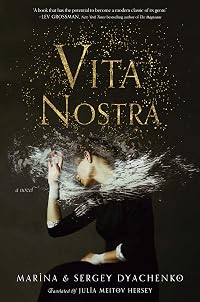
"Vita Nostra" -- a cross between Lev Grossman's "The Magicians" and Elizabeth Kostova's "The Historian" [...] is the anti-Harry Potter you didn't know you wanted." -- The Washington Post "Vita Nostra has become a powerful influence on my own writing. It's a book that has the potential to become a modern classic of its genre, and I couldn't be more excited to see it get the global audience in English it so richly deserves." -- Lev Grossman Best Books of November 2018 -- Paste Magazine The show more definitive English language translation of the internationally acclaimed Russian novel--a brilliant dark fantasy combining psychological suspense, enchantment, and terror that makes us consider human existence in a fresh and provocative way. Our life is brief . . . Sasha Samokhina has been accepted to the Institute of Special Technologies. Or, more precisely, she's been chosen. Situated in a tiny village, she finds the students are bizarre, and the curriculum even more so. The books are impossible to read, the lessons obscure to the point of maddening, and the work refuses memorization. Using terror and coercion to keep the students in line, the school does not punish them for their transgressions and failures; instead, it is their families that pay a terrible price. Yet despite her fear, Sasha undergoes changes that defy the dictates of matter and time; experiences which are nothing she has ever dreamed of . . . and suddenly all she could ever want. A complex blend of adventure, magic, science, and philosophy that probes the mysteries of existence, filtered through a distinct Russian sensibility, this astonishing work of speculative fiction--brilliantly translated by Julia Meitov Hersey--is reminiscent of modern classics such as Lev Grossman's The Magicians, Max Barry's Lexicon, and Katherine Arden's The Bear and the Nightingale, but will transport them to a place far beyond those fantastical worlds. show lessTags
Recommendations


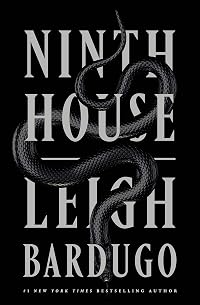
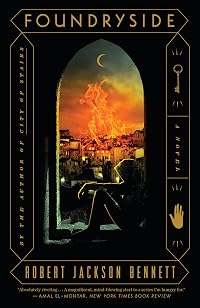
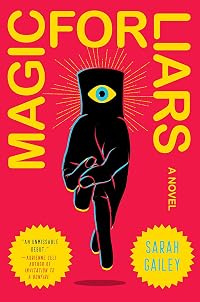
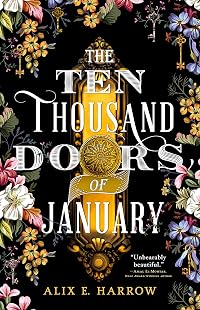


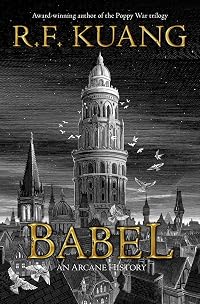
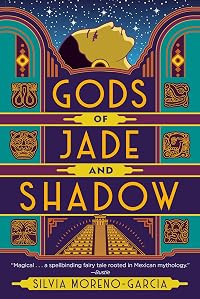
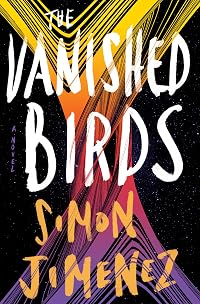
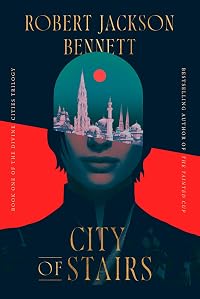
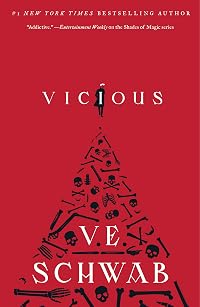
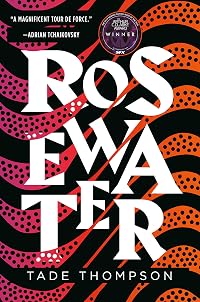
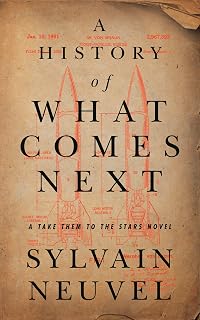
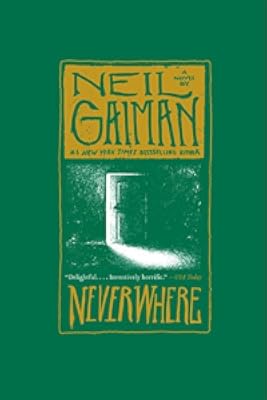


Member Recommendations
Member Reviews
"Has it ever occurred to you that we live inside a text."
This is a book with a lot of twists and turns. You have to read most of it before you have any idea what the Institute of Special Technologies actually teaches. On the surface, it is a rather dark school novel, Hogwarts on LSD, and Bildungsroman. Sasha, a teenager verging on antihero, is an engaging protagonist who by the end grows up without losing her edge. Underneath it is a book about the relation of language to creation and reality (whatever that is); ἐν ἄρχῇ ἦν ὁ λὸγος. Not an accident that Sasha starts out wanting to study philology; she goes a way beyond that.
My last book of the year, finished on New Year's Eve, was definitely one of the best.
This is a book with a lot of twists and turns. You have to read most of it before you have any idea what the Institute of Special Technologies actually teaches. On the surface, it is a rather dark school novel, Hogwarts on LSD, and Bildungsroman. Sasha, a teenager verging on antihero, is an engaging protagonist who by the end grows up without losing her edge. Underneath it is a book about the relation of language to creation and reality (whatever that is); ἐν ἄρχῇ ἦν ὁ λὸγος. Not an accident that Sasha starts out wanting to study philology; she goes a way beyond that.
My last book of the year, finished on New Year's Eve, was definitely one of the best.
“To live is to be vulnerable”
I'm so incredibly mind fucked right now I don’t even know where to start…. This review is probably going to be a bit messy. Like my mind.
This was probably the weirdest book I’ve ever read. Let’s start there. The way “magic” works here is so unique, it’s not even magic, it’s kind of a science of life? I still haven’t quite figured it out, I’m confused but in a very good way. Our protagonist, Sasha, had to work hard for her powers and I loved watching her do it. It did not come easy to her, she cried and she went through all sorts of emotions to become what she needed to be. The Sasha at the beginning of the book is a completely different person compared to the Sasha at the end of it. show more Obviously, I mean three years pass throughout this. You get to watch this confused girl grow into a flawed but bright young woman.
This freaking school was brutal. They forced these kids to come and study a bunch of weird crap and if they didn’t then bad stuff happened. My first impression, naturally, was that this was a cult of sorts. That these kids were getting brainwashed. I was creeped but fascinated.
It was quite refreshing to not have romance be the focus of the book. Vita Nostra wasn’t really character driven but it also wasn’t plot driven, it was somewhere in between… Concept driven? Is that a thing?
The writing built these fascinating images in my head and it slightly reminded me of the way Laini Taylor’s works made me feel. I’m not saying you’ll like this if you like her stuff but try it out if you do.
As for the audiobook, which I listened to as I read, it was quite lovely. I would definitely recommend it. Without it, I would probably be a lot more confused. The narrators' voice was relaxing. She did, however, mess up most of the Russian names but it’s fine.,. I’m used to it lol show less
I'm so incredibly mind fucked right now I don’t even know where to start…. This review is probably going to be a bit messy. Like my mind.
This was probably the weirdest book I’ve ever read. Let’s start there. The way “magic” works here is so unique, it’s not even magic, it’s kind of a science of life? I still haven’t quite figured it out, I’m confused but in a very good way. Our protagonist, Sasha, had to work hard for her powers and I loved watching her do it. It did not come easy to her, she cried and she went through all sorts of emotions to become what she needed to be. The Sasha at the beginning of the book is a completely different person compared to the Sasha at the end of it. show more Obviously, I mean three years pass throughout this. You get to watch this confused girl grow into a flawed but bright young woman.
This freaking school was brutal. They forced these kids to come and study a bunch of weird crap and if they didn’t then bad stuff happened. My first impression, naturally, was that this was a cult of sorts. That these kids were getting brainwashed. I was creeped but fascinated.
It was quite refreshing to not have romance be the focus of the book. Vita Nostra wasn’t really character driven but it also wasn’t plot driven, it was somewhere in between… Concept driven? Is that a thing?
The writing built these fascinating images in my head and it slightly reminded me of the way Laini Taylor’s works made me feel. I’m not saying you’ll like this if you like her stuff but try it out if you do.
As for the audiobook, which I listened to as I read, it was quite lovely. I would definitely recommend it. Without it, I would probably be a lot more confused. The narrators' voice was relaxing. She did, however, mess up most of the Russian names but it’s fine.,. I’m used to it lol show less
A reread for my book club
I loved the book the first time I read it, a long time ago. I was overwhelmed, as in ”what is this???” and ”this is the weirdest book I’ve ever read!” But you never reread the same book, because you are not the same reader. So, I am not overwhelmed now, yet the book is brilliant and I see things I hadn't seen before and my thoughts on the reread were not the same.
Your regular ordinary world is slowly turning into a strange, nightmare one. I loved how it was done in the first pages.
This novel is an ode to the power of language and symbols, the gorgeousness and the horror of it. It is about finding meaning in chaos and darkness, through language.
The horrible things done to the students and the show more manipulation hit me very hard this time. I wonder if only someone who has lived through oppression and experienced a totalitarian society in all its ghastliness and absurdity could have imagined this world. I kept thinking about all the beautiful young things burning so bright, and those who would step on them and twist, twist, twist, until people are remade to suit somebody else.
Towards the end of the book, I started wondering about those text fragments that coalesced out of chaos (this is the power of the reread!). So I googled one of them and found Aristotle ☺ It warmed my heart, of course.
I must confess that I did not understand the ending on the first read. That’s because I swallowed the book whole, dived into it, and then came up gasping for air, wondering what just happened. This time: the oppressors of any kind would have you believe that Love = Fear. The ending is Sasha’s answer to that, and it is full of courage and brilliance.
That quote at the end is from the Gospels. Oh. show less
I loved the book the first time I read it, a long time ago. I was overwhelmed, as in ”what is this???” and ”this is the weirdest book I’ve ever read!” But you never reread the same book, because you are not the same reader. So, I am not overwhelmed now, yet the book is brilliant and I see things I hadn't seen before and my thoughts on the reread were not the same.
Your regular ordinary world is slowly turning into a strange, nightmare one. I loved how it was done in the first pages.
This novel is an ode to the power of language and symbols, the gorgeousness and the horror of it. It is about finding meaning in chaos and darkness, through language.
The horrible things done to the students and the show more manipulation hit me very hard this time. I wonder if only someone who has lived through oppression and experienced a totalitarian society in all its ghastliness and absurdity could have imagined this world. I kept thinking about all the beautiful young things burning so bright, and those who would step on them and twist, twist, twist, until people are remade to suit somebody else.
Towards the end of the book, I started wondering about those text fragments that coalesced out of chaos (this is the power of the reread!). So I googled one of them and found Aristotle ☺ It warmed my heart, of course.
I must confess that I did not understand the ending on the first read. That’s because I swallowed the book whole, dived into it, and then came up gasping for air, wondering what just happened. This time: the oppressors of any kind would have you believe that Love = Fear. The ending is Sasha’s answer to that, and it is full of courage and brilliance.
That quote at the end is from the Gospels. Oh. show less
This sinister exercise in magical realism begins well enough, so you want to keep flipping the pages to see what the authors really have in mind. In the end though, the fate of the female protagonist leaves one scratching your head, making you wonder just what the hell is going on. Apparently, if one goes by an explanation offered at "Good Reads," successfully completing one's program of study at the school where most of the events happen means becoming an angel of the lord and the key to unlocking a new world ; really!? I need to mull over this some more to decide whether the problem is me, or whether the authors aren't quite as clever as they think they are. Your enthusiasm for the more symbolist flavors of Russian literature will show more probably condition your reception of this novel. As a light spoiler I might note that the original Russian book cover art can be taken quite literally, besides being a glorious exercise in kitsch. show less
Sixteen-year-old Sasha is enjoying a pleasant beach holiday with her mother, when she becomes aware that a strange, unsettling man is watching her. The man coerces her in an impossible-seeming fashion into performing certain odd, seemingly meaningless, mildly transgressive actions, with bizarre results. Then he tells her she's been accepted to a college she's never heard of, much less applied to. And she will be attending. Or else. Even once she gets there, though, it's not at all clear exactly what she's studying. But it seems to be doing something worrying to the students...
It's tempting to think of this as a sort of weird, dark mirror of the Harry Potter books. The obvious comparison here is with that other dark school-for-magic show more story, Lev Grossman's The Magicians, and, indeed, there's a blurb from Grossman on the cover. But I have to say, I liked this a lot more than The Magicians. (Or at least the first book. The rest of the trilogy did grow on me.) And the general vibe of the two is very, very different. Whereas The Magicians feels as if it sort of sucks everything magical out of magic, this one feels positively permeated with a deep, profound feeling of something mystical and extraordinary -- despite the fact that the students mostly aren't doing things that we might conventionally think of as magic, and words like "magic" are never used.
Exactly what the students are doing is hard to say. I do think that, if I'd read this in a worse, less patient mood, I might have found myself annoyed and frustrated by how opaque so much of this is, how little is explained, and how much of what we are told or shown is expressed in ways that are abstract or oblique or perhaps even flat-out nonsensical. But I'm very, very glad I did read it in the right mood, one that allowed me to fully appreciate the way in which the authors are approaching something that is literally impossible: giving us a glimpse into the process of learning something so deeply alien that it simply cannot be understood by human beings... and a viewpoint character who must herself become something non-human and incomprehensible if she is going to master it. It's audacious and fascinating and more than a little disturbing, and it worked for me much, much better than I might have expected it could.
I should note that this was translated from Russian, and I'm not entirely sure what to make of some of the translation choices. There were definitely a lot of moments where I felt like the translator must have been struggling to find an English word to express whatever was in the original, and ended up landing on one that felt a little off, or inappropriately obscure or something. In another novel, maybe that would have bothered me more, but in this one perceiving it all through an obvious extra layer of translation maybe just enhances the overall feel of strangeness and provokes some actually appropriate thoughts about the ways in which the words available to us do or don't fully capture meaning. Anyway, despite all that, I found the novel very readable and fully capable of evoking the intended emotional reactions, so I think we can say the translator was doing the really important stuff right. show less
It's tempting to think of this as a sort of weird, dark mirror of the Harry Potter books. The obvious comparison here is with that other dark school-for-magic show more story, Lev Grossman's The Magicians, and, indeed, there's a blurb from Grossman on the cover. But I have to say, I liked this a lot more than The Magicians. (Or at least the first book. The rest of the trilogy did grow on me.) And the general vibe of the two is very, very different. Whereas The Magicians feels as if it sort of sucks everything magical out of magic, this one feels positively permeated with a deep, profound feeling of something mystical and extraordinary -- despite the fact that the students mostly aren't doing things that we might conventionally think of as magic, and words like "magic" are never used.
Exactly what the students are doing is hard to say. I do think that, if I'd read this in a worse, less patient mood, I might have found myself annoyed and frustrated by how opaque so much of this is, how little is explained, and how much of what we are told or shown is expressed in ways that are abstract or oblique or perhaps even flat-out nonsensical. But I'm very, very glad I did read it in the right mood, one that allowed me to fully appreciate the way in which the authors are approaching something that is literally impossible: giving us a glimpse into the process of learning something so deeply alien that it simply cannot be understood by human beings... and a viewpoint character who must herself become something non-human and incomprehensible if she is going to master it. It's audacious and fascinating and more than a little disturbing, and it worked for me much, much better than I might have expected it could.
I should note that this was translated from Russian, and I'm not entirely sure what to make of some of the translation choices. There were definitely a lot of moments where I felt like the translator must have been struggling to find an English word to express whatever was in the original, and ended up landing on one that felt a little off, or inappropriately obscure or something. In another novel, maybe that would have bothered me more, but in this one perceiving it all through an obvious extra layer of translation maybe just enhances the overall feel of strangeness and provokes some actually appropriate thoughts about the ways in which the words available to us do or don't fully capture meaning. Anyway, despite all that, I found the novel very readable and fully capable of evoking the intended emotional reactions, so I think we can say the translator was doing the really important stuff right. show less
Reviewers cannot resist linking Marina and Sergey Dyachenko’s Vita Nostra with Harry Potter, but they usually have to settle for something like Harry Potter as written by Tolstoy, or better, Harry Potter as written by Kafka.
Connections with HP are ready to hand. There is a girl, Sasha, who is repeatedly told she is special. And there is a magic school with teen romance. Students there learn a brand of magic, are transformed, grow wings, and learn to fly, but such connections mislead.
The Institute for Special Technologies in the village of Torpa is no Hogwarts. Its tawdry campus is symbolically located on a street named for Sacco and Vanzetti, the anarchist Italian immigrants who were executed for murder in America after a trial that show more was a travesty of justice.
None of the Institute students are there by choice. They seem abused, downtrodden, and desperate. The professors routinely use threats and intimidation to achieve their educational ends, which are concealed from the students until the final high-stakes matriculating exam.
The creepiness starts right away. Sasha is recruited by a Svengali who tells her she must swim naked to a buoy each morning before dawn. When she gets home, she vomits gold coins containing the Institute’s logo. Failure might endanger her or her family.
What it has to say about adolescence is darkly Jungian. As a critique of education, it suggests quite literally that it turns students into abstractions that rob them of their humanity. I am too uninformed to say what it says about Russian-Ukrainian politics. show less
Connections with HP are ready to hand. There is a girl, Sasha, who is repeatedly told she is special. And there is a magic school with teen romance. Students there learn a brand of magic, are transformed, grow wings, and learn to fly, but such connections mislead.
The Institute for Special Technologies in the village of Torpa is no Hogwarts. Its tawdry campus is symbolically located on a street named for Sacco and Vanzetti, the anarchist Italian immigrants who were executed for murder in America after a trial that show more was a travesty of justice.
None of the Institute students are there by choice. They seem abused, downtrodden, and desperate. The professors routinely use threats and intimidation to achieve their educational ends, which are concealed from the students until the final high-stakes matriculating exam.
The creepiness starts right away. Sasha is recruited by a Svengali who tells her she must swim naked to a buoy each morning before dawn. When she gets home, she vomits gold coins containing the Institute’s logo. Failure might endanger her or her family.
What it has to say about adolescence is darkly Jungian. As a critique of education, it suggests quite literally that it turns students into abstractions that rob them of their humanity. I am too uninformed to say what it says about Russian-Ukrainian politics. show less
Published in English as Vita Nostra.
16-year-old Sasha is looking forward to her summer holidays: full of sun, swimming, and a bit of good ol' pitypar-- ahem daydreaming about romance. Instead, she finds a creepy dude who blackmails her into early morning bouts of swimming. Still, no holiday lasts forever, and Sasha can go back home and get rid of her creepy blackmailer, right? Riiiiiiight?!
Any contemporary, socially-aware person, will likely find a whole host of things wrong in this book:
- the creepy dude who thinks that bullying people for their own good, is perfectly acceptable
- the mother who's convinced that good things come to those who bribe their way to them
- the university with the study or else policy
- ... and the overall show more "mother/professor knows best" mentality that gets hammered home over and over again.
As much as I may now resent not having had the courage to pursue my actual interests during childhood, I can't help but wish I could be back in school, memorising all sorts of crap, hoping that it would be the answer to life, the universe and everything.
But for all its faults, there was something incredibly addictive about this story. With the weird tasks, rules and restrictions heaped upon the unfortunate protagonist, I became genuinely curious to see where everything would lead. And to the authors' credit, they certainly did their best to make things unpredictable, fantastic... and with plenty of things left unexplained.
On a completely unrelated note, the book helped me practice my mother tongue, since it appeared that Hungarian was the only translation where all three books from the series are available. I will never get over the giggle-inducing term for bribe money being "spreading money". As in, spreading butter on bread...
Score: 4/5 stars
If you can get past the very communist approach to education, you'll find a truly fascinating fantasy/sci-fi/coming-of-age story, starring a whole host of flawed characters who'll nevertheless worm their way into your heart. show less
16-year-old Sasha is looking forward to her summer holidays: full of sun, swimming, and a bit of good ol' pitypar-- ahem daydreaming about romance. Instead, she finds a creepy dude who blackmails her into early morning bouts of swimming. Still, no holiday lasts forever, and Sasha can go back home and get rid of her creepy blackmailer, right? Riiiiiiight?!
Any contemporary, socially-aware person, will likely find a whole host of things wrong in this book:
- the creepy dude who thinks that bullying people for their own good, is perfectly acceptable
- the mother who's convinced that good things come to those who bribe their way to them
- the university with the study or else policy
- ... and the overall show more "mother/professor knows best" mentality that gets hammered home over and over again.
As much as I may now resent not having had the courage to pursue my actual interests during childhood, I can't help but wish I could be back in school, memorising all sorts of crap, hoping that it would be the answer to life, the universe and everything.
But for all its faults, there was something incredibly addictive about this story. With the weird tasks, rules and restrictions heaped upon the unfortunate protagonist, I became genuinely curious to see where everything would lead. And to the authors' credit, they certainly did their best to make things unpredictable, fantastic... and with plenty of things left unexplained.
On a completely unrelated note, the book helped me practice my mother tongue, since it appeared that Hungarian was the only translation where all three books from the series are available. I will never get over the giggle-inducing term for bribe money being "spreading money". As in, spreading butter on bread...
Score: 4/5 stars
If you can get past the very communist approach to education, you'll find a truly fascinating fantasy/sci-fi/coming-of-age story, starring a whole host of flawed characters who'll nevertheless worm their way into your heart. show less
Members
- Recently Added By
Lists

Dark Academia Novels
59 works; 11 members

SF & Fantasy in Translation
95 works; 18 members

Fiction written by couples
7 works; 2 members

Speculative Fiction from around the World
610 works; 18 members

Kirkus Starred Fiction Reviews of Books Published in 2018
330 works; 3 members

Amazon best fictional genre picks monthly for 2018
418 works; 9 members

KayStJ's to-read list
1,616 works; 11 members

Magic schools
51 works; 8 members

Recommended Fantasy Books
77 works; 5 members

Linguistics in Science Fiction
27 works; 4 members
Author Information

33+ Works 1,860 Members

32+ Works 1,852 Members
Some Editions
Awards and Honors
Awards
Distinctions
Series

Belongs to Publisher Series
Work Relationships
Is contained in
Common Knowledge
- Canonical title
- Vita Nostra
- Original title
- Vita Nostra
- Original publication date
- 2007
- People/Characters
- Alexandra "Sasha" Samokhina; Farit Kozhennikov; Kostya Kozhennikov; Lisa Pavlenko; Oleg Borisovich Portnov; Nikolay Valerivich Sterkh
- Blurbers
- Grossman, Lev; de Bodard, Aliette; Holmberg, Charlie N.
- Original language
- Russian
- Canonical DDC/MDS
- 891.7934
- Canonical LCC
- PG3949.14.I14
Classifications
- Genres
- Fiction and Literature, Fantasy, General Fiction
- DDC/MDS
- 891.7934 — Literature & rhetoric Literatures of other languages East Indo-European and Celtic literatures Russian and East Slavic languages Ukrainian and other East Slavic languages Ukrainian fiction 1991–
- LCC
- PG3949.14 .I14 — Language and Literature Slavic languages and literatures. Baltic languages. Albanian language Slavic. Baltic. Albanian Slavic Ukrainian
- BISAC
Statistics
- Members
- 1,163
- Popularity
- 21,622
- Reviews
- 52
- Rating
- (3.89)
- Languages
- 9 — Czech, English, French, Hungarian, Italian, Polish, Russian, Portuguese (Portugal), Portuguese (Brazil)
- Media
- Paper, Audiobook, Ebook
- ISBNs
- 25
- ASINs
- 11