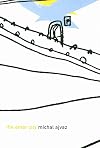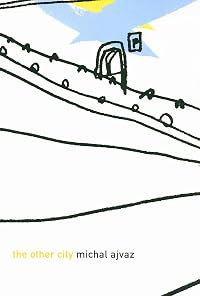
The Other City
by Michal Ajvaz
On This Page
Description
In this strange and lovely hymn to Prague, Michal Ajvaz repopulates the city of Kafka with ghosts, eccentrics, talking animals, and impossible statues, all lurking on the peripheries of a town so familiar to tourists. The Other City is a guidebook to this invisible, "other Prague," overlapping the workaday world: a place where libraries can turn into jungles, secret passages yawn beneath our feet, and waves lap at our bedspreads. Heir to the tradition and obsessions of Jorge Luis Borges, as show more well as the long and distinguished line of Czech fantasists, Ajvaz's Other City--his first novel to be translated into English--is the emblem of all the worlds we are blind to, being caught in our own ways of seeing. show lessTags
Recommendations





Member Reviews
After thirty pages I put it down and put it in my "Didn't finish" collection. After half an hour I reconsidered and looked up some reviews. I read another ten pages and thought "Nope". Later the same day I couldn't let go of the nagging feeling that there was more to it than met the eye, so I picked it up again. And ended up by giving it 4.5 stars.
At first, The Other City feels like written by a lazy wannabe surrealist who has discovered that he can ramble and just write sentences by piling words randomly, scribbling whatever his associations bring up without a plan or any coherence, and call it "art". But the longer you read, the more you see the structure and what Ajvaz is trying to do, which both makes the book meaningful and quite show more funny. This is not a book for everyone, but it gave me great pleasure. show less
At first, The Other City feels like written by a lazy wannabe surrealist who has discovered that he can ramble and just write sentences by piling words randomly, scribbling whatever his associations bring up without a plan or any coherence, and call it "art". But the longer you read, the more you see the structure and what Ajvaz is trying to do, which both makes the book meaningful and quite show more funny. This is not a book for everyone, but it gave me great pleasure. show less
Sometimes a book comes along that knocks me out of complacency and reminds me exactly why I love to read. The Other City by Michal Ajvaz was one of those books. At once incredibly intelligent and captivatingly beautiful, it is a rewarding book for anyone who loves to read beneath the surface and find meaning just beyond the frontier.
After discovering a strange book in an alien language at an antiquarian book store, an unnamed narrator comes into contact with a strange other world, "a place where libraries can turn into jungles, secret passages yawn beneath our feet, and waves lap at our bedspreads." (from the blurb) He finds The Other City, a city that is at once the same place as his home city of Prague and something entirely show more different. Surrealist and strange, the people he meets and events he witnesses initially baffle both the narrator and the reader. The struggle of the reader to understand the book mirrors the experience that the narrator has trying to understand the strange new city in which he finds himself. Is there meaning to be found here? The answer is, of course, yes, but it is never quite the meaning that we expect.
What struck me first about this book was the vivid imagery. Though surrealism isn't usually my favorite aesthetic, the descriptions in The Other City were so beautiful and real that I didn't mind the initial confusion that necessarily comes with a surrealist text. Even the strangest and most incomprehensible of things are described in luminous prose, glowing with life and color. These descriptions help to create the atmosphere that defines the strange city.
Though the descriptions are beautiful, The Other City isn't just a text of images. There is a plot to this book, and the reader is just as invested in discovering the inner workings of the other city as the narrator is. I wanted to reach that inner courtyard and hear the music of strange fountains. Not only is the subject interesting, but Michal Ajvaz is a critical theorist, and his incredible intelligence shows in his writing. This is a book driven not only by conventional plot, but also by ideas and philosophies, which are always being found, challenged, and changed. As someone who loves to think and engage with ideas while I'm reading, I greatly enjoyed this intellectual side of the book. Whether it's notions of otherness and frontiers, the true nature of monsters, the relationship of language to reality, or the act of reading, this book handles ideas with a mix of beautiful prose and intellectual dexterity. Ajvaz manages to contemplate ideas without being pedantic or boring the reader. Instead, ideas become vitally significant, a way of making sense of a world that seems to defy logic and understanding.
A book about frontiers, monsters, and the act of reading, The Other City is stunning in both the depth of its ideas and the beauty and quality of its writing. For readers who need to understand every word of a book, The Other City is definitely not going to be enjoyable. But for those of you who like difficult novels, this might be the book for you. If you want a novel that will make you think as often as it takes your breath away, I absolutely recommend The Other City.
Rating: 5+ stars.
Recommendations: Don't give up if it confuses you at first. Keep on going. It's worth it. show less
After discovering a strange book in an alien language at an antiquarian book store, an unnamed narrator comes into contact with a strange other world, "a place where libraries can turn into jungles, secret passages yawn beneath our feet, and waves lap at our bedspreads." (from the blurb) He finds The Other City, a city that is at once the same place as his home city of Prague and something entirely show more different. Surrealist and strange, the people he meets and events he witnesses initially baffle both the narrator and the reader. The struggle of the reader to understand the book mirrors the experience that the narrator has trying to understand the strange new city in which he finds himself. Is there meaning to be found here? The answer is, of course, yes, but it is never quite the meaning that we expect.
What struck me first about this book was the vivid imagery. Though surrealism isn't usually my favorite aesthetic, the descriptions in The Other City were so beautiful and real that I didn't mind the initial confusion that necessarily comes with a surrealist text. Even the strangest and most incomprehensible of things are described in luminous prose, glowing with life and color. These descriptions help to create the atmosphere that defines the strange city.
Though the descriptions are beautiful, The Other City isn't just a text of images. There is a plot to this book, and the reader is just as invested in discovering the inner workings of the other city as the narrator is. I wanted to reach that inner courtyard and hear the music of strange fountains. Not only is the subject interesting, but Michal Ajvaz is a critical theorist, and his incredible intelligence shows in his writing. This is a book driven not only by conventional plot, but also by ideas and philosophies, which are always being found, challenged, and changed. As someone who loves to think and engage with ideas while I'm reading, I greatly enjoyed this intellectual side of the book. Whether it's notions of otherness and frontiers, the true nature of monsters, the relationship of language to reality, or the act of reading, this book handles ideas with a mix of beautiful prose and intellectual dexterity. Ajvaz manages to contemplate ideas without being pedantic or boring the reader. Instead, ideas become vitally significant, a way of making sense of a world that seems to defy logic and understanding.
A book about frontiers, monsters, and the act of reading, The Other City is stunning in both the depth of its ideas and the beauty and quality of its writing. For readers who need to understand every word of a book, The Other City is definitely not going to be enjoyable. But for those of you who like difficult novels, this might be the book for you. If you want a novel that will make you think as often as it takes your breath away, I absolutely recommend The Other City.
Rating: 5+ stars.
Recommendations: Don't give up if it confuses you at first. Keep on going. It's worth it. show less
The best novel I have read for many years, the sort of book you find yourself insistently pressing on strangers, a magical vision of Prague when you're not looking. I was reminded of Lewis Carroll, the Surrealists and the dizzying transformations of Windsor Mackay's Little Nemo strips. I need the rest of Ajvaz' work in English, and I need it now - given the time. I'd learn Czech purely to read the original texts. Go and read this right now, or the sharks will get you!
I have very high standards of weirdness. Often when looking for a strange book to read, I am disappointed by how normal it is. Often I'll read reviews claiming how bizarre a certain novel is and end up bitterly disappointed.
However, I am glad to say that this spectacular novel met my standards perfectly and is one of the most brilliant works of imagination I have ever read. I don't like using the "X meets Y" approach to describing books as they are often wrong, but it seemed to me a bit like what Neverwhere had been like if it had been written by Flann O'Brien while channelling the spirit of Haruki Murakami. But that doesn't really capture the spirit of the work. Like Gaiman's Neverwhere it is all about what could be hidden in plain show more site, a city within a city, somewhere that is easily reached yet still hidden from our view. However, this novel is also incredibly surreal, just like O'Brien's Third Policeman. You might say it's even more surreal. And it does have something of Murakami's dreamlike quality there as well, but the novel's style is really all its own, unique and original.
It is I suppose Magic Realism, but a lot of literary snobs tend to forget that Magic Realism is just a subgenre of Fantasy. For it is definitely, gloriously fantasy. Fantasy isn't just sword and sorcery. It is anything you can imagine. What makes it Magic Realism is that the main character encounters things that he doesn't understand and which are not fully explained to him, things which intrude upon the normality of everyday life and entwine perfectly with it.
Books like these always make me want to seek out hidden worlds and doorways. Someday I'll find one. show less
However, I am glad to say that this spectacular novel met my standards perfectly and is one of the most brilliant works of imagination I have ever read. I don't like using the "X meets Y" approach to describing books as they are often wrong, but it seemed to me a bit like what Neverwhere had been like if it had been written by Flann O'Brien while channelling the spirit of Haruki Murakami. But that doesn't really capture the spirit of the work. Like Gaiman's Neverwhere it is all about what could be hidden in plain show more site, a city within a city, somewhere that is easily reached yet still hidden from our view. However, this novel is also incredibly surreal, just like O'Brien's Third Policeman. You might say it's even more surreal. And it does have something of Murakami's dreamlike quality there as well, but the novel's style is really all its own, unique and original.
It is I suppose Magic Realism, but a lot of literary snobs tend to forget that Magic Realism is just a subgenre of Fantasy. For it is definitely, gloriously fantasy. Fantasy isn't just sword and sorcery. It is anything you can imagine. What makes it Magic Realism is that the main character encounters things that he doesn't understand and which are not fully explained to him, things which intrude upon the normality of everyday life and entwine perfectly with it.
Books like these always make me want to seek out hidden worlds and doorways. Someday I'll find one. show less
An observer can't be part of the world he observes: you can't be detached, uninvested in that world and yet also a part of it, because being a part of something requires you to invest yourself in it. The tourist cannot understand the places he merely passes through, as it's a temporary sojourn for him and a permanent state of being for the people he sees there. You want to understand something, to be a part of something? You have to immerse yourself in it, and not hold anything back, letting go of every lifeline that you could use to pull yourself back to your old life. It's a scary, but necessary if you want to be a member and not an outsider.
Ajvaz explores the difference between an observer and a participant in The Other City, and he show more does it in a way that consistently brought a smile to my face. Prague and The Other Prague come to life in this novella, and personally I found it a joy to read. Both individual scenes and the journey as a whole still appear vivid in my memory many months later, and I look forward to rereading this short book many times in the years to come. God I wish more Ajvaz had been translated to English: let's get some more of his work Dalkey Archive Press, I know you own the rights! show less
Ajvaz explores the difference between an observer and a participant in The Other City, and he show more does it in a way that consistently brought a smile to my face. Prague and The Other Prague come to life in this novella, and personally I found it a joy to read. Both individual scenes and the journey as a whole still appear vivid in my memory many months later, and I look forward to rereading this short book many times in the years to come. God I wish more Ajvaz had been translated to English: let's get some more of his work Dalkey Archive Press, I know you own the rights! show less
Someone recommended this to me months ago, a surreal reimagining of Prague as a city with a mystical twin space linked to it. I found it dull and incoherent. China Mieville did it much better in "The City & the City". At least it is short.
Members
- Recently Added By
Lists

Recommend the 20 best books you've read in the last five years
2,168 works; 606 members

Magic Realism
371 works; 52 members

Winter Books
127 works; 17 members

Top Five Books of 2015
811 works; 241 members

Best public-transport fiction
72 works; 17 members

Books Read in 2015
3,299 works; 129 members

Books set in Prague
40 works; 1 member

Speculative Fiction from around the World
610 works; 18 members

LIBROS DE CIENCIA FICCIÓN Y FANTASIA
60 works; 1 member

Reading Globally
136 works; 16 members

Books written in uncommon languages
97 works; 8 members
Author Information

Some Editions
Awards and Honors
Awards
Series
Belongs to Publisher Series
Common Knowledge
- Canonical title
- The Other City
- Original title
- Druhé město
- Original publication date
- 1993
- People/Characters
- Unnamed Narrator; Alweyra; Alweyra's Father; Old Shopkeeper; Researcher; Guardian of the Temple
- Important places
- Prague, Czech Republic
- First words
- I was walking up and down the rows of books at the antiquarian bookseller's in Karlova Street.
- Quotations
- Can there really exist a world in such close proximity to our own, one that seethes with such strange life, one that was possibly here before our own city and yet we know absolutely nothing about it? The more I pondered on it... (show all), the more i was inclined to think that it was indeed quite possible, that it corresponded to our lifestyle, to the way we lived in circumscribed spaces that we are afraid to leave. We are troubled by the dark music heard from over the border, which undermines our order. We fear what looms in the twilit corners; we don't know whether they are broken or disintegrating shapes of our world, or the embryos of new fauna, which will one day transform the city into its hunting ground - the vanguard of an army of monsters slowly lurking its way through our apartments.
- Last words
- (Click to show. Warning: May contain spoilers.)I got up and walked towards it across the untrodden white snow.
- Blurbers*
- 塔, 円城; 史緒, 高野
- Original language
- Czech
*Some information comes from Common Knowledge in other languages. Click "Edit" for more information.
Classifications
- Genres
- General Fiction, Fiction and Literature, Fantasy
- DDC/MDS
- 891.8635 — Literature & rhetoric Literatures of other languages East Indo-European and Celtic literatures West and South Slavic languages (Bulgarian, Slovene, Polish, Czech, Slovak, Serbo-Croatian, and Macedonian) Czech Czech fiction 1900–1989
- LCC
- PG5039.1 .J83 .D7813 — Language and Literature Slavic languages and literatures. Baltic languages. Albanian language Slavic. Baltic. Albanian Slavic Czech
- BISAC
Statistics
- Members
- 220
- Popularity
- 148,400
- Reviews
- 8
- Rating
- (4.11)
- Languages
- 9 — Czech, Dutch, English, French, Hungarian, Italian, Japanese, Russian, Swedish
- Media
- Paper
- ISBNs
- 12
- ASINs
- 1