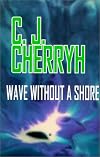
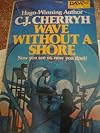
Wave without a Shore
by C. J. Cherryh
The Era of Rapprochement (2), Alliance-Union Universe: Publication (7.5), Alliance-Union Universe (39)
On This Page
Description
C. J. Cherryh planned to write since the age of ten. When she was older, she learned to use a type writer while triple-majoring in Classics, Latin and Greek. At 33, she signed over her first three books to DAW and has worked with DAW ever since. She can be found at cherryh.com.Tags
Recommendations
















Member Recommendations
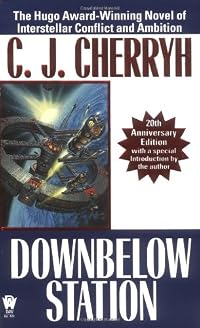
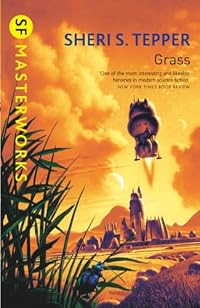
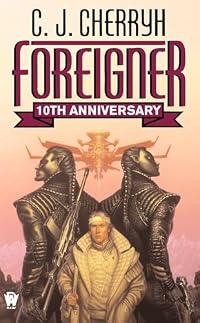
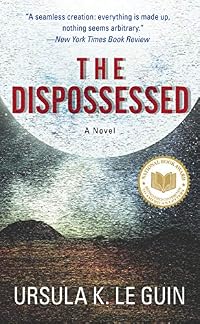
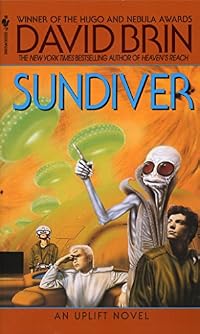
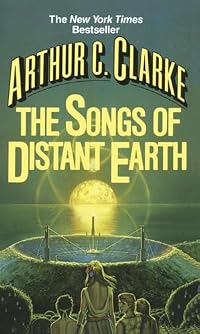
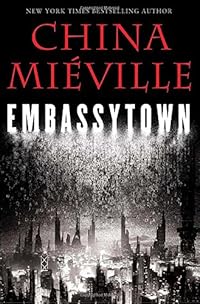
reading_fox Covers the same ground regarding visualising concepts.
Member Reviews
If one's subjective reality clashes with objective reality, or someone else's subjective reality, what happens to reality? Can all realities be true?
On a planet named Freedom, in a metropolis named Kierkegaard, the Artist and the First Citizen share a subjective reality. Until, one day, the Artist begins to notice things which should not be there. These "things" are the Ahnit, natives of Freedom, who have been ignored by the colonists for generations so as to have become Invisible. What, then, becomes of the Artist's and the First Citizen's realities? What happens when war comes to Kierkegaard at the behest of the First Citizen's expansion of his subjective reality?
Simple, yet complex, this is a novella which demands more than one show more reading. I found it both intriguing and mind bending. And enjoyable. show less
On a planet named Freedom, in a metropolis named Kierkegaard, the Artist and the First Citizen share a subjective reality. Until, one day, the Artist begins to notice things which should not be there. These "things" are the Ahnit, natives of Freedom, who have been ignored by the colonists for generations so as to have become Invisible. What, then, becomes of the Artist's and the First Citizen's realities? What happens when war comes to Kierkegaard at the behest of the First Citizen's expansion of his subjective reality?
Simple, yet complex, this is a novella which demands more than one show more reading. I found it both intriguing and mind bending. And enjoyable. show less
Nearly a perfect little SF novel. In many ways, I found this reminiscent of Le Guin's City of Illusions. Where Le Guin explores the meaning of truth, Cherryh toys with the individual's perception of reality; how the strength of one person's intellect and charisma can sway the perceived reality of weaker minds. Exploring class structures, racism, and alienation through a solipsistic lens, Cherryh writes a tight narrative that, as I have come to expect from her, starts somewhat slowly, but then builds inexorably to a satisfying conclusion.
Wow. Just wow. In this short novel Cherryh does what she usually does in her stories, creates a world, and culture, both alien and familiar...but this time it's on a scale that even she rarely attains. With virtually no fighting or other actions so common in SciFi, she hurls the reader along in this story of an artist who went too far and threatened a society conditioned to be blind to reality. Superb.
Wave Without a Shore is a stand-alone novel by C. J. Cherryh, one of my favorites. I was reminded of it when reading Dr. Neutron's review of The City and the City, so I pulled it off the shelf for a quick reread. I currently own it in an omnibus edition called Alternate Realities, with Port Eternity and Voyager in Night. I used to own it as a discrete novel, but I gave it away to a professor whose research methods seminar reminded me of the story. He was always going on about defining reality with sketches of clouds (that would be the intangible concepts, or immaterial reality) and brick walls (that would be the operationalized definition for the purpose of collecting data to try to measure reality). Or maybe not, it's been a few years, show more and I just packed up all my notes from grad school.
Anyway, Wave Without a Shore is a sort of first not-quite-contact novel. And a story about the dialectic run amok. On a small, remote planet, a human colony was established. The planet is called Freedom, the main continent, Sartre, and the capitol, Kierkegaard. Can you see where this might be going? The three main human characters are Herrin Law the artist, Waden Jenks the politico and soon-to-be First Citizen (read: dictator), and Keye Lynn the creative ethicist, the three most brilliant students at University.
Except for the first, each chapter opens with a little dialectic interchange between Herrin and someone else. The first opens with a quote by Pythagoras: Man is the measure of all things. At first these little stand-along snippets of dialogue reflect Herrin's character through his past or future, but generally unrelated to the events in the chapter. Later in the book, the dialectic prologues converge with the story.
The story follows Herrin from his small-town upbringing to his arrival at the central university and meeting Waden and Keye to creating the first piece of public art once Waden assumes power to subsequent events once various conflicts emerge.
The culture of Freedom is structured by people's definitions of reality rather than anything so crass as objective reality. To acknowledge the existence of something that isn't considered "real" is to be declared insane, and therefore invisible. And so a whole invisible underclass, including the unacknowledged nonhuman Others populates the city. With them comes a grey economy, as goods disappear from the visible, "real" community to circulate among the invisibles, in effect, creating a closed system, even though all of its loops are not acknowledged. When offworlders come, they disrupt society and individual lives in so many ways, and the world will never be the same. show less
Anyway, Wave Without a Shore is a sort of first not-quite-contact novel. And a story about the dialectic run amok. On a small, remote planet, a human colony was established. The planet is called Freedom, the main continent, Sartre, and the capitol, Kierkegaard. Can you see where this might be going? The three main human characters are Herrin Law the artist, Waden Jenks the politico and soon-to-be First Citizen (read: dictator), and Keye Lynn the creative ethicist, the three most brilliant students at University.
Except for the first, each chapter opens with a little dialectic interchange between Herrin and someone else. The first opens with a quote by Pythagoras: Man is the measure of all things. At first these little stand-along snippets of dialogue reflect Herrin's character through his past or future, but generally unrelated to the events in the chapter. Later in the book, the dialectic prologues converge with the story.
The story follows Herrin from his small-town upbringing to his arrival at the central university and meeting Waden and Keye to creating the first piece of public art once Waden assumes power to subsequent events once various conflicts emerge.
The culture of Freedom is structured by people's definitions of reality rather than anything so crass as objective reality. To acknowledge the existence of something that isn't considered "real" is to be declared insane, and therefore invisible. And so a whole invisible underclass, including the unacknowledged nonhuman Others populates the city. With them comes a grey economy, as goods disappear from the visible, "real" community to circulate among the invisibles, in effect, creating a closed system, even though all of its loops are not acknowledged. When offworlders come, they disrupt society and individual lives in so many ways, and the world will never be the same. show less
The back cover blurb of Wave Without a Shore describes it as “a different sort of interplanetary novel by the author of Downbelow Station and The Faded Sun trilogy Which is almost true. It certainly does not resemble the two novels mentioned - for one thing, it’s set entirely on the surface of a single planet. So, not really “interplanetary” either, I guess.
The world of Freedom was settled by humans, even though it already had a native population, the ahnit. The humans built a city, Kierkegaard, and settled down to develop a way of life that resulted them in not seeing things which do not fit their worldview or “reality”. Such as the ahnit. Who more or less become invisible to them. As do humans who drop out.
Herrin Law show more considers himself the cleverest person on the planet. He becomes a sculptor at the university in Kierkegaard, where he meets Waden Jenks, son of the world’s First Citizen, and almost as clever as Herrin, if not equal in intelligence. Jenks’s cleverness, however, lies in politics. There’s also a third super-smart student, Keye Lynn, who starts out as Law’s girlfriend, then after Jenks has seized power from his father, moves in with Jenks.
Jenks commissions a statue of himself from Law, which Law turns into a series of carved domes, within which is the statue, in Kierkegaard’s only square. Meanwhile, Freedom’s sole contact with other worlds, a freebooter merchant, threatens Jenks and Kierkegaard, and Jenks responds by shopping him to the military… who then start building a station in Freedom orbit.
Much of the first half of the novel is taken up with philosophical discussions between Law and Jenks. Everyone on Freedom is solipsistic to the degree they can choose what and what not to see in their surroundings. But when Jenks, encouraged by the visiting military, tells Law to never sculpt again, and then has his goons break Law’s hands to make sure… Law is driven into a crisis and begins to “see” the ahnit.
It’s a neat concept - and reminds me a little of Miéville’s The City & the City - but Cherryh spends so long setting up the characters of Law and Jenks, and describing the underpinnings to the Freedom humans’ solipsism, the story drags badly for much of its length. Nor is it helped by both Law and Jenks being so arrogant and self-centred and unlikeable. It also remind me a little of other novels by Cherryh, such as Voyager in Night, and while it’s set in her Alliance-Union universe, it’s on the fringes of it, like The Faded Sun trilogy and Angel with the Sword. So, probably one for completists. show less
The world of Freedom was settled by humans, even though it already had a native population, the ahnit. The humans built a city, Kierkegaard, and settled down to develop a way of life that resulted them in not seeing things which do not fit their worldview or “reality”. Such as the ahnit. Who more or less become invisible to them. As do humans who drop out.
Herrin Law show more considers himself the cleverest person on the planet. He becomes a sculptor at the university in Kierkegaard, where he meets Waden Jenks, son of the world’s First Citizen, and almost as clever as Herrin, if not equal in intelligence. Jenks’s cleverness, however, lies in politics. There’s also a third super-smart student, Keye Lynn, who starts out as Law’s girlfriend, then after Jenks has seized power from his father, moves in with Jenks.
Jenks commissions a statue of himself from Law, which Law turns into a series of carved domes, within which is the statue, in Kierkegaard’s only square. Meanwhile, Freedom’s sole contact with other worlds, a freebooter merchant, threatens Jenks and Kierkegaard, and Jenks responds by shopping him to the military… who then start building a station in Freedom orbit.
Much of the first half of the novel is taken up with philosophical discussions between Law and Jenks. Everyone on Freedom is solipsistic to the degree they can choose what and what not to see in their surroundings. But when Jenks, encouraged by the visiting military, tells Law to never sculpt again, and then has his goons break Law’s hands to make sure… Law is driven into a crisis and begins to “see” the ahnit.
It’s a neat concept - and reminds me a little of Miéville’s The City & the City - but Cherryh spends so long setting up the characters of Law and Jenks, and describing the underpinnings to the Freedom humans’ solipsism, the story drags badly for much of its length. Nor is it helped by both Law and Jenks being so arrogant and self-centred and unlikeable. It also remind me a little of other novels by Cherryh, such as Voyager in Night, and while it’s set in her Alliance-Union universe, it’s on the fringes of it, like The Faded Sun trilogy and Angel with the Sword. So, probably one for completists. show less
The protagonist, Herrin, is such an arrogant, unlikable jerk that I didn't really care what happened to him, which made it difficult to stay invested in the story line, particularly the first 60% or so about the sculpture. It picked up a bit after that, but I was disappointed that we never really learned anything about Keye or the alien civilisation (other than just Sbi).
Does it matter whether I see you?
Of course it does. But the humans on Freedom have conditioned themselves not to see - to live solely inside their own constructed realities while at the same time conducting life as it must be lived; socially.
The human settlement is still young, still forming, and some developments changed life more than anyone could predict...
A thought-provoking read it feels closely related to the writings of LeGuin while at the same time being trademark Cherryh.
I had not planned to buy or read this one but I'm very glad that I did.
Of course it does. But the humans on Freedom have conditioned themselves not to see - to live solely inside their own constructed realities while at the same time conducting life as it must be lived; socially.
The human settlement is still young, still forming, and some developments changed life more than anyone could predict...
A thought-provoking read it feels closely related to the writings of LeGuin while at the same time being trademark Cherryh.
I had not planned to buy or read this one but I'm very glad that I did.
Members
- Recently Added By
Lists

Favorite Science Fiction by Women Authors
737 works; 202 members

Books Read in 2014
2,341 works; 89 members
Author Information

258+ Works 74,508 Members
A multiple award-winning author of more than thirty novels, C. J. Cherryh received her B.A. in Latin from the University of Oklahoma, and then went on to earn a M.A. in Classics from Johns Hopkins University. Cherryh's novels, including Tripoint, Cyteen, and The Pride of Chanur, are famous for their knife-edge suspense and complex, realistic show more characters. Cherryh won the John W. Campbell Award for Best New Writer in 1977. She was also awarded the Hugo Award for her short story Cassandra in 1979, and the novels Downbelow Station in 1982 and Cyteen in 1989. (Bowker Author Biography) show less
Some Editions
Series


Belongs to Publisher Series
Colecção Bolso Noite (21)
DAW Book Collectors (444)
Work Relationships
Common Knowledge
- Original publication date
- 1981-08
- People/Characters
- Waden Jenks; Herrin Law; Perrin Law (Herrin's sister); Keye Lynn; Sri (ahnit)
- Important places
- Freedom, Alliance (planet)
- First words
- Freedom was one of those places honest ships avoided, a pleasant world of a pleasant star, but lacking a station at which ships could dock, and by reason of its location on the limb's sparse edge, inconvenient for ships on fi... (show all)xed schedules.
- Last words
- (Click to show. Warning: May contain spoilers.)Herrin left him there, walked away with Sbi and the others, trusting that Waden would follow, in his own time.
Classifications
Statistics
- Members
- 466
- Popularity
- 65,293
- Reviews
- 11
- Rating
- (3.43)
- Languages
- English, French, Italian, Portuguese
- Media
- Paper, Ebook
- ISBNs
- 8
- ASINs
- 3