On This Page
Description
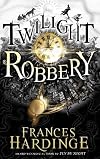
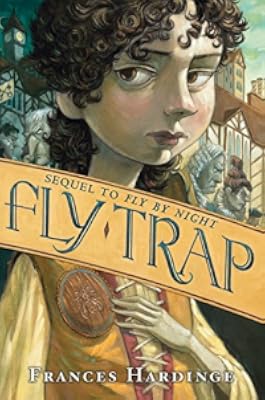
Adventurous orphan Mosca Mye, her savage goose, Saracen, and their sometimes-loyal companion, Eponymous Clent, become embroiled in the intrigues of Toll, a town that changes entirely as day turns to night.Tags
Recommendations





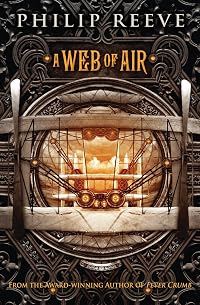

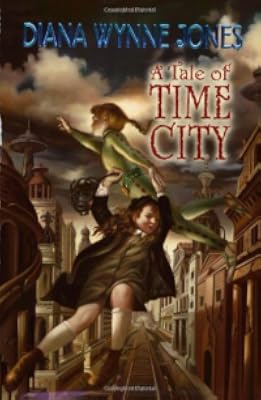
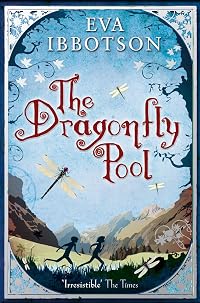
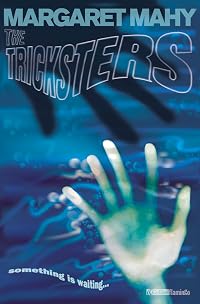



Member Recommendations
kgodey Has similar cities that are located in the same physical location.
Member Reviews
In the sequel to Fly by Night, Mosca Mye and her travelling companion Eponymous Clent find themselves, together with Saracen, Mosca's pet goose, in the town of Toll, where the Committee of the Hours has classified all the Beloved into 'good names' (day) and 'bad names' (night). Accordingly, if an inhabitant has the misfortune to bear a name deemed to belong to the darkness or is considered too radical, they are forced to live in the night town, which is controlled by Mosca and Clent's old adversaries, the Locksmiths. As is to be expected, here ensues a wildly imaginative tale of kidnap and betrayal, but also courage when faced with terrible odds.
Frances Hardinge's novels have surprisingly mature themes at their heart, and Twilight show more Robbery is no exception. While it is a little less violent than its predecessor, its tone is on the whole more serious, even if Saracen adds some light relief to the proceedings now and again with his avian antics. Through the inhabitants of Toll, Hardinge explores themes of prejudice, discrimination and identity, and the belief in predestination taken to its extreme; a cheerful read it is not, even if readers are able to cheer on Mosca, with her usual quick wit, inventiveness and resourcefulness. Oh, and Frances Hardinge's prose is simply a joy to read. show less
Frances Hardinge's novels have surprisingly mature themes at their heart, and Twilight show more Robbery is no exception. While it is a little less violent than its predecessor, its tone is on the whole more serious, even if Saracen adds some light relief to the proceedings now and again with his avian antics. Through the inhabitants of Toll, Hardinge explores themes of prejudice, discrimination and identity, and the belief in predestination taken to its extreme; a cheerful read it is not, even if readers are able to cheer on Mosca, with her usual quick wit, inventiveness and resourcefulness. Oh, and Frances Hardinge's prose is simply a joy to read. show less
Mosca Mye, educated ragamuffin, Eponymous Clent, cunning rogue, and Saracen, goose, cast out of one city after causing disturbances and revolutions, find their way into another, with even more calamitous results. The city of Toll has a day face and a night face, and they are kept strictly apart, but there are kidnappings afoot, and Mosca and Clent are right in the middle of them, and before long, Mosca is heartily sick of both Toll-By-Day and Toll-By-Night, an ingeniously horrible system of repression and control and exploitation. But what can a girl, a con-man and goose do against the fearsome might of the jinglers?
A well-conceived and ingenious fantasy that mixes dark elements with comic wit and a likable protagonist and a show more well-rounded menagerie of supporting or opposite-of-supporting characters. I really hope there's another one of these at some point. show less
A well-conceived and ingenious fantasy that mixes dark elements with comic wit and a likable protagonist and a show more well-rounded menagerie of supporting or opposite-of-supporting characters. I really hope there's another one of these at some point. show less
Troubles again! Unfortunately, Mosca Mye, Eponymous Clent and the goose Saracen have run into so many complications with their latest scheme that they’ve run through the first, second, and third back-up plans.
“Quaternary plan!’ gasped Clent. ‘Creative panic!'”
But at least Saracen is on their side, although Mosca needs to be cautioned by Clent against unleashing the power of the goose. “‘Be it even so, now is the time for calm calculation… and not for sending your web-footed apocalypse on a one-goose rampage…'”
The story begins with Saracen, who has been holding a village hostage with his belligerent behavior, and indirectly, Clent and Mosca for the damages he’s caused.
“Saracen, who had been swaggering to and fro show more in some uncertainty, was delighted to see Mosca on her feet and screaming at somebody. At last he knew how to choose his enemy. There was a froth of white wings, and a splash…”
I must say how much I love the irascible, bullying goose. Hardinge is particularly clever in avian characterization, keeping him very goose-like and leaving the details of his skirmishes behind flying feathers and howls of anguish. I suspect I find him particularly amusing because I have a Saracen of my own, an Amazon parrot that occasionally struts across the floor (he can fly, but for some reason chooses to walk during these little displays, perhaps the better to parade), bound for the lower rungs of a desk chair that he considers a back-up lair. Woe betide any toes or unsuspecting ankles coming to use the computer. Once, my mother complained she had to climb on top of the chair to escape after being subjected to his bloody ambush. I could only laugh–there is something so absurd about the power of 800 grams holding 60 kilograms hostage. David and Goliath, indeed. I share that anecdote to say that Hardinge captures that avian swagger well, and if she is exaggerating, it is likely by only a little.
So the quick sum is that Mosca and Clent are in a hard spot after leaving Mandelion, Clent particularly so as he languishes in debtor’s prison. Mosca takes a scribe job to earn enough coin for bail, but is caught in a double-cross. She’s resourceful, however, and after aid from an old acquaintance, they make haste for the open road. Unfortunately, the choice of destination is somewhat limited by Clent’s reputation, so they find themselves headed toward the town of Toll, a gateway to the eastern counties. Toll is very unusual, for more than just their critical control of the only bridge spanning a gorge that divides the country. They’ve made a science of the many little gods, and have assigned ‘dayshift’ or ‘nightshift’ to each one based on their characteristics. Unfortunately, they’ve also done the same to people, since people are named after the god in ascendance during their birth. Clent and Mosca have three days to come up with enough money to pay the exit fees to leave Toll, or they’ll be permanently assigned–Clent to the day, Mosca to the night. The main story takes place in Toll, where there’s thievery, love, duplicity, dungeons, damsels in distress, the strange habits of the inhabitants at dawn and dusk, and, of course, rebellion.
“‘Just between you and me,’ Mosca whispered, ‘radicalism is all about walkin’ on the grass.'”
Plotting is more singly focused than Fly by Night; the chief goal is to escape Toll, and action is centered around a strategy to earn money. When I was nice and settled into the plot, Hardinge again surprised, managing a clever plot twist as well as a completely satisfactory ending, even when I wasn’t sure it could be done.
Hardinge continues to impress with her imagination, both in setting and in word-smithing. She does amazing things with the town geography, and I can’t help but imagine a movie based on such a vision. I like the characterization; Clent and Mosca are so layered they achieve a rare dimensionality. Clent, in particular, shows the disenchanted but resigned acceptance adulthood often brings, while Mosca remains full of passion and youthful ideas of right and wrong. Perhaps my only complaint is an emphasis on Mosca’s irritable disposition; while it is usually connected to feelings of justice, her contrariness started to feel a little repetitive. I missed the Mosca that was filled with joy from words, learning and discovery of the larger world.
Hardinge still has a way with words, a playfulness that has me smiling as I read:
“‘So… the doors have been blocked.’ Clent was clearly becoming uneasy. ‘Plague, possibly. Or giant rats…’ He was blinking rapidly, as if his eyes had noticed that his words were not improving morale and were desperately signaling to his mouth to stop moving.”
“When she was at last woken by a young ostler politely and carefully stepping on her head in his attempts to rake out the dead coals…”
“A couple of expressions pulled Clent’s face to a fro between them, like puppies trying to fight their way out of a bag.”
Thematically, there is an interesting and indirect exploration of the power of names and the accident of birth. It leads to an even more interesting exploration of the power of social pressure–do you believe the expectations society ascribes to you because of class? Rise or sink to the occasion? I enjoyed the way Hardinge explores the issue without becoming pedantic or making Mosca into a straw-girl for an Important Life Lesson.
Overall, a great read that was highly satisfying on a number of levels. Hardinge’s made herself a spot on my ‘must-read’ authors.
Four-and-a-half golden eggs sassy geese
http://clsiewert.wordpress.com/2013/11/13/fly-trap-by-frances-hardinge/ show less
“Quaternary plan!’ gasped Clent. ‘Creative panic!'”
But at least Saracen is on their side, although Mosca needs to be cautioned by Clent against unleashing the power of the goose. “‘Be it even so, now is the time for calm calculation… and not for sending your web-footed apocalypse on a one-goose rampage…'”
The story begins with Saracen, who has been holding a village hostage with his belligerent behavior, and indirectly, Clent and Mosca for the damages he’s caused.
“Saracen, who had been swaggering to and fro show more in some uncertainty, was delighted to see Mosca on her feet and screaming at somebody. At last he knew how to choose his enemy. There was a froth of white wings, and a splash…”
I must say how much I love the irascible, bullying goose. Hardinge is particularly clever in avian characterization, keeping him very goose-like and leaving the details of his skirmishes behind flying feathers and howls of anguish. I suspect I find him particularly amusing because I have a Saracen of my own, an Amazon parrot that occasionally struts across the floor (he can fly, but for some reason chooses to walk during these little displays, perhaps the better to parade), bound for the lower rungs of a desk chair that he considers a back-up lair. Woe betide any toes or unsuspecting ankles coming to use the computer. Once, my mother complained she had to climb on top of the chair to escape after being subjected to his bloody ambush. I could only laugh–there is something so absurd about the power of 800 grams holding 60 kilograms hostage. David and Goliath, indeed. I share that anecdote to say that Hardinge captures that avian swagger well, and if she is exaggerating, it is likely by only a little.
So the quick sum is that Mosca and Clent are in a hard spot after leaving Mandelion, Clent particularly so as he languishes in debtor’s prison. Mosca takes a scribe job to earn enough coin for bail, but is caught in a double-cross. She’s resourceful, however, and after aid from an old acquaintance, they make haste for the open road. Unfortunately, the choice of destination is somewhat limited by Clent’s reputation, so they find themselves headed toward the town of Toll, a gateway to the eastern counties. Toll is very unusual, for more than just their critical control of the only bridge spanning a gorge that divides the country. They’ve made a science of the many little gods, and have assigned ‘dayshift’ or ‘nightshift’ to each one based on their characteristics. Unfortunately, they’ve also done the same to people, since people are named after the god in ascendance during their birth. Clent and Mosca have three days to come up with enough money to pay the exit fees to leave Toll, or they’ll be permanently assigned–Clent to the day, Mosca to the night. The main story takes place in Toll, where there’s thievery, love, duplicity, dungeons, damsels in distress, the strange habits of the inhabitants at dawn and dusk, and, of course, rebellion.
“‘Just between you and me,’ Mosca whispered, ‘radicalism is all about walkin’ on the grass.'”
Plotting is more singly focused than Fly by Night; the chief goal is to escape Toll, and action is centered around a strategy to earn money. When I was nice and settled into the plot, Hardinge again surprised, managing a clever plot twist as well as a completely satisfactory ending, even when I wasn’t sure it could be done.
Hardinge continues to impress with her imagination, both in setting and in word-smithing. She does amazing things with the town geography, and I can’t help but imagine a movie based on such a vision. I like the characterization; Clent and Mosca are so layered they achieve a rare dimensionality. Clent, in particular, shows the disenchanted but resigned acceptance adulthood often brings, while Mosca remains full of passion and youthful ideas of right and wrong. Perhaps my only complaint is an emphasis on Mosca’s irritable disposition; while it is usually connected to feelings of justice, her contrariness started to feel a little repetitive. I missed the Mosca that was filled with joy from words, learning and discovery of the larger world.
Hardinge still has a way with words, a playfulness that has me smiling as I read:
“‘So… the doors have been blocked.’ Clent was clearly becoming uneasy. ‘Plague, possibly. Or giant rats…’ He was blinking rapidly, as if his eyes had noticed that his words were not improving morale and were desperately signaling to his mouth to stop moving.”
“When she was at last woken by a young ostler politely and carefully stepping on her head in his attempts to rake out the dead coals…”
“A couple of expressions pulled Clent’s face to a fro between them, like puppies trying to fight their way out of a bag.”
Thematically, there is an interesting and indirect exploration of the power of names and the accident of birth. It leads to an even more interesting exploration of the power of social pressure–do you believe the expectations society ascribes to you because of class? Rise or sink to the occasion? I enjoyed the way Hardinge explores the issue without becoming pedantic or making Mosca into a straw-girl for an Important Life Lesson.
Overall, a great read that was highly satisfying on a number of levels. Hardinge’s made herself a spot on my ‘must-read’ authors.
Four-and-a-half golden eggs sassy geese
http://clsiewert.wordpress.com/2013/11/13/fly-trap-by-frances-hardinge/ show less
Another great one by Frances Hardinge. Not as wonderful as Well Wished, but still pretty darn wonderful. Beautifully written, and I love the idea of two towns living inside each other. The only bad thing I can say about it is that I wouldn't want to be Mosca or live her her world.
Young Mosca Mye and her dubiously loyal companion, the con man Eponymous Clent, have only just escaped Mandelion. There they'd averted one revolution and caused another, and so consider it safer to be far away from the city and its new rulers before the dust settled. But wherever they travel is sure to be full of trouble, and so too is the town of Toll.
Mosca is a wonderful character: pig headed, quick-witted, with a talent for lies and an unfortunate tendency toward fairness. The world she inhabits is strange, flavored by seventeenth century Europe but not beholden to them. I love it all, from the twisty plot to the drily sarcastic narrative style. If you like Terry Pratchett or Locke Lamora, you'll probably like this.
Mosca is a wonderful character: pig headed, quick-witted, with a talent for lies and an unfortunate tendency toward fairness. The world she inhabits is strange, flavored by seventeenth century Europe but not beholden to them. I love it all, from the twisty plot to the drily sarcastic narrative style. If you like Terry Pratchett or Locke Lamora, you'll probably like this.
I was instantly captivated when I read Fly by Night by Frances Hardinge, so I was really looking forward to this sequel, Fly Trap (Twilight Robbery in the U.K.)
Fly Trap follows the continuing adventures of Mosca Mye, an orphaned 12-year old who has the rare ability to read, her travelling companion Eponymous Clent, a well-known con-artist, and her homicidal goose, Saracen. They have recently (accidentally) helped cause a revolution in the city of Mandelion and run afoul of the powerful Guilds that control the realm. They've been trying to make a living using their conning skills and Mosca's ability to read, but winter is coming, and they're not in a comfortable spot. After they accidentally stumble upon a kidnapping plot, they head to show more the city of Toll hoping to notify the intended victim and earn a reward. Predictably, things don't end up turning out like they'd hoped and they become embroiled in far larger schemes.
This is another of those books that is labelled "fantasy" simply because it is set in an alternate world, even thought it does not contain any magic. The world is really interesting, though. In the previous book, we learned that every hour and day has its own patron saint or god (called "Beloved"), and a child is named in honour of the reigning deity when he or she was born. This book explores this concept even further. The city of Toll takes these names very seriously, as Mosca and Eponymous soon find out.
Just like Fly by Night, Fly Trap is a self-contained adventure, and I don't think it's necessary to read the previous book in order to enjoy this one. A few familiar faces appear, but their appearances and significance are explained.
Mosca and Eponymous are fun protagonists, and their half-antagonistic, half-affectionate relationship is very endearing. I particularly loved the scene where Mosca makes up some choice insults in order to get Eponymous out of trouble, and his reaction to it. Even though both Mosca and Eponymous would deny having a sense of right and wrong, they definitely do – especially when it comes to saving each other from trouble. Saracen was a hoot (or rather, a honk) as always, but I was a bit disappointed that he wasn't a bit more murderous.
Hardinge is a total delight to read – she loves playing with words, and her descriptions are inventive and charming. I think that she is one of the best young adult writers of today, having also read her The Lost Conspiracy. I don't think she's nearly as popular as she should be.
Originally posted on my blog. show less
Fly Trap follows the continuing adventures of Mosca Mye, an orphaned 12-year old who has the rare ability to read, her travelling companion Eponymous Clent, a well-known con-artist, and her homicidal goose, Saracen. They have recently (accidentally) helped cause a revolution in the city of Mandelion and run afoul of the powerful Guilds that control the realm. They've been trying to make a living using their conning skills and Mosca's ability to read, but winter is coming, and they're not in a comfortable spot. After they accidentally stumble upon a kidnapping plot, they head to show more the city of Toll hoping to notify the intended victim and earn a reward. Predictably, things don't end up turning out like they'd hoped and they become embroiled in far larger schemes.
This is another of those books that is labelled "fantasy" simply because it is set in an alternate world, even thought it does not contain any magic. The world is really interesting, though. In the previous book, we learned that every hour and day has its own patron saint or god (called "Beloved"), and a child is named in honour of the reigning deity when he or she was born. This book explores this concept even further. The city of Toll takes these names very seriously, as Mosca and Eponymous soon find out.
Just like Fly by Night, Fly Trap is a self-contained adventure, and I don't think it's necessary to read the previous book in order to enjoy this one. A few familiar faces appear, but their appearances and significance are explained.
Mosca and Eponymous are fun protagonists, and their half-antagonistic, half-affectionate relationship is very endearing. I particularly loved the scene where Mosca makes up some choice insults in order to get Eponymous out of trouble, and his reaction to it. Even though both Mosca and Eponymous would deny having a sense of right and wrong, they definitely do – especially when it comes to saving each other from trouble. Saracen was a hoot (or rather, a honk) as always, but I was a bit disappointed that he wasn't a bit more murderous.
Hardinge is a total delight to read – she loves playing with words, and her descriptions are inventive and charming. I think that she is one of the best young adult writers of today, having also read her The Lost Conspiracy. I don't think she's nearly as popular as she should be.
Originally posted on my blog. show less
Twilight Robbery, apparently titled Fly Trap in the USA, is a long and complex tale set in an alternative Eighteenth century/early Victorian England. I was reminded very early on of Joan Aiken's series for children published in the 1960s and 1970s set in a similar alternative world and centred around a streetwise orphan named Dido Twite, and wonder if it is the author's homage to that.
The main character, a 12-year-old girl named Mosca Mye, is a scrawny, streetwise orphaned urchin with a propensity for getting involved in local politics and causing dramatic changes in the towns in which she finds herself. She has a pet goose which occasionally causes mayhem, although I worked out its role in this story as soon as the big heist that show more occurs in a mad blend of Keystone Kops and pantomime goes drastically wrong.
It was quite near the beginning of the story that this is not a standalone book and that momentous events had occurred earlier, but, as they are explained in several bits of exposition throughout, there was no requirement to halt and read Fly by Night first. The current story is very ingenious with the nicely novel idea of 'Beloveds' - gods that rule every hour of every day, so that if someone is born at a particular time and date they come under that deity and are given a name ruled by them. This also dictates how other people see a person regardless of what that person is really like. Because of the way in which everyone is bound up in their Beloved, no one can lie about their name - even Mosca, who is starting to doubt that Beloveds actually exist - which is rather tricky when trying to avoid the fallout from one's previous activities. Mosca and the con man with whom she travels, Eponymous Clent, have made enemies and there is a reward out on Clent due to his previous cons.
To escape this 'heat', they travel to a town called Toll, which controls the only way across a dangerous river gorge, and steal the means to enter, but then have only three days as visitors in which to try to get the fee to escape on the farside. To make matters worse, Mosca was born under a nightime Beloved, so is treated with contempt and distrust, and will become a permanent resident of the nightime town if she and Clent cannot raise the exit fee. They attempt to do so by tipping off the subject of a kidnap plot- Mosca has already nearly lost her life to the would-be kidnappers - but everything that can go wrong does, and the two are soon embroiled in umpteen hidden agendas, plots and conspiracies. At one point, I thought I had spotted a dramatic inconsistency when a villain acted against his own best interest, but it turned out to be deliberate clue and I still didn't guess the actual major plot twist.
The book is written in a lively wry tone and develops the characters well, including minor ones such as the midwife who helps Mosca. There are some great names especially of the various Beloveds and their attributes and the author obviously enjoys the word play. There are lots of twists and turns, with conspiracy, spies, plots within plots, and a town which is under a protection racket and literally changes as dusk falls, with false fronts hiding buildings or creating or shutting off roads. The question of identity is a big theme due to the total predetermination of one's natal date and time and hence name.
I did find though that the story dragged a bit towards the end until it picked up again as the various plot strands came together. An enjoyable read, but I don't feel impelled to seek out book 1 which was adequately summarised in the backstory in this one, and for these reasons am rating this as a 4-star read. show less
The main character, a 12-year-old girl named Mosca Mye, is a scrawny, streetwise orphaned urchin with a propensity for getting involved in local politics and causing dramatic changes in the towns in which she finds herself. She has a pet goose which occasionally causes mayhem, although I worked out its role in this story as soon as the big heist that show more occurs in a mad blend of Keystone Kops and pantomime goes drastically wrong.
It was quite near the beginning of the story that this is not a standalone book and that momentous events had occurred earlier, but, as they are explained in several bits of exposition throughout, there was no requirement to halt and read Fly by Night first. The current story is very ingenious with the nicely novel idea of 'Beloveds' - gods that rule every hour of every day, so that if someone is born at a particular time and date they come under that deity and are given a name ruled by them. This also dictates how other people see a person regardless of what that person is really like. Because of the way in which everyone is bound up in their Beloved, no one can lie about their name - even Mosca, who is starting to doubt that Beloveds actually exist - which is rather tricky when trying to avoid the fallout from one's previous activities. Mosca and the con man with whom she travels, Eponymous Clent, have made enemies and there is a reward out on Clent due to his previous cons.
To escape this 'heat', they travel to a town called Toll, which controls the only way across a dangerous river gorge, and steal the means to enter, but then have only three days as visitors in which to try to get the fee to escape on the farside. To make matters worse, Mosca was born under a nightime Beloved, so is treated with contempt and distrust, and will become a permanent resident of the nightime town if she and Clent cannot raise the exit fee. They attempt to do so by tipping off the subject of a kidnap plot- Mosca has already nearly lost her life to the would-be kidnappers - but everything that can go wrong does, and the two are soon embroiled in umpteen hidden agendas, plots and conspiracies. At one point, I thought I had spotted a dramatic inconsistency when a villain acted against his own best interest, but it turned out to be deliberate clue and I still didn't guess the actual major plot twist.
The book is written in a lively wry tone and develops the characters well, including minor ones such as the midwife who helps Mosca. There are some great names especially of the various Beloveds and their attributes and the author obviously enjoys the word play. There are lots of twists and turns, with conspiracy, spies, plots within plots, and a town which is under a protection racket and literally changes as dusk falls, with false fronts hiding buildings or creating or shutting off roads. The question of identity is a big theme due to the total predetermination of one's natal date and time and hence name.
I did find though that the story dragged a bit towards the end until it picked up again as the various plot strands came together. An enjoyable read, but I don't feel impelled to seek out book 1 which was adequately summarised in the backstory in this one, and for these reasons am rating this as a 4-star read. show less
Members
- Recently Added By
Lists

Top Five Books of 2013
1,562 works; 715 members

Recommend the 20 best books you've read in the last five years
2,168 works; 606 members

Works by Authors I have Yet to Read
8 works; 1 member

Books Read in 2020
4,379 works; 124 members

Books Read in 2019
4,052 works; 108 members
Author Information

23+ Works 8,447 Members
Frances Hardinge was born in 1973 in the United Kingdom. Her first novel, Fly By Night, won the Bradford Boase Award in 2006. Her other books include Verdigris Deep / Well Witched, Twilight Robbery, and A Face Like Glass. Cuckoo Song won the Robert Holdstock Award for Best Novel at the British Fantasy Awards in 2015 and The Lie Tree won the 2015 show more Costa Book of the Year award. (Bowker Author Biography) show less
Some Editions
Awards and Honors
Awards
Distinctions
Series

Common Knowledge
- Canonical title
- Twilight Robbery
- Alternate titles
- Fly Trap
- Original publication date
- 2011-05-03
- People/Characters
- Mosca Mye; Saracen (goose); Eponymous Clent; Rabilan Skellow; Jennifer Bessel; Aramai Goshawk (show all 14); Beamabeth Marlebourne; Leveretia Leap; Paragon Collymoddle; Brand Appleton; Laylow; Sir Feldroll; Welter Leap; Mayor Marlebourne
- Important places
- Grabely; Toll
- Dedication
- To Martin, for being my partner in crime, fellow adventurer and one true love, and for being wiser than anybody has a right to be.
- First words
- 'Read the paper for you, sir?'
One small voice strove against the thunder of rain, the shuffle and huff of the passing mules, the damp flap of canvas as the last sodden stallholders gave up their fight against the di... (show all)smal weather. Market day was coming apart like a biscuit in coffee, fragments of it running for cover with trays and baskets held over their heads. - Quotations
- 'To be young is to be powerless, but to have delusions of power. To believe that one can really change things, make the world better and simpler in good and simple ways. To grow old is to realize that nobody is ever good, not... (show all)hing is ever simple. That truth is cruel at first, but finally comforting.' (p. 442)
- Last words
- (Click to show. Warning: May contain spoilers.)He met the future with tiny, black, and fearless eyes, his bully brow full of goosely daring, and a crown jewel of the Realm in his crop.
- Original language
- English (UK) (UK)
- Disambiguation notice
- Fly Trap (US), Twilight Robbery (UK)
Classifications
Statistics
- Members
- 417
- Popularity
- 74,297
- Reviews
- 19
- Rating
- (4.25)
- Languages
- English
- Media
- Paper, Audiobook, Ebook
- ISBNs
- 20
- ASINs
- 7