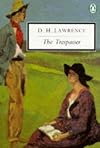
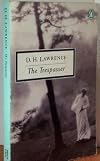
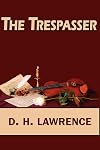
The Trespasser
by D. H. Lawrence
On This Page
Description
It was the sitting-room of a mean house standing in line with hundreds of others of the same kind along a wide road in South London. Now and again the trams hummed by but the room was foreign to the trams and to the sound of the London traffic.Tags
Recommendations




















Member Reviews
Siegmund is a professional musician approaching forty, he feels trapped in his marriage and falls in love with his student Helena, feeling torn between her and his four children (he does not consider his wife all that much). Siegmund and Helena spend a week on the Isle of Wight together, which makes up the main part of the novel. Although it is not long, it took me a long time to read it, because the reading is slow - for many chapters, nothing really happens. The couple spend their time swimming, walking and talking, sometimes quarreling, and well - being emotional. The writing is almost cinematic when the landscape, and especially the sea, is described, and it is heavy with metaphors and symbols, requiring a slower reading pace. The show more feelings of uncertainty, longing, despair, attachment and resentment are reflected by nature - the sea, the vegetation, the wind, the moon. It seems like every day just drags on, without any certain outcome.
This somewhat changes when they return to London and Siegmund has to face the fact that he cannot go on like this, but has to make a decision. The atmosphere in his family home is suffocating and cold, which Lawrence conveys in a poignant way, and in a stark contrast to the openness of the days on the island.
I found reading this rather depressing because I was frustrated with the characters. I missed the determination and stamina some of Lawrence's later characters show. However, I am still glad I read it, because the writing is truly stellar and will leave a lasting impression, and I did like the end with its tentative signs of hope. show less
This somewhat changes when they return to London and Siegmund has to face the fact that he cannot go on like this, but has to make a decision. The atmosphere in his family home is suffocating and cold, which Lawrence conveys in a poignant way, and in a stark contrast to the openness of the days on the island.
I found reading this rather depressing because I was frustrated with the characters. I missed the determination and stamina some of Lawrence's later characters show. However, I am still glad I read it, because the writing is truly stellar and will leave a lasting impression, and I did like the end with its tentative signs of hope. show less
I often come away from D.H. Lawrence thinking, "What an odd book." This is no exception. The love story/romance is full of nothing happening and the rapidly shifting feelings of one person for another, bouncing back and forth between affection, attraction, frustration, and disdain. At first, I found this jarring. Then, I began to wonder if it is closer to how humans actually feel if examined in that minute by minute manner. Though the affair was presumably the main story, I found the pieces with Siegmund's family (their painful rejection, his overpowering guilt) the most gripping.
This was Lawrence’s second novel, published the year after The White Peacock. It was apparently based on the diaries of a friend of Lawrence, whose lover, a married man, committed suicide. It seems a bit, well, off, especially since the female lead in the novel is called Helena, which is not much different from Helen, the name of Lawrence’s friend. Helena is a young woman studying how to play the violin under Siegmund, a married man. The two enter into an affair, but the book pretty much focuses on a trip the two take together – partly by accident – to the Isle of Wight. They know that once the holiday is over they must return to their respective lives, and any affair between the two must end. On his return home, Siegmund show more realises his relationship with his wife and children has been forever tainted by his affair, even if they did not know of it (although his wife certainly suspected). Like the earlier novel – and some of his later ones – Lawrence’s prose is at its best when it’s describing the landscape. The dialogue, and the characters’ emotions, seem over-emphatic to modern readers, and though Lawrence had a good ear for dialogue it often jars with the over-emotional prose. I can understand why he’s no longer as popular, or as read, as he once was, but I still think he’s an important author in British literature, and it’s a shame he’s best-known these days for TV miniseries adaptations of his work. show less
D.H. Lawrence is an author I have not come round to read too much, although the works I have read were fully satisfactory. Surprisingly, this short work has very few readers on LT, at least as a separate edition.
So, I enjoyed reading The trespasser. However, it must be said that it was a laborious read. I could not read it very fast, and each time, I would only read a number of pages. The story is simple enough, but the descriptions of nature, and the landscape, and the way they are symbolically intertwined with the mood of the characters calls for slow reading. While some readers might be put off by the symbolism, the tragedy has a very deep sense of realism, as the story draws on the experience of one of Lawrence's friends.
So, I enjoyed reading The trespasser. However, it must be said that it was a laborious read. I could not read it very fast, and each time, I would only read a number of pages. The story is simple enough, but the descriptions of nature, and the landscape, and the way they are symbolically intertwined with the mood of the characters calls for slow reading. While some readers might be put off by the symbolism, the tragedy has a very deep sense of realism, as the story draws on the experience of one of Lawrence's friends.
A tedious read....the story at the beginning says what is going to happen.....so that part is already shot for me......I was just waiting for it. A fairly sappy tale of married man's week away with a mistress......and the impacts this 'relationship' has on both the married and the mistress......gobs and gobs of ...'the sunlight on her eyelashes sparkled as the rather haunting mist arose from the harbor below' (I just made that up...but only to make a point....I could not be bothered to actually go back and look up and copy what the real language was.) The ending only is interesting as to when and how...yawn. Much of it did take place on the Isle of Wight in the English Channel...so that fed my island fetish.....a minor saving grace. An show more early work of Lawrence.....his more famous works must be better......I hope! show less
sad, sad story.
Ratings
Members
- Recently Added By
Author Information

D(avid) H(erbert) Lawrence was born on September 11, 1885. His father was a coal miner and Lawrence grew up in a mining town in England. He always hated the mines, however, and frequently used them in his writing to represent both darkness and industrialism, which he despised because he felt it was scarring the English countryside. Lawrence show more attended high school and college in Nottingham and, after graduation, became a school teacher in Croyden in 1908. Although his first two novels had been unsuccessful, he turned to writing full time when a serious illness forced him to stop teaching. Lawrence spent much of his adult life abroad in Europe, particularly Italy, where he wrote some of his most significant and most controversial novels, including Sons and Lovers and Lady Chatterly's Lover. Lawrence and his wife, Frieda, who had left her first husband and her children to live with him, spent several years touring Europe and also lived in New Mexico for a time. Lawrence had been a frail child, and he suffered much of his life from tuberculosis. Eventually, he retired to a sanitorium in Nice, France. He died in France in 1930, at age 44. In his relatively short life, he produced more than 50 volumes of short stories, poems, plays, essays, travel journals, and letters, in addition to the novels for which he is best known. (Bowker Author Biography) show less
Some Editions
Series
Belongs to Publisher Series
rororo (5135)
Work Relationships
Is contained in
Common Knowledge
- Original title
- The Trespasser
- Original publication date
- 1912
- Important places
- Isle of Wight, England, UK
- First words*
- 'Take off that mute, do!' cried Louisa, snatching her fingers from the piano keys, and turning abruptly to the violinist.
- Last words*
- (Click to show. Warning: May contain spoilers.)'All right!' he murmured.
- Original language*
- English
- Disambiguation notice
- See also the Wikipedia article.
*Some information comes from Common Knowledge in other languages. Click "Edit" for more information.
Classifications
Statistics
- Members
- 335
- Popularity
- 94,788
- Reviews
- 6
- Rating
- (3.26)
- Languages
- English, French, German, Italian
- Media
- Paper, Audiobook, Ebook
- ISBNs
- 72
- ASINs
- 22