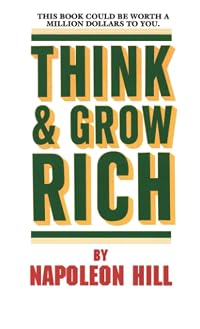
Think and Grow Rich
by Napoleon Hill
On This Page
Description
What Do You Want Most? Is It Money, Fame, Power, Contentment, Personality, Peace of Mind, Happiness? The Thirteen Steps to Riches described in this book offer the shortest dependable philosophy of individual achievement ever presented for the benefit of the man or woman who is searching for a definite goal in life."This is not a novel. It is a textbook on individual achievement that came directly from the experiences of hundreds of America's most successful men. It should be studied, show more digested, and meditated upon." (Dr. Miller Reese Hutchison).
After reading the story, you will realize that you are about to come into possession of a philosophy which can be transmuted into material wealth, or serve as readily to bring you peace of mind, understanding, spiritual harmony and help you master physical affliction.
. show less
Tags
Recommendations


Member Reviews
Timeless advice...even where he went wrong, he was still pretty much right on
Think & Grow Rich was Napoleon Hill's attempt to put his entire "philosophy of success" into a single volume, and he succeeded spectacularly, as is attested by the work's enduring popularity to this day.
Some of his ideas are now outdated, for instance his belief in psychic phenomena, which he picked up from many of his business leader friends like Henry Ford for whose generation this was not an uncommon view. But given that Harry Houdini had largely debunked such ideas (much to Arthur Conan Doyle's chagrin) by then, perhaps Hill should have known better.
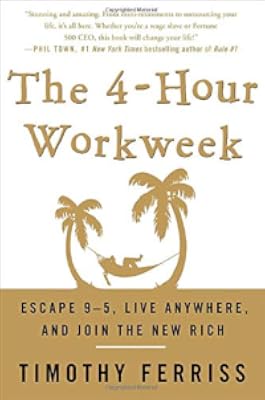
At any rate, most of Hill's ideas have stood the test of time, and indeed have formed the basis for most show more self-help and success coaches since. For instance, Hill begins with the idea that you need a "definite chief aim" in life, akin to what Ayn Rand would later call a central purpose, and this thread is recognizable on down through Tim Ferriss's "dreamlining" exercises in The 4-Hour Work Week. Hill's own definite chief aim, for example, was to define and promote his "philosophy of success," and all his productive activities, his career, and his life were organized around this purpose, which did ultimately lead him to success.
Building on this foundation, Hill sets down a sequence of principles and steps necessary to turn your definite chief aim into reality, from developing a positive mental attitude to acquiring specialized knowledge. Even some of his more scientifically dubious ideas can be interpreted in a way that makes a lot of sense. For instance, he thinks that a lot of creative thinking involves tapping into some sort of "collective subconscious", but most of the examples he gives are explained perfectly well by the fact that the person has already stocked their own subconscious with lots of specialized knowledge. And the phenomena he discusses in what he calls a "mastermind group" need not involve literal mind-reading, but may be instances of "group flow" (see Steven Kotler's The Rise of Superman).
My personal favorite part of the book, though, is when Hill works up the courage to admit to an unusual practice of his, which he had actually mentioned in previous works (such as The Law of Success) but had attributed to "a friend". For many years, every night in bed Hill would hold an imaginary round-table council in his mind, a sort of mastermind group of advisers composed of his personal heroes, including historical figures ranging from Thomas Paine and Abraham Lincoln to Charles Darwin. I found this idea absolutely charming, and have been working to implement it myself as I believe it could have even greater benefits than those Hill claimed for it. But then, that's as it relates to my own definite chief aim, so I won't claim that this would work or be particularly helpful or effective for everyone.
If you want to get Think & Grow Rich on audio, this "21st-Century Edition" (narrated by Michael McConnohie) is quite good, and far, far better than the other recent (though unrevised) audio edition narrated by Anthony Rogers, which I recommend avoiding like the plague. Rogers's British accent combined with his odd intonations and frequent mispronunciations makes it like listening to Think & Grow Rich as narrated by Nigel Tufnel, which isn't nearly as entertaining as it might sound!
http://www.amazon.com/review/R2C860D6KZJ7EW show less
Think & Grow Rich was Napoleon Hill's attempt to put his entire "philosophy of success" into a single volume, and he succeeded spectacularly, as is attested by the work's enduring popularity to this day.
Some of his ideas are now outdated, for instance his belief in psychic phenomena, which he picked up from many of his business leader friends like Henry Ford for whose generation this was not an uncommon view. But given that Harry Houdini had largely debunked such ideas (much to Arthur Conan Doyle's chagrin) by then, perhaps Hill should have known better.
At any rate, most of Hill's ideas have stood the test of time, and indeed have formed the basis for most show more self-help and success coaches since. For instance, Hill begins with the idea that you need a "definite chief aim" in life, akin to what Ayn Rand would later call a central purpose, and this thread is recognizable on down through Tim Ferriss's "dreamlining" exercises in The 4-Hour Work Week. Hill's own definite chief aim, for example, was to define and promote his "philosophy of success," and all his productive activities, his career, and his life were organized around this purpose, which did ultimately lead him to success.
Building on this foundation, Hill sets down a sequence of principles and steps necessary to turn your definite chief aim into reality, from developing a positive mental attitude to acquiring specialized knowledge. Even some of his more scientifically dubious ideas can be interpreted in a way that makes a lot of sense. For instance, he thinks that a lot of creative thinking involves tapping into some sort of "collective subconscious", but most of the examples he gives are explained perfectly well by the fact that the person has already stocked their own subconscious with lots of specialized knowledge. And the phenomena he discusses in what he calls a "mastermind group" need not involve literal mind-reading, but may be instances of "group flow" (see Steven Kotler's The Rise of Superman).
My personal favorite part of the book, though, is when Hill works up the courage to admit to an unusual practice of his, which he had actually mentioned in previous works (such as The Law of Success) but had attributed to "a friend". For many years, every night in bed Hill would hold an imaginary round-table council in his mind, a sort of mastermind group of advisers composed of his personal heroes, including historical figures ranging from Thomas Paine and Abraham Lincoln to Charles Darwin. I found this idea absolutely charming, and have been working to implement it myself as I believe it could have even greater benefits than those Hill claimed for it. But then, that's as it relates to my own definite chief aim, so I won't claim that this would work or be particularly helpful or effective for everyone.
If you want to get Think & Grow Rich on audio, this "21st-Century Edition" (narrated by Michael McConnohie) is quite good, and far, far better than the other recent (though unrevised) audio edition narrated by Anthony Rogers, which I recommend avoiding like the plague. Rogers's British accent combined with his odd intonations and frequent mispronunciations makes it like listening to Think & Grow Rich as narrated by Nigel Tufnel, which isn't nearly as entertaining as it might sound!
http://www.amazon.com/review/R2C860D6KZJ7EW show less
Delulu: the book. Reading it was much like having a nosebleed. Occasionally, the author is correct about something, but in a way that a broken clock is right twice a day. It's extremely repetitive and has a lot of needless tangents and anecdotes (are they even true? I don't care enough to check but I'm sceptical). I suffered through this book cause I wanted to know what's so great about it, since so many different people recommend it. The only thing I got out of reading it, is a better understanding of how con men do their gig. Gladly, I don't interact quite enough with con men to have observed many, so this was an insight I didn't have before. Was it worth it? Noooope.
Over the last several months, a few friends have suggested that I read Think and Grow Rich (1937) by Napoleon Hill. I resisted it until recently. I didn't like the title. I didn't like the emphasis on money, money, money. Most recently however, I asked a respected friend how to approach certain personal goals. His answer, "Read, no STUDY Think and Grow Rich". So I did. If you ask a specific question of somebody you respect, you ought to give their answer a fair try.
Hill's book is an early classic of personal success and self-help. It probably belongs on your must-read list even if you're not using it to further your personal goals but just to understand the evolution of the genre.
In spite of the enduring popularity of Think and Grow show more Rich, I had a hard time navigating some passages. I was troubled by some of the things that Hill treats as axiomatic. The money, money, money mantra borders on idolatrous materialism. Hill has some ideas about spirituality and cosmology that are at times heretical and at other times just plain goofy. Written in 1937, it contains a number of dated references and some ideas that seem naive in the light the further unfolding of history. However, to dismiss this book because of these weaknesses (or conflicts with my personal opinions, if you prefer) would be to foolishly discard a lot of good. Most valuable are numerous mental models which, along with some excellent pep talks, have the potential to help the reader reach a new level of commitment to any worthy goal and the self-confidence required to achieve it.
I'm glad that I finally invested the time to read Think and Grow Rich. Over the next few weeks, I will continue to study and write about certain passages. Overall, I imagine a tree-lined boulevard in Chicago with the trees leafing out and flowers in bloom under a bright spring sky. The big picture is impressive. The view ahead is bright and beautiful, but it was a rough winter and there are many potholes where your can blow a tire or break an ankle. Take from it whatever good you will, and find your own way to navigate the rough spots. I do not recommend that you look here for your deepest guiding philosophy and worldview. But, if you are working on your commitment and confidence, do not neglect this classic.
[Originally posted on my blog at http://ItsClearAndBright.com] show less
Hill's book is an early classic of personal success and self-help. It probably belongs on your must-read list even if you're not using it to further your personal goals but just to understand the evolution of the genre.
In spite of the enduring popularity of Think and Grow show more Rich, I had a hard time navigating some passages. I was troubled by some of the things that Hill treats as axiomatic. The money, money, money mantra borders on idolatrous materialism. Hill has some ideas about spirituality and cosmology that are at times heretical and at other times just plain goofy. Written in 1937, it contains a number of dated references and some ideas that seem naive in the light the further unfolding of history. However, to dismiss this book because of these weaknesses (or conflicts with my personal opinions, if you prefer) would be to foolishly discard a lot of good. Most valuable are numerous mental models which, along with some excellent pep talks, have the potential to help the reader reach a new level of commitment to any worthy goal and the self-confidence required to achieve it.
I'm glad that I finally invested the time to read Think and Grow Rich. Over the next few weeks, I will continue to study and write about certain passages. Overall, I imagine a tree-lined boulevard in Chicago with the trees leafing out and flowers in bloom under a bright spring sky. The big picture is impressive. The view ahead is bright and beautiful, but it was a rough winter and there are many potholes where your can blow a tire or break an ankle. Take from it whatever good you will, and find your own way to navigate the rough spots. I do not recommend that you look here for your deepest guiding philosophy and worldview. But, if you are working on your commitment and confidence, do not neglect this classic.
[Originally posted on my blog at http://ItsClearAndBright.com] show less
Inspired by Andrew Carnegie, the entrepreneur billionaire later turned philanthropist, Napoleon Hill spent more than twenty years of his life around people who, starting from rags or close to rags (poor, little or no education, no influence) nevertheless became highly successful. Businessmen and finance gurus, inventors, artists, writers, politicians... No matter what was their field of expertise (he particularly focuses on Henry Ford and Thomas Edison) what Napoleon Hill demonstrates in here is that there is no such thing as a miracle recipe or magical formula to achieving. In fact, it all come down to a mindset, a certain combination of personality traits that shape a very peculiar outlook upon life and the challenges it offers. To show more succeed, in short, is nothing less than about character, and character can be forged.
Well... He is right and he is wrong.
Yes, character definitely matters to succeed. Achievement in life has no time to spare for whines unwilling or unable to challenge themselves, as a Carole Dweck, for example, demonstrated quite clearly when opposing so-called growth mindset and fixed mindset (Mindset: The New Psychology of Success). Is that enough, though, to be as successful as a Thomas Edison? Thinking so is seriously very simplistic and naïve, since such successful individuals never appear in a socio-cultural vacuum (check, for instance, what a Malcolm Gladwell would have to say about it! Outliers: The Story of Success). Now, does that mean it's all rubbish?
Well, to be honest, here's more a book to read for its historical value than anything else. Here's indeed THE book that started it all when it comes to self-help mantra. As such, it undeniably contains a few pearls of wisdom when it comes to determination, motivation, and strength of character in front of adversity. It can be truly motivational. Thing is, the self-help market has now widely turned into common sense philosophy and pub spirituality, and, ironically enough, this book being so avant-garde for its time is not exempt of such weaknesses either! The writing is bad. It also is so pop it manages to strike a chord right in between pseudo-science and psychic doolali. For instance, Napoleon Hill used to believe our environment to be made out of an ether; an ether that can be affected by positive or negative vibrations emanating from our thoughts... (I wanted to laugh, but then I remembered I am living in a time gripped by postmodernism 'philosophies', and, truly, there really is nothing to laugh about...).
So... In a word, it surely is all pretty naïve. Yet, give him that, the core point remains: there's no such thing as fatalism when it comes to achieving. If you want you can, so get a grip and get on. As for the rest, yes it has an historical value; but I still cannot fathom why this book has such a cult status... show less
Well... He is right and he is wrong.
Yes, character definitely matters to succeed. Achievement in life has no time to spare for whines unwilling or unable to challenge themselves, as a Carole Dweck, for example, demonstrated quite clearly when opposing so-called growth mindset and fixed mindset (Mindset: The New Psychology of Success). Is that enough, though, to be as successful as a Thomas Edison? Thinking so is seriously very simplistic and naïve, since such successful individuals never appear in a socio-cultural vacuum (check, for instance, what a Malcolm Gladwell would have to say about it! Outliers: The Story of Success). Now, does that mean it's all rubbish?
Well, to be honest, here's more a book to read for its historical value than anything else. Here's indeed THE book that started it all when it comes to self-help mantra. As such, it undeniably contains a few pearls of wisdom when it comes to determination, motivation, and strength of character in front of adversity. It can be truly motivational. Thing is, the self-help market has now widely turned into common sense philosophy and pub spirituality, and, ironically enough, this book being so avant-garde for its time is not exempt of such weaknesses either! The writing is bad. It also is so pop it manages to strike a chord right in between pseudo-science and psychic doolali. For instance, Napoleon Hill used to believe our environment to be made out of an ether; an ether that can be affected by positive or negative vibrations emanating from our thoughts... (I wanted to laugh, but then I remembered I am living in a time gripped by postmodernism 'philosophies', and, truly, there really is nothing to laugh about...).
So... In a word, it surely is all pretty naïve. Yet, give him that, the core point remains: there's no such thing as fatalism when it comes to achieving. If you want you can, so get a grip and get on. As for the rest, yes it has an historical value; but I still cannot fathom why this book has such a cult status... show less
I listened to this book for the first time following a conversation with my leadership coach about the various motivational and leadership tapes and books we'd consumed in our early career days. This was one I never got to; it seemed so focused on wealth. And it is, but it's as applicable to other goals too. What most surprised me was how many concepts we consider relatively modern and even "new age" were cited by the great industrialists as secrets everyone should know. This book has some extremely dated perspectives that should offend any modern reader. I suspect that's why there appear to have been some re-writes. Setting those aside, the principles and laws within are valuable.
The author begins with the story of how he got the secret to wealth from Andrew Carnegie.
Then he goes on to say how the reader, as he reads this book, will stumble upon the great elusive secret to untold riches; which I too would have found out if I had the grit to finish this book.
There were two main reasons for me quitting on this book:
1. Never have I encountered such cheesy writing. Just try and read the following page:
Now you see what I mean? I thought this would be just limited to the preface, but he kept a similar style well into the first chapter as well.
2. It was such a pain to read the capitalized words in the middle of sentences. Dear author, I understand that you want to highlight the word, but pray, can you at least not show more make it an eyesore?
Maybe I'm being overly dramatic, but I expect a certain level of literary standard from the books that I invest my time in.
I don't know if I'll ever pick it up again, but it certainly won't be anytime soon. show less
Then he goes on to say how the reader, as he reads this book, will stumble upon the great elusive secret to untold riches; which I too would have found out if I had the grit to finish this book.
There were two main reasons for me quitting on this book:
1. Never have I encountered such cheesy writing. Just try and read the following page:
Now you see what I mean? I thought this would be just limited to the preface, but he kept a similar style well into the first chapter as well.
2. It was such a pain to read the capitalized words in the middle of sentences. Dear author, I understand that you want to highlight the word, but pray, can you at least not show more make it an eyesore?
Maybe I'm being overly dramatic, but I expect a certain level of literary standard from the books that I invest my time in.
I don't know if I'll ever pick it up again, but it certainly won't be anytime soon. show less
I finally managed to finish an absolutely fantastic book. This was the book that I had heard off for the past ten years but just never had time to actually read it and then finally during quarantine time I decided to start reading it and boy oh boy was I ever happy that I took that step.
This book is for everybody who wants to achieve something immense and great in life and you're looking for ways and means of how to do it. There are so many stories of Thomas Edison, Einstein, Henry Ford and they brought back so many thoughts from the thousands of hours of motivational video I had heard -about Arnold Schwarzenegger, Sylvester Stallone, Tony Robbins, Charlie Chaplin -all of them who grew up with so many hardships but were able to tap into show more their subconscious imagination and have a vision of what they wanted to become even before they were able to achieve it. As Napoleon Hill says everything starts off with a burning desire.
A burning desire then leads to an active imagination, an organised plan and finally your mind starts a receiving and a broadcasting station of its own - (a means to communication with the infinite intelligence as Napoleon Hill said)
"Remember you cannot climb the ladder of success with one hand in your pocket.."
If I could only recommend one book to you - just ONE book, this is it. show less
This book is for everybody who wants to achieve something immense and great in life and you're looking for ways and means of how to do it. There are so many stories of Thomas Edison, Einstein, Henry Ford and they brought back so many thoughts from the thousands of hours of motivational video I had heard -about Arnold Schwarzenegger, Sylvester Stallone, Tony Robbins, Charlie Chaplin -all of them who grew up with so many hardships but were able to tap into show more their subconscious imagination and have a vision of what they wanted to become even before they were able to achieve it. As Napoleon Hill says everything starts off with a burning desire.
A burning desire then leads to an active imagination, an organised plan and finally your mind starts a receiving and a broadcasting station of its own - (a means to communication with the infinite intelligence as Napoleon Hill said)
"Remember you cannot climb the ladder of success with one hand in your pocket.."
If I could only recommend one book to you - just ONE book, this is it. show less
Members
- Recently Added By
Lists

Mindset
8 works; 2 members

Best Self Help Books
87 works; 18 members

Mind Expanding Books by hackerkid
581 works; 8 members

r/GetMotivated's Recommended Books
27 works; 1 member

BitLife
212 works; 4 members

Overdue Podcast
808 works; 9 members

Books That Changed Our Perspective
423 works; 168 members

Favorite 10 Books of the Upper Class For Developing Self-Discipline
10 works; 1 member

Men's healing resources
751 works; 1 member

Healing resources for women
589 works; 1 member

Money & finances
42 works; 1 member

If Books Could Kill Podcast
52 works; 1 member
Author Information

347+ Works 12,110 Members
Napoleon Hill was born in 1 883 in a one-room cabin on the Pound River in Wise County, Virginia. He is the author of the motivational classic Think and Grow Rich. Hill passed away in November 1970 after a long career writing, teaching, and lecturing about the principles of success.
Some Editions
Awards and Honors
Notable Lists
Series
Belongs to Publisher Series
Work Relationships
Common Knowledge
- Canonical title
- Think and Grow Rich
- Original title
- Think and Grow Rich
- Original publication date
- 1937
- First words
- A Word From The Author. In every chapter of this book, mention has been made of the money-making secret which has made fortunes for hundreds of exceedingly wealthy men whom I have carefully analyzed over a long period of year... (show all)s.
- Blurbers
- Forbes, Steve; Beckwith, Michael Bernard
- Original language
- English
Classifications
Statistics
- Members
- 5,365
- Popularity
- 2,537
- Reviews
- 54
- Rating
- (3.80)
- Languages
- 25 — Bengali, Chinese, Czech, Dutch, English, Estonian, French, German, Hindi, Hungarian, Indonesian, Italian, Korean, Marathi, Malay, Norwegian (Bokmål), Panjabi, Polish, Romanian, Spanish, Swedish, Tamil, Telugu, Turkish, Portuguese (Portugal)
- Media
- Paper, Audiobook, Ebook
- ISBNs
- 529
- UPCs
- 2
- ASINs
- 134