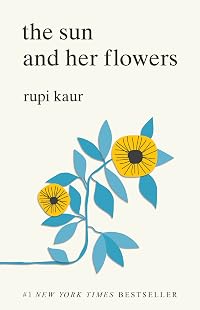
The Sun and Her Flowers
by Rupi Kaur
On This Page
Description
Divided into five chapters and illustrated by kaur, the sun and her flowers is a journey of wilting, falling, rooting, rising, and blooming. A celebration of love in all its forms.this is the recipe of life
said my mother
as she held me in her arms as i wept
think of those flowers you plant
in the garden each year
they will teach you
that people too
must wilt
fall
root
rise
in order to bloom
.
Tags
Recommendations




Member Reviews
Rupi Kaur has an insight that far surpasses her chronological age. I believe she is what used to be called an old soul, and that reflects beautifully in her poetry. Many of the themes in The Sun and Her Flowers are similar to those in Milk and Honey, but it doesn't feel like a retread. Her heartbreak and anguish still come across as unrelenting, her new love still feels new, and her acceptance feels freshly earned. The poetry regarding her romantic relationships is moving, but the pieces that really caught my heart were those that referred to her mother and her heritage. This is a young woman who fully appreciates the sacrifices that were made for her, and doesn't try to belittle those sacrifices by comparing them to her own journey. show more She knows there is no comparison. show less
consider me surprised
to find
i enjoyed this book
despite not liking the first
opinions change and people grow
both as readers and as writers
never judge an author
by their first book
judge them by their second
This pretty much addressed all of my criticisms of the first book. It wasn't just about sex (though there was definitely a lot of that); it was about family and love and what it means to be an immigrant. It actually made me cry on several occasions, and while I marked only 3 poems in the first book, I marked 25 in this. It was worlds away from the messy nonsense of Milk and Honey. It felt more real and genuine. It felt less like a 13-year-old's tumblr poetry and more like an adult. The narrative poems were some of my favorites and the show more shorter ones had messages that weren't reiterated repeatedly. I really liked it. I'm glad the years between this publication and the previous showed some growth and honed skill. show less
to find
i enjoyed this book
despite not liking the first
opinions change and people grow
both as readers and as writers
never judge an author
by their first book
judge them by their second
This pretty much addressed all of my criticisms of the first book. It wasn't just about sex (though there was definitely a lot of that); it was about family and love and what it means to be an immigrant. It actually made me cry on several occasions, and while I marked only 3 poems in the first book, I marked 25 in this. It was worlds away from the messy nonsense of Milk and Honey. It felt more real and genuine. It felt less like a 13-year-old's tumblr poetry and more like an adult. The narrative poems were some of my favorites and the show more shorter ones had messages that weren't reiterated repeatedly. I really liked it. I'm glad the years between this publication and the previous showed some growth and honed skill. show less
consider me surprised
to find
i enjoyed this book
despite not liking the first
opinions change and people grow
both as readers and as writers
never judge an author
by their first book
judge them by their second
This pretty much addressed all of my criticisms of the first book. It wasn't just about sex (though there was definitely a lot of that); it was about family and love and what it means to be an immigrant. It actually made me cry on several occasions, and while I marked only 3 poems in the first book, I marked 25 in this. It was worlds away from the messy nonsense of Milk and Honey. It felt more real and genuine. It felt less like a 13-year-old's tumblr poetry and more like an adult. The narrative poems were some of my favorites and the show more shorter ones had messages that weren't reiterated repeatedly. I really liked it. I'm glad the years between this publication and the previous showed some growth and honed skill. show less
to find
i enjoyed this book
despite not liking the first
opinions change and people grow
both as readers and as writers
never judge an author
by their first book
judge them by their second
This pretty much addressed all of my criticisms of the first book. It wasn't just about sex (though there was definitely a lot of that); it was about family and love and what it means to be an immigrant. It actually made me cry on several occasions, and while I marked only 3 poems in the first book, I marked 25 in this. It was worlds away from the messy nonsense of Milk and Honey. It felt more real and genuine. It felt less like a 13-year-old's tumblr poetry and more like an adult. The narrative poems were some of my favorites and the show more shorter ones had messages that weren't reiterated repeatedly. I really liked it. I'm glad the years between this publication and the previous showed some growth and honed skill. show less
LOVED LOVED LOVED this! Normally I'm not one for poetry but Rupi Kaur showed me what's up. I didn't think anything could top her last collection (Milk and Honey), but my god, this is heaven. It's profoundly emotional, soul jarring, and introspective. It's word porn of the highest order. The Sun and Her Flowers is split into five sections: wilting, falling, rooting, rising, and blooming. Rooting was especially moving, delving into immigration and making a new life in a new country, her poems about her mother are profoundly touching. The accompanying illustrations really add to her poems, helping elicit even more of an emotional response from the reader. Her poems range from break-ups, self doubt, self-love, trust, immigration, and show more womanhood. I literally loved this book so much, I went out and bought it because I knew I had to possess such a a beautiful collection. A definite must read, especially for women. show less
I have no idea how to say what I want to say about this book without offending the people who love it.
And I did like it. Four-star rating and all. It was affecting and enjoyable.
But it wasn't quite poetry.
Or at least, it was poetry for people who don't normally read and don't typically enjoy poetry.
I realize this makes me sound like a jazz or classical music aficionado railing against Top 40 pop on the radio. And I don't think that there is anything bad or wrong with the book--or people who love it--or Top 40 music--or the people who love that--or jazz, or classical.
It's just that I read a lot of poetry, and a great poem is like holding a live firecracker in your hand. It fizzes and pops and sets your whole body buzzing. It isn't just show more what's said, but how it's said, the music with which it's said, the economy and originality with which it's said. It's not just prose about deep issues or affecting memories with unusual line breaks. There should be something humming under the surface, like lava, or a poltergeist.
And as much as I enjoyed reading this book, I didn't get that feeling from any one of them. show less
And I did like it. Four-star rating and all. It was affecting and enjoyable.
But it wasn't quite poetry.
Or at least, it was poetry for people who don't normally read and don't typically enjoy poetry.
I realize this makes me sound like a jazz or classical music aficionado railing against Top 40 pop on the radio. And I don't think that there is anything bad or wrong with the book--or people who love it--or Top 40 music--or the people who love that--or jazz, or classical.
It's just that I read a lot of poetry, and a great poem is like holding a live firecracker in your hand. It fizzes and pops and sets your whole body buzzing. It isn't just show more what's said, but how it's said, the music with which it's said, the economy and originality with which it's said. It's not just prose about deep issues or affecting memories with unusual line breaks. There should be something humming under the surface, like lava, or a poltergeist.
And as much as I enjoyed reading this book, I didn't get that feeling from any one of them. show less
I approach every poet new to me with the expectation I will find something new, enlightening, expanding or enjoyable in their work. I think poetry has every right to be individual, so it doesn't need to appeal to everyone, or even a lot of people.
But all the same, poetry needs to work as poetry. For me, poems need to be their own tiny worlds that demand to exist and insist on being read . And quite consistently I found the poems in this collection fail to convince me of that. Kaur engages in provocative topics a plenty, from interpersonal abuse to immigrant identities, but that isn't enough to give a poem the artfulness it needs, nor is a relatively good, catching line or phrase here and there enough to make a poem possess its own show more life.
To often in this collection, the poems themselves simply lay flat on the page with their form on the page a bit ugly to go with their lack of life. They too often read clumsily and without much energy or desire to be more than to convey the dictionary definitions of the words in them. The emotions and moods expressed feel dull, perfunctory and lacking depth. I cannot find any of the wonder in them that makes me love poetry so much and reading this collection made me feel sad, not in the way of being moved by her poems, but in the way one does when you gave someone a chance and they didn't even try. show less
But all the same, poetry needs to work as poetry. For me, poems need to be their own tiny worlds that demand to exist and insist on being read . And quite consistently I found the poems in this collection fail to convince me of that. Kaur engages in provocative topics a plenty, from interpersonal abuse to immigrant identities, but that isn't enough to give a poem the artfulness it needs, nor is a relatively good, catching line or phrase here and there enough to make a poem possess its own show more life.
To often in this collection, the poems themselves simply lay flat on the page with their form on the page a bit ugly to go with their lack of life. They too often read clumsily and without much energy or desire to be more than to convey the dictionary definitions of the words in them. The emotions and moods expressed feel dull, perfunctory and lacking depth. I cannot find any of the wonder in them that makes me love poetry so much and reading this collection made me feel sad, not in the way of being moved by her poems, but in the way one does when you gave someone a chance and they didn't even try. show less
"yesterday / the rain tried to imitate my hands / by running down your body / i ripped the sky apart for allowing it"
Obviously I read this after reading Milk and Honey. It's frustrating to give it the same rating, because I do think this could have been a big step forward for Kaur, but the commercialized nature of her poetry, which propelled her to fame, is what holds back this book from some genuine merit. What we get isn't horrible, but is fundamentally more of the same: cliched analogies, lots of poems with little to say, packaged over a positive (if unoriginal) message.
Like M&H, this book has some great lessons. I commend Kaur for spending so much time making it clear that women should love their bodies and themselves. The show more exploration of pain and love is obviously a deep well for artists, but Kaur doesn't dig too far down. That's fine, but it may make the poetry less accessible to wide audiences. What I dislike so much is that this book flirts so often with more profound themes, only to ditch them for the same shit I already saw in the last book. The way sex brought anger out of the people she knew, eroticism intertwined with jealousy and rage. That's what I want to see! You can only write so many poems about how He is gone and She is sad.
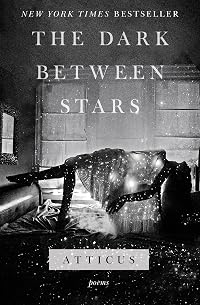
As with Milk and Honey, this all feels bite-sized by design. I don't mean the poem length (Kaur actually goes out of her way to write these longer sections that explore concepts in more depth, which is nice but doesn't solve the key problem)- but the poetry is thematically small, intentionally. My assumption for why? Partially because there isn't enough high level poetry for young audiences, and partially because these days poetry spreads like wildfire if they have virality, a quality that makes them instagram friendly. Rupi has mastered that subgenre, reached mainstream success that people like Atticus haven't quite been capable of. She's also a much better artist than Atticus, so that's another factor.
Is it bad? No. Some people probably really enjoy this poetry, and they are valid. In many ways this book is better than the last, although only in passing moments. It's essentially more of the same, and your opinion of the first book will likely inform your opinion of this one. Side note, the cover on this book is a lot better.
Another note: If you think this poetry, or any real published poetry, is just random line breaks and pointless capitalization and punctuation (or lack thereof) then you just don't get it. I don't say that to be elitist, it's not like poetry is some fundamental aspect of humanity. It's one of many art-forms, but there's a lot of history behind modern poetic styles, including the way Kaur writes. There's tons to criticize, but any review that just mocks the visual style and thinks they are contributing to the conversation is just as surface-level as the book. show less
Obviously I read this after reading Milk and Honey. It's frustrating to give it the same rating, because I do think this could have been a big step forward for Kaur, but the commercialized nature of her poetry, which propelled her to fame, is what holds back this book from some genuine merit. What we get isn't horrible, but is fundamentally more of the same: cliched analogies, lots of poems with little to say, packaged over a positive (if unoriginal) message.
Like M&H, this book has some great lessons. I commend Kaur for spending so much time making it clear that women should love their bodies and themselves. The show more exploration of pain and love is obviously a deep well for artists, but Kaur doesn't dig too far down. That's fine, but it may make the poetry less accessible to wide audiences. What I dislike so much is that this book flirts so often with more profound themes, only to ditch them for the same shit I already saw in the last book. The way sex brought anger out of the people she knew, eroticism intertwined with jealousy and rage. That's what I want to see! You can only write so many poems about how He is gone and She is sad.
As with Milk and Honey, this all feels bite-sized by design. I don't mean the poem length (Kaur actually goes out of her way to write these longer sections that explore concepts in more depth, which is nice but doesn't solve the key problem)- but the poetry is thematically small, intentionally. My assumption for why? Partially because there isn't enough high level poetry for young audiences, and partially because these days poetry spreads like wildfire if they have virality, a quality that makes them instagram friendly. Rupi has mastered that subgenre, reached mainstream success that people like Atticus haven't quite been capable of. She's also a much better artist than Atticus, so that's another factor.
Is it bad? No. Some people probably really enjoy this poetry, and they are valid. In many ways this book is better than the last, although only in passing moments. It's essentially more of the same, and your opinion of the first book will likely inform your opinion of this one. Side note, the cover on this book is a lot better.
Another note: If you think this poetry, or any real published poetry, is just random line breaks and pointless capitalization and punctuation (or lack thereof) then you just don't get it. I don't say that to be elitist, it's not like poetry is some fundamental aspect of humanity. It's one of many art-forms, but there's a lot of history behind modern poetic styles, including the way Kaur writes. There's tons to criticize, but any review that just mocks the visual style and thinks they are contributing to the conversation is just as surface-level as the book. show less
Members
- Recently Added By
Lists

Modern Poetry Must Reads
7 works; 3 members

Florida
366 works; 3 members

2024
34 works; 1 member

Healing resources for women
587 works; 1 member
Author Information

8 Works 13,153 Members
Rupi Kaur is a Canadian poet, author, illustrator, and performer. With her mother's encouragement, she began drawing at the age of five. She views her life as an artistic journey and has a degree in rhetoric studies. She is a poet and has performed her work internationally. Her debut poetry collection was published in 2014, Milk and Honey. It show more became a New York Times bestseller. The Sun and Her Flowers is her second poetry collection and was published in 2017. (Bowker Author Biography) show less
Awards and Honors
Awards
Distinctions
Work Relationships
Is contained in
Common Knowledge
- Original publication date
- 2017-10-03
- Original language
- English
- Canonical DDC/MDS
- 819.116
Classifications
- Genres
- Poetry, Fiction and Literature
- DDC/MDS
- 819.116 — Literature & rhetoric American literature in English American literatures in English not requiring local emphasis English literature from Canada Canadian poetry 21st Century
- LCC
- PR9199.4 .K377 .A6 — Language and Literature English English Literature English literature: Provincial, local, etc.
- BISAC
Statistics
- Members
- 4,329
- Popularity
- 3,479
- Reviews
- 65
- Rating
- (3.80)
- Languages
- 12 — Catalan, Czech, Dutch, English, French, German, Italian, Polish, Spanish, Swedish, Turkish, Portuguese (Portugal)
- Media
- Paper, Audiobook, Ebook
- ISBNs
- 50
- UPCs
- 2
- ASINs
- 12