Vera (Mrs. Vladimir Nabokov)
by Stacy Schiff
On This Page
Description
Hailed by critics as "monumental" (Boston Globe) and "utterly romantic" (New York magazine), Ve ra, the story of Mrs. Vladimir Nabokov, brings to shimmering life one of the greatest literary love stories of our time. Vladimir Nabokov, author of Lolita, Pale Fire, and Speak, Memory, wrote his books first for himself and secondly for his wife.Set in prewar Europe and postwar America and spanning much of the twentieth century, this telling of the Nabokov's fifty-two-year marriage reads as show more vividly as a novel. Ve ra, both beautiful and brilliant, is its outsized heroine, a woman who loves as deeply and intelligently as did the great romantic heroines of Austen and Tolstoy. Stacy Schiff's Ve ra is a triumph of the biographical form. show lessTags
Recommendations












Member Reviews
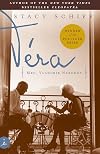
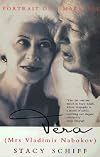
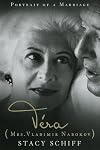
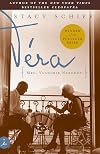
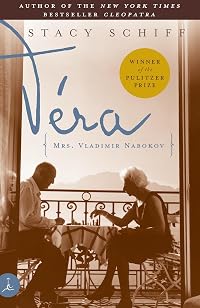
The cover of the copy of this book that I read had a photograph of Mrs. N gazing at her husband. The look on her face makes it clear that, when he was in the room, no one else mattered. It seems every love sonnet ever written is held in that gaze. And what comes to my mind most clearly is as if she is living Ben Johnson's "Song to Celia":
Drink to me only with thine eyes
And I will pledge with mine;
Or leave a kiss but in the cup,
And I'll not look for wine.
The thirst that from the soul doth rise
Doth ask a drink divine:
But might I of Jove's nectar sup
I would not change for thine.
I sent thee late a rosy wreath,
Not so much honouring thee
As giving it a hope that there
It could not withered be
But thou thereon didst only breathe
And sent'st it show more back to me:
Since, when it grows and smells, I swear,
Not of itself but thee.
Yet, she was no doting wife. As intellectually gifted as he, though denying it to others, she truly was his second half. If his health were suffering, she could, without a skip, assume his teaching duties at University. She was the chauffeur because he could not manage to understand driving. She was the typist because he was incompetent to use the horrid machine. She handled phone calls because he could not tolerate the thing. She became his co-translator on works he was translating but insisted her role was minor. She became his agent because no one else could really do as good a job negotiating successfully as she. Yet she claims she was no good at it. Her only complaints were about the amount of work she had to do to keep all the correspondence in hand. People corresponding with Nabokov never knew if "VN" was Vladimir or Véra because she could precisely imitate his writing style. And those who were most successful were those who approached contact assuming VN was Mrs. N. Extended family were highly insulted when they realized she was their contact and Nabokov was not. He was too busy writing to bother with such mundane details, she would explain. And throughout, she sought anonymity, belittling her intelligence, her skill, her role, her invaluable presence within the universe that was Vladimir Nabokov.
It was a role she savored, feeling privileged, when others would have divorced the .... A truly amazing woman. show less
Drink to me only with thine eyes
And I will pledge with mine;
Or leave a kiss but in the cup,
And I'll not look for wine.
The thirst that from the soul doth rise
Doth ask a drink divine:
But might I of Jove's nectar sup
I would not change for thine.
I sent thee late a rosy wreath,
Not so much honouring thee
As giving it a hope that there
It could not withered be
But thou thereon didst only breathe
And sent'st it show more back to me:
Since, when it grows and smells, I swear,
Not of itself but thee.
Yet, she was no doting wife. As intellectually gifted as he, though denying it to others, she truly was his second half. If his health were suffering, she could, without a skip, assume his teaching duties at University. She was the chauffeur because he could not manage to understand driving. She was the typist because he was incompetent to use the horrid machine. She handled phone calls because he could not tolerate the thing. She became his co-translator on works he was translating but insisted her role was minor. She became his agent because no one else could really do as good a job negotiating successfully as she. Yet she claims she was no good at it. Her only complaints were about the amount of work she had to do to keep all the correspondence in hand. People corresponding with Nabokov never knew if "VN" was Vladimir or Véra because she could precisely imitate his writing style. And those who were most successful were those who approached contact assuming VN was Mrs. N. Extended family were highly insulted when they realized she was their contact and Nabokov was not. He was too busy writing to bother with such mundane details, she would explain. And throughout, she sought anonymity, belittling her intelligence, her skill, her role, her invaluable presence within the universe that was Vladimir Nabokov.
It was a role she savored, feeling privileged, when others would have divorced the .... A truly amazing woman. show less
This unobtrusive, worn out, paperback with extra thin yellowing pages (all 456 of them) caught my attention at a used-books store by its simple title: "Vera". Even before I saw the tiny subtitle "Mrs. Vladimir Nabokov", I intuitively knew it had to be Nabokov's wife Vera, her biography. I've always wondered about the woman behind the words "To Vera" - a dedication in almost all Nabokov's books.
And this book gave a wealth of information! A most extensive, detailed, and full of substance biography I have ever read - especially a biography of someone who tried so hard to stay in the shadow of her illustrious husband, but nevertheless being so utterly indispensable in his life and creativity. After reading this book, it's clear to me why show more Nabokov dedicated most of his work to her (and also why Stacy Schiff won a Pulitzer Prize for this book!)
Vera Nabokov was indeed a rare lady. Strong-minded, determined woman with a mission ("no hand wringing"), with total devotion to her husband and his work. Fluent in several languages - though very modest about it. The author points out that Vera's "litmus test of good taste was recognition of her husband's genius" (!). She actually "raised Being Mrs. Nabokov to a science and an art and then pretended that such a person did not exist". No wonder she never had any confidantes - her husband got that covered, she practically didn't need anybody else! Also, understandable why there are prototypes of Vera in some of Nabokov's books: he couldn't have done it without her, i.e. his work wouldn't have reached the reader without her unrelenting efforts. I am sure of it. She was unquestionably his muse. But, according to this book, she was definitely not an "angel": she was "fiercely wed to her opinions" and "seemed to enjoy disconcerting people" (!).
The Nabokovs as a couple were so inseparable in everything that the book practically covered both of them, not just Vera. It seemed as if "Vera appeared to have some trouble discerning where she ended and her husband began". An interesting point that the author makes is that their son Dmitri "knew how uncommon was the rapport his parents had enjoyed, what an elusive rarity is the "twin soul" ", and as a consequence, though he had a number of relationships, he never married - presumably unable to find anything even close to such a unique connection.
I have read but a few of Nabokov's books so far, but am now eager to read the rest - to discover more of Vera in some of them, as she was sure to be a prototype, according to the biography. Also, I would caution any reader not to base their opinion of Nabokov on "Lolita" alone (although this book propelled him into fame) - it wouldn't be fair to him at all.
What I liked about Stacy Schiff's writing is her total objectivity - so important in writing a biography. Interestingly, I came out with less awe for Nabokov after reading this book, but with more respect - if that's a possible wording.
And another final credit to the author: the book's cover was devised very cleverly - "Vera" in big bold letters and the subtitle "Mrs. Vladimir Nabokov" in tiny ones under it - as if to reverse Vera's image about herself, to get her out from behind the shadow of her famous husband, at least posthumously... show less
And this book gave a wealth of information! A most extensive, detailed, and full of substance biography I have ever read - especially a biography of someone who tried so hard to stay in the shadow of her illustrious husband, but nevertheless being so utterly indispensable in his life and creativity. After reading this book, it's clear to me why show more Nabokov dedicated most of his work to her (and also why Stacy Schiff won a Pulitzer Prize for this book!)
Vera Nabokov was indeed a rare lady. Strong-minded, determined woman with a mission ("no hand wringing"), with total devotion to her husband and his work. Fluent in several languages - though very modest about it. The author points out that Vera's "litmus test of good taste was recognition of her husband's genius" (!). She actually "raised Being Mrs. Nabokov to a science and an art and then pretended that such a person did not exist". No wonder she never had any confidantes - her husband got that covered, she practically didn't need anybody else! Also, understandable why there are prototypes of Vera in some of Nabokov's books: he couldn't have done it without her, i.e. his work wouldn't have reached the reader without her unrelenting efforts. I am sure of it. She was unquestionably his muse. But, according to this book, she was definitely not an "angel": she was "fiercely wed to her opinions" and "seemed to enjoy disconcerting people" (!).
The Nabokovs as a couple were so inseparable in everything that the book practically covered both of them, not just Vera. It seemed as if "Vera appeared to have some trouble discerning where she ended and her husband began". An interesting point that the author makes is that their son Dmitri "knew how uncommon was the rapport his parents had enjoyed, what an elusive rarity is the "twin soul" ", and as a consequence, though he had a number of relationships, he never married - presumably unable to find anything even close to such a unique connection.
I have read but a few of Nabokov's books so far, but am now eager to read the rest - to discover more of Vera in some of them, as she was sure to be a prototype, according to the biography. Also, I would caution any reader not to base their opinion of Nabokov on "Lolita" alone (although this book propelled him into fame) - it wouldn't be fair to him at all.
What I liked about Stacy Schiff's writing is her total objectivity - so important in writing a biography. Interestingly, I came out with less awe for Nabokov after reading this book, but with more respect - if that's a possible wording.
And another final credit to the author: the book's cover was devised very cleverly - "Vera" in big bold letters and the subtitle "Mrs. Vladimir Nabokov" in tiny ones under it - as if to reverse Vera's image about herself, to get her out from behind the shadow of her famous husband, at least posthumously... show less
60. Véra : Mrs Vladimir Nabokov by Stacy Schiff
published: 1999
format: 437-page Modern Library Paperback from 2000
acquired: June 2020
read: Nov 14 – Dec 9
time reading: 28:57, 4.0 mpp
rating: 4 ½
locations: St. Petersburg, Berlin, the French Riveira, Paris, Boston, Ithica New York, some American road trips, the Swiss Alps, to name a few.
about the author: born in Adams, MA, 1961
This is a beautiful book, but I find it a little tricky to review because it's difficult to get the nuance right. The Russian Jew, Vera (née Slonim) Nabokov was something of a contradiction - an extremely proud, intelligent, well-read, mutlilingual scholar of a sort, who proudly made herself humbled to her husband's work, as invisible as possible, except when show more this was impossible. She took care of every aspect of the Nabokov private and professional life, including typing up and editing and critiquing all his manuscripts, teaching his classes when he was sick, negotiating all their business activities with publishers, all the communication with colleagues, publishers, friends and family, even his family. She was everywhere in his life, and tried to make herself nowhere, even destroying all the letters she wrote him. She exists through his literature in variety of ways - physically, emotionally, intellectually, inspirationally, and has essentially nothing to say about any of it, other than to deny it, as did her husband. She is and is not Zina in [The Gift], or [Ada] in that novel, or the missing V in [The Real Life of Sebastian Knight]. Much of what made Nabokov's work beautiful can be linked to her in some way, at least imaginatively.
A biography of Vera must, maybe of course, become a biography of her husband, because he was her life, her ferocious purpose. And, to find her, who never had close friends she could or would open up to, you have look at what he wrote. So much of their intentionally obscured life is in that literature, pretty much all of it publicly denied.
I have had a mixed relationship with Stacy Schiff. Her slow, 500-page, biography of Benjamin Franklin in Paris ([The Great Improvisation]) is quietly something of a masterpiece, opening up a very a tricky and oddly effective American ambassador at the most fragile point of American existence. Her book on Cleopatra was average, and I found her book on the Salem witch trials unreadable. But here, with so much source material - books, letters, interviews throughout the decades, and the option to interview, herself, many of the key people, she is in her element, picking out a hidden character, one somewhat mythical in the literary world. Vera, as a book, is slow and immersive, long but beautifully done. The 56 pages of notes hide my true pace, which was typically about 5 minutes a page, flipping back and forth between main text and notes, which I found added to the biography greatly.
It's hard to recommend 30 hours of reading to anyone, but this one rewards the curious. If you don't want to read Nabokov, but do want to read about him, this might be your book.
2021
https://www.librarything.com/topic/333774#7678322 show less
published: 1999
format: 437-page Modern Library Paperback from 2000
acquired: June 2020
read: Nov 14 – Dec 9
time reading: 28:57, 4.0 mpp
rating: 4 ½
locations: St. Petersburg, Berlin, the French Riveira, Paris, Boston, Ithica New York, some American road trips, the Swiss Alps, to name a few.
about the author: born in Adams, MA, 1961
This is a beautiful book, but I find it a little tricky to review because it's difficult to get the nuance right. The Russian Jew, Vera (née Slonim) Nabokov was something of a contradiction - an extremely proud, intelligent, well-read, mutlilingual scholar of a sort, who proudly made herself humbled to her husband's work, as invisible as possible, except when show more this was impossible. She took care of every aspect of the Nabokov private and professional life, including typing up and editing and critiquing all his manuscripts, teaching his classes when he was sick, negotiating all their business activities with publishers, all the communication with colleagues, publishers, friends and family, even his family. She was everywhere in his life, and tried to make herself nowhere, even destroying all the letters she wrote him. She exists through his literature in variety of ways - physically, emotionally, intellectually, inspirationally, and has essentially nothing to say about any of it, other than to deny it, as did her husband. She is and is not Zina in [The Gift], or [Ada] in that novel, or the missing V in [The Real Life of Sebastian Knight]. Much of what made Nabokov's work beautiful can be linked to her in some way, at least imaginatively.
A biography of Vera must, maybe of course, become a biography of her husband, because he was her life, her ferocious purpose. And, to find her, who never had close friends she could or would open up to, you have look at what he wrote. So much of their intentionally obscured life is in that literature, pretty much all of it publicly denied.
I have had a mixed relationship with Stacy Schiff. Her slow, 500-page, biography of Benjamin Franklin in Paris ([The Great Improvisation]) is quietly something of a masterpiece, opening up a very a tricky and oddly effective American ambassador at the most fragile point of American existence. Her book on Cleopatra was average, and I found her book on the Salem witch trials unreadable. But here, with so much source material - books, letters, interviews throughout the decades, and the option to interview, herself, many of the key people, she is in her element, picking out a hidden character, one somewhat mythical in the literary world. Vera, as a book, is slow and immersive, long but beautifully done. The 56 pages of notes hide my true pace, which was typically about 5 minutes a page, flipping back and forth between main text and notes, which I found added to the biography greatly.
It's hard to recommend 30 hours of reading to anyone, but this one rewards the curious. If you don't want to read Nabokov, but do want to read about him, this might be your book.
2021
https://www.librarything.com/topic/333774#7678322 show less
I'll confess right away that this was not a smooth read for me. Both the subject and the level of detail made it difficult to get excited while reading it. Schiff also remains curiously neutral about Vera Nabokov's choice (if it was a choice) to subsume herself within her husband's 'genius' -- the full expression of which she both made possible and also made an effort to remain separate from, or at least, to make it almost impossible for anyone outside their circle of two to know the difference. It is really the story of a perfect union, that rare case of two souls entwined, and better with than without, and I suppose that is the fascination. Here are some of the highlights: Schiff examines throughout the way the Nabokovs used one show more another, from the beginning of their relationship to the end (and beyond) as camouflage, to disguise, to baffle, to avoid, to redirect and ultimately to protect their own privacy. Masks played a part in their courtship and appear to be a theme throughout, much of it conscious and deliberately used on their parts, among friends, in public, in correspondence (making it hard often to know who really thought or said what). Just as Nabokov was fascinated by the ways butterflies, those most gorgeous and fragile of insects, use deception to protect themselves, the Nabokovs seemed also to delight in obfuscation: almost as a game, but an earnest one. But also, and more difficult for me to comprehend, I'll admit freely, was Vera's joy (truly) in doing everything she could to free Vladimir to write, to live in his creative alternate universe, while she toiled away, shoveling snow and doing tax returns. Was it something rare and unique, this marriage? Let me just say that Vera was very conservative about everything from sexual preferences to politics (she would have belonged to the NRA) and also, like many refugees from Communism (a stance I don't quarrel with out of respect for the fact that certain personal experiences become the framework on which we construct our political beliefs) and in her devotion to Vladimir, both the person and the writer, she was very much a woman of her era, not of mine. Perhaps some of Schiff's distance and even bemusement arises from a reluctance to confront head this hard question of the conflict between pursuing personal development and devoting yourself to another, or others. Vera would have been a remarkable professor of literature in her own right, and possibly a good writer too, although I suspect mainly as a scholar, not in creative work. Have we lost something? Or was her devotion to VN what made his oeuvre possible? Certainly Vladimir was comfortable taking what she would give and she was equally comfortable giving all she had to him. That is how it was. A very solid biography and I know, when I read more Nabokov, which I intend to do, I'll be glad I read this. (I've read Pnin which I adored, Lolita which I respect, and years ago Ada which I did not understand, I don't think, in my twenties, and need to reread. . . .) show less
immersive and dense, and by the end a bit of a slog, but altogether fascinating story of a woman and a marriage like no other. Stacy Schiff makes their cloistered and inwardly focused life accessible, to the degree it can be made so. Vera was a tough customer and she gave her life to her husband and his genius, using her own to protect him, support him and make what he did possible in many respects. It's a great biography of a great woman, a great lady as they used to say, and it's a treat for Nabokov fans and acolytes.
An extensive biography of a very elusive figure. The woman without whom Nabokov's art couldn't have existed as it did. The love and intimacy of the Nabokovs was great to read, as well as their collaborative efforts through the years. I wish this audiobook was better though, the narrator's attempts to mimic an elderly person's voice or a male voice as well as the French accents here and there were annoying and distracted from the work.
This is the life story of a truly remarkable woman, originally Vera Slonim, who came to have a famous author as a husband and become Mrs. Vera Nabokov. And it is not too much to put the emphasis that way because, even though her husband was Vladimir Nabokov, she was a full and devoted partner in everything he accomplished and had an exceedingly interesting and determined personality as well. He did the writing; she did just about everything else. She typed and re-typed (and re-typed) his manuscripts; handled all the correspondence (originating and signing much of it herself in his name); and dealt with contractual matters, foreign editions and translators. And she was Vladimir's first reader, offering comment and suggestion, while show more typing, when the phrasing didn't seem right. She decided to learn Italian, and did, to check the quality of the Lolita translation into that language -- and, incidentally, was dismayed at the poor quality! She had a wit and an intellect to match her husband's and they formed a marriage bond and a love that lasted undiminished throughout fifty years.
They were inseparable and, just so, is this life story of Vera inseparable from the life of Vladimir Nabokov. His lively personality is seen in his personal life with Vera; in the adulation and affection of his female students for him on campus (which he appreciated, and returned, sometimes personally); in his lecturing manner, which can be seen almost exactly reproduced in Timofey Pnin; and in the exultant publisher's reception when word of Lolita's smashing initial success was reported.
As a young man, he was captivated for life when, on their first date, meeting on a dark bridge at night in Berlin, this slender woman emerged from the mists, walking toward him, wearing a mask, and reciting his own poetry to him from memory. That was Vera! Just give her the chance, and you also will be captivated by her and their heartwarming story of mutual love and endearing affection. show less
They were inseparable and, just so, is this life story of Vera inseparable from the life of Vladimir Nabokov. His lively personality is seen in his personal life with Vera; in the adulation and affection of his female students for him on campus (which he appreciated, and returned, sometimes personally); in his lecturing manner, which can be seen almost exactly reproduced in Timofey Pnin; and in the exultant publisher's reception when word of Lolita's smashing initial success was reported.
As a young man, he was captivated for life when, on their first date, meeting on a dark bridge at night in Berlin, this slender woman emerged from the mists, walking toward him, wearing a mask, and reciting his own poetry to him from memory. That was Vera! Just give her the chance, and you also will be captivated by her and their heartwarming story of mutual love and endearing affection. show less
Members
- Recently Added By
Lists

100 Biographies and Memoirs to Read in a (Single) Lifetime
98 works; 12 members

Club Read's Recommended Nonfiction Written by Women
618 works; 30 members
Author Information

10+ Works 10,986 Members
Stacy Schiff was born on October 26, 1961 in Adams, Massachusetts. She received a B.A. degree from Williams College in 1982. She was a Senior Editor at Simon and Schuster until 1990. She is the author of several nonfiction books including Saint-Exupéry: A Biography about Antoine de Saint Exupéry, Cleopatra: A Life, and The Witches: Salem 1692. show more She won the Pulitzer Prize for biography for Véra: Mrs. Vladimir Nabokov in 2000. (Bowker Author Biography) show less
Awards and Honors
Awards
Distinctions
Common Knowledge
- Original title
- Véra (Mrs. Vladimir Nabokov) (Mrs. Vladimir Nabokov)
- Original publication date
- 1998
- People/Characters
- Vladimir Nabokov; Vera Nabokov
- Dedication
- For Marc
- First words
- Introduction: This is the story of a woman, a man, and a marriage, a threesome that adds up any number of ways.
- Last words
- (Click to show. Warning: May contain spoilers.)The Land Beyond the Veil:
Surrounded by a deep and comfortable sea of blank space, she is right there -- one end of a luminous brain-bridge -- plan as day, front and center, hidden in full view. - Blurbers
- Shreve, Anita; Harr, Jonathan; Kakutani, Michiko
Classifications
- Genres
- Biography & Memoir, Literature Studies and Criticism
- DDC/MDS
- 813.54 — Literature & rhetoric American literature in English American fiction in English 1900-1999 1945-1999
- LCC
- PG3476 .N3 .Z8626 — Language and Literature Slavic languages and literatures. Baltic languages. Albanian language Slavic. Baltic. Albanian Russian literature Individual authors and works 1917-1960
- BISAC
Statistics
- Members
- 647
- Popularity
- 44,880
- Reviews
- 8
- Rating
- (3.89)
- Languages
- 7 — Dutch, English, French, German, Italian, Russian, Spanish
- Media
- Paper, Audiobook, Ebook
- ISBNs
- 21
- ASINs
- 5