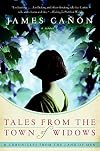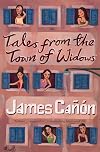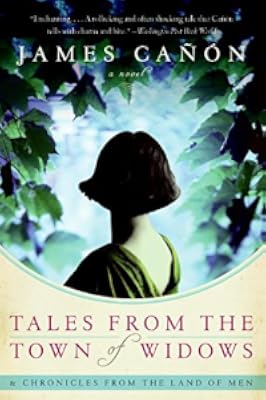
Tales from the Town of Widows: A Novel
by James Cañón
On This Page
Description
In the small Colombian mountain village of Mariquita, a band of guerrillas storms in to protest the country's ruling government. They arrive with propaganda and guns, and when they depart they have forcibly recruited all the town's men, leaving behind only a few--the priest and a young, fair-skinned boy disguised as a little girl.In their wake, Mariquita becomes a sinking wasteland filled with women who quickly resign themselves to food shortages, littered streets, and mourning. Without men, show more life is hopeless, and getting along, nearly impossible. But, Rosalba viuda de Pati o, wife of the former police sergeant, sees a different fate for the town of widows. She declares herself magistrate and promises to instill law and order while restoring the failing economy and infrastructure. Reluctantly, the women agree to join forces. A utopia emerges, one that ironically resembles the ideal society the guerrilla group claims to promote.Deft, rich, and darkly humorous, Tales from the Town of Widows is a captivating exploration of gender and sexuality that uses the ongoing conflict in Colombia as a backdrop. It presents a fascinating portrait of ill-fated wives and the war that helped them build a peaceful, equality-based society.Exquisitely wrought, remarkably original, James Ca n's stunning debut marks the arrival of an unforgettable new literary talent. show lessTags
Recommendations





















Member Reviews
Tales from the Town of Widows and Chronicles from the Land of Men is a feast for anyone who relishes beautiful, intelligent writing infused with humor and humanity. Set against the backdrop of the Colombian civil war, it tells the story of a group of women living in a remote mountain village who are forced to fend for themselves after a band of Communist guerrillas descends on the village and forcibly recruits all the men, killing those who resist and leading the others away to fight for their cause. The women and children who are left behind must overcome their grief, fear, ignorance and passivity in order to survive and build a new society of their own on the patriarchal rubble of the old. The book embodies many contradictions without show more ever pulling at the seams. It is at once lyrical and brutal, subversive and idealistic, satirical and affecting, wickedly funny and profoundly sad. It tackles big issues--religion, politics, sexual politics--but its real power lies in the poignant and often comic humanity of its characters, with their hairy, muscular legs and rectangular bodies, their migrating warts and luxurious mustaches. And those are just the women: the widows, spinsters, prostitutes and virgins who inhabit the town of Mariquita. We are also given, in journalistic chronicles at the end of each chapter, brief and often shocking glimpses of the men and boys doomed to fight in the war, and the civilians caught up in its senseless violence. And when, at the end of the book, the men come home after their 16-year absence and try to reclaim their power and male prerogatives, things get really interesting… Tales from the Town of Widows is that rare achievement in literature, a unique and wholly original book. show less
Tales From the Town of Widows serves up rich stories of how a small town of very unique women cope after their husbands, dads, sons and brothers are forced to go fight in the Colombian civil war for a band of guerrillas, or be shot on the spot. A few men are killed for resisting, but the majority reluctantly head out into the chaos of that devastating conflict. The women left behind consider the guerrillas' order a death sentence for their men. Their isolated, prosperous town rapidly decays, along with the morale of the inhabitants. Ultimately, those who stay devise a new, matriarchal society that, while far from Utopian, plays to the the residents' strengths. Spliced between each chapter is a heartbreaking chronicle of a different man show more caught up in the 40+-year war. James Canon tells a story that is vivid, amusing, magical and heartbreaking. The offbeat, bittersweet tale makes for a good read. show less
Sex. Sex, sex, sex and more sex. Brief or sordid or sad, hopeful, youthful or entrepreneurial. This is not a sexy book but the subject does come up once or twice (or indeed more). Strangely (or maybe not) the only tender encounters are between two men or two women. The stories of the women's lives, where men are portrayed as brutes, are interspersed with stories of the men's lives, as guerillas, paramilitaries etc, where they show their more human sides. There is the feeling that the author is using the book to present his ideal of a new world order and only occasionally are you made to feel that this may be swallowing too much.
In a small, poor village, all of the men are taken away by rebel groups. This novel details the way that the women, individually, and collectively, deal with their lives in the absence of men. In alternate chapers, we read see short scenes of the men away from the village.
I enjoyed some of the individual stories of the folks (particularly the "Other Widow") but overall, it feels flat. It just didn't have much emotional resonance.
The overall theme of the novel was better portrayed in Charlotte Perkins Gillman's "Herland"
I enjoyed some of the individual stories of the folks (particularly the "Other Widow") but overall, it feels flat. It just didn't have much emotional resonance.
The overall theme of the novel was better portrayed in Charlotte Perkins Gillman's "Herland"
Interesting take on gender in Latin America, a gentle fantasy with a satisfying tone of hopefulness. Bold and adventurous for a first novel!
Une tragi-comédie sur l'horreur au quotidien dans la campagne colombienne. Surréaliste, utopiste, drôle, poignant et surtout... optimiste.
Colombia, novembre 1992. Il minuscolo villaggio montano di Mariaquita viene occupato da un manipolo di guerriglieri che sequestrano tutti gli uomini al di sopra dei dodici anni: si salvano solo i bambini, il prete don Rafael, un ragazzino che la madre ha travestito da femmina per proteggerlo e Santiago, gay dichiarato in perenne attesa del ritorno di un amico d'infanzia. In breve il villaggio conosce la fame e il declino: sarà Rosalba, vedova del poliziotto del paese, a prendere in mano la situazione instaurando un'inedita forma di matriarcato. Dopo qualche anno Mariaquita, in assenza di uomini, rischia però l'estinzione: don Rafael viene quindi costretto a rompere il voto di castità per garantire la sopravvivenza del villaggio. Ma show more l'uomo, scopertosi sterile, avvelena quattro ragazzini che avrebbero dovuto sostituirlo nel ruolo di maschio riproduttore. Don Rafael rischia il linciaggio e fugge: andrà in giro raccontando di un villaggio di amazzoni giganti e assassine, mentre le pie donne finiranno per abbracciare un ingenuo quanto solido ateismo.
Quando i guerrieri arrivano a Mariquita, uno sperduto villaggio tra le montagne della Colombia, la gente alza gli occhi al cielo: non ne possono più di razzie, collette forzate e sermoni marxisti. Ma questa volta i ribelli non si accontentano, vogliono arruolare tutti gli uomini e chi si rifiuta di seguirli viene ucciso. Dopo il loro passaggio, Mariquita è una terra di vedove e orfani; l'unico uomo rimasto è padre Rafael, l'untuoso prete. Restano lacrime e ricordi, carestia e riovine. Finché, stufe di aspettare gli aiuti del governo, le donne di Mariquita passano all'azione: guidate dall'energica Rosalba, trasformano il villaggio in una repubblica modello, un paradiso che ricorda il socialismo, ma in versione riveduta e corretta. Perfino la misurazione del tempo subisce una rivoluzione femminista. Rimane un unico, spinosissimo problema: come assicurare la prosecuzione della specie? Alle storie rocambolesche, tragiche, divertenti, nere oppure tenere e perfino romantiche della città delle vedove, fanno da contrappunto le cronache che un giornalista americano invia dalla terra degli uomini, i guerriglieri nascosti nella selva: è la violenza maschile contro l'utopia ginocratica, il realismo più crudo contro il realismo magico. Quello di James Cañón è il debutto di un narratore capace di combinare immaginazione e umorismo, di fondere la cultura pop con l'eredità di Márquez, Cortázar e Vargas Llosa. show less
Quando i guerrieri arrivano a Mariquita, uno sperduto villaggio tra le montagne della Colombia, la gente alza gli occhi al cielo: non ne possono più di razzie, collette forzate e sermoni marxisti. Ma questa volta i ribelli non si accontentano, vogliono arruolare tutti gli uomini e chi si rifiuta di seguirli viene ucciso. Dopo il loro passaggio, Mariquita è una terra di vedove e orfani; l'unico uomo rimasto è padre Rafael, l'untuoso prete. Restano lacrime e ricordi, carestia e riovine. Finché, stufe di aspettare gli aiuti del governo, le donne di Mariquita passano all'azione: guidate dall'energica Rosalba, trasformano il villaggio in una repubblica modello, un paradiso che ricorda il socialismo, ma in versione riveduta e corretta. Perfino la misurazione del tempo subisce una rivoluzione femminista. Rimane un unico, spinosissimo problema: come assicurare la prosecuzione della specie? Alle storie rocambolesche, tragiche, divertenti, nere oppure tenere e perfino romantiche della città delle vedove, fanno da contrappunto le cronache che un giornalista americano invia dalla terra degli uomini, i guerriglieri nascosti nella selva: è la violenza maschile contro l'utopia ginocratica, il realismo più crudo contro il realismo magico. Quello di James Cañón è il debutto di un narratore capace di combinare immaginazione e umorismo, di fondere la cultura pop con l'eredità di Márquez, Cortázar e Vargas Llosa. show less
Feb 21, 2020Italian
Members
- Recently Added By
Author Information

4+ Works 155 Members

James Cañón is a LibraryThing Author, an author who lists their personal library on LibraryThing.
Awards and Honors
Series
Belongs to Publisher Series
Common Knowledge
- Original publication date
- 2007
- Important places
- Colombia; Latin America
- Epigraph*
- De dag zal komen dat mannen vrouwen als hun gelijke zullen zien, niet alleen voor het haardvuur, maar ook in staatsaangelegenheden. Pas dan, en niet eerder, zal er volmaakte kameraadschap zijn, de ideale eenwording tussen de ... (show all)seksen die zal leiden tot de hoogste ontwikkeling van de menselijke soort.
Susan B. Anthony - First words*
- De dag waarop de mannen verdwenen, begon als een gewone zondagochtend in Mariquita; de hanen vergaten de dag aan te kondigen, de koster versliep zich, de kerkklokken riepen de gelovigen niet op voor de vroegmis, en net als al... (show all)le zondagen van de afgelopen tien jaar, kwam er maar één persoon opdagen voor de mis van zes uur: dona Victoria viuda de Morales, de weduwe Morales.
- Last words*
- (Click to show. Warning: May contain spoilers.)Hun volk had een tweede kans gekregen.
*Some information comes from Common Knowledge in other languages. Click "Edit" for more information.
Classifications
Statistics
- Members
- 150
- Popularity
- 218,249
- Reviews
- 9
- Rating
- (3.38)
- Languages
- 6 — Dutch, English, French, German, Italian, Spanish
- Media
- Paper, Ebook
- ISBNs
- 15
- ASINs
- 3