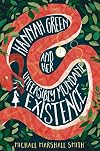
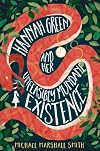
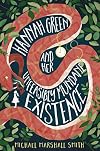
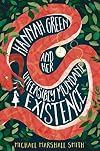
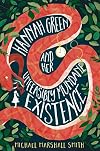
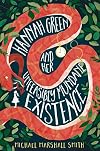
Hannah Green and Her Unfeasibly Mundane Existence
by Michael Marshall Smith
On This Page
Description
"Hannah Green actually thinks her story is more mundane than most. But she's about to discover that the shadows in her life have been hiding a world where nothing is as it seems: that there's an ancient and secret machine that converts evil deeds into energy, that some mushrooms can talk - and that her grandfather has been friends with the Devil for over a hundred and fifty years, and now they need her help"--Tags
Recommendations






Member Reviews
I'm not sure why, but this feels like a return to form, though I've enjoyed all his previous books. But this is pure fantasy/horror, with Smith's trademark rich writing and wonderful turn of phrase and ability to evoke place and character and atmosphere. It's dark and strange and funny, and I suppose part of what makes it superior to his other more recent books is that they often suffered from the choice to spend most of their length establishing their premise, as their protagonist tries to work out what's going on, whereas this lets you and the characters have a solid idea of what's going on before you get a quarter of the way in, while still retaining a sense of mystery. The youthful voice of the main protagonist gives it the feel of show more a YA, actually, and it mostly works as one and it seems to suit Smith quite well. An unfeasible book in lots of ways, but not a mundane one. show less
Hannah's world is turned upside down when her parents split up - just as the Devil wakes from a long sleep to discover someone is stealing the evil deeds of humanity. And Hannah and her family will be central to putting this right. For various definitions of right. He is the Devil, after all.
This is a book that's perfectly fine, but I can't help but be a little disappointed after many years waiting for a new outing from MMS.
While this is charming and exhibits Smith's trademark humour and ability to home in on the heart, I mostly found it a little bit too young for my taste - perhaps more young adult than adult with its eleven year old heroine and clean lines. That said, it's oddly jarring in some of its juxtapositions of tone; in show more places perhaps bordering on too grown up for an 11 year old like Hannah. Consequently, I'm not sure who it's intended for but I hope it finds an audience to bring a new generation to MMS and his dark worlds. I also hope there's a more grown up book in his future.
I received a free copy from the publisher in exchange for an honest review. show less
This is a book that's perfectly fine, but I can't help but be a little disappointed after many years waiting for a new outing from MMS.
While this is charming and exhibits Smith's trademark humour and ability to home in on the heart, I mostly found it a little bit too young for my taste - perhaps more young adult than adult with its eleven year old heroine and clean lines. That said, it's oddly jarring in some of its juxtapositions of tone; in show more places perhaps bordering on too grown up for an 11 year old like Hannah. Consequently, I'm not sure who it's intended for but I hope it finds an audience to bring a new generation to MMS and his dark worlds. I also hope there's a more grown up book in his future.
I received a free copy from the publisher in exchange for an honest review. show less
Hannah Green is eleven years old and has recently learned the word ‘mundane’. She learns that it has two meanings: 1) of the earthly world; and 2) tedious, everyday, inconsequential. As the book opens, her life very definitely falls into the latter category. She is an only child whose life follows a comfortable set of patterns: trips with her parents downtown in Santa Cruz; visits to a favourite restaurant in Los Gatos; holidays to a lodge in Big Sur. These things have formed Hannah’s childhood with a reassuring sense of security. But then things start going wrong. Suddenly Hannah’s mum and dad don’t seem happy any more. Then her mum moves out to focus on a big work project in London. Then her dad announces that Hannah is show more going to stay for her granddad for a couple of weeks. And it’s at this point that things start to become very, very weird, and Hannah begins to realise that perhaps her new life is going to be best defined in the first sense of ‘mundane’. Because, quite frankly, when your granddad turns out to be working for the Devil, and you end up on a road trip with said prince of darkness, ‘tedious’ just doesn’t quite fit the bill...
For the full review, please see my blog:
https://theidlewoman.net/2020/02/14/hannah-green-and-her-unfeasibly-mundane-exis... show less
For the full review, please see my blog:
https://theidlewoman.net/2020/02/14/hannah-green-and-her-unfeasibly-mundane-exis... show less
This is an odd book -- ostensibly the adventures of 11 year old Hannah Green, but definitely not aimed at the 11 year old age group. The omniscient narrator works really well. The incredibly horrifying casual violence and destruction of the devil is well, awful, and for all the talk about dark and light coexisting, there's not much to balance out the dark.
In some ways, I'd recommend it for snackulars (best demon name ever) and the squirrel of destiny alone, but I have to admit that's a thin hanger to carry it.
I guess I want it to make more sense -- for the violent episodes to serve some kind of purpose or meaning, for there to be an overarching reason why Hannah is experiencing this, for some kind of moral compass. And the fact that show more that is not present says something in itself -- that's life, right? But then you have an omniscient narrator talking about story and the structure of story and you have some fairy tale like structures going on and it just seems confusing and sort of pointless.
Advanced reader's copy provided by Edelweiss. show less
In some ways, I'd recommend it for snackulars (best demon name ever) and the squirrel of destiny alone, but I have to admit that's a thin hanger to carry it.
I guess I want it to make more sense -- for the violent episodes to serve some kind of purpose or meaning, for there to be an overarching reason why Hannah is experiencing this, for some kind of moral compass. And the fact that show more that is not present says something in itself -- that's life, right? But then you have an omniscient narrator talking about story and the structure of story and you have some fairy tale like structures going on and it just seems confusing and sort of pointless.
Advanced reader's copy provided by Edelweiss. show less
*I received a free advance copy of this book in return for an honest review*
Hannah's parents have split up and they are all having trouble coping with the new situation. In an attempt to get some space to adjust her father sends her to stay with her grandfather, an eccentric wanderer who just happens to work for the Devil. The Devil. The problem is that the Devil has just emerged from several years of "sleep" and things have gone wrong in his absence, the essential balance of evil in the world is shifting and he needs his old employee's help. Oh, and there's a demon cheeky, simple-minded demon called Vaneclaw that happens to resemble a large mushroom.
There's a slightly rocky start and Marshal Smith takes a little while to find his feet show more in the narrative and to establish the tone. For a while I wondered how the strands were going to come together when the tone was sometimes wildly different. Hannah is an enjoyable protagonist sitting on just the right side of precocious, she entertainingly cynical and world-weary without losing her childish qualities. The Devil is the Devil and he does Bad Things, but this is the devil in his most relatable form, a part of the necessary balance between good and evil . He's bad, but he's not all bad. My unease was with the trio of criminals that form the antagonist group, some of their segments were really rather dark, in a way that I found difficult to reconcile with the more typical YA fare of the rest of the narrative. It's a problem that was never fully resolved with moments of unexpected violence that were just a shade too much.
Aside from this I found myself enjoying the story more and more. The interactions between the Devil and his dry deadpan delivery and Vaneclaw's silly puns and asinine comments are amusing and the relationship between the Devil and Hannah's grandfather in an inventive take on the age-old trope of making deals with the Devil, though a little more development would have been very welcome. Hannah is funny, brave hero out to save her parents and the world while grappling with the changes wrought by their split. She wants them to reunite but a conflict of potentially biblical proportions puts everything into perspective, even for an eleven-year-old! Once the tone (mostly) settled it was a fun, pacy ride with enough originality and style to make it truly enjoyable. The balance between the morals of the story, the sly humour and the acknowledgement of the darkness out there in the world definitely placed it in the better class of YA, with just enough depth to keep young readers and adults (children at heart) happy. show less
Hannah's parents have split up and they are all having trouble coping with the new situation. In an attempt to get some space to adjust her father sends her to stay with her grandfather, an eccentric wanderer who just happens to work for the Devil. The Devil. The problem is that the Devil has just emerged from several years of "sleep" and things have gone wrong in his absence, the essential balance of evil in the world is shifting and he needs his old employee's help. Oh, and there's a demon cheeky, simple-minded demon called Vaneclaw that happens to resemble a large mushroom.
There's a slightly rocky start and Marshal Smith takes a little while to find his feet show more in the narrative and to establish the tone. For a while I wondered how the strands were going to come together when the tone was sometimes wildly different. Hannah is an enjoyable protagonist sitting on just the right side of precocious, she entertainingly cynical and world-weary without losing her childish qualities. The Devil is the Devil and he does Bad Things, but this is the devil in his most relatable form, a part of the necessary balance between good and evil . He's bad, but he's not all bad. My unease was with the trio of criminals that form the antagonist group, some of their segments were really rather dark, in a way that I found difficult to reconcile with the more typical YA fare of the rest of the narrative. It's a problem that was never fully resolved with moments of unexpected violence that were just a shade too much.
Aside from this I found myself enjoying the story more and more. The interactions between the Devil and his dry deadpan delivery and Vaneclaw's silly puns and asinine comments are amusing and the relationship between the Devil and Hannah's grandfather in an inventive take on the age-old trope of making deals with the Devil, though a little more development would have been very welcome. Hannah is funny, brave hero out to save her parents and the world while grappling with the changes wrought by their split. She wants them to reunite but a conflict of potentially biblical proportions puts everything into perspective, even for an eleven-year-old! Once the tone (mostly) settled it was a fun, pacy ride with enough originality and style to make it truly enjoyable. The balance between the morals of the story, the sly humour and the acknowledgement of the darkness out there in the world definitely placed it in the better class of YA, with just enough depth to keep young readers and adults (children at heart) happy. show less
I don’t know what Marshall Smith was thinking, I truly don’t. Too casually dark for your average young adult and with themes of estrangement that will barely be relateable to younger readers, you would think this would be aimed towards adults. Yet with one of the narratives from a rather young eleven year-old, and a plot about getting the Devil his mojo back by getting Grandpa’s magic machine working again, it certainly skews young adult. Except the Devil is, you know, the Devil. Remember that review where I criticized the UF author for having Disney-fied demons and basically making the creatures from Hell cute? Marshall Smith’s Devil is definitely Not From The Same Place. Example:
“The Devil inclined his head, as if conceding show more the point. He bought a large vodka and left the counter, trailing his finger along the man’s shoulder as he walked off. The man was too drunk to notice. Later that afternoon, however, he finally realized how much his room-mate’s aged cat was getting on his nerves, and killed it, losing consciousness on the sofa with the animal’s neck still gripped in his hands. Around midnight the room-mate returned, worked out what had happened (not a tough piece of deduction, profoundly stoned though the room-mate was), and stabbed him in the heart with a dirty ten-inch chef’s knife. He died quickly, a faster resolution to his pain than the Devil would have preferred but it was not an exact science. You put stuff out there, and you got what you got. It’s a journey.”
This is an aside, mind you. It’s not germane to the story. There’s no value, except to show that the Devil really is casually Evil. But you see what I mean? Marshall Smith tries to through a little humor in their about a dumb stoner (ha, ha), why, exactly? And then applying a New Age mantra to creating Evil? Super-funny, because we just witnessed an animal killing and a homicide. Hee-hee.
In the spirit of Anti-Hero, Marshall Smith then tries to introduce a Worse Thing that may mean the Devil is preferable. What can be worse than this level of casual evil? Well, it took a bit to be introduced to them (as in, halfway through the book), but they seemed the typical Ultimate Evil sort.
I couldn’t help thinking of John Connolly as I read, he of the Samuel Johnson trilogy ([b:The Gates|6411440|The Gates (Samuel Johnson, #1)|John Connolly|https://i.gr-assets.com/images/S/compressed.photo.goodreads.com/books/1348405681l/6411440._SY75_.jpg|6600382] published 2010), of an eleven year-old boy who ends up trying to shut the gates of Hell, and in book two, takes an inadvertent trip through it. Interestingly, his parents are also separated. Both books contain narratives from their eleven-year-old protagonists, but while Samuel Johnson seems perceptive and somewhat precocious, Hannah seems mostly lost and focused on trying to recover her previous reality.
Connolly manages the right balance of funny-with-scary, combined with a swift plot, that makes it a joy to read in comparison to this somber and grey-scale version. Actually, I’ve made up my mind; Connolly has the YA version that will appeal to all ages, and Marshall Smith has the version that will resonate with the fifty-year old that can only remember fun through the distance of decades.
Marshall Smith is a gorgeous writer, no doubts there, and any lesser writer probably would have resulted in a DNF. This is nicely crafted, but hampered by a slow-moving plot and fragmented perspectives.
“And so you bravely pick up the existential pencil and sketch a few opening sentences, the speculative first paragraph. You encourage the woman or man you love to write alongside you, relishing the co-authoring of this huge improvisational adventure, this big and beautiful game. You write and write and write and it all seems so very easy, and before you know it you’re already on Chapter Sixteen and that’s great because just look how much you’ve done, and how very good it is… or will be, definitely, when you’ve had a chance to give it an edit.
Until the lunch in Lost Gatos when you realize there will be no second draft, that your wife doesn’t love you any more, and you’ve been writing with indelible ink all along.” show less
“The Devil inclined his head, as if conceding show more the point. He bought a large vodka and left the counter, trailing his finger along the man’s shoulder as he walked off. The man was too drunk to notice. Later that afternoon, however, he finally realized how much his room-mate’s aged cat was getting on his nerves, and killed it, losing consciousness on the sofa with the animal’s neck still gripped in his hands. Around midnight the room-mate returned, worked out what had happened (not a tough piece of deduction, profoundly stoned though the room-mate was), and stabbed him in the heart with a dirty ten-inch chef’s knife. He died quickly, a faster resolution to his pain than the Devil would have preferred but it was not an exact science. You put stuff out there, and you got what you got. It’s a journey.”
This is an aside, mind you. It’s not germane to the story. There’s no value, except to show that the Devil really is casually Evil. But you see what I mean? Marshall Smith tries to through a little humor in their about a dumb stoner (ha, ha), why, exactly? And then applying a New Age mantra to creating Evil? Super-funny, because we just witnessed an animal killing and a homicide. Hee-hee.
In the spirit of Anti-Hero, Marshall Smith then tries to introduce a Worse Thing that may mean the Devil is preferable. What can be worse than this level of casual evil? Well, it took a bit to be introduced to them (as in, halfway through the book), but they seemed the typical Ultimate Evil sort.
I couldn’t help thinking of John Connolly as I read, he of the Samuel Johnson trilogy ([b:The Gates|6411440|The Gates (Samuel Johnson, #1)|John Connolly|https://i.gr-assets.com/images/S/compressed.photo.goodreads.com/books/1348405681l/6411440._SY75_.jpg|6600382] published 2010), of an eleven year-old boy who ends up trying to shut the gates of Hell, and in book two, takes an inadvertent trip through it. Interestingly, his parents are also separated. Both books contain narratives from their eleven-year-old protagonists, but while Samuel Johnson seems perceptive and somewhat precocious, Hannah seems mostly lost and focused on trying to recover her previous reality.
Connolly manages the right balance of funny-with-scary, combined with a swift plot, that makes it a joy to read in comparison to this somber and grey-scale version. Actually, I’ve made up my mind; Connolly has the YA version that will appeal to all ages, and Marshall Smith has the version that will resonate with the fifty-year old that can only remember fun through the distance of decades.
Marshall Smith is a gorgeous writer, no doubts there, and any lesser writer probably would have resulted in a DNF. This is nicely crafted, but hampered by a slow-moving plot and fragmented perspectives.
“And so you bravely pick up the existential pencil and sketch a few opening sentences, the speculative first paragraph. You encourage the woman or man you love to write alongside you, relishing the co-authoring of this huge improvisational adventure, this big and beautiful game. You write and write and write and it all seems so very easy, and before you know it you’re already on Chapter Sixteen and that’s great because just look how much you’ve done, and how very good it is… or will be, definitely, when you’ve had a chance to give it an edit.
Until the lunch in Lost Gatos when you realize there will be no second draft, that your wife doesn’t love you any more, and you’ve been writing with indelible ink all along.” show less
I noticed this book in the '12 Days of Kindle' sale that Amazon were having for the 2018 winter hols and it made me think of a friend named Hannah who spends most of her work days in a rather mundane looking cupboard (yes, actually in a cupboard), and the title of this book instantly made me think of her. And so, with me being hooked on the title, and also suitably impressed by the cover art, i had a quick look at the reviews and they seemed rather positive as well - and at £1.49 one can't really go wrong. And so, with all four check boxes (cover, title, reviews and price) ticked, i went ahead and bought the book.
Of course, i had to go and tell Hannah about my fiendishly brilliant book purchase, while she was at work, sat in her show more cupboard. I know, i'm bad, but it put a smile and a giggle on Hannah's face.
So, you're probably wondering, when's he gonna get onto talking about the actual story and doing an actual review? Like, was it any good? Was it worth £1.49? Did it come up to the standard of the cover and the title? Was Hannah's existence, really, 'unfeasibly mundane'?
The answer to all the above, is yes. More than yes, actually.
It was brilliant, it was worth more than £1.49, it surpassed its cover and certainly matched its title, as while Hannah starts out with quite a feasibly mundane existence, of which she wasn't too impressed although she did enjoy some of it, it soon begins to spiral rapidly into complete unfeasibility of mundaneness when Hannah's parents split up and she goes to stay with her granddad for a couple of weeks and the devil himself turns up at granddad's house with an accident imp in tow because... well, you'll just have to read it and find out for yourself.
I know what you're thining. You're thinking it all sounds incredibly silly, 'the devil himself and an accident imp'? But it isn't at all silly, there's a real underlying serious side to this book. It's about the stories of our lives, who gets to write them, who we're in them with and who we write them with - which would be incredibly dull and tedious if you just wrote a philosophy PHD thesis on the topic. But Michael manages to make the points he wants to make while packaging it all up in an a story that is quite giggle-icious.
I would also add that i think it's very suitable for both adults (especially parents) and teens alike and, IMHO, speaks incredibly well to each about the other - something for us all to learn.
So yes, at the end of the tale, i can honestly say that it's a really wonderful book that i'm very glad to have discovered (thank you Hannah and your cupboard ), with a nice easy flowing style that just lets you fall inside the book and enjoy a story about the stories of our lives. show less
Of course, i had to go and tell Hannah about my fiendishly brilliant book purchase, while she was at work, sat in her show more cupboard. I know, i'm bad, but it put a smile and a giggle on Hannah's face.
So, you're probably wondering, when's he gonna get onto talking about the actual story and doing an actual review? Like, was it any good? Was it worth £1.49? Did it come up to the standard of the cover and the title? Was Hannah's existence, really, 'unfeasibly mundane'?
The answer to all the above, is yes. More than yes, actually.
It was brilliant, it was worth more than £1.49, it surpassed its cover and certainly matched its title, as while Hannah starts out with quite a feasibly mundane existence, of which she wasn't too impressed although she did enjoy some of it, it soon begins to spiral rapidly into complete unfeasibility of mundaneness when Hannah's parents split up and she goes to stay with her granddad for a couple of weeks and the devil himself turns up at granddad's house with an accident imp in tow because... well, you'll just have to read it and find out for yourself.
I know what you're thining. You're thinking it all sounds incredibly silly, 'the devil himself and an accident imp'? But it isn't at all silly, there's a real underlying serious side to this book. It's about the stories of our lives, who gets to write them, who we're in them with and who we write them with - which would be incredibly dull and tedious if you just wrote a philosophy PHD thesis on the topic. But Michael manages to make the points he wants to make while packaging it all up in an a story that is quite giggle-icious.
I would also add that i think it's very suitable for both adults (especially parents) and teens alike and, IMHO, speaks incredibly well to each about the other - something for us all to learn.
So yes, at the end of the tale, i can honestly say that it's a really wonderful book that i'm very glad to have discovered (thank you Hannah and your cupboard ), with a nice easy flowing style that just lets you fall inside the book and enjoy a story about the stories of our lives. show less
Members
- Recently Added By
Author Information

88+ Works 8,398 Members
Common Knowledge
- Original publication date
- 2017-01-21
- Dedication
- For Nate,
who heard some of this first,
and without whom it wouldn't exist. - First words
- Imagine if your will, a watchmakers workshop.
Classifications
Statistics
- Members
- 224
- Popularity
- 144,975
- Reviews
- 14
- Rating
- (3.77)
- Languages
- English, Portuguese
- Media
- Paper, Audiobook, Ebook
- ISBNs
- 8
- ASINs
- 3