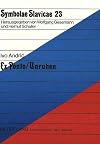
Ex Ponto ;: Nemiri ; Lirika (Serbo-Croatian Edition)
by Ivo Andrić
22 Members (4.50)
On This Page
Description
«Ex Ponto» und «Unruhen», die beiden zentralen Werke in Andric' frühem literarischen Schaffen, sind im Unterschied vom späteren Erzählwerk des Autors weitestgehend unbekannt geblieben. Beide Werke stammen aus der Zeit des Ersten Weltkrieges und sind während Andric' Gefängnishaft in Maribor und seiner Internierung in der bosnischen Provinz entstanden. Sie beinhalten eine lyrisch meditative Prosa, die trotz literarischer Stilisierung einen nahen autobiographischen Bezug, zum Teil show more Tagebuchcharakter aufweist. Die unausgeglichene künstlerische Qualität der Texte hatte Andric davon Abstand nehmen lassen, beide Werke nach ihren Erstpublikationen von 1918 und 1920 selbst noch einmal zu veröffentlichen. Die Übertragung ins Deutsche ging von der Überlegung aus, dass - ungeachtet der ästhetischen Mängel - die Kenntnis von «Ex Ponto» wie auch von «Unruhen» wichtig für das Gesamtverständnis des Autors und der Entwicklung seines literarischen Werkes ist. show lessTags
Recommendations
























Member Reviews
Members
- Recently Added By
Author Information

236+ Works 4,847 Members
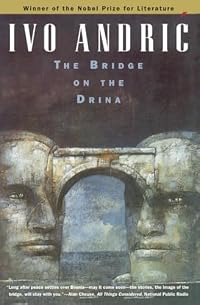
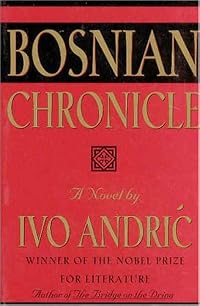
Ivo Andric was born October 10, 1892, in Docu, Bosnia. He was raised in Bosnia, a region of violent political turmoil for centuries. As a young patriot, Andric became associated with political organizations, leading to his imprisonment for three years during World War I. He was also under virtual house arrest during World War II. While imprisoned show more Andric wrote his most creative material as he explored the agonies of Bosnia's oppression and exploitation. His World War I incarceration led to Ex Ponto, his collection of prison meditations and philosophy. His World War II house arrest provided Andric with the material and time to produce his most memorable novels, known as the Bosnian trilogy-Gospodjica (The Woman From Sarajevo), Travnicka hronicka (Bosnian Story or Chronicle), and Na Drini cuprija (The Bridge on the Drina). His devotion to truth and morality in times of despair and struggle is one of his strengths. His work has been translated into German, French, Russian, Spanish, and Italian. After the wars, Andric served as a Yugoslav diplomat, deputy, and representative from Bosnia. He was a member of the Federation of Writers of Yugoslavia. Andric was awarded the Prize for Life Work from the Yugoslav government in 1956, the Nobel Prize for Literature in 1961, and was bestowed an honorary doctorate from the University of Krakon in 1964. Andric died March 13, 1975, in Belgrade, Yugoslavia. (Bowker Author Biography) show less
Classifications
- Genres
- Fiction and Literature, Literature Studies and Criticism
- DDC/MDS
- 891.8 — Literature & rhetoric Asian Literature East Indo-European and Celtic literatures West and South Slavic languages (Bulgarian, Slovene, Polish, Czech, Slovak, Serbo-Croatian, and Macedonian)
- LCC
- PG1418 .A6 .A6 — Language and Literature Slavic languages and literatures. Baltic languages. Albanian language Slavic. Baltic. Albanian Serbo-Croatian
- BISAC
Statistics
- Members
- 22
- Popularity
- 1,186,026
- Rating
- (4.50)
- Languages
- German, Croatian
- Media
- Paper
- ISBNs
- 4
- ASINs
- 3