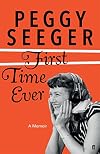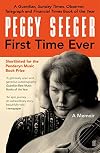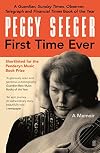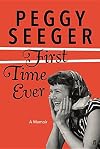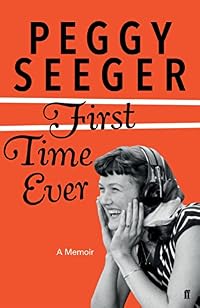
First Time Ever: A Memoir
by Peggy Seeger
On This Page
Description
"Peggy Seeger is one of folk music's most influential artists and songwriters. Born in New York City in 1935, she enjoyed a childhood steeped in music and left-wing politics - they remain her lifeblood. After college, she traveled to Russia and China - against US advice - before arriving in London, where she met the man with whom she would raise three children and share the next thirty-three years: Ewan MacColl. Together, they helped lay the foundations of the British folk revival, through show more the influential Critics Group and the landmark BBC Radio Ballads series. And as Ewan's muse, she inspired one of the twentieth century's most popular love songs, "The First Time Ever I Saw Your Face". With a clear eye and generous spirit, Peggy writes of a roller-coaster life - of birth and abortion, sex and infidelity, devotion and betrayal - in a luminous, beautifully realized account."--Amazon.com. show lessTags
Recommendations
















Member Recommendations
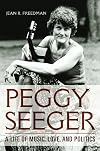
waltzmn One is the biography. The other is the autobiography. They really do illuminate the story of one of the people who did the most to link British and American "pop folk" music, and the last of the great Seeger siblings.
Member Reviews
This book first showed up on LibraryThing Early Reviewers, and I signed up. After all, I'm a logical reviewer -- I'm a folk music scholar. I have many MacColl/Seeger records, and I've seen them perform. I have never met any of their family, but I've known people who know them. And I know much of the background of both the Seeger family and the Miller family (Ewan MacColl's proper name). And -- like many in the folk music community -- I have many questions about the background of their music.
So, naturally, I didn't get the book. I've gotten lots of far less interesting volumes from the Early Reviewers program, but not the one I was meant to get.
Which, obviously, meant that I had to get it just to give a proper review. And was very show more surprised at what I found.
First, the trigger warnings. If you know Peggy Seeger (or any Seeger, really) and Ewan MacColl, you probably know that they are from the far left. But this is an utterly frank, open memoir. If you aren't up for mentions of extra-marital sex, lesbianism, abortion, and other hot button issues, stay away. You have been warned.
But you will also get an insight into America's first family of folk music that you won't get anywhere else. Yes, Pete Seeger wrote more -- but he's a generation older, and more reserved about his own life. Peggy doesn't hide who she is.
It's not a perfect book. She says at the beginning that the manuscript was heavily cut by the editor, and the chopping is much more evident in the second half. The first half flows smoothly, although you'll often have questions as to why Peggy did this or that crazy thing. And, sometimes, you'll lose track of who a particular person is. (An index would really help.) In the second half, the chronology gets hard to follow; events race along, then slow down. It's like a traditional ballad, "leaping and lingering," on some things such as MacColl's death -- but sometimes the leaps are too far.
Oddly, one of the things that is most absent seems to be her music. All the Seegers have tremendous innate musical talent -- almost a savant skill. Yet Peggy tells us almost nothing about how she learned most of her instruments. She tells us nothing at all about her relationships with her instruments. (If you don't know what I mean by a relationship with an instrument, all I can say is, you've never really gotten to know one.) She quotes snippets of traditional songs, and songs she wrote, but often without much context. She talks a lot about touring, and its problems, and even about performing, but only occasionally about getting into a song. Her emotional language is... curious. Which may be why it's so much easier to understand some of the things she did than others.
There is a pattern here. The special skills -- not just in music, though those are the most extreme. The perfectionism and black-and-white thinking that, even as a child, caused her to run off-stage when she made a misstep in a school play, and then refused to go to school the next day because it was so painful. The wild decision to, in effect, run off to Europe -- where she fell in love with and got pregnant by a man twenty years her senior who was already married to someone else! The passion for organizing things in a particular way. The slight hints of gender fluidity. Signs of problems establishing her identity, particularly after MacColl died. It all adds up. And it makes Seeger a very interesting, very unusual person.
She may not be your sort of person, especially if you are culturally conservative. But, by reading her words, you will definitely get a chance to see the world in a different way.
[CORRECTIONS and CHANGES:
11/20 - Changed "gender dysphoria" to "gender fluidity" and removed explanation of the term; "gender dysphoria" is an explicit diagnosis which requires distress, and Seeger does not suffer distress; the term was misleading. Added reference to identity.] show less
So, naturally, I didn't get the book. I've gotten lots of far less interesting volumes from the Early Reviewers program, but not the one I was meant to get.
Which, obviously, meant that I had to get it just to give a proper review. And was very show more surprised at what I found.
First, the trigger warnings. If you know Peggy Seeger (or any Seeger, really) and Ewan MacColl, you probably know that they are from the far left. But this is an utterly frank, open memoir. If you aren't up for mentions of extra-marital sex, lesbianism, abortion, and other hot button issues, stay away. You have been warned.
But you will also get an insight into America's first family of folk music that you won't get anywhere else. Yes, Pete Seeger wrote more -- but he's a generation older, and more reserved about his own life. Peggy doesn't hide who she is.
It's not a perfect book. She says at the beginning that the manuscript was heavily cut by the editor, and the chopping is much more evident in the second half. The first half flows smoothly, although you'll often have questions as to why Peggy did this or that crazy thing. And, sometimes, you'll lose track of who a particular person is. (An index would really help.) In the second half, the chronology gets hard to follow; events race along, then slow down. It's like a traditional ballad, "leaping and lingering," on some things such as MacColl's death -- but sometimes the leaps are too far.
Oddly, one of the things that is most absent seems to be her music. All the Seegers have tremendous innate musical talent -- almost a savant skill. Yet Peggy tells us almost nothing about how she learned most of her instruments. She tells us nothing at all about her relationships with her instruments. (If you don't know what I mean by a relationship with an instrument, all I can say is, you've never really gotten to know one.) She quotes snippets of traditional songs, and songs she wrote, but often without much context. She talks a lot about touring, and its problems, and even about performing, but only occasionally about getting into a song. Her emotional language is... curious. Which may be why it's so much easier to understand some of the things she did than others.
There is a pattern here. The special skills -- not just in music, though those are the most extreme. The perfectionism and black-and-white thinking that, even as a child, caused her to run off-stage when she made a misstep in a school play, and then refused to go to school the next day because it was so painful. The wild decision to, in effect, run off to Europe -- where she fell in love with and got pregnant by a man twenty years her senior who was already married to someone else! The passion for organizing things in a particular way. The slight hints of gender fluidity. Signs of problems establishing her identity, particularly after MacColl died. It all adds up. And it makes Seeger a very interesting, very unusual person.
She may not be your sort of person, especially if you are culturally conservative. But, by reading her words, you will definitely get a chance to see the world in a different way.
[CORRECTIONS and CHANGES:
11/20 - Changed "gender dysphoria" to "gender fluidity" and removed explanation of the term; "gender dysphoria" is an explicit diagnosis which requires distress, and Seeger does not suffer distress; the term was misleading. Added reference to identity.] show less
Peggy Seeger writes lyrically about life as part of the famous Seeger family, whose father collected authentic American folk music (like Alan Lomax) and whose mother was a gifted composer in her own right. Her half-brother Pete was the most famous member of the family as a folk singer. I learned so much about the folk revival in England and she certainly lived a fascinating life, unconventional to say the least.
 This review was written for LibraryThing Early Reviewers.
First Time Ever is the autobiography of folk musician Peggy Seeger, who acted as singer, songwriter, and pioneer of the British folk revival, along with her husband, Ewan MacColl. It’s a chatty, somewhat impressionistic and disjointed but honest and revealing account that begins with her colorful family (father was a musicologist, mother was “the most significant American female composer of the twentieth century” per the Library of Congress, brothers Mike and Pete were also musicians). Her life with MacColl and their children (as well as stepdaughter Kirsty MacColl) as well as their work together are documented, as well as the subsequent years after his death, when Peggy continued as a musician on her own. I didn’t know a lot show more about the folk music scene of the 1960s so I enjoyed this account, particularly the musical politics, the logistics of gigs and touring, and specifics related to particular songs (MacColl wrote their biggest hit, “The First Time Ever I Saw Your Face,” for her to sing; at that time he was married to someone else). Seeger also includes domestic details like the difficulty of making ends meet and the near-constant presence of her mother-in-law. I also enjoyed her account of making the Radio Ballads, described by the BBC as “masterpieces of radio, weaving the voices of rarely-heard communities with songs written from and about the recorded experiences of the interviewees.” At the end of the book, you feel you’ve been on the journey with her (even the harrowing parts). Those interested in Seeger and her life and music may be interested in the double CD set she released in tandem with this book, which includes 38 songs in the order they are mentioned in the memoir, available on Bandcamp. show less
This review was written for LibraryThing Early Reviewers.First Time Ever is Peggy Seeger's autobiography and is, I think, a wonderful example of what an autobiography can be. A fascinating life, with many professional and personal ups and downs.
One aspect of a good autobiography (or biography for that matter) is that the life examined has been full of peaks and valleys, even more interesting when many of the names are recognizable. Seeger's life absolutely qualifies in this respect and she provides many wonderful stories in the process of telling her larger overarching story. Some passages were simply stunning in both the writing and the reflective insight.
What I think sets this autobiography above so many others is Seeger's willingness to expose her own blemishes as well as her positives. show more Many readers may decide they don't care for aspects of her personality or some decisions and actions she made during her life. The fact Seeger herself is the one who presented the insight to allow such a view of her is, I believe, a positive about the book itself, aside from what one may think of her personally.
I would highly recommend this not only to folk music fans and music historians but also to readers who enjoy autobiographies, biographies, and memoirs. The work goes beyond just being a chronological retelling of her life into the realm of reflection. Like all of us I think Seeger is less than 100% critical of herself when reflecting but, the part with which I am impressed, she is honest and frank enough to allow readers to make their own conclusions about her life and her actions. Far too many autobiographies gloss over things that would elicit any negative response, Seeger did not do that to her readers.
Reviewed from a copy made available by the publisher via LibraryThing Early Reviewers. show less
One aspect of a good autobiography (or biography for that matter) is that the life examined has been full of peaks and valleys, even more interesting when many of the names are recognizable. Seeger's life absolutely qualifies in this respect and she provides many wonderful stories in the process of telling her larger overarching story. Some passages were simply stunning in both the writing and the reflective insight.
What I think sets this autobiography above so many others is Seeger's willingness to expose her own blemishes as well as her positives. show more Many readers may decide they don't care for aspects of her personality or some decisions and actions she made during her life. The fact Seeger herself is the one who presented the insight to allow such a view of her is, I believe, a positive about the book itself, aside from what one may think of her personally.
I would highly recommend this not only to folk music fans and music historians but also to readers who enjoy autobiographies, biographies, and memoirs. The work goes beyond just being a chronological retelling of her life into the realm of reflection. Like all of us I think Seeger is less than 100% critical of herself when reflecting but, the part with which I am impressed, she is honest and frank enough to allow readers to make their own conclusions about her life and her actions. Far too many autobiographies gloss over things that would elicit any negative response, Seeger did not do that to her readers.
Reviewed from a copy made available by the publisher via LibraryThing Early Reviewers. show less
This review was written for LibraryThing Early Reviewers.I doubt very much I would like Peggy Seeger if I met her in person, but this is an interesting, well-written, very honest memoir.
She was raised in an unconventional household. Pete Seeger was her half-brother by her father's first marriage. At 20, after spending 3 years at Radcliffe, she dropped out and went to Europe.
There she fell in love with Ewan MacColl, a married (for the second time) man with a young son, who was 20 years her senior. She battled his wife Jean for his love and affection, especially at the beginning of their relationship. Becoming pregnant with MacColl's child, Seeger entered into a sham marriage with a mutual friend so she could move to the UK with MacColl. Jean gave birth to her second child with MacColl shortly show more after the birth of Ewan and Peggy's oldest child. She also renounced her American citizenship.
She and MacColl were important figures in the British folk music scene.
This is an interesting account of her life and times. show less
She was raised in an unconventional household. Pete Seeger was her half-brother by her father's first marriage. At 20, after spending 3 years at Radcliffe, she dropped out and went to Europe.
There she fell in love with Ewan MacColl, a married (for the second time) man with a young son, who was 20 years her senior. She battled his wife Jean for his love and affection, especially at the beginning of their relationship. Becoming pregnant with MacColl's child, Seeger entered into a sham marriage with a mutual friend so she could move to the UK with MacColl. Jean gave birth to her second child with MacColl shortly show more after the birth of Ewan and Peggy's oldest child. She also renounced her American citizenship.
She and MacColl were important figures in the British folk music scene.
This is an interesting account of her life and times. show less
This review was written for LibraryThing Early Reviewers.Peggy Seeger saw a lot of life, and made a lot of music. Her family (including much older half-brother, Pete Seeger) were musicians, and friends of musicians. She spent time in some mighty heady company, and contributed her own talents to the "scene". I will forever be grateful to her for inspiring one of my all-time favorite love songs---"The First Time Ever I Saw Your Face". This autobiography reads like a ramble through her memories, and at times I got the feeling she was sliding over some of the tough bits. It also could have used a bit more editing in some places, and possibly less in others (assuming some of the things that got short shrift may have been due to the editor's discretion?). In any case, if you lived through the show more 1960's, or just love the music and mythos of that turbulent time, you may find this an interesting, if somewhat unsatisfying read.
Review written in March 2018 show less
Review written in March 2018 show less
This review was written for LibraryThing Early Reviewers.This autobiographical memoir of folk singer Peggy Seeger offers a view of the American and British folk music world of the 1960s and later.
She led an interesting life, although many will wonder at some of her decisions, it seems to have worked out. The writing is authentic and personal if a bit choppy. There is surprisingly little about music,but lots about family (including older half-brothe Pete), other musicians and making do on little money and lots of love and energy. High marks for good stories, a bit lower for organization. Worth a read if you are at all into life stories or classic British folk music.
She led an interesting life, although many will wonder at some of her decisions, it seems to have worked out. The writing is authentic and personal if a bit choppy. There is surprisingly little about music,but lots about family (including older half-brothe Pete), other musicians and making do on little money and lots of love and energy. High marks for good stories, a bit lower for organization. Worth a read if you are at all into life stories or classic British folk music.
This review was written for LibraryThing Early Reviewers.Members
- Recently Added By
Lists

Music
89 works; 1 member

Books Read in 2018
4,360 works; 110 members
Author Information

26+ Works 133 Members
Awards and Honors
Series
Belongs to Publisher Series
Common Knowledge
- Original publication date
- 2017
- People/Characters
- Peggy Seeger; Ewan MacColl; Charles Seeger; Ruth Crawford Seeger; Pete Seeger; Mike Seeger (show all 12); Irene Pyper Scott; Neill MacColl; Calum MacColl; Kirsty MacColl; Kitty MacColl; Betsy Miller (mother of Ewan MacColl)
- Dedication
- For my beloveds, Here and AfterHere.
You know who you are. - First words
- Forethoughts
Please read this.
In his 1854 autobiography, American President Martin Van Buren forgot to mention his wife (née Hannah Hoes), mother of his five sons, to whom he had been married for twelve years.
Classifications
- Genres
- Music, Nonfiction, Biography & Memoir, General Nonfiction
- DDC/MDS
- 782.421620092 — Arts & recreation Music Vocal music [formerly: Dramatic music and production of musical drama] Secular forms of vocal music Songs General principles and musical forms Traditions of secular songs {genres} Folk songs modified standard subdivisions, General principles of folk music, Influence of other traditions of music modified standard subdivisions History, geographic treatment, biography Biography
- LCC
- ML420 .S4448 .A3 — Music Literature on music Literature on music History and criticism Biography
- BISAC
Statistics
- Members
- 53
- Popularity
- 562,407
- Reviews
- 13
- Rating
- (3.73)
- Languages
- English
- Media
- Paper, Ebook
- ISBNs
- 3
- ASINs
- 1