Hurricane Child
by Kacen Callender
On This Page
Description
Born on Water Island in the Virgin Islands during a hurricane, which is considered bad luck, twelve-year-old Caroline falls in love with another girl--and together they set out in a hurricane to find Caroline's missing mother.Tags
Recommendations


Member Reviews
Caroline Murphy lives on Water Island with her father since her mother disappeared; she goes to a Catholic school on St. Thomas, where her "clear-skinned" teacher Missus Wilhelmina is overtly racist and treats Caroline ("My skin is even darker than the paintings of African queens hanging in tourist shops) worse than all the other students, who follow their teacher's cues and taunt and shun her.
When a new student, Kalinda, arrives from Barbados, though, Caroline's world changes: instead of becoming friends with popular Anise Fowler and her "hyenas," Kalinda becomes friends with Caroline. And Caroline suspects - and eventually confirms - that Kalinda, too, can see "the things no one else sees," though they don't know if they are spirits, show more ghosts, demons, or angels. Caroline falls in love with Kalinda, despite Kalinda's disgust toward same-sex couples; but even more pressing than first love is finding her mother.
Quotes
It's like a dream, almost, to be seen by someone who has never looked at you before, someone who is not the same thirteen classmates you've had all your life, someone who is not your teacher or a parent, someone who does not know who you have been and has not already decided who you are, or what you will become. It's more than a chance to create a new identity. It's a chance to really become someone else - or, perhaps, to really become myself. (40-41)
I see the things no one else sees. (41)
Nobody but my mother has ever loved me, and if she doesn't love me anymore, I have not a soul on this Earth that cares anything about me. No one cares about someone like me, and no one cares that I'm angry about that either....might as well not exist at all. And so I think maybe I really don't belong to this world. (145)
"I have a right to exist and live and love and be loved. And so do you." (Doreen to Caroline, 181)
I'm angry at her for bringing me into this world and then trying to leave me here alone (ch. 10?) show less
When a new student, Kalinda, arrives from Barbados, though, Caroline's world changes: instead of becoming friends with popular Anise Fowler and her "hyenas," Kalinda becomes friends with Caroline. And Caroline suspects - and eventually confirms - that Kalinda, too, can see "the things no one else sees," though they don't know if they are spirits, show more ghosts, demons, or angels. Caroline falls in love with Kalinda, despite Kalinda's disgust toward same-sex couples; but even more pressing than first love is finding her mother.
Quotes
It's like a dream, almost, to be seen by someone who has never looked at you before, someone who is not the same thirteen classmates you've had all your life, someone who is not your teacher or a parent, someone who does not know who you have been and has not already decided who you are, or what you will become. It's more than a chance to create a new identity. It's a chance to really become someone else - or, perhaps, to really become myself. (40-41)
I see the things no one else sees. (41)
Nobody but my mother has ever loved me, and if she doesn't love me anymore, I have not a soul on this Earth that cares anything about me. No one cares about someone like me, and no one cares that I'm angry about that either....might as well not exist at all. And so I think maybe I really don't belong to this world. (145)
"I have a right to exist and live and love and be loved. And so do you." (Doreen to Caroline, 181)
I'm angry at her for bringing me into this world and then trying to leave me here alone (ch. 10?) show less
I feel strongly that we need more books like this in the world -- queer/questioning child, set in the Carribean, own voices, deals with mental illness. Beautifully written, in a dreamy, intense, adult novel kind of way.
I hated it.
I assume that this is my failing, because I don't really enjoy dreamy, drifty sorts of books when they are filled with cruelty, even while I can appreciate the reality they depict. But I think the real thing is that this child is abandoned by her parent and no one ever explains to her what is going on in her mother's life. She is just expected to cope. And when she finally does find her mother and confront her, the response is, well, I love you, but I had some stuff to work on, so it was too painful to see show more you. I guess we can hang out now, if that's ok. I was planning on never seeing you again, but you're here now, so...
And when she expresses how angry she is about this situation, her teacher tells her that she's being self-absorbed.
I find this completely outrageous and more than a little horrifying. I also suspect that my feelings of outrage come from a place of privilege, where I've never needed to face this kind of pragmatic abandonment.
Nonetheless, I can't imagine, having read it, giving it to a child. I think maybe a book group for adults would be a more appropriate venue. Anyway, that's an honest opinion. I also honestly hope that Kheryn Callender keeps writing, because I think their voice adds to the richness of the world, even if it is too difficult for me, personally, to enjoy. show less
I hated it.
I assume that this is my failing, because I don't really enjoy dreamy, drifty sorts of books when they are filled with cruelty, even while I can appreciate the reality they depict. But I think the real thing is that this child is abandoned by her parent and no one ever explains to her what is going on in her mother's life. She is just expected to cope. And when she finally does find her mother and confront her, the response is, well, I love you, but I had some stuff to work on, so it was too painful to see show more you. I guess we can hang out now, if that's ok. I was planning on never seeing you again, but you're here now, so...
And when she expresses how angry she is about this situation, her teacher tells her that she's being self-absorbed.
I find this completely outrageous and more than a little horrifying. I also suspect that my feelings of outrage come from a place of privilege, where I've never needed to face this kind of pragmatic abandonment.
Nonetheless, I can't imagine, having read it, giving it to a child. I think maybe a book group for adults would be a more appropriate venue. Anyway, that's an honest opinion. I also honestly hope that Kheryn Callender keeps writing, because I think their voice adds to the richness of the world, even if it is too difficult for me, personally, to enjoy. show less
the first 60 pages of this were really hard to get through. caroline is going THROUGH it. this has some serious, big emotional depth especially for a middle grade novel.
caroline spent the whole novel like 'adults never take me seriously. they don't know shit' which i love. she's such a great character. she has such a fury about her, such a righteous anger. so well-formed.
the second half of this novel really picked up and had a great pace. i loved caroline as a main character. i stan.
caroline spent the whole novel like 'adults never take me seriously. they don't know shit' which i love. she's such a great character. she has such a fury about her, such a righteous anger. so well-formed.
the second half of this novel really picked up and had a great pace. i loved caroline as a main character. i stan.
Caroline lives with her father in the U.S. Virgin Islands, gets bullied at school for being different, desperately wants answers for why her mother left and where she went, wonders about the spirits that follow her around but that no one else seems to be able to see, and falls in love with Kalinda, the first friend she's ever had. It's an interesting story, but it feels like there's too much going on at once and that the book can't decide which of the things it's really about. I'm always happy about more LGTBQ+ stories for kids, but that element of the book seemed tagged on and seamy (i.e. not at all seamlessly interwoven). And the ghosts/spirits part felt that way, too, really, although I do wonder if that perception is due to my not show more being very well versed in the proper cultural references. If so, then yeah, I own up to needing to do more homework to get how the spirits work into things. However, since this is a book intended for a young audience, it would have been a great opportunity to introduce them to such a thing (or at least add some references at the end for further reading). So, great potential here, but I think it needed a bit more polish. show less
Twelve-year-old Caroline Murphy is a lonely child -- her mother skipped out on the family a while ago, her father is emotionally distant, her teacher doesn't hide her disdain for Caroline, and the other children bully her. But things start to change when a new girl, Kalinda, arrives at school and is interested in helping Caroline reconnect with her mother.
This book had a ton of positive reviews from critical sources and it sounded very promising. While I did like it on the whole, some of it didn't quite live up to the hype. Let's start with the positives:
- Diversity and representation were present in all kinds of ways. Caroline is Black (specifically noted that she is a darker tone than many of her classmates) and clearly queer. The show more setting (U.S. Virgin Islands) is also not one seen much in children's literature and it felt like the author did a good job of integrating the culture without stating 'and this is how it's done in the Caribbean' (i.e., she doesn't hit the reader over the head with it, but instead lets it flow naturally into the writing). There is also the separated parents situation for both Caroline and Kalinda, although in different ways for each girl.
- The writing was compelling and kept me engaged.
- The audiobook narrator was excellent and it really felt like I was listening in on Caroline's thoughts during this slice of her life.
On the flip side, it seemed like the book was trying to conquer a whole lot and didn't necessarily live up to it all. For instance, the whole subplot about spirits and ghosts never felt like it was truly explained. I guess this was just adding on atmospheric and cultural vibes, but it didn't do much for me personally. Also Bernadette initially seemed to appear out of nowhere and was a rather underdeveloped character. The final explanation about Caroline's mother and why she left her child with zero contact also felt a little weak, especially after all the different scenarios that Caroline ran through in her mind.
I'd be slightly hesitant to recommend this book to some sensitive or especially susceptible readers as Caroline does describe some violence in her interactions with the other school children, and also the fact that Caroline and Kalinda run away from home while there is a storm watch, spending the night in a condo they broke into and have a physical altercation with a security guard there. This book initially seemed to lean almost too heavily in the romance plotline -- I'm happy the LGBTQIA representation is there but this is the third middle-grade book I've read recently about 12-year-olds talking about love, marriage, soulmates, etc. as though lasting relationships founded at such a young age are the norm. However, this book did later step back from that a little with Caroline later in the book realizing she's too young for such a long-lasting relationship.
Again, on the whole I enjoyed this book, but it did feel like a lot was jam-packed into a relatively short book so some of it was better developed than other parts. show less
This book had a ton of positive reviews from critical sources and it sounded very promising. While I did like it on the whole, some of it didn't quite live up to the hype. Let's start with the positives:
- Diversity and representation were present in all kinds of ways. Caroline is Black (specifically noted that she is a darker tone than many of her classmates) and clearly queer. The show more setting (U.S. Virgin Islands) is also not one seen much in children's literature and it felt like the author did a good job of integrating the culture without stating 'and this is how it's done in the Caribbean' (i.e., she doesn't hit the reader over the head with it, but instead lets it flow naturally into the writing). There is also the separated parents situation for both Caroline and Kalinda, although in different ways for each girl.
- The writing was compelling and kept me engaged.
- The audiobook narrator was excellent and it really felt like I was listening in on Caroline's thoughts during this slice of her life.
On the flip side, it seemed like the book was trying to conquer a whole lot and didn't necessarily live up to it all. For instance, the whole subplot about spirits and ghosts never felt like it was truly explained. I guess this was just adding on atmospheric and cultural vibes, but it didn't do much for me personally. Also Bernadette initially seemed to appear out of nowhere and was a rather underdeveloped character. The final explanation about Caroline's mother and why she left her child with zero contact also felt a little weak, especially after all the different scenarios that Caroline ran through in her mind.
I'd be slightly hesitant to recommend this book to some sensitive or especially susceptible readers as Caroline does describe some violence in her interactions with the other school children, and also the fact that Caroline and Kalinda run away from home while there is a storm watch, spending the night in a condo they broke into and have a physical altercation with a security guard there. This book initially seemed to lean almost too heavily in the romance plotline -- I'm happy the LGBTQIA representation is there but this is the third middle-grade book I've read recently about 12-year-olds talking about love, marriage, soulmates, etc. as though lasting relationships founded at such a young age are the norm. However, this book did later step back from that a little with Caroline later in the book realizing she's too young for such a long-lasting relationship.
Again, on the whole I enjoyed this book, but it did feel like a lot was jam-packed into a relatively short book so some of it was better developed than other parts. show less
I really liked this book, and I think that it's an important book. In general, we need more queer young adult fiction, and the more books we have about people from different parts of the world, the better. "Hurricane Child" is set in the U.S. Virgin Islands, which is a place I know very little about. I love to learn about new places when I read. In sci-fi and fantasy, you often get a chance to learn about places that don't exist at all. I love to see the ways in which life is different and ways in which it is the same. It's one of the reasons why I often have a hard time getting into more realistic fiction. If I'm going to read a book that is (mostly) realistic (like this one), I'm happy when it's set someplace I'm not familiar show more with.
Note that this is not "lite" reading, as you often get with novels targeted at preteen readers. The protagonist Caroline Murphy has to deal with bullying, ostracization, and homophobia from their peers and by (some of) the adults in their life. It's not an easy thing to live through, and it's not always a easy thing to read about. But the book isn't a complete downer.
If I have any criticism at all, it's that I think some of Caroline's insights sound more like what adults say about childhood than what kids think about. To be sure, Caroline is a thoughtful kid, and so a certain amount of "adult" thinking is to be expected, but there were a few moments that sounded more like an adult's nostalgia for childhood than a child's thoughts. And I think I only noticed that because otherwise Callender does an excellent job creating a believable voice for Caroline as a narrator. I especially love the way she narrates dialogue that includes swearing.
I listened to the audiobook version of the novel, which was narrated by Krystel Roche, using a Caribbean accent. I had to pay a little more attention than usual at first because it's not an accent I'm super familiar with, but as usual, it got easier with time. More and more, this is becoming my preferred way to "read" books that aren't written your standard General American or British English dialects. show less
Note that this is not "lite" reading, as you often get with novels targeted at preteen readers. The protagonist Caroline Murphy has to deal with bullying, ostracization, and homophobia from their peers and by (some of) the adults in their life. It's not an easy thing to live through, and it's not always a easy thing to read about. But the book isn't a complete downer.
If I have any criticism at all, it's that I think some of Caroline's insights sound more like what adults say about childhood than what kids think about. To be sure, Caroline is a thoughtful kid, and so a certain amount of "adult" thinking is to be expected, but there were a few moments that sounded more like an adult's nostalgia for childhood than a child's thoughts. And I think I only noticed that because otherwise Callender does an excellent job creating a believable voice for Caroline as a narrator. I especially love the way she narrates dialogue that includes swearing.
I listened to the audiobook version of the novel, which was narrated by Krystel Roche, using a Caribbean accent. I had to pay a little more attention than usual at first because it's not an accent I'm super familiar with, but as usual, it got easier with time. More and more, this is becoming my preferred way to "read" books that aren't written your standard General American or British English dialects. show less
diverse children's middlegrade fiction (missing absent mother, black tween in the Caribbean Islands with a crush on another girl, contact with spirit world or other unearthly beings)
I loved how complex the characters and their situations were. I felt the jumbledness of the different issues and the complexity of everything happening reflected how confusing the time could be for a queer child growing up without a mother and without friends.
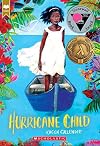
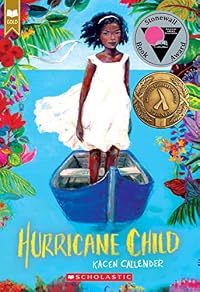
The cover is also beautiful though I wish the child were as blue-black dark as she is described in the text. As much as I love seeing POC prominently featured on book covers, this lightening of the skin is still a form of white-washing.
I loved how complex the characters and their situations were. I felt the jumbledness of the different issues and the complexity of everything happening reflected how confusing the time could be for a queer child growing up without a mother and without friends.
The cover is also beautiful though I wish the child were as blue-black dark as she is described in the text. As much as I love seeing POC prominently featured on book covers, this lightening of the skin is still a form of white-washing.
Members
- Recently Added By
Lists

LGBTQ Books for Preteens
86 works; 2 members

LGBTQ+ Speculative Fiction
819 works; 51 members

Banned or Challenged Books
400 works; 37 members

School library books removed after TX state legislator inquiry
429 works; 6 members

VPL Middle Grade Books
86 works; 1 member
Author Information

14 Works 4,263 Members
Some Editions
Awards and Honors
Awards
Distinctions
Notable Lists
Classifications
Statistics
- Members
- 522
- Popularity
- 57,084
- Reviews
- 25
- Rating
- (3.65)
- Languages
- English, Spanish
- Media
- Paper, Audiobook, Ebook
- ISBNs
- 18
- ASINs
- 2