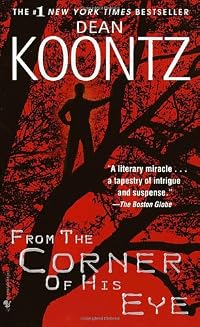
From the Corner of His Eye
by Dean Koontz
On This Page
Description
Fiction. Suspense. Thriller. HTML:Bartholomew Lampion is born in Bright Beach, California, on a day of tragedy and terror, when the lives of everyone in his family are changed forever. Remarkable events accompany his birth, and everyone agrees that his unusual eyes are the most beautiful they have ever seen.On this same day, a thousand miles away, a ruthless man learns he has a mortal enemy named Bartholomew. He doesn't know who Bartholomew is, but he embarks on a search that will show more become the purpose of his life. If ever he finds the right Bartholomew, he will deal mercilessly with him.
And in San Francisco a girl is born, the result of a violent rape. Her survival is miraculous, and her destiny is mysteriously linked to the fates of Barty and the man who stalks him.
At the age ot three, Barty Lampion is blinded when surgeons reluctantly remove his eyes to save him from a fast-spreading cancer. As the growing boy copes with his blindness and proves to be a prodigy, his mother, an exceptional woman, counsels him that all things happen for a reason, that there is meaning even in his suffering, and that he will affect the lives of people yet unknown to him in ways startling and profound.
At thirteen, Bartholomew regains his sight. How he regains it, why he regains it, and what happens as his amazing life unfolds results in a breathtaking journey of courage, heart-stopping suspense, and high adventure. His mother once told him that every person's life has an effect on every other's, in often unknowable ways, and Barty's eventful life indeed entwines with others in ways that will astonish and move everyone who reads his story.
People magazine has said that Dean Koontz has the "power to scare the daylights out of us." In this, perhaps the most thrilling, suspenseful, and emotionally powerful work of his critically acclaimed career, Koontz does that and far more. He has created a compulsive page-turner that will have you at the edge of your seat, a narrative tour-de-force that will change the way you yourself look at the world. show less
Tags
Recommendations


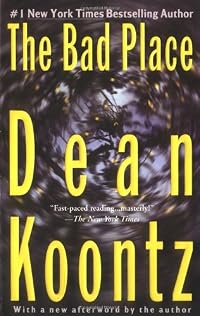
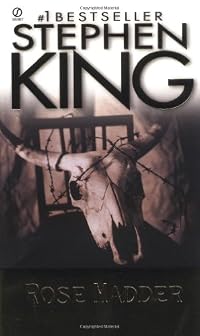
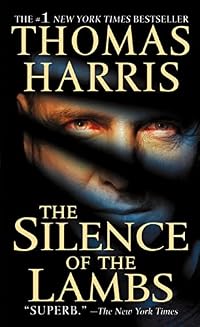






Member Recommendations
Member Reviews
I thought that this was one of the most unusual books that Dean Koontz has ever written and those who read and follow his works can attest that he has written some very unusual ones in the past. It's filled with evil, love, mysticism, and above all...hope. There are lots and lots of characters and it spans at least three generations. The two characters that really carry the story are Bartholomew and Angel...who were born on the same day...born surrounded by death...and an entire continent apart... but joined in a like mission. The character of Enoch is a man that carries something that demands a sacrifice occasionally causing the reader to be undecided if you should like him...feel pity for him...or just outright hate him. What you will show more know is that you can never, ever trust him. It's a long, long book but a story that you just have to see to the last page. show less
I picked this up because Dean Koontz is one of my favourite authors. He can be hit-or-miss, but when he's on, he's REALLY on and I eagerly devour his books.
This one started out a little slow and meandering for me. I wasn't quite sure about it for the first hundred pages or so, but then I found myself eagerly picking it up every chance I had. The thing about Koontz's style is that it is meandering. He lets his characters wander, and he delves into their psyches until it's almost uncomfortable to go that deep. But then just when you think it's too much, he throws in something completely unexpected and jolts you out of your reader complacency.
Koontz also writes extremely well-developed characters, and villains you love to hate. I found show more myself moved to tears a few times while I was reading, and I was outright sobbing during the last few pages. Overall, this is another Koontz winner for me, and I'm eager to read more from him! show less
This one started out a little slow and meandering for me. I wasn't quite sure about it for the first hundred pages or so, but then I found myself eagerly picking it up every chance I had. The thing about Koontz's style is that it is meandering. He lets his characters wander, and he delves into their psyches until it's almost uncomfortable to go that deep. But then just when you think it's too much, he throws in something completely unexpected and jolts you out of your reader complacency.
Koontz also writes extremely well-developed characters, and villains you love to hate. I found show more myself moved to tears a few times while I was reading, and I was outright sobbing during the last few pages. Overall, this is another Koontz winner for me, and I'm eager to read more from him! show less
I only discovered Dean Koontz in 2009 and I've been busily reading him ever since. I don't like every single one of his books (they are always superbly written, but sometimes I don't care for the setting or a main character or something else), but this book was an absolute delight to read and I did not want it to end. I checked it out from the library and now will buy it so I can read it again. What did I love about it? (1) It draws you in from the first paragraph. (2) The main characters are endearing; you'll cheer for them from the moments they arrive. (3) There is a profound spiritual slant to it that really makes you think about life as you think you know it. (4) The plot is complicated (but not confusing) with many strings that all show more come together at the end. However, the main reason I love this book is because I laughed all the way through it. Koontz seemed to have great fun with the characterization of the serial killer, a narcissistic megalomaniac who suffered physically every time he killed someone (but at the same time was pleased to know that he was such a sensitive guy that his killings would affect him so), was filled with self pity to the point of crying, when, for example, he killed someone he had cared for and would now have to live without, and who congratulated himself on his logical analyses and deductions, which were, in fact, quite deluded. Not often do I read a book where a character is as entertaining to read as this one was. It drew me to the treadmill and kept me on it for an hour every day--no small feat! show less
From the Corner of His Eye
by Dean Koontz
Bantam, 729 pages, paperback, 2001; reissue of a book
originally published in 2001
Dean Koontz is probably, right now, the most underestimated
writer at work in the field of fantastic literature. The reasons
are not hard to fathom. Unlike most authors, who go through the
learning process before they ever see print, Koontz had the
misfortune — although of course it must have seemed far from
that to him at the time — to find publishers for his early,
clumsy attempts, which, again unfortunately for his status within
the field, sold pretty well; one of them, Demon Seed
(1973), an sf novel of risible implausibility, was successfully
made into an even worse movie (1977). His movie novelization
The Funhouse (1980; show more initially published as by Owen West)
is another to be recalled with the wrong sort of shudder. Through
these and other books he gained a dubious reputation — and
good sales figures — as a sort of poor man's Stephen King, a
reputation that ignored the fact that he was slowly carving out
his own individual and quite distinctive niche: his novels, which
got steadily better, grew less like horror novels and less even
than like dark fantasies, instead becoming what might best be
described as dark technofantasies. Horrors there might be
aplenty, and they might seem to be rooted in the fantastic, but
almost always there was a sub-sciencefictional rationalization
somewhere. By the time of a book like Mr. Murder (1993)
— which is not far short of a fine novel — he had more
or less mastered his art. It can be read as a technofantasy
response to Stephen King's The Dark Half (1989): in both
books the central character is a writer being persecuted by a
doppelg„nger, but in Koontz's novel the doppelg„nger has been
manufactured rather than generated from the psyche.
Bestsellerdom greeted many of his novels of the later 1980s
and especially the 1990s, but by that time many readers of
fantastic literature had given up on him, having been more than
once bitten by his earlier efforts. This was a great shame.
And it would be a great shame were such readers to miss
From the Corner of His Eye, because, although not blemish-
free, this is a good novel by anybody's standards. Although not
as elegantly polished, it has the air of the novel that John
Irving, perhaps, might write were he ever to stray into Dean
Koontz territory.
Most of the book is set in the latter part of the 1960s.
Harrison White, a black preacher, writes a long and powerful
radio sermon based on the little-regarded disciple Saint
Bartholomew. This sermon provides important motivation for much
of the plot, as is slowly revealed. For example, a rehearsal of
it is playing in the background as psychopath Junior Cain is
brutally raping the younger of White's two virginal daughters,
Seraphim; she dies bearing the resultant child, a girl who,
christened Angel, is adopted by her elder sister Celestina.
Although Cain barely listens to the tape, the name Bartholomew
imprints itself upon his subconscious. Elsewhere, at about the
time of Angel's birth, the broadcast sermon much affects Joe
Lampion, whose wife Aggie is expecting their first-born; he dies
in a car smash while taking her to hospital for the birth, his
dying wish being that the baby, if a boy, be called Bartholomew.
Cain does not stop his psychopathic career at the rape of
Seraphim. Less than a year later he moves on to murder, the
victim being his fairly recent bride; he fakes her death as an
accidental fall from a rickety tower and is awarded millions in
an out-of-court settlement by the authorities whose task it
should have been to keep the tower in a proper state of repair.
Not all are entirely convinced by Cain's explanation, among them
his lawyer, Simon Magusson — seemingly seedy but in fact
with a moral core — and most particularly a maverick
homicide detective, Thomas Vanadium, who can make coins
(quarters) disappear in a seemingly sleight-of-hand trick that in
fact is real: he has accidentally learned the knack of flicking
the coins into parallel universes. (As an aside, this offers a
wry counter-explanation of the celebrated Randi-Geller dispute:
what if it's not Geller who's doing conjuring tricks but Randi
who's performing paranormal feats?) Vanadium hears Cain talking
in his sleep, and discovers that the murderer has a subliminal
fixation on the name Bartholomew — a fixation that he begins
to exploit after Cain has very nearly killed him. Cain, you see,
believes that he has killed Vanadium, rather than, in
actuality, putting him into a months-long coma; and it is because
of this false assumption that Cain's psychopathic career begins
to unravel; tormented by occasional, deliberately staged glimpses
of Vanadium's "ghost", by incongruously "materializing" quarters
and by snatches of a meaningful song "spectrally" broadcast into
his luxury apartment, he becomes obsessed with the notion that
the child born of his rape must have been a boy called
Bartholomew, the murder of which infant will bring him release
from all the "paranormal" persecution he is suffering.
As they grow through infancy, both Bartholomew — who
proves to be a child prodigy — and Angel discover they have
Vanadium's ability to interact with parallel universes, only much
more so; in Bartholomew's case this becomes even more pronounced
after, at the age of three, he must have his eyes surgically
removed to halt the spread of retinal cancer. To help him move
about without accident, he can let his mind briefly camp in
closely similar realities where he was never stricken by the
cancer and so still possesses his sight.
Cain is the star of the show. Koontz is obviously irritated
by the fallacy perpetuated in almost all serial-killer chillers
that serial killers are phenomenally intelligent — all
Hannibal Lecters. In real life this is total nonsense: serial
killers are almost always pretty dimwitted but their psychopathy
leads them to believe themselves to be more intelligent by
untold orders of magnitude than the "common herd"; this false
belief is what leads them to getting caught, usually through
repeated acts of thundering stupidity. Koontz, going against the
literary trend but more accurately reflecting reality, portrays
Junior Cain as an exceptionally stupid and gullible, if at the
same time cunning and certainly lucky, psychopath, and he does so
through often hilarious, laugh-out-loud satire. Cain has
pretensions to Culture, and is completely hoodwinked by the
stances of the bad modern-art cliques of the late 1960s: no
painting is acceptable to him unless it is utterly hideous,
preferably stomach-churningly so, and thus he squanders much of
his ill gotten gains on the dire but fashionable artworks
produced by idiot poseur Sklent. In his sexual life, Cain,
physically handsome but affectingly vile, is convinced of his
magnificence as a lover and that he is completely irresistible to
women; he is perplexed by the fact that so few of his ex-lovers
ever plead with him for a reconciliation and by the way so many
of the women lusting after him play the game of pretending to
resist, but chooses to dismiss these facts as just quirks of
happenstance. And throughout everything he is guided by the
ludicrous but bestselling self-help writings of the crackpot guru
Cyrus Zedd, which have titles like Act Now, Think Later
and which advise that one should live always in the future, never
in the present or the past. As example, Zedd's prescription for
the recovery of lost memories is to stand in a cold shower for as
long as it takes, tightly pressing a fistful of ice cubes to the
genitalia. Cain discovers that the technique does indeed
eventually help him recover a specific lost memory, and
thereafter, for some reason, he becomes generally much
better at not forgetting things. There are other books in
Cain's library — almost all purchased from the Book of the
Month Club, of which he is inordinately proud to be a member
— but somehow he has never quite had the time to read more
than a page or two of any of them, obviously believing that,
through their very possession, he has transformed himself into
Literary Man through some sort of osmotic process.
But Cain is not the only character in this long and much-
woven novel to leap out of the page and permanently imprint on
the mind. Celestina White is another delightful discovery. A
highly talented artist, she becomes successful creating paintings
of the type that Cain has learnt to detest and despise: only
morons could like paintings that uplift the heart and display
brilliant technique, after all. More to the point, having
initially, briefly hated the baby whose birth "killed her sister"
— the newborn who, while half the offspring of the loved
Seraphim must also be half the offspring of the deservedly
loathed (but unidentified) rapist — takes her in and
sacrifices much to be an ideal mother to her. It might sound as
if Celestina could read as a nauseatingly good goodie (and the
portrayal of Agnes Lampion does on occasion veer this way), but
in fact she emerges as a charming and extremely intelligent
woman, someone one wishes one had as a best friend. While it is
hard to control a grin of derision, if not outright laughter,
when Cain is at centre stage, in Celestina's case it is hard to
control a warm grin of affection.
As noted parenthetically, the depiction of the one-woman
charity movement Agnes Lampion is less successful, and, oddly,
the same can be said for the unkillable cop and retired priest
Thomas Vanadium, who really should be the tale's Immutable Force
of Good. Perhaps part of it is to do with the name. As will be
obvious, there's quite a lot of coding going on in terms of the
book's names: Cain, the black Whites, Simon Magusson, Angel,
Bartholomew, and so on, and this is by no means limited to the
central characters. But Vanadium — harder, of course, than
steel þ? It's a highly artificial surname, and the effect is a
bit hokey, damagingly so in that it colours our perceptions of
the rest of Vanadium's characterization, which would be just on
the verge of clich‚d caricature even without the name, which
pulls it (only slightly) too far in that direction. It's
possible, of course, that this was a deliberate gambit on
Koontz's part — to set a caricatured Force of Good against
his inspiredly caricatured Force of Evil — and certainly in
the rest of the novel Koontz displays a sufficiently attuned
intelligence that this may very well be the case, but in this
instance, at least for this reader, it is a minor irritation
rather than an effective literary stratagem.
Fantasy, technofantasy, science fiction, chiller thriller or
comedy of manners? From the Corner of His Eye is all of
these, to a greater or lesser extent. Although it has occasional
clumsinesses (almost inevitable in such a very long novel) —
the final, inevitable despatch of Junior by the kids is, for
example, hurriedly and rather flatly done — these are just
about irrelevant in the context of the whole, which is a splendid
achievement. Do not be deceived by the book's trumpeted
bestseller status, or by the bizarrely misleading blurb, or by
any memories you might have (no need for cold showers and ice
cubes here) of early experiences with Koontz's novels: give this
one a try.
This review, first published by Infinity Plus, is
excerpted from my ebook Warm Words and Otherwise: A Blizzard
of Book Reviews, to be published on September 19 by Infinity
Plus Ebooks. show less
Once in a while Dean Koontz comes up with an absolute stonker, one that doesn't sem like he knocked it up in a couple of days. This is such a book. Starting off with a fascinating conundrum, and a tragic accident, it goes on to introduce a host of intriguing characters, whose motivations and interconnections are tantalisingly ambiguous. The book is at once moving (Bart losing his sight had me blubbing) and humorous (the vomitus/ejecta exchange). There's a little thread of magic running the whole way through it, and it ties itself off nicely at the end.
Just a small criticism - I skipped most of the sections where Edom spouted facts, I'm not sure what they added to the story, except to demostrate that Koontz knows a lot of stuff, possibly.
Just a small criticism - I skipped most of the sections where Edom spouted facts, I'm not sure what they added to the story, except to demostrate that Koontz knows a lot of stuff, possibly.
From the Corner of His Eye
by Dean Koontz
This is my first Koontz. The suspense started off so well with murder, rape, personal tragedy, and surprising ties between different characters. We were able to see inside the mind of a sociopathic serial killer, reading his thoughts and seeing his paranoia increase along with his ego. There were some humorous asides as the killer thought all women were after him because they just couldn't help it. He was so handsome, so skilled, so et cetera, et cetera. He was so deluded. He would describe the reactions from women (who were in reality horrified by him) and he would twist those reactions to benefit himself, i.e. they were "pretending" to be coy, or they were just teases, or they really wanted him show more but they wanted him to take the decision away from them. It was supposed to be frightening, I think, but the way he described his assets and his skills made me laugh. As we were alongside him as he committed his horrific and unemotional kills, we were inside his mind to see why and how he was able to rationalize the need for these murders.
There was a weird sense of something supernatural thrown in that was confusing for most of the book, as the killer is haunted and stalked by his own prey--those who are already dead. It didn't really end up that way, however, although a strange element is left in the book in the form of quantum mechanics/physics, i.e. the possibility of our other selves living in parallel universes.
This ended up being a disappointing read for me. Although the premise was interesting, it was such a meandering read, that it became more of a chore to finish it. It had too many things going on, too many murders thrown in just to up the suspense but not really adding to the plot, multiple people who were considered prodigies who held unique skills (relating back to the quantum mechanics thing), and an unsatisfying ending. It was just too much all around. I think the book got away from the author. show less
by Dean Koontz
This is my first Koontz. The suspense started off so well with murder, rape, personal tragedy, and surprising ties between different characters. We were able to see inside the mind of a sociopathic serial killer, reading his thoughts and seeing his paranoia increase along with his ego. There were some humorous asides as the killer thought all women were after him because they just couldn't help it. He was so handsome, so skilled, so et cetera, et cetera. He was so deluded. He would describe the reactions from women (who were in reality horrified by him) and he would twist those reactions to benefit himself, i.e. they were "pretending" to be coy, or they were just teases, or they really wanted him show more but they wanted him to take the decision away from them. It was supposed to be frightening, I think, but the way he described his assets and his skills made me laugh. As we were alongside him as he committed his horrific and unemotional kills, we were inside his mind to see why and how he was able to rationalize the need for these murders.
There was a weird sense of something supernatural thrown in that was confusing for most of the book, as the killer is haunted and stalked by his own prey--those who are already dead. It didn't really end up that way, however, although a strange element is left in the book in the form of quantum mechanics/physics, i.e. the possibility of our other selves living in parallel universes.
This ended up being a disappointing read for me. Although the premise was interesting, it was such a meandering read, that it became more of a chore to finish it. It had too many things going on, too many murders thrown in just to up the suspense but not really adding to the plot, multiple people who were considered prodigies who held unique skills (relating back to the quantum mechanics thing), and an unsatisfying ending. It was just too much all around. I think the book got away from the author. show less
This suspenseful supernatural novel by Dean Koontz explores themes of hope, resilience, and the enduring struggle between good and evil. The story centers on Bartholomew Lampion, known as Barty, a boy whose life begins in the aftermath of a devastating car accident that claims his father's life. Agnes, his grieving mother and a beloved figure in Bright Beach, California—often referred to as "the pie lady"—discovers that Barty possesses remarkable abilities and a compassionate nature. With the support of her neighbors and two brothers, Agnes continues to raise Barty, nurturing his unique gifts and generous spirit.
In parallel with Barty's journey, the narrative introduces Enoch Cain, also known as Junior, a ruthless antagonist who show more murders his wife and embarks on a relentless pursuit of a boy he perceives as a threat. Driven by delusions of grandeur and cunning, Junior evades Detective Thomas Vanadium, a former priest who experiences supernatural phenomena and is determined to stop Junior's violent spree. The chase between Junior and Vanadium adds tension and urgency to the story, as Vanadium commits himself to justice and the protection of innocents.
In San Francisco, the lives of Celestina White and her niece Angel unfold. Celestina, an artist raising Angel alone after a tragic loss, finds their lives spiritually intertwined with those of Barty and Detective Vanadium. Angel, a bright and special child, becomes central to this connection, as loss and hope bring the characters together in unexpected ways.
Dean Koontz crafts a complex thriller that keeps readers engaged, blending elements of horror and the supernatural. The novel delves into quantum mechanics and the theory of parallel lives, allowing characters to "crossover" into alternate realities. This exploration adds depth to the narrative and enriches the suspenseful atmosphere. The story is a compelling and entertaining example of Koontz's skillful storytelling, offering one of his most memorable works. show less
In parallel with Barty's journey, the narrative introduces Enoch Cain, also known as Junior, a ruthless antagonist who show more murders his wife and embarks on a relentless pursuit of a boy he perceives as a threat. Driven by delusions of grandeur and cunning, Junior evades Detective Thomas Vanadium, a former priest who experiences supernatural phenomena and is determined to stop Junior's violent spree. The chase between Junior and Vanadium adds tension and urgency to the story, as Vanadium commits himself to justice and the protection of innocents.
In San Francisco, the lives of Celestina White and her niece Angel unfold. Celestina, an artist raising Angel alone after a tragic loss, finds their lives spiritually intertwined with those of Barty and Detective Vanadium. Angel, a bright and special child, becomes central to this connection, as loss and hope bring the characters together in unexpected ways.
Dean Koontz crafts a complex thriller that keeps readers engaged, blending elements of horror and the supernatural. The novel delves into quantum mechanics and the theory of parallel lives, allowing characters to "crossover" into alternate realities. This exploration adds depth to the narrative and enriches the suspenseful atmosphere. The story is a compelling and entertaining example of Koontz's skillful storytelling, offering one of his most memorable works. show less
Members
- Recently Added By
Lists

Books Read in 2014
2,342 works; 86 members

Blue Pyramid 1,276 Best Books of All Time
1,248 works; 32 members
Author Information

530+ Works 228,004 Members
Dean Koontz was born on July 9, 1945 in Everett, Pennsylvania. He received a degree in education from Shippensburg State College in 1967. A former high school English teacher as well as a teacher-counselor with the Appalachian Poverty Program, he began writing as a child to escape an ugly home life caused by his alcoholic father. A prolific writer show more at a young age, he had sold a dozen novels by the age of 25. Early in his career, he wrote under numerous pen names including David Axton, Brian Coffey, K. R. Dwyer, Leigh Nichols, Richard Paige, and Owen West. He is best known for the books written under his own name, many of which are bestsellers, including Midnight, Cold Fire, The Bad Place, Hideaway, The Husband, Odd Hours, 77 Shadow Street, Innocence, The City, Saint Odd, and The Silent Corner. (Bowker Author Biography) show less
Some Editions
Awards and Honors
Distinctions
Common Knowledge
- Canonical title
- From the Corner of His Eye
- Original title
- From the Corner of His Eye
- Original publication date
- 2000
- People/Characters
- Bartholomew Lampion; Junior Cain; Agnes Lampion; Joe Lampion; Maria Elena Gonzolez; Edom Issacson (show all 15); Jacob Issacson; Naomi Cain; Detective Thomas Vanadium; Seraphim Aethionema White; Celestina White; Grace White; Nella Lombardi; Dr Leland Daines; Dr Wally Lipscomb
- Epigraph*
- Het kleinste vriendelijke gebaar weergalmt over een enorme afstand en tijd, beroert levens die degenen die met hun geweldadige geest de bron van die goede echo waren, niet herkennen omdat vriendelijkheid doorgegeven wordt en ... (show all)elke keer dat ze doorgegeven wordt groeit, zodat een eenvoudig gebaar jaren later en ver weg een daad van onbaatzuchtige moed wordt. Hetzelfde geldt voor elke kleine laagheid, elke uitdrukking van haat, elke daad van slechtheid.
- Deze Gedenkwaardige Dag, H.R. White
Niemand begrijpt de kwantumtheorie.
- Richard Feynman - Dedication
- To Gerda. In the thousands of days in my life, the most momentous was--and always will be--the day we met.
As I wrote this book, the singular and beautiful music of the late Israel Kamakawiwo'ole was always playing. I hope that the reader finds pleasure in my story equal to the joy and consolation that I found in the voice, the s... (show all)pirit, and the heart of Israel Kamakawiwo'ole.
As I was finishing this book, Carol Bowers and her family spent a day here, under the auspices of the Dream Foundation. Carol, having read this book, you'll understand why your visit, coming when it did, reinforced what I be... (show all)lieve about the uncanny interconnectedness of things and about the profound and mysterious meaning in all our lives. - First words
- Bartholomew Lampion was blinded at the age of three, when surgeons reluctantly removed his eyes to save him from a fast-spreading cancer, but although eyeless, Barty regained his sight when he was thirteen.
- Last words
- (Click to show. Warning: May contain spoilers.)On one momentous day, that will change.
*Some information comes from Common Knowledge in other languages. Click "Edit" for more information.
Classifications
Statistics
- Members
- 4,090
- Popularity
- 3,765
- Reviews
- 60
- Rating
- (3.88)
- Languages
- 15 — Czech, Danish, Dutch, English, Finnish, French, German, Greek, Hungarian, Lithuanian, Polish, Portuguese, Spanish, Swedish, Turkish
- Media
- Paper, Audiobook, Ebook
- ISBNs
- 57
- ASINs
- 19