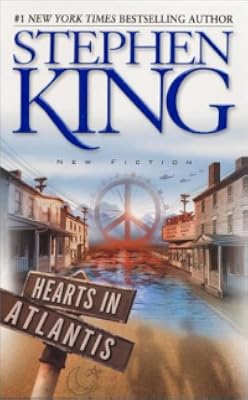
Hearts in Atlantis
by Stephen King
On This Page
Description
The classic collection of five deeply resonant and disturbing interconnected stories from #1 New York Times bestselling author Stephen King.Innocence, experience, truth, deceit, loss, and recovery are at the core of these five interconnected, sequential tales—each deeply rooted in the 1960s, and each scarred by the Vietnam War, which continues to cast its shadow over American lives, politics and culture.
In Part One, "Low Men in Yellow Coats," eleven-year-old Bobby Garfield discovers a show more world of predatory malice in his own neighborhood. He also discovers that adults are sometimes not rescuers but at the heart of the terror.
In the title story, a bunch of college kids get hooked on a card game, discover the possibility of protest, and confront their own collective heart of darkness, where laughter may be no more than the thinly disguised cry of the beast.
In "Blind Willie" and "Why We're in Vietnam," two men who grew up with Bobby in suburban Connecticut try to fill the emptiness of the post-Vietnam era in an America which sometimes seems as hollow—and as haunted—as their own lives.
And in "Heavenly Shades of Night Are Falling," this remarkable book's denouement, Bobby returns to his hometown where one final secret, the hope of redemption, and his heart's desire may await him.
Full of danger and suspense, full of heart, this spellbinding fiction will take some readers to a place they have never been...and others to a place they have never been able to completely forget. Nearly twenty years after its first publication, Hearts in Atlantis is powerful and astonishingly current.
"You will see Stephen King in a new light. Read this moving, heartfelt tragedy and weep—weep for our lost conscience." —BookPage. show less
Tags
Recommendations







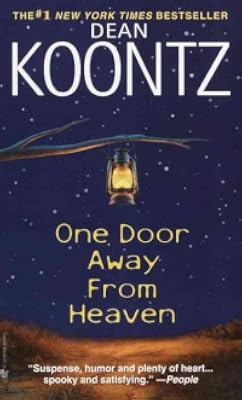


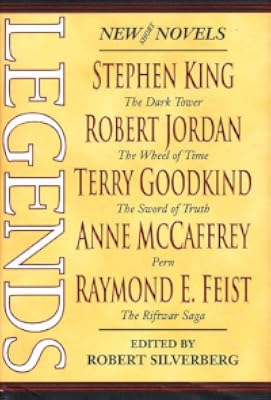

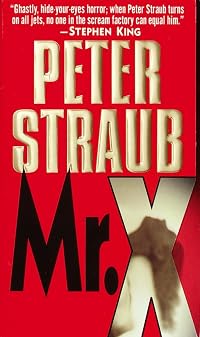
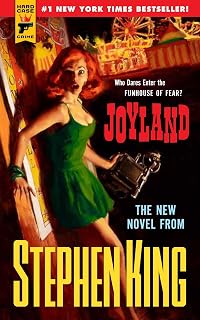

Member Recommendations
sturlington There are thematic connections between the title story of Hearts in Atlantis and The Dark Tower series.
Member Reviews
Riletto dopo tanti anni, sull'onda dell'aver rivisto il film omonimo con Antony Hopkins, ho aumentato il giudizio da 4 a 5 stelle, e deciso che questo è uno dei migliori libri di Stephen King, nonostante non abbia avuto il successo di altri titoli assai più sanguinolenti.
A tutti gli effetti è uno straordinario libro di formazione che, invece di limitarsi al momento del passaggio, esplora la vita dei suoi protagonisti dall'infanzia all'età adulta, con in mezzo niente popò di meno che il Vietnam.
Forse la mancanza di vero successo di questo libro risiede proprio nella sua dolente profondità, nella normalità delle reazioni, e della follia, di molti dei suoi protagonisti, nella certezza che ciascuno di loro alla fine tradirà, show more esattamente come avviene nella vita reale.
Splendido.
Read again after so many years, in the wake of having seen again the eponymous film with Anthony Hopkins, I increased the judgment from 4 to 5 stars, and decided that this is one of the best Stephen King books, despite not having had the success of others far more gory titles.
For all practical purposes is a unique bildungroman, that, instead of just the age of passage, explores the lives of its characters from childhood to adulthood, with in the half, unbelievably, Vietnam.
Perhaps the lack of success of this book lies in its sore depth, in the normal reactions, and madness, of many of its protagonists, in the certainty that each of them at the end will betray, just like we does in real life.
Beautiful. show less
A tutti gli effetti è uno straordinario libro di formazione che, invece di limitarsi al momento del passaggio, esplora la vita dei suoi protagonisti dall'infanzia all'età adulta, con in mezzo niente popò di meno che il Vietnam.
Forse la mancanza di vero successo di questo libro risiede proprio nella sua dolente profondità, nella normalità delle reazioni, e della follia, di molti dei suoi protagonisti, nella certezza che ciascuno di loro alla fine tradirà, show more esattamente come avviene nella vita reale.
Splendido.
Read again after so many years, in the wake of having seen again the eponymous film with Anthony Hopkins, I increased the judgment from 4 to 5 stars, and decided that this is one of the best Stephen King books, despite not having had the success of others far more gory titles.
For all practical purposes is a unique bildungroman, that, instead of just the age of passage, explores the lives of its characters from childhood to adulthood, with in the half, unbelievably, Vietnam.
Perhaps the lack of success of this book lies in its sore depth, in the normal reactions, and madness, of many of its protagonists, in the certainty that each of them at the end will betray, just like we does in real life.
Beautiful. show less
I didn't expect to throw five stars at this one.
I remembered bits and pieces of this collection from my one and only read 25 years ago, however I do also remember truly enjoying the first story, and not being all that impressed with the ones that follow.
I was also 25 years younger, and now, some themes hit very differently.
I think the thing that bugged me the first time around was, I was expecting horror. The Low Men story delivered some, but then King seemingly eschews horror for the rest of the book...or does he?
King knows that horror can take many faces, and with this book, it's the horror of war—and the mentality of opposing war "at all costs" and what it can do to rational people—and he takes his time to examine it from many show more different angles.
And while all but one of the stories utterly captivated me, and a couple left me in tears, overall, this is King firing on all cylinders.
Just a gorgeous, terrible book. show less
I remembered bits and pieces of this collection from my one and only read 25 years ago, however I do also remember truly enjoying the first story, and not being all that impressed with the ones that follow.
I was also 25 years younger, and now, some themes hit very differently.
I think the thing that bugged me the first time around was, I was expecting horror. The Low Men story delivered some, but then King seemingly eschews horror for the rest of the book...or does he?
King knows that horror can take many faces, and with this book, it's the horror of war—and the mentality of opposing war "at all costs" and what it can do to rational people—and he takes his time to examine it from many show more different angles.
And while all but one of the stories utterly captivated me, and a couple left me in tears, overall, this is King firing on all cylinders.
Just a gorgeous, terrible book. show less
Stephen King has been waging a war with his image for the last eighteen years. Ever since the release of his collection of novellas, "Different Seasons," King has been trying to persuade his public of adoring horror fans that he's not just a master of things that go bump in the night, he's also a--are you ready for this?--Legitimate Writer. By "legitimate," I mean serious; by "serious," I mean books without vampires, ghosts or zombies.
While he still churns out stories that delight us with the nastier things in life, every now and then King also publishes a book ("Different Seasons," "Dolores Claiborne," and "Bag of Bones") that proclaims, "Hey, put me up on the bookshelf next to Faulkner, Hemingway and Fitzgerald." Okay, maybe that's show more stretching it a bit, but I swear that sometimes I can see an Oprah Book Club gleam in King's eye.
Now, with "Hearts in Atlantis," he marches onto the literary battlefield holding high his "I'm a Serious Writer" banner. The result is a strange mix that sometimes hits, but mostly misses.
Labeled on the cover as "New Fiction," the book is comprised of a short novel, a novella and three short stories that center around the Vietnam War and its lasting imprint on American society.
The first piece, "Low Men in Yellow Coats," is the closest thing to horror you'll find between these covers. Set in 1960, it tells the story of eleven-year-old Bobby Garfield and his best friends Carol and Sully-John as they spend their idyllic youth in Harwich, Connecticut. One day, a mysterious lodger moves into the apartment upstairs from Bobby and his widowed mother. The new boarder warns Bobby to watch out for sinister men prowling the neighborhood in their fancy pimp-mobiles (the "low men" referred to in the title). Without giving away any of the story's surprises, let's just say that if you've read the Dark Tower series or "The Regulators," those Low Men will be awfully familiar.
The title story takes place in 1966 at the University of Maine where a group of students are obsessed with playing the card game Hearts. Outside their dormitory windows, of course, the Vietnam War protests are gathering steam. Things come to a head as some of the characters start to experience their own turmoil over loyalty versus betrayal. While it paints a fairly accurate picture of campus protests, this is probably the worst story of the whole lot. The characters are well-conceived, but there's not enough of a plot to carry them through to a satisfying conclusion.
"Blind Willie" and "Why We're in Vietnam" describe the lives of Vietnam veterans as they try to cope with the horrors they shared in combat. With the exception of "Low Men," the entire book centers around Vietnam, but never uses it as the direct setting. Instead, we get flashbacks in "Blind Willie" and "Why We're in Vietnam" to a My Lai incident which comes at us like a jump-cut movie, projecting lurid images in lightning flashes on our imaginations. You want monsters? King asks, I'll show you some real monsters--the kind that look just like you and me and occasionally go berserk. These two stories are the most unsettling and, consequently, the most powerful in the 522-page collection. Unfortunately, they're all too short. I found myself wanting to know more about these two characters.
The final short story, "Heavenly Shades of Night Are Falling," is a grace note to the rest of "Hearts," tying the interconnected characters and stories of the previous pages into a final, sweet epiphany as Bobby returns to Harwich to confront the ghosts of his past.
"Hearts in Atlantis" got better as it went along, each story building on the others and finally bringing the reader full circle to Bobby's story from "Low Men." Nonetheless, I was vaguely unsatisfied by this effort from Stephen King. He seemed to be trying too hard to shake the horror mantle. Certainly, he's got a way with words and these characters are some of the best developed in any of his books; but I think he overreached himself here. The plot is just not very engaging--it's like a symphony that builds and builds, then ends with a little tweet from a piccolo. I kept asking myself, if anyone else's name but Stephen King's was on the cover of this book, would it have rated very high on my scale of interest? Unfortunately, no. show less
While he still churns out stories that delight us with the nastier things in life, every now and then King also publishes a book ("Different Seasons," "Dolores Claiborne," and "Bag of Bones") that proclaims, "Hey, put me up on the bookshelf next to Faulkner, Hemingway and Fitzgerald." Okay, maybe that's show more stretching it a bit, but I swear that sometimes I can see an Oprah Book Club gleam in King's eye.
Now, with "Hearts in Atlantis," he marches onto the literary battlefield holding high his "I'm a Serious Writer" banner. The result is a strange mix that sometimes hits, but mostly misses.
Labeled on the cover as "New Fiction," the book is comprised of a short novel, a novella and three short stories that center around the Vietnam War and its lasting imprint on American society.
The first piece, "Low Men in Yellow Coats," is the closest thing to horror you'll find between these covers. Set in 1960, it tells the story of eleven-year-old Bobby Garfield and his best friends Carol and Sully-John as they spend their idyllic youth in Harwich, Connecticut. One day, a mysterious lodger moves into the apartment upstairs from Bobby and his widowed mother. The new boarder warns Bobby to watch out for sinister men prowling the neighborhood in their fancy pimp-mobiles (the "low men" referred to in the title). Without giving away any of the story's surprises, let's just say that if you've read the Dark Tower series or "The Regulators," those Low Men will be awfully familiar.
The title story takes place in 1966 at the University of Maine where a group of students are obsessed with playing the card game Hearts. Outside their dormitory windows, of course, the Vietnam War protests are gathering steam. Things come to a head as some of the characters start to experience their own turmoil over loyalty versus betrayal. While it paints a fairly accurate picture of campus protests, this is probably the worst story of the whole lot. The characters are well-conceived, but there's not enough of a plot to carry them through to a satisfying conclusion.
"Blind Willie" and "Why We're in Vietnam" describe the lives of Vietnam veterans as they try to cope with the horrors they shared in combat. With the exception of "Low Men," the entire book centers around Vietnam, but never uses it as the direct setting. Instead, we get flashbacks in "Blind Willie" and "Why We're in Vietnam" to a My Lai incident which comes at us like a jump-cut movie, projecting lurid images in lightning flashes on our imaginations. You want monsters? King asks, I'll show you some real monsters--the kind that look just like you and me and occasionally go berserk. These two stories are the most unsettling and, consequently, the most powerful in the 522-page collection. Unfortunately, they're all too short. I found myself wanting to know more about these two characters.
The final short story, "Heavenly Shades of Night Are Falling," is a grace note to the rest of "Hearts," tying the interconnected characters and stories of the previous pages into a final, sweet epiphany as Bobby returns to Harwich to confront the ghosts of his past.
"Hearts in Atlantis" got better as it went along, each story building on the others and finally bringing the reader full circle to Bobby's story from "Low Men." Nonetheless, I was vaguely unsatisfied by this effort from Stephen King. He seemed to be trying too hard to shake the horror mantle. Certainly, he's got a way with words and these characters are some of the best developed in any of his books; but I think he overreached himself here. The plot is just not very engaging--it's like a symphony that builds and builds, then ends with a little tweet from a piccolo. I kept asking myself, if anyone else's name but Stephen King's was on the cover of this book, would it have rated very high on my scale of interest? Unfortunately, no. show less
As both a film buff and avid reader, I tend to read books that have been adapted to film since many screenplays often leave out or create characters, or change plots. The Anthony Hopkins film with the same title, was yet another stellar performance by the iconic artist and surprisingly, the book wasn't at all what I expected; far from it in fact. While well written, its broken into 4 interconnected stories, none of which touch on the 'low men in yellow coats' we learn about in the first story. The film is focused purely on the first story with no reference to any of the others. The other 3 sections are focused on how the card game of Hearts plays a role, as well as memories of the Vietnam war using characters from the first section. show more Personally I would have preferred a continuation of the first story, the mystery of the low men and more about Ted's back story. Regardless its not a favorite SK book, but I'm glad I read it just the same. show less
Hearts in Atlantis has just taken its place as my favorite Stephen King novel. At first I was prepared to find this one mediocre, only liking the stories that directly related to my Dark Tower reading project. Instead I found this an incredible, melancholy lament for the children of the 60s, of the lost innocence that happened to this generation over the course of the thirty-nine years the book covers.
Not a full novel, but a collection of seemingly disparate novellas and short stories that actually all connect to one another through a series of characters. To me, the most fascinating feature of this connection is that it's not through any leading character that somehow connects all the others in some way only to tie it all together in show more the end. No, the one connecting factor in all of the stories making up Hearts in Atlantis is Carol Gerber.
Starting as a secondary character in "Low Men in Yellow Coats" (the primary Dark Tower story here), Carol flits through the lives of the main characters in some way, is either intentionally or unintentionally responsible for helping to drive their stories along. From her friendship and love of Bobby Garfield in "Low Men," we follow her to college where she falls for Pete Riley, narrator and Hearts addict of "Hearts in Atlantis." As Vietnam heats up, Carol becomes an anti-war protester and her life becomes fodder for the news, managing to unintentionally affect her former tormentor Willie Shearman as he does his penance in "Blind Willie" and childhood friend turned high school boyfriend John "Sully-John" Sullivan in "Why We're in Vietnam." The rest of Carol's strange and fascinating life as "Red Carol" remains as speculation when she reunites with Bobby in the final tale, "Heavenly Shades of Night are Falling." The Platters' "Twilight Time" is also a recurring theme in these stories.
Hearts in Atlantis is a brilliant example of a writer's use of sonder, the realization that each random passerby has their own rich and unique story. This is something I have always tried to incorporate into my own writing, using a minor character in one story as the lead in another; and this is what King does brilliantly here. Seeing other people from Carol Gerber's childhood interacting with those she knew in college, often without knowing of any actual connection to the girl herself, is one of my favorite parts of this book.
So, yes, this is one that I highly recommend if you're looking for a good cry over the lost potential of people and the loss of innocence from childhood to adulthood. show less
Not a full novel, but a collection of seemingly disparate novellas and short stories that actually all connect to one another through a series of characters. To me, the most fascinating feature of this connection is that it's not through any leading character that somehow connects all the others in some way only to tie it all together in show more the end. No, the one connecting factor in all of the stories making up Hearts in Atlantis is Carol Gerber.
Starting as a secondary character in "Low Men in Yellow Coats" (the primary Dark Tower story here), Carol flits through the lives of the main characters in some way, is either intentionally or unintentionally responsible for helping to drive their stories along. From her friendship and love of Bobby Garfield in "Low Men," we follow her to college where she falls for Pete Riley, narrator and Hearts addict of "Hearts in Atlantis." As Vietnam heats up, Carol becomes an anti-war protester and her life becomes fodder for the news, managing to unintentionally affect her former tormentor Willie Shearman as he does his penance in "Blind Willie" and childhood friend turned high school boyfriend John "Sully-John" Sullivan in "Why We're in Vietnam." The rest of Carol's strange and fascinating life as "Red Carol" remains as speculation when she reunites with Bobby in the final tale, "Heavenly Shades of Night are Falling." The Platters' "Twilight Time" is also a recurring theme in these stories.
Hearts in Atlantis is a brilliant example of a writer's use of sonder, the realization that each random passerby has their own rich and unique story. This is something I have always tried to incorporate into my own writing, using a minor character in one story as the lead in another; and this is what King does brilliantly here. Seeing other people from Carol Gerber's childhood interacting with those she knew in college, often without knowing of any actual connection to the girl herself, is one of my favorite parts of this book.
So, yes, this is one that I highly recommend if you're looking for a good cry over the lost potential of people and the loss of innocence from childhood to adulthood. show less
Cinque stelle come la prima volta che lo lessi, ma solo perché non è possibile darne di più. Tra le cose migliori che King abbia scritto, un romanzo (seppur sia in realtà una raccolta di racconti connessi tra loro) malinconico ma di una bellezza rara. Così come Stagioni Diverse, è assolutamente da consigliare a chiunque pensi che lo scrittore del Maine sappia scrivere solo horror.
This is one of my favorite Stephen King novels. It is a little heavy on the language in some parts but that is my only complaint. It is a beautiful story that ranges from the 1960's to today and you can almost feel King's sentiment for what could have happened in the 1960's. This book is less horror and more heartbreak and coming of age than anything else.
Members
- Recently Added By
Published Reviews
ThingScore 75
In ''Hearts in Atlantis,'' it's as though King has written two lengthy prologues and two brief epilogues but left out the novel proper. Or perhaps he hasn't. The book's juxtapositions set me wondering: maybe Vietnam is the archetype not only of the otherworldly horror Bobby chooses to avoid in ''Low Men in Yellow Coats'' but of all King's supernatural horror.
added by Shortride
Lists

Read the book and saw the movie
1,170 works; 193 members

Best Horror Books
281 works; 85 members
Top 5 Books by Stephen King
27 works; 18 members

Best Historical Fiction
620 works; 261 members
Stephen King Bibliography
77 works; 3 members

One Book, Many Authors
441 works; 40 members

Books tagged unread
41 works; 1 member

Stephen King books
81 works; 1 member

Sinister AudioTales
65 works; 1 member

Eerie eTales
192 works; 3 members

Books I Own But Haven't Read
144 works; 2 members

Books With Body Parts in the Title
153 works; 9 members

Alphabetical Books
211 works; 3 members

Unread books
1,063 works; 87 members

Books Bought & Received as Gifts in 2014
81 works; 1 member

Dark Tower Books
47 works; 2 members

Favorite Coming of Age Novels.
164 works; 51 members

Books Read in 2026
1,994 works; 67 members
Talk Discussions
Past Discussions
August 2012's SK Flavor of the Month - Hearts in Atlantis in King's Dear Constant Readers (May 2013)
Author Information

Stephen King was born in Portland, Maine, on September 21, 1947. After graduating with a Bachelor's degree in English from the University of Maine at Orono in 1970, he became a teacher. His spare time was spent writing short stories and novels. King's first novel would never have been published if not for his wife. She removed the first few show more chapters from the garbage after King had thrown them away in frustration. Three months later, he received a $2,500 advance from Doubleday Publishing for the book that went on to sell a modest 13,000 hardcover copies. That book, Carrie, was about a girl with telekinetic powers who is tormented by bullies at school. She uses her power, in turn, to torment and eventually destroy her mean-spirited classmates. When United Artists released the film version in 1976, it was a critical and commercial success. The paperback version of the book, released after the movie, went on to sell more than two-and-a-half million copies. Many of King's other horror novels have been adapted into movies, including The Shining, Firestarter, Pet Semetary, Cujo, Misery, The Stand, and The Tommyknockers. Under the pseudonym Richard Bachman, King has written the books The Running Man, The Regulators, Thinner, The Long Walk, Roadwork, Rage, and It. He is number 2 on the Hollywood Reporter's '25 Most Powerful Authors' 2016 list. King is one of the world's most successful writers, with more than 100 million copies of his works in print. Many of his books have been translated into foreign languages, and he writes new books at a rate of about one per year. In 2003, he received the National Book Foundation Medal for Distinguished Contribution to American Letters. In 2012 his title, The Wind Through the Keyhole made The New York Times Best Seller List. King's title's Mr. Mercedes and Revival made The New York Times Best Seller List in 2014. He won the Edgar Allan Poe Award in 2015 for Best Novel with Mr. Mercedes. King's title Finders Keepers made the New York Times bestseller list in 2015. Sleeping Beauties is his latest 2017 New York Times bestseller. (Bowker Author Biography) Stephen King is the author of more than thirty books, all of them worldwide bestsellers. Among his most recent are "Hearts in Atlantis", "The Girl Who Loved Tom Gordon", "Bag of Bones", & "The Green Mile". "On Writing" is his first book of nonfiction since "Danse Macabre", published in 1981. He served as a judge for Prize Stories: The Best of 1999, The O. Henry Awards. He lives in Bangor, Maine with his wife, novelist Tabitha King. King's book, The Bazaar of Bad Dreams: Stories, made the 2015 New York Times bestseller list. (Publisher Provided) show less
All Editions
Awards and Honors
Awards
Distinctions
Series
Belongs to Publisher Series
Work Relationships
Common Knowledge
- Canonical title
- Hearts in Atlantis
- Original title
- Hearts in Atlantis
- Alternate titles
- Hearts in Atlantis
- Original publication date
- 1999-04-06
- People/Characters
- Bobby Garfield; Liz Garlfield; John 'Sully' Sullivan; Carol Gerber; Ted Brautigan; Crimson King (show all 12); Richie O'Meara; Willie Shearman; Peter Riley; Can-toi; Randall Flagg; Raymond Fiegler
- Important places
- University of Maine, Orono, Maine, USA; Harwich, Connecticut, USA; New York, New York, USA; Vietnam; Atlantis (fictional place)
- Important events
- Vietnam War (1961 | 1975); My Lai Massacre (1968-03-16)
- Related movies
- Hearts in Atlantis (2001 | IMDb)
- Epigraph
- Number 6: What do you want?
Number 2: Information.
Number 6: Whose side are you on?
Number 2: That would be telling We want information.
Number 6: You won't get it!
Number 2: By hook or... (show all) by crook...we will.
—The Prisoner
Simon stayed where he was, a small brown image, concealed by the leaves. Even if he shut his eyes the sow's head still remained like an after-image. The half-shut eyes were dim with the infinite cynicism of adult life. They a... (show all)ssured Simon that everything was a bad business. — William Golding, Lord of the Flies
"We blew it." — Easy Rider - Dedication
- This is for Joseph and Leanora and Ethan: I told you all that to tell you this.
- First words
- Bobby Garfield's father had been one of those fellows who start losing their hair in their twenties and are completely bald by the age of forty-five or so.
- Quotations
- There are also books full of great writing that don’t have very good stories. Read sometimes for the story, Bobby. Don’t be like the book snobs that won’t do that. Read sometimes for the words--the language. Don’t... (show all) be like the play-it-safers that won’t do that. But when you find a book that has both a good story and good words, treasure that book.
- Last words
- (Click to show. Warning: May contain spoilers.)They sat that way without speaking, and from the radio at their feet, The Platters began to sing.
- Blurbers
- De Haven, Tom; Olson, Ray
- Original language
- English
- Canonical DDC/MDS
- 813.54
- Canonical LCC
- PS3561.I483
Classifications
Statistics
- Members
- 9,857
- Popularity
- 1,025
- Reviews
- 121
- Rating
- (3.68)
- Languages
- 20 — Chinese, Czech, Danish, Dutch, English, Finnish, French, German, Greek, Hungarian, Italian, Norwegian (Bokmål), Polish, Portuguese, Russian, Croatian, Spanish, Swedish, Turkish, Ukrainian
- Media
- Paper, Audiobook, Ebook
- ISBNs
- 100
- UPCs
- 4
- ASINs
- 34