On This Page
Description
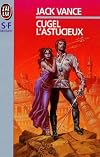
Jack Vance is one of the most remarkable talents to ever grace the world of science fiction. His unique, stylish voice has been beloved by generations of readers. One of his enduring classics is his Mazirian the Magician (previously titled The Dying Earth), and its sequels--a fascinating, baroque tale set on a far-future Earth, under a giant red sun that is soon to go out forever. Cugel the Clever is a novel-length adventure of Cugel the trickster, the thief, the very questionable hero in show more this decadent, dying world. Caught by the magician whose house he was robbing, Cugel is set the task of retrieving certain rare objects as penance. At the Publisher's request, this title is being sold without Digital Rights Management Software (DRM) applied. show lessTags
Recommendations























Member Reviews
Cugel the Clever stumbles from one adventure to another in a dismal world, ancient beyond memory, in Jack Vance’s The Eyes of the Overworld. Written in 1966, Cugel’s world spanning tale of thwarted ambition and stillborn revenge is darkly epic.
Reading through my omnibus edition of Tales of the Dying Earth, I find the contrast between the 1950 The Dying Earth and the 1966 The Eyes of the Overworld remarkable. The world is the same, but the style of the story is very different. Unlike the loosely connected short stories of the first book which featured a variety of different characters, this whole volume centers upon Cugel the Clever.
This focus upon Cugel isn’t the only difference. I complained in my review that the characters of show more The Dying Earth were unfairly maligned as rapacious. For Cugel, on the other hand, that criticism would be apt. Cugel’s vanity and ambition far outstrip his competence, although not perhaps his luck. He is the classic anti-hero, a liar, a cheat, and a thief whose only redeeming quality is that he discomfits those worse than himself.
Since this is only the second book by Vance I’ve read, I don’t know his motive for trying something different. Perhaps the times had changed, or perhaps Vance had. In any case, the feel of the story is quite different. There was something magical [not Vancian] about The Dying Earth that is missing here. However, I did enjoy Cugel’s adventures, and I can see why Gygax listed The Eyes of the Overworld first in Appendix N, as it contains much more of the magical mechanics that eventually found their way into Dungeons and Dragons.
There is a grandness to the sweep of Cugel’s journey, despite his personal lacks. Since many of the chapters of The Eyes of the Overworld were originally published in magazines, each chapter is relatively self-contained. Thus, Vance has to establish each setting quickly, leading to a plethora of interesting locales. My favorite is the ever-watchful village of Vull, in the “Mountains of Magnatz”.
The anti-hero style of the book does have one thing going for it. What Cugel does to Vull is more satisfying than the ending of Le Guin’s thinkpiece, Those Who Walk Away from Omelas. Vance wasn’t trying to make it high art, which is almost always a mistake. The combination of an episodic structure with the fundamental premise, Cugel’s cupidity gets him into trouble and his luck gets him out again, does not allow Vance to get too clever, which is a good thing.
So despite a big change in style, I did like the second entry in The Tales of Dying Earth, and I’m looking forward to Cugel’s Saga next. Jack Vance made the anti-hero thing work, at least this time. show less
Reading through my omnibus edition of Tales of the Dying Earth, I find the contrast between the 1950 The Dying Earth and the 1966 The Eyes of the Overworld remarkable. The world is the same, but the style of the story is very different. Unlike the loosely connected short stories of the first book which featured a variety of different characters, this whole volume centers upon Cugel the Clever.
This focus upon Cugel isn’t the only difference. I complained in my review that the characters of show more The Dying Earth were unfairly maligned as rapacious. For Cugel, on the other hand, that criticism would be apt. Cugel’s vanity and ambition far outstrip his competence, although not perhaps his luck. He is the classic anti-hero, a liar, a cheat, and a thief whose only redeeming quality is that he discomfits those worse than himself.
Since this is only the second book by Vance I’ve read, I don’t know his motive for trying something different. Perhaps the times had changed, or perhaps Vance had. In any case, the feel of the story is quite different. There was something magical [not Vancian] about The Dying Earth that is missing here. However, I did enjoy Cugel’s adventures, and I can see why Gygax listed The Eyes of the Overworld first in Appendix N, as it contains much more of the magical mechanics that eventually found their way into Dungeons and Dragons.
There is a grandness to the sweep of Cugel’s journey, despite his personal lacks. Since many of the chapters of The Eyes of the Overworld were originally published in magazines, each chapter is relatively self-contained. Thus, Vance has to establish each setting quickly, leading to a plethora of interesting locales. My favorite is the ever-watchful village of Vull, in the “Mountains of Magnatz”.
The anti-hero style of the book does have one thing going for it. What Cugel does to Vull is more satisfying than the ending of Le Guin’s thinkpiece, Those Who Walk Away from Omelas. Vance wasn’t trying to make it high art, which is almost always a mistake. The combination of an episodic structure with the fundamental premise, Cugel’s cupidity gets him into trouble and his luck gets him out again, does not allow Vance to get too clever, which is a good thing.
So despite a big change in style, I did like the second entry in The Tales of Dying Earth, and I’m looking forward to Cugel’s Saga next. Jack Vance made the anti-hero thing work, at least this time. show less
Oddly enough, I think I enjoyed this second book of Vance's Dying Earth much better than the first. It's not only smoother but it also tickles most of my funny bones.
Cugel is one hell of a damned rogue! Very flexible of morals, quick of wit, and easily a loveable/hateable anti-hero. In most respects, I felt like I was reading a high-fantasy version of Gulliver's Travels, always skirting the edge of high satire and always roving knee-deep in extremely lucky circumstance, tragic reversals, and yet more inexplicable adventure.
The man is charmed and cursed in a very enjoyable fashion.
Best of all, Vance never dumbs down his text. I was very amused to find some awesome language and a highbrow vocabulary inserted so deftly. I'm not used to ANY show more modern fantasy being allowed a free hand with words.
Fortunately, this came out in 1966 by a firmly established master of the craft with little interest in catering to the lowest common denominator. :) Go, Vance! :) show less
Cugel is one hell of a damned rogue! Very flexible of morals, quick of wit, and easily a loveable/hateable anti-hero. In most respects, I felt like I was reading a high-fantasy version of Gulliver's Travels, always skirting the edge of high satire and always roving knee-deep in extremely lucky circumstance, tragic reversals, and yet more inexplicable adventure.
The man is charmed and cursed in a very enjoyable fashion.
Best of all, Vance never dumbs down his text. I was very amused to find some awesome language and a highbrow vocabulary inserted so deftly. I'm not used to ANY show more modern fantasy being allowed a free hand with words.
Fortunately, this came out in 1966 by a firmly established master of the craft with little interest in catering to the lowest common denominator. :) Go, Vance! :) show less
ORIGINALLY POSTED AT Fantasy Literature.
I’ve already said, numerous times, how much I love Jack Vance, so I’ll skip all that this time. You can read other reviews on this page if you missed that.
The Eyes of the Overworld is the second part of Tales of the Dying Earth and the main character is one of my favorite Vance characters: the self-titled Cugel the Clever. Cugel is not the kind of guy you want to have dealings with — he’s clever, sneaky, completely selfish and remorseless. He is always trying to figure out how he can take advantage of other people in order to make his own circumstances better.
In The Eyes of the Overworld, Cugel decides to burglarize the house of Iucounu the Laughing Magician so he can sell some of show more Iucounu’s thaumaturgical artifacts. But the magician catches Cugel and punishes him by setting him on a quest to procure a lens which allows the wearer to view the overworld.
Cugel is clever, but as clever as he is, he often finds himself facing a foe who, at least temporarily, manages to outwit him (which invariably surprises Cugel). This time his quest leads him on a series of misadventures in which he: gets captured by rat people… is forced to be the watchman of a village… steals more than one person’s inheritance… deals with demons… trades a woman for information… impersonates a god… and travels a million years into the past. Wherever he goes, Cugel, sometimes purposely and sometimes unwittingly, leaves sorrow and destruction in his wake. He deprives people of their hope, their faith and, often, their lives.
This doesn’t sound like it should be very entertaining, but oh, it is! That’s because the story is written in Jack Vance’s singular style: high language, bizarre occurrences, and Vance’s characteristic humor. I hate to say it again, but the best comparison I can make is to Monty Python. If you’re a fan of that type of strange dark humor, then this should be your thing.
I listened to The Eyes of the Overworld in audio format. I can’t express how excited I was to learn that Brilliance Audio was producing these, and I’m pleased to report that they did an excellent job. Arthur Morey once again brought out all of the nuances of Vance’s humor and he made a perfect Cugel. In fact, The Eyes of the Overworld was even better than The Dying Earth, probably because it follows the same main character rather than being divided up into separate short stories. I loved it. show less
I’ve already said, numerous times, how much I love Jack Vance, so I’ll skip all that this time. You can read other reviews on this page if you missed that.
The Eyes of the Overworld is the second part of Tales of the Dying Earth and the main character is one of my favorite Vance characters: the self-titled Cugel the Clever. Cugel is not the kind of guy you want to have dealings with — he’s clever, sneaky, completely selfish and remorseless. He is always trying to figure out how he can take advantage of other people in order to make his own circumstances better.
In The Eyes of the Overworld, Cugel decides to burglarize the house of Iucounu the Laughing Magician so he can sell some of show more Iucounu’s thaumaturgical artifacts. But the magician catches Cugel and punishes him by setting him on a quest to procure a lens which allows the wearer to view the overworld.
Cugel is clever, but as clever as he is, he often finds himself facing a foe who, at least temporarily, manages to outwit him (which invariably surprises Cugel). This time his quest leads him on a series of misadventures in which he: gets captured by rat people… is forced to be the watchman of a village… steals more than one person’s inheritance… deals with demons… trades a woman for information… impersonates a god… and travels a million years into the past. Wherever he goes, Cugel, sometimes purposely and sometimes unwittingly, leaves sorrow and destruction in his wake. He deprives people of their hope, their faith and, often, their lives.
This doesn’t sound like it should be very entertaining, but oh, it is! That’s because the story is written in Jack Vance’s singular style: high language, bizarre occurrences, and Vance’s characteristic humor. I hate to say it again, but the best comparison I can make is to Monty Python. If you’re a fan of that type of strange dark humor, then this should be your thing.
I listened to The Eyes of the Overworld in audio format. I can’t express how excited I was to learn that Brilliance Audio was producing these, and I’m pleased to report that they did an excellent job. Arthur Morey once again brought out all of the nuances of Vance’s humor and he made a perfect Cugel. In fact, The Eyes of the Overworld was even better than The Dying Earth, probably because it follows the same main character rather than being divided up into separate short stories. I loved it. show less
I've read this in the omnibus Tales Of The Dying Earth. I feel like kicking Cugel's ass, for everywhere he comes, he leaves a path of destruction, death, ... has no respect for customs, profites from others' actions, and yet, one can't help feel to choose his side too when he's cornered. On the other hand, in the end you sort of get the message: what goes around, comes around. Or, don't seek personal revenge, because that is not going to end the circle or spiral. On the contrary, it might get worse. All in all, another nice read, though less exciting (and more nerve-wrecking) than "The Dying Earth", hence only 7/10.
I loved this book. The character is a borderline sociopath but extremely amusing. Accordingly, Vance's prose style is quite artistic. He is the type of writer whose phrases you can roll over your tongue over and over. With risk of being hyperbolic, I would say Vance's work is lyrical. As far as the plot is concerned, I'll offer a little summary: the novel is about a Rogue named Cugel the Clever (he only thinks he's clever--he's actually somewhat of a fool). Cugel decides to rob a sorcerer's private abode. Alas, he gets caught. The sorcerer then forces him to commit to an adventure on his behalf. He has to go and get a magical artifact. Using his sorcery the sorcerer throws Cugel halfway across a decadent world filled with monsters, show more demons, strange cities, horrible wastes, etc. etc.. Thus, Cugel has to finish his mission and make his way home. In terms of structure, the novel is kind of a "picaresque novel," a linear narrative that includes a variety of episodic encounters. If you liked Jack Vance's, *The Dying Earth,* you'll love this--but, never fear! It is not a sequel to that book. It only takes place in the same world as that previous novel. To wrap things up: if you like weirdness and beautiful language, rogue-like characters whose silly behavior will have you in tears, science-romances or romantic fantasies, then *drum roll* this book is for you. show less
Vance returns to his Dying Earth setting and introduces us to the dubiously titled Cugel the Clever. It's a wonderful read, even if the stories within are very episodic, since Vance's prose is a delight to read - few authors manage to marry precision, clarity and lightness of touch so well. There is the odd misstep - Cugel being sent back in time to search for Totality was a weak episode - but overall the collection is very strong and Cugel such a fun character, despite his rogue-ish ways, you can't help but enjoy reading of his adventures. It's not life changing, but it's damn good fun.
This is the second book in the “tales of dying Earth” and follows the journey of our protagonist, the self-proclaimed Cugel the clever, across mountains, deserts and seas.
Cugel is a selfish, greedy and a remorseless charlatan. He is capable of performing a lot of despicable and ignoble actions to get himself out of sticky situations. He is filled with a sense of his own greatness and despite his self-proclaimed title, we find Cugel to be gullible and often a victim of a trick himself.
This book lacks the sense of wonder which was present in “the dying Earth”. But with Vance’s exotic prose and filled with a lot of irony and dark humour, this makes a wonderful read.
Cugel is a selfish, greedy and a remorseless charlatan. He is capable of performing a lot of despicable and ignoble actions to get himself out of sticky situations. He is filled with a sense of his own greatness and despite his self-proclaimed title, we find Cugel to be gullible and often a victim of a trick himself.
This book lacks the sense of wonder which was present in “the dying Earth”. But with Vance’s exotic prose and filled with a lot of irony and dark humour, this makes a wonderful read.
Members
- Recently Added By
Lists

Best Science Fiction Novels
816 works; 430 members

Best Fantasy Novels
821 works; 361 members

Survey of Fantasy Classics
111 works; 23 members

S.F. Masterworks (Complete)
229 works; 15 members

Favourite Science Fantasy Books
49 works; 6 members

20th Century Literature
1,161 works; 55 members

David Pringle's Modern Fantasy: The 100 Best Novels
100 works; 5 members

Favourite Books
1,819 works; 316 members
1960s, Best books published therein
254 works; 22 members

Top Five Books of 2018
802 works; 265 members

Michael Dirda's 100 Best Comic Novels
100 works; 1 member

Books Read in 2026
1,959 works; 66 members
Talk Discussions
Past Discussions
Rar! in Good Show Sir! — bad science fiction and fantasy covers (May 2025)
Author Information

374+ Works 34,869 Members
John Holbrook Vance (August 28, 1916 - May 26, 2013) was an American mystery, fantasy and science fiction writer. Most of his work was published under the name Jack Vance. He also wrote 11 mystery novels as John Holbrook Vance and three as Ellery Queen, and once each used pseudonyms Alan Wade, Peter Held, John van See, and Jay Kavanse. Vance won show more the World Fantasy Award for Life Achievement in 1984. The Science Fiction Hall of Fame inducted him in 2001. Among his awards for particular works were: Hugo Awards, in 1963 for The Dragon Masters, in 1967 for The Last Castle, and in 2010 for his memoir This is Me, Jack Vance!; a Nebula Award in 1966, also for The Last Castle; the Jupiter Award in 1975; the World Fantasy Award in 1990 for Lyonesse: Madouc. He also won an Edgar (the mystery equivalent of the Nebula) for the best first mystery novel in 1961 for The Man in the Cage. He died at his home in Oakland, California, on May 26, 2013, aged 96. (Bowker Author Biography) show less
Some Editions
Awards and Honors
Distinctions
Series

Belongs to Publisher Series
Work Relationships
Is contained in
Common Knowledge
- Canonical title
- The Eyes of the Overworld
- Original title
- The Eyes of the Overworld
- Alternate titles
- Cugel the Clever
- Original publication date
- 1966
- People/Characters
- Cugel the Clever
- Publisher's editor*
- Fuchs, Werner
- Original language*
- Englisch
- Disambiguation notice*
- Sarabande der Zauberer enthält sowohl Die sterbende Erde (The Dying Earth) als auch Rhialto der Wunderbare (Rhialto the Marvelous).
*Some information comes from Common Knowledge in other languages. Click "Edit" for more information.
Classifications
Statistics
- Members
- 915
- Popularity
- 29,308
- Reviews
- 25
- Rating
- (3.86)
- Languages
- 10 — Dutch, English, French, German, Greek, Hungarian, Italian, Polish, Russian, Spanish
- Media
- Paper, Audiobook, Ebook
- ISBNs
- 33
- UPCs
- 1
- ASINs
- 31