
A Concise Chinese-English Dictionary for Lovers
by Xiaolu Guo
On This Page
Description
Twenty-three-year-old Zhuang (or Z as she calls herself) arrives in London to spend a year learning English. Struggling to find her way in the city, and through the puzzles of tense, verb and adverb; she falls for an older Englishman and begins to realise that the landscape of love is an even trickier terrain..Tags
Recommendations
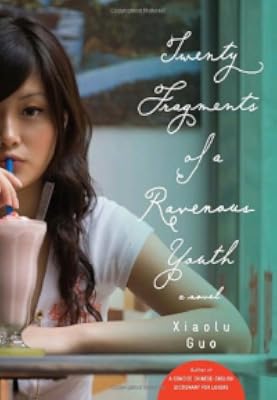
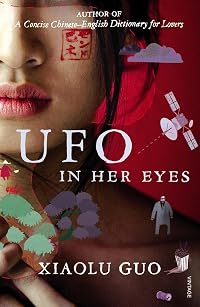










Member Reviews
My local library has a display devoted to the 2007 Orange Broadband prize for fiction; if it didn't have this display, I would never have picked up this little jem of a book.
Z is a Chinese girl sent by her parents to England to study the language. During her year there she falls in love with an older man, experiences English life, discovers her sexuality, and travels around Europe. So far, so ordinary, I suppose, but the real joy of this book is the way in which Z's life is expressed in words, in bad English, and in language that truly reflects the journey she takes in becoming an adult.
It's a breathtakingly beautiful story, told beautifully. I haven't read a book that uses the English language as well as this since "The Curious show more Incident of the Dog in the Night-time." It is also crushingly sad at times, and carries an urgency that led me to read the book in its entirety in a single day - an unusual feat for me, and one I haven't accomplished since a friend gave me a copy of Fowles' "The Collector."
Extraordinary. show less
Z is a Chinese girl sent by her parents to England to study the language. During her year there she falls in love with an older man, experiences English life, discovers her sexuality, and travels around Europe. So far, so ordinary, I suppose, but the real joy of this book is the way in which Z's life is expressed in words, in bad English, and in language that truly reflects the journey she takes in becoming an adult.
It's a breathtakingly beautiful story, told beautifully. I haven't read a book that uses the English language as well as this since "The Curious show more Incident of the Dog in the Night-time." It is also crushingly sad at times, and carries an urgency that led me to read the book in its entirety in a single day - an unusual feat for me, and one I haven't accomplished since a friend gave me a copy of Fowles' "The Collector."
Extraordinary. show less
Zhuang doesn't want to go abroad to study English, but her newly wealthy parents are determined to send her. Her first months in London are achingly lonely, but her life changes when she meets a stranger in a movie theater. Thanks to a linguistic misunderstanding, she's soon living in his small East London flat.
This set-up sounds like a lot of cliched chick lit and a lot of cliched East-meets-West stories, but luckily, the novel transcends both genres. Unlike a lot of Chinese heroines, Zhuang isn't instantly enlightened or liberated by Western culture; in fact, she is baffled by Westerners' seemingly endless appetite for individuality and privacy. Reading her meditations on the English language, and how it reveals the differences show more between English and Chinese culture, is one of the most fascinating parts of the book. We see how linguistic barriers complicate romantic relationships, like when she fails to comprehend that her boyfriend's previous "love of men" refers to a series of homosexual relationships.
As Zhuang's English improves, her first-person narration matures from stilted, childish prose to eloquent exploration of sex, freedoms and relationships. She emerges as a unique, quirky character who quietly imbibes a few English values while holding onto her Chinese culture. I found this book eloquent and insightful, and would recommend it particularly to people curious about Chinese culture. show less
This set-up sounds like a lot of cliched chick lit and a lot of cliched East-meets-West stories, but luckily, the novel transcends both genres. Unlike a lot of Chinese heroines, Zhuang isn't instantly enlightened or liberated by Western culture; in fact, she is baffled by Westerners' seemingly endless appetite for individuality and privacy. Reading her meditations on the English language, and how it reveals the differences show more between English and Chinese culture, is one of the most fascinating parts of the book. We see how linguistic barriers complicate romantic relationships, like when she fails to comprehend that her boyfriend's previous "love of men" refers to a series of homosexual relationships.
As Zhuang's English improves, her first-person narration matures from stilted, childish prose to eloquent exploration of sex, freedoms and relationships. She emerges as a unique, quirky character who quietly imbibes a few English values while holding onto her Chinese culture. I found this book eloquent and insightful, and would recommend it particularly to people curious about Chinese culture. show less
(Reprinted from the Chicago Center for Literature and Photography [cclapcenter.com].)
So first, a confession from my personal life that is relevant to today's essay; that like many others, I too once fell in love with someone while on a foreign trip, in many ways precisely because it was a foreign country and she was a foreigner within that country. And like many others, it wasn't just simple lust that made me fall in love with this person so intensely in such a short period, nor just a shared set of opinions and tastes; it was that I was feeling so scared and confused and alone in that foreign country, not able to even begin expressing myself adequately there about the emotions I was having, with this good-looking woman suddenly there show more and seemingly understanding everything I was going through without me ever having to say anything. In the middle of a very stressful international trip, she became a life preserver that I threw myself at, a small moment of calm in an unending storm that had been happening for nearly a month at the point I met her. And this of course is why the woman was ultimately not interested in a romance with me, because she understood where these emotions of mine were coming from, that for me it was all about the experience and little to do with her in particular; and she knew this of course because she had done some international traveling herself in the past, and had had the exact same experience that I was going through, but in her case did end up getting romantically involved with the person in question, which of course ended in disaster a few months later, such a surety that you didn't even really need me to mention it.
Like I said, it's a well-known story from the world of international travel, a situation that is tackled once again in the extremely delightful new novel A Concise Chinese-English Dictionary for Lovers, the first English-language book by Chinese-British author Xiaolu Guo, one that was short-listed for this year's Orange Prize and has gone on to become a surprise commercial hit. Based on Guo's own experiences when first moving to London at the turn of the millennium, the novel uses a personal-journal format to track the first year of a new immigrant, using only the words that immigrant knows at any given moment; it's a literary trick that could've been awfully gimmicky if flubbed, but here Guo uses it to profoundly comment on Western culture from the eyes of an Easterner, to use the difficulty of a new language to metaphorically examine the entire society that uses the language. It is a book simultaneously laugh-out-loud funny and heartbreakingly sad, a story that will strike a lot of powerful (and sometimes painful) chords among anyone who has done any amount of international traveling themselves; one of those books that makes you want to run out and buy a bunch of copies, so that you can slap them into friends' hands and yell, "See, this is why I go to all the trouble that I do so that I can travel. Read this and you'll finally get it." Oh, and did I mention that it's really freakin' dirty too? It's really freakin' dirty too, not in a shockingly pornographic way (as are many of the sexual projects that get reviewed here), but rather in a delightful and highly erotic way, with Guo again using the quirky details of the English language to get across some highly symbolic (and temperature-raising) mental images.
Like many travel stories, the actual plotline of Dictionary is a fairly simple one; it's the story of 23-year-old Chinese peasant girl Zhuang, whose factory-owning blue-collar parents send her to London for a year, in order to learn English "as the English speak it" and thus improve her chances of a well-paying job in this global age we're moving into these days. And, I mean, that's pretty much it as far as the actual storyline is concerned -- "Z," as she's known by most of her Western acquaintances, does end up moving to London for a year, keeps a journal about her school and life experiences while there, meets and dates and breaks up with a guy, then at the end of a year goes back home. Er, the end. What the novel really becomes about, then, is not so much the events that transpire but an examination of the people these events are happening to; a detailed look at the people involved, in fact, using the infinitely fascinating and international milieu of London in order to look at the lives of a few of its random citizens, with Guo playing against character expectations as much as humanly possible.
Because that's an important thing to know about Dictionary, and a big reason why the novel is so delightful in the first place, is that Z is in no way your typical meek Chinese peasant girl; she is an opinionated loudmouth, as a matter of fact, a bit of an a--hole as well, unusually aggressive in situations that fascinate her and ready to embrace this cosmopolitan urban environment she suddenly finds herself in, a money-focused realist who goes out of her way at cocktail parties to defend communism. This is an interesting enough play against type, of course, but then becomes even more so when examining the Welsh guy she ends up getting involved with, who in many ways is her opposite: a bisexual, globetrotting, radically liberal ex-hippie twenty years her senior, a lover of both farming and the countryside who hasn't dated a woman in years and years. Now add Z's misunderstanding at the beginning of their relationship, where she mistakes an invitation to come over one night for an invitation to move in; and then add the man's unwillingness to correct the mistake; and now you have yourself one engaging little love story indeed.
So why do the two end up getting so heavily involved? Well, for the reasons I mentioned at the beginning of today's review -- because of common traveling experiences bonding them in a temporary way, while a lack of a common language fluency hindering their ability to see how ideologically different they actually are. It's a unique aspect of international romances, this lack of a common fluent language besides the "unspoken one of love," something that makes the entire endeavor both thrillingly exotic and almost guaranteed to be doomed for failure; it's the fuel by which movies like Before Sunrise drive their story engines, the fantasy that inspires thousands of undergraduate backpacking trips across Europe every summer. And indeed, under Guo's masterful hands as an English-language writer (and seriously, she is so deft with the English language here that you can easily mistake her for a UK native), it's this exact fantasy that drives the relationship of Z and her lover for its first six months or so, and is the impetus behind so much of Z's glee and pathos during her "year in the West."
But alas, such relationships can never sustain themselves for very long, not once the people involved start getting a deeper understanding of this lover they've been seeing; and in Dictionary Guo charts the unmaking of this relationship just so brilliantly, by timing it with Z's growing understanding of "English as the English speak it," watching her not only come to all these new complex realizations about her lover but also be able to express them in a more sophisticated way with each passing day. Make no mistake, Guo pulls no punches here; the story can get quite dark at certain points, and certainly does a devastating job at expressing the deep loneliness and alienation that immigrants can sometimes experience (especially on bad days). It's a very real book, I guess I'm saying; one that paints such a deep portrait of some very complex characters that you'll swear by the end that they must actually exist, that if you were to ever go to London you might have a shot of actually running into them on the street there.
And then finally, like I mentioned, this book is a surprisingly erotic one as well, definitely not its main point but a nice little unexpected bonus nonetheless; and as mentioned, the eroticism in Dictionary is not a dysfunctional, in-your-face kind as often featured here at CCLaP, but rather a flowery and nerdy kind (which I mean in a good way), which much like the rest of the novel depends on an expert skill over language and cleverness to be as effective as it is. It's one of those stories that titillates, not overwhelms; a book that helps clueless men understand the complex and emotionally weighted way so many women approach the subject of sexuality in the first place. I hesitate to use the term "chick-lit," because it's just such a loaded term that so many people find so disagreeable; but I will say this, that this is a good book to buy your friend who's into all those horrible chick-lit novels, as a way of getting her to read more intelligent stuff that will still naturally appeal to her. Can I say that without anyone getting angry or offended? We'll see, I guess.
To tell you the truth, there is barely anything in Dictionary that I myself would change, and the only reason it didn't get a larger score than it did is because of it essentially being a niche publication; that if you're not naturally a fan of delicate love stories with international travel at their core, you're likely to find this novel tedious to the point of tears, and will be tempted to throw it back on the "Books Destined to Be Made Into Cheap Looking Cable Television Movies That Your Mom Inexplicably Freaking Loves" shelf, where it rightly belongs. You definitely have to be of a certain type to enjoy this book; if like me, though, you are of this type, you're bound to love Dictionary from its very first page to its very last.
Out of 10:
Story: 7.3
Characters: 9.9
Style: 8.5
Overall: 8.8, or 9.8 for fans of delicate love stories show less
So first, a confession from my personal life that is relevant to today's essay; that like many others, I too once fell in love with someone while on a foreign trip, in many ways precisely because it was a foreign country and she was a foreigner within that country. And like many others, it wasn't just simple lust that made me fall in love with this person so intensely in such a short period, nor just a shared set of opinions and tastes; it was that I was feeling so scared and confused and alone in that foreign country, not able to even begin expressing myself adequately there about the emotions I was having, with this good-looking woman suddenly there show more and seemingly understanding everything I was going through without me ever having to say anything. In the middle of a very stressful international trip, she became a life preserver that I threw myself at, a small moment of calm in an unending storm that had been happening for nearly a month at the point I met her. And this of course is why the woman was ultimately not interested in a romance with me, because she understood where these emotions of mine were coming from, that for me it was all about the experience and little to do with her in particular; and she knew this of course because she had done some international traveling herself in the past, and had had the exact same experience that I was going through, but in her case did end up getting romantically involved with the person in question, which of course ended in disaster a few months later, such a surety that you didn't even really need me to mention it.
Like I said, it's a well-known story from the world of international travel, a situation that is tackled once again in the extremely delightful new novel A Concise Chinese-English Dictionary for Lovers, the first English-language book by Chinese-British author Xiaolu Guo, one that was short-listed for this year's Orange Prize and has gone on to become a surprise commercial hit. Based on Guo's own experiences when first moving to London at the turn of the millennium, the novel uses a personal-journal format to track the first year of a new immigrant, using only the words that immigrant knows at any given moment; it's a literary trick that could've been awfully gimmicky if flubbed, but here Guo uses it to profoundly comment on Western culture from the eyes of an Easterner, to use the difficulty of a new language to metaphorically examine the entire society that uses the language. It is a book simultaneously laugh-out-loud funny and heartbreakingly sad, a story that will strike a lot of powerful (and sometimes painful) chords among anyone who has done any amount of international traveling themselves; one of those books that makes you want to run out and buy a bunch of copies, so that you can slap them into friends' hands and yell, "See, this is why I go to all the trouble that I do so that I can travel. Read this and you'll finally get it." Oh, and did I mention that it's really freakin' dirty too? It's really freakin' dirty too, not in a shockingly pornographic way (as are many of the sexual projects that get reviewed here), but rather in a delightful and highly erotic way, with Guo again using the quirky details of the English language to get across some highly symbolic (and temperature-raising) mental images.
Like many travel stories, the actual plotline of Dictionary is a fairly simple one; it's the story of 23-year-old Chinese peasant girl Zhuang, whose factory-owning blue-collar parents send her to London for a year, in order to learn English "as the English speak it" and thus improve her chances of a well-paying job in this global age we're moving into these days. And, I mean, that's pretty much it as far as the actual storyline is concerned -- "Z," as she's known by most of her Western acquaintances, does end up moving to London for a year, keeps a journal about her school and life experiences while there, meets and dates and breaks up with a guy, then at the end of a year goes back home. Er, the end. What the novel really becomes about, then, is not so much the events that transpire but an examination of the people these events are happening to; a detailed look at the people involved, in fact, using the infinitely fascinating and international milieu of London in order to look at the lives of a few of its random citizens, with Guo playing against character expectations as much as humanly possible.
Because that's an important thing to know about Dictionary, and a big reason why the novel is so delightful in the first place, is that Z is in no way your typical meek Chinese peasant girl; she is an opinionated loudmouth, as a matter of fact, a bit of an a--hole as well, unusually aggressive in situations that fascinate her and ready to embrace this cosmopolitan urban environment she suddenly finds herself in, a money-focused realist who goes out of her way at cocktail parties to defend communism. This is an interesting enough play against type, of course, but then becomes even more so when examining the Welsh guy she ends up getting involved with, who in many ways is her opposite: a bisexual, globetrotting, radically liberal ex-hippie twenty years her senior, a lover of both farming and the countryside who hasn't dated a woman in years and years. Now add Z's misunderstanding at the beginning of their relationship, where she mistakes an invitation to come over one night for an invitation to move in; and then add the man's unwillingness to correct the mistake; and now you have yourself one engaging little love story indeed.
So why do the two end up getting so heavily involved? Well, for the reasons I mentioned at the beginning of today's review -- because of common traveling experiences bonding them in a temporary way, while a lack of a common language fluency hindering their ability to see how ideologically different they actually are. It's a unique aspect of international romances, this lack of a common fluent language besides the "unspoken one of love," something that makes the entire endeavor both thrillingly exotic and almost guaranteed to be doomed for failure; it's the fuel by which movies like Before Sunrise drive their story engines, the fantasy that inspires thousands of undergraduate backpacking trips across Europe every summer. And indeed, under Guo's masterful hands as an English-language writer (and seriously, she is so deft with the English language here that you can easily mistake her for a UK native), it's this exact fantasy that drives the relationship of Z and her lover for its first six months or so, and is the impetus behind so much of Z's glee and pathos during her "year in the West."
But alas, such relationships can never sustain themselves for very long, not once the people involved start getting a deeper understanding of this lover they've been seeing; and in Dictionary Guo charts the unmaking of this relationship just so brilliantly, by timing it with Z's growing understanding of "English as the English speak it," watching her not only come to all these new complex realizations about her lover but also be able to express them in a more sophisticated way with each passing day. Make no mistake, Guo pulls no punches here; the story can get quite dark at certain points, and certainly does a devastating job at expressing the deep loneliness and alienation that immigrants can sometimes experience (especially on bad days). It's a very real book, I guess I'm saying; one that paints such a deep portrait of some very complex characters that you'll swear by the end that they must actually exist, that if you were to ever go to London you might have a shot of actually running into them on the street there.
And then finally, like I mentioned, this book is a surprisingly erotic one as well, definitely not its main point but a nice little unexpected bonus nonetheless; and as mentioned, the eroticism in Dictionary is not a dysfunctional, in-your-face kind as often featured here at CCLaP, but rather a flowery and nerdy kind (which I mean in a good way), which much like the rest of the novel depends on an expert skill over language and cleverness to be as effective as it is. It's one of those stories that titillates, not overwhelms; a book that helps clueless men understand the complex and emotionally weighted way so many women approach the subject of sexuality in the first place. I hesitate to use the term "chick-lit," because it's just such a loaded term that so many people find so disagreeable; but I will say this, that this is a good book to buy your friend who's into all those horrible chick-lit novels, as a way of getting her to read more intelligent stuff that will still naturally appeal to her. Can I say that without anyone getting angry or offended? We'll see, I guess.
To tell you the truth, there is barely anything in Dictionary that I myself would change, and the only reason it didn't get a larger score than it did is because of it essentially being a niche publication; that if you're not naturally a fan of delicate love stories with international travel at their core, you're likely to find this novel tedious to the point of tears, and will be tempted to throw it back on the "Books Destined to Be Made Into Cheap Looking Cable Television Movies That Your Mom Inexplicably Freaking Loves" shelf, where it rightly belongs. You definitely have to be of a certain type to enjoy this book; if like me, though, you are of this type, you're bound to love Dictionary from its very first page to its very last.
Out of 10:
Story: 7.3
Characters: 9.9
Style: 8.5
Overall: 8.8, or 9.8 for fans of delicate love stories show less
This novel was shortlisted for the 2007 Orange Prize for Fiction. Zhuang Xiao Qiao is a 23 year old woman from a small Chinese village, who is ordered by her hardworking parents to study English for a year in London, so that she can use these skills to further the family's business. She is completely on her own, and has to negotiate the bustling city using her concise Chinese-English dictionary, as she does not speak Mandarin fluently. Her narrative is in her broken English, and is both humorous and painful:
I worry I getting lost and nobody in China can find me anymore. How I finding important places including Buckingham Palace, or Big Stupid Clock? I looking everywhere but not seeing big posters of David Beckham, Spicy Girls or show more President Margaret Thatcher. In China we hanging them everywhere. English person not respect their heroes or what?
She finds a cheap flat in north London, and attends an English language school. The writing in her narrative progressively improves as she becomes more fluent in English. However, she continues to be lonely, as she cannot even communicate with the Cantonese family that lives in her building.
She meets an Englishman who sits next to her at a movie theater, and within a week she moves in with him. He is older, and quite different from her, yet she discovers herself through her love of him and her exposure to Western culture mainly by him.
The author deftly uses Zhuang's words to express her conflicted feelings about the freedoms she experiences in London, with its associated loneliness, in contrast to the sense of family and community but associated lack of freedom and individuality in her Chinese village:
But in the evening, you cook a fish for me. Not cod, not seabass, not any typical English fish. It is
a silver carp. It is like my hometown's fish. It smells of the river nearby our house. I remember I
studied a word before, and I remember how to pronounce this word. No-stal-gia. Eating carp causes my nostalgia.
The wording of the last sentence made me think of "nausea" in addition to "nostalgia", and I had a sense of her psychological nausea, as the relationship begins to fray.
At the end of the year, she is faced with a dilemma: should she stay in London with this man who loves her but cannot guarantee that he will be there for her in the future, or should she return to the mundane security of her home village?
I thought that I would enjoy this novel, but I liked it even more than I had expected. Through Zhuang's narrative we are provided with a somewhat skewed view of her lover's thoughts and desires, which makes it somewhat difficult to sympathize with him. However, this is a minor criticism, and I definitely recommend this novel. show less
I worry I getting lost and nobody in China can find me anymore. How I finding important places including Buckingham Palace, or Big Stupid Clock? I looking everywhere but not seeing big posters of David Beckham, Spicy Girls or show more President Margaret Thatcher. In China we hanging them everywhere. English person not respect their heroes or what?
She finds a cheap flat in north London, and attends an English language school. The writing in her narrative progressively improves as she becomes more fluent in English. However, she continues to be lonely, as she cannot even communicate with the Cantonese family that lives in her building.
She meets an Englishman who sits next to her at a movie theater, and within a week she moves in with him. He is older, and quite different from her, yet she discovers herself through her love of him and her exposure to Western culture mainly by him.
The author deftly uses Zhuang's words to express her conflicted feelings about the freedoms she experiences in London, with its associated loneliness, in contrast to the sense of family and community but associated lack of freedom and individuality in her Chinese village:
But in the evening, you cook a fish for me. Not cod, not seabass, not any typical English fish. It is
a silver carp. It is like my hometown's fish. It smells of the river nearby our house. I remember I
studied a word before, and I remember how to pronounce this word. No-stal-gia. Eating carp causes my nostalgia.
The wording of the last sentence made me think of "nausea" in addition to "nostalgia", and I had a sense of her psychological nausea, as the relationship begins to fray.
At the end of the year, she is faced with a dilemma: should she stay in London with this man who loves her but cannot guarantee that he will be there for her in the future, or should she return to the mundane security of her home village?
I thought that I would enjoy this novel, but I liked it even more than I had expected. Through Zhuang's narrative we are provided with a somewhat skewed view of her lover's thoughts and desires, which makes it somewhat difficult to sympathize with him. However, this is a minor criticism, and I definitely recommend this novel. show less
Both funny and poignant, this novel uses a word and definition to open each chapter of the narrator's diary or notebook. A student from China in England, she writes in English, which improves over time, as does her ability to express more complex and nuanced ideas and emotions. At times it's hilarious and the observations pithy; at others it is a tale of protracted yearning. A very enjoyable novel, perhaps especially so for English as a Foreign Language teachers.
This was a quirky little novel, very different, very refreshing. I found this copy in a used book store; it's an uncorrected proof, published in 2007. I quite enjoyed this story of a 23 year old Chinese girl who comes to England to study English. The format of this book is that of a notebook of vocabulary that the author keeps as she learns news words and phrases in English. Each entry is a short essay on how she comes to understand these words in the context of her new life in London. From the back: "Written in steadily improving English grammar and vocabulary, [this book] is a funny, romantic, and moving story that gives us a sparkling new lens through which we view ourselves". I found it sad and almost disturbing at times but also show more sweet, wise and profound. show less
Written in the form of dictionary entries musing on unfamiliar English words by Zhuang (call her Z), a young Chinese woman who has come to London to study English for a year, this is tells of immigrant alienation, misunderstandings, and the small and large cultural differences that govern relationships between people from very different countries. Z's sadness and longing for human connection echo throughout her early entries as she tries to understand this very different place in which she finds herself living. She can't even communicate with the Cantonese family living on the other floor of the cheap, marginalized house where she finds a flat.
Then a chance conversation with the man seated next to her at a movie theater leads her to show more move in with the much older man, eventually falling in love with him. Her English improves and her dictionary entry musings become less pidgeon English and more properly colloquial but the disconnect between cultures remains and perhaps even widens as she comes directly up against the gulf that separates a more open and communal China and the privacy-obsessed, individually focused England. She stops relying on her little Concise Chinese-English Dictionary when she discovers that it lacks so much of what she wants to look up. But no dictionary can possibly detail and explain adequately all the freight of so much of what she learns.
Her English lover remains enigmatic to the reader, as he seems to to Z as well although we Western readers understand him at least slightly better than Z, seeing clearly how her year must end long before she does. His absence as a meaningful character makes Z's lonliness and sense of alienation even greater and her melancholic sorrow is oftentimes palpable during the novel. There are comedic instances to offset the pervading air of sadness though, such as when Z is completely baffled by the inappropriateness of buying and displaying pornographic magazines at her lover's home and when she disinterestedly continues feeding coins into the peep show slot in order to watch more and more of a graphic sex show.
Naive or just culturally unaware, Z doesn't come across as a victim, except, perhaps, during the beginning of her European tour, but she is an excellent tour guide to life as an outsider, one who doesn't speak the language well, doesn't understand the cultural context of things, and has no community to fold into for safety, companionship, and happiness. Her excursions outside the English language institute point out not only attitudes that we take for granted but also shine a non-judgmental but accurate light on those parts of our culture that we allow to flourish only in the seedy alleys and back streets.
I really enjoyed the structure of this novel, finding it to be more than a gimmick. And Guo's mastery in presenting the evolution of Z's language and vocabulary was nothing short of impressive. Z was the only character to receive a thorough handling but that helped to highlight her solitariness, even when living with her aimless lover. There was a feeling of emotional distance in this that is generally less marked in books written by Westerners but which seems in keeping with other Chinese authors I've read (Ha Jin comes to mind as a comparison in tone), even in those who spend time in the West as Guo herself does. I found this a thoughtful book, slow moving and serious, so it may not be for everyone. But as a look at cultural misunderstandings and relationship drift, I thought this was a good read. show less
Then a chance conversation with the man seated next to her at a movie theater leads her to show more move in with the much older man, eventually falling in love with him. Her English improves and her dictionary entry musings become less pidgeon English and more properly colloquial but the disconnect between cultures remains and perhaps even widens as she comes directly up against the gulf that separates a more open and communal China and the privacy-obsessed, individually focused England. She stops relying on her little Concise Chinese-English Dictionary when she discovers that it lacks so much of what she wants to look up. But no dictionary can possibly detail and explain adequately all the freight of so much of what she learns.
Her English lover remains enigmatic to the reader, as he seems to to Z as well although we Western readers understand him at least slightly better than Z, seeing clearly how her year must end long before she does. His absence as a meaningful character makes Z's lonliness and sense of alienation even greater and her melancholic sorrow is oftentimes palpable during the novel. There are comedic instances to offset the pervading air of sadness though, such as when Z is completely baffled by the inappropriateness of buying and displaying pornographic magazines at her lover's home and when she disinterestedly continues feeding coins into the peep show slot in order to watch more and more of a graphic sex show.
Naive or just culturally unaware, Z doesn't come across as a victim, except, perhaps, during the beginning of her European tour, but she is an excellent tour guide to life as an outsider, one who doesn't speak the language well, doesn't understand the cultural context of things, and has no community to fold into for safety, companionship, and happiness. Her excursions outside the English language institute point out not only attitudes that we take for granted but also shine a non-judgmental but accurate light on those parts of our culture that we allow to flourish only in the seedy alleys and back streets.
I really enjoyed the structure of this novel, finding it to be more than a gimmick. And Guo's mastery in presenting the evolution of Z's language and vocabulary was nothing short of impressive. Z was the only character to receive a thorough handling but that helped to highlight her solitariness, even when living with her aimless lover. There was a feeling of emotional distance in this that is generally less marked in books written by Westerners but which seems in keeping with other Chinese authors I've read (Ha Jin comes to mind as a comparison in tone), even in those who spend time in the West as Guo herself does. I found this a thoughtful book, slow moving and serious, so it may not be for everyone. But as a look at cultural misunderstandings and relationship drift, I thought this was a good read. show less
Members
- Recently Added By
Lists

Top Five Books of 2016
795 works; 228 members

BBC Radio 4 Bookclub
340 works; 13 members

Translingualism
191 works; 4 members

BingoDOG - Language in Fiction
35 works; 12 members

BBC World Book Club
265 works; 5 members

Favourite Women's Prize for Fiction, Orange & Bailey's Prize contenders
132 works; 52 members
Author Information

18+ Works 2,607 Members
Xiaolu Guo is the author of Village of Stone, A Concise Chinese-English Dictionary for Lovers, Twenty Fragments of a Ravenous Youth, and I Am China. Guo has also directed several award-winning films including She, A Chinese and documentaries including Late at Night, and Five Men and a Caravaggio.
Some Editions
Awards and Honors
Awards
Notable Lists
Series
Belongs to Publisher Series
btb (74079)
Common Knowledge
- Canonical title
- A Concise Chinese-English Dictionary for Lovers
- Original title
- A Concise Chinese-English Dictionary For Lovers
- Original publication date
- 2007
- People/Characters
- Zhuang Xiao Qiao; Klaus
- Important places
- London, England, UK; Zhe Jiang, China; Faro, Algarve, Portugal
- Epigraph*
- Rien dans ce livre n'est vrai à l'exception de l'amour entre elle et lui.
- Dedication
- For the man who lost my manuscript in Copenhagen airport, and knows how a woman lost her language.
- First words
- "What are you thinking?"
- Last words
- (Click to show. Warning: May contain spoilers.)The rain was ceaseless, covering the whole Forrest, the whole mountain and the whole land.
- Publisher's editor*
- Buchet/Chastel
- Blurbers
- Tan, Amy
*Some information comes from Common Knowledge in other languages. Click "Edit" for more information.
Classifications
Statistics
- Members
- 1,113
- Popularity
- 22,780
- Reviews
- 69
- Rating
- (3.51)
- Languages
- 10 — Dutch, English, Finnish, French, German, Italian, Norwegian (Bokmål), Polish, Spanish, Swedish
- Media
- Paper, Audiobook, Ebook
- ISBNs
- 32
- ASINs
- 6